
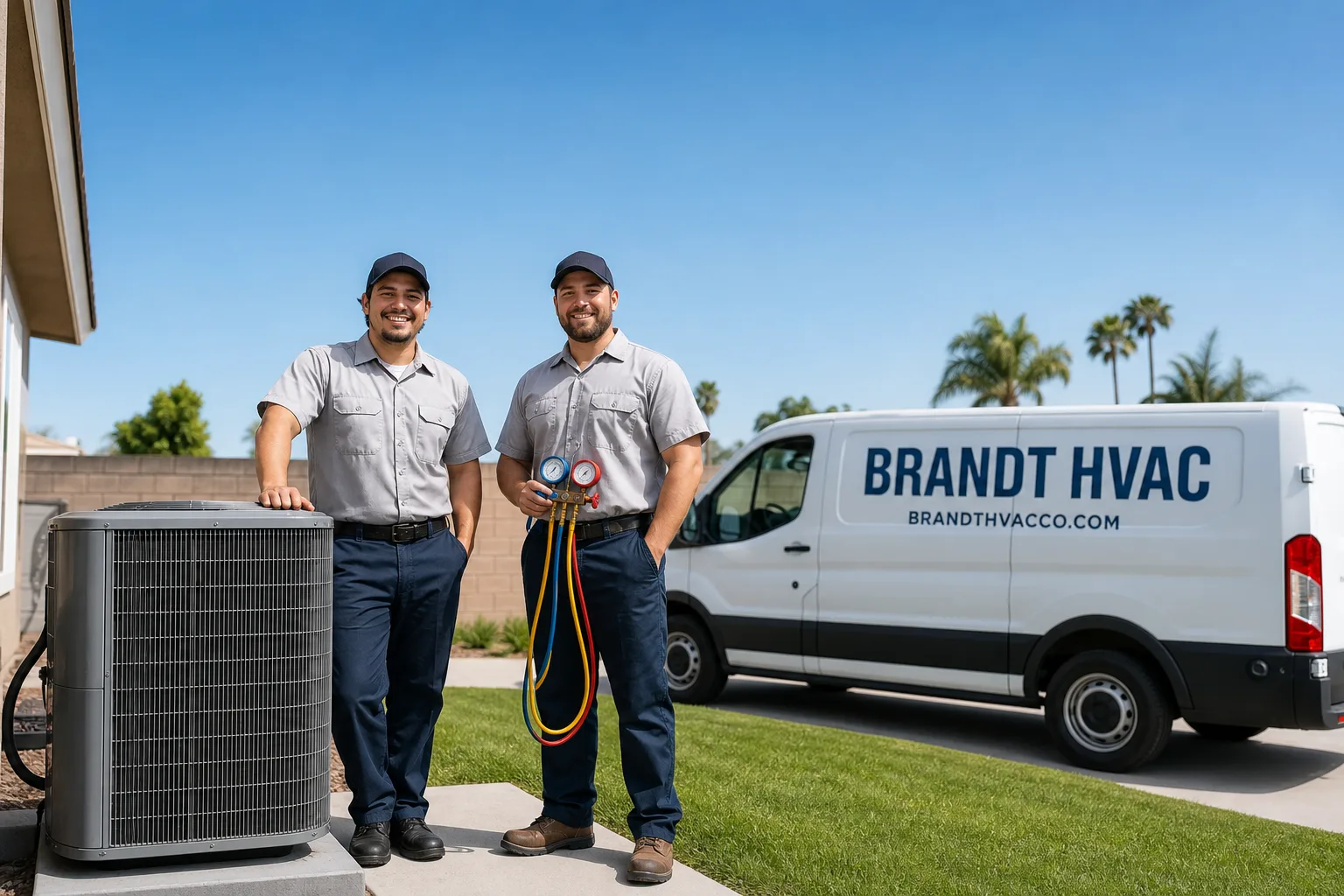
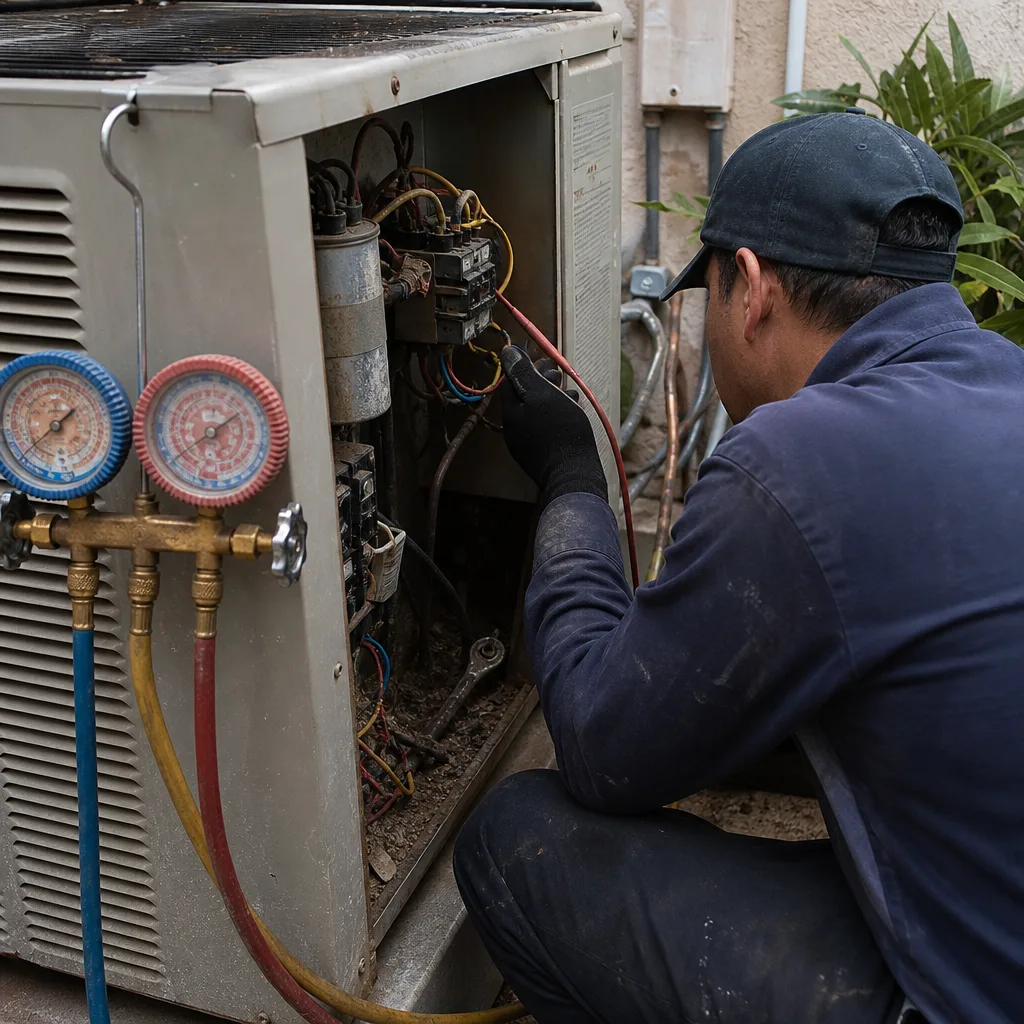
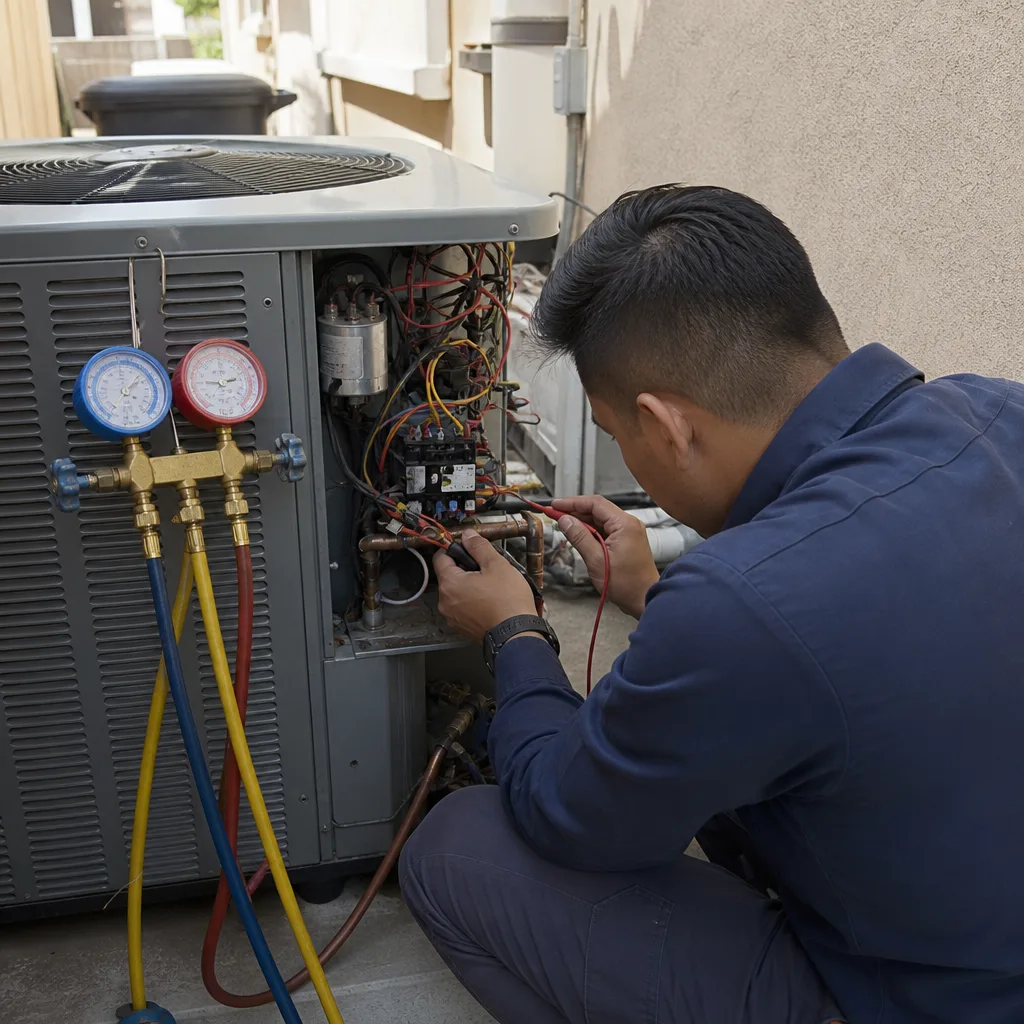
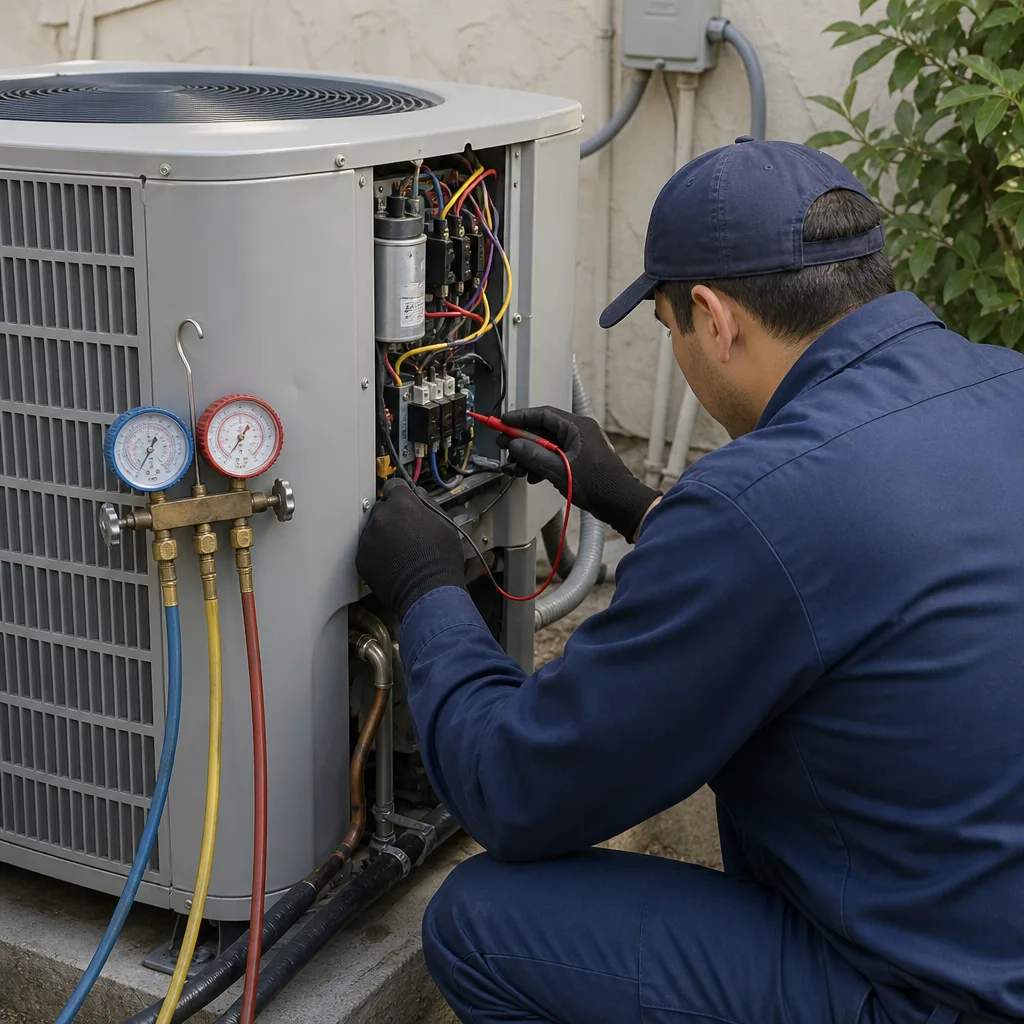
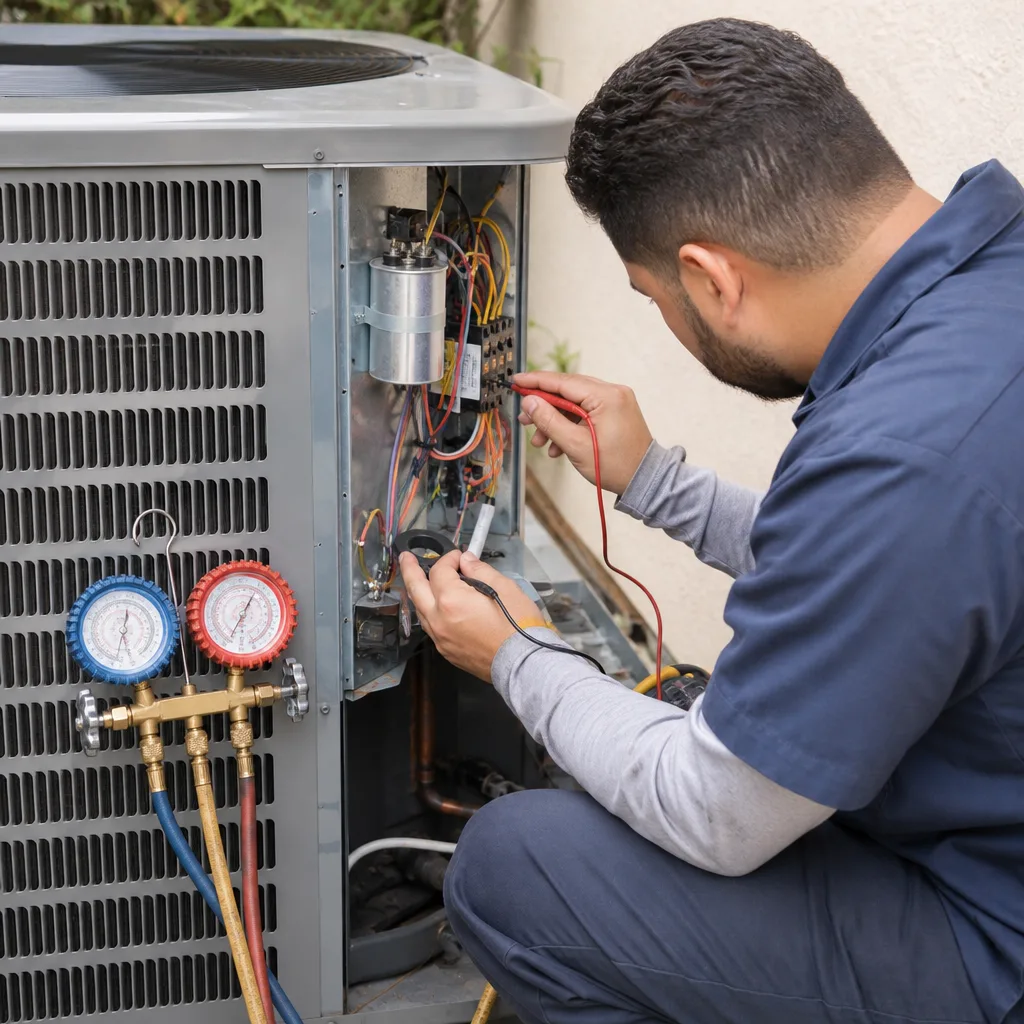
Seasonal tune-up and full diagnostic on your Carrier, Trane, or Goodman system - readings shown to you before any repair is proposed
Diagnosis first, numbers second - you approve the repair price before a single part goes in.
 Before
 After
After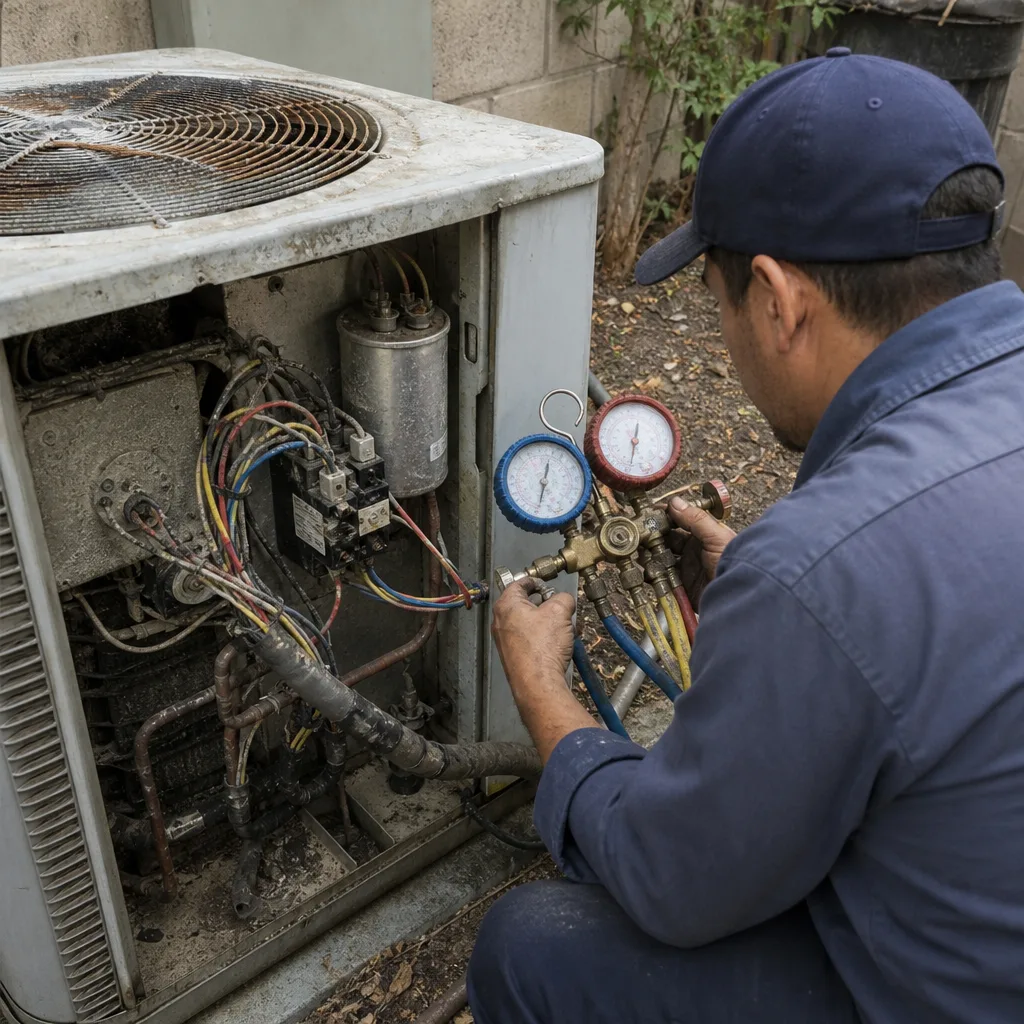 Before
 After
After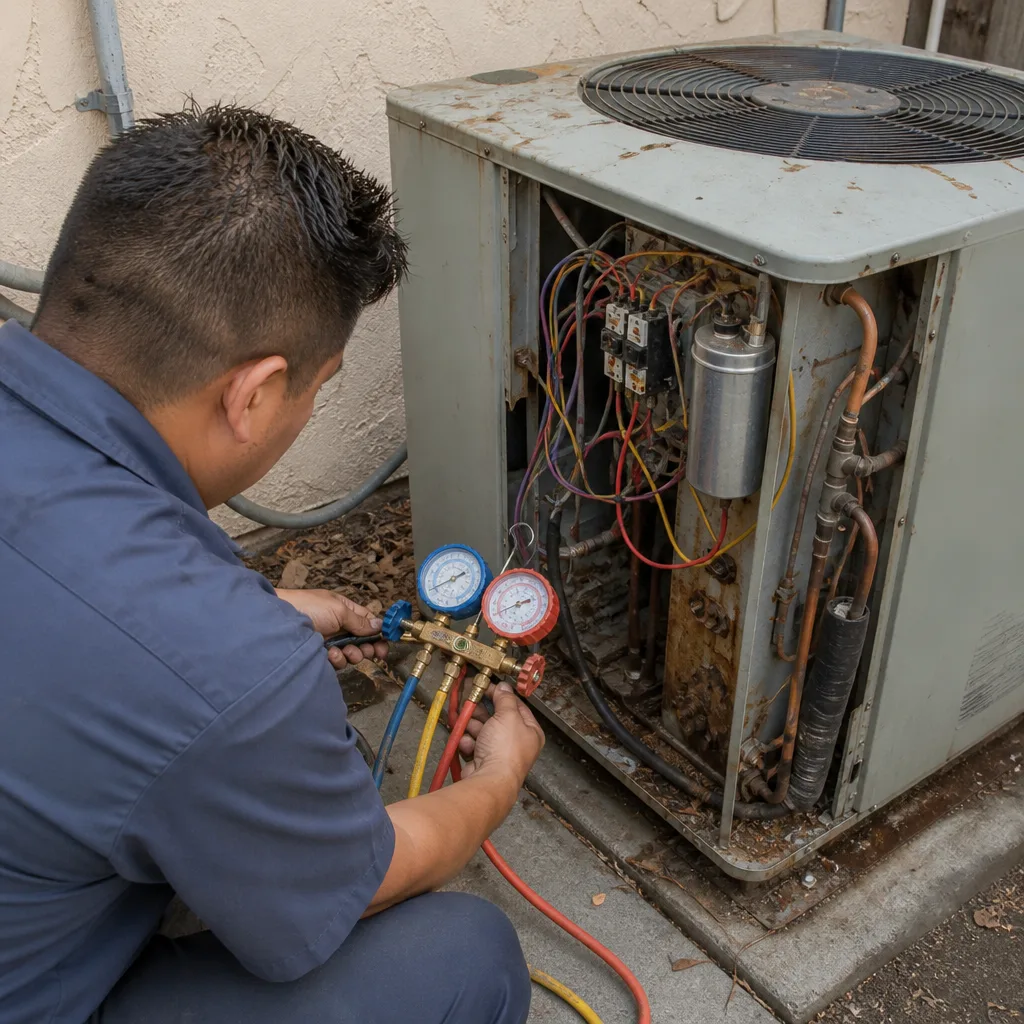 Before
 After
AfterFurnace Won’t Turn On
When your furnace won’t turn on, the most common causes are a tripped circuit breaker, a thermostat set incorrectly or running on dead batteries, a clogged filter that shut the system down on safety, or a failed igniter. Most of these can be ruled out in a few minutes. If none of the simple checks clear it, a licensed technician needs to take over – some of the components involved carry serious electrical current or vent combustion gas, and those are not safe to troubleshoot yourself.
A furnace that won’t respond at all is not always a major repair. But it is not always a minor one either. The tricky part is that four or five completely different problems produce the exact same symptom – silence. Walking through them in order, from simplest to most serious, is how you figure out which one you’re dealing with before anyone opens the cabinet.
Why It Happens
The Circuit Breaker Tripped
Furnaces draw a significant amount of power when they start up, and a momentary surge or an aging breaker can flip it to the off position. Check your electrical panel for a breaker labeled “furnace” or “air handler” that is sitting in the middle position rather than fully on or fully off. If it’s tripped, reset it once. If it trips again immediately, stop – a breaker that won’t hold is telling you there’s a deeper electrical problem in the system, and resetting it repeatedly can cause real damage.
Thermostat Setting or Dead Batteries
This one sounds obvious, but it accounts for a surprising number of service calls. Check that the thermostat is set to “heat” rather than “cool” or “fan only,” and that the set temperature is actually above whatever the house is reading right now. If your thermostat uses batteries and they’re low or dead, the display may look fine but the signal never reaches the furnace. Swap in fresh AA or AAA batteries (check the back panel) and see if the system responds.
A Clogged Air Filter Triggered the High-Limit Switch
When a filter gets packed with dust and debris, airflow through the system drops off. The furnace’s internal high-limit switch detects the resulting heat buildup and shuts the unit down before anything overheats or cracks. You’ll often find the furnace silent, the filter dark gray or completely blocked, and no fault code at all – because the system worked exactly as designed. Replacing the filter and letting the furnace cool for 30 minutes will sometimes let it restart on its own. If it doesn’t, the high-limit switch itself may need to be tested and reset by a technician.
The Igniter Has Failed
Modern furnaces use a hot surface igniter – a small, fragile ceramic component that glows bright orange to light the burner. When it fails, the furnace will try to start (you may hear the blower run briefly or hear a clicking sound), but no flame ever appears, and the system shuts back down. A failed igniter is one of the most common furnace repairs made each winter. It’s also a component that sits inside the furnace cabinet near the burner assembly, which means it should only be replaced by a technician – not because the swap itself is complicated, but because you’re working next to a gas valve and a heat exchanger, and those deserve respect.
What to Do Right Now
- Check the thermostat first. Confirm it’s on “heat,” the set temperature is higher than the current room temperature, and the batteries aren’t dead. Replace them if you’re not certain they’re fresh.
- Look at your electrical panel. Find the breaker for the furnace and see if it’s tripped. Reset it once if so. If it trips again, leave it off and call – do not keep resetting it.
- Check the furnace power switch. There’s usually a simple on/off switch on or near the furnace that looks like a standard light switch. It gets bumped off accidentally more often than you’d think.
- Pull the air filter and look at it. If it’s visibly clogged, replace it with a matching size and give the furnace 20 to 30 minutes before trying to restart. Write down the filter size printed on the frame – your technician will want to know it.
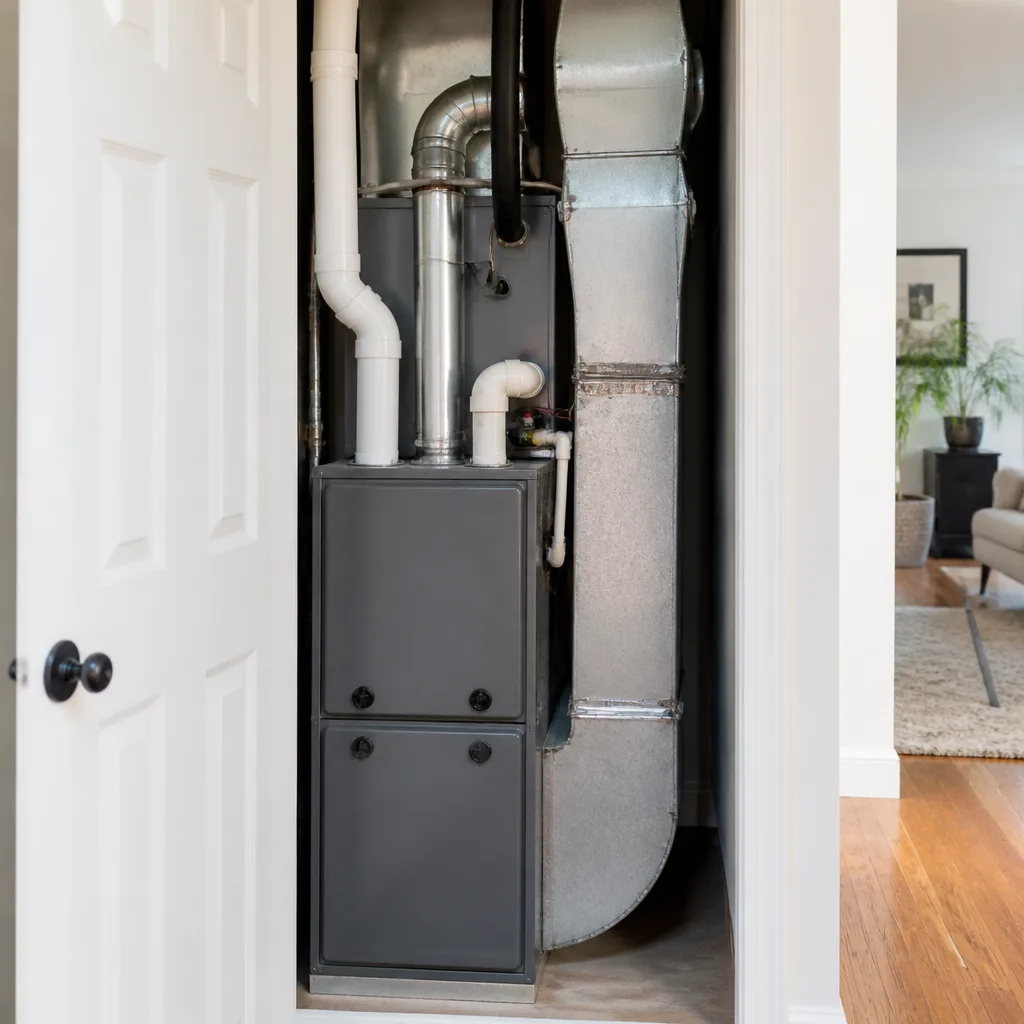
- Do not open the furnace cabinet or attempt to access the burner, gas valve, heat exchanger, or wiring. Photograph the outside of the unit, the model and serial number label, and any error codes showing on the control board display if you can see them through the cabinet. That information helps a technician come prepared – and it keeps you well clear of anything that carries gas or electrical current.
How We Fix It
When your local Brandt HVAC team arrives, the technician starts with a full diagnostic – power supply, thermostat signal, filter condition, control board fault codes, igniter resistance, flame sensor reading, and a check of the heat exchanger if there’s any indication of a combustion issue. That sequence usually narrows the cause to one component within the first 20 minutes.
Before any part is replaced or any work begins, you get a written price. That’s not a formality – it’s how every single Brandt HVAC job works, on every visit, without exception. You see the number, you agree to it, and then the work starts. Not before.
Most igniter replacements, control board resets, and limit switch repairs are completed in a single visit, typically under two hours. If the repair is more involved, your technician will tell you exactly what that means before touching anything. Every repair is covered by the 365-Day Done Right Promise: if the fix doesn’t hold, we come back at no charge.
The service that applies here is Furnace Repair. We work on all major residential brands, including Carrier, Trane, Lennox, Goodman, Rheem, York, Daikin, Bryant, and American Standard.
Frequently Asked Questions
It depends on why it stopped. A tripped breaker or dead thermostat batteries are not dangerous – just cold. A failed igniter that repeatedly tries to light and fails means unburned gas is cycling through briefly each attempt, which is worth taking seriously. If you smell gas at any point – a sulfur or rotten-egg odor – leave the house immediately, don’t touch any switches, and call your gas utility’s emergency line from outside. For all other no-start situations, call (984) 538-9003 and we’ll get someone to you.
If it’s below freezing outside and the heat has been off for several hours, waiting until morning is a real risk – both to the people in the house and to your pipes. Hypothermia risk is genuine for older adults and young children, and pipes can begin freezing in an unheated home faster than most people expect. A live person answers at (984) 538-9003 around the clock, every night, every weekend, every holiday – call and tell us what you’re dealing with.
Yes, always. Your technician will diagnose the problem first, then give you a written price for the repair before a single part is touched. That written price is the price – there are no add-ons after the fact. If the number doesn’t work for you, you’re free to decline, and the diagnostic conversation was still worth having.
Before your technician arrives, you’ll receive their name and photo so you know exactly who to expect. At the door, they’ll show a photo ID badge – every time, without exception. Every Brandt HVAC technician is background-checked and identity-verified under the Threshold Verified standard. If anyone shows up who you were not told to expect, that visit is on us and we make it right. That promise exists because we know opening the door to a stranger – especially when you’re home alone – is not a small thing.
Get It Fixed
Your local Brandt HVAC team is ready to diagnose and repair your furnace today. A live person answers at (984) 538-9003 around the clock – no voicemail, no phone tree, no callback queue. Call now or book online and we’ll send you your technician’s name and photo before they arrive.
Written by Devin Marlowe, Owner and Lead HVAC Technician at Brandt HVAC, serving homeowners across the country since 2003.
What Our Customers Say
"AC stopped cooling on a hot afternoon. Tech arrived with a badge, checked the capacitor, found it bad, and replaced it on the spot. House cooled down within the hour."
- Steve P."Furnace ignitor went out on a cold morning. Part was on the truck, installed in thirty minutes."
- Alvin K."Annual tune-up on the furnace. He cleaned the burners, tested the heat exchanger, and told me what was fine and what to watch. No scare tactics."
- Lorraine E.