
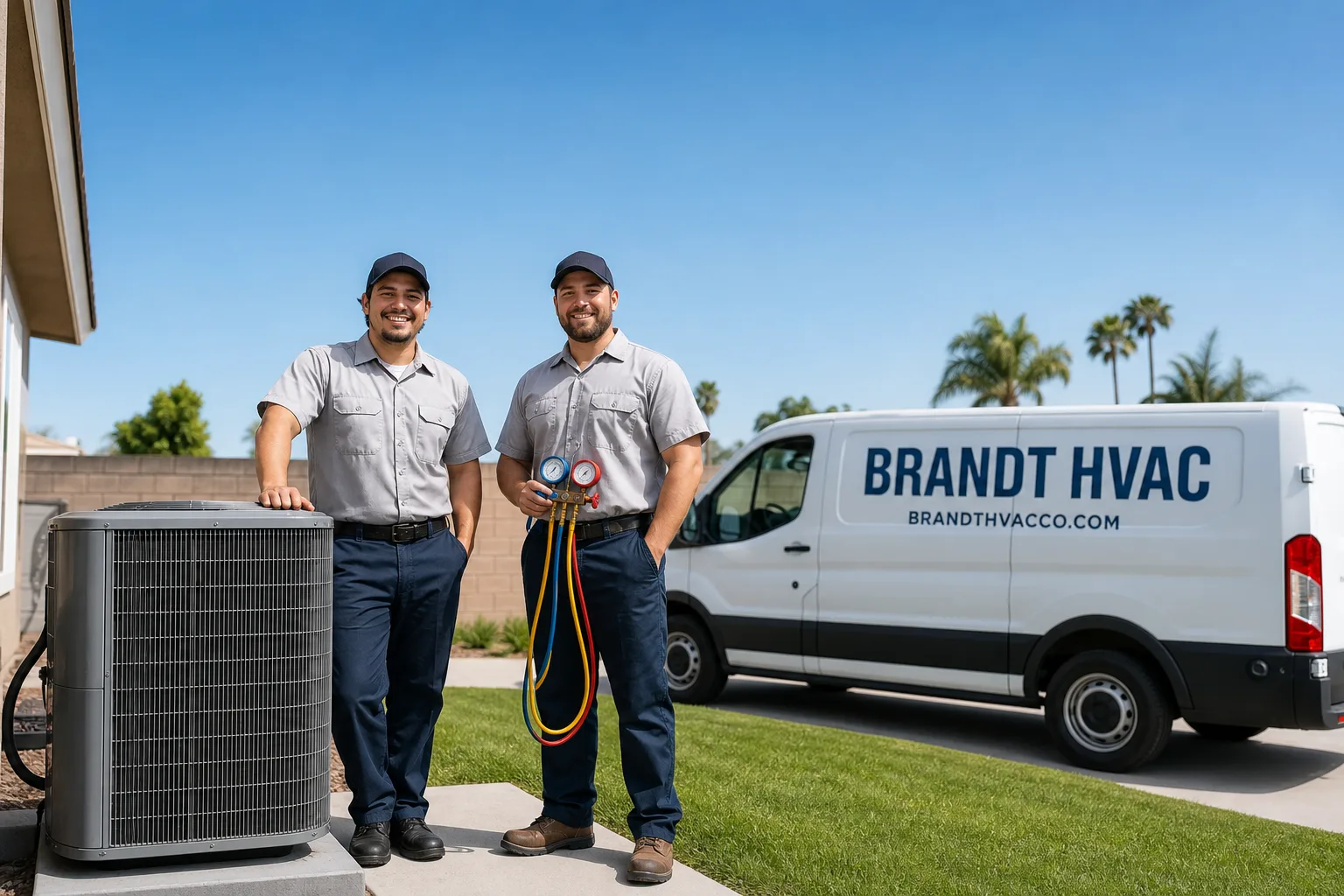
Seasonal tune-up and full diagnostic on your Carrier, Trane, or Goodman system - readings shown to you before any repair is proposed
Diagnosis first, numbers second - you approve the repair price before a single part goes in.
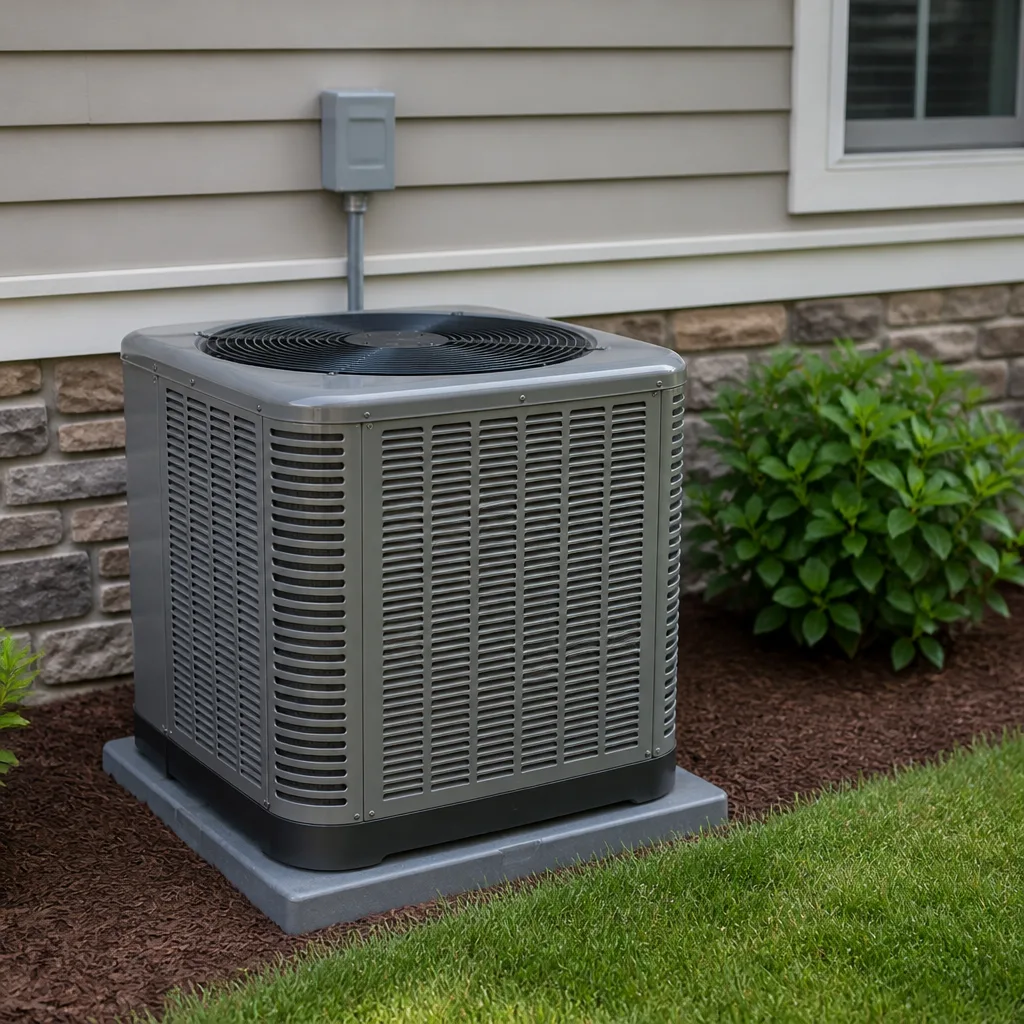
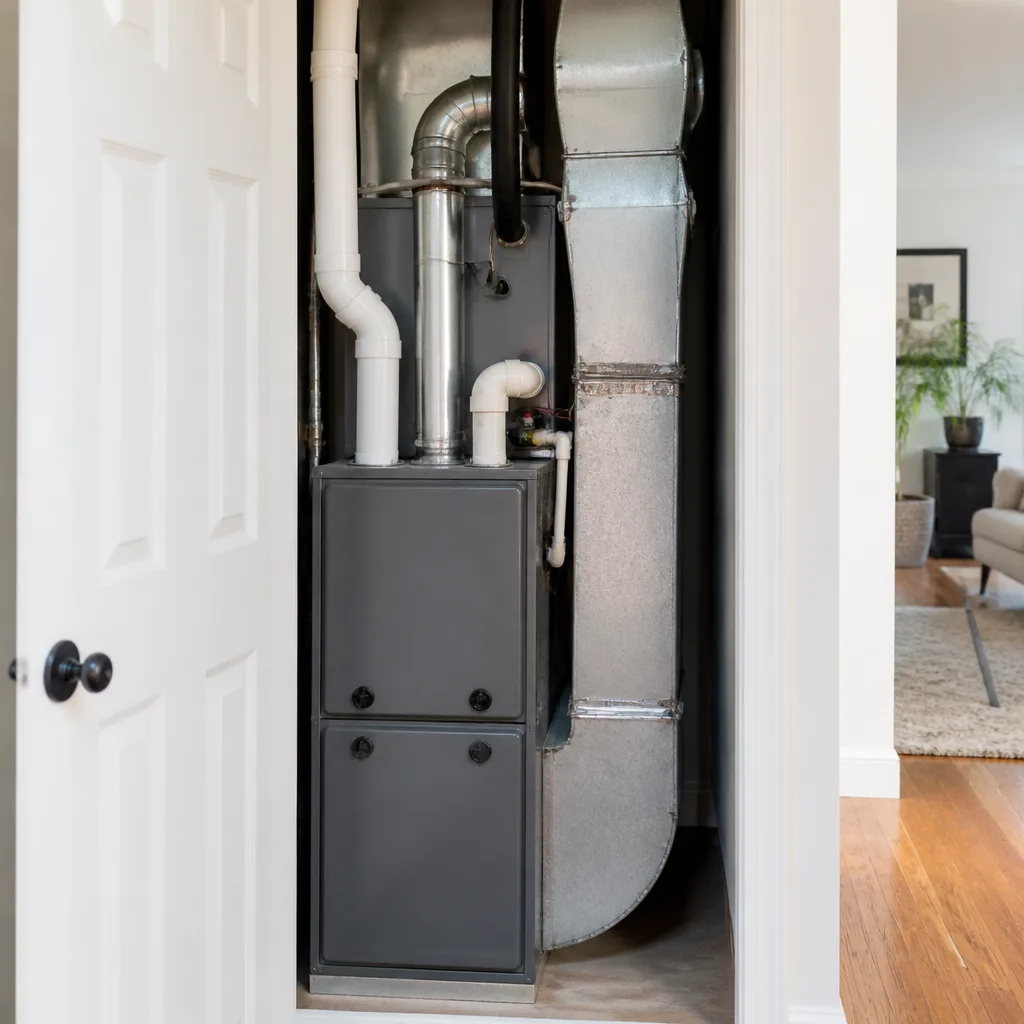
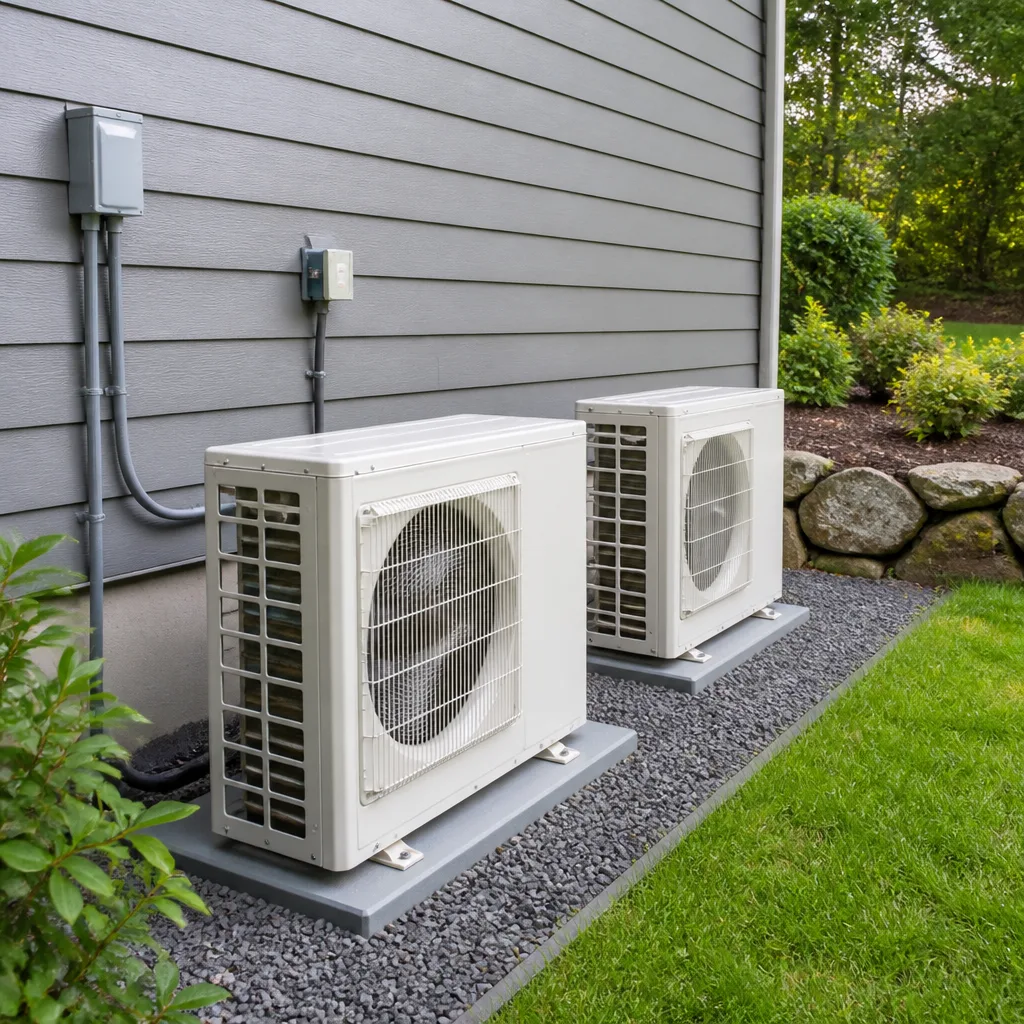
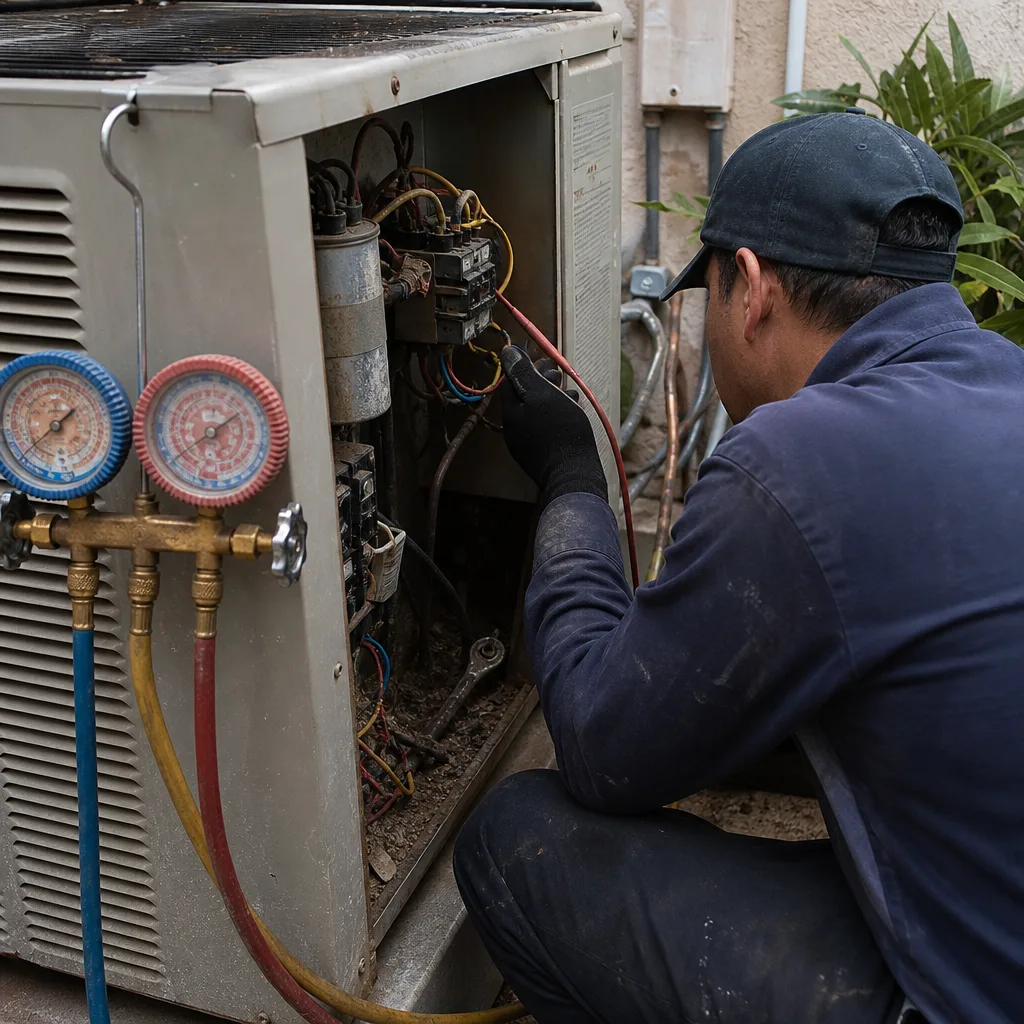 Before
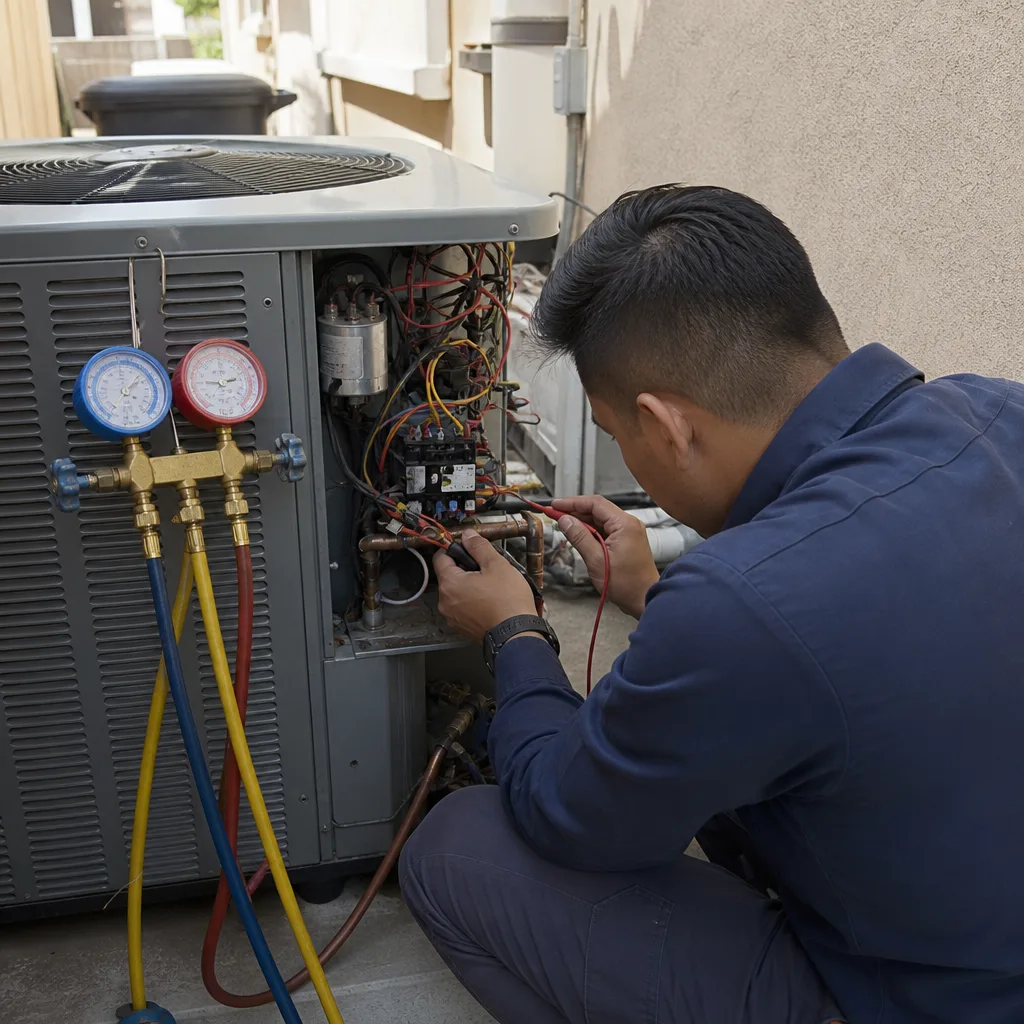 After
After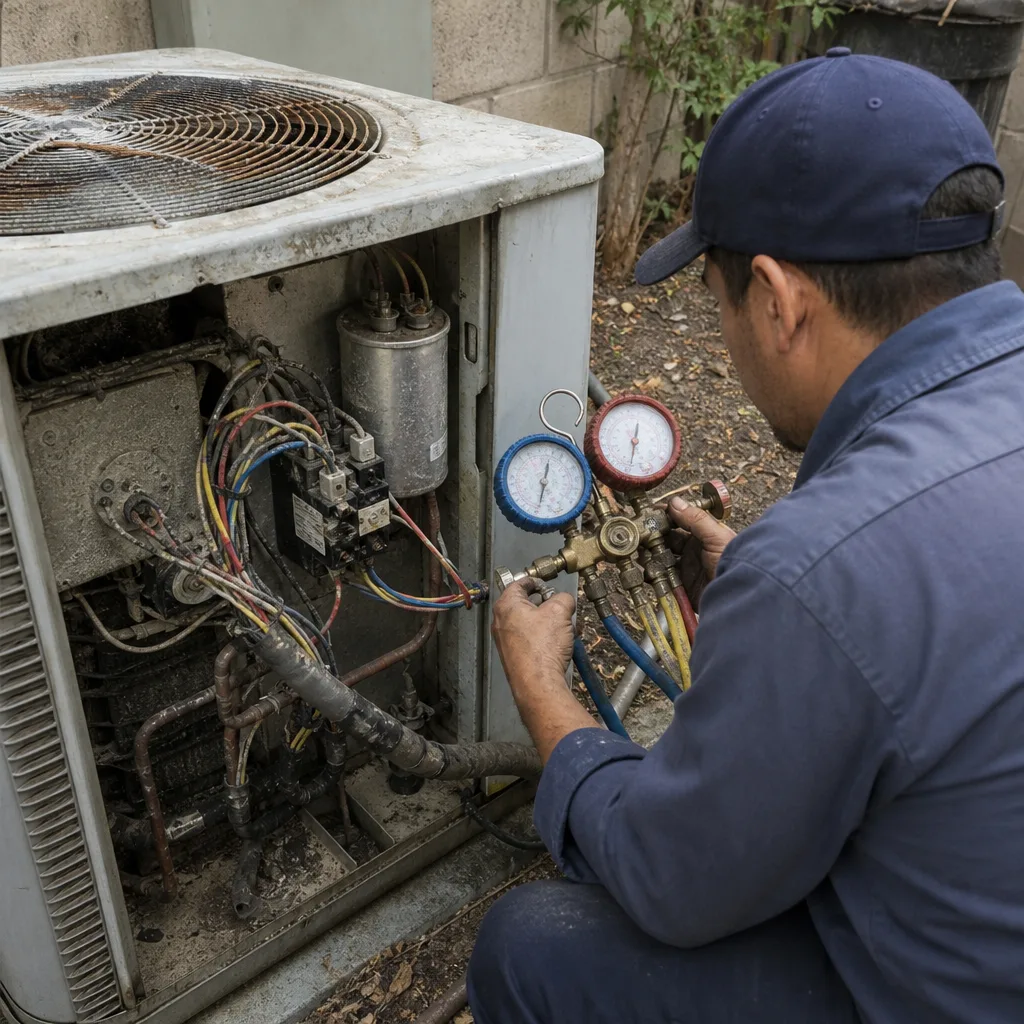 Before
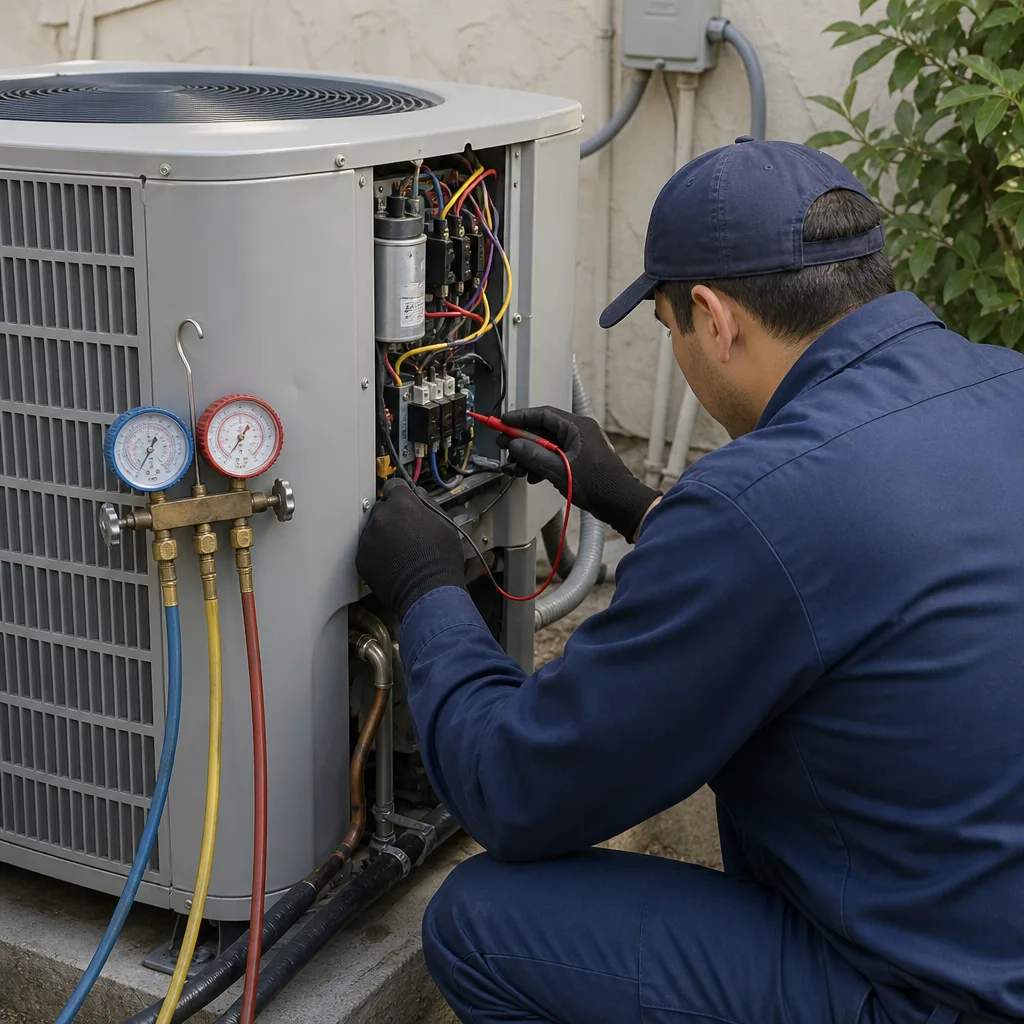 After
After Before
 After
AfterLoud A/C Unit: What’s Going On and What to Do About It
A loud A/C unit is almost always telling you something specific – a loose part, a failing motor bearing, debris in the blower or condenser, or a refrigerant issue. The noise itself is the diagnosis clue: banging, rattling, squealing, humming, and hissing each point to different components. Most causes are repairable the same day a technician arrives, but a few – left alone – turn a moderate repair into a full system replacement.
What you’re hearing isn’t just annoying. It’s the system working harder than it should, putting extra load on parts that were already stressed. The faster you track down the source, the better the odds of a straightforward fix. This page walks you through what each sound usually means, what you can safely check yourself, and how your local Brandt HVAC team handles the repair once they arrive.
What’s Happening
A loud A/C unit almost always signals a mechanical problem – a worn bearing, a loose component, debris contact, or a refrigerant leak. The sound type tells you which part of the system is involved. Left undiagnosed, most of these conditions worsen under the heat load and can take a working system to a full failure.
Your A/C has two main sections: an outdoor condenser unit and an indoor air handler or evaporator section. Noise can originate in either one, and sometimes in both. The blower fan moves air through your home; the condenser fan and compressor sit outside. Each has motors, bearings, belts (on older systems), and electrical contactors that wear over time. When any of those parts start to go, they announce it – usually in a way that’s hard to miss at 2 a.m. on a hot night.
Why It Happens
1. A Loose or Broken Blower Fan Blade (Banging or Clanking)
If you’re hearing a hard banging or clanking sound, especially from the indoor air handler, a fan blade has usually come loose or cracked and is striking the housing on every rotation. You might also notice the sound is rhythmic – one loud knock per second or so – which matches the fan’s spin speed. Do not keep running the system; a blade that lets go entirely can damage the motor and housing in minutes.
2. Worn Motor Bearings (Squealing or Grinding)
A high-pitched squeal or a low grinding sound, from either the indoor or outdoor unit, almost always points to motor bearings that have worn dry or past their service life. Bearings are the small components that let the motor shaft spin smoothly; when they fail, metal contacts metal. Squealing tends to come early in bearing failure; grinding means it’s further along. Either way, the motor is close to seizing.
3. Debris in the Condenser (Rattling or Clattering)
The outdoor condenser pulls in a lot of air, and it also pulls in leaves, seed pods, small sticks, and anything else the wind carries. A rattling or clattering sound from the outdoor unit that started suddenly – especially after a storm or a windy day – is often debris hitting the condenser fan blades. You can look through the top grille to see if something is visibly sitting inside, but don’t reach in; the fan blades carry enough force to cause a serious hand injury, even when the unit appears to be slowing down.
4. A Refrigerant Leak or Failing Capacitor (Hissing or Loud Humming)
A hissing sound from the indoor or outdoor unit usually means refrigerant is escaping through a small leak in the copper line set or at a fitting. Refrigerant under pressure sounds similar to air leaking from a tire. A loud electrical hum – the kind that vibrates the cabinet – often points to a failing start or run capacitor, which is the component that gives the compressor and fan motors the jolt they need to start. A capacitor on its way out makes the motor labor, and that labor is loud. Capacitors carry a lethal stored charge even when the unit is off; this is not a component to handle yourself.
What to Do Right Now
- Note exactly what you hear and where. Is the noise coming from inside the house or outside? Is it constant or does it pulse? Does it happen only at startup, only while running, or only when the system shuts off? A 20-second voice memo on your phone gives your technician more to work with than any description you’ll remember later.
- Turn the system off at the thermostat if the sound is banging, clanking, or grinding. Running a system that’s making impact noises can convert a single broken part into damage to the motor, housing, or coil. Switch the thermostat to OFF – not just to FAN – and leave it there until someone takes a look.
- Check the outdoor unit for visible debris from a safe distance. Look through the top grille without reaching in. If you can see a branch or a large object sitting against the fan blades, note it for the technician. Don’t attempt to remove anything while the unit has power, and don’t open the side panels – electrical components inside carry dangerous voltage.
- Check your air filter. A clogged filter forces the blower to work harder and can create a low rumble or a whistling sound that’s easy to mistake for a mechanical problem. If the filter is visibly gray and packed, replace it before the technician arrives. It won’t fix a bearing or a loose blade, but it rules out one variable and protects the system in the meantime.
- Do not attempt to access the capacitor, fan motor, or refrigerant lines yourself. Capacitors retain a stored electrical charge that can be fatal even with the unit powered off. Refrigerant handling requires certified equipment. If your outdoor unit is humming loudly and failing to start, turn it off and call – this is the right stopping point.
How We Fix It
When your local Brandt HVAC technician arrives, the first thing that happens is a full diagnostic – both units, not just the one making noise. Noise in the indoor air handler sometimes has its root cause in the outdoor condenser, and the other direction is true too. The technician will identify the source, explain what they found in plain terms, and give you a written price before a single repair begins. That’s not a policy we sometimes follow; it’s how every job works, on every visit.
For a loose or damaged fan blade, the repair is usually a blade replacement and a balance check, done in an hour or two. For worn motor bearings, the motor itself is typically replaced rather than rebuilt. A failing capacitor is a straightforward swap – the part is common and the labor is fast, though the technician handles stored charge safely before touching anything. A refrigerant leak requires finding the breach, repairing it, and recharging the system to the manufacturer’s specification. Any of these repairs falls under our 365-Day Done Right Promise: if the repair fails within the guarantee period, we come back at no charge, no argument.
The relevant services here are AC Repair and, where the system hasn’t been serviced in some time, AC Maintenance – which gives the technician a full picture of anything else that’s close to failing before it becomes the next loud surprise.
Frequently Asked Questions
It depends on the sound. A rattling from loose debris is lower urgency than a grinding or banging noise – those signals point to mechanical failure that gets worse with every hour the system runs. A hissing sound from inside the unit suggests refrigerant loss, which reduces cooling capacity and can damage the compressor over time. If the system is making grinding, clanking, or hissing sounds, don’t wait. Call (984) 538-9003 and describe what you’re hearing – the team on the phone can help you decide how quickly someone needs to come out.
Call (984) 538-9003 and a live person picks up, around the clock, any day of the year – no voicemail, no phone tree. Your local Brandt HVAC team will tell you the earliest available time and get you on the schedule. We can’t guarantee a time slot here on a webpage, but we can tell you that phones are staffed 24 hours a day, 7 days a week, specifically because noise and no-cool calls don’t happen on a convenient schedule.
Yes, every time. Before your technician heads to your address, you’ll receive their name and photo. When they arrive, they’ll show a photo ID badge at the door. They’ll be in a clean, marked Brandt HVAC uniform. This is the Threshold Verified standard – it applies to every visit, not just first ones. If anyone shows up who you weren’t told to expect, that visit is on us and we make it right.
Every repair Brandt HVAC does is covered by the 365-Day Done Right Promise. If the repair fails within the guarantee period, we return at no charge – no additional fee, no argument about what’s covered. The written guarantee you receive at the time of the repair states exactly what it covers and for how long, so there’s no ambiguity later. Call (984) 538-9003 and reference your original repair if anything comes up.
Get It Fixed
A loud A/C unit rarely gets quieter on its own. Call (984) 538-9003 – a live person answers 24/7 – or book online, and your local Brandt HVAC team will get a background-checked, uniformed technician to you with a written price before any work begins.
Written by Devin Marlowe, Owner and Lead HVAC Technician, Brandt HVAC – part of the Threshold Group family of home-service companies, established in 2003.
What Our Customers Say
"Furnace ignitor went out on a cold morning. Part was on the truck, installed in thirty minutes."
- Alvin K."Annual tune-up on the furnace. He cleaned the burners, tested the heat exchanger, and told me what was fine and what to watch. No scare tactics."
- Lorraine E."Maintenance plan is simple and the tech showed me the readings, not just said it was fine."
- Maribel C.