
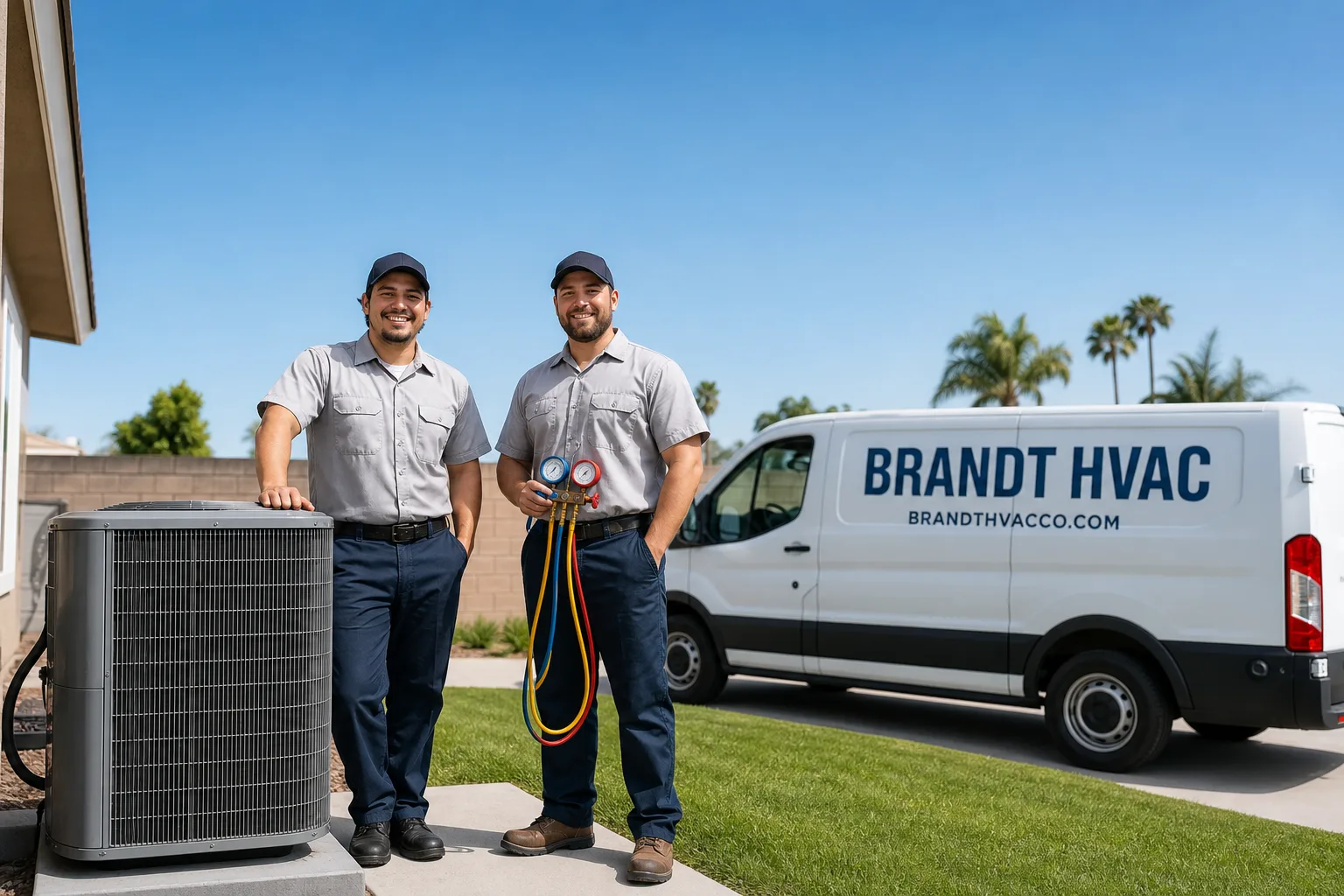
Seasonal tune-up and full diagnostic on your Carrier, Trane, or Goodman system - readings shown to you before any repair is proposed
Diagnosis first, numbers second - you approve the repair price before a single part goes in.
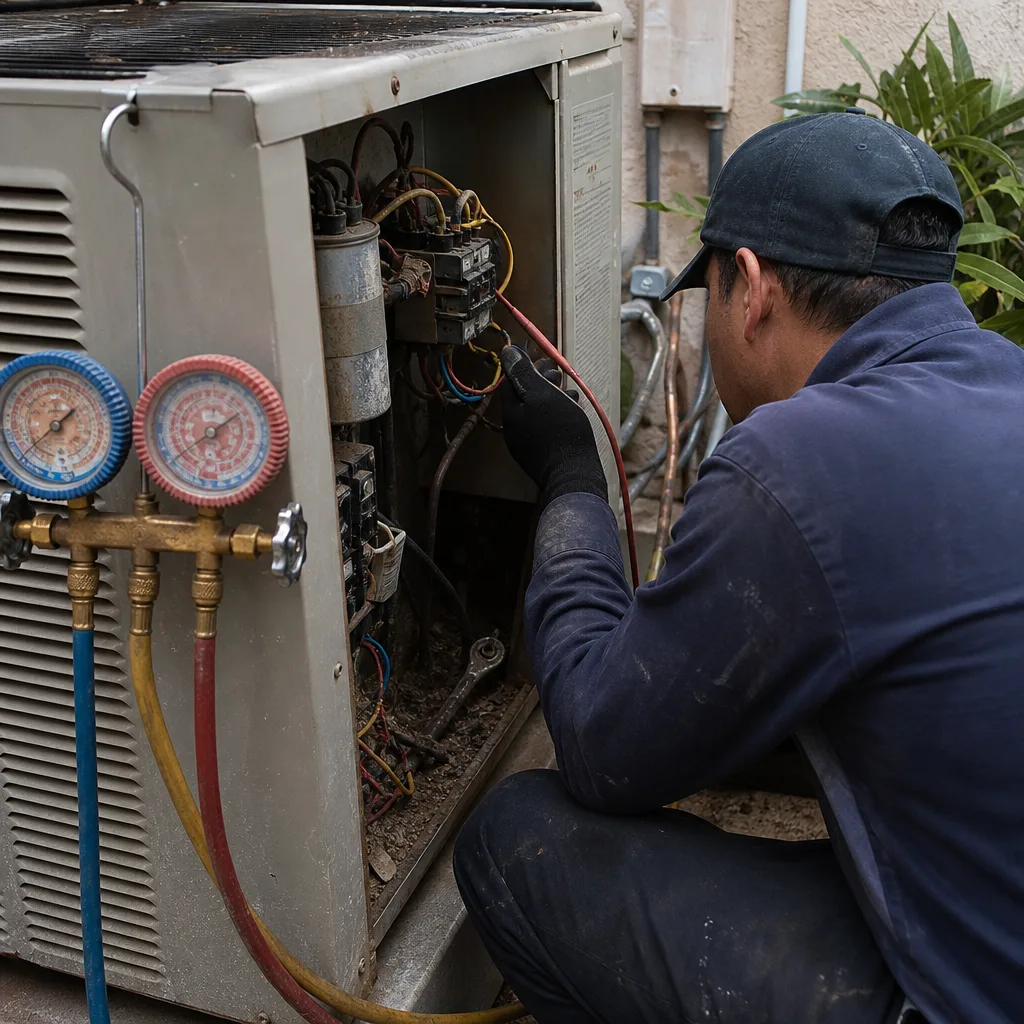 Before
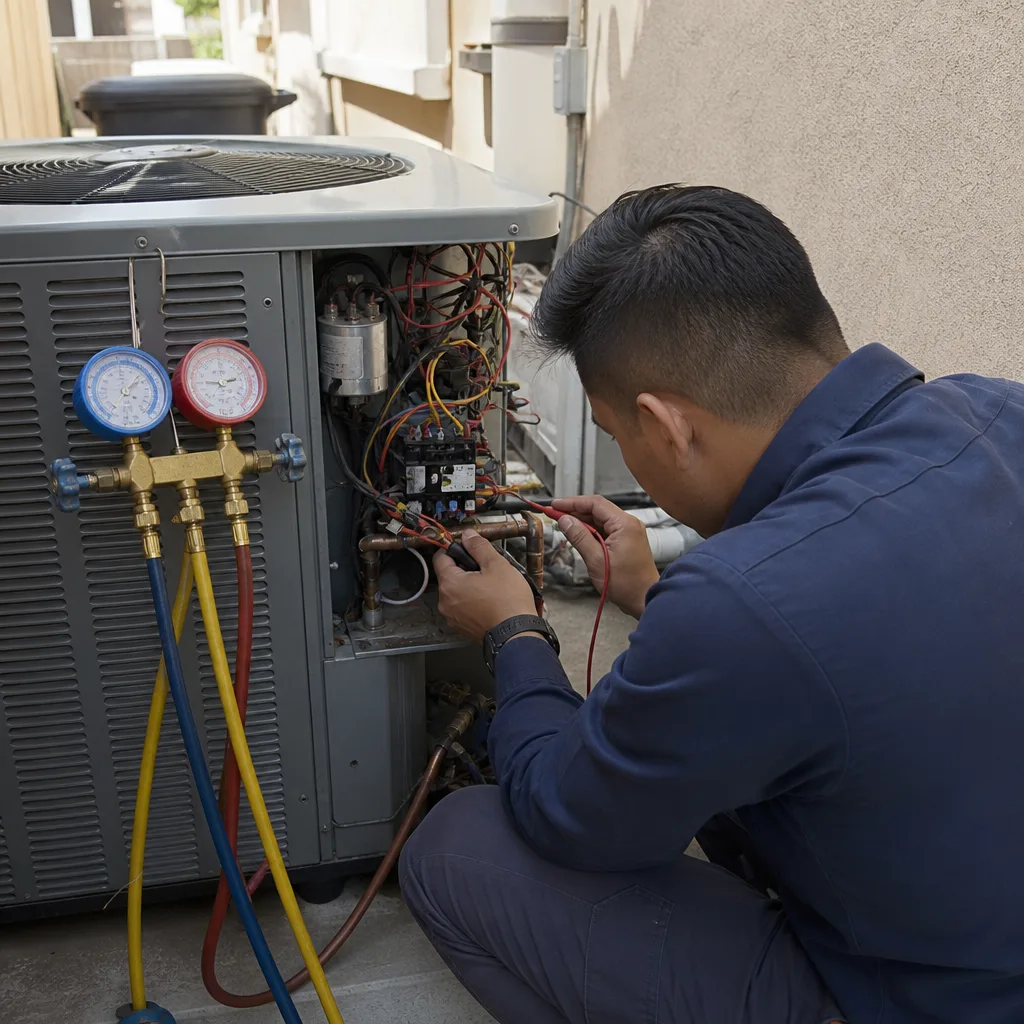 After
After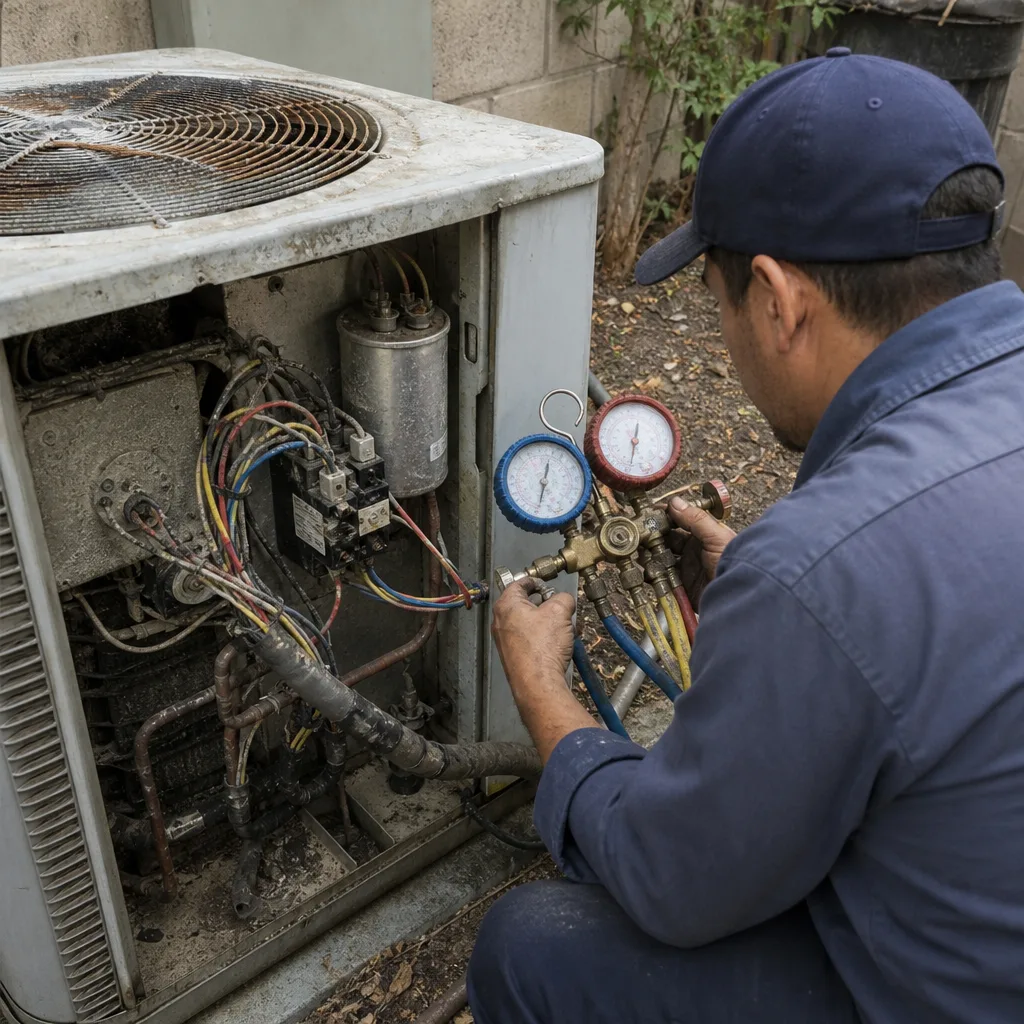 Before
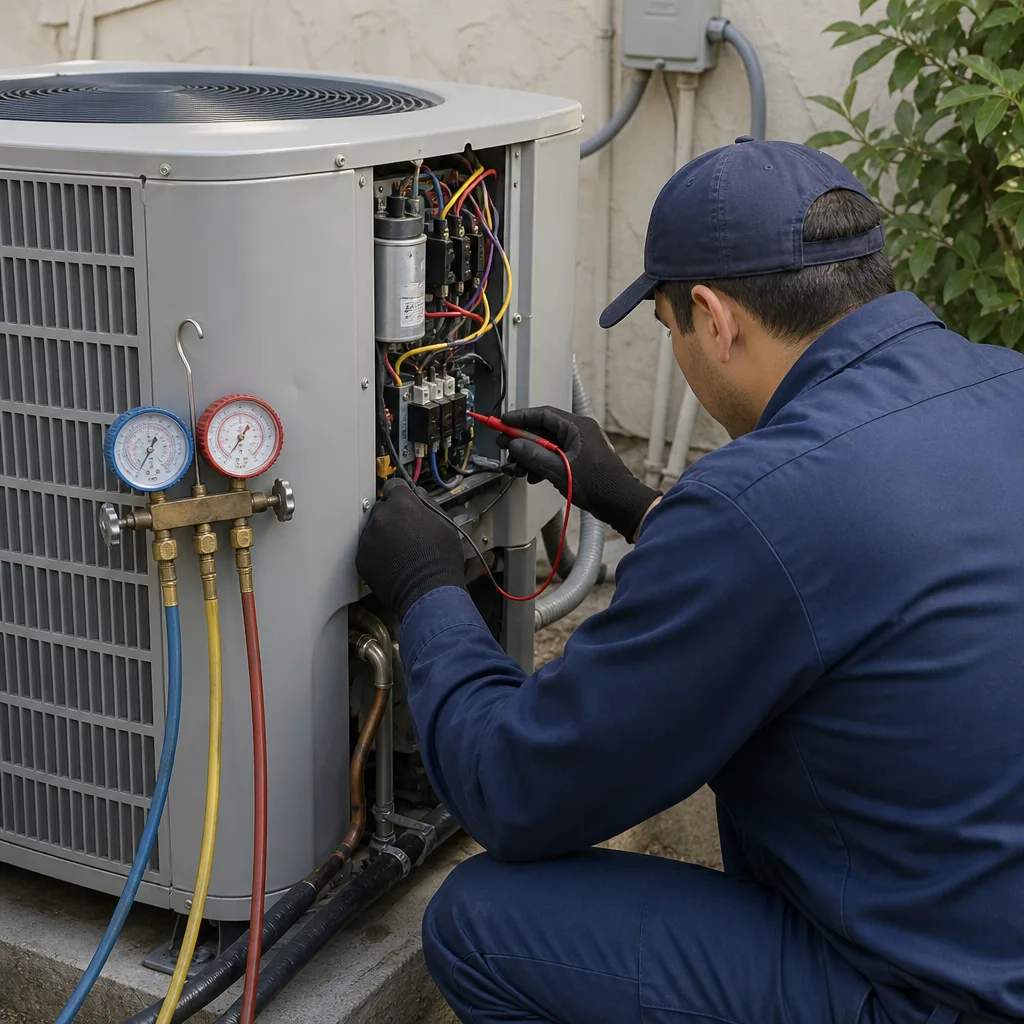 After
After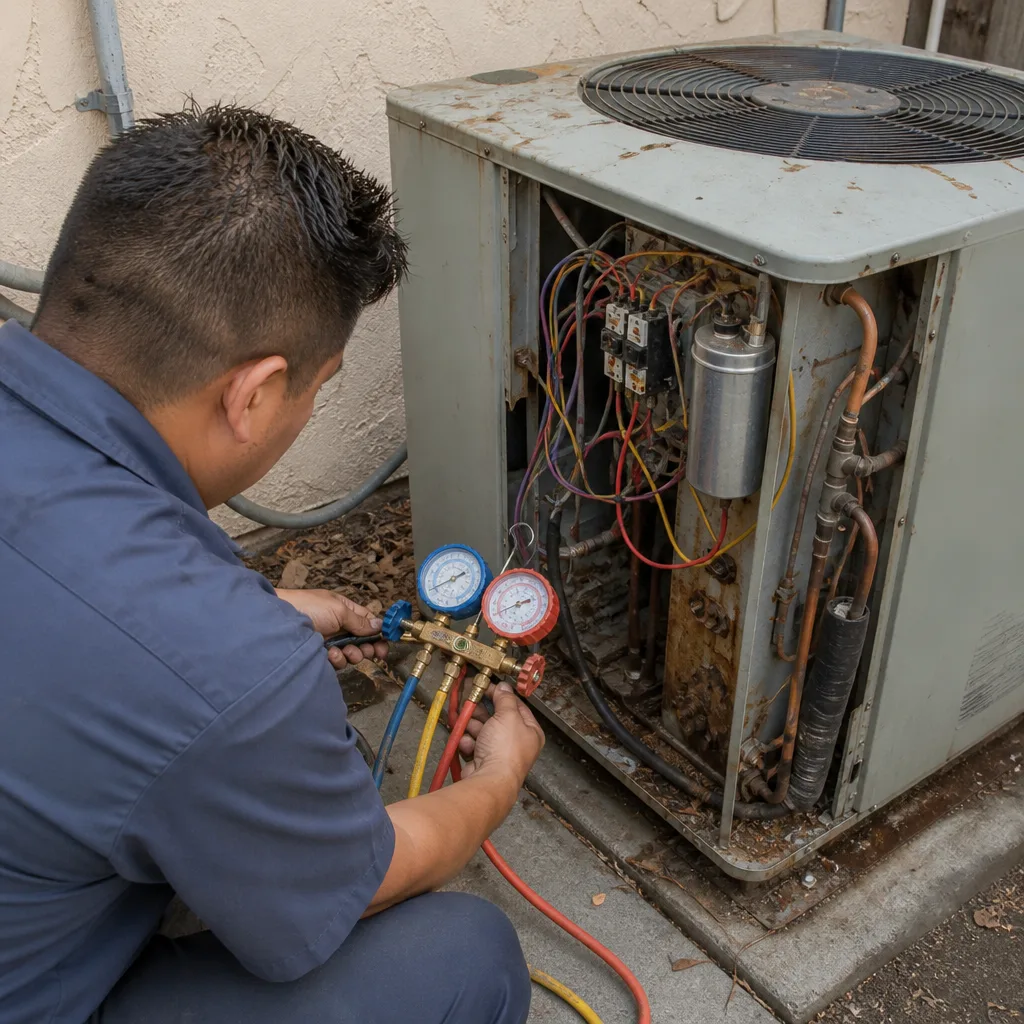 Before
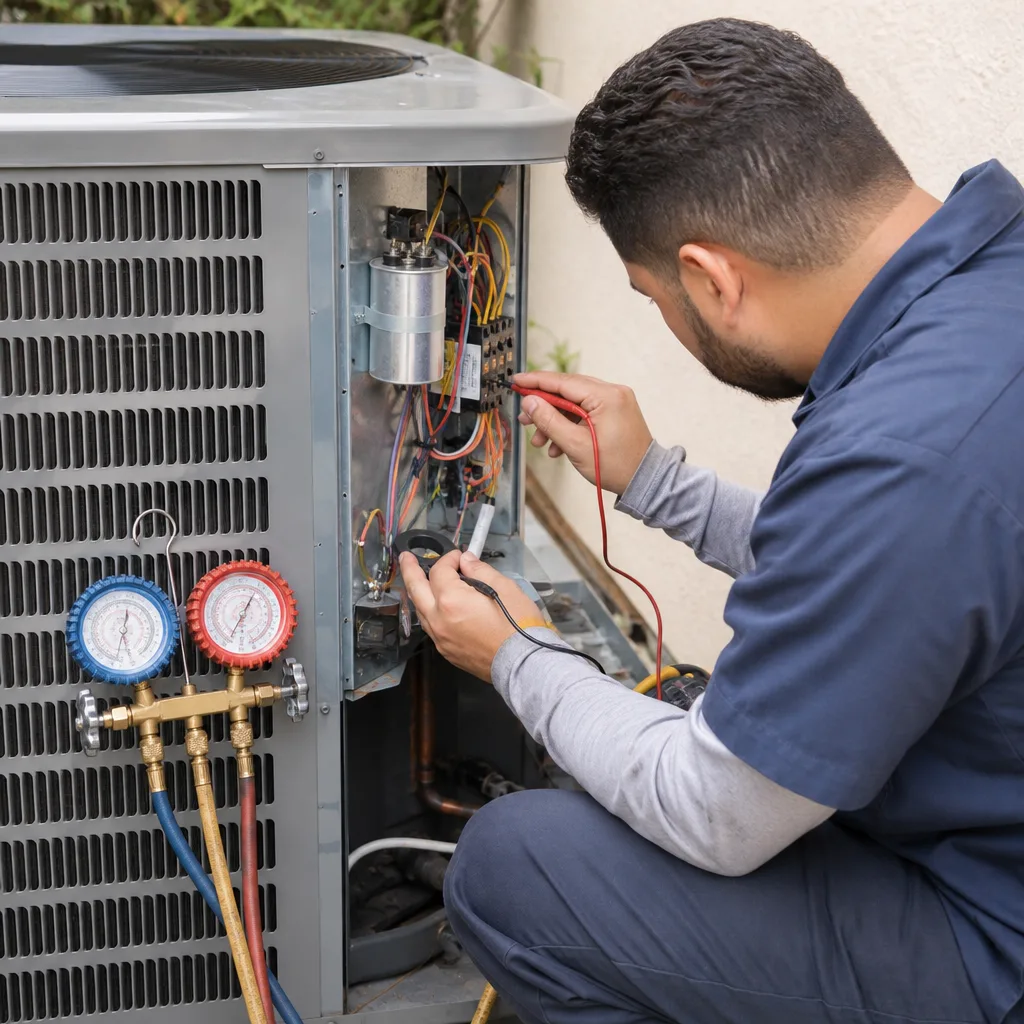 After
AfterWater Leaking Around the Furnace
Water pooling near your furnace almost always means one of three things: a blocked condensate drain, a cracked condensate pan, or a secondary heat exchanger problem on a high-efficiency unit. None of these are something you should ignore, and one of them – the heat exchanger – carries a genuine safety concern beyond the puddle you’re looking at right now.
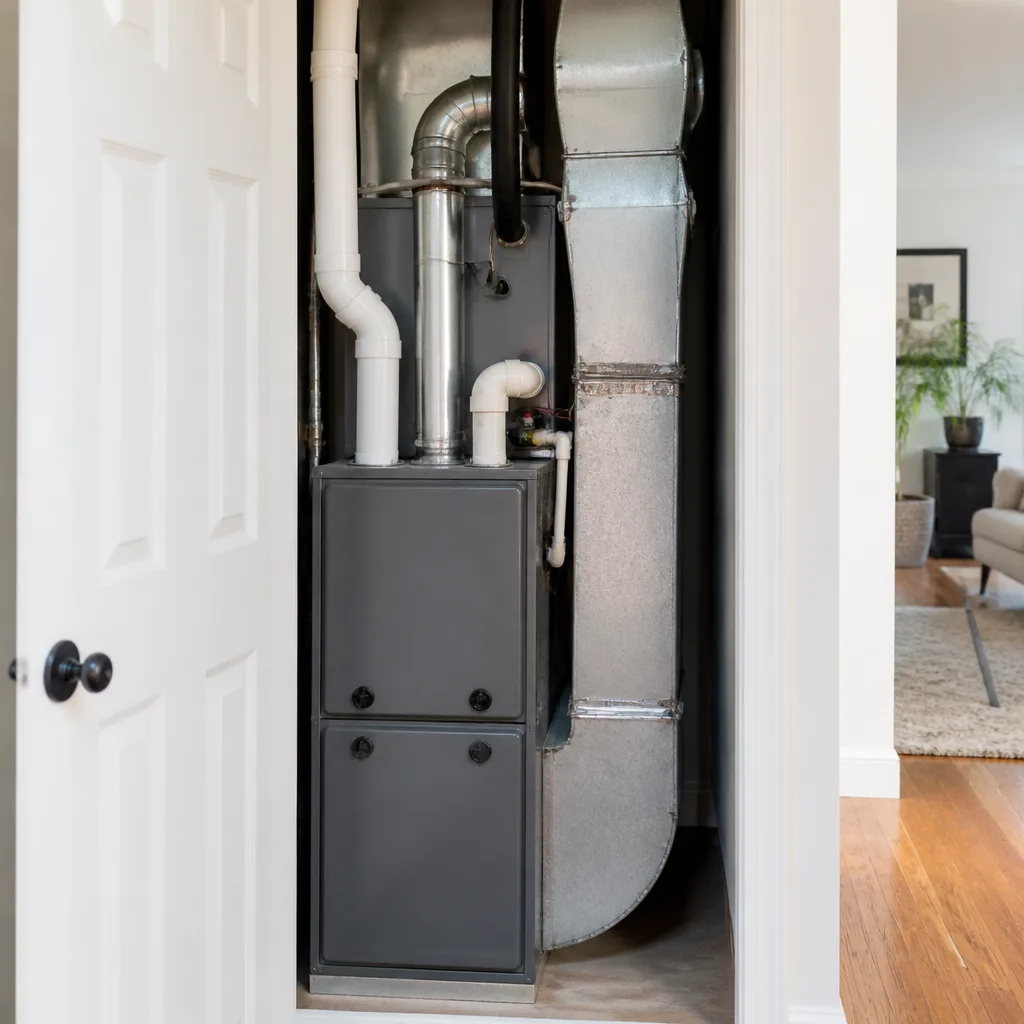
Here’s the plain version of what’s going on. High-efficiency furnaces (the kind rated 90% AFUE or higher) produce water as a byproduct of combustion. That water is supposed to flow out through a condensate drain line. When that line clogs, cracks, or the drain pan underneath fails, the water has nowhere to go but the floor. If your furnace is an older, standard-efficiency unit and you’re seeing water, the source is usually something else entirely – a humidifier mounted to the unit, a leaking flue pipe, or, in some cases, an AC coil drain that shares the same drain line and is backed up. A technician can tell within a few minutes which one it is, because the source and the smell of the water are different in each case.
Why It Happens
Clogged or Cracked Condensate Drain Line
This is the most common reason a high-efficiency furnace leaks. Over a heating season, algae, dust, and mineral deposits build up inside the small plastic condensate drain line until water backs up and overflows. You’ll usually see a slow, steady drip or a shallow puddle directly below the furnace’s white PVC drain tubing. The water is typically clear or faintly cloudy.
Failed Condensate Pan or Pump
Beneath the coil on a high-efficiency furnace sits a shallow plastic drain pan. It can crack from age, freeze damage, or simple wear – and when it does, water escapes before it ever reaches the drain line. Some setups also use a small condensate pump to move water to a drain. If that pump’s float switch fails or the pump itself stops working, water backs up and spills over the edge of the pan. If you see the puddle forming directly under the unit’s base, rather than along the drain line, the pan or pump is the likely culprit.
Secondary Heat Exchanger Crack
This one matters more than a wet floor. The secondary heat exchanger on a high-efficiency furnace extracts the last heat from combustion gases – which is how those systems reach 90%+ efficiency. If this component cracks, it can allow combustion byproducts, including carbon monoxide, to mix with the air being distributed through your home. Water leaking from inside the furnace cabinet, rather than from drain components on the outside, can indicate this failure. If your carbon monoxide detector has gone off, or anyone in the house has had unexplained headaches or dizziness, stop the furnace at the thermostat and call immediately. Do not try to inspect the heat exchanger yourself.
Humidifier or AC Coil Drain Overflow
Many furnaces have a whole-house humidifier mounted directly on the supply plenum. These have their own water feed line and drain, and when either fails, the water runs straight down to the furnace base and looks exactly like a furnace leak. Similarly, if your air handler shares a condensate drain line with the furnace and that line is partially blocked, warm months of AC use can cause enough back-pressure that water migrates backward toward the furnace. The giveaway here is timing: if the leak appeared or worsened when the humidifier was running, or when you recently switched from cooling to heating, one of these two sources is almost certainly responsible.
What to Do Right Now
- Turn the furnace off at the thermostat. Switch it from Heat to Off. This stops the water production at the source and gives you a dry look at what’s already accumulated.
- If you have a carbon monoxide detector and it has alarmed, leave the house now. Get everyone out, leave the door open, and call 911 before you call anyone else. A water leak alone does not mean CO is present, but a cracked secondary heat exchanger can produce both. Do not go back inside to investigate.
- Take photos before you clean up the water. Where exactly is it pooling? Is it coming from a drain tube, the base of the unit, or the area around the flue pipe? A photo of this takes thirty seconds and helps your technician arrive with the right parts.
- Do not attempt to open the furnace cabinet or touch the condensate pump wiring. The components inside a furnace cabinet carry live voltage, and the heat exchanger area is not safe to probe without proper equipment and training.
- Put down towels to protect flooring, but don’t use a shop vac on any standing water near the unit until power to the furnace is confirmed off at the breaker. Water and live electrical components in the same cabinet is a real hazard, not a theoretical one.
How We Fix It
When your local Brandt HVAC technician arrives, the first thing they do is a visual trace – following the water back to its actual source before touching anything. That trace usually takes ten to fifteen minutes and tells them whether this is a drain issue, a pan or pump failure, or something internal to the heat exchanger.
If it’s a condensate drain clog, they’ll clear the line, flush it, and inspect the trap. If the condensate pan is cracked, it gets replaced. If the pump has failed, it gets tested and swapped out. If the heat exchanger warrants a closer look, they’ll use the proper diagnostic tools – not a visual guess – before giving you a conclusion you can actually rely on.
This work falls under our Furnace Repair service. Before any part is ordered or any work starts, you’ll have a written price in hand. That’s not a policy we sometimes follow – it’s how every single Brandt HVAC job works, every time. If anything we repair fails during the guarantee period, we come back at no charge under the 365-Day Done Right Promise. Most drain and pan repairs are completed in a single visit.
Frequently Asked Questions
Most furnace leaks – a clogged condensate line, a cracked pan – are not immediately dangerous, but they should not sit for days. Standing water damages flooring, promotes mold, and can eventually reach electrical components inside the unit. The exception is a suspected heat exchanger crack: if anyone in the household is experiencing headaches, nausea, or dizziness, or if a CO detector has alarmed, that is an emergency. Get out and call 911 first, then call us at (984) 538-9003.
Your local Brandt HVAC team handles furnace repair calls, and our phones are staffed by a live person every hour of the day, every day of the week – nights, weekends, and holidays included. Call (984) 538-9003 and you’ll reach a person, not a voicemail. We’ll tell you exactly when a technician can be there and send you their name and photo before they arrive.
Yes, always. A written price is given before any work begins – no exceptions, no after-the-fact surprises. Your technician will diagnose the problem, tell you what they found in plain language, and hand you a written price. Work only starts when you say so.
Before your technician heads to your door, you’ll receive their name and a photo. When they arrive, they’ll be in a clean, marked uniform and will show a photo ID badge at the door. That’s the Threshold Verified standard – every Brandt HVAC technician is background-checked and identity-verified before they’re ever sent to a customer’s home. If anyone arrives who you were not told to expect, that visit is on us and we make it right, no argument.
Get It Fixed
Call (984) 538-9003 – a live person answers around the clock – or book online. Your local Brandt HVAC team will send a background-checked, uniformed technician with a written price in hand. No work starts until you’ve seen and agreed to the cost.
Written by Devin Marlowe, Owner and Lead HVAC Technician, Brandt HVAC – part of the Threshold Group family since 2003.
What Our Customers Say
"Knowing a vetted tech was coming into my house made a difference. Name and photo texted ahead, shoe covers, polite, and thorough with explaining."
- Tina M."Drain line was clogging and causing a leak by the air handler. They cleared it and installed a float switch so it can't flood again."
- Nora T."AC stopped cooling on a hot afternoon. Tech arrived with a badge, checked the capacitor, found it bad, and replaced it on the spot. House cooled down within the hour."
- Steve P.