
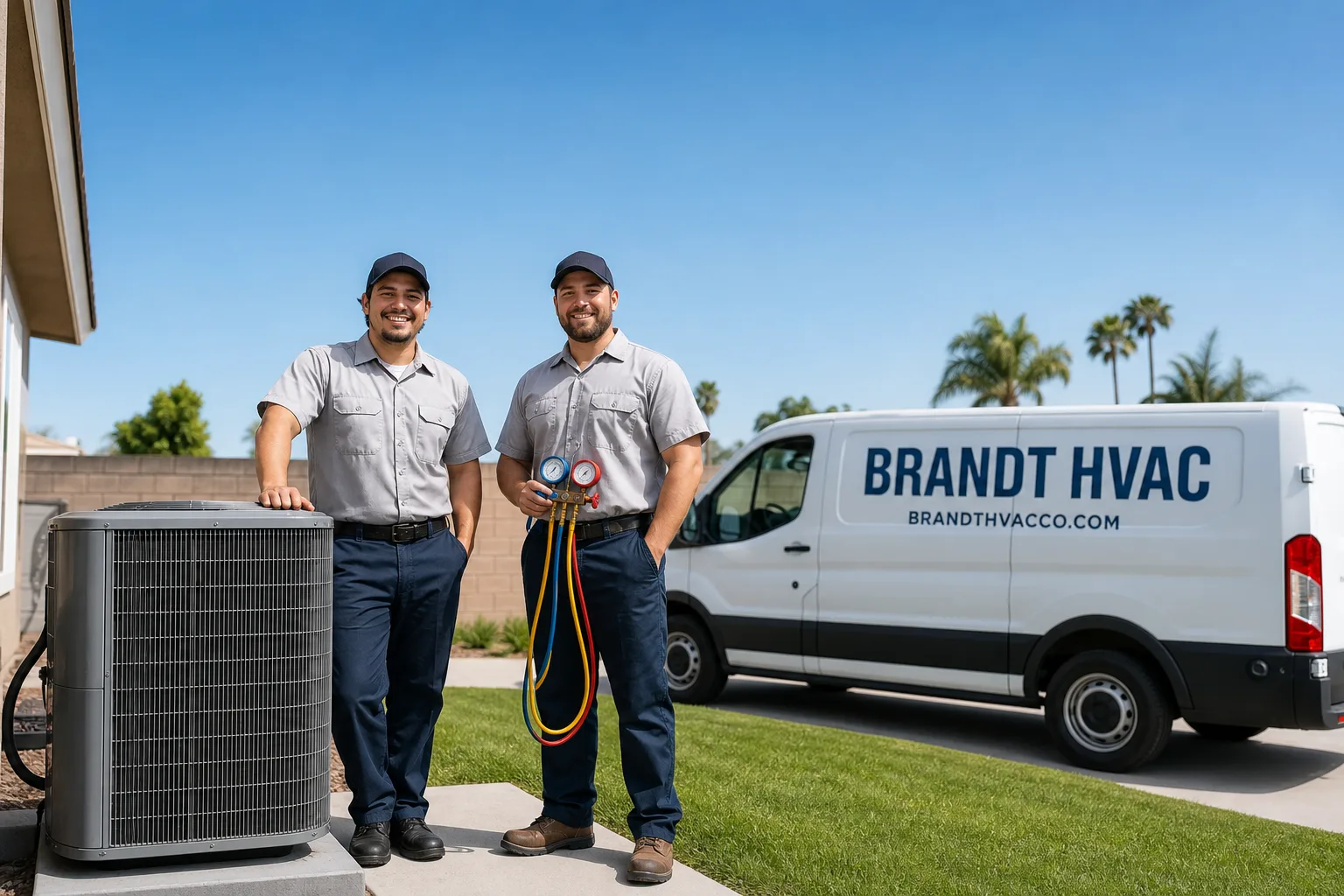
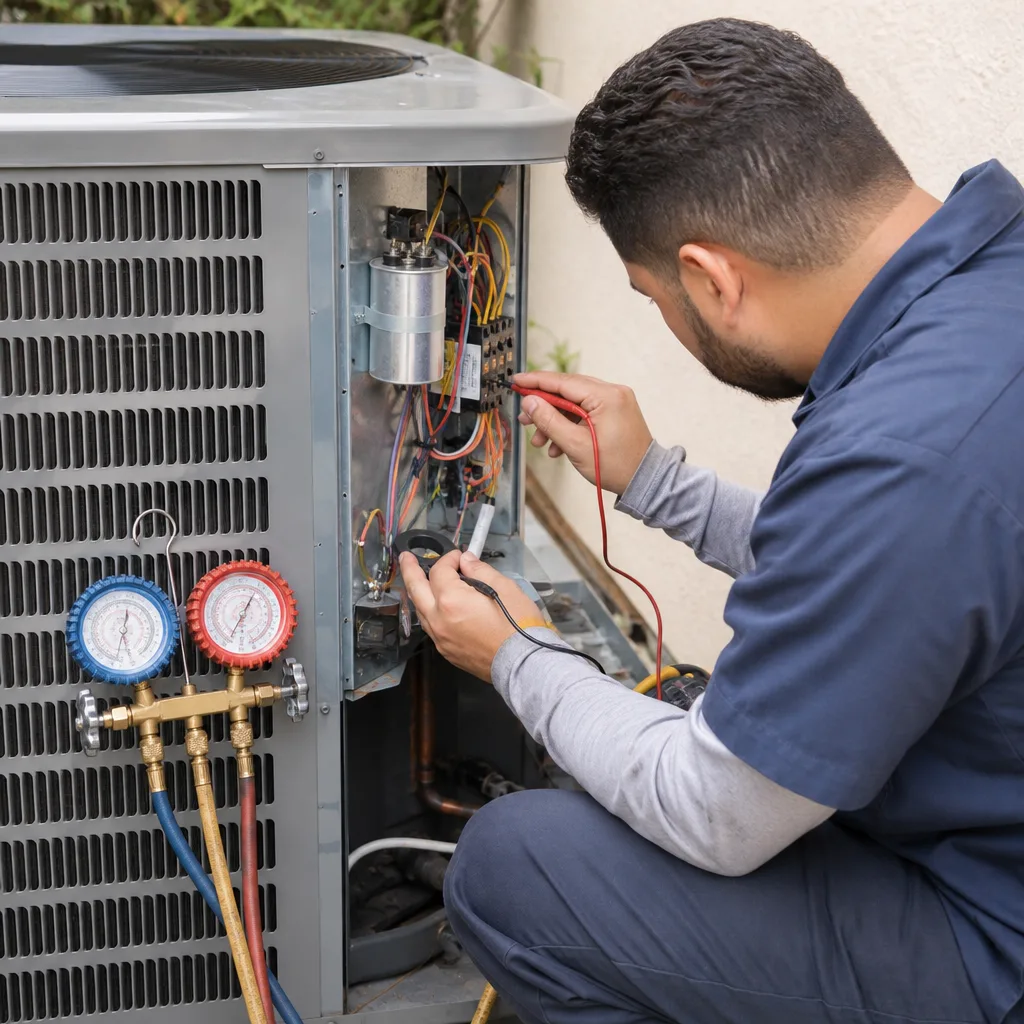
Seasonal tune-up and full diagnostic on your Carrier, Trane, or Goodman system - readings shown to you before any repair is proposed
Diagnosis first, numbers second - you approve the repair price before a single part goes in.
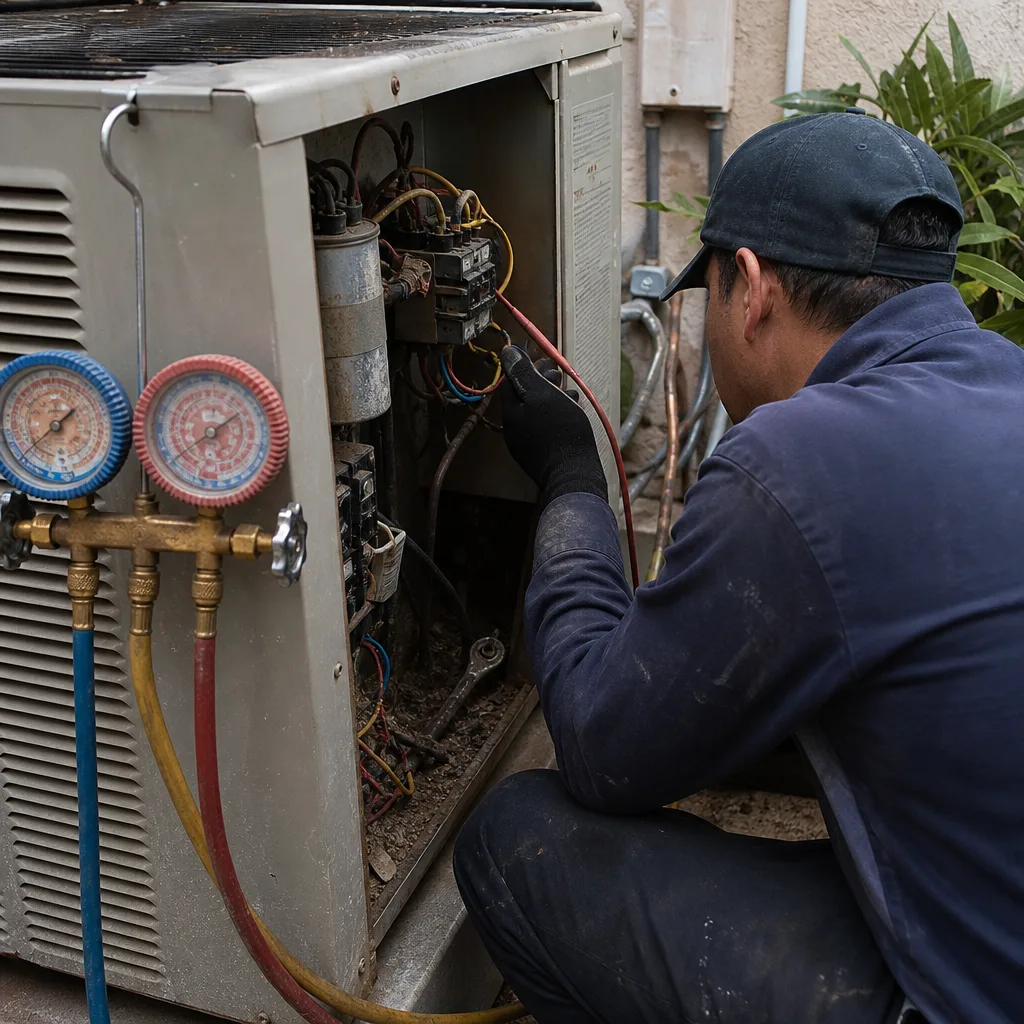 Before
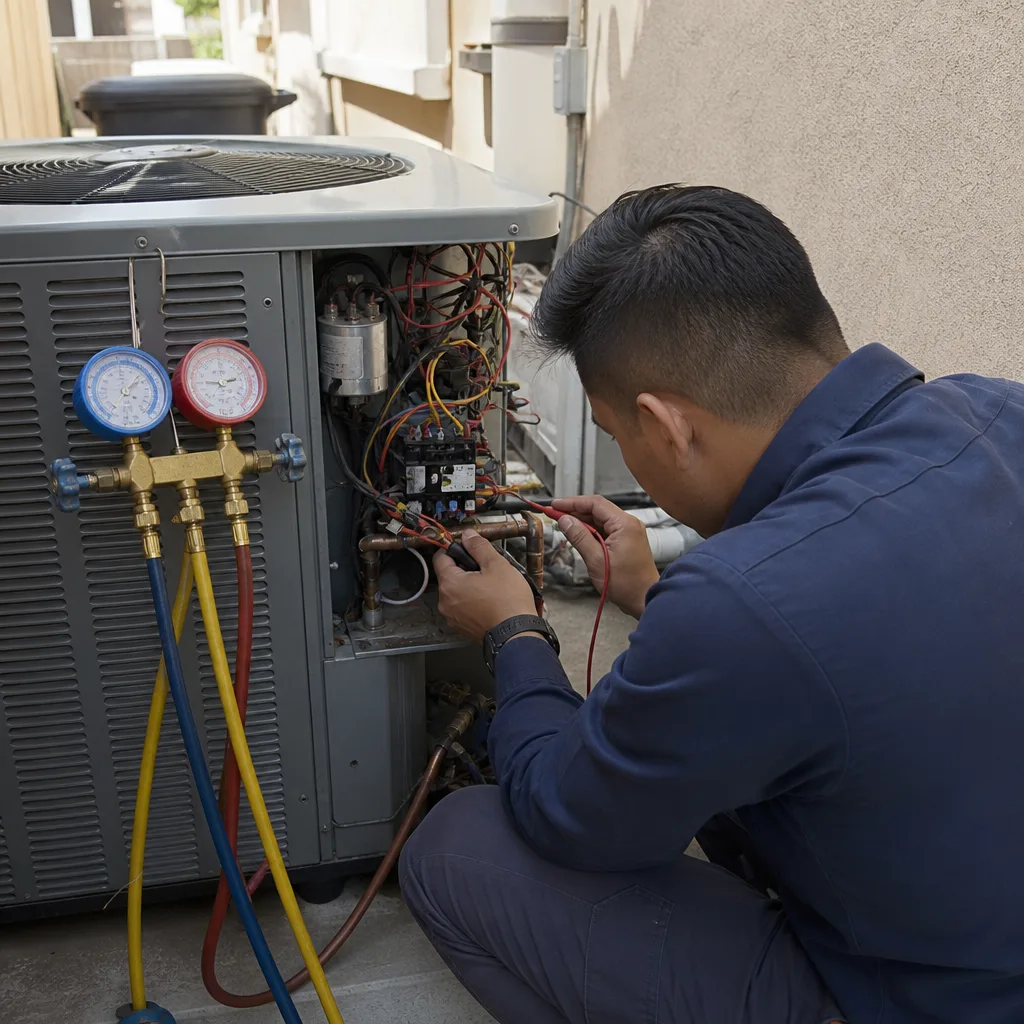 After
After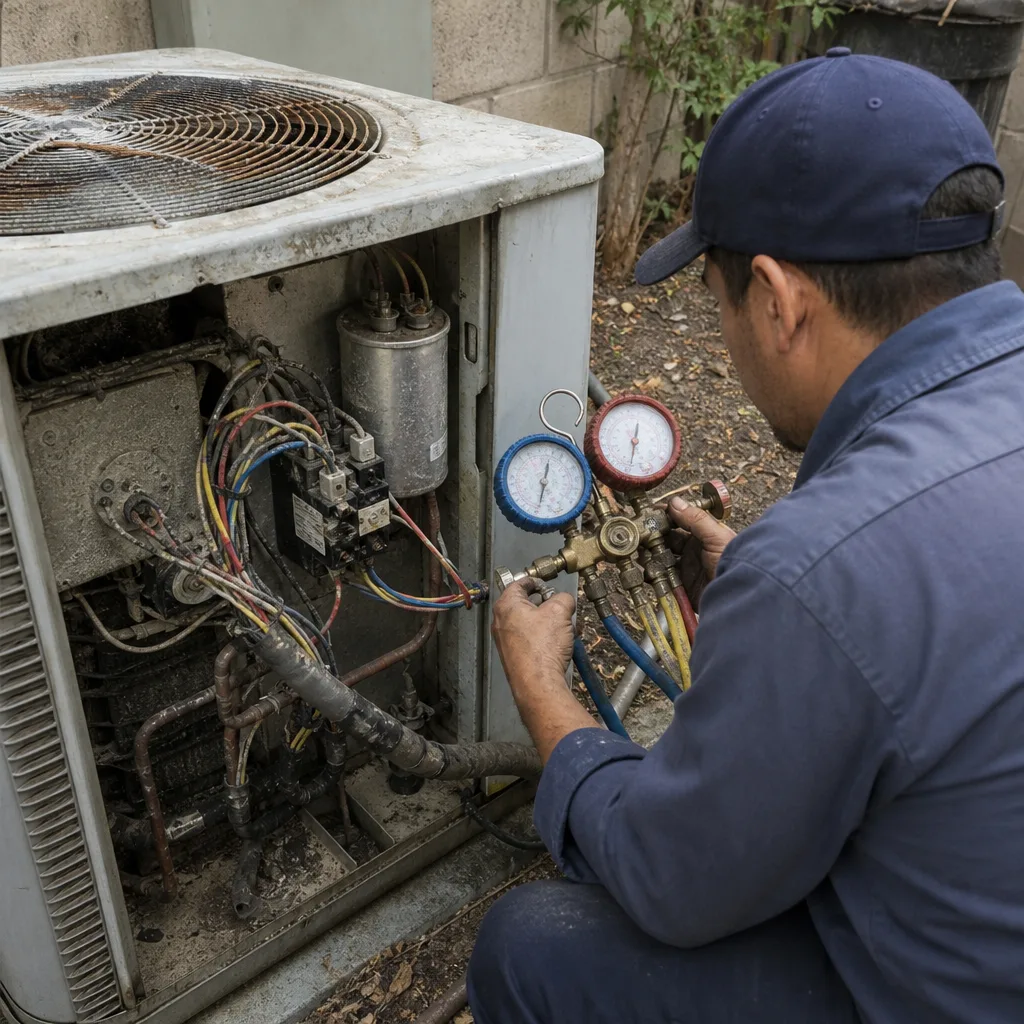 Before
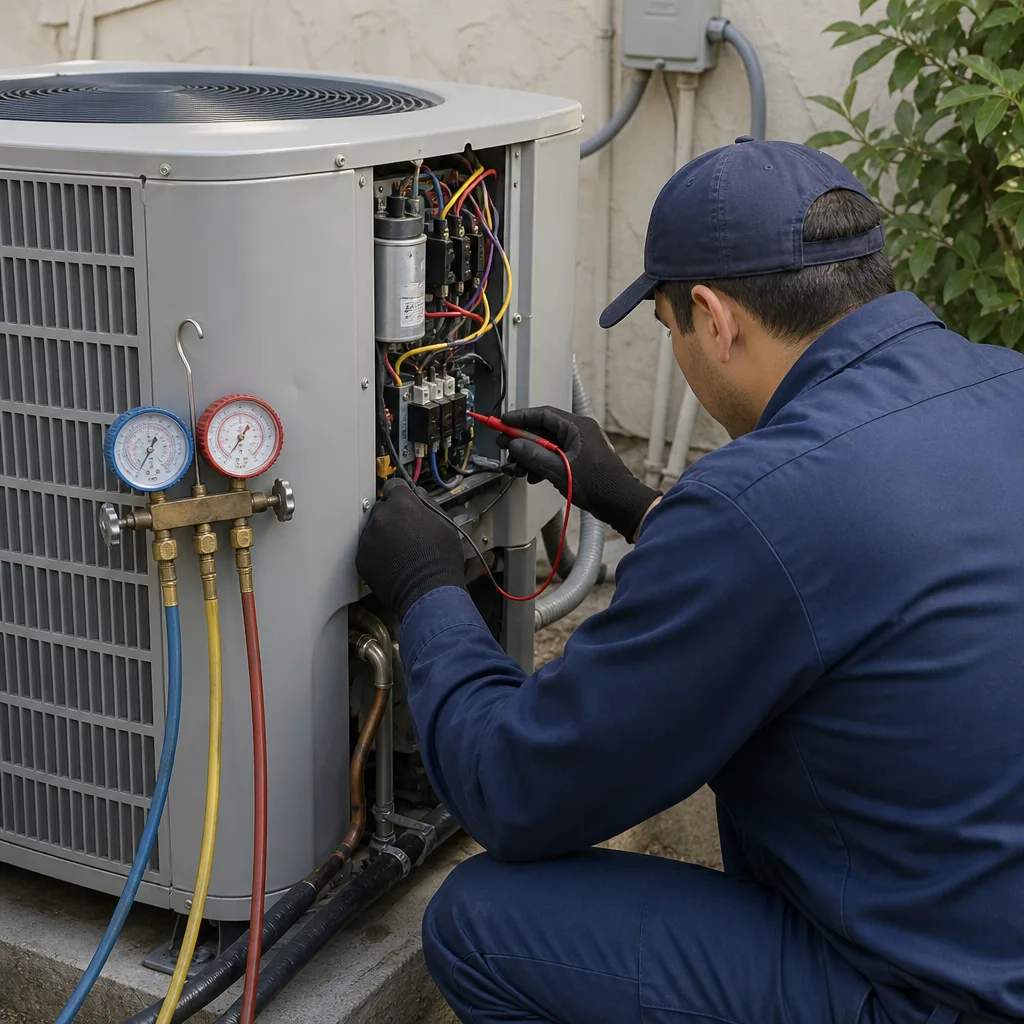 After
After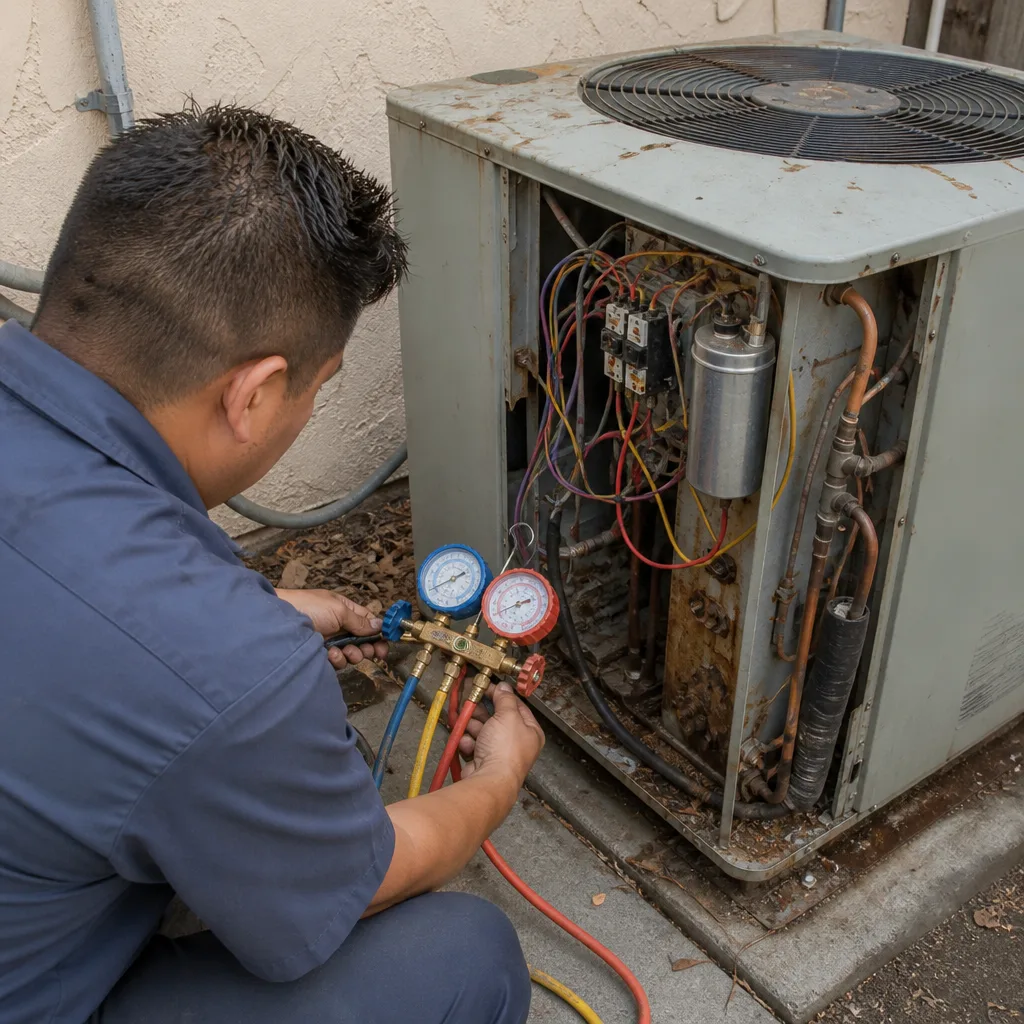 Before
 After
AfterThermostat Not Responding
A thermostat that won’t respond is almost always caused by one of four things: a dead battery or blown fuse, a tripped circuit breaker, wiring that has come loose at the thermostat base, or a failed thermostat that needs to be replaced. In most cases, the fix is straightforward and your system can be back up the same day a technician looks at it.
When you tap the screen and nothing happens, or you turn the dial and the system doesn’t react at all, it feels alarming. But the thermostat is just a messenger between you and your HVAC equipment, and the problem is usually in the messenger, not the whole system. That said, a dead thermostat can also be the first visible sign of a larger electrical problem, so it’s worth knowing what to look for before you assume it’s a simple fix.
Why It Happens
Dead Batteries or a Blown Thermostat Fuse
This is the most common reason a thermostat goes completely dark. Many thermostats, even ones hardwired to your system, use AA or AAA batteries to hold settings and power the display. When those batteries die, the screen goes blank and the unit stops sending signals. Some models have a small internal fuse that blows if there’s a brief power surge. If your display is dark and you’ve had no other electrical issues in the house, start here.
Tripped Circuit Breaker
Your HVAC system runs on a dedicated circuit, and a tripped breaker cuts power to the whole system, including the thermostat. If your thermostat is dark and you notice your air handler or furnace isn’t making any sound at all, check your main electrical panel for a breaker that has flipped to the middle or “off” position. A breaker that trips repeatedly after you reset it is telling you something more serious is going on, and that’s the point to call a technician rather than keep resetting it.
Loose or Corroded Wiring at the Base
Thermostats connect to your HVAC equipment through a bundle of low-voltage wires at the base plate behind the unit. Over time, a wire can loosen from its terminal, corrode, or get pulled free when someone bumps the thermostat during painting or cleaning. You’ll often see intermittent behavior before it quits entirely: the system kicks on sometimes but not others, or the display flickers. If the thermostat was recently removed and reinstalled, a loose wire is high on the list.
Failed Thermostat or Control Board
Thermostats do wear out. The average lifespan is around ten years, and older electromechanical models can fail sooner. If you’ve ruled out batteries, the breaker, and loose wiring, the thermostat itself may need to be replaced. In some cases, the problem isn’t the thermostat at all – it’s the control board inside the air handler or furnace, which sends and receives signals from the thermostat. When a control board fails, the thermostat looks like it’s working but the system never responds. A technician can test both in a single visit.
What to Do Right Now
- Check the batteries first. If your thermostat has a battery compartment (usually on the side or back of the unit), swap in fresh batteries. Even if the display seems fine, weak batteries can cause unresponsive behavior.
- Look at your circuit breaker panel. Find the breaker labeled for your HVAC, air handler, or furnace. If it’s tripped, reset it once. If it trips again immediately or within a few minutes, stop resetting it and call a technician – a repeatedly tripping breaker can indicate a wiring fault or electrical problem that needs a professional diagnosis.
- Check that your system switch is in the right position. Some thermostats have a physical switch for Heat, Cool, and Off. It’s easy to bump this to Off, especially on older units. Confirm the fan switch is set to Auto, not On, which can make it seem like the thermostat isn’t working even when it is.
- Take a photo of the thermostat display and the wiring base before touching anything. If you remove the thermostat face to look at wiring, photograph the wires and their terminal labels first. This saves real time when a technician arrives.
- Do not attempt to trace, splice, or reconnect wiring yourself. Low-voltage thermostat wiring is generally safe to look at, but it connects to a transformer and to your furnace or air handler’s control board. If there’s any sign of burning, scorching, or melted insulation near the base or at the air handler, stop and call us. That’s not a thermostat problem – it’s an electrical problem, and it needs a trained technician.
How We Fix It
When your local Brandt HVAC team arrives, the technician starts by testing the thermostat’s power supply, checking the battery circuit, the low-voltage transformer, and the breaker. From there, they’ll test the signal path between the thermostat and the air handler or furnace control board to find exactly where the communication is breaking down.
Before any work begins, you’ll receive a written price for the repair. That’s not a formality here – it’s how every Brandt HVAC job works, on every call, without exception. You see the number, you agree to it, and then work starts. Nothing happens before that.
Most thermostat repairs or replacements take one to two hours. If the fix is a new thermostat, the technician carries common replacement models and can usually complete the swap the same visit. Every repair is backed by the 365-Day Done Right Promise: if the repair doesn’t hold, we come back and make it right at no additional charge. That’s in writing, too.
This falls under our AC Repair and Furnace Repair services, depending on which side of the system is affected.
Frequently Asked Questions
In most cases, no – a dead thermostat is an inconvenience, not a safety emergency. However, if you see any scorching, smell burning plastic, or notice the breaker tripping repeatedly, those are signs of an electrical problem that should be treated as urgent. If your furnace is involved and you smell gas at any point, leave the house and call your gas utility immediately. For everything else, call (984) 538-9003 and a live person will help you figure out how quickly it needs attention.
It depends on the weather and whether your system is completely down. If it’s extremely hot or cold and your HVAC isn’t running at all because of the thermostat, it shouldn’t wait – temperature extremes are a real health risk, especially for older adults and young children. If conditions are mild and you have some flexibility, it’s still worth calling sooner rather than later because a failed thermostat can sometimes be the first sign of a larger control-board issue. Call (984) 538-9003 and we’ll help you decide.
Call (984) 538-9003 and a live person will answer – not a voicemail, not a callback queue, not an automated menu. Your local Brandt HVAC team handles repair calls and will get a technician scheduled as quickly as possible. Phones are staffed 24 hours a day, seven days a week, including nights, weekends, and holidays.
When the display works but the system doesn’t respond, the problem is often deeper in the system rather than the thermostat itself. The most likely culprits are a failed control board inside the furnace or air handler, a safety switch that’s been tripped (like a float switch in a condensate pan), or a wiring break between the thermostat and the equipment. A technician can trace the signal through the system and find the break. It’s a diagnostic visit, not a guessing game, and you’ll have a written price before anything is replaced.
Get It Fixed
Call (984) 538-9003 – a live person answers 24 hours a day, seven days a week. Your local Brandt HVAC team will schedule a visit, send you the technician’s name and photo before arrival, and show up with a written price before any work begins. Book online or call now.
Written by Devin Marlowe, Owner and Lead HVAC Technician at Brandt HVAC, serving homeowners nationwide since 2003.
What Our Customers Say
"AC stopped cooling on a hot afternoon. Tech arrived with a badge, checked the capacitor, found it bad, and replaced it on the spot. House cooled down within the hour."
- Steve P."Furnace ignitor went out on a cold morning. Part was on the truck, installed in thirty minutes."
- Alvin K."Annual tune-up on the furnace. He cleaned the burners, tested the heat exchanger, and told me what was fine and what to watch. No scare tactics."
- Lorraine E.