
Seasonal tune-up and full diagnostic on your Carrier, Trane, or Goodman system - readings shown to you before any repair is proposed
Diagnosis first, numbers second - you approve the repair price before a single part goes in.
 Before
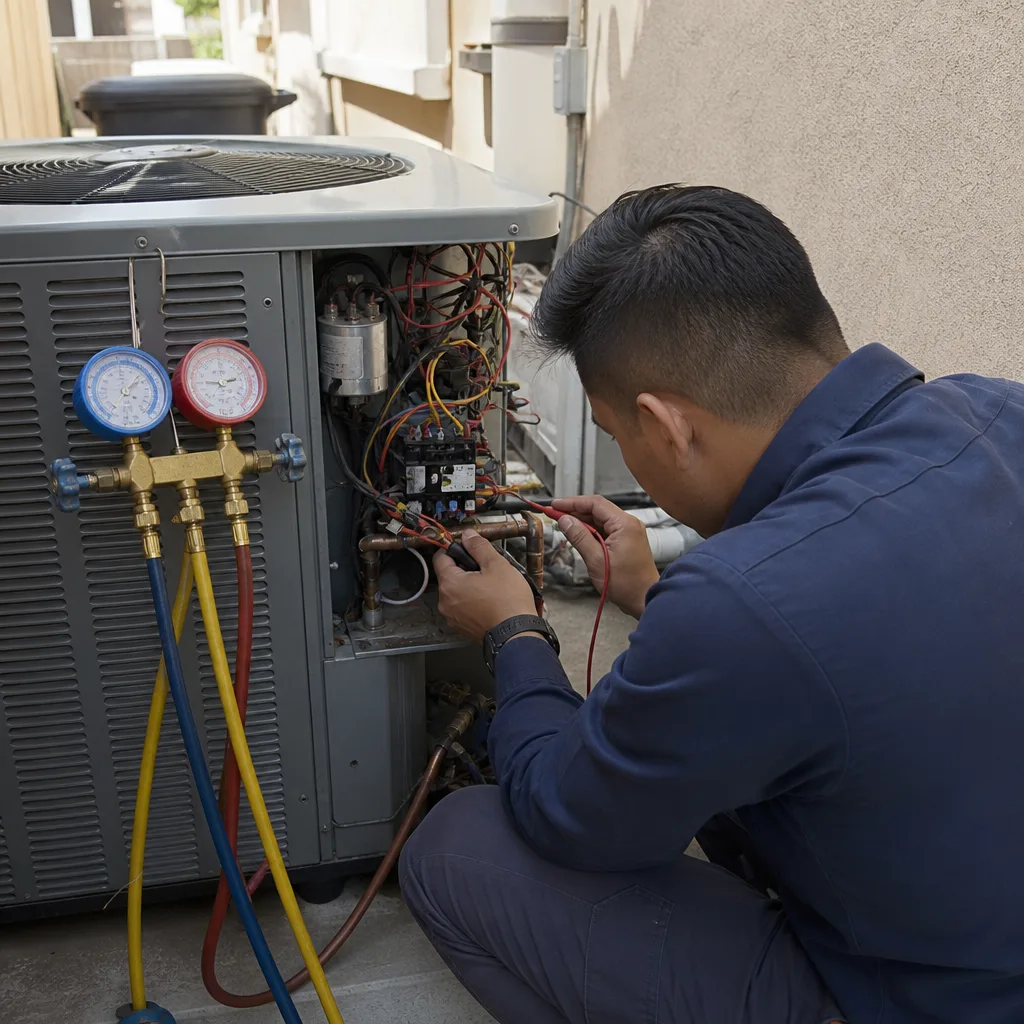 After
After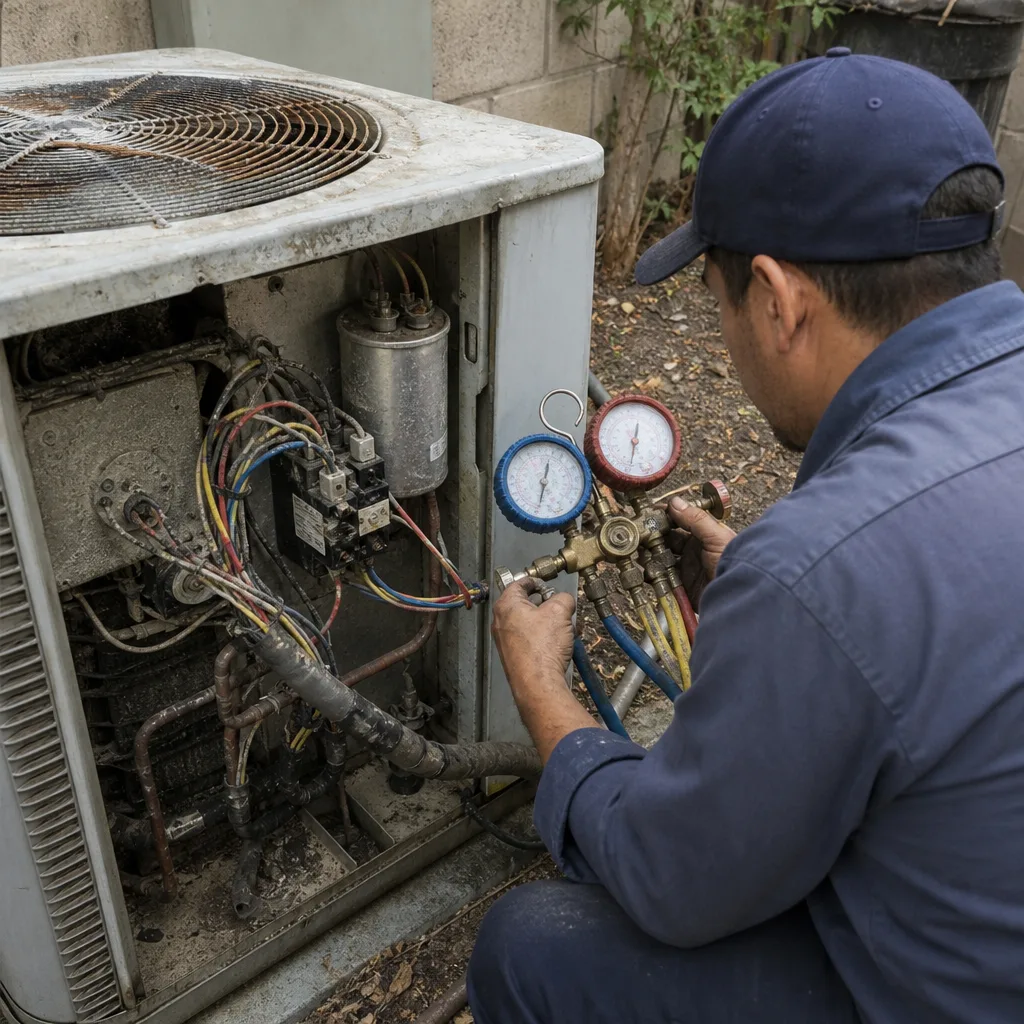 Before
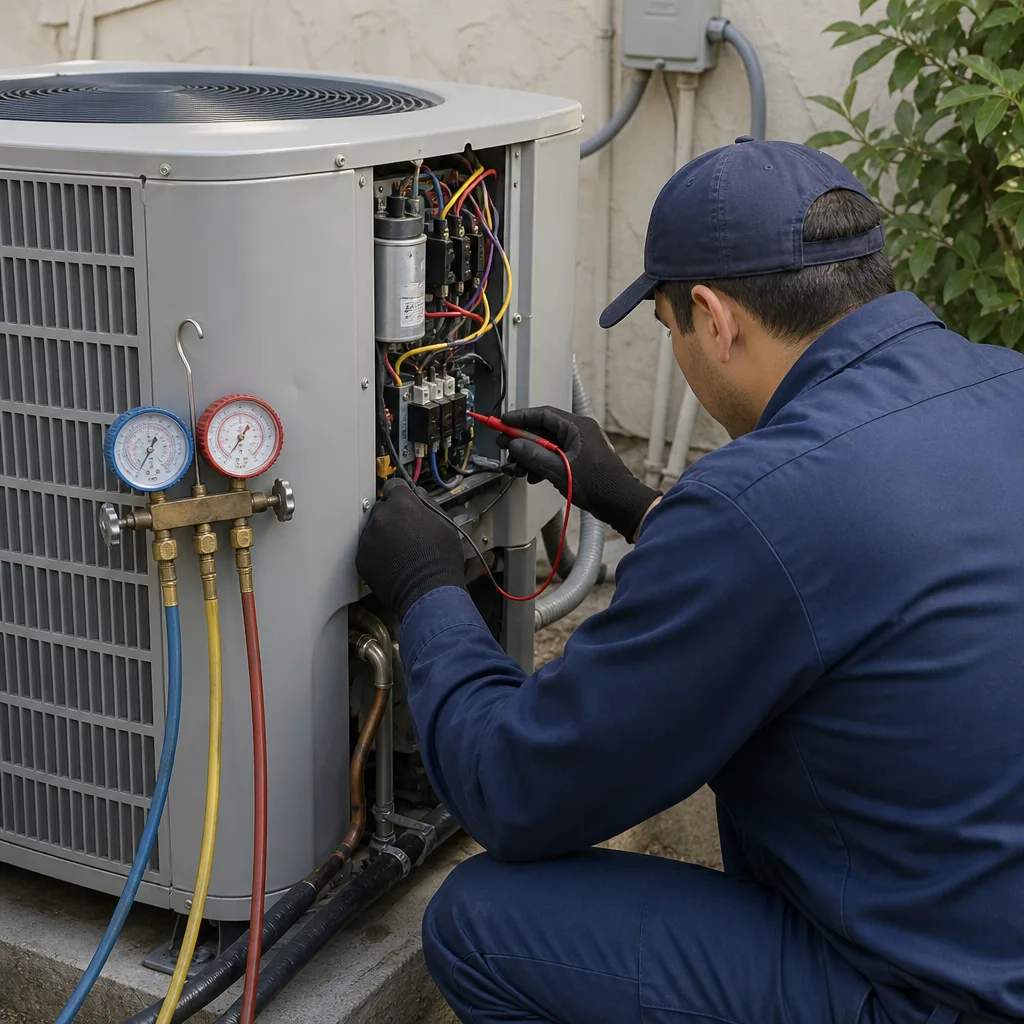 After
After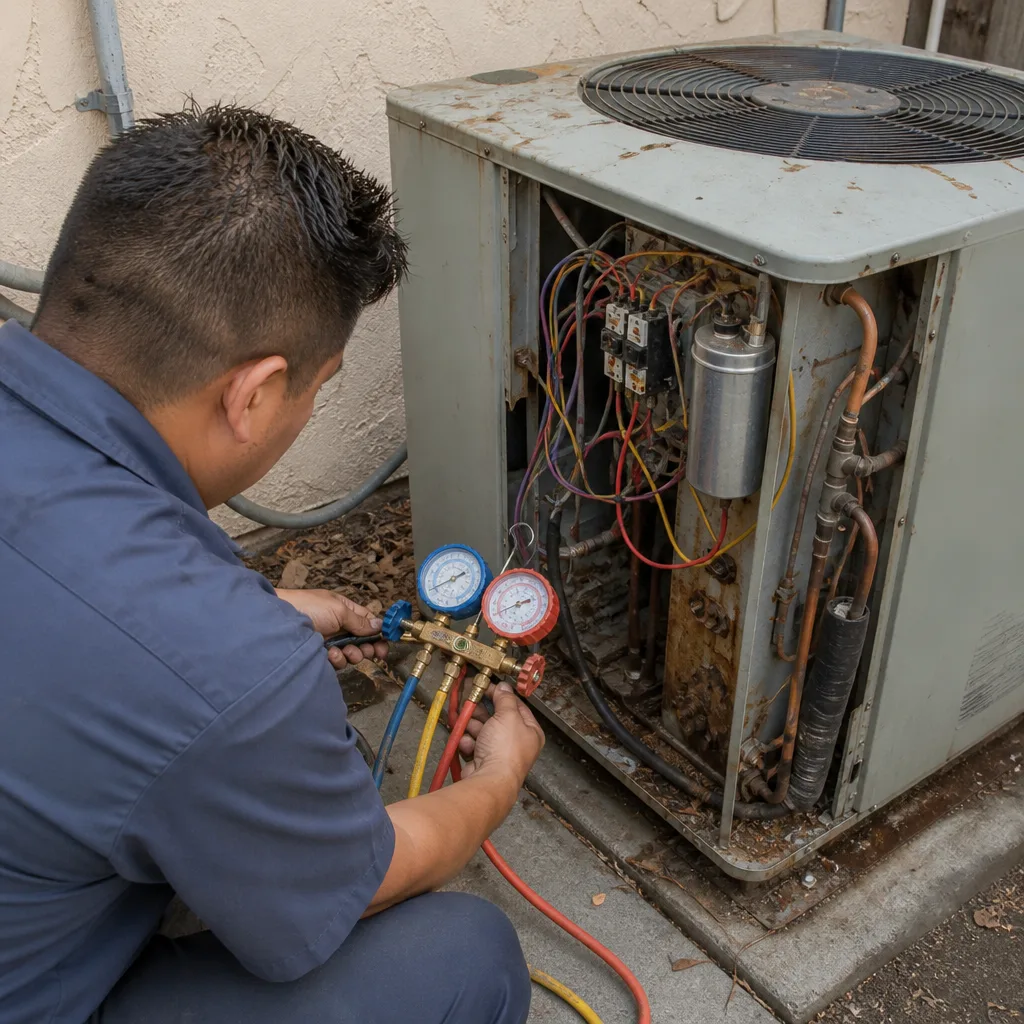 Before
 After
AfterAmerican Standard Capacitor Replacement: The Los Angeles Owner’s Guide
We replace American Standard capacitors throughout Los Angeles for $175 – $320 installed, and we carry the common dual-run and start capacitors on our trucks for same-day service in most neighborhoods. The capacitor is the small cylinder inside your condenser that gives the compressor and fan motor the electrical jolt they need to start. When it fails, you’ll usually hear a hum from the outdoor unit with no fan spinning, or the compressor will try to start and shut off within seconds.
In Los Angeles, capacitors fail faster than almost anywhere else in the country. The heat in the San Fernando Valley, the salt air near places like Playa del Rey, and the constant cycling during our long cooling season all shorten capacitor life. Devin Marlowe, our owner, grew up in Reseda and has replaced enough swollen, leaking capacitors in mid-century ranch homes across the Valley to know exactly what a Los Angeles summer does to these parts. Tell me what it is, tell me what it costs, tell me it holds – that’s the whole job.
Which American Standard Models This Applies To
American Standard uses capacitors across its Silver, Gold, and Platinum series condensers, including the Silver 14, Gold 16, and Platinum 20 lines, as well as older Allegiance and Heritage models that are still common in Los Angeles homes built in the 1980s and 1990s. The part itself isn’t proprietary in the way a control board is. American Standard sources capacitors from OEM suppliers, and the critical things are matching the microfarad (µF) rating and voltage, not the brand stamped on the label.
Here’s the compatibility gotcha most people don’t know: American Standard dual-run capacitors often have slightly different µF ratings than what generic HVAC supply houses stock. A common American Standard condenser might call for a 45/5 µF dual-run capacitor, while the generic replacement on the shelf is a 40/5 or 50/5. Close doesn’t work here. A mismatch stresses the compressor and shortens its life. We verify the exact rating printed on your old capacitor, or cross-reference the condenser’s model plate, before we install anything.
For most Los Angeles homeowners, a quality aftermarket capacitor from a reputable manufacturer like AmRad or Titan HD is actually a better value than the OEM part. The OEM American Standard capacitor is fine, but the aftermarket options often carry a 5-year manufacturer warranty versus 1 year for OEM, and they cost about the same. We stock both, and we’ll show you the ratings side by side before you decide.
We also keep American Standard-compatible parts for Carrier, Trane, and Lennox on the truck, since Los Angeles neighborhoods mix brands heavily and we’d rather be ready for whatever’s behind the gate.
Signs Your American Standard Capacitor Replacement Is Failing
- The outdoor unit hums but the fan doesn’t spin. This is the classic dead capacitor symptom. The motor is getting power but can’t overcome the starting torque without the capacitor’s stored charge. You’re hearing a locked, buzzing compressor or fan motor.
- The compressor starts and stops within a few seconds, over and over. That’s called short-cycling, and for a capacitor it means the compressor is trying to start on residual charge that isn’t enough to keep it running. Left alone, this overheats the compressor windings and can turn a $200 capacitor job into a $3,000+ compressor replacement.
- The AC is running but the air from your vents is barely cool. A weak capacitor can still start the compressor but not at full speed, which means the system can’t fully pressurize the refrigerant. You’re getting partial cooling while the system works harder and pulls more electricity.
- Your energy bill jumped in a month with normal weather. A failing capacitor forces the compressor and fan motor to draw higher amperage to do the same job. In a Los Angeles August, that difference can be $80 – $120 on a single bill.
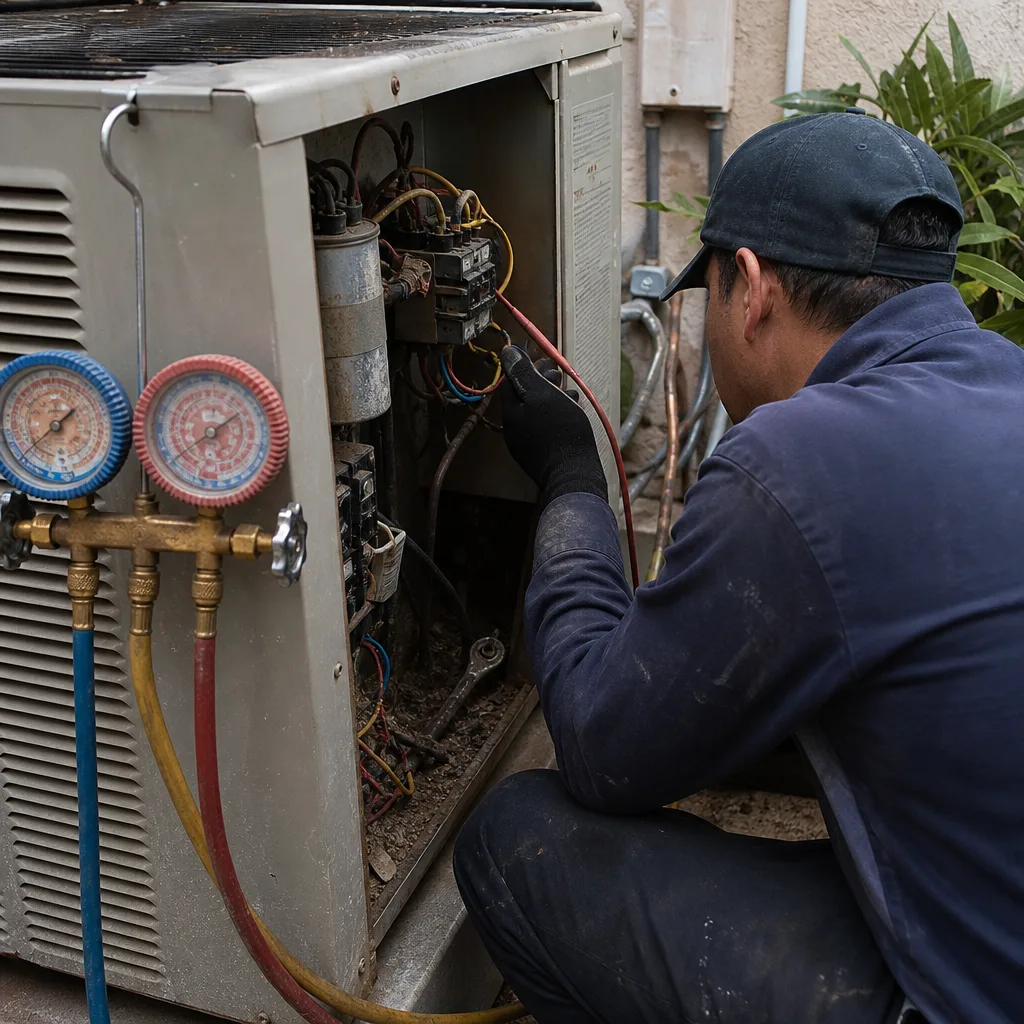
- You see a swollen or leaking capacitor. If you’re comfortable opening the condenser’s electrical panel (with power off at the breaker), a capacitor that looks like a bulging soda can or has oily residue around the terminals has already failed internally. The bulge is the internal pressure from the dielectric fluid breaking down.
Replacement Cost & What’s Included
For American Standard capacitor replacement in Los Angeles, you should expect to pay $175 – $320 installed, parts and labor included. The range depends on whether you need a single-run, dual-run, or start capacitor, and whether your condenser uses a standard or turbo-style capacitor. Most American Standard residential condensers take a dual-run capacitor, which lands in the $210 – $280 range in our experience.
| Capacitor Type | Installed Price (Parts + Labor) |
|---|---|
| Single-run capacitor (fan or compressor only) | $175 – $240 |
| Dual-run capacitor (most common) | $210 – $280 |
| Start capacitor with relay | $240 – $320 |
Every capacitor replacement from Brandt HVAC includes a written price before any work starts, no exceptions. The repair is covered by our 365-Day Done Right Promise, which means if the part fails within one year, we return and replace it at no charge. The capacitor itself typically carries a manufacturer warranty of 1 to 5 years depending on which part we install, and we’ll register that warranty for you.
DIY or Call Us?
Here’s the honest split. What you can safely check: turn the breaker off, take the condenser panel off, and look at the capacitor. If it’s swollen, leaking, or the terminals show burn marks, you’ve found the problem, and a professional swap is the next step. What’s not safe: replacing it yourself. Capacitors store electrical charge even after power is cut, and the terminals can carry a jolt that can stop your heart. The compressor and fan terminals inside the condenser are also live when the breaker is on. This is one part where the risk isn’t worth saving the $100 difference between a DIY part and a professional install.
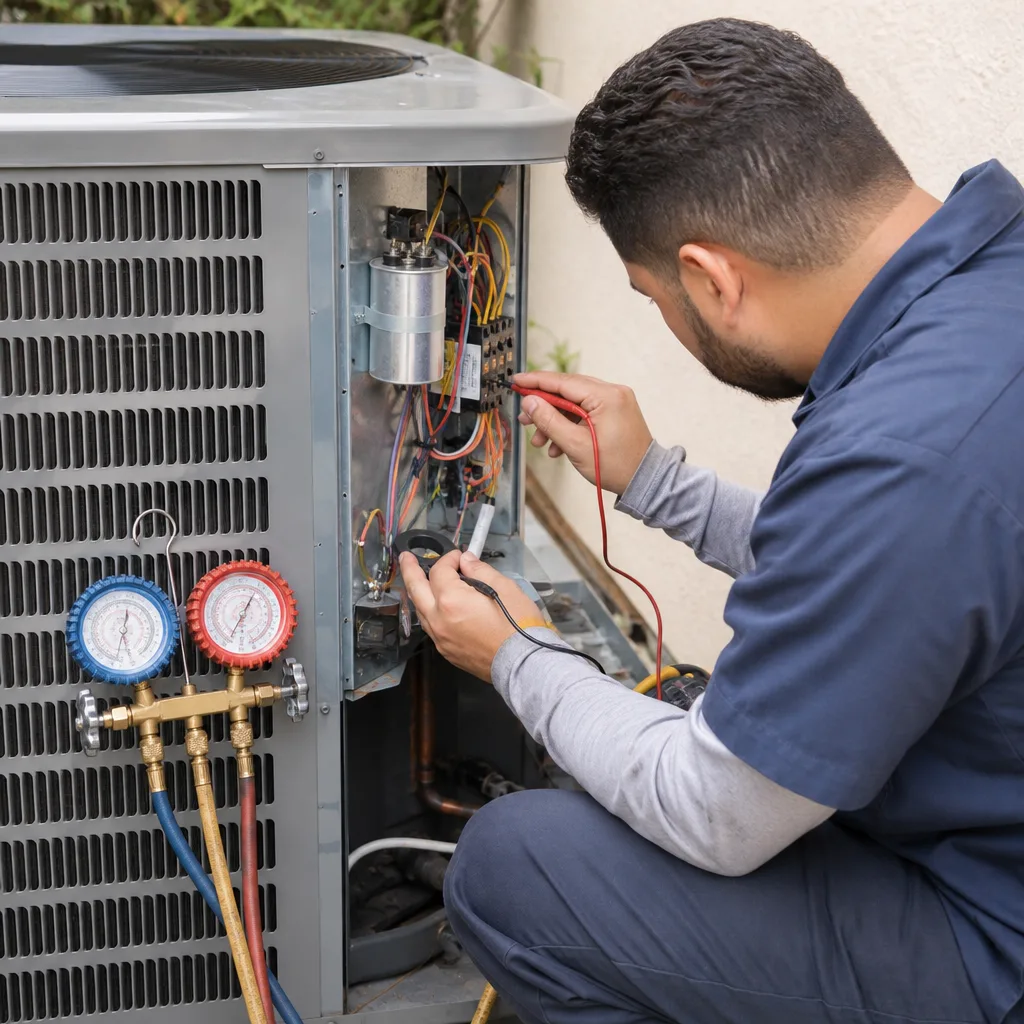
We also test the new capacitor’s microfarad reading with a meter before and after installation, and we check the contactor while we’re in there, since a pitted contactor often kills capacitors and is a $40 part we can catch before it costs you another service call. If you suspect a capacitor has failed, call (984) 538-9003. We’ll tell you over the phone what’s likely wrong, and if we come out, you’ll know the price before we touch a screwdriver.
FAQs
In Los Angeles, expect 5 to 8 years from an American Standard capacitor, compared to 8 to 12 years in milder climates. The combination of Valley heat in places like Reseda and Northridge, nightly cycling during summer, and dirty condensers that raise internal temperatures all shorten capacitor life.
No. A capacitor is a sealed component, and once the dielectric fluid breaks down or the casing breaches, there is no repair path. Replacement is the only option, and at $175 – $320 installed, it’s one of the least expensive AC repairs you’ll encounter.
A standard capacitor swap takes 45 to 90 minutes including testing the old part, confirming the correct microfarad rating, installing the new one, and verifying the system starts and runs within spec. If it’s paired with a contactor replacement or other repair, plan for up to two hours.
Yes. Our trucks carry the common dual-run ratings (including 40/5, 45/5, and 50/5 µF), single-run fan capacitors, and start capacitors, plus all the standard MFD ratings American Standard uses across its Silver, Gold, and Platinum series. In most Los Angeles neighborhoods, we can complete the repair on the first visit. Call (984) 538-9003 to confirm availability and get a free estimate.
If your American Standard is humming, short-cycling, or just not cooling like it should, call (984) 538-9003. A real person answers, 24 hours a day. We’ll give you an honest diagnosis over the phone, a written price before any work starts, and a repair backed by our 365-Day Done Right Promise. If it fails within a year, we come back free. That’s the guarantee, in writing, every time.
Written by Devin Marlowe, Owner & Lead HVAC Technician, Brandt HVAC at Brandt HVAC, serving Los Angeles and nearby areas.