
American Standard AC Repair in Los Angeles: A Homeowner’s Guide
American Standard AC repair in Los Angeles typically runs $180 – $540 depending on whether you’re dealing with a failed capacitor, a refrigerant leak, or a corroded contactor. Coastal units in neighborhoods like Playa del Rey and Mar Vista fail differently than inland units in Reseda or Northridge, and knowing which failure pattern applies to your ZIP code changes what you should watch for and what a fair repair bill looks like. If you’d rather skip the detective work, call Brandt HVAC home at (984) 538-9003 and we’ll walk you through it.
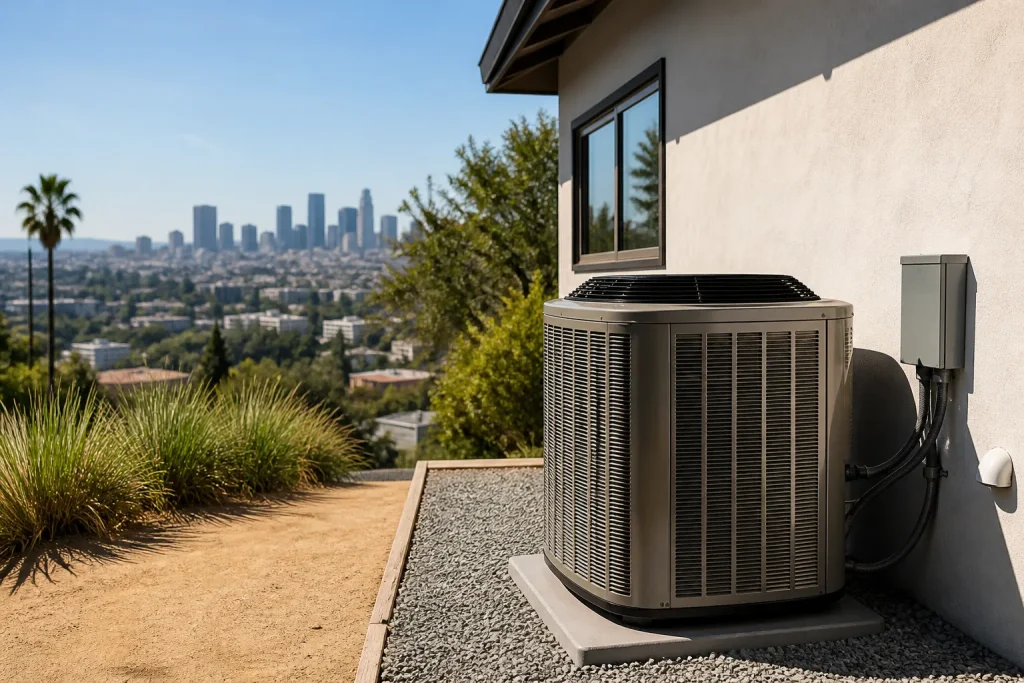
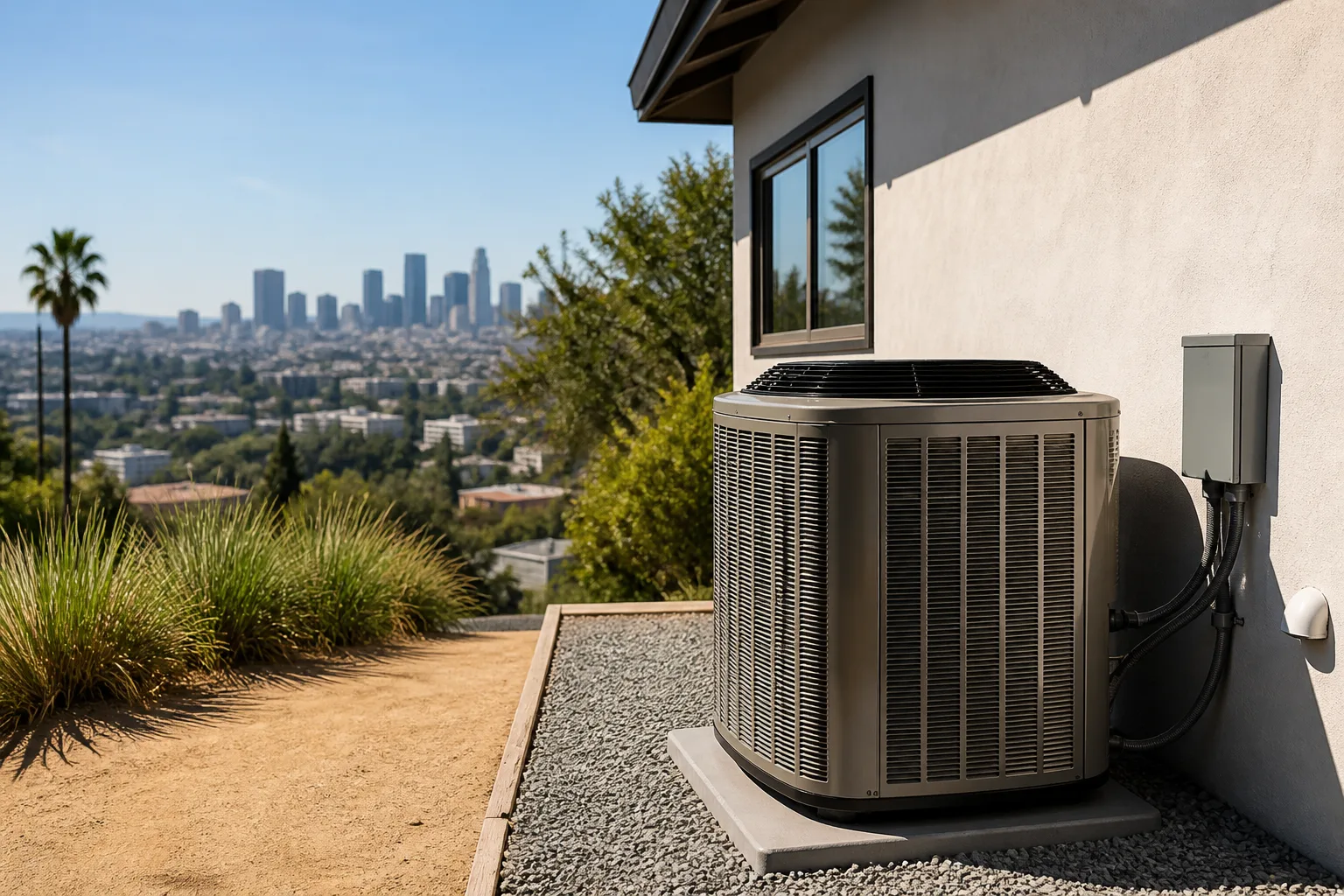
Here’s what most homeowners don’t hear until it’s too late: an American Standard condenser on the Westside and one in the Valley are running in effectively different climates. The coastal machine fights salt-laden marine air every single night. The inland machine bakes in dry 100-degree heat for five straight months, cycling on and off four times an hour. Both are solid units. Both fail. They just fail for different reasons.
Key Takeaways
- Los Angeles has two distinct American Standard failure patterns: coastal corrosion and inland heat cycling. They require different diagnostics.
- The most common delayed repair is a worn capacitor or contactor, and waiting turns a $180 part swap into a $900+ compressor job.
- American Standard warranties depend on dealer registration. Unregistered units often carry only a 5-year parts warranty instead of 10 years.
- You can read diagnostic codes yourself before calling a technician, which saves a diagnostic visit and speeds up the repair.
- Brandt HVAC sends every technician by name and photo before arrival, and every job gets a written price before work begins.
The Two Ways American Standard Units Fail in Los Angeles
We’ve repaired enough American Standard systems across Los Angeles to see the pattern clearly. A condenser sitting three miles from the ocean in Marina del Rey ages faster on its aluminum fins and electrical contacts than the same model sitting in Sherman Oaks. The salt air works into the coil fins, causes pitting, and eventually eats through the thin aluminum. It also corrodes the low-voltage wire connections at the contactor, which creates resistance, heat, and intermittent failures that are maddening to diagnose. Homeowners call us saying the unit works sometimes, then cuts out, then comes back. That’s a classic coastal corrosion signature.
Inland, the story flips. A unit in Reseda cycles 40 to 50 times a day during a July heat wave. The capacitor, which gives the compressor and fan motor their starting jolt, absorbs that wear. Same for the contactor points, which physically open and close every cycle. After enough cycles, the capacitor’s microfarad rating drifts downward, the compressor struggles to start, and the unit pulls higher amperage. Left alone, that higher amperage overheats the compressor windings. The repair goes from a capacitor replacement to a full compressor job, and the bill goes from a few hundred dollars to several thousand.
Compare that to brands we also service, like Carrier and Trane, and you’ll notice similar patterns across the board. Coastal corrosion hits every brand. But American Standard’s particular coil fin design, with its tightly spaced aluminum fins, tends to show corrosion damage a little more visibly on coastal units. It’s not a knock on the brand. It’s just what we see.
American Standard Diagnostic Codes Translated Into Plain English
American Standard units communicate through a small LED or digital display on the control board. When something’s wrong, the unit flashes a code. You don’t need to be a technician to read it, and reading it before you call saves everyone time. Here are the most common codes we hear about from Los Angeles homeowners, and what each one actually means.
- Three flashes: High-pressure lockout. Your outdoor coil is dirty, or the fan isn’t moving enough air. In the San Fernando Valley dust, a clogged coil is the usual cause.
- Four flashes: Low-pressure lockout. This almost always means low refrigerant. That’s a leak, not a “recharge and forget it” situation.
- Five flashes: Compressor overload. The compressor is pulling too many amps. Often a failing capacitor forcing a hard start.
- Six flashes: Open start circuit. The capacitor, run winding, or a wire connection has failed completely. The unit won’t start at all.
Write down the number of flashes and whether they repeat or pause, then relay that to whoever answers the phone. A technician who knows they’re walking into a pressure lockout brings different parts than one walking into an electrical fault. We’ll often ask for the flash count when you call for AC Repair in Los Angeles, because it tells us whether we’re chasing a refrigerant problem or an electrical one before we even knock on the door.
The Warranty Structure Nobody Explains Clearly
American Standard’s base warranty on new equipment is 10 years on the compressor and 10 years on parts, but only if the unit was registered by the installing dealer within 60 days of installation. Miss that window and the parts warranty drops to 5 years. We can’t count how many Los Angeles homeowners have discovered this the hard way. The unit is 6 years old, the fan motor fails, and they’re told the part isn’t covered because the original installer never filed the registration. It’s the single most avoidable expense in American Standard ownership.
Here’s the other piece most guides skip: American Standard requires that warranty parts be installed by a licensed contractor. You can’t buy the part and do it yourself, and you can’t have an unlicensed handyman do it and still expect the manufacturer to honor the remaining warranty. The warranty specifically states “installed by a licensed HVAC contractor.” So when a homeowner calls us for AC Maintenance in Los Angeles and asks whether they should try a parts swap themselves, our answer is always the same: if the unit is under warranty, no. You’ll void it.
How do you check if a technician is authorized to work on American Standard units? Ask them directly. An authorized dealer can show you their dealer agreement or verify it through American Standard’s dealer locator. It’s a fair question, and any legitimate contractor will welcome it. We’re transparent about it. If someone gets cagey about their authorization status, that’s your cue to call someone else.
The Most Common Delayed Repair: Capacitor and Contactor Wear
Let’s talk real numbers, because Brentwood and Burbank homeowners both ask the same question: what does it cost to stop a small problem before it becomes a big one?
We replace capacitors and contactors every single week in Los Angeles. It’s the single most common American Standard repair across every ZIP code. The failure is gradual. The capacitor’s microfarad rating drifts down from, say, 45 to 38 to 30. The unit still runs, but the compressor strains harder on every start. The contactor points pit and burn, adding resistance. The homeowner doesn’t notice anything until one day the unit just hums and won’t start, or the breaker trips.
Here’s the cost comparison that matters:
- Early capacitor and contactor replacement: $180 – $300, parts and labor included. One visit, one hour, unit runs like new.
- Delayed repair resulting in compressor damage: $2,800 – $4,800 in Los Angeles, depending on the size of the condenser and whether it’s a scroll or reciprocating compressor. That’s not a guess. That’s the range we quote.
The difference is a $200 maintenance call versus a $4,000 replacement, and the warning signs are simple. If the unit hums for a second before the fan kicks on, if it takes two tries to start, or if the lights in the house dim briefly when the AC cycles, the capacitor is telling you something. Listen to it. When a customer in Eagle Rock told us last month that her lights had been dimming for six weeks, we found a capacitor running at 55% of its rated power. She caught it before the compressor gave out. Watching that kind of thing closely is the cheapest insurance you’ll ever buy on an American Standard system.
What to Ask Your Technician to Document
Every American Standard repair should leave a paper trail. Without one, you’re relying on memory for warranty claims, resale disclosures, and future diagnostics. Here’s exactly what to ask the technician to write down before they leave your driveway, whether that’s us or any other contractor in Los Angeles.
- Measured capacitor microfarad reading: Not “capacitor was fine.” The actual number, and what it should be. If it’s 38 on a 45-rated cap, you want that on paper.
- Refrigerant pressures before and after: The superheat and subcooling numbers. If the tech won’t write them down, that’s a red flag about whether they actually measured them.
- Amp draw on the compressor and fan motor: Compared against the manufacturer’s rated load amps on the data plate. A high amp draw is the earliest sign of a failing compressor.
- Condition of the contactor points and any corrosion: Coastal homeowners especially. You want a note on whether the contacts are pitted, burned, or corroded, because that’ll recur.
- The refrigerant type and amount added, if any: R-410A versus R-454B matters. If refrigerant was added but no leak was found and no dye was injected, that’s a problem to flag.
We handed a customer in Westchester a full written report last spring: pressures, amp draws, capacitor readings, contactor condition, photos of the coil. Six months later, his compressor failed under warranty. Because he had a dated record showing the amp draw was creeping up, the warranty process went smoothly. No argument. A written report is the difference between a warranty claim that gets approved and one that stalls for weeks.
When should you call a pro instead of trying to read codes and test parts yourself? Any time the unit is under warranty, any time refrigerant is involved (which requires an EPA certification to handle legally), and any time you don’t have the electrical meter and training to test a capacitor safely. A charged capacitor can stop your heart. That’s not hyperbole. Don’t open the panel and start probing unless you know exactly what you’re doing. If you’re not sure, Furnace Repair in Los Angeles is another thing we handle, and AC repair calls are staffed 24/7. Call first.
The Bottom Line
American Standard builds a solid machine, and Los Angeles treats those machines differently depending on whether they’re breathing salt air or Valley dust. Coastal units need corrosion inspection every year. Inland units need capacitor and contactor checks, especially after a long summer. The best money you’ll spend on your system is a maintenance visit that catches a drifting capacitor before it takes out the compressor. The second best is a written report you can use for warranty claims down the road. If you’re in Los Angeles and need a straight answer on whether your American Standard unit should be repaired or replaced, Brandt HVAC offers free estimates. Call (984) 538-9003 and a live person answers, day or night.
Frequently Asked Questions
Most American Standard repairs in Los Angeles fall between $180 and $540. A capacitor or contactor replacement typically runs $180 – $300, a condenser fan motor $350 – $520, and a refrigerant leak repair can range from $500 to over $1,200 depending on the leak location and how much refrigerant needs to be replaced. Compressor replacement is the big one: $2,800 – $4,800 on most residential American Standard units in the Los Angeles market. Call (984) 538-9003 for an exact written quote. Estimates are free.
Yes. American Standard’s warranty terms require that warranty parts be installed by a licensed HVAC contractor. If you use unlicensed labor or attempt the repair yourself, the manufacturer can deny the claim and void the remaining coverage. Confirm the contractor is licensed and ask directly whether they’re authorized by American Standard before booking the job.
If the repair is under $600 and the unit is under 10 years old, repair almost always makes sense. If the compressor has failed and the unit is 12 years or older, replacement is usually the smarter long-term move, especially with new refrigerant regulations phasing out R-410A. Get a written repair quote and a replacement quote side by side before deciding. The repair cost divided by the remaining expected life is the math that matters.
In Los Angeles, intermittent shutdowns are most often caused by corroded low-voltage connections on coastal units or a failing capacitor on inland units. Both create exactly that pattern: the unit runs fine for a while, then cuts out, then comes back on later. Read the diagnostic code on the control board, write down the flash count, and relay it when you call. It narrows the problem down before the technician arrives. Call (984) 538-9003 and we’ll walk you through reading the code over the phone.
Written by the team at Brandt HVAC.
Need HVAC Help?
Call Brandt HVAC - licensed & insured, here with fast after-hours help in Los Angeles.
(984) 538-9003