

Seasonal tune-up and full diagnostic on your Carrier, Trane, or Goodman system - readings shown to you before any repair is proposed
Diagnosis first, numbers second - you approve the repair price before a single part goes in.
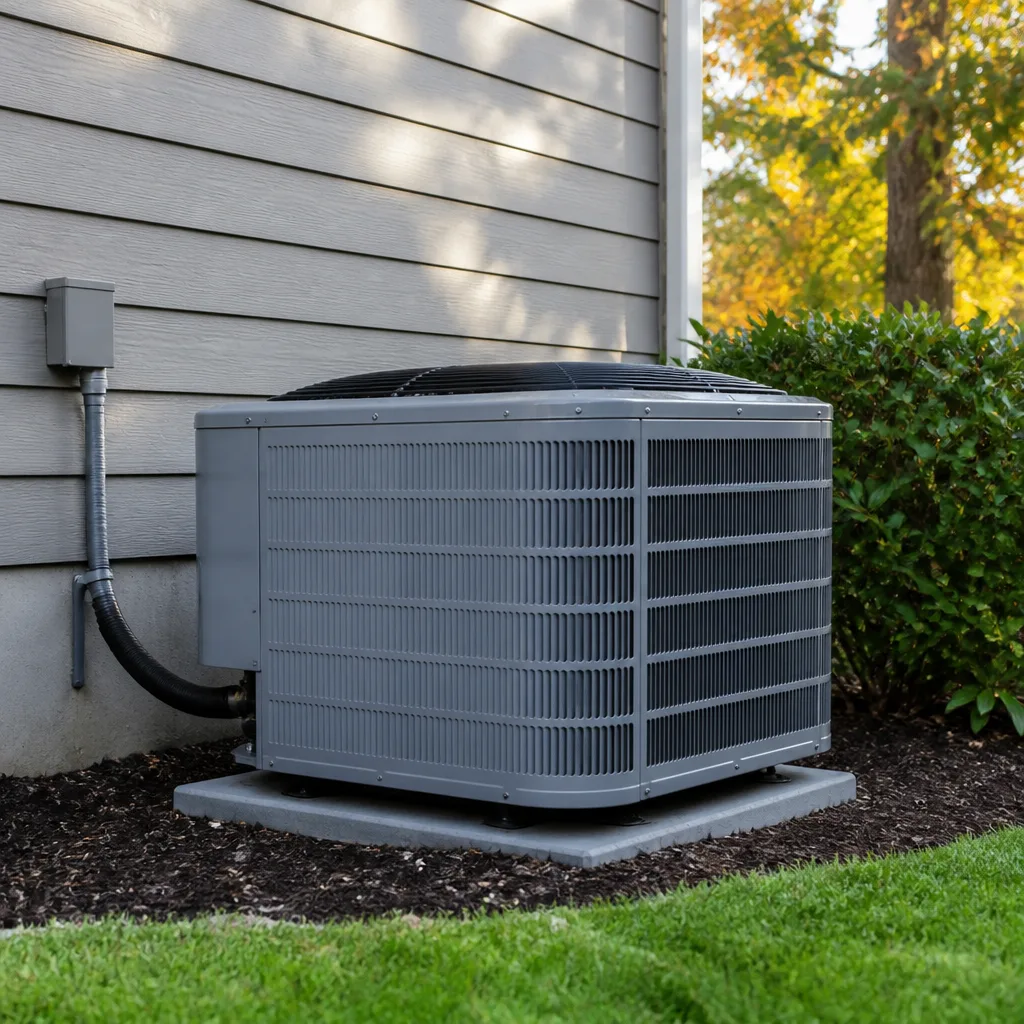
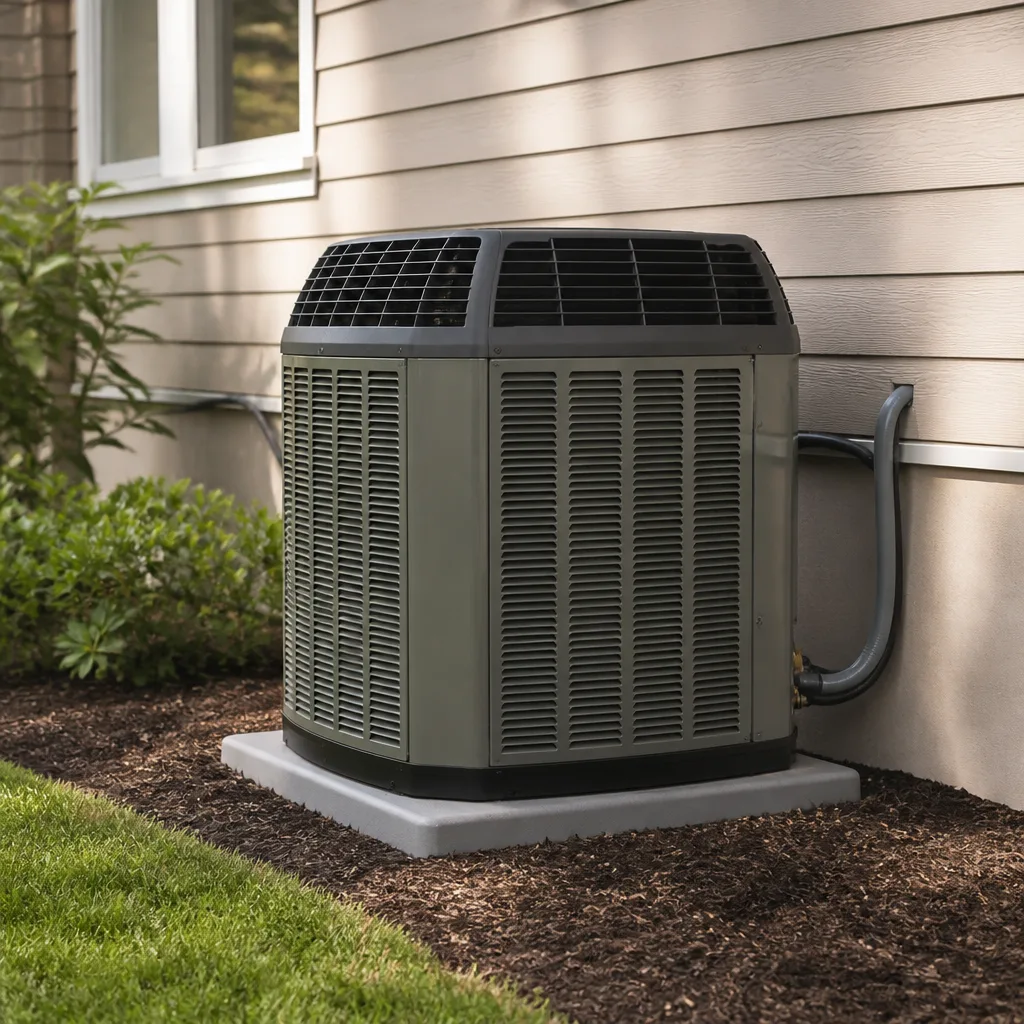
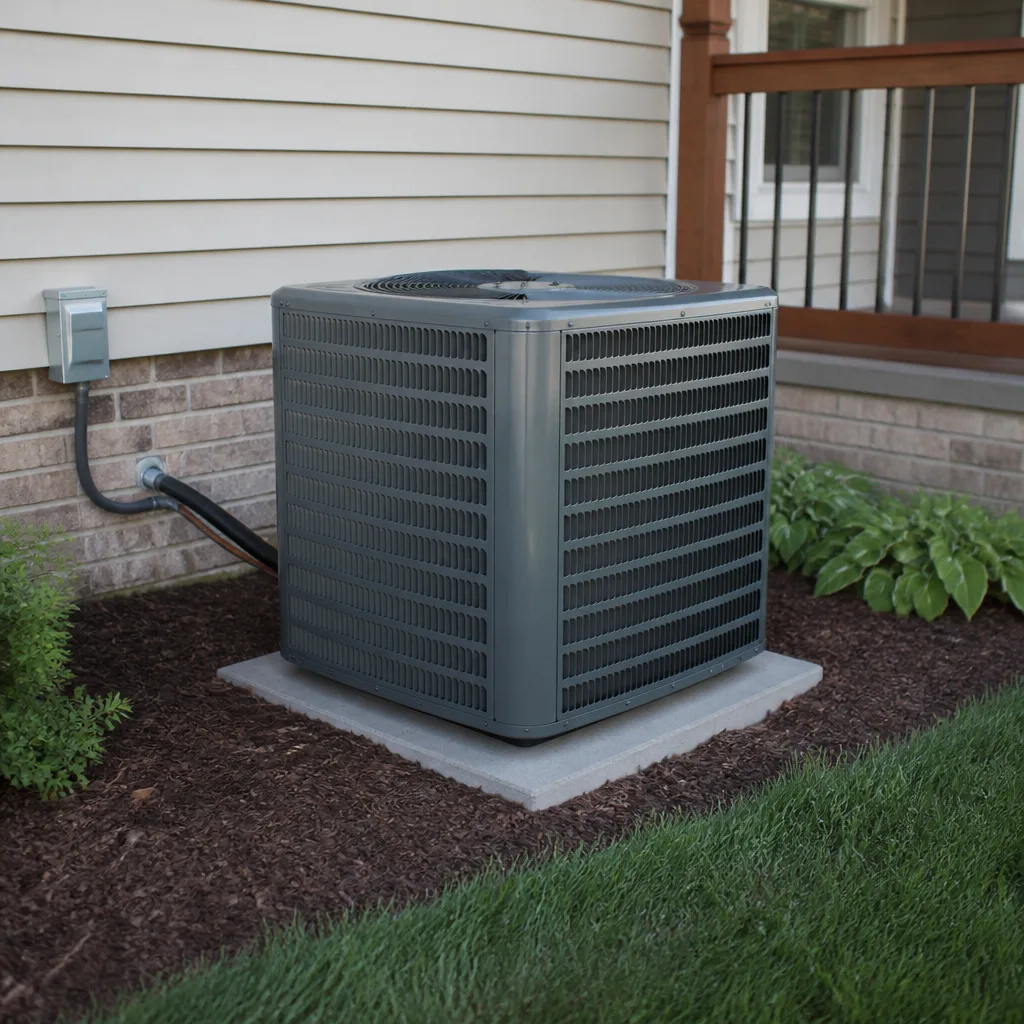
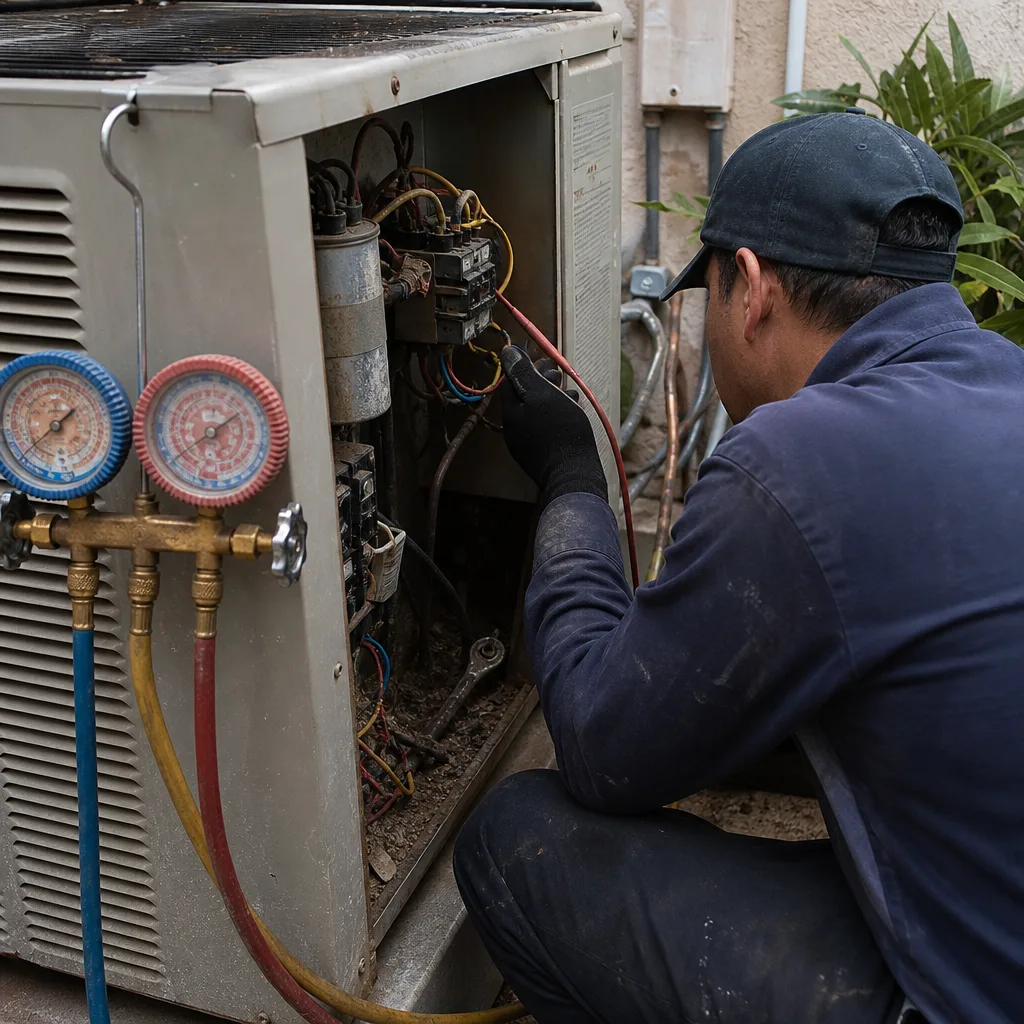 Before
 After
After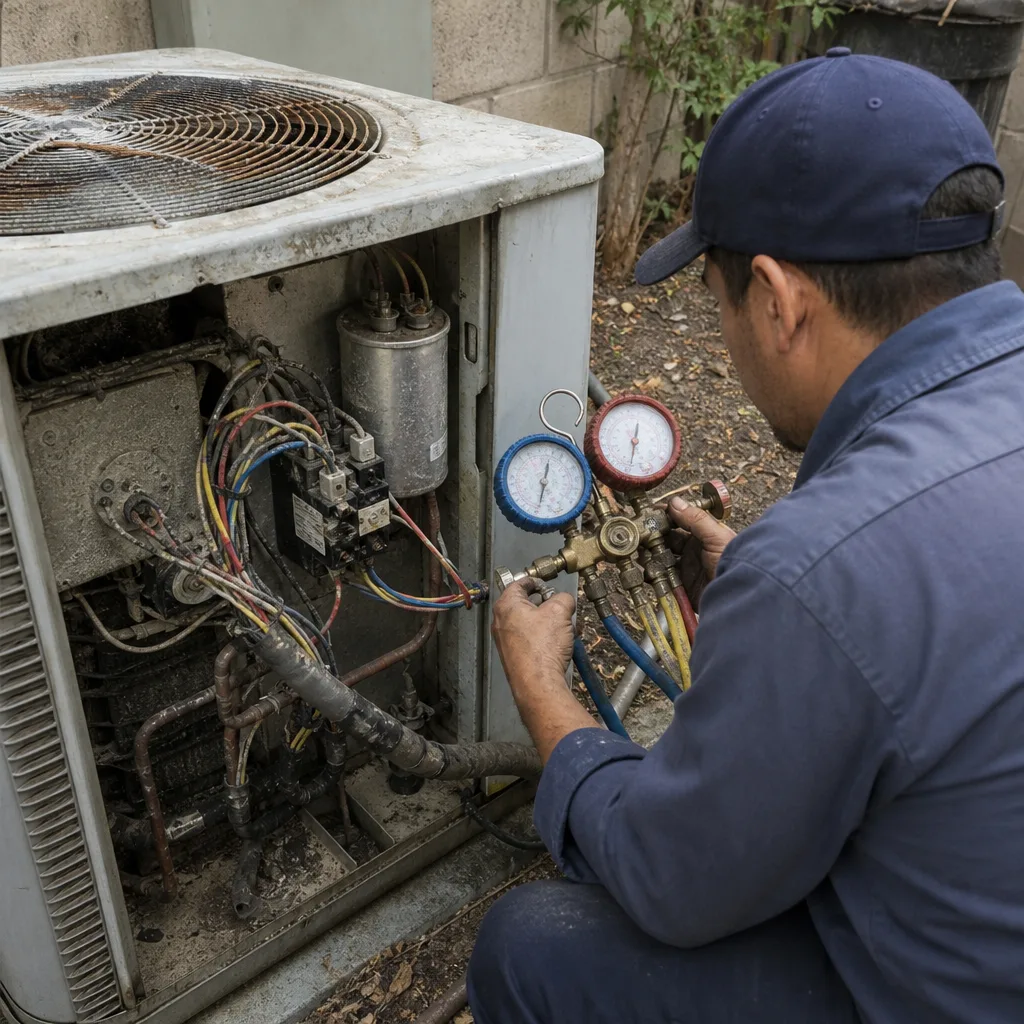 Before
 After
After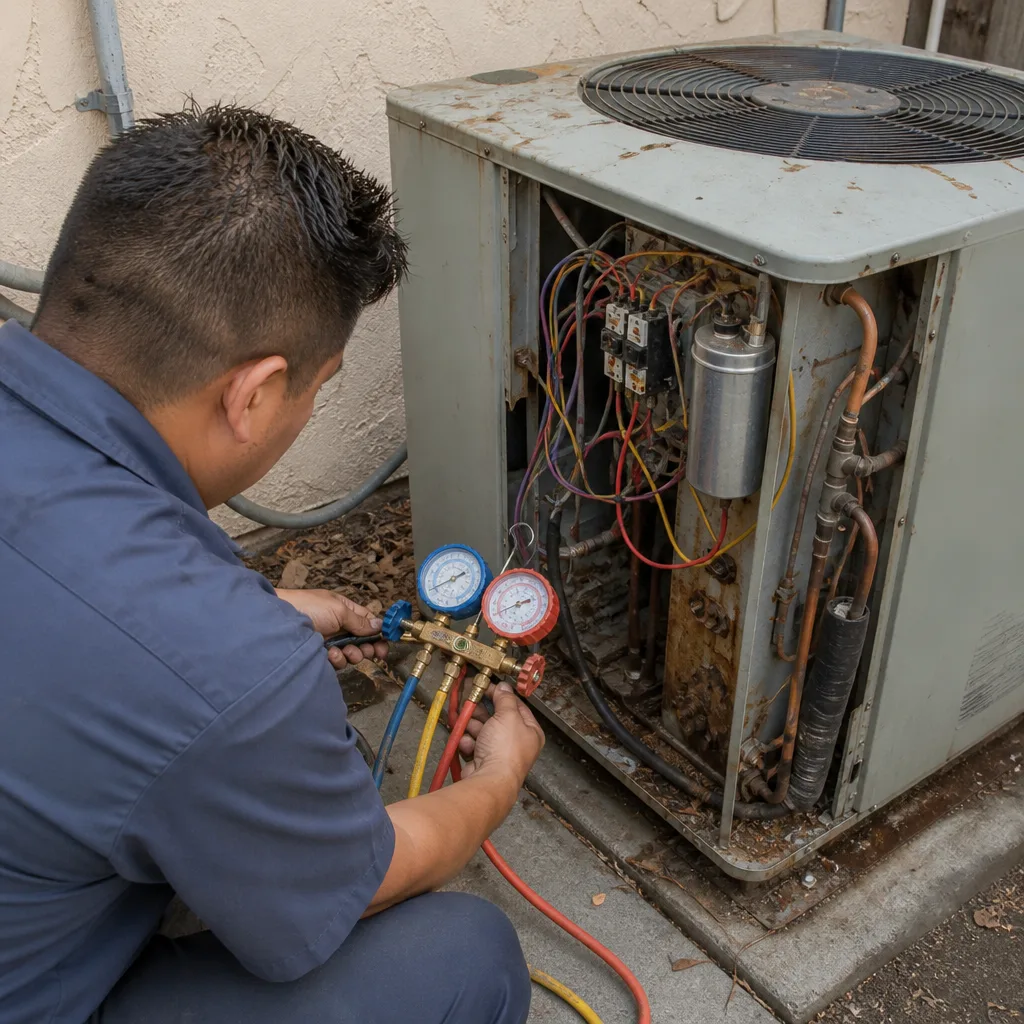 Before
 After
AfterA/C Blowing Warm Air
When your air conditioner is running but pushing warm air through the vents, the system has lost its ability to transfer heat out of your home. The three most common reasons are a refrigerant leak, a frozen evaporator coil, or a failed capacitor on the outdoor unit. A technician can usually diagnose the root cause in a single visit.
The tricky part is that all three of those problems feel identical from inside the house: the fan runs, air moves, but nothing cools down. Your system is working – just not at the part that actually matters. Because the causes are different enough that the wrong fix won’t help, it’s worth understanding what each one looks like before anyone opens a panel.
Why It Happens
Low or Leaking Refrigerant
Refrigerant is the fluid that absorbs heat from your indoor air and carries it outside. If the level drops because of a leak, there isn’t enough refrigerant to do that job, and the air coming out of your vents stays close to room temperature. Signs that point to this: you might notice ice forming on the copper lines that run to your outdoor unit, or a faint hissing sound near the indoor air handler. A refrigerant leak doesn’t fix itself – the source has to be found and sealed before the system is recharged.
Frozen Evaporator Coil
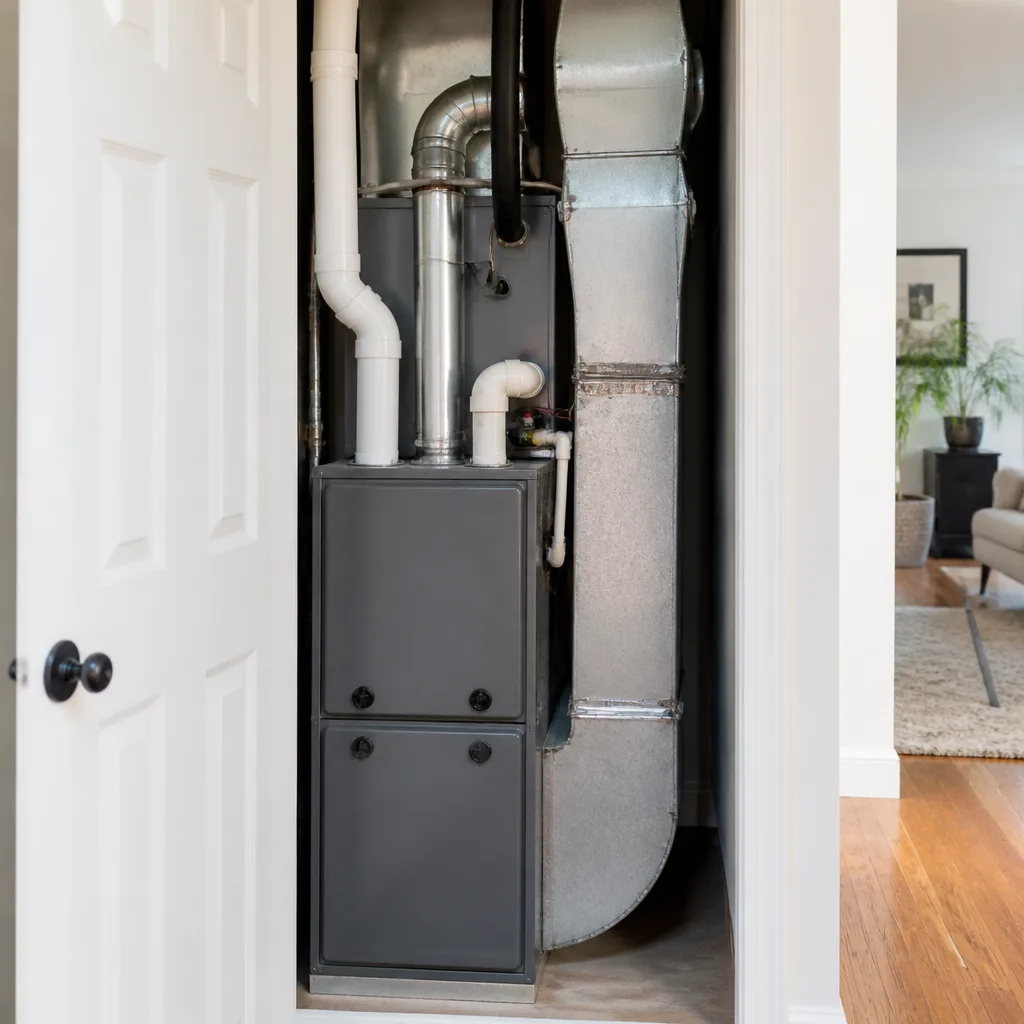
The evaporator coil sits inside your air handler and is where the refrigerant absorbs heat. If airflow across it is restricted – usually by a clogged filter or a blocked return vent – the coil gets too cold and ice builds up on it. Once it’s frozen solid, air can’t move through it at all, and what does reach your vents feels warm or just faintly cool. Check your filter first: if it’s gray and dense with dust, that’s almost certainly the cause. Turn the system to “fan only” for two to three hours to let the coil thaw before a technician arrives.
Failed Capacitor on the Outdoor Unit
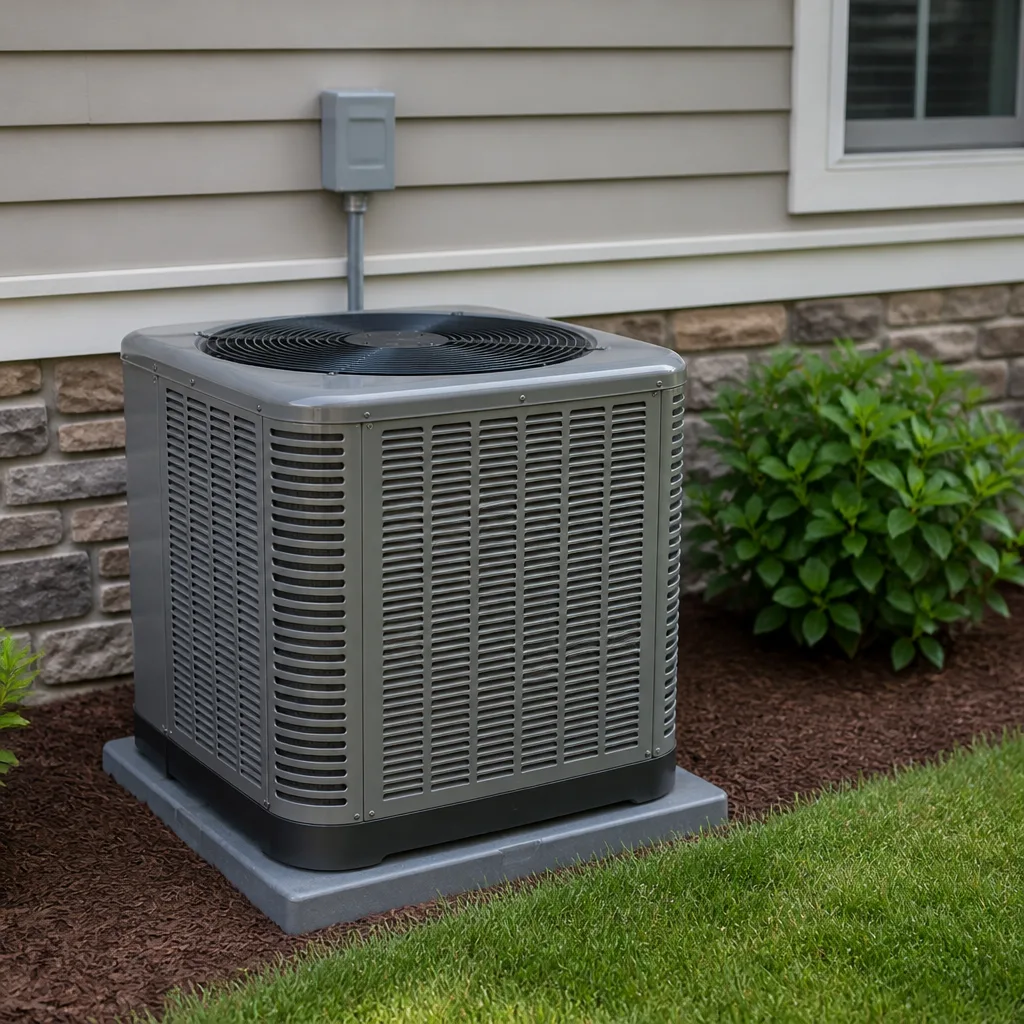
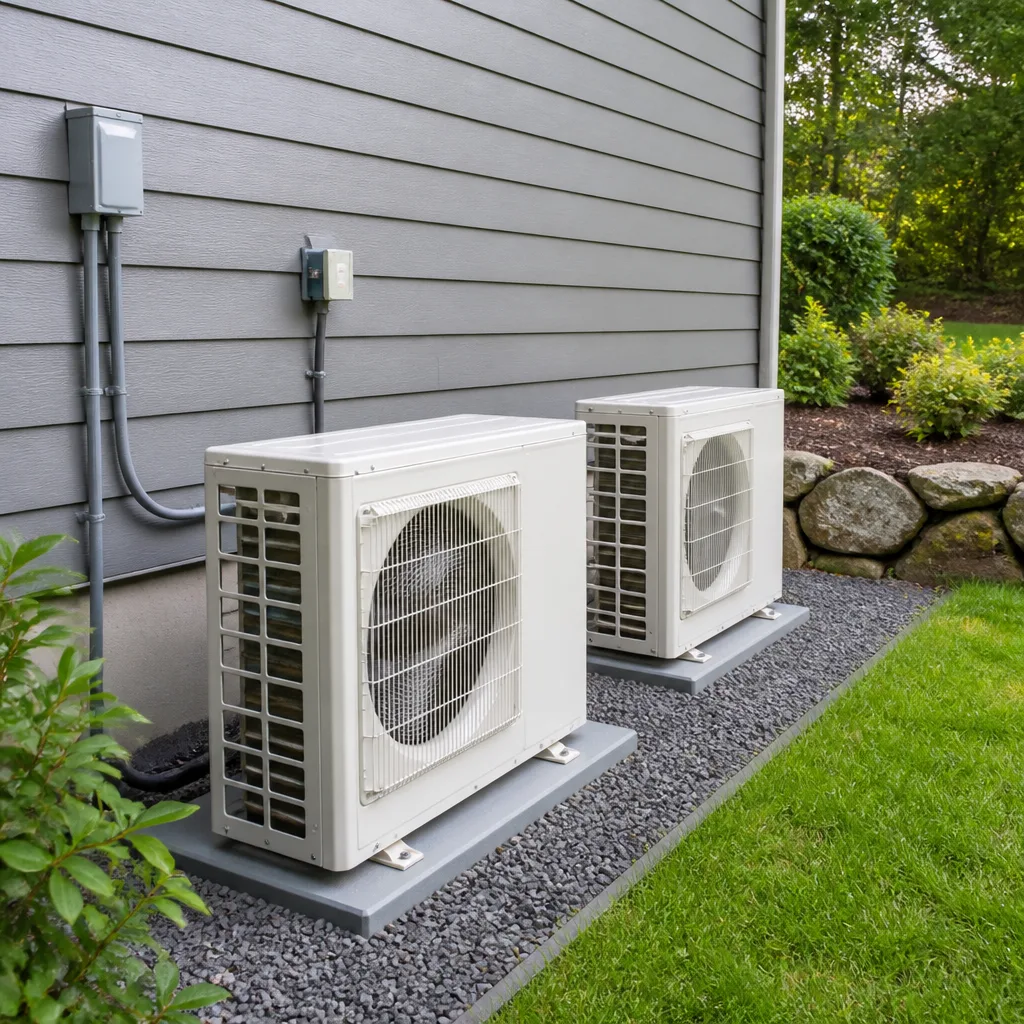
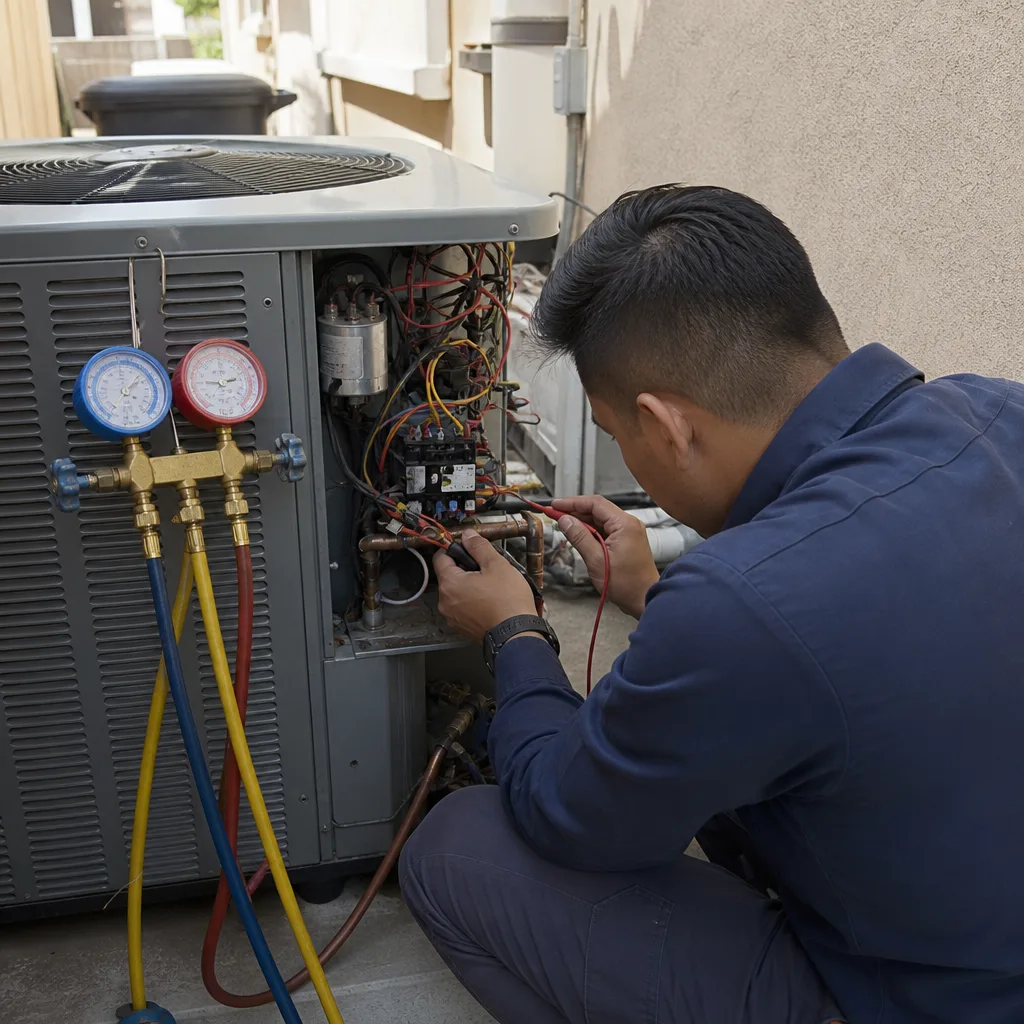
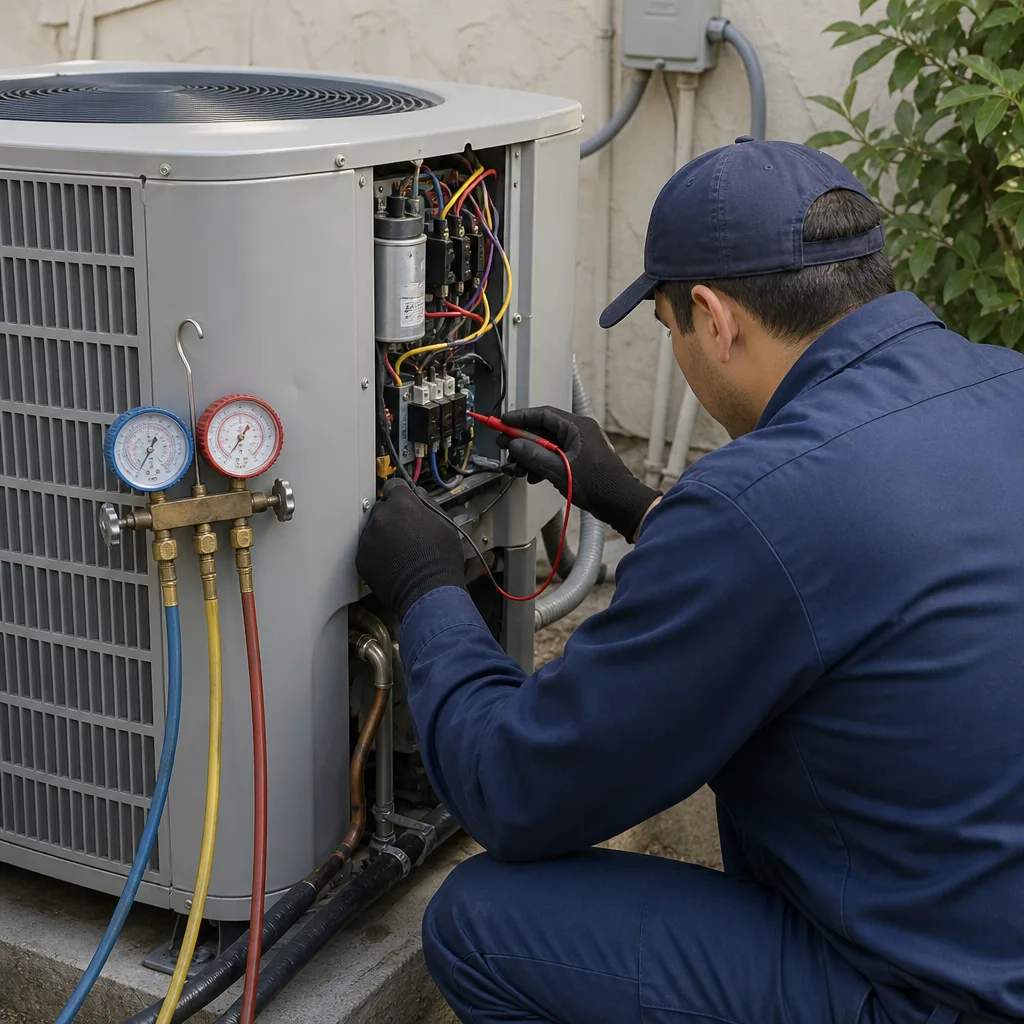
The capacitor is a small cylindrical component that gives the compressor and condenser fan motor the electrical jolt they need to start and keep running. When it fails, the outdoor unit either won’t start at all or the fan stops spinning while the compressor keeps trying. You can check this from outside: look at the top of the outdoor unit while the system is calling for cooling. If the fan isn’t turning, or is turning very slowly, a capacitor is a likely cause. Don’t attempt to open or touch the electrical components inside the outdoor unit – capacitors store a charge and can cause a serious shock even when the power is off. Stop here and call.
Thermostat Set Wrong or Malfunctioning
It sounds basic, but it’s the first thing a technician checks because it costs nothing to rule out. If the thermostat fan setting is on “ON” instead of “AUTO,” the fan runs continuously even when the system isn’t actively cooling, moving unconditioned air through the vents. A malfunctioning thermostat can also fail to send the cooling signal to the outdoor unit at all, so the indoor fan runs but the compressor never kicks on. Check that the mode is set to “COOL,” the fan is set to “AUTO,” and the set temperature is at least a few degrees below the current room temperature.
What to Do Right Now
- Check and replace your air filter. Pull it out and hold it up to a light. If you can’t see light through it, replace it before anything else. A blocked filter is behind a surprising number of warm-air calls.
- Switch the fan setting to “AUTO” and the mode to “COOL.” Look at your thermostat and confirm neither setting has been changed accidentally.
- Look at your indoor air handler for ice. If you see frost or ice on the copper lines or on the unit itself, turn the system off and switch to fan-only mode. Running a frozen coil harder damages the compressor.
- Go outside and observe the outdoor unit – from a safe distance. Note whether the fan on top is spinning. If it isn’t, or if you hear the compressor humming and straining, turn the system off at the thermostat. Do not open the electrical panel on the outdoor unit. The capacitor inside holds a dangerous charge and is not safe to handle without proper equipment.
- Take a few photos. Photograph the filter you pulled out, any ice you can see, and the outdoor unit. These take about two minutes and help the technician understand what they’re walking into before they arrive.
How We Fix It
When your local Brandt HVAC technician arrives, they’ll introduce themselves at the door and show a photo ID badge – the same name and photo you received before the visit. Before anything is opened or tested, you’ll see a written price for the diagnostic and any repair. No work starts until you’ve agreed to that number in writing.
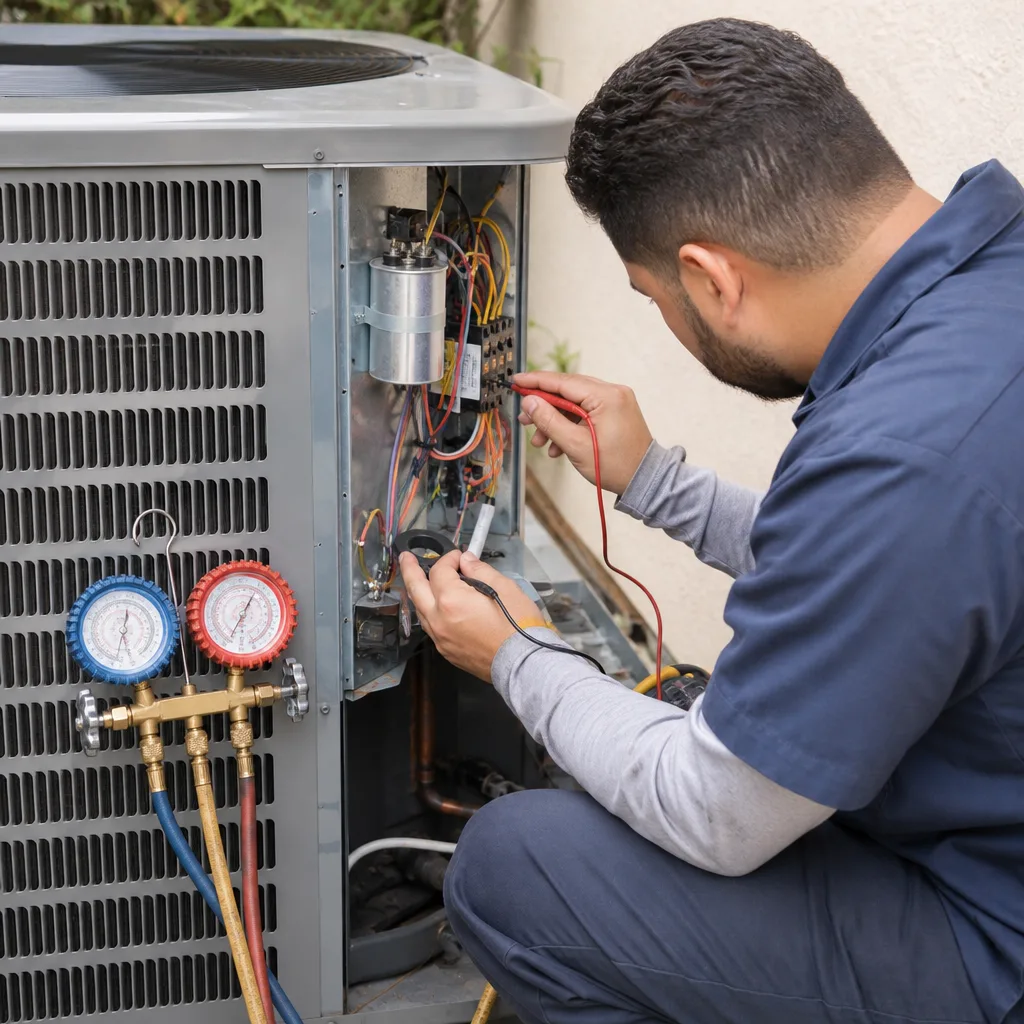
The technician will check refrigerant pressure, inspect the evaporator and condenser coils, test the capacitor, and verify thermostat output. Most warm-air diagnoses are complete within the first thirty to forty-five minutes. If the fix is a capacitor swap or a coil cleaning, that’s typically done the same visit. If there’s a refrigerant leak, the technician will locate the leak, repair it, and recharge the system to the manufacturer’s specification. Either path falls under our AC Repair service, and the 365-Day Done Right Promise covers the work: if the repair fails within that window, we come back at no charge, no argument.
Frequently Asked Questions
Yes – depending on the cause, waiting can turn a repair into a larger one. A frozen evaporator coil, if left running, puts strain on the compressor, which is the most expensive single component in the system. A refrigerant leak that goes unaddressed does the same thing over time. If the system is icing up or the outdoor unit is straining, turn it off and call (984) 538-9003 today rather than letting it run.
It depends on what you see. If the system is running normally but just not cooling, running it for a short time while you wait for a technician is unlikely to cause immediate damage. If you see ice on the lines or hear the compressor laboring, turn the system off at the thermostat. Running a frozen coil or a struggling compressor shortens the life of the unit. When in doubt, call (984) 538-9003 and describe what you’re seeing – a live person answers around the clock.
Call (984) 538-9003 and a live person will answer – not a voicemail, not an automated system. Your local Brandt HVAC team schedules based on the technicians available in your area, and the person on the phone can tell you exactly what the earliest appointment looks like. Phones are staffed 24 hours a day, 7 days a week, including nights, weekends, and holidays.
A refrigerant leak, a failed capacitor, or a frozen coil is almost always a repair, not a replacement. The technician will diagnose the specific cause and give you a written price for the fix before any work begins – so you’ll know the cost and what it covers before you decide anything. If the system has other issues that make replacement the smarter choice, the technician will explain that clearly and let you make the call.
Get It Fixed
Call (984) 538-9003 right now and a live person will answer. Your local Brandt HVAC team will send a background-checked, uniformed technician – with their name and photo sent to you before they arrive. Every repair comes with a written price and the 365-Day Done Right Promise.
Written by Devin Marlowe, Owner and Lead HVAC Technician at Brandt HVAC, part of the Threshold Group family of home-service companies, established 2003.
What Our Customers Say
"Furnace short cycled all winter. He found a dirty flame sensor and cleaned it. Twenty minutes and a small bill."
- George Q."Knowing a vetted tech was coming into my house made a difference. Name and photo texted ahead, shoe covers, polite, and thorough with explaining."
- Tina M."Drain line was clogging and causing a leak by the air handler. They cleared it and installed a float switch so it can't flood again."
- Nora T.