

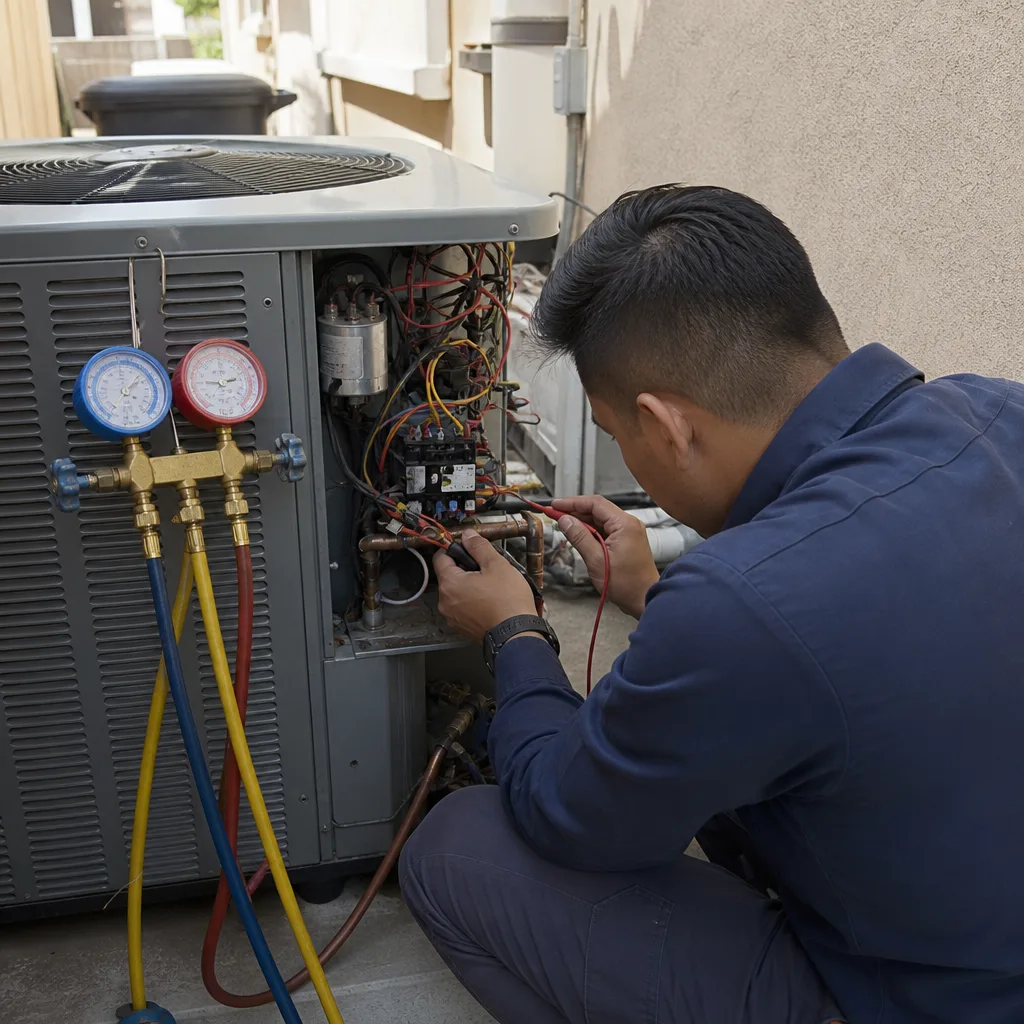
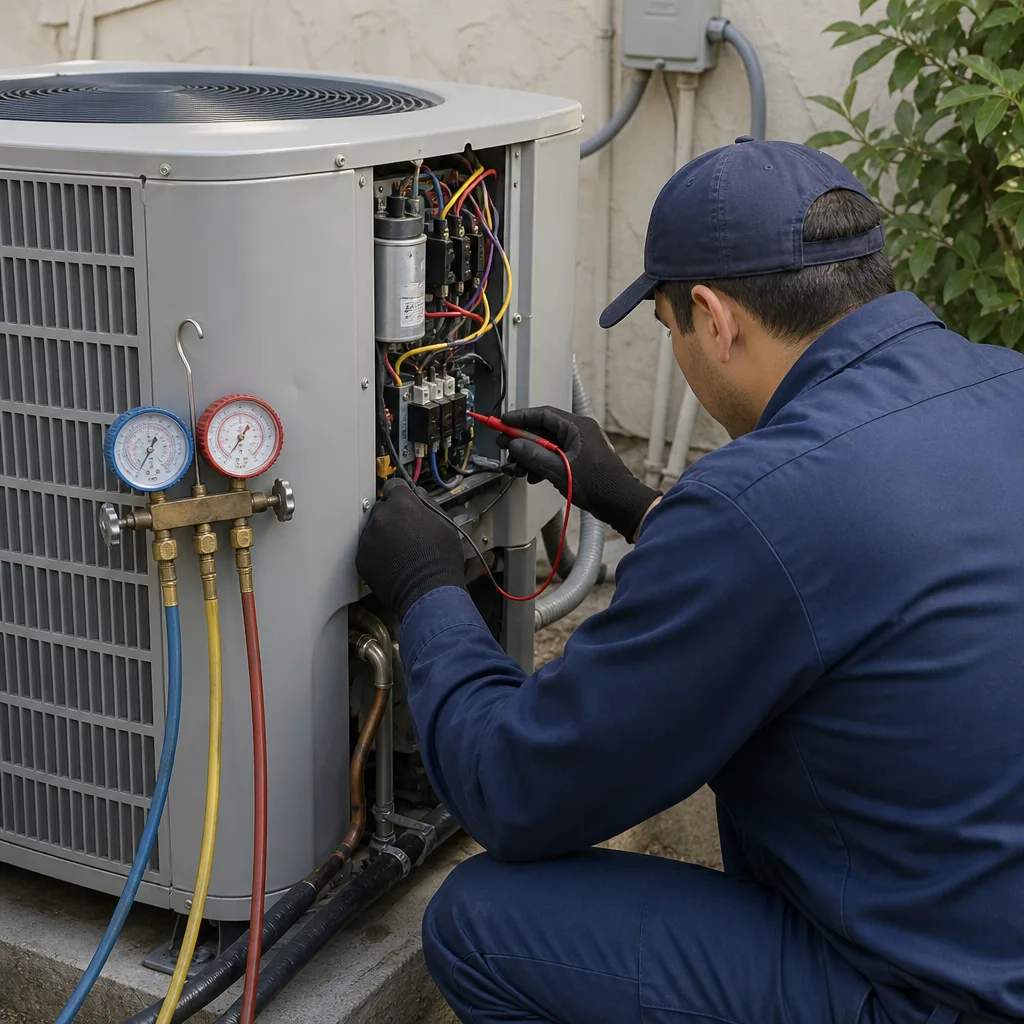
Seasonal tune-up and full diagnostic on your Carrier, Trane, or Goodman system - readings shown to you before any repair is proposed
Diagnosis first, numbers second - you approve the repair price before a single part goes in.
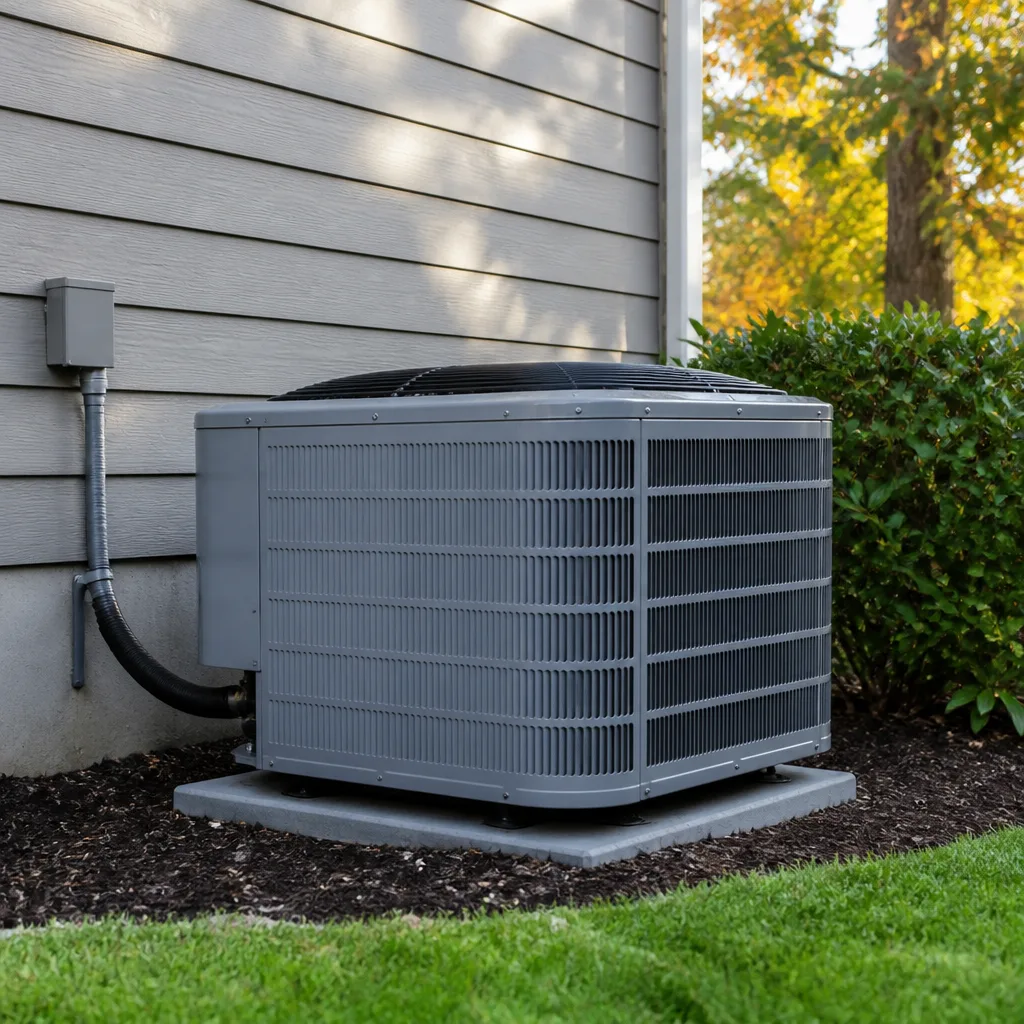
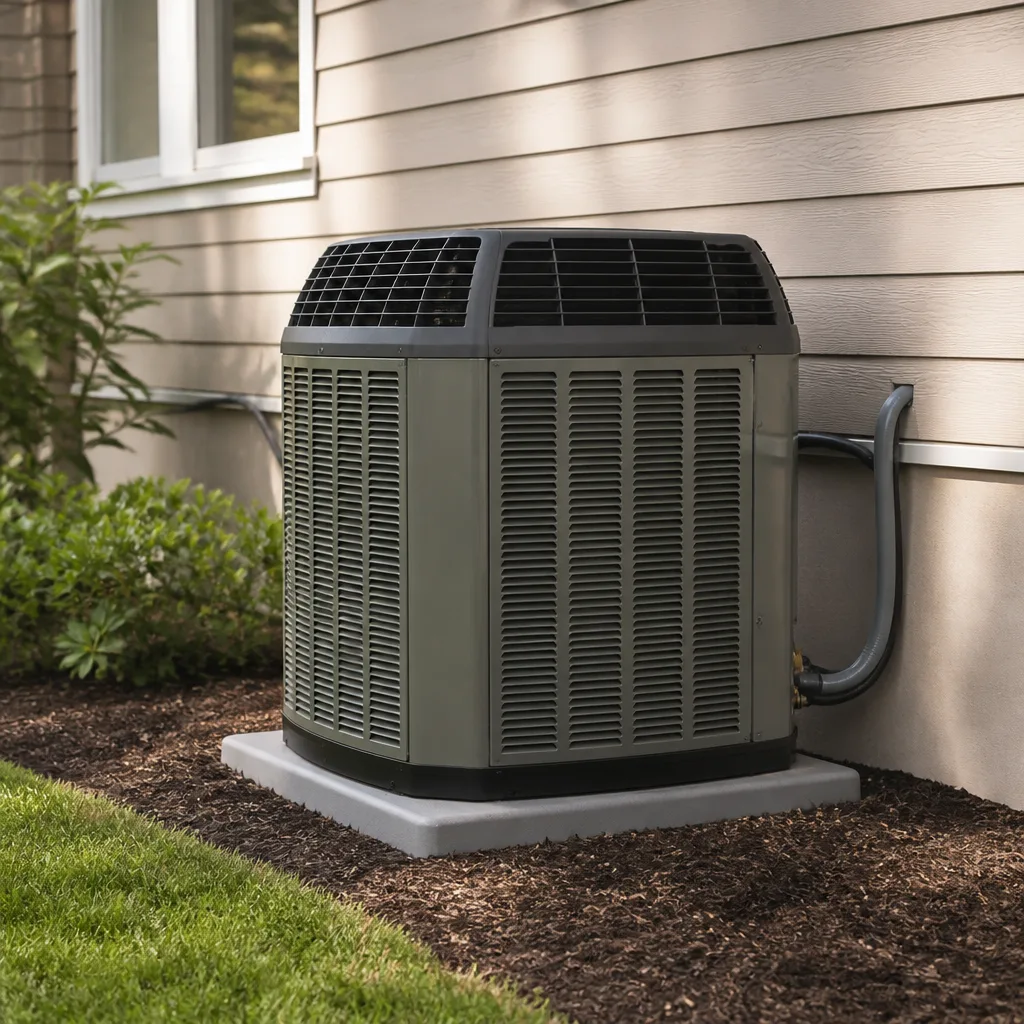
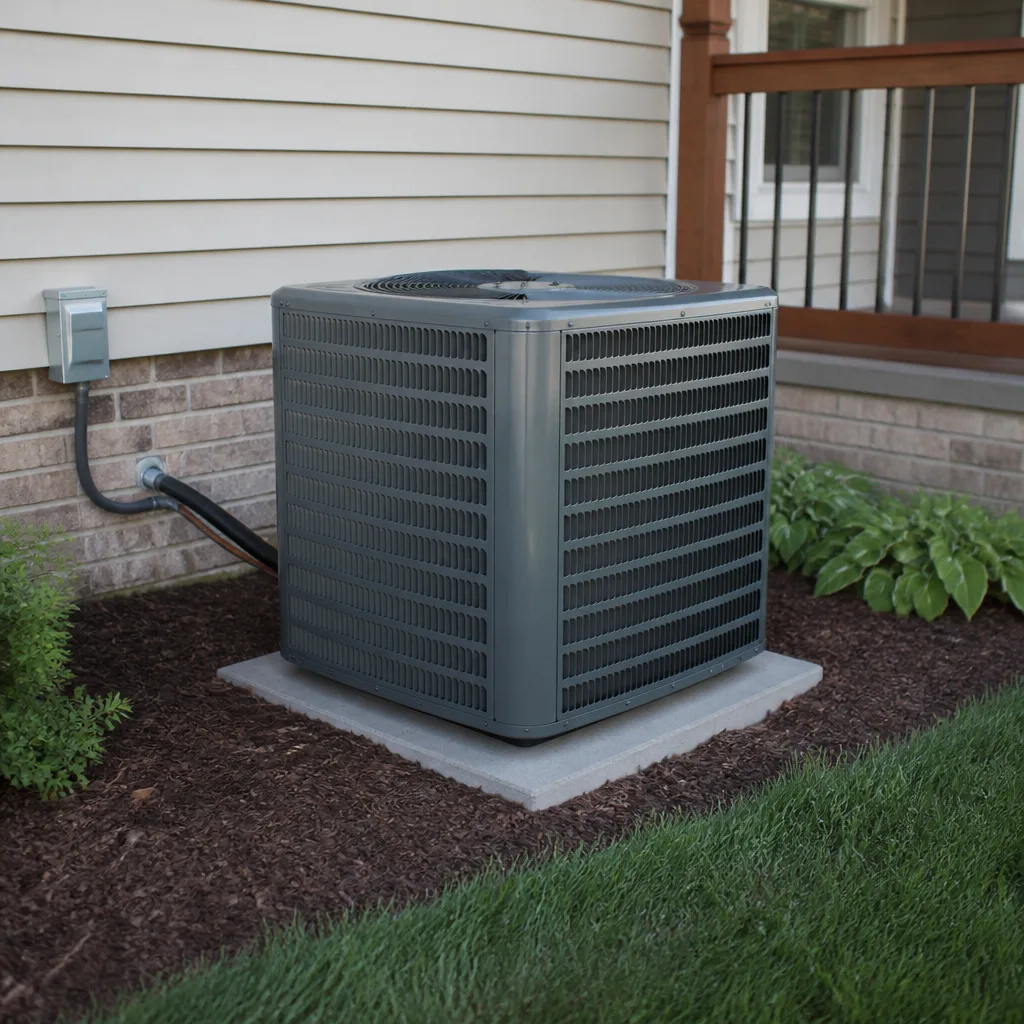
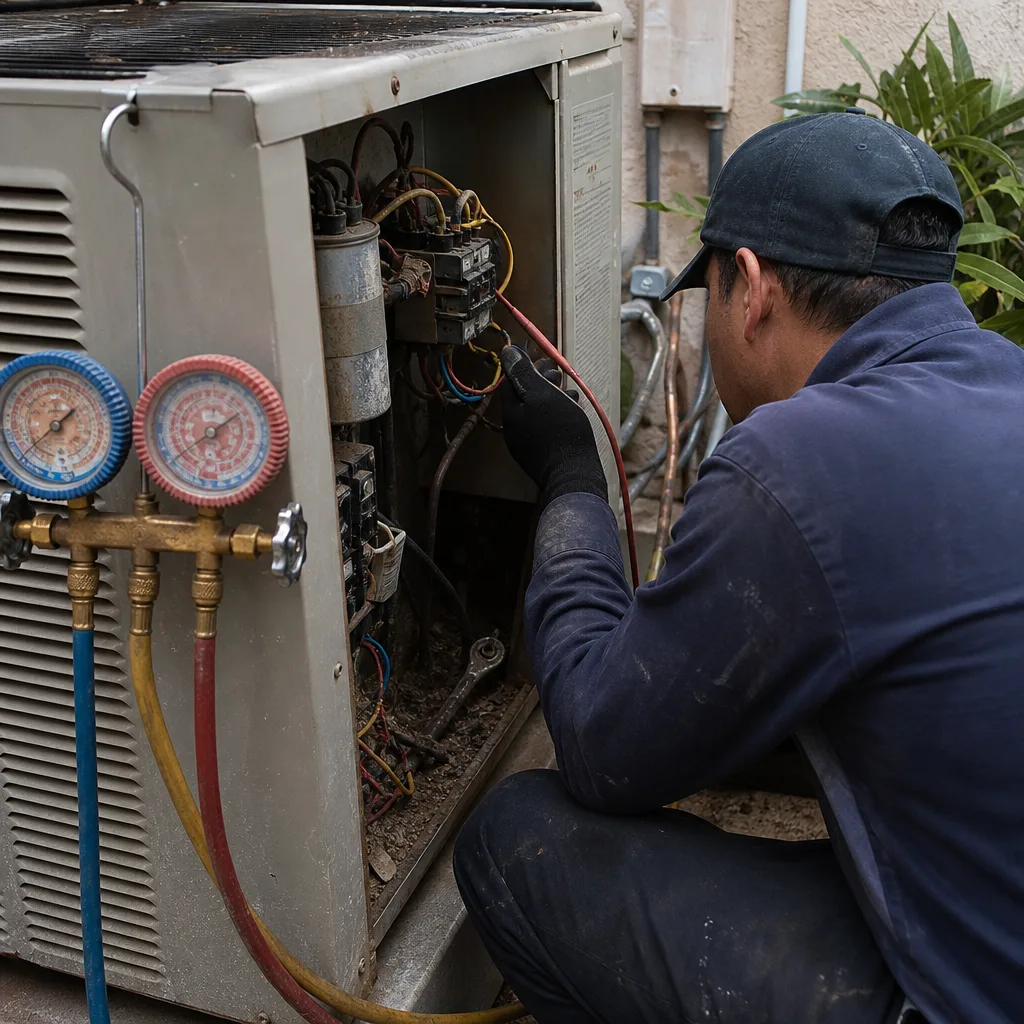 Before
 After
After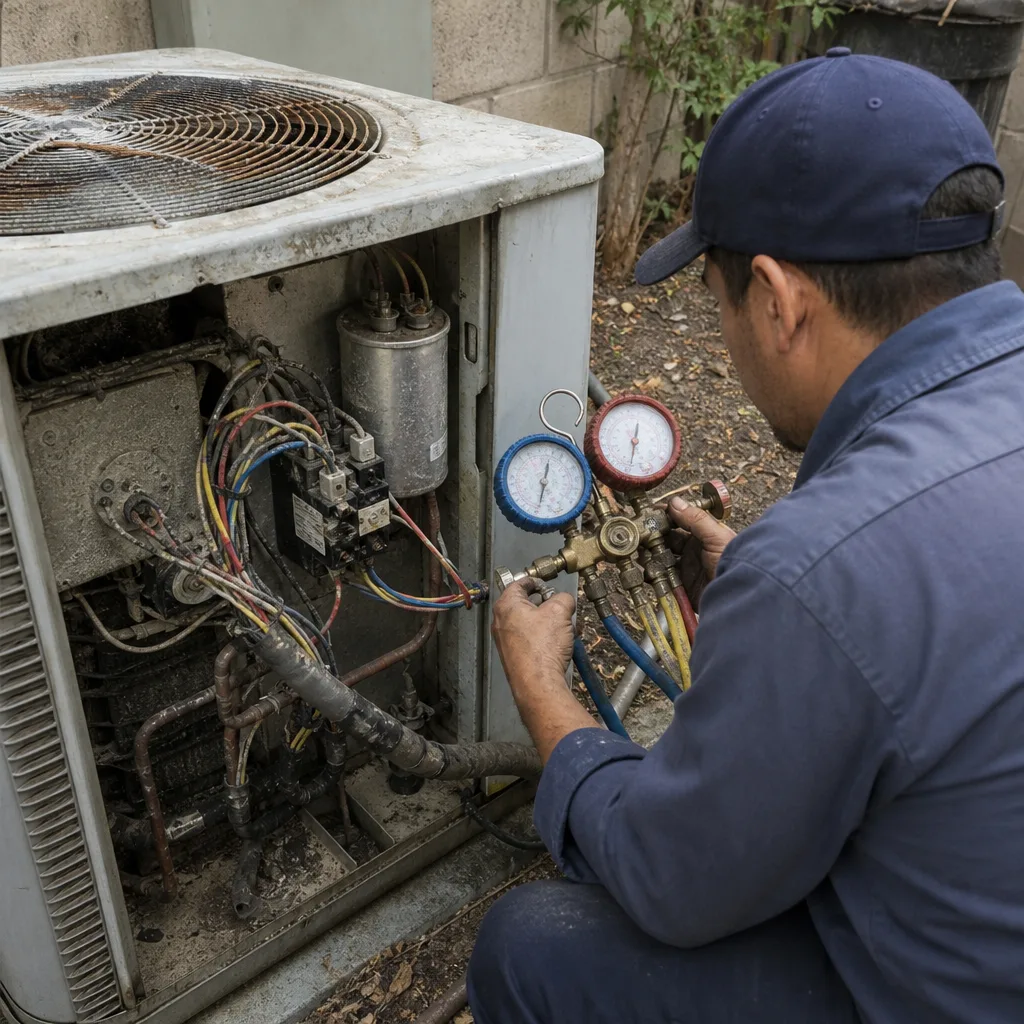 Before
 After
After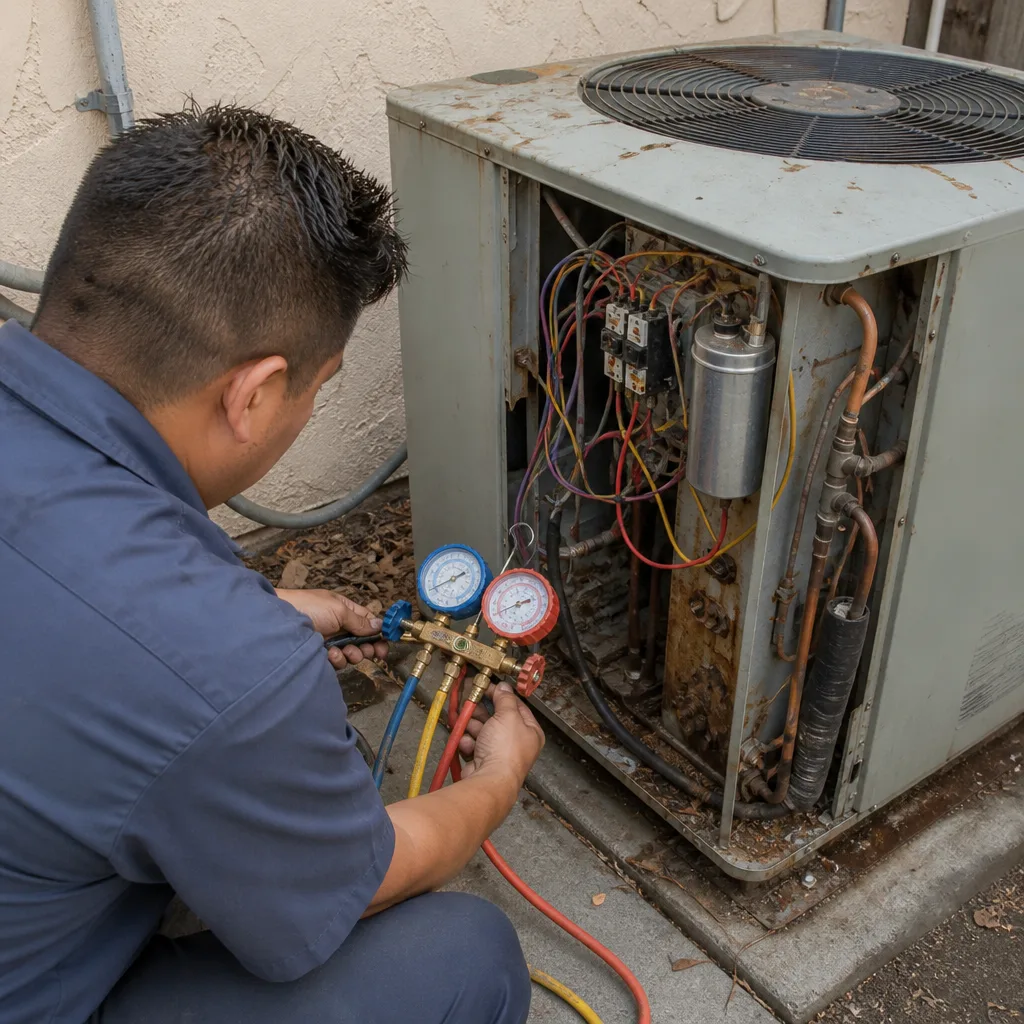 Before
 After
AfterA/C Won’t Turn On at All
When your air conditioner does nothing – no hum, no click, no fan – the most common causes are a tripped circuit breaker, a blown fuse at the disconnect box near the outdoor unit, a failed capacitor, or a fault in the thermostat. Most of these are same-day fixes. A few are not, and knowing which one you’re dealing with changes how urgently you need to act.
A completely dead AC is different from one that runs but blows warm air, or one that short-cycles. “Won’t turn on at all” means zero response from the system – the indoor air handler is quiet, the outdoor compressor never kicks on, and the thermostat seems to be doing nothing. That specific set of symptoms points toward an electrical or control problem, not a refrigerant or airflow issue. The good news is that the most common causes are diagnosed quickly and repaired the same day.
Why It Happens
1. Tripped Circuit Breaker or Blown Disconnect Fuse
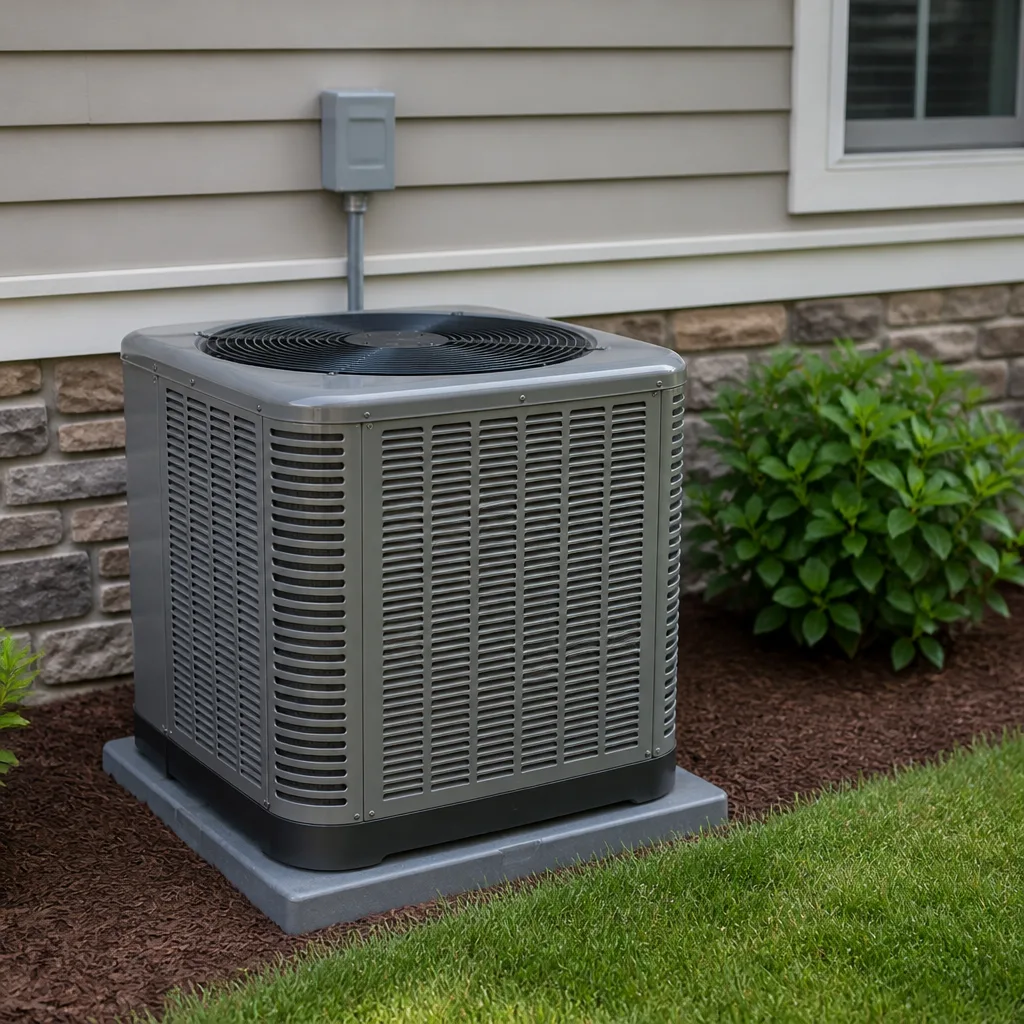
Your AC runs on its own dedicated circuit, and that circuit has a breaker in your main panel – sometimes two. A power surge, a brief voltage spike, or a unit that drew too much current can trip that breaker to the off position. There’s also a separate disconnect box mounted on the wall next to the outdoor unit; it contains cartridge fuses that blow for the same reasons. If you walk to your electrical panel and find a breaker that’s flipped to the middle or off position, or if the disconnect box outside has a fuse that looks scorched or darkened, you’ve likely found the culprit.
2. Failed Capacitor
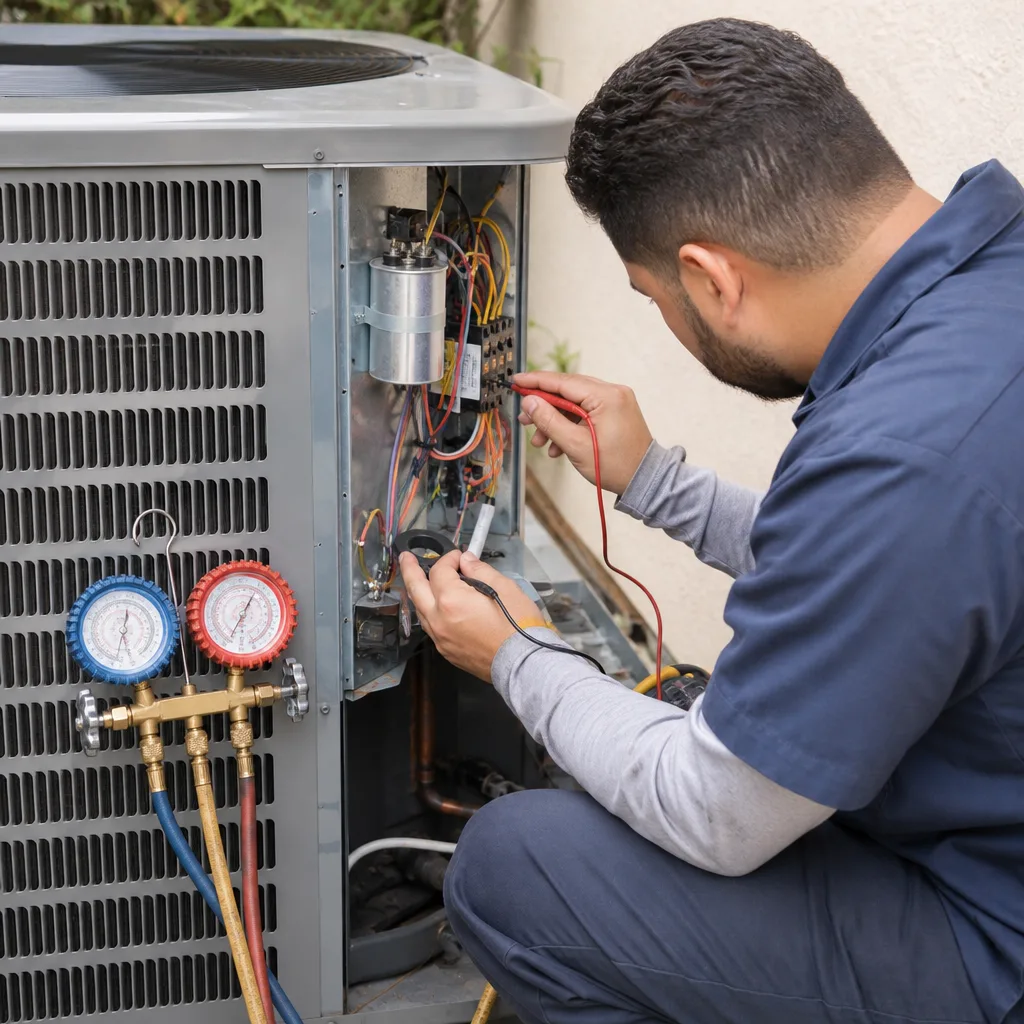
The capacitor is a small cylindrical component inside the outdoor unit that gives the compressor and fan motors the jolt of electricity they need to start. When it fails – and capacitors fail more often than any other single AC component – the motors simply can’t start, and the whole system sits silent. Sometimes a failed capacitor announces itself with a brief humming sound right before the unit gives up, or you’ll hear a single click from the contactor followed by nothing. If you put your ear near the outdoor unit and hear a faint hum with no fan movement, a failed capacitor is a strong candidate.
3. Thermostat Fault or Wiring Problem
If the thermostat display is blank or unresponsive, the command to start the system never leaves the wall. This can be a dead battery in a battery-powered thermostat, a loose low-voltage wire at the terminal block, or a thermostat that’s simply failed. On systems with a smart thermostat, a lost Wi-Fi connection or a firmware glitch can produce the same result. A quick test: if you replace the batteries and the display comes back but the system still won’t start, the problem is downstream of the thermostat – not the thermostat itself.
4. Safety Switch Tripped – Float Switch or High-Pressure Cutout
Modern AC systems have safety switches designed to shut the unit off before something worse happens. The most common is the condensate float switch: a small sensor in the drain pan that cuts power to the system when the pan fills with water (usually because the drain line is clogged). If you see standing water in the drip tray beneath your indoor air handler, this is almost certainly why the system went dead. A high-pressure or low-pressure cutout inside the outdoor unit can also trigger a shutdown, usually due to a refrigerant issue or a blocked condenser coil. Both of these are the system doing exactly what it was designed to do – protecting itself – and both need a technician to address the root cause.
What to Do Right Now
- Check your thermostat first. Set it to COOL and drop the set temperature 5 degrees below the current room temperature. If the display is blank, try fresh batteries. Note what the screen shows – or doesn’t show – before you call. A photo of the display is useful.
- Look at your main electrical panel. Find the breaker labeled for the AC (often labeled “AC,” “HVAC,” or “compressor”). If it’s tripped, reset it once by flipping it fully to off and then back to on. If it trips again immediately, stop. A breaker that keeps tripping is protecting you from a fault in the system – resetting it repeatedly can start a fire or cause equipment damage. Call at that point.
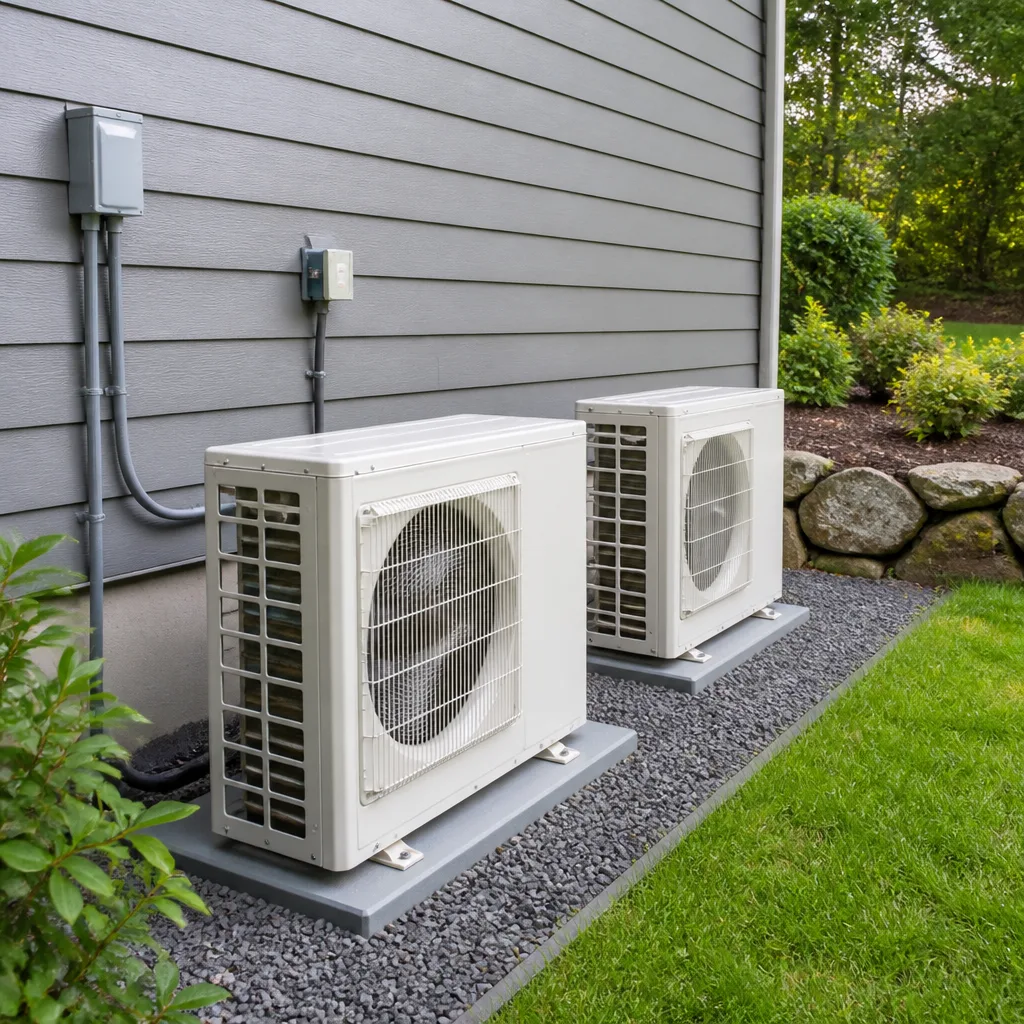
- Check the disconnect box near the outdoor unit. This is usually a gray box mounted on the exterior wall within a few feet of the outdoor unit. It has a handle or a pull-out block. You can pull it out and look at the fuses – if one looks discolored or the wire inside is visibly broken, that fuse has blown. Do not reach into the box or touch any wiring. Replacing high-voltage fuses involves live current at voltages that can be fatal. This step is look, don’t touch.
- Check the condensate drain pan. Look under your indoor air handler for standing water. If you see water pooling, the float switch has cut your system off for a good reason. Don’t force the system back on – running AC with a clogged drain line causes water damage to your home. Turn the system off at the thermostat and call.
- Don’t try to open the outdoor unit or access the capacitor yourself. Capacitors store a high-voltage electrical charge even after the power to the unit is switched off. A capacitor that hasn’t been properly discharged can deliver a severe or fatal electric shock. If you suspect a capacitor, the right move is to leave the outdoor unit alone and let a technician handle it.
How We Fix It
When your local Brandt HVAC technician arrives, you’ll already know who to expect – we send the tech’s name and photo before the visit, and they’ll show a photo ID badge at the door. The diagnostic starts at the thermostat and works outward: control board signals, low-voltage wiring, the disconnect, and then the electrical components inside the outdoor unit. A capacitor swap typically takes under an hour. A thermostat replacement is similarly fast. If the breaker is tripping because of a fault in the compressor or a refrigerant pressure problem, the technician will explain exactly what they found and what it takes to fix it.
Before anything is touched, you get a written price – specific to your system, your situation, and your repair. That’s how every Brandt HVAC job works, every time. No work starts before you’ve seen the number and said yes. The repair is also covered by the 365-Day Done Right Promise: if the fix doesn’t hold, we come back at no additional charge – no argument, no runaround. Most “A/C won’t turn on” repairs are completed in a single visit. The service that resolves this is AC Repair.
Frequently Asked Questions
It depends on the weather and who’s in your home. If temperatures outside are mild, waiting isn’t a health risk for most people. But if it’s a hot stretch and you have young children, elderly family members, or anyone with a respiratory or cardiovascular condition in the home, a non-functional AC is a genuine safety concern – heat illness can develop faster than most people expect. Don’t wait it out in those circumstances. Call (984) 538-9003 and a live person will pick up, any hour of the day or night.
Our phones are answered by a live person 24 hours a day, 7 days a week – nights, weekends, and holidays included. Call (984) 538-9003 and we’ll tell you exactly what availability looks like for your area today. We don’t route you to voicemail or a callback queue – you’ll speak to someone immediately.
A refrigerant leak on its own rarely causes a completely dead system – it usually shows up first as warm air from the vents or ice forming on the lines. That said, a low-pressure safety cutout triggered by lost refrigerant can shut the system off entirely. The technician’s diagnostic will catch this if it’s the cause, and they’ll explain the options before any work begins.
A single trip can be a fluke, especially after a power surge in your neighborhood. But if the breaker trips again within the same cooling season, that’s the system telling you something is wrong – a failing compressor drawing too much current, a wiring fault, or a refrigerant pressure problem. It’s worth having someone look at it before the system fails on the hottest day of summer. Call (984) 538-9003 for a free written estimate and a straight answer about what’s going on.
Get It Fixed
Call (984) 538-9003 – a live person answers every call, day or night, no exceptions. Or book online and your local Brandt HVAC team will reach out to confirm. You’ll know exactly who’s coming before they arrive, and you’ll have a written price before any work starts.
Written by Devin Marlowe, Owner and Lead HVAC Technician at Brandt HVAC, part of the Threshold Group family of home-service companies since 2003.
What Our Customers Say
"Condenser fan motor replaced the same day. Clean, quick, and the quote didn't change."
- Lamar R."Very thorough check on the whole system before summer. Found a worn belt and swapped it for cheap."
- Jerome F."Furnace short cycled all winter. He found a dirty flame sensor and cleaned it. Twenty minutes and a small bill."
- George Q.