
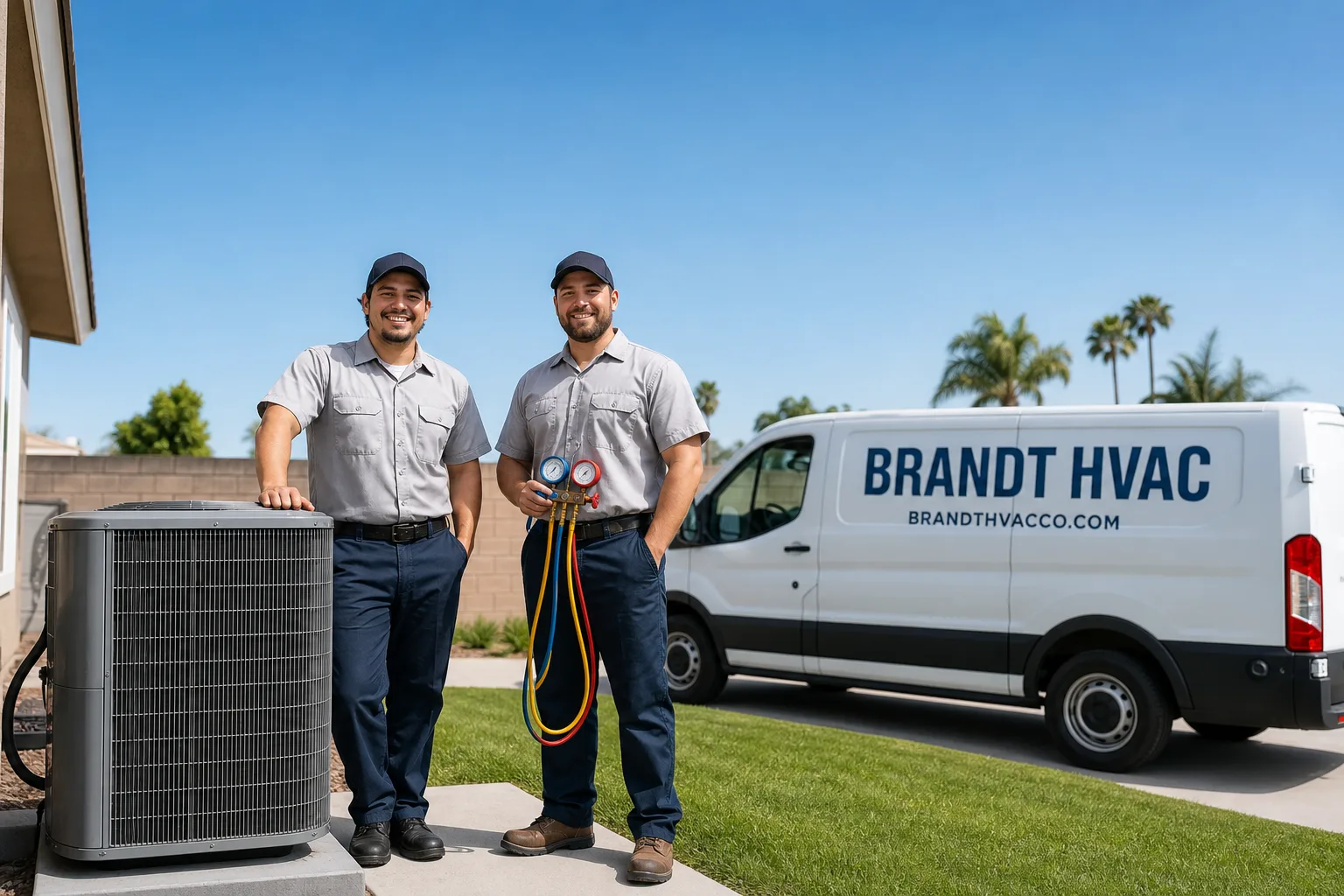
Seasonal tune-up and full diagnostic on your Carrier, Trane, or Goodman system - readings shown to you before any repair is proposed
Diagnosis first, numbers second - you approve the repair price before a single part goes in.
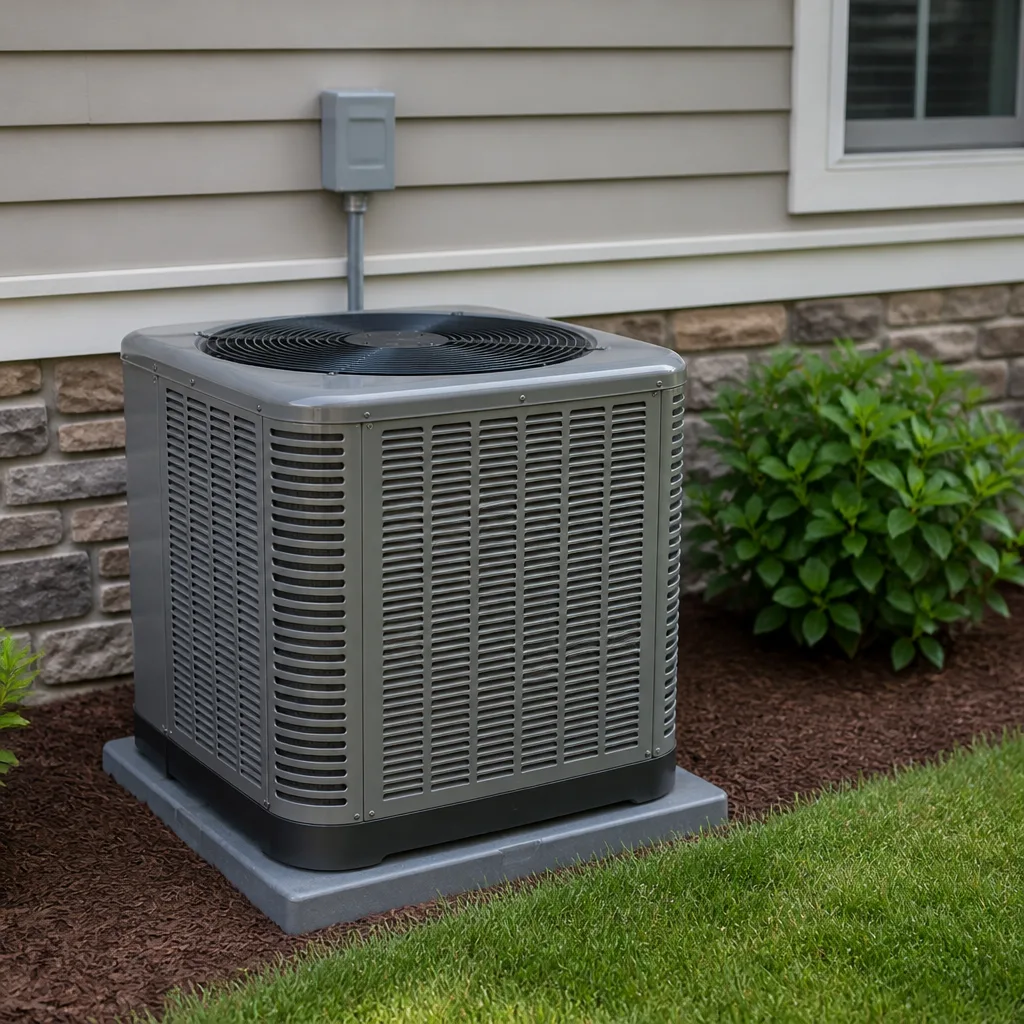
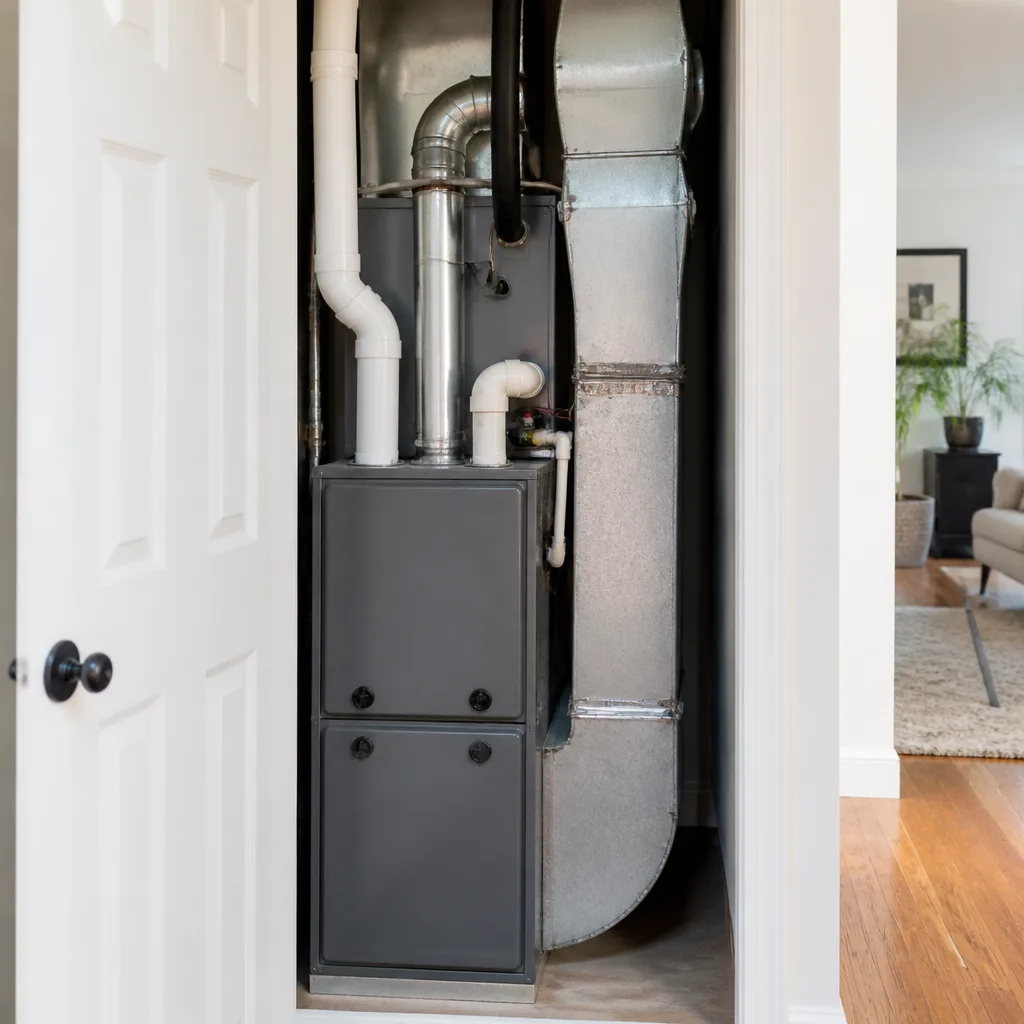
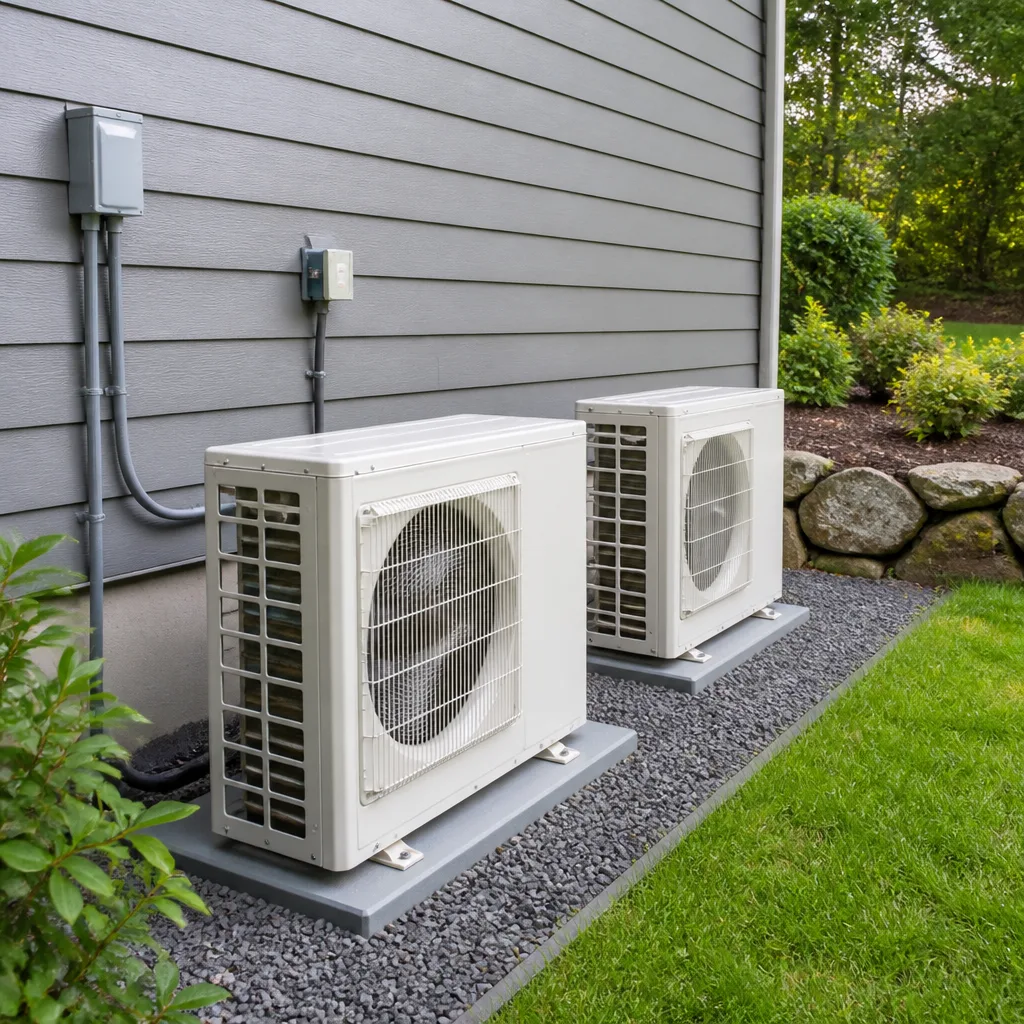
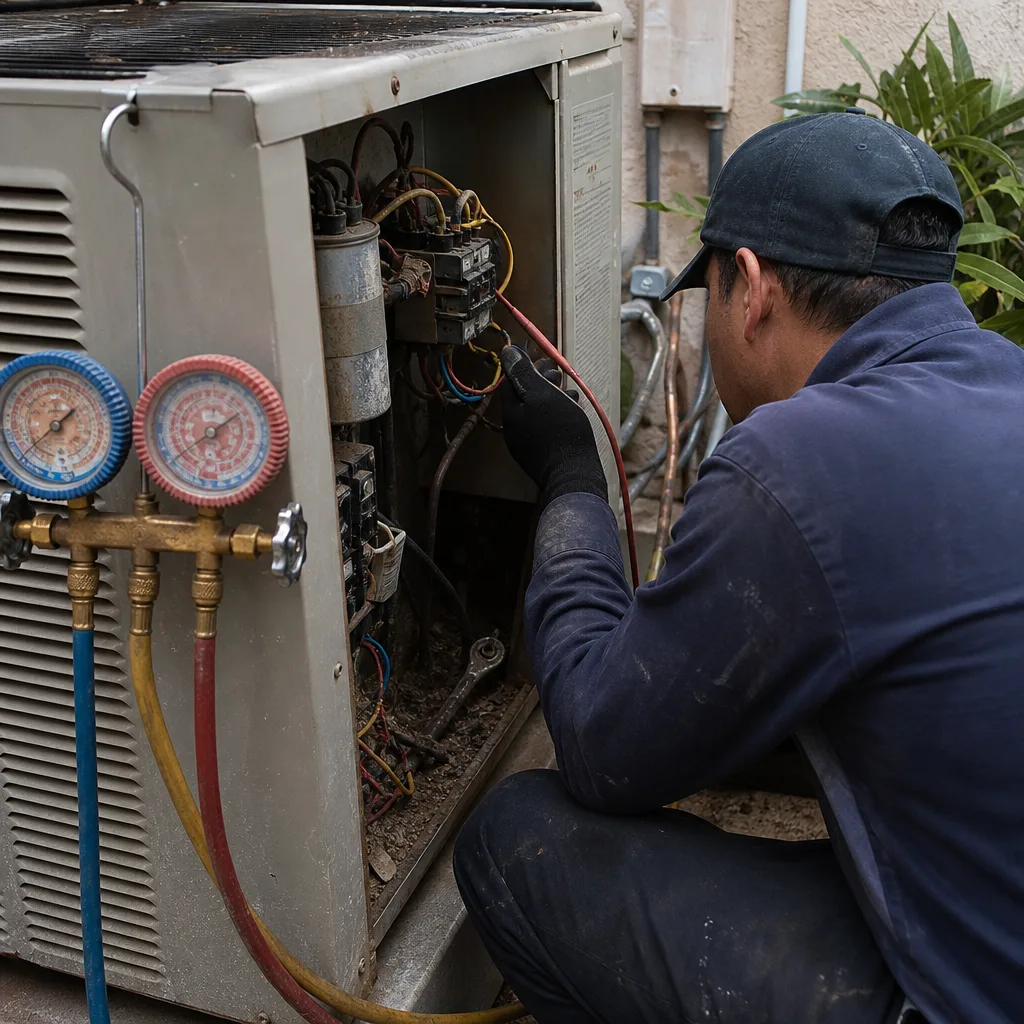 Before
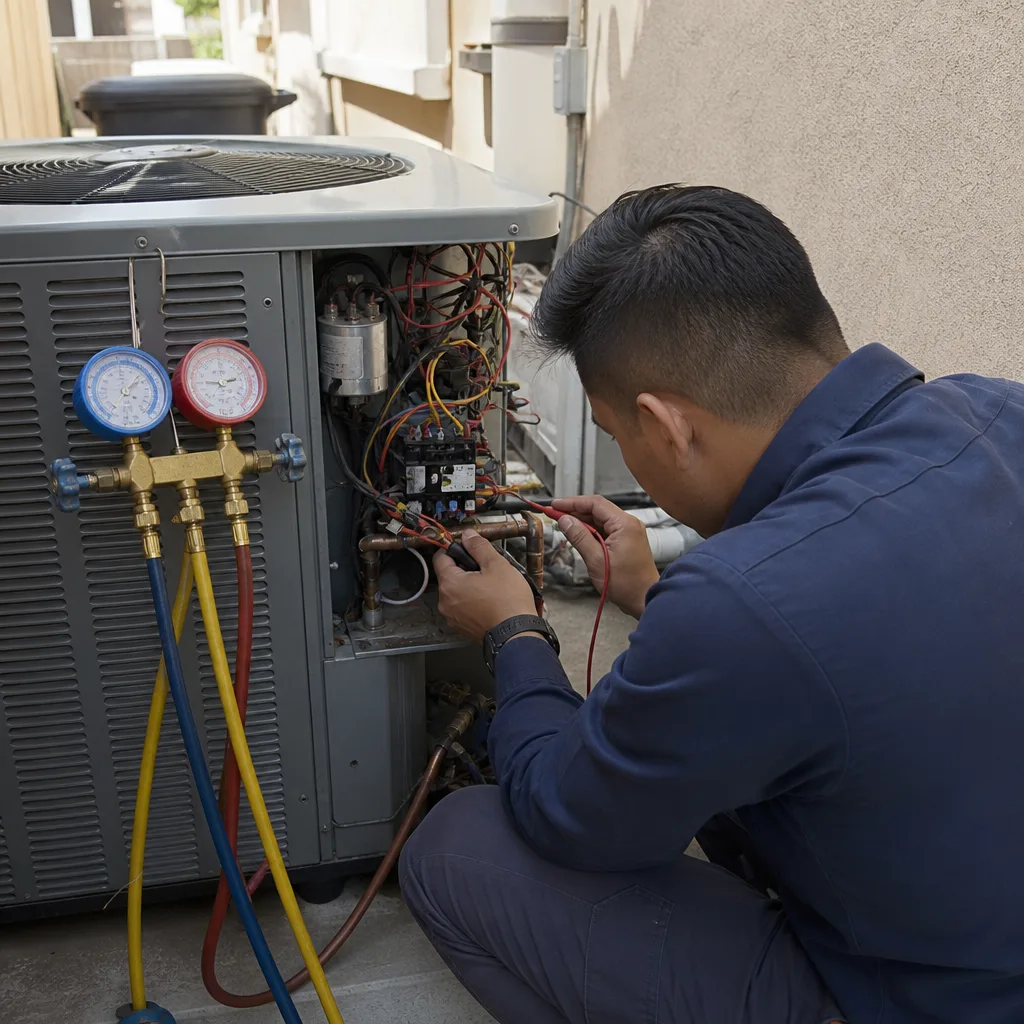 After
After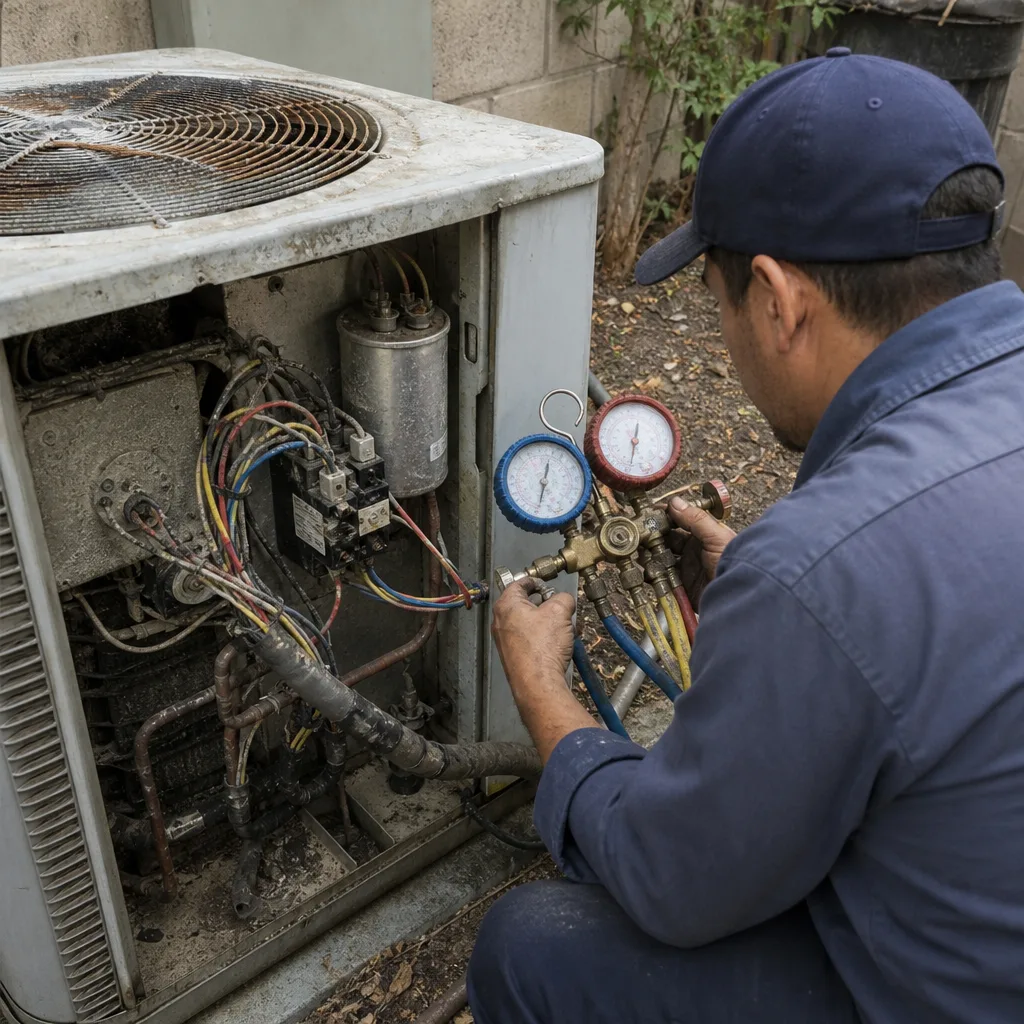 Before
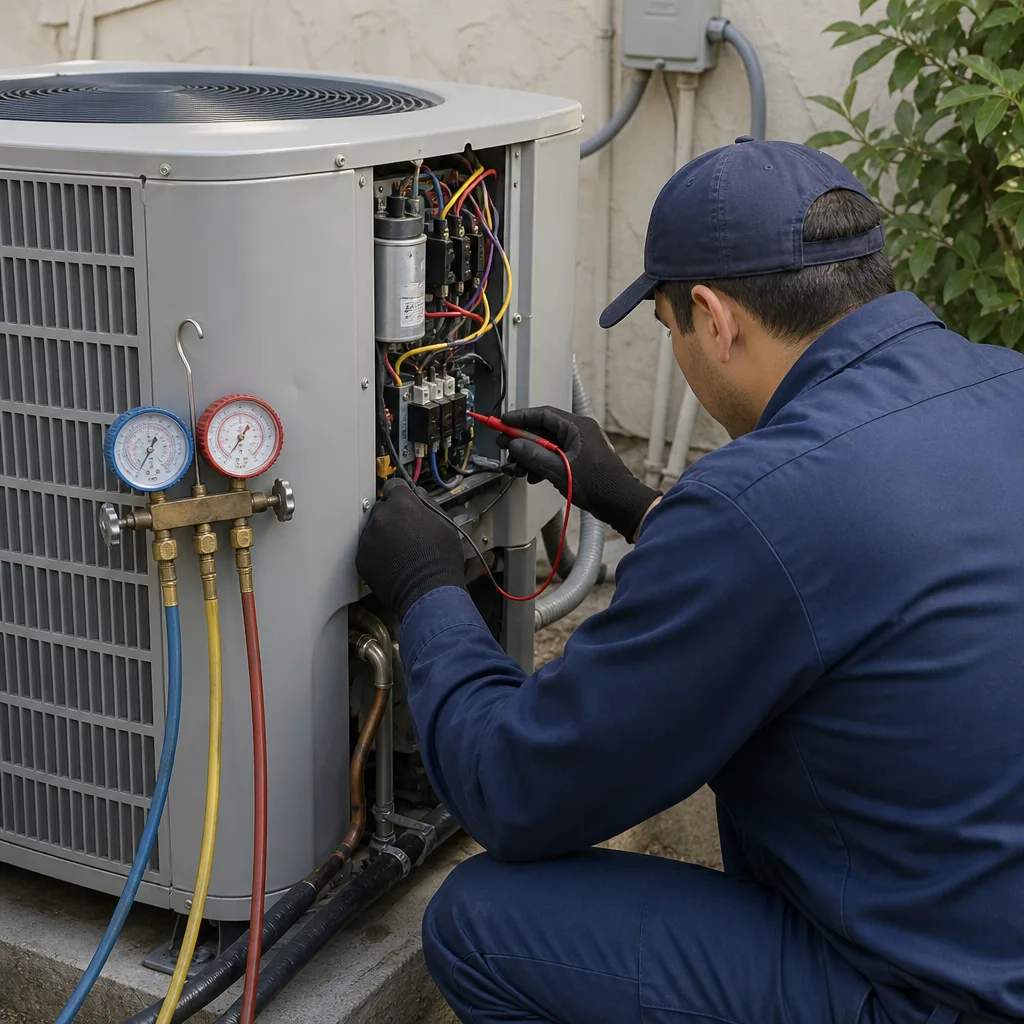 After
After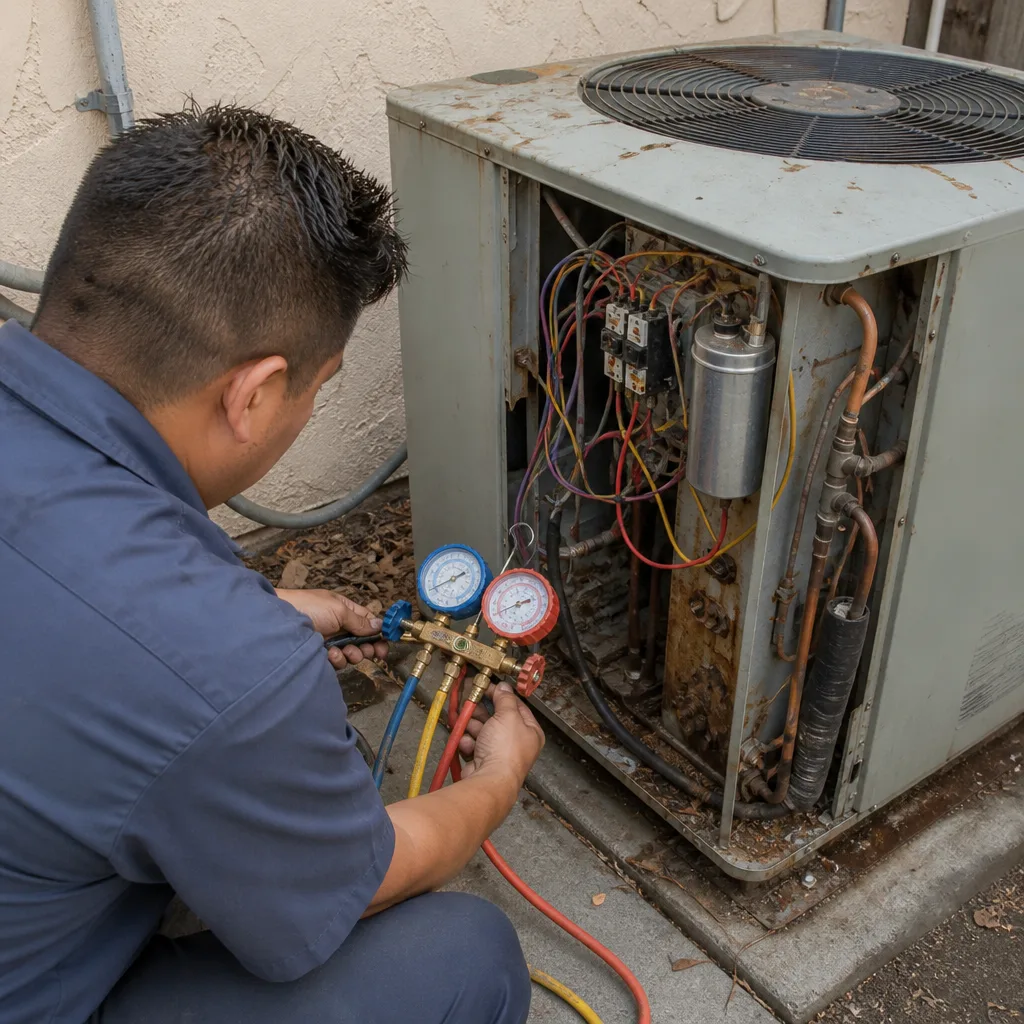 Before
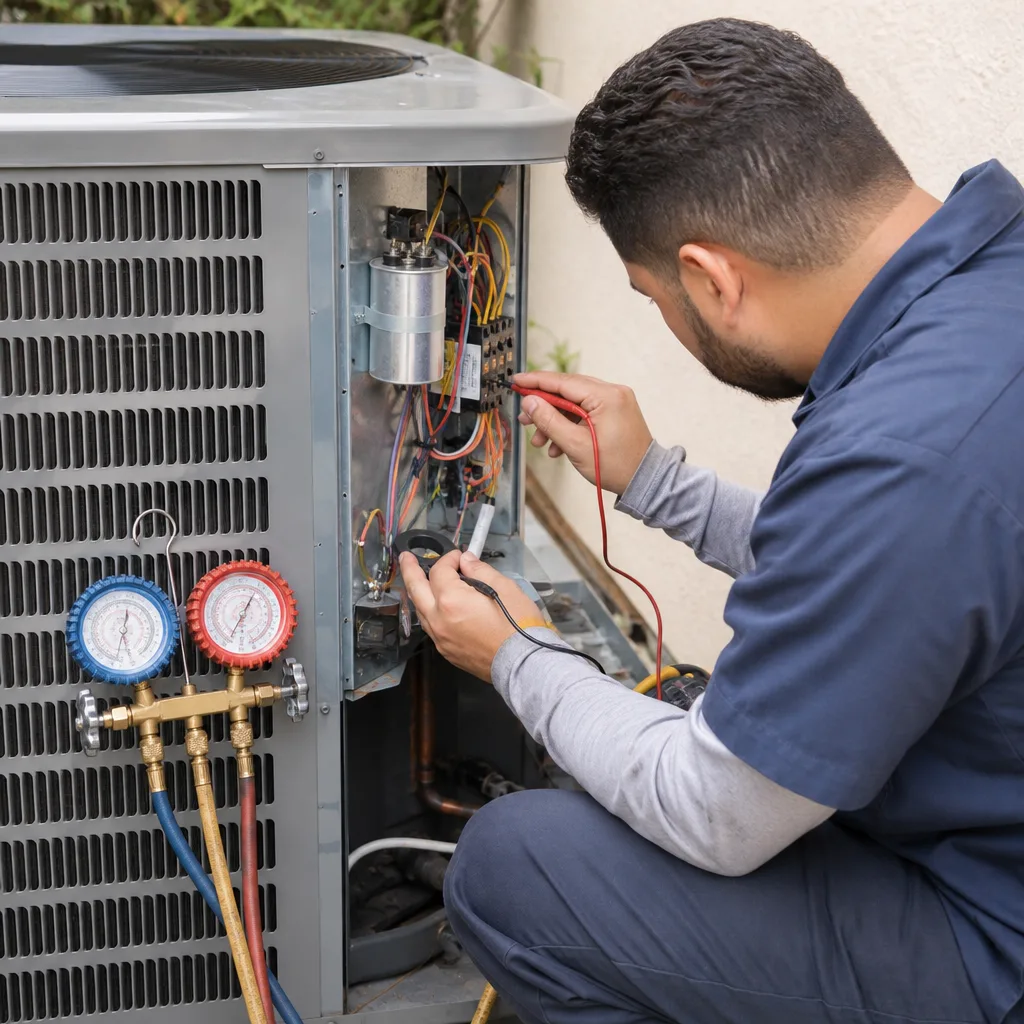 After
AfterFast, Reliable AC Maintenance Across Stanford
AC maintenance in Stanford typically runs $80 – $200 for a full tune-up, and most campus-area systems need service every 90 days rather than once a year because coastal salt exposure corrodes condenser coils three to four times faster than inland. We’re Brandt HVAC, and our crews work Stanford from the San Francisco Bay Area office, usually arriving same-day when you call (984) 538-9003. We know the difference between a private home in Palo Alto and a university-managed residence off Campus Drive East, and we know which buildings route through Stanford’s Central Energy Facility.
Stanford isn’t a conventional city. Most residential housing here is university-owned, spans from pre-1906 earthquake faculty homes to 1950s ranch-style staff housing, and sits at a marine-to-inland climate transition where 25 – 35°F diurnal swings are normal but Diablo wind events can spike temperatures past 100°F in hours. That combination demands maintenance technicians who understand economizer cycling, seismic Zone 4 bracing requirements, and when a building’s HVAC ties into the campus SESI hot-water loop rather than standalone equipment. We do.
Why Brandt HVAC Is Stanford’s Preferred AC Maintenance Company
We’ve built our reputation in Stanford by treating every home like the security concern it genuinely is for many residents. Our Threshold Verified standard means you get a name, photo, and background-check confirmation before anyone arrives, and that technician shows a photo ID badge at your door. If someone shows up who you weren’t told to expect, that visit is on us.
Our San Francisco Bay Area dispatch gets crews to Stanford quickly, and we answer the phone with a live person 24 hours a day, no automated trees. We’ve serviced Goodman and Rheem systems in the 1950s ranch homes near Escondido Village, cleaned salt-corroded York coils on faculty housing along Santa Teresa Street, and coordinated with Stanford Real Estate & Facilities Management for main-campus buildings tied to the Central Energy Facility. Every job starts with a written price you see and approve before any work begins.
Our 365-Day Done Right Promise covers every repair: if it fails, we return at no charge. No argument. That’s been our standard since Brandt HVAC was established in 2003 as part of the Threshold Group family of home-service companies.
Air Conditioner Maintenance in Stanford
Air Conditioner Maintenance in Stanford means more than swapping a filter and checking refrigerant levels. For most university-owned homes here, it means inspecting condenser coils for salt-bloom corrosion, verifying economizer operation against those sharp overnight temperature drops, and knowing whether your building connects to campus district chilled water or runs standalone equipment. A typical AC tune-up in Stanford runs $80 – $200, with repairs ranging $150 – $650 when we find worn capacitors, corroded contactors, or refrigerant leaks.
We recommend 90-day intervals for coastal-exposed units rather than standard annual maintenance. The marine layer that sweeps across campus from the San Francisco Bay deposits chloride salts on outdoor coils that eat aluminum fins in three to four years if left uncoated. Inland Palo Alto systems often last a decade. Here, coated-coil upgrades and more frequent cleaning pay for themselves quickly.
Coastal Corrosion Protection
We apply protective coil coatings and cabinet treatments specifically for Stanford’s salt-air exposure. On a 1950s ranch-style staff residence off Campus Drive East, we found a Carrier condenser coil with salt-bloom corrosion reducing airflow and a bulging run capacitor pulling the compressor toward a hard start. We replaced the capacitor, cleaned and recoated the coil, verified refrigerant charge and static pressure, and logged the unit on a 90-day coastal-exposure interval instead of the usual annual visit. The homeowner said the system cycled quieter the same afternoon.
Economizer Calibration for Diurnal Swings
Stanford’s 25 – 35°F daily temperature swings mean economizers should handle free cooling during cool nights and mornings. When they’re stuck closed or improperly calibrated, the compressor runs unnecessarily, shortening capacitor and contactor life. We test economizer damper operation, actuator response, and changeover setpoints against actual campus weather patterns, not generic Bay Area defaults.
HVAC Maintenance in Stanford
HVAC Maintenance in Stanford encompasses both cooling and heating system care, but with critical local distinctions. Many campus-area buildings connect to the Stanford Energy System Innovations (SESI) infrastructure, abandoning conventional boilers for hot-water loops recoverable from chiller waste heat. A technician treating these as standalone systems misses the campus hydronic interface entirely. Our maintenance protocol includes verification of SESI coordination where applicable, plus seismic bracing inspection for all rooftop and suspended equipment per California OSHPD Zone 4 requirements.
Fall Diablo wind events can push campus temperatures above 100°F within hours, stressing systems sized only for the mild marine baseline. We inspect electrical components for heat-related degradation, verify refrigerant charge against actual load conditions, and document capacitor ESR (equivalent series resistance) values to catch weakening components before they fail under spike load. A standard tune-up at $80 – $200 includes this full electrical and mechanical assessment.
SESI Loop Integration Checks
For main-campus buildings, we verify hydronic interface valve operation, loop pressure differentials, and coordination protocols with the Central Energy Facility. Standalone HVAC contractors from neighboring cities often miss this entirely, treating a campus building like a private home in Menlo Park. We log all SESI interactions per Stanford Real Estate & Facilities Management requirements.
Seismic Bracing Verification
Every rooftop unit, suspended air handler, and duct riser in Stanford must meet OSHPD-level seismic bracing standards. Our maintenance includes visual inspection of anchor bolts, cable restraints, and snubber assemblies. We document findings in writing, and if we find compromised bracing, we coordinate repair approvals with Stanford’s Real Estate Office for university-owned properties.
Trusted Brands We Service in Stanford
We maintain all major residential HVAC brands found in Stanford housing stock: Goodman, Rheem, York, and Daikin among them. The 1950s – 60s ranch-style staff residences near Escondido Village and Lyman often run original Goodman or Rheem split systems with aging ductwork. Newer apartment complexes may use Daikin or York equipment. We stock capacitors, contactors, and coated replacement coils locally for fast turnaround, and we carry OEM-spec refrigerants for systems still running R-22 or newer R-410A replacements. Every repair includes a written guarantee, and if it fails within 365 days, we return at no charge under our Done Right Promise.
Common AC Maintenance Problems We See in Stanford Homes
- Salt-bloom corrosion on uncoated condenser coils. The marine air sweeping across campus from the bay leaves chloride deposits that pit aluminum fins and reduce heat transfer by 30% or more in three to four years. We find this on coastal-exposed units along Santa Teresa Street and near the Dish area regularly.
- Economizer stuck-closed failures causing compressor short-cycling. When overnight lows drop into the 50s but the economizer damper won’t open, the compressor runs, stops, and restarts repeatedly. Capacitors weaken prematurely. We see this most in shoulder seasons when diurnal swings peak.
- Campus hydronic interface misdiagnosed as standalone equipment failure. Technicians unfamiliar with SESI call for boiler replacement when the issue is loop pressure or Central Energy Facility coordination. We verify interface status before recommending any major repair.
- Capacitor and contactor heat degradation from Diablo wind spikes. Systems sized for 82°F afternoons face 100°F+ surges. Electrical components rated for standard load cycles fail under repeated thermal stress. We check ESR and microfarad values, not just visual condition.
Pricing for AC Maintenance in Stanford, CA
We believe you should know real numbers before calling. Here’s what AC maintenance costs in Stanford’s market:
| Service | Price Range |
|---|---|
| AC Tune-Up | $80 – $200 |
| AC Repair | $150 – $650 |
What moves you within these ranges? Coastal-exposed units needing coil coating application run higher than basic filter-and-charge checks. SESI-loop buildings requiring Central Energy Facility coordination take additional diagnostic time. Older faculty homes with mid-century insulation and no central ductwork may need specialized access for maintenance. We give you a written price before any work starts, every single time, with no exceptions. Estimates are free. Call (984) 538-9003 to schedule.
We Also Serve Cities Near Stanford
Our crews work throughout the mid-Peninsula, including AC Maintenance in Stanford and surrounding communities. We also serve Palo Alto, Menlo Park, Atherton, and Los Altos with the same Threshold Verified standard: named, photographed, background-checked technicians, written upfront pricing, and live phone answering 24/7. Each community has its own housing stock and climate considerations, and we adjust our maintenance protocols accordingly.
Serving Stanford, CA - Our Local Coverage Area
We’re based in the Stanford area and know this community well. Use the map below to see our service coverage - if you’re nearby, we can almost certainly help.
FAQs About AC Maintenance in Stanford
Every 90 days for coastal-exposed outdoor units, not annually. Stanford’s marine air corrodes uncoated condenser coils in three to four years versus a decade inland. We log these units on accelerated intervals and recommend coated-coil upgrades. Call (984) 538-9003 to set up a coastal-exposure maintenance plan.
Yes. Virtually all Stanford residential housing is university-owned and managed through Stanford’s Real Estate Office, not private landlords. We coordinate approvals before any main-campus work and document all maintenance per university sustainability standards tied to carbon neutrality commitments. Call us to verify your property’s approval pathway.
Yes, and we must coordinate with the Central Energy Facility rather than treat it as standalone equipment. Our technicians verify hydronic interface status, loop pressures, and facility protocols before performing any maintenance. This is standard for our AC Maintenance team on main-campus calls.
Salt-corroded condenser coils, economizers stuck closed during sharp diurnal swings, and capacitors weakened by Diablo wind heat spikes. We also find seismic bracing compromised on rooftop units and campus hydronic interfaces misdiagnosed by contractors unfamiliar with SESI. Our maintenance protocol addresses all four specifically.
Our standard tune-up verifies current system operation, refrigerant charge, airflow, and electrical health. SEER2 efficiency rating verification and full Manual J load calculations are separate services, typically performed when sizing replacement equipment or diagnosing chronic underperformance. We offer both; ask when scheduling for pricing specific to your building.
Written by Devin Marlowe, Owner at Brandt HVAC, serving Stanford and the San Francisco Bay Area since 2003.