
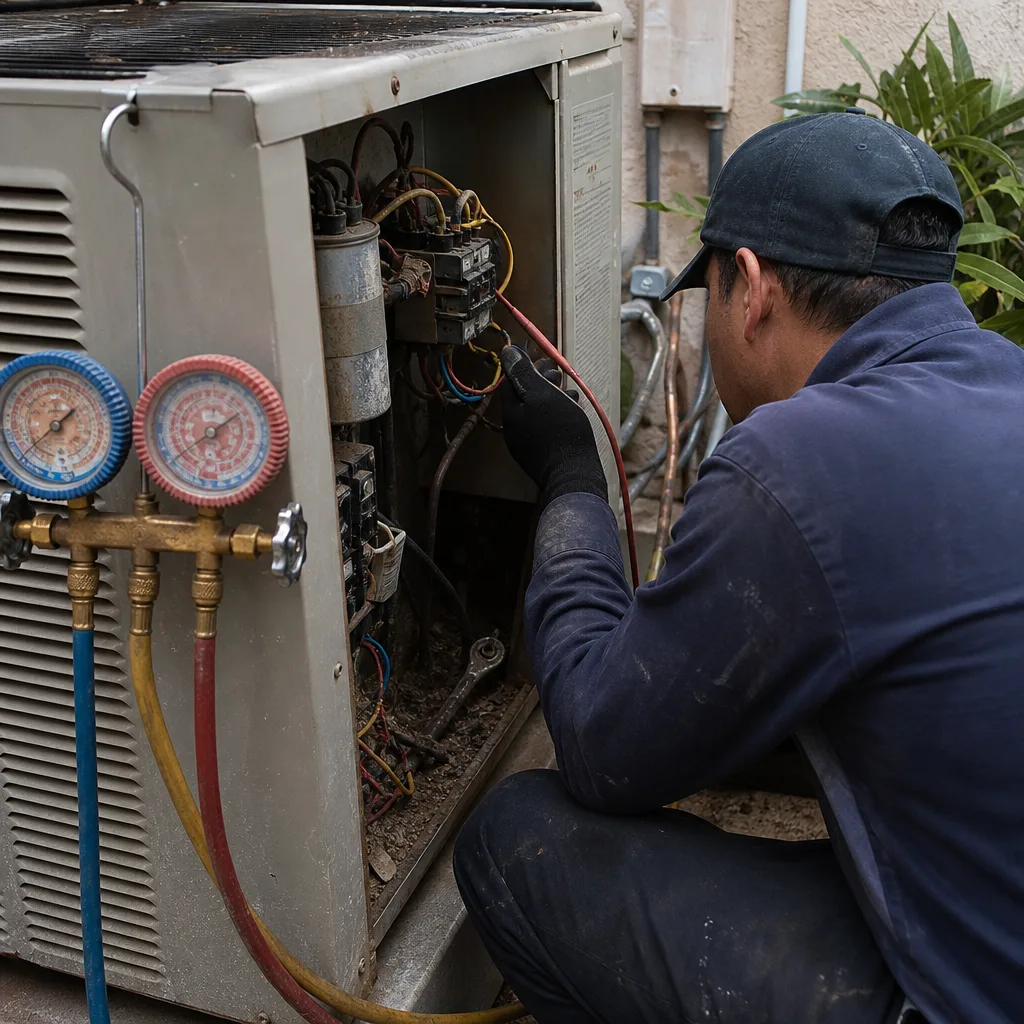
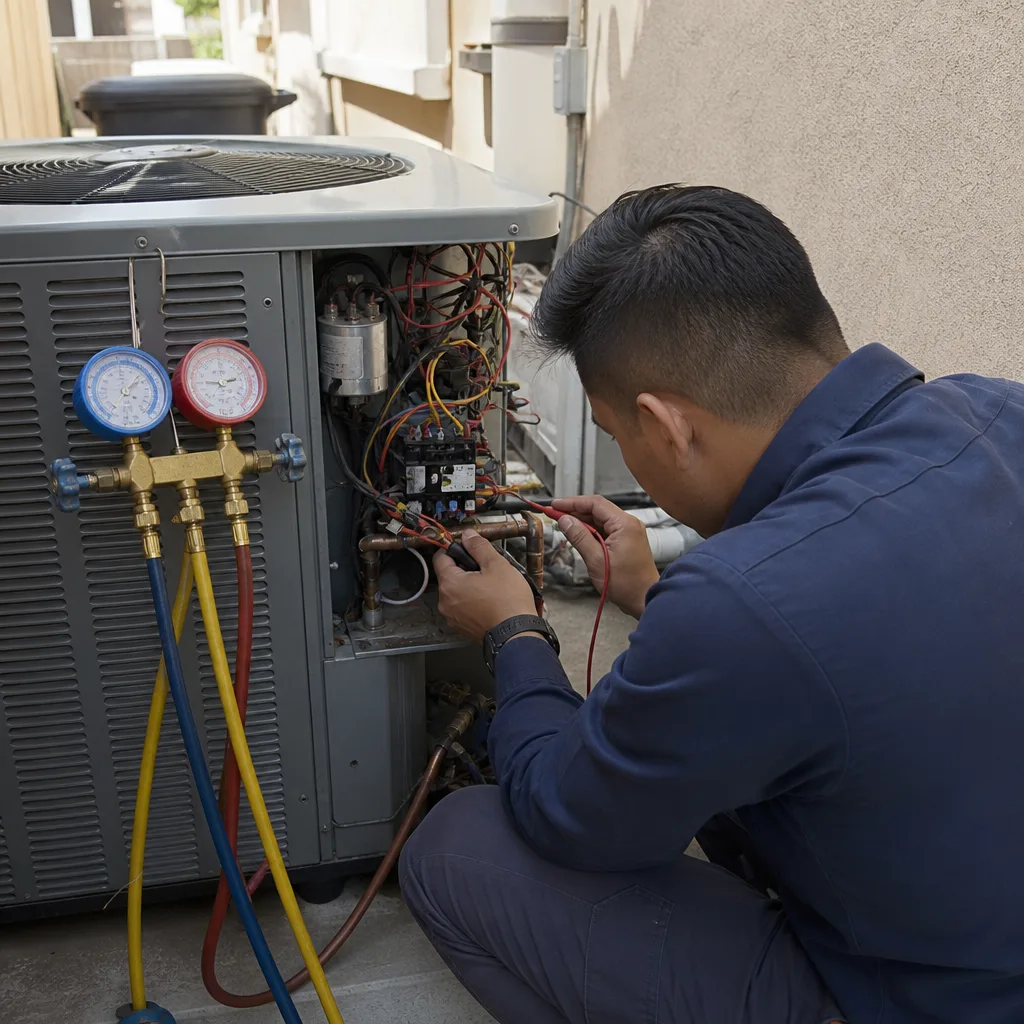
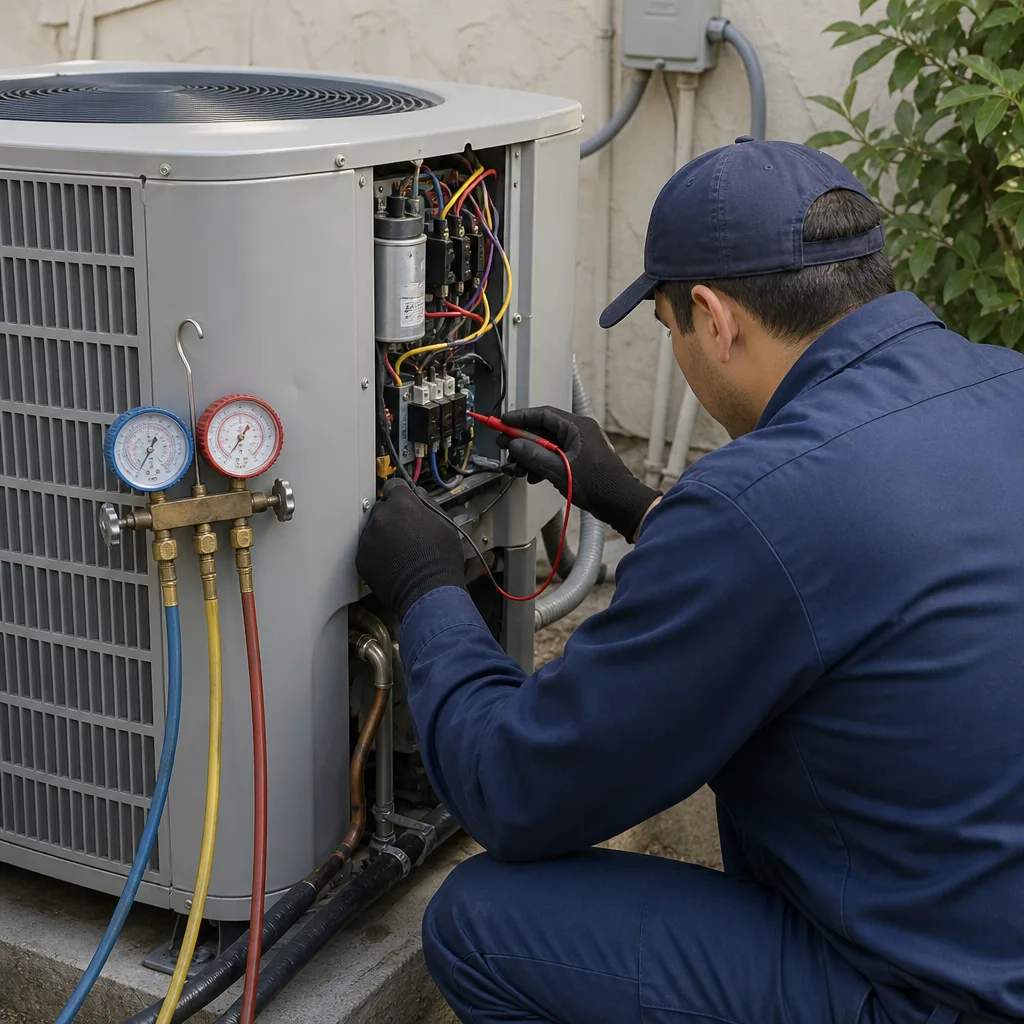
Seasonal tune-up and full diagnostic on your Carrier, Trane, or Goodman system - readings shown to you before any repair is proposed
Diagnosis first, numbers second - you approve the repair price before a single part goes in.
 Before
 After
After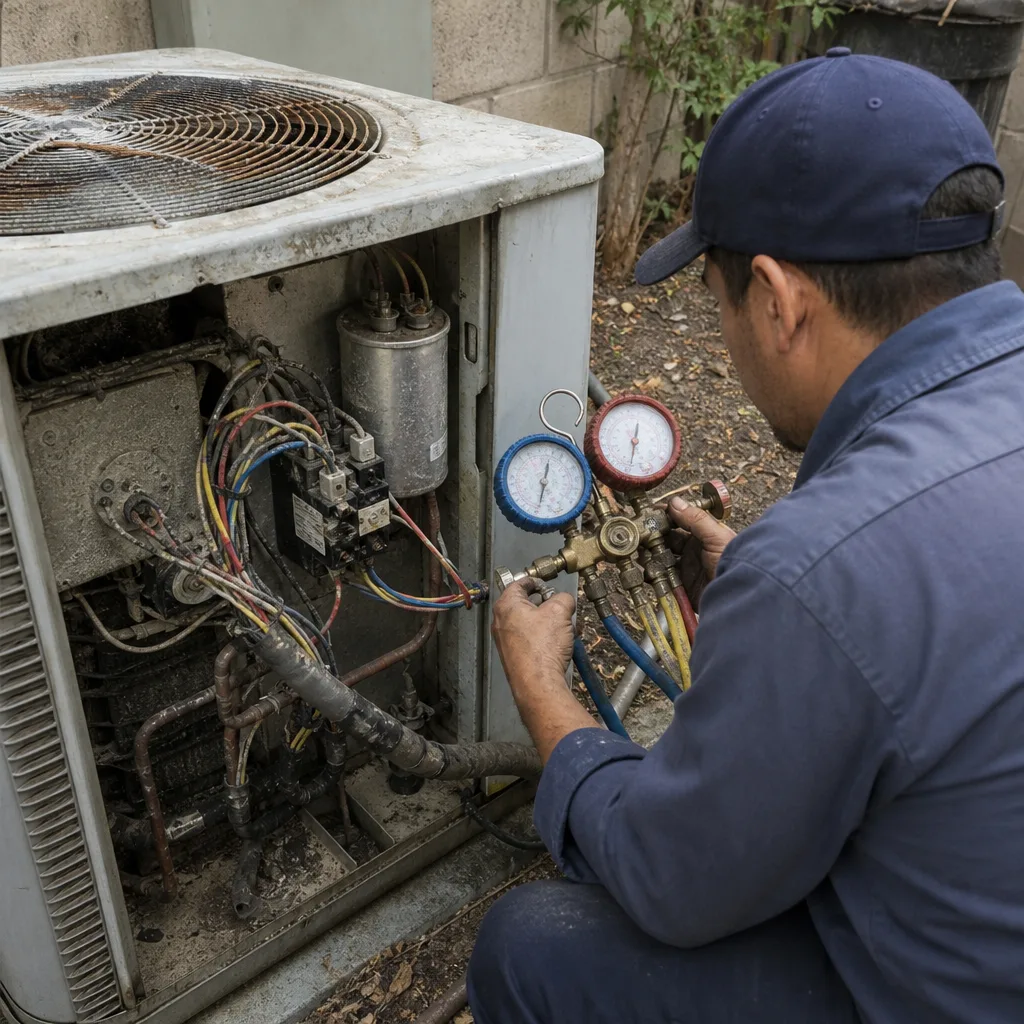 Before
 After
After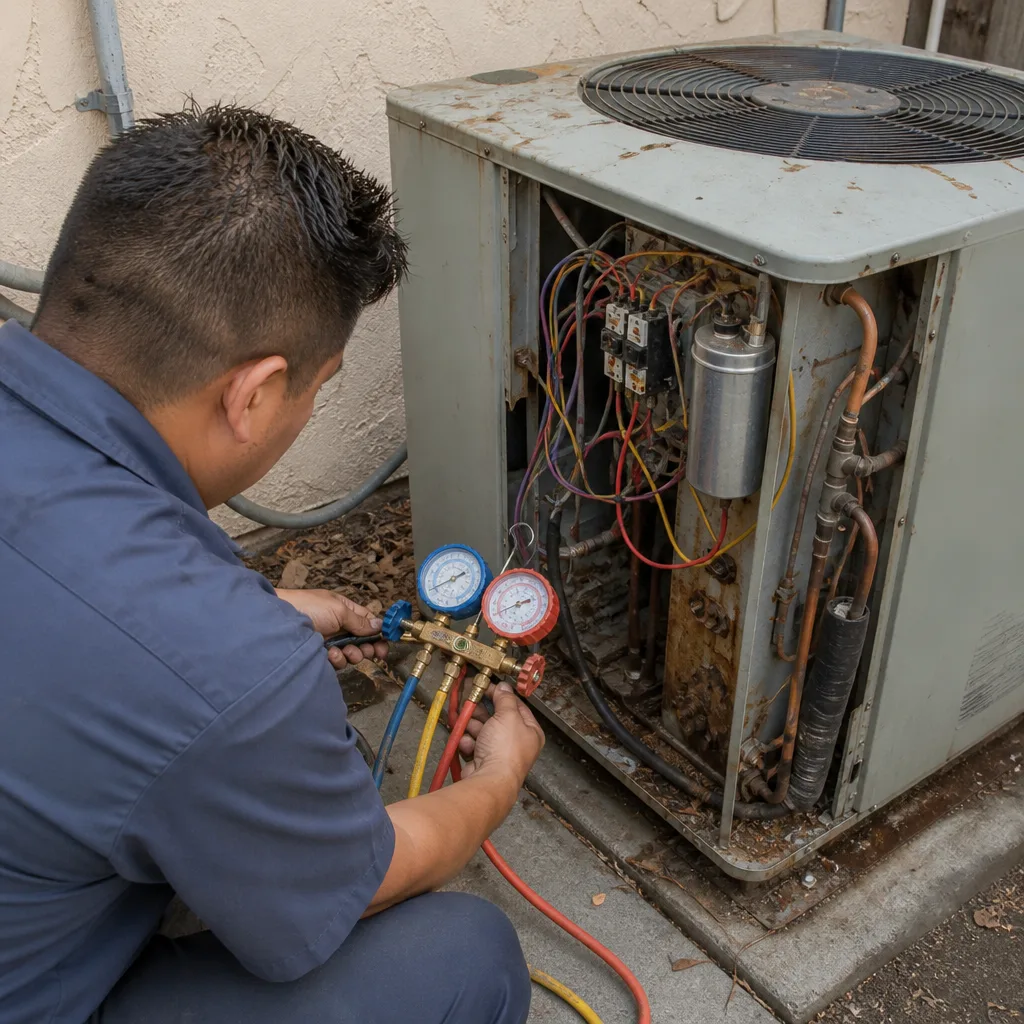 Before
 After
AfterAmerican Standard Ductwork Repair: The Los Angeles Owner’s Guide
Ductwork repair on an American Standard system in Los Angeles typically runs $275 – $1,400 installed, depending on whether we’re sealing a failed joint, replacing a collapsed section, or rebuilding a return plenum. We stock American Standard-compatible duct fittings, collars, and sealants on our trucks, so most repairs are completed the same day we diagnose the problem. You’ll usually notice it first as a room that never quite reaches temperature, a sudden spike in your LADWP bill, or dust accumulating faster than it should around your vents.
Ductwork fails quietly. It doesn’t throw an error code or shut down the way a compressor does. What it does is bleed conditioned air into your attic or crawlspace, where it does you no good at all. In Los Angeles, where summer attic temperatures routinely pass 130°F, a leaking duct in the wrong place can cost you hundreds of dollars a season. Devin Marlowe has pulled apart enough duct runs in Reseda and Tarzana to know that the failure is rarely the duct itself. It’s almost always a connection, a seal, or a section that got crushed during some other repair.
Which American Standard Models This Applies To
American Standard residential systems, from the Silver and Gold series up through the Platinum line, all use standard fiberglass ductboard or flexible duct runs. The good news is that American Standard doesn’t manufacture proprietary ductwork. Their air handlers and furnaces use industry-standard supply and return plenums, so a repair on a Silver 14 heat pump uses the same fittings as a repair on a Platinum 20 variable-speed system. What matters is the size, not the brand stamp.
Here’s the compatibility gotcha most people don’t know: American Standard variable-speed air handlers, particularly the Platinum series, are more sensitive to static pressure than single-stage units. That means a badly sized repair, like a return collar that’s an inch too small or a flex run that’s kinked, will cause the blower to work harder and fail sooner. When we repair ductwork on a variable-speed American Standard system, we check the full static pressure after the work, not just whether the air is blowing. That’s the difference between a repair that holds and one that quietly shortens the life of your blower motor.
If your system still has its original American Standard air handler, the model number is on a data plate behind the front panel. That number tells us the tonnage and the blower type, which tells us the minimum duct sizing the system was designed for. When we see a 4-ton system fed by a 14-inch return, that’s not a repair job. That’s a correction waiting to happen.
Signs Your American Standard Ductwork Repair Is Failing
- One room never reaches temperature. A disconnected or crushed duct branch means that room is getting whatever air happens to drift through the attic, not what the system is actually producing. The rest of the house feels fine, which is why this can go unnoticed for months.
- Your energy bill climbs without a change in habits. In Los Angeles, where AC runs from June through October, a 20% duct leak can add $40 to $80 a month to your LADWP bill. Conditioned air isn’t free, and leaking it into an attic is the most expensive way to heat or cool nothing.
- Dust builds up on registers and furniture within days of cleaning. A return-side leak pulls in attic air, which carries fiberglass particles, insulation dust, and whatever else is up there. That dust ends up in your living room, not just in the duct.
- Whistling or rushing air sounds from specific vents. That’s usually a collapsed flex duct or a kinked section creating a restriction. The system is working against itself, and the noise is the air telling you where the problem is.
- Hot or cold spots on walls and ceilings near the duct runs. A supply leak will condition the wall cavity or attic space around the leak. If you can feel a temperature difference on drywall, the duct behind it is compromised.
Replacement Cost & What’s Included
Ductwork repair pricing in Los Angeles depends on what’s actually wrong. Here’s what we typically see:
- Resealing a joint or collar: $175 – $350, including mastic and new zip ties or clamps.
- Replacing a crushed or torn flex duct section (up to 10 feet): $250 – $600, depending on diameter and accessibility.
- Rebuilding a plenum or transition: $400 – $900, which includes fabricating the fitting, not just patching it.
- Full return or supply line replacement in an accessible attic: $800 – $1,400, when multiple sections have failed or the original install was undersized.
Every quote from Brandt HVAC is a written price before any work starts. You’ll see the part cost, the labor, and the total, and you approve it before we touch anything. The repair itself is covered by our 365-Day Done Right Promise. If the same connection fails or the same section separates within a year, we come back and fix it at no charge. No argument, no service call fee, no fine print.
DIY or Call Us?
Ductwork repair is one of the safer HVAC jobs to approach yourself, but the gap between “looks fine” and “actually sealed” is wider than most people think. You can check your own ductwork: look for disconnected flex runs in the attic, feel for air escaping at joints, and check for crushed sections where something heavy was set on a duct. What you can’t easily do is properly seal a fitting with mastic, correct a static pressure issue, or know whether a section needs to be resized rather than just reconnected.
What we see from DIY attempts most often is duct tape. Duct tape fails on ductwork, every time. It dries out in Los Angeles attic heat within a season or two, loses adhesion, and you’re back where you started. Proper sealing uses mastic or foil-backed tape rated for HVAC temperatures, applied to a clean, dry surface. If you want to tackle a simple reconnection yourself, use the right materials. If you’d rather have it done once and guaranteed, call us at (984) 538-9003 and we’ll send a technician who’s been background-checked, identity-verified, and introduced to you by name and photo before they ever knock on your door.
FAQs
Properly installed ductwork in a Los Angeles attic typically lasts 15 to 25 years, but flex duct connections and seals often fail within 8 to 12 years due to attic heat cycling. The duct material itself is rarely the problem; it’s the connections, the sealant, and the sections that get crushed during other repairs or storage. If your system is over 15 years old and you’re seeing dust, uneven temperatures, or rising bills, the ductwork is a likely contributor. Call (984) 538-9003 for an inspection, and we’ll tell you honestly whether repair or replacement is the better spend.
Most ductwork problems can be repaired rather than replaced. Isolated leaks, separated joints, crushed sections, and undersized collars are all repairable. We recommend replacement only when multiple runs have failed, the original installation was done wrong, or the duct sizing doesn’t match the system. A good repair extends the life of what you have for years, and we’ll tell you plainly if we think replacement is a better use of your money, with a written price either way.
Most ductwork repairs take 2 to 4 hours from diagnosis to completion. A simple joint reseal is usually done in under an hour. Replacing a flex run or rebuilding a plenum takes longer, but we complete the vast majority of ductwork repairs in a single visit, same day. You’ll know the price before we start, and the work is guaranteed for 365 days.
Because American Standard uses industry-standard duct sizes and fittings rather than proprietary components, we stock the common fittings, flex duct, mastic, and sealants on our trucks. When a repair needs a custom-fabricated transition or plenum, we build it in-house, usually the same day. You will not be waiting on a special-order part for a ductwork repair. We also service Carrier, Trane, and Lennox systems, and carry compatible parts for those brands as well.
Written by Devin Marlowe, Owner & Lead HVAC Technician, Brandt HVAC at Brandt HVAC, serving Los Angeles and nearby areas.