
Seasonal tune-up and full diagnostic on your Carrier, Trane, or Goodman system - readings shown to you before any repair is proposed
Diagnosis first, numbers second - you approve the repair price before a single part goes in.
 Before
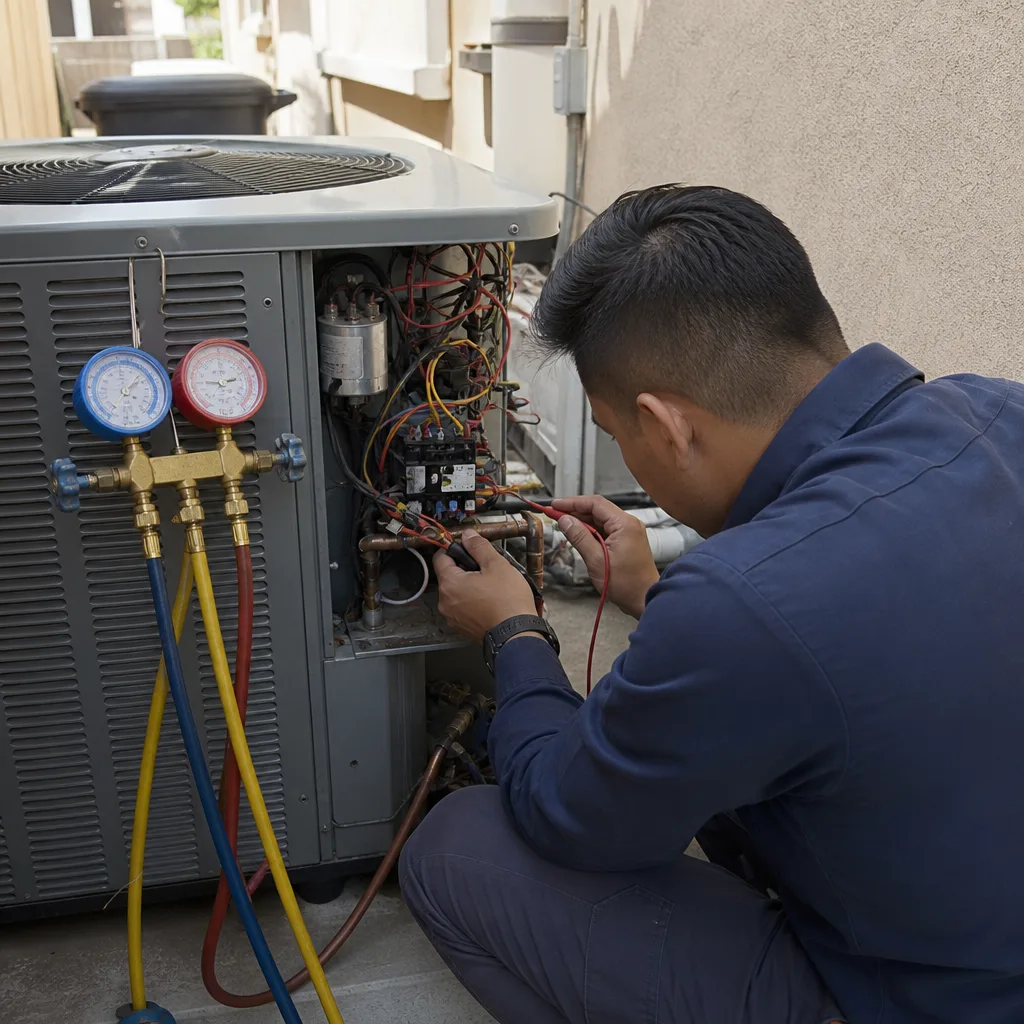 After
After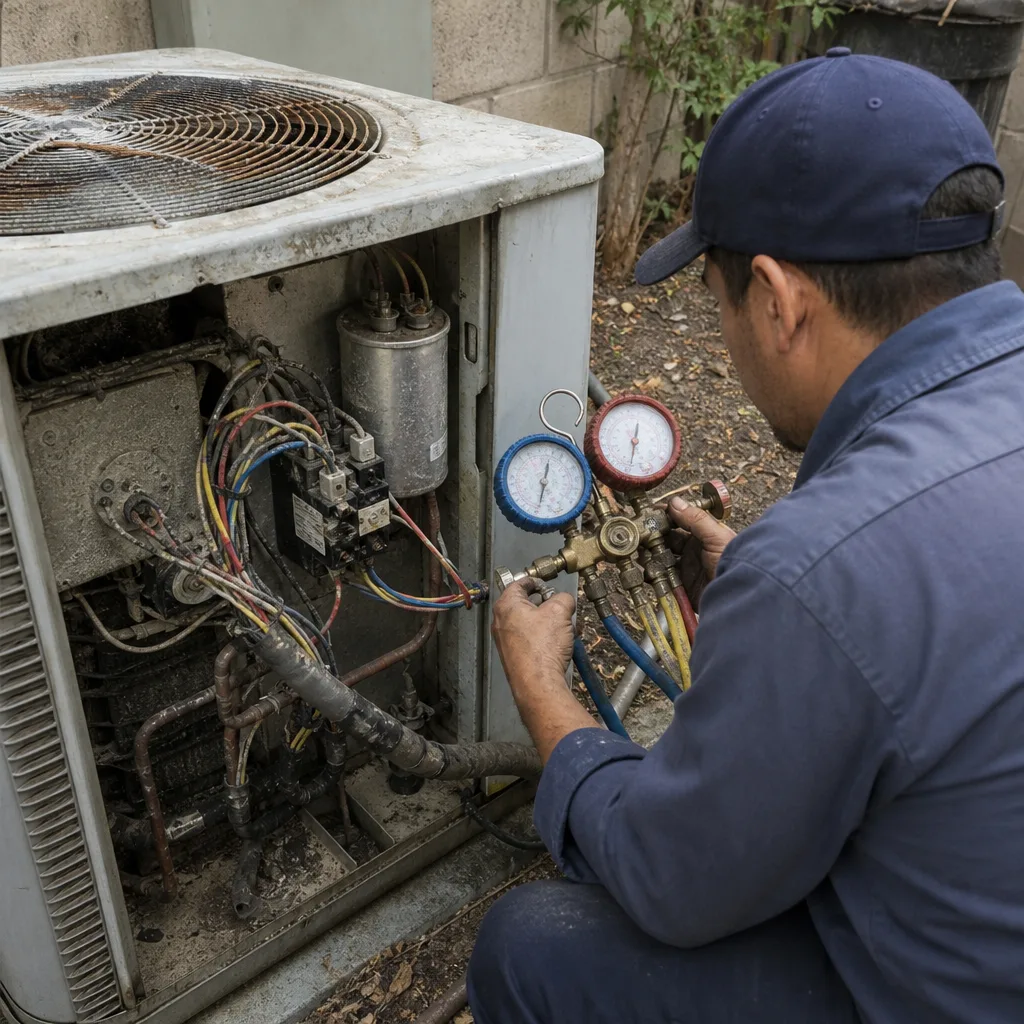 Before
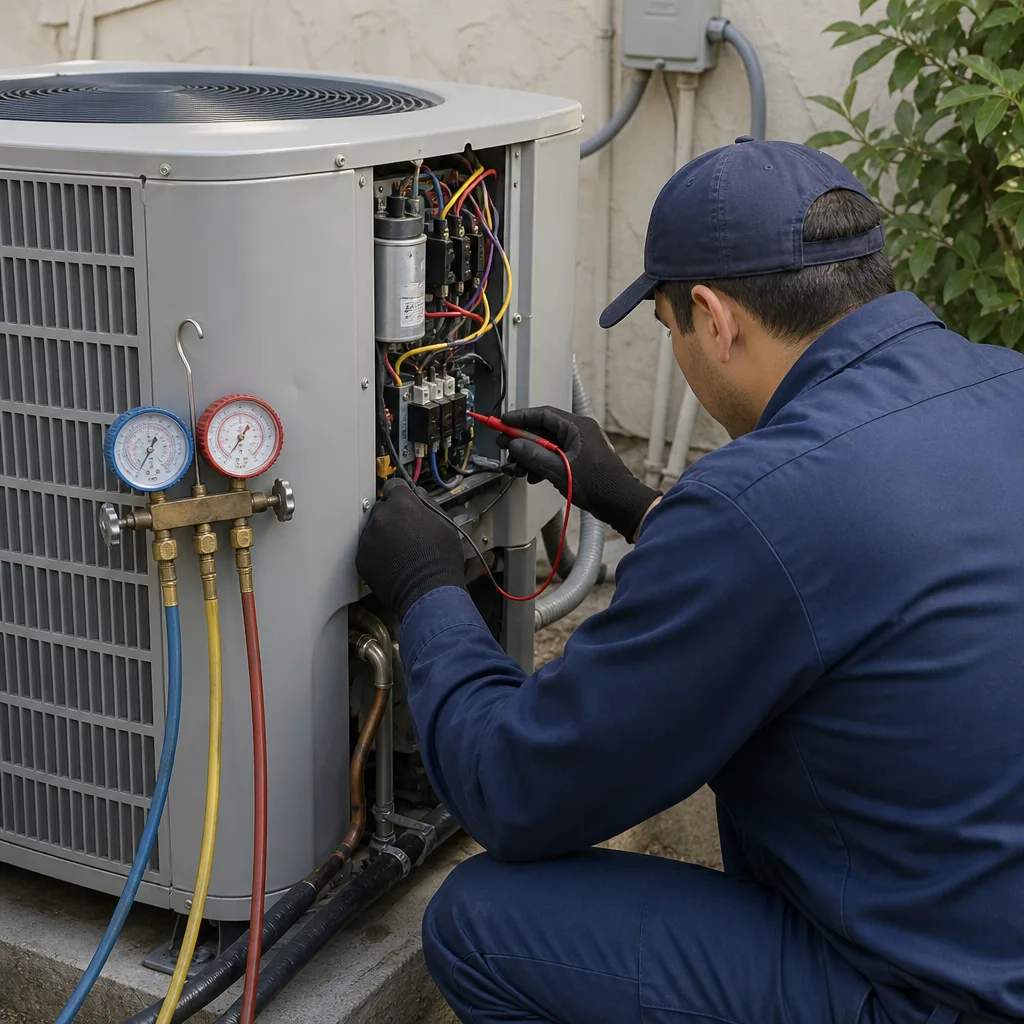 After
After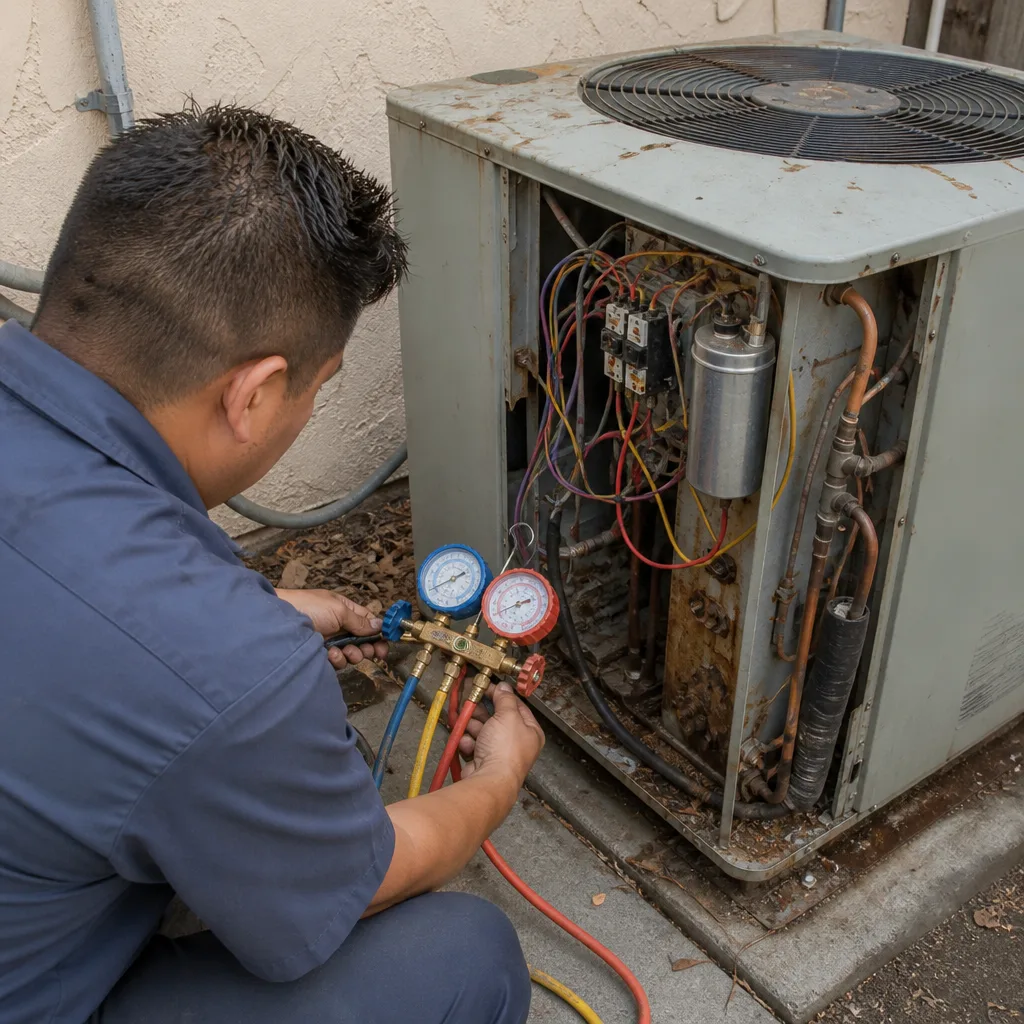 Before
 After
AfterCarrier Capacitor Replacement: The Los Angeles Owner’s Guide
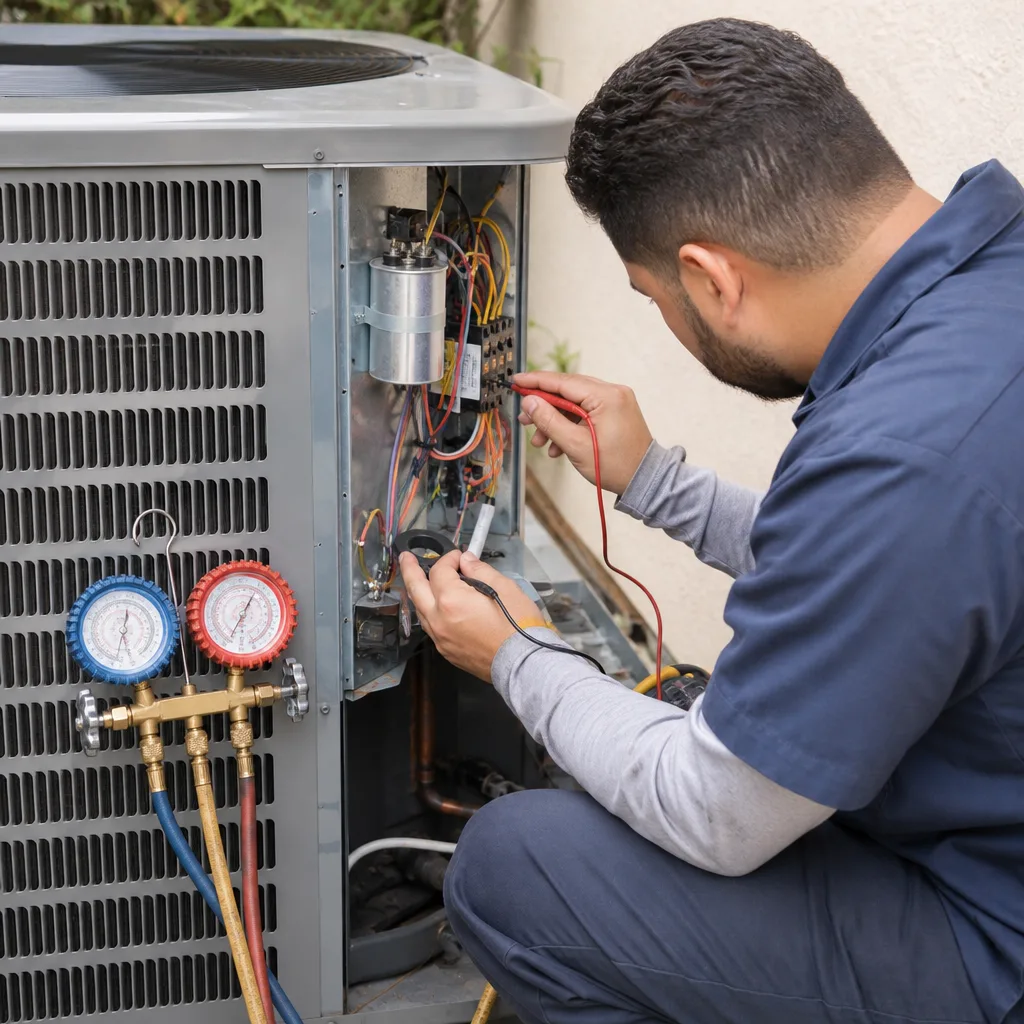
We stock Carrier-compatible run and start capacitors on our trucks and can usually complete a replacement the same day we diagnose it. Most Carrier capacitor replacements in Los Angeles run $175 – $385 installed, parts and labor included, depending on whether it’s a single or dual capacitor and the specific microfarad rating your unit calls for. You’ll know this part has failed when your outdoor condenser hums but the fan won’t spin, or the compressor clicks and gives up before the house cools.
In Los Angeles, capacitors fail faster than almost anywhere else in the country. The combination of 100-degree summer afternoons, airborne dust from the Santa Anas, and condensers tucked into tight side yards with poor airflow breaks these parts down predictably. Devin Marlowe has pulled capacitors out of Reseda, Sherman Oaks, and Silver Lake units that looked fine on the outside and were completely dead on the inside. If your Carrier is humming, clicking, or running warm air, keep reading. This page covers what you need to know before you spend a dollar.
Which Carrier Models This Applies To
Carrier uses round and oval capacitors across its residential lines, and the right replacement depends on two things: the microfarad (µF) rating printed on the old part, and the voltage rating, usually 370 or 440 VAC. Carrier models we commonly work on include the Comfort series, Performance series, and Infinity line, as well as older units from the 2000s that are still running around Los Angeles. The part itself is not model-specific in the way a control board is. What matters is matching the electrical rating, and that’s where homeowners get into trouble.
Here’s the gotcha Carrier owners miss: a 370 VAC capacitor will physically fit where a 440 VAC capacitor belongs, but it won’t survive the voltage spikes that Los Angeles utilities deliver on hot afternoons. We’ve seen units in Woodland Hills fail twice in one summer because someone installed the cheaper 370 part. We stock both ratings in most common microfarad values so we don’t leave a job half-finished. For Carrier specifically, we prefer OEM or Tier-1 equivalents from AmRad, Titan HD, or Mars. Cheap generic capacitors from no-name importers tend to fail within one or two Los Angeles cooling seasons. The extra $15 to $40 for a quality part buys you four to seven years instead of one.
Signs Your Carrier Capacitor Replacement Is Failing
- The condenser hums but the fan doesn’t turn. This is the classic dead capacitor symptom. The motor is getting voltage but not the jolt it needs to start. You may catch the fan trying to move a few degrees before it gives up.
- The compressor clicks off after a few seconds. A weak capacitor can’t hold the compressor start winding energized long enough, so the unit short-cycles. You’ll hear the click, the brief rush of refrigerant, then silence.
- The top of the capacitor looks swollen or domed. Heat and electrical stress build internal pressure. A flat-top capacitor that now looks rounded is done. If the side seams are split, it’s leaking dielectric fluid and should be replaced immediately.
- The air is cool but not cold, or takes hours to drop a few degrees. A failing capacitor may still run the fan at reduced speed or the compressor at reduced efficiency. It’s working just enough to fool you while your electric bill climbs.
- The breaker trips randomly on hot days. As a capacitor degrades, the compressor draws more current to do the same work. That extra amperage can trip a breaker, especially in older Los Angeles homes with aging panels.
Replacement Cost & What’s Included
In Los Angeles, you should expect to pay between $175 and $385 for a Carrier capacitor replacement from a licensed HVAC contractor. The lower end covers a standard single-run capacitor on an easily accessible condensing unit. The higher end covers a dual-run capacitor (which handles both the fan and compressor), a harder-to-reach unit, or an after-hours call. At Brandt HVAC, the price you see is the written price you approve before any work starts. No surprise line items, no “we found something else” add-ons.
Here’s what a typical Carrier capacitor replacement includes when we do the job: the diagnostic visit, the replacement capacitor itself (OEM or Tier-1 equivalent), installation labor, a full system test after the swap, and a written guarantee on the repair. We also check the contactor and the fan motor while we’re there, because a failed capacitor often takes out the contactor with it, and you don’t want to pay for two service calls a week apart. If the repair fails within 365 days, you call us and we come back at no charge. That’s the 365-Day Done Right Promise, and it’s in writing on every invoice.
DIY or Call Us?
Here’s the honest split. You can safely check the outdoor disconnect box, confirm the breaker is on, and see whether the capacitor looks visibly swollen or leaking from the top. That’s worth knowing before you call. What you should not do is open the condenser panel and handle the capacitor yourself. Capacitors store a charge even when the power is off, and a discharge across your hand is a genuine injury. Carrier capacitors carry enough stored energy to stop a heart. Please don’t test that.
We also don’t recommend guessing at the replacement part online. We’ve had homeowners in Los Angeles order a $12 capacitor from a marketplace seller, install it, and call us two weeks later when the same symptoms return. The part was the wrong µF rating for the compressor. Now the compressor is stressed and the repair costs more than it should have. If you want this done once and done right, call (984) 538-9003. We’ll have the correct part on the truck and a live person will answer when you call, day or night.
FAQs
A quality Carrier capacitor typically lasts 5 to 7 years in Los Angeles weather, though cheap aftermarket parts and units with poor airflow may fail in 1 to 2 summers. High heat degrades the internal dielectric faster, so a capacitor in Reseda running against a hot west-facing wall will age faster than one in a shaded Santa Monica carport.
No, capacitors cannot be repaired. Once the dielectric material inside breaks down or the casing deforms, the only correct fix is replacement. Any tech who claims to “top up” a capacitor or refurbish one is not doing you a favor. Call (984) 538-9003 and we’ll get a straight answer and a written price before any work begins.
Most Carrier capacitor replacements take between 30 and 60 minutes once our tech is on site. That includes removing the panel, testing the old part, installing the replacement, and cycling the system to confirm the fan and compressor both start correctly. If your condenser is in a tight side yard or on a rooftop, allow a little extra time for safe access.
Yes. Our trucks carry common Carrier-compatible single and dual capacitors in 370 and 440 VAC ratings across the most common microfarad values. If your unit needs an unusual spec we don’t have on board, we’ll source it from our local Los Angeles supply houses the same morning and come back that afternoon. We also stock parts for Trane and Lennox systems if you have a second unit on the property.
If your Carrier condenser is humming, clicking, or blowing warm air across Los Angeles, we can usually have it fixed the day you call. You’ll know the price before we touch anything, you’ll know the name and face of the tech before they knock, and you’ll know the repair is guaranteed in writing for 365 days. Call (984) 538-9003 for a free estimate and a straight answer. As Devin says: “Tell me what it is, tell me what it costs, tell me it holds – that’s the whole job.”
Written by Devin Marlowe, Owner & Lead HVAC Technician, Brandt HVAC at Brandt HVAC, serving Los Angeles and nearby areas.