
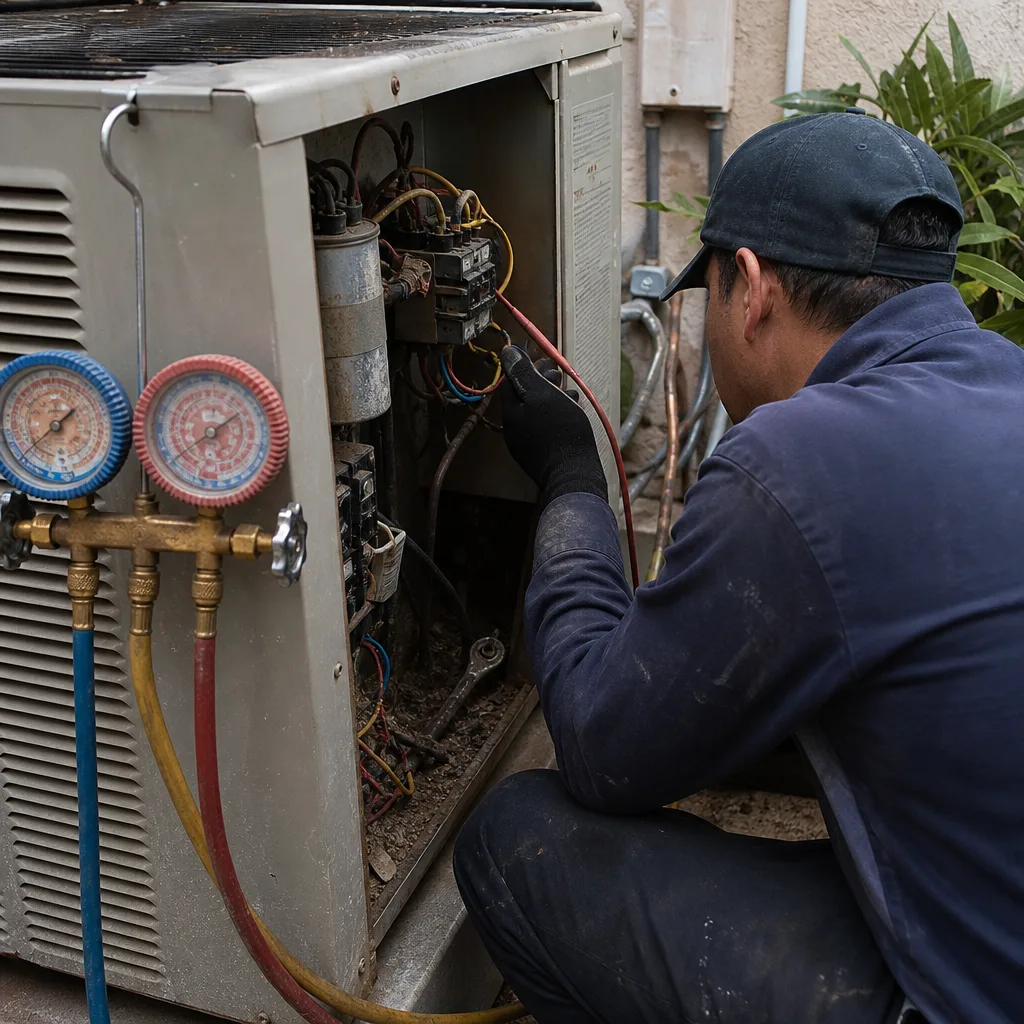
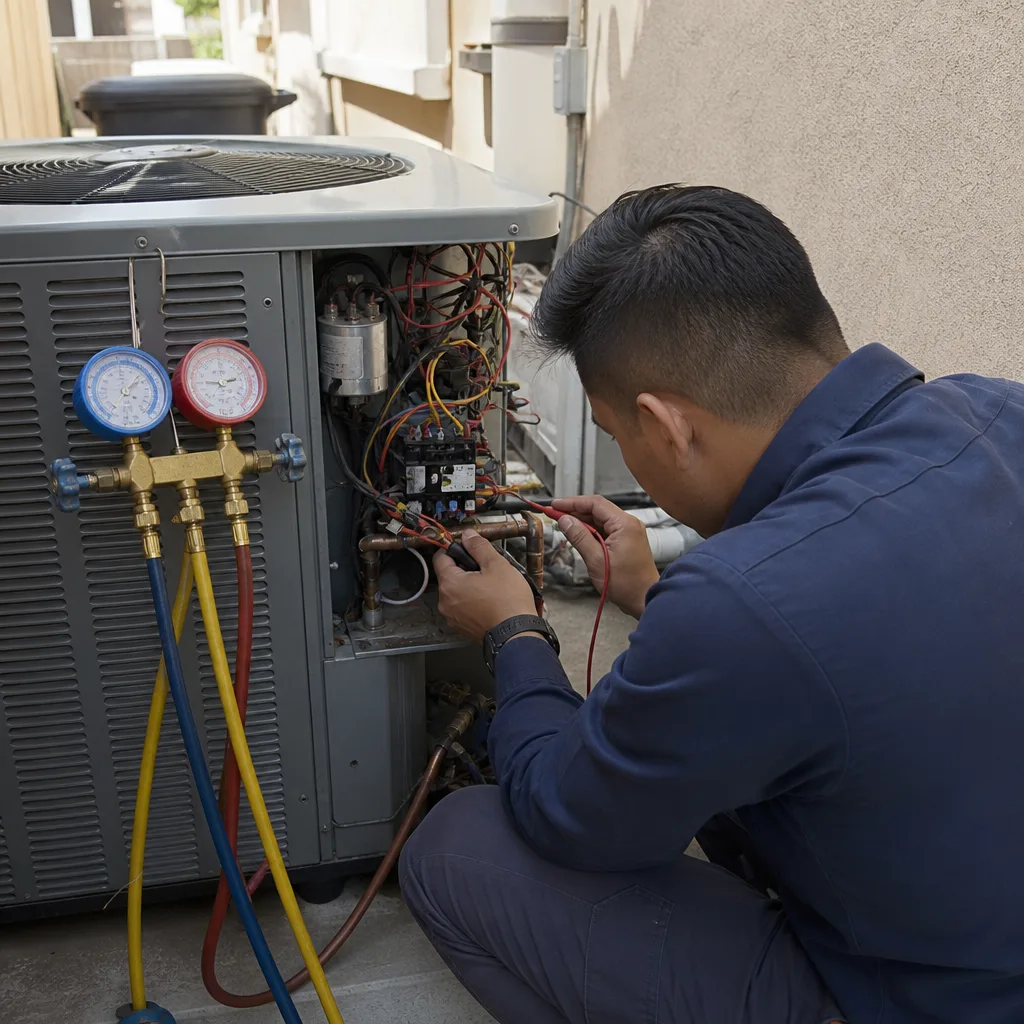
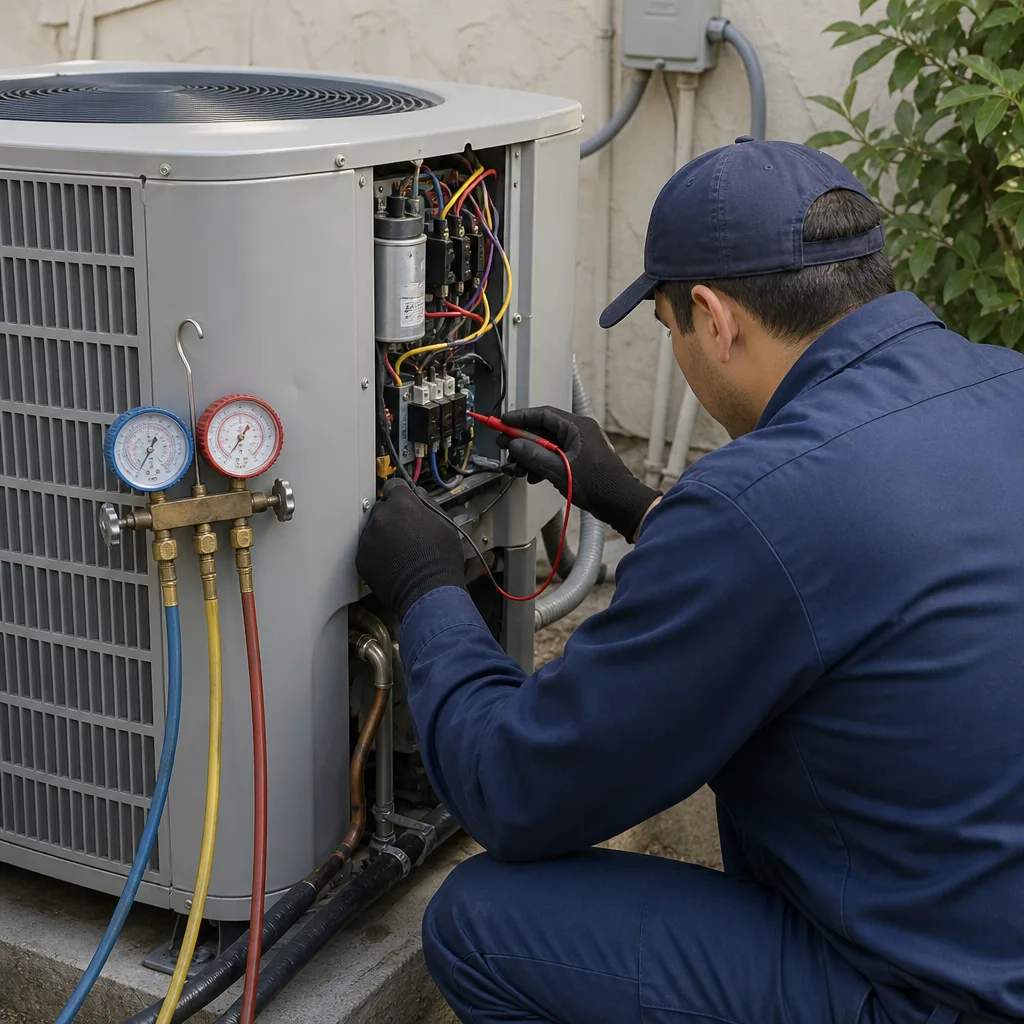
Seasonal tune-up and full diagnostic on your Carrier, Trane, or Goodman system - readings shown to you before any repair is proposed
Diagnosis first, numbers second - you approve the repair price before a single part goes in.
 Before
 After
After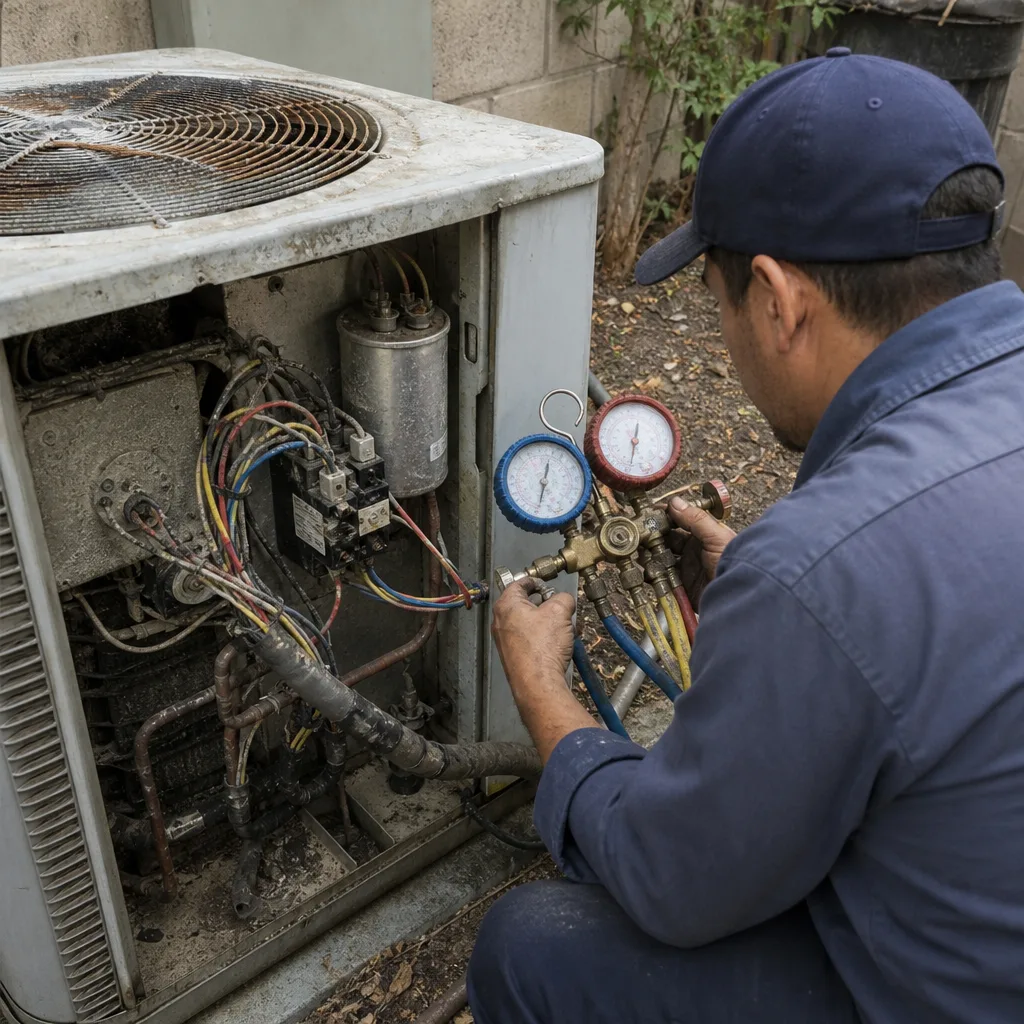 Before
 After
After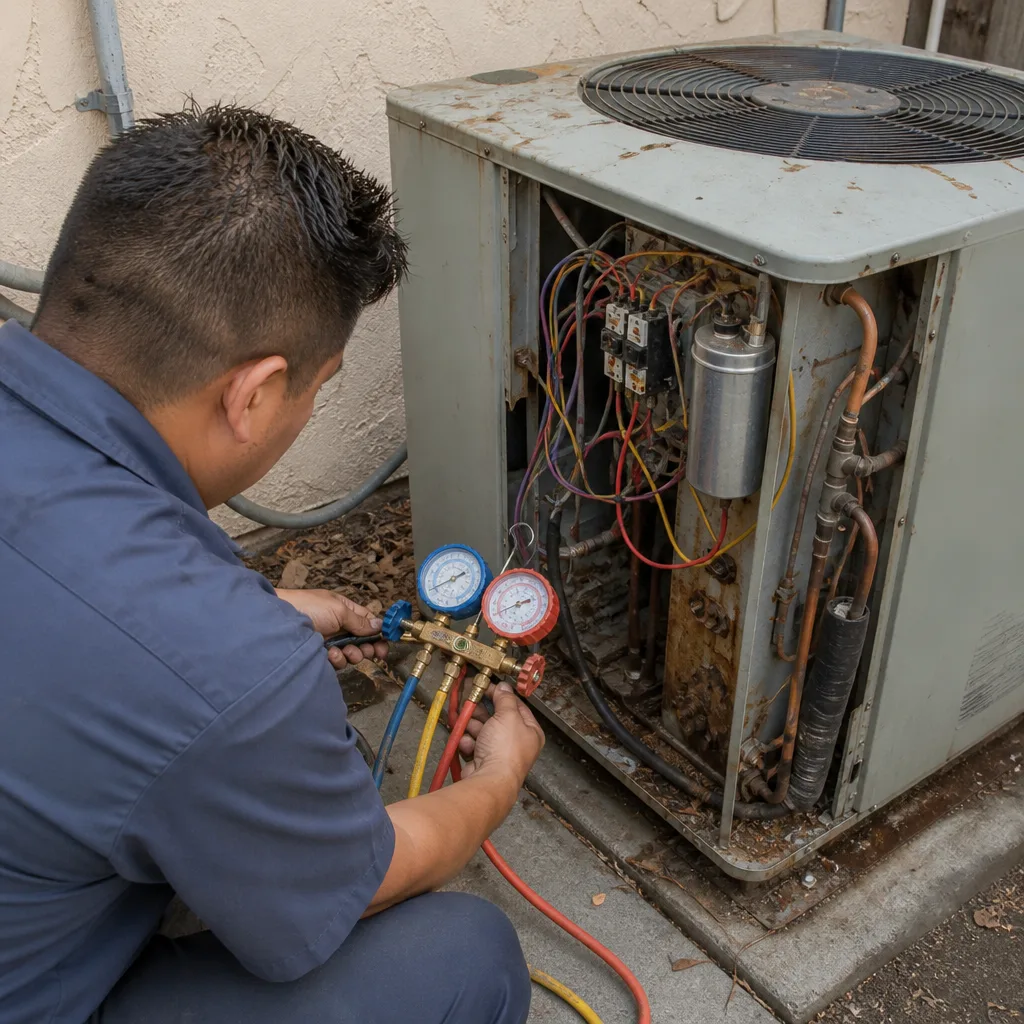 Before
 After
AfterCarrier Ductwork Repair: The Los Angeles Owner’s Guide
Ductwork repair on a Carrier system in Los Angeles typically runs $175 – $765 installed, depending on whether we’re sealing a failed joint, replacing a collapsed section, or rebuilding a return plenum. We stock Carrier-compatible duct fittings, mastic, and flex duct on the truck, so most repairs are completed same-day. You’ll usually discover the problem the way most LA homeowners do: one room that never cools in August, a whistling sound near a register, or a sudden jump in your SMUD or LADWP bill that doesn’t match the weather.
Here’s the thing about ductwork: it’s the part of your Carrier system nobody thinks about until it misbehaves. The air handler can run perfectly, the condenser can be spotless, and you’ll still have a hot master bedroom if the duct feeding it has pulled loose in the attic. We see this constantly in Los Angeles, where attics hit 130 degrees and flex duct baked for fifteen summers turns brittle enough to crack like an eggshell.
Key takeaways:
- Most duct repairs in Los Angeles fall between $175 and $765, parts and labor included.
- Same-day repair is common because we keep Carrier-compatible duct materials on the truck.
- Ductwork failure often mimics AC failure – we diagnose which one is actually the problem before quoting anything.
- Every repair comes with a written price up front and a written guarantee on the work.
Which Carrier Models This Applies To
Ductwork isn’t model-specific the way a control board or inducer motor is. Your Carrier furnace, heat pump, or air conditioner connects to ductwork that was almost always installed by a third party, not by Carrier. So whether you have a Carrier Infinity, Performance, or Comfort series system, a Comfort 80 furnace, or a 38MURA heat pump, the ducts carrying that air follow the same rules.
What matters is the type of duct and the size of the run, not the Carrier badge. Los Angeles homes fall into two broad camps: older mid-century houses in the Valley with rigid galvanized duct, and newer builds or retrofits with flexible R-6 or R-8 duct. Flex duct is the one we repair most often. It’s quieter and easier to route, but it doesn’t tolerate heat, rodents, or sloppy installation the way rigid metal does.
The compatibility question that actually affects your repair is this: is the failed section accessible, and what’s the R-value required for the replacement? Los Angeles building code (Title 24) requires R-6 minimum on ductwork in most residential attics, but we routinely find R-4.2 installed illegally in older homes. That matters because matching the existing wrong R-value means the repair won’t pass inspection if you ever sell. We’ll flag it during the estimate.
On the OEM-versus-aftermarket question: Carrier doesn’t manufacture the ductwork itself, and they don’t require “Carrier-brand” duct for warranty purposes. What they require is that the system moves the right amount of air. We use name-brand flexible duct (R-6 and R-8), code-rated mastic, and sheet metal that meets SMACNA standards. You’re not paying a Carrier premium on what is, frankly, a commodity material, and we won’t pretend otherwise.
Signs Your Carrier Ductwork Repair Is Failing
- One room won’t cool or heat properly. This is the #1 symptom in Los Angeles, and it’s almost always a disconnected or crushed duct run. The farther the room is from the air handler, the more likely a separation has occurred. We find loose takeoffs in attics where installers used duct tape instead of mastic and zip ties, and that tape gives out after a handful of hot summers.
- A whistling or fluttering sound from a register. Air escaping at a loose joint or through a torn flex duct makes a high-pitched sound you won’t hear when the system is off. It gets louder when the filter is dirty because pressure in the duct increases. If you hear it, call us before you replace the blower motor, because starving the system for airflow is what kills blower motors.
- Dust or lint buildup around a supply vent. When a return duct leaks, it sucks in attic air, and that attic air is full of insulation particles, dust, and whatever else is up there. If you notice grayish film around a vent or a fine dust settling on furniture in one specific room, the duct connected to that vent is pulling air from the wrong place.
- Higher energy bills without a change in thermostat use. Leaky ducts in a Los Angeles attic leak conditioned air into a 130-degree space. The system runs longer to hit the same setpoint. A 20-30% duct leak isn’t uncommon in 20-year-old Los Angeles homes, and it shows up as a bill that creeps up every summer.
- A musty or stale smell when the system first starts. Ducts with holes or separated joints pull in attic air, and attic air in Los Angeles smells like dust, old wood, and occasionally rodent activity. If the smell clears after the system runs a while, you’re smelling air that sat in a leaky duct, not the system itself.
Replacement Cost & What’s Included
Let’s talk real numbers for Los Angeles. A simple duct-joint reseal and mastic application runs $175 – $350 depending on attic access and how many joints are involved. Replacing a section of crushed or rodent-damaged flex duct runs $275 – $525. Rebuilding a return plenum or replacing a trunk-line section moves into the $425 – $765 range. You’ll notice these numbers fit inside the $175 – $765 AC repair range we quote across Los Angeles, and that’s on purpose: duct repair is an AC repair, even though it doesn’t touch the condenser.
| Repair Type | Typical Installed Price in LA | What’s Included |
|---|---|---|
| Joint reseal (per access point) | $175 – $350 | Mastic, tape, labor, verification |
| Flex duct section replacement | $275 – $525 | New R-6 or R-8 flex, connections, sealing |
| Return plenum rebuild | $425 – $765 | Sheet metal fabrication, sealing, insulation |
The price you get from Brandt HVAC is written before we start, and it doesn’t change unless we find something hidden and you approve the additional work in writing. Every duct repair includes a written guarantee. If the repair fails within the guarantee period, we come back at no charge under our 365-Day Done Right Promise. That’s the whole agreement, and Devin Marlowe signs off on it himself.
DIY or Call Us?
Honest answer: most ductwork repair is not a safe or effective DIY job, for one simple reason: the ducts are in your attic, and attics in Los Angeles in summer are dangerous places to work. We’re talking 130-degree surfaces, insulation that irritates skin and lungs, and the very real risk of putting a foot through drywall if you step off a joist. If the repair involves high-tension anything, you won’t find it here, but an attic fall is a hospital visit, and that’s not worth saving $200.
What you can do safely: check visible ducts in a garage or utility closet for obvious gaps, replace your filter regularly so pressure doesn’t build and worsen leaks, and listen for the symptoms above. That’s real diagnostic value. If you find something questionable, call us at (984) 538-9003. A live person answers 24/7, and we’ll send a technician who’s been background-checked, identity-verified under our Threshold Verified standard, and introduced to you by name and photo before they ever ring your doorbell.
FAQs
Flex duct in a Los Angeles attic typically lasts 15 – 20 years before the outer jacket degrades and the inner liner begins to tear. Rigid galvanized duct lasts 40 – 50 years if it’s sealed correctly, its main failure point is the joints and takeoffs, not the metal itself. If your home is over 20 years old and you’ve never had the ducts inspected, you’re likely leaking 20% or more of your conditioned air.
In most Los Angeles homes, individual sections can be repaired without replacing the entire system. A torn flex run, a loose takeoff, or a leaky plenum is a localized problem. Full replacement only makes sense when 60% or more of the runs are damaged, or the original sizing was wrong to begin with. We’ll tell you which situation you’re in before we quote a dollar amount, and if the repair isn’t worth doing because the system is beyond saving, we’ll say that plainly.
Most single-run duct repairs take 2 – 4 hours from arrival to final verification, including attic access, the repair itself, and a pressure test to confirm the leak is sealed. Return plenum rebuilds can run a full day because they involve sheet metal fabrication. We’ll give you a realistic time window when you call (984) 538-9003, and we’ll stick to it.
Yes. We carry R-6 and R-8 flex duct, code-rated mastic, sheet metal, zip ties, and collars on every truck we send out in Los Angeles, and that covers the majority of repairs without a second trip. For unusual sizes or custom plenums, we fabricate in-house, not wait on a distributor. If you need a part we don’t have, which is rare, we’ll tell you when to expect it before you approve anything.
If you’re losing air, you’re losing money, and in Los Angeles, you’re losing comfort at the worst possible time. Call (984) 538-9003 and we’ll send someone who tells you what’s wrong, what it costs, and what happens if the fix doesn’t hold. Tell me what it is, tell me what it costs, tell me it holds, that’s the whole job.
Written by Devin Marlowe, Owner & Lead HVAC Technician, Brandt HVAC at Brandt HVAC, serving Los Angeles and nearby areas.