
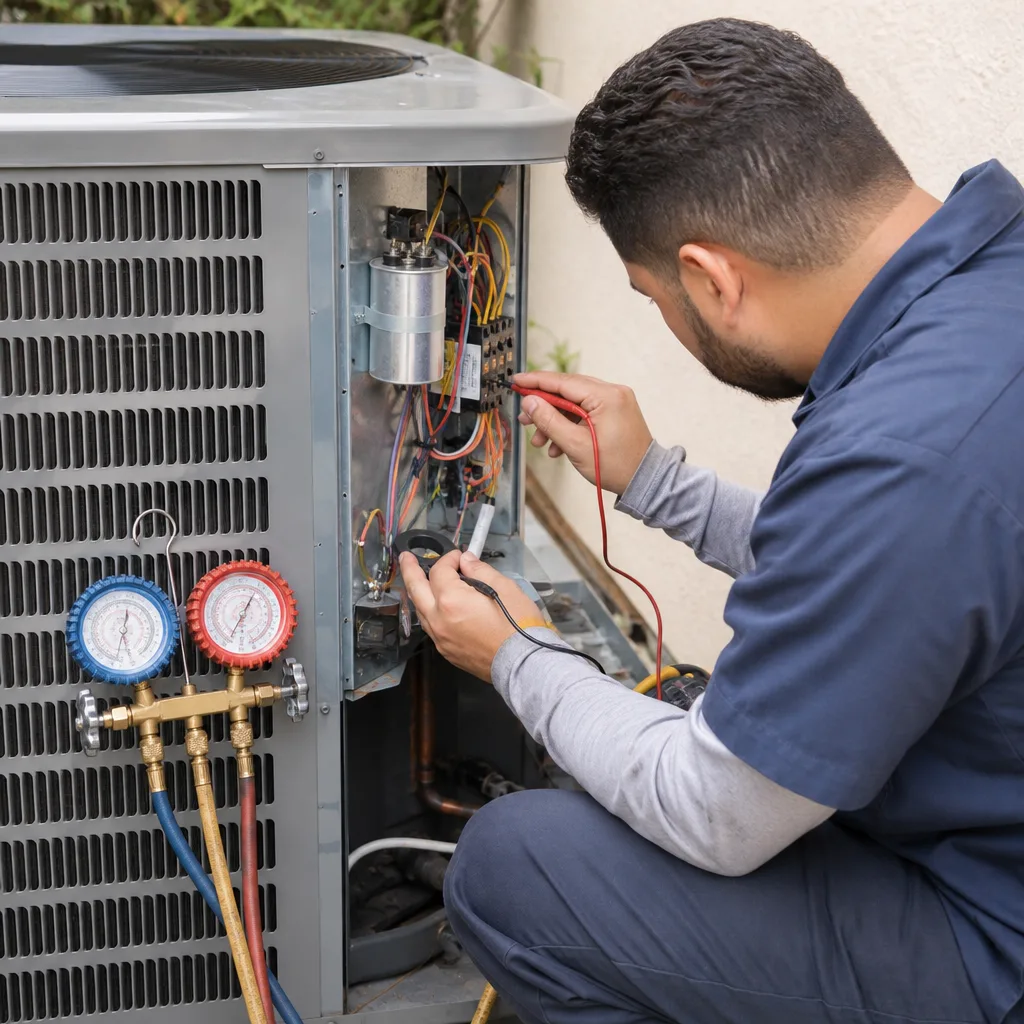
Seasonal tune-up and full diagnostic on your Carrier, Trane, or Goodman system - readings shown to you before any repair is proposed
Diagnosis first, numbers second - you approve the repair price before a single part goes in.
 Before
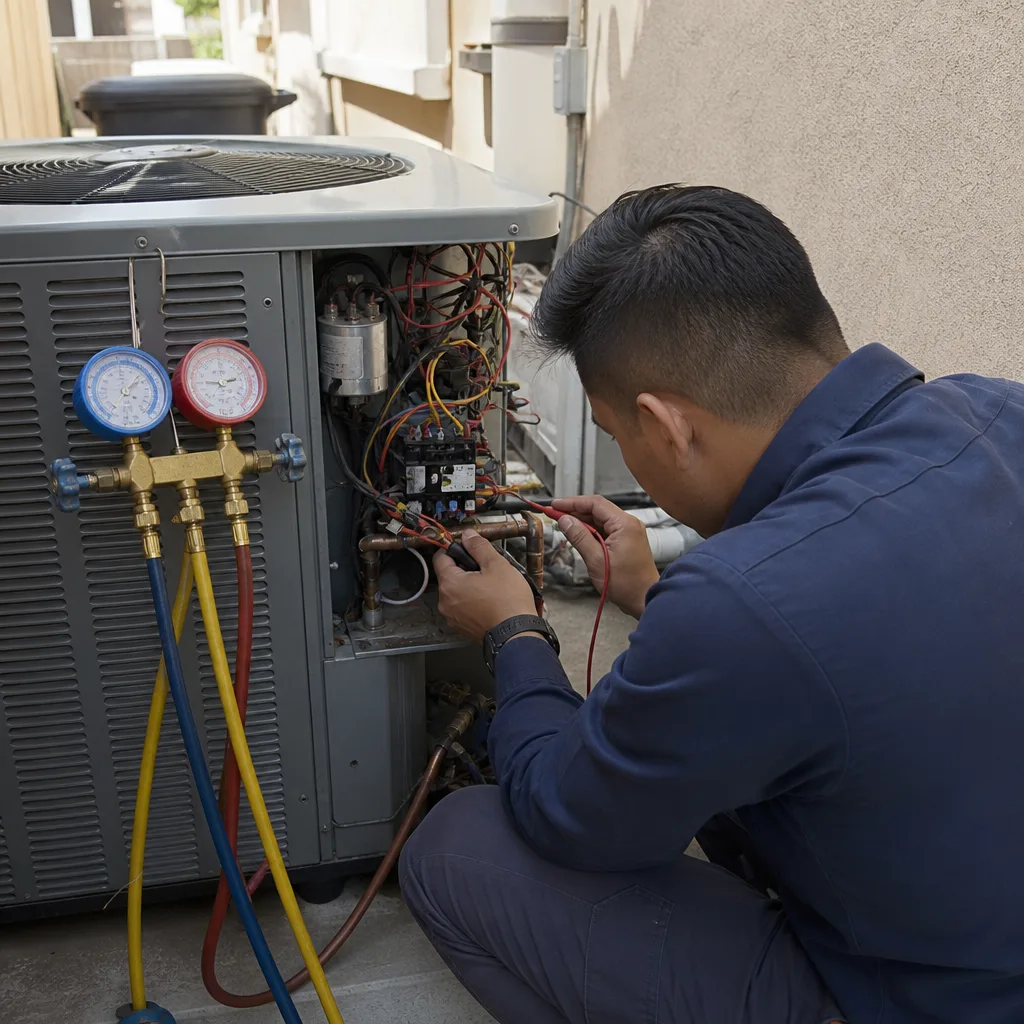 After
After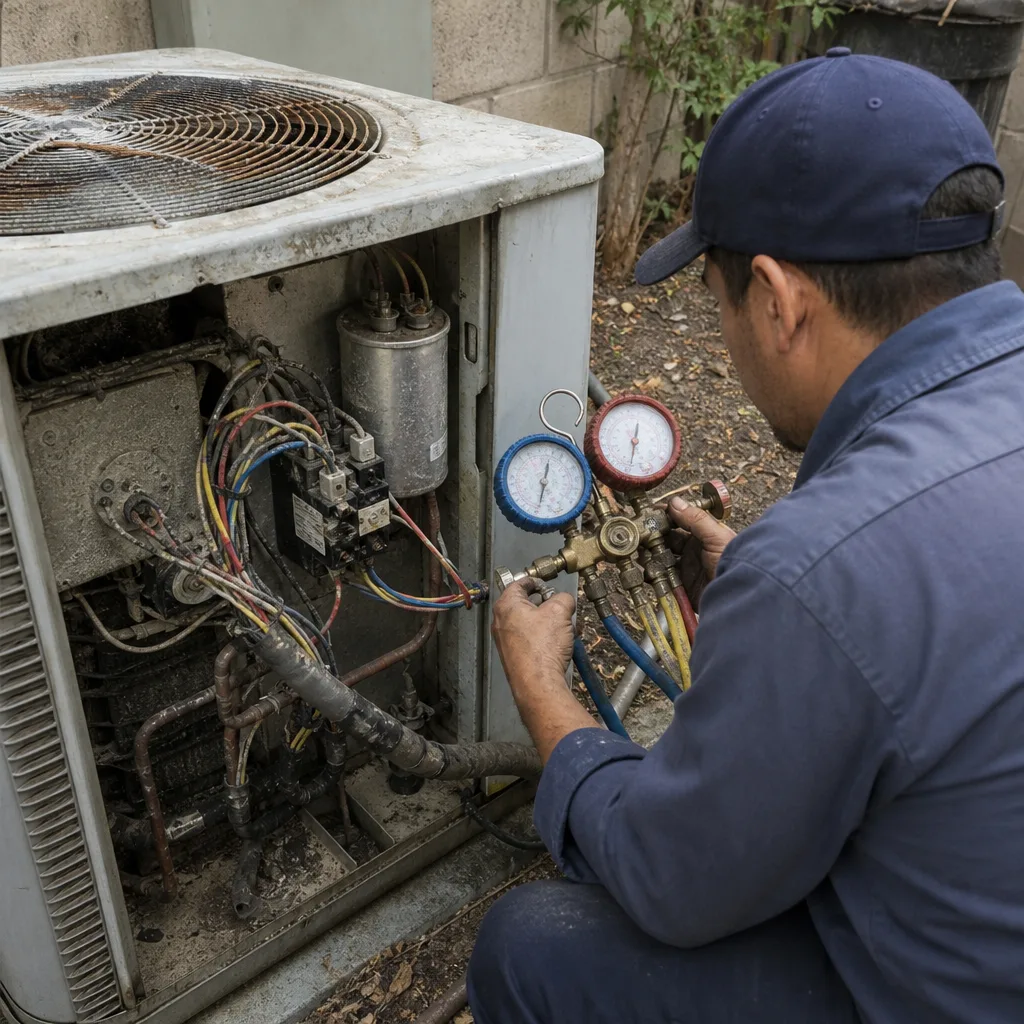 Before
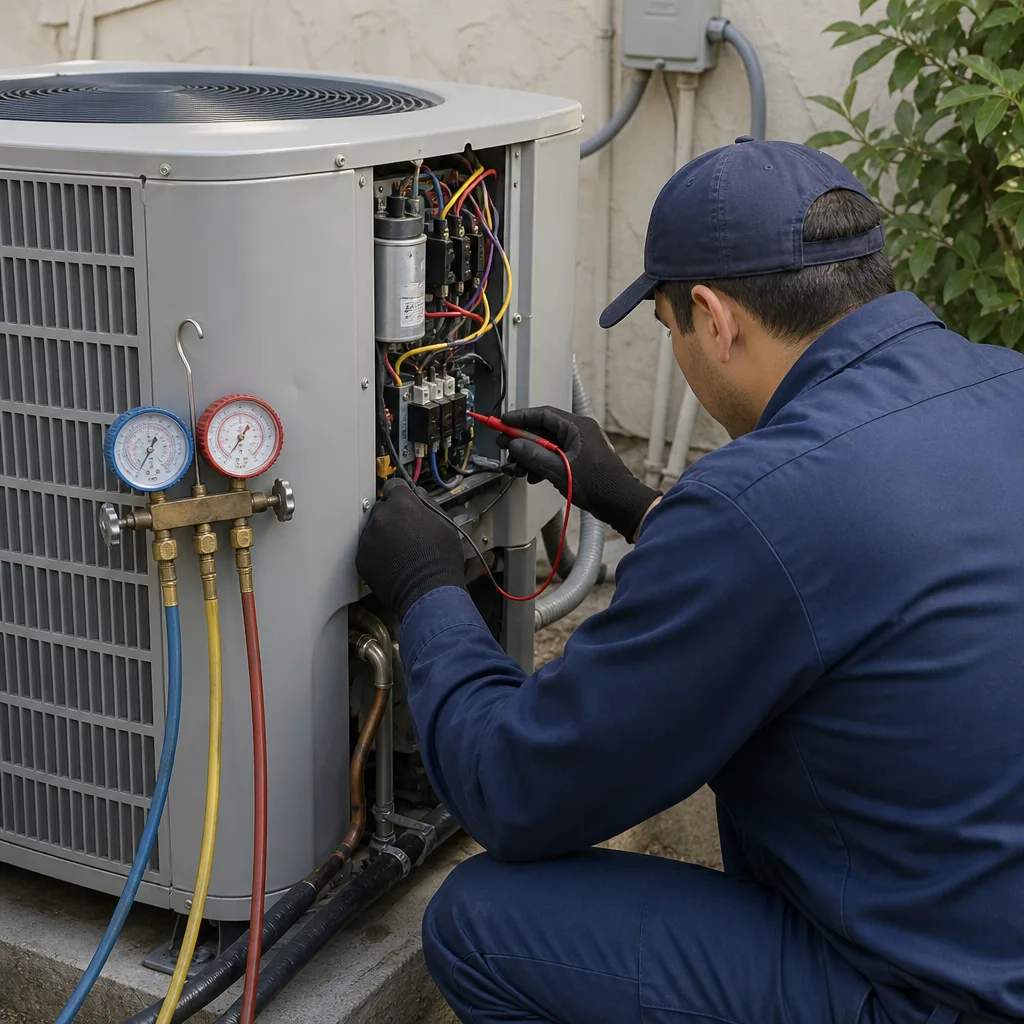 After
After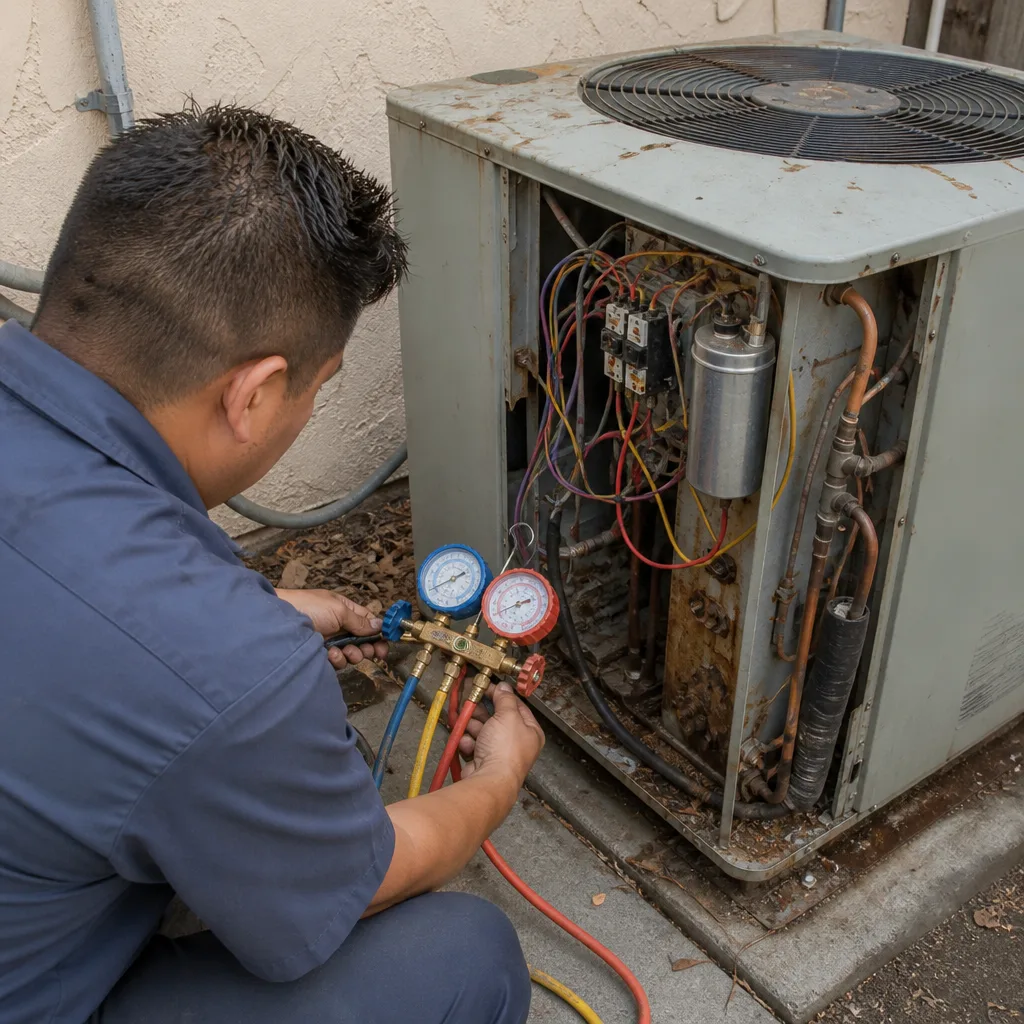 Before
 After
AfterCarrier Thermostat Installation: The Los Angeles Owner’s Guide
Carrier thermostat installation in Los Angeles typically runs $250 – $600 installed, depending on whether you’re matching an existing Carrier system with a like-for-like swap or upgrading to a smart Wi-Fi model. We keep the most common Carrier-compatible thermostats on our trucks, so a straightforward replacement is often done same-day in one visit. Most Los Angeles homeowners figure out something’s wrong when the AC won’t hold temperature, the display goes blank, or the system short-cycles through July heat.
You could be looking at a simple wiring failure, a dead sensor, or a thermostat that’s simply outlived its useful life. The telltale rhythm: the house gets warm, the thermostat reads 78 when it should read 74, and you tap the screen harder than you should. That’s usually when we get the call. Devin Marlowe has seen enough burned-out thermostats across Los Angeles to tell you straight: this is a repair worth doing right the first time, because a miswired thermostat can take out a control board faster than you’d think.
Which Carrier Models This Applies To
We install thermostats that match the full Carrier residential lineup: Infinity, Performance, Comfort, and the older TC/TP series that still run in thousands of Los Angeles homes. The compatibility question that trips up most owners is communication. Carrier’s Infinity line uses a communicating thermostat with four wires (A, B, C, D) that talks digitally to the furnace or air handler. A standard 24-volt thermostat won’t work on that system, and vice versa. If you have an Infinity system and someone installs a Nest or a generic Honeywell without the right interface module, you’ll lose variable-speed staging and could fault the blower.
Check the back of your current thermostat or the model sticker inside the furnace door. If it says “Infinity” or “SYSTXCC,” you need a communicating thermostat. If it says “Comfort” or “Performance,” you’re on standard 24-volt wiring and have more options, including aftermarket units. On Carrier equipment, we default to OEM Carrier thermostats for communicating systems and offer quality aftermarket options for standard systems, always priced out before we start. Brandt HVAC is an independent service provider, not affiliated with Carrier, but we stock and service their parts because Los Angeles has a lot of Carrier equipment out there.
Signs Your Carrier Thermostat Installation Is Failing
- Blank or flickering display. This is usually a power issue: dead batteries on a battery-powered unit, a tripped float switch cutting low-voltage power, or a failing capacitor in the thermostat itself. On Carrier Infinity models, a blank screen can also mean the communicating bus lost its handshake with the air handler.
- Temperature reading drifts or reads wrong. If the thermostat says 72 but the room feels like 80, the internal thermistor is drifting. This accelerates in Los Angeles because interior walls facing west can hit 90-plus degrees in summer, and a thermostat mounted there reads wall temperature, not room temperature.
- System short-cycles or won’t shut off. A thermostat that clicks the compressor on and off every few minutes either has a bad relay or a misconfigured temperature differential. On Carrier heat pumps, this can cause the reversing valve to hunt, which wears out the compressor over time.
- Buttons or touchscreen stop responding. Capacitive touchscreens degrade with heat and age. In Los Angeles homes without air conditioning running year-round, interior temperatures swing enough to shorten the screen’s life. If you have to press three times to get a response, the control electronics are failing.
- System runs heat when cooling is called for, or vice versa. This is often a wiring mismatch at the thermostat base. If the O/B reversing valve terminal got bumped or miswired, your Carrier heat pump will blow hot air in August. We see this most often after a DIY attempt or a previous handyman repair.
Replacement Cost & What’s Included
In Los Angeles, a Carrier thermostat installation with a standard 24-volt non-programmable or programmable unit runs $250 – $375 installed. A Carrier smart thermostat, or a comparable Ecobee or Honeywell with Wi-Fi and app control, runs $400 – $600 installed. Communicating Infinity thermostats run at the higher end, typically $500 – $600, because the thermostat itself costs more and the install requires verifying communication with the air handler.
Every quote includes the thermostat, any needed wiring repairs at the base, mounting, programming, system testing, and a written price before any work starts. If your existing thermostat wiring is damaged or you want to relocate the thermostat to a better wall, that’s additional labor quoted upfront. The work is guaranteed for 365 days under the Done Right Promise: if the installation fails within a year, we return at no charge. We don’t do surprise add-ons.
DIY or Call Us?
You can safely check the basics: confirm the breaker isn’t tripped, replace the batteries on a battery-powered unit, and make sure the thermostat is set to “cool” and the temperature is lower than the room. If those check out, stop there. Thermostat wiring is low-voltage, which sounds harmless, but a shorted wire can send 24 volts back through the control board and turn a $300 thermostat swap into a $900 board replacement. On communicating Carrier systems, the wiring carries data signals, and an incorrect splice can scramble communication and throw fault codes that require a full system reset.
Devin’s honest take after two decades of Los Angeles service calls: a thermostat replacement is one of the few HVAC jobs where the part is cheap but the mistakes are expensive. If you’re comfortable with a multimeter and you know your system type, a basic 24-volt swap is doable. If you’re not sure whether your Carrier system is communicating or standard, call us at (984) 538-9003 and we’ll tell you over the phone which one you have.
FAQs
A Carrier thermostat in a Los Angeles home typically lasts 10 – 15 years, but we’ve replaced units at 7 years in homes with heavy west-facing sun exposure or poor attic ventilation. The temperature swings in uninsulated wall cavities age the electronics faster. Communicating models can fail earlier if the system has experienced power surges.
In most cases, no. Thermostats fail at the circuit board, relay, or sensor level, and none of those are repairable in the field. A broken mounting plate or damaged wiring at the base can be fixed, but internally, a failed Carrier thermostat is a replacement part. The good news is that a new thermostat costs less than most service calls we make for other HVAC repairs.
A standard Carrier thermostat swap takes 45 – 90 minutes from arrival to testing. Communicating Infinity installs take a little longer because we verify communication with the air handler and run the system through staging checks. If you need new wire pulled or the thermostat relocated, that adds time and we’ll tell you before we start.
Yes. Our trucks carry Carrier OEM thermostats for standard 24-volt systems, Infinity communicating replacements, and a few aftermarket smart options. If you have a less common Carrier model or want a specific smart thermostat, we can order it and schedule the install. We also stock thermostat parts for Trane and Lennox systems for the mixed-brand homes we see across Los Angeles.
Need a Carrier thermostat installed right, with a written price and a year of coverage? Call Brandt HVAC at (984) 538-9003 and a live person will answer, day or night. Tell me what it is, tell me what it costs, tell me it holds, that’s the whole job.
Written by Devin Marlowe, Owner & Lead HVAC Technician, Brandt HVAC at Brandt HVAC, serving Los Angeles and nearby areas.