
Seasonal tune-up and full diagnostic on your Carrier, Trane, or Goodman system - readings shown to you before any repair is proposed
Diagnosis first, numbers second - you approve the repair price before a single part goes in.
 Before
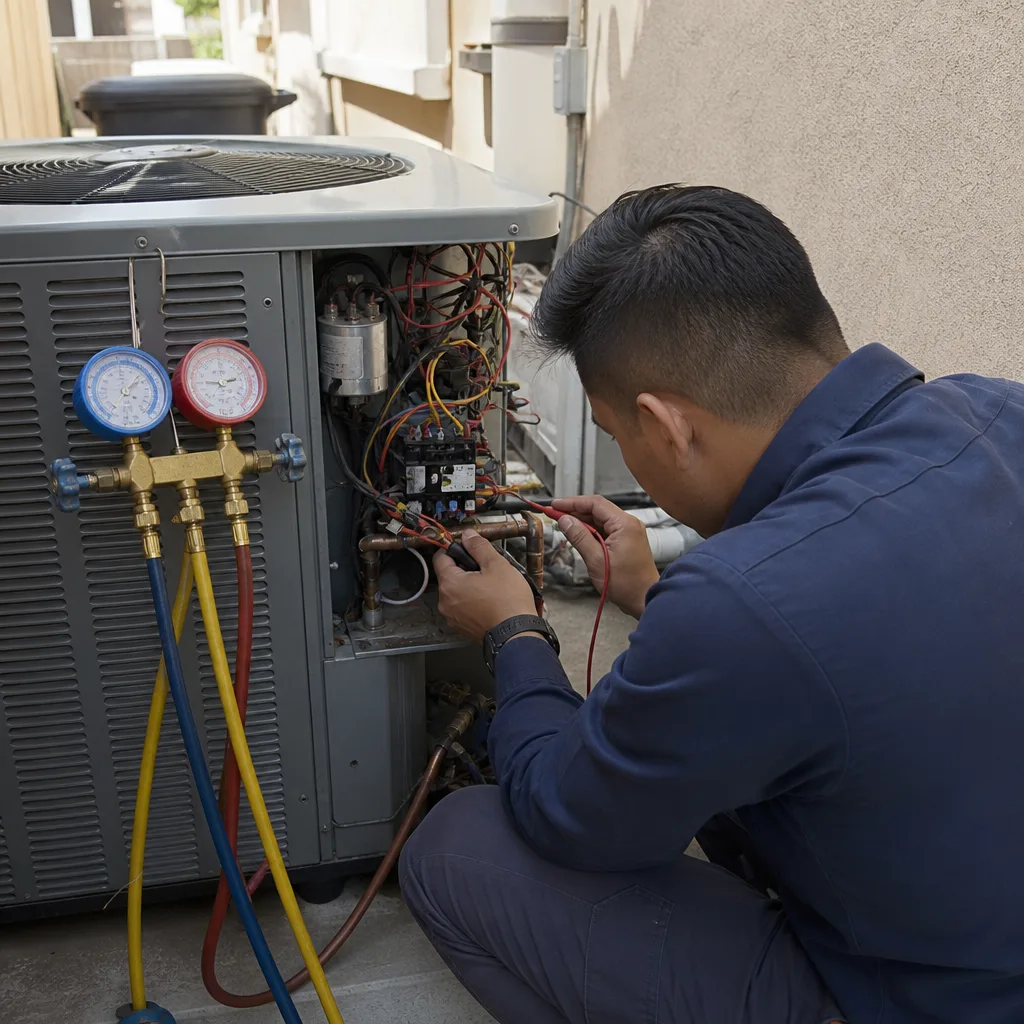 After
After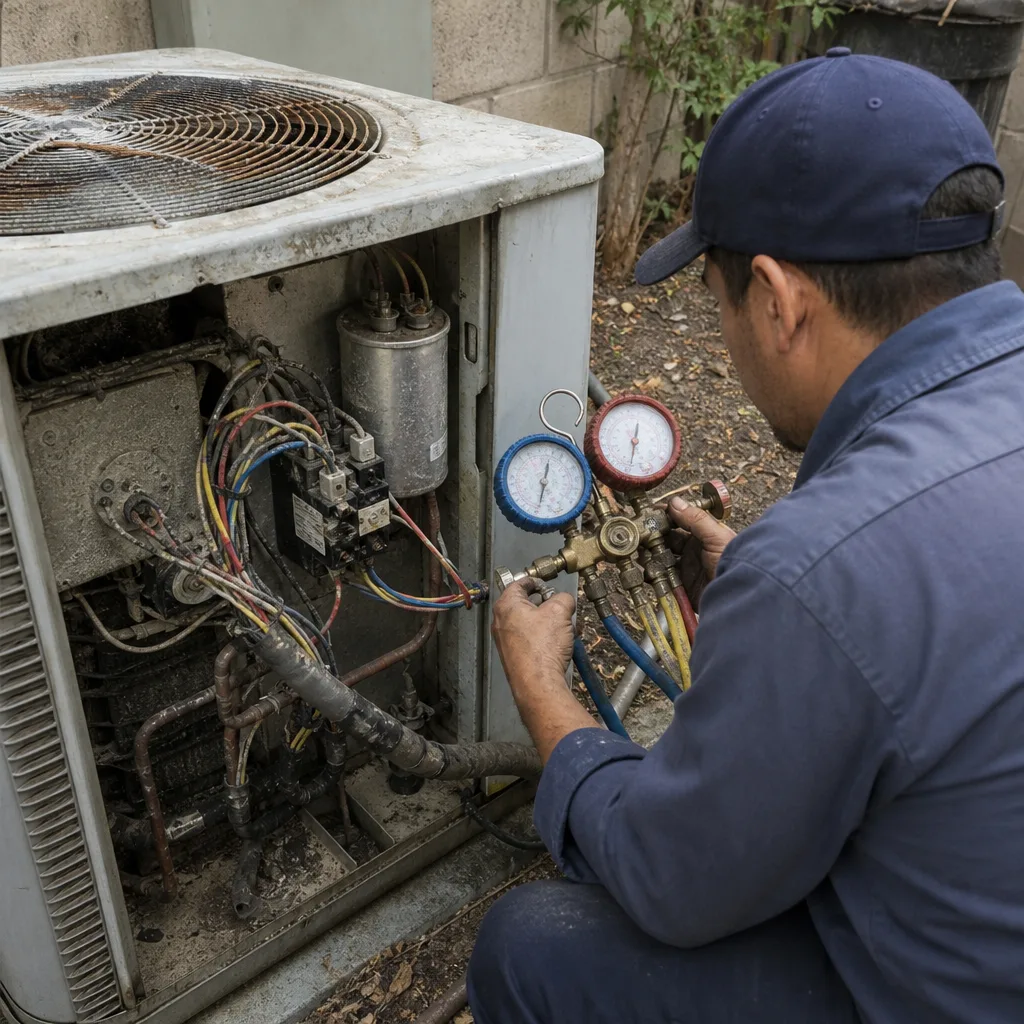 Before
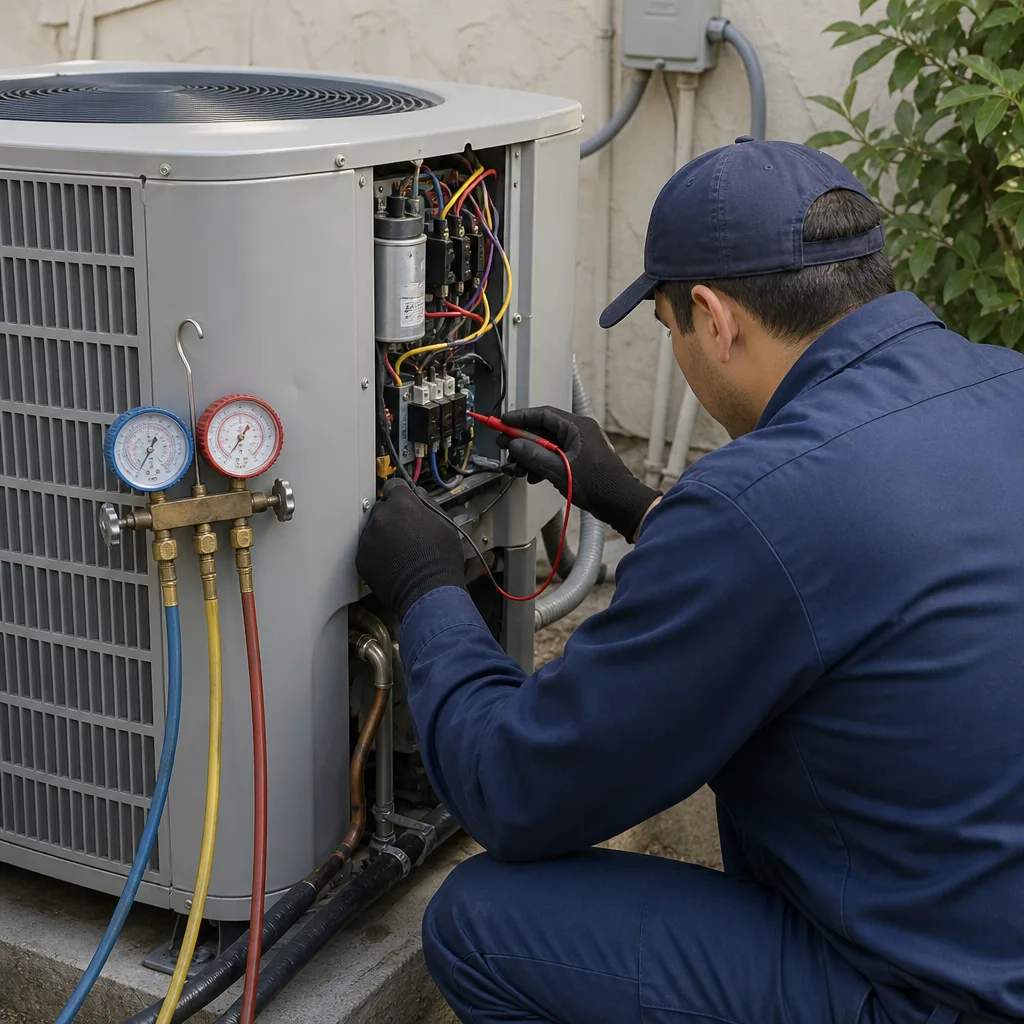 After
After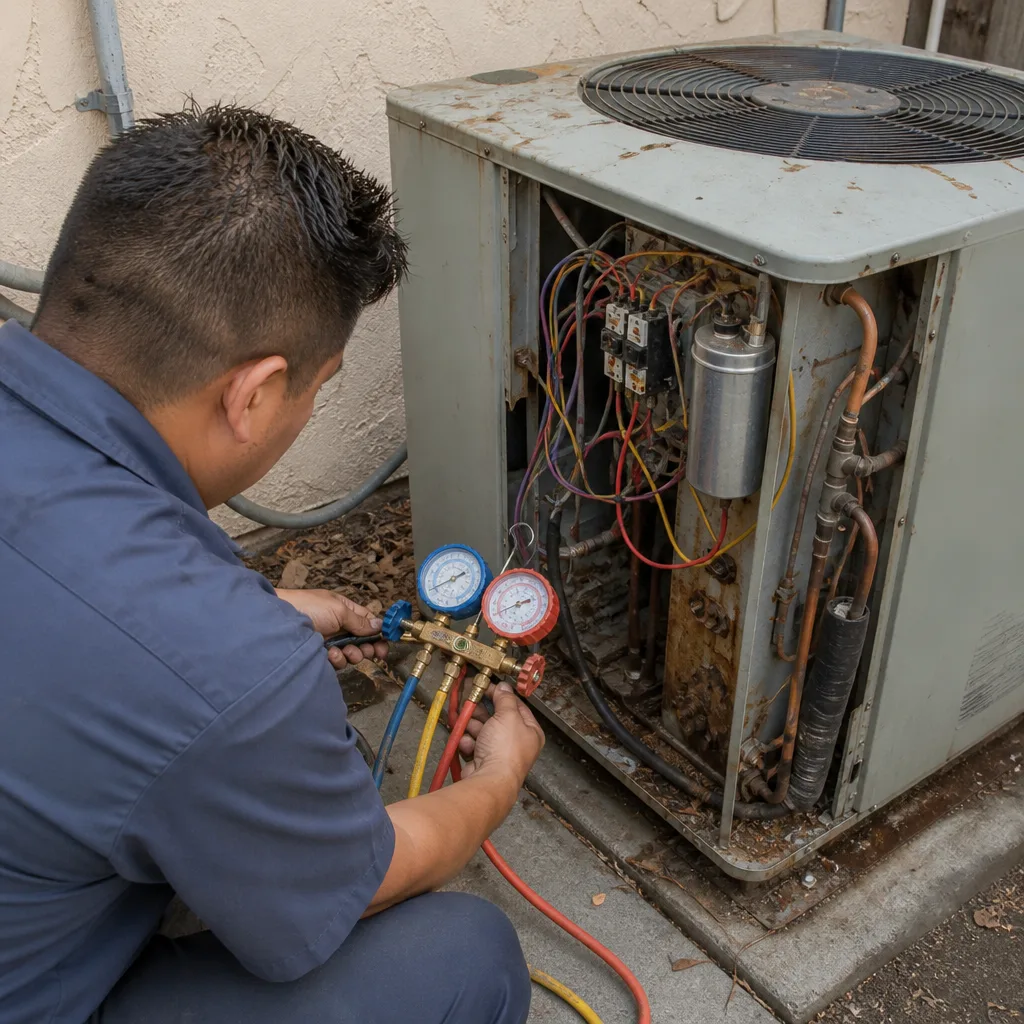 Before
 After
AfterRheem Capacitor Replacement: The Los Angeles Owner’s Guide
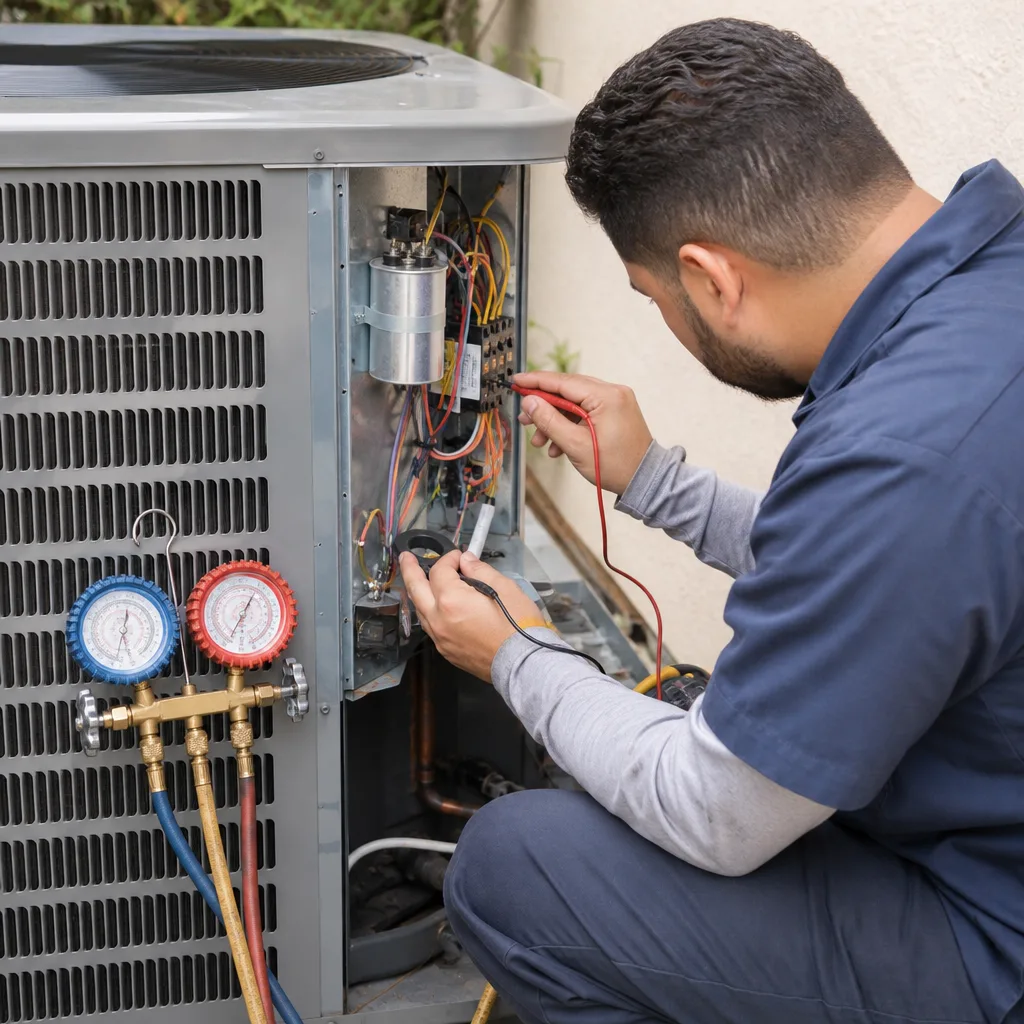
We replace Rheem capacitors across Los Angeles, and a typical installed job runs $175 – $390 depending on whether it’s a single or dual run capacitor, the microfarad rating, and how easy your condenser is to access. Most Rheem capacitor replacements we do same-day because we keep the common ratings on the truck: 35/5, 40/5, 45/5, and 50/5 microfarad dual caps plus singles like 5, 7.5, and 10. The way most Los Angeles homeowners discover this part failed: the outside unit hums but the fan doesn’t spin, or the compressor clicks and quits. Sometimes the top of the capacitor is domed like a mushroom, which means it already vented.
If you’re standing in front of a dead Rheem right now, call (984) 538-9003 and we’ll get a tech to you with the right cap. The estimate is free, and you’ll see the written price before any work starts.
Which Rheem Models This Applies To
This covers Rheem’s residential split systems and package units produced over the last 25 years or so, including the Classic, Value, and Prestige series, plus Rheem’s RA (air-cooled condenser) and RP (heat pump) lines. If your Rheem system was installed in a Los Angeles tract home, a mid-century ranch in the Valley, or a newer build in the South Bay, the capacitor we need is going to be mounted in the outdoor unit behind the service panel.
The practical question is finding the right replacement. The old cap has a label with two numbers that matter: the microfarad rating (written like “45/5 µF” or “35+5 µF”) and the voltage (usually 370 or 440 VAC). The shorthand we use: a dual run capacitor powers both the compressor and the fan motor; a single run cap does just one job. Rheem has used both depending on era and model, and getting the wrong microfarad rating is a common cause of “we replaced it and it burned out in a week.”
On OEM versus aftermarket: Rheem-branded capacitors exist but they’re made by the same Tier-1 suppliers (AmRad and Genteq are the two we trust) that build quality aftermarket equivalents. We stock AmRad and Genteq for Rheem work. The thing to know is that a cheap no-name cap from a big-box store may be rated the same on the label but wear out in a season or two. The difference is in the internal film and the case sealing, not the label. For a part that costs, say, $40 – $90 of the total job, it’s not worth a bargain version.
Signs Your Rheem Capacitor Replacement Is Failing
- Humming condenser, no fan spin: The motor is trying to start but can’t get the phase shift a healthy capacitor provides. You’re hearing the locked-rotor draw. Shut it down at the thermostat and breaker until a tech arrives, because the motor is cooking itself.
- Compressor clicks on, then off after a few seconds: There’s enough stored charge to start the compressor but not enough torque to keep it running under load. This is the classic intermittent startup in Los Angeles summer afternoons when the system has to work hardest.
- Fan turns slowly, or you can start it manually with a stick: The cap is weak, not fully dead. It’s delivering maybe 40% of rated microfarads. The unit will “sort of” cool until it doesn’t.
- Swollen or domed capacitor top: The cylindrical cap should be perfectly flat on top. When it balloons or splits at the seams, the dielectric fluid inside vented from overheating. This is a failed part, not a maybe.
- Noise changes at the outdoor unit: A failing cap often causes a groaning or buzzing that comes and goes as the compressor starts. It’s not the compressor itself. It’s the starved start circuit.
Replacement Cost & What’s Included
Here’s what we charge in Los Angeles for Rheem capacitor work, parts and labor included:
- Single run capacitor replacement: $175 – $260
- Dual run capacitor replacement (the common 45/5 and 40/5): $225 – $330
- Dual cap plus hard start kit, if your compressor is older or struggled before the failure: $300 – $390
What drives the spread: which capacitor your Rheem actually takes, whether we’re also replacing a weak contactor or terminal connectors, and how much disassembly your condenser needs. You’ll always get the written price before we touch anything, and the repair includes our 365-Day Done Right Promise, which means if the cap fails in the first year, we return and fix it at no charge, no argument.
DIY or Call Us?
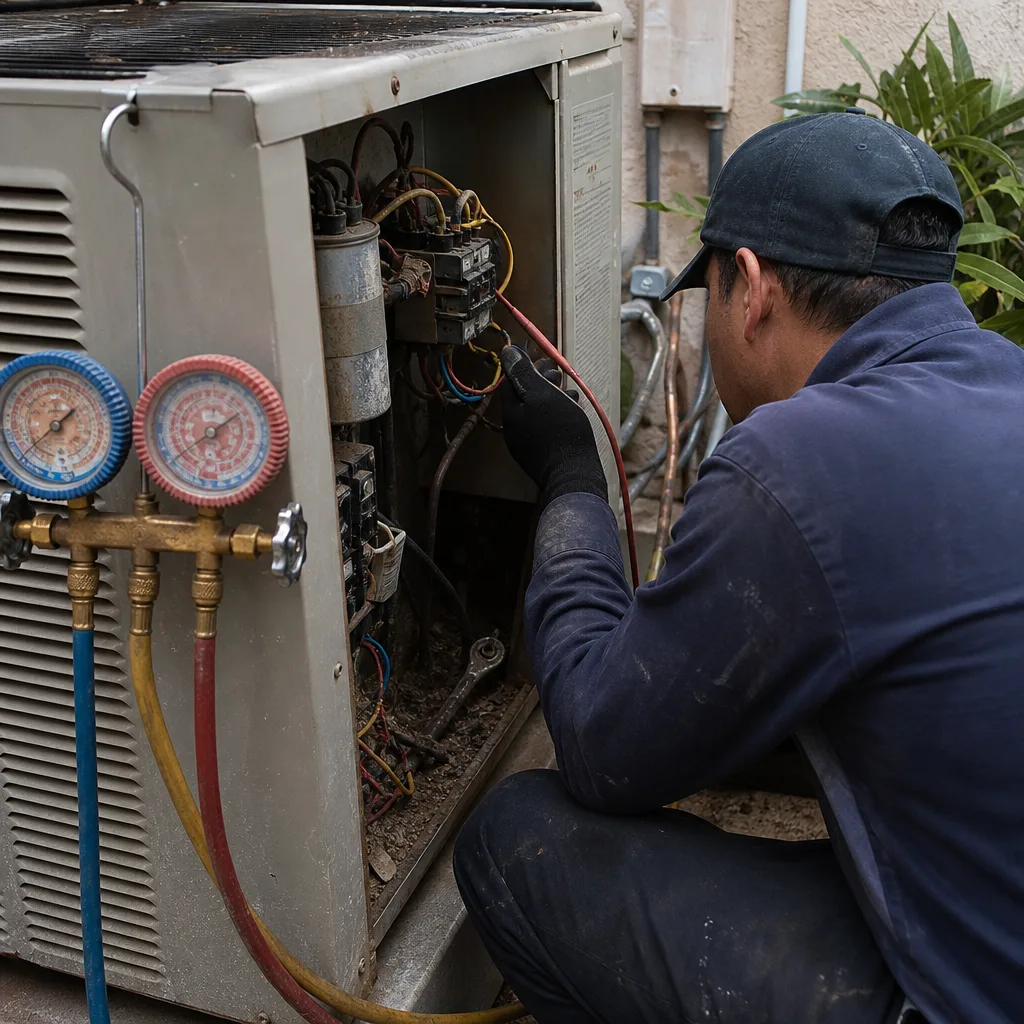
A capacitor stores enough electrical charge to hurt you even after the breaker is off, and it’s the kind of part where any mistake creates an expensive problem downstream. The honest split: you can safely check whether the capacitor is visibly swollen by looking through the condenser grille, and you can note what the label says if you’re comfortable removing the access panel with the power fully disconnected. What we wouldn’t recommend is wiring in a replacement yourself, because shorting a charged cap or landing the fan and compressor leads on the wrong terminals both end with a dead board or a shock. We’ve also come behind DIY swaps where the wrong microfarad rating was installed and the compressor ran hot for a season.
If you’d rather have the right part, matched to your Rheem and installed with a meter reading before and after, call (984) 538-9003. Devin Marlowe, our owner and lead tech, has been reading capacitors on Rheem units across Los Angeles for the better part of two decades, and he’ll give you the straight answer on whether it’s a cap replacement or something deeper before any money changes hands.
FAQs
A quality capacitor in a properly maintained condenser lasts 10 to 15 years, but Los Angeles heat shortens that in systems that run hard from June through October and get no off-season. We routinely replace caps that are only 5 or 6 years old because the rooftop or south-facing exposure baked them.
No. There’s no repairable component inside a capacitor. Once the dielectric breaks down or the case vents, the part is scrap. The repair is a replacement, and it’s one of the fastest, cleanest jobs in HVAC.
Most swaps take 30 to 60 minutes on site. We check the old cap’s measured microfarads against the label, match the replacement, wire it, and run the system through a full start cycle before we leave.
We stock the common Rheem ratings on the truck: 35/5, 40/5, 45/5, 50/5, and the single-run values most Rheem condensers and heat pumps use. The uncommon ratings are usually available same-day from our Los Angeles supply houses. Call (984) 538-9003 and we’ll tell you if your exact cap is already on the shelf.
Written by Devin Marlowe, Owner & Lead HVAC Technician, Brandt HVAC at Brandt HVAC, serving Los Angeles and nearby areas.