
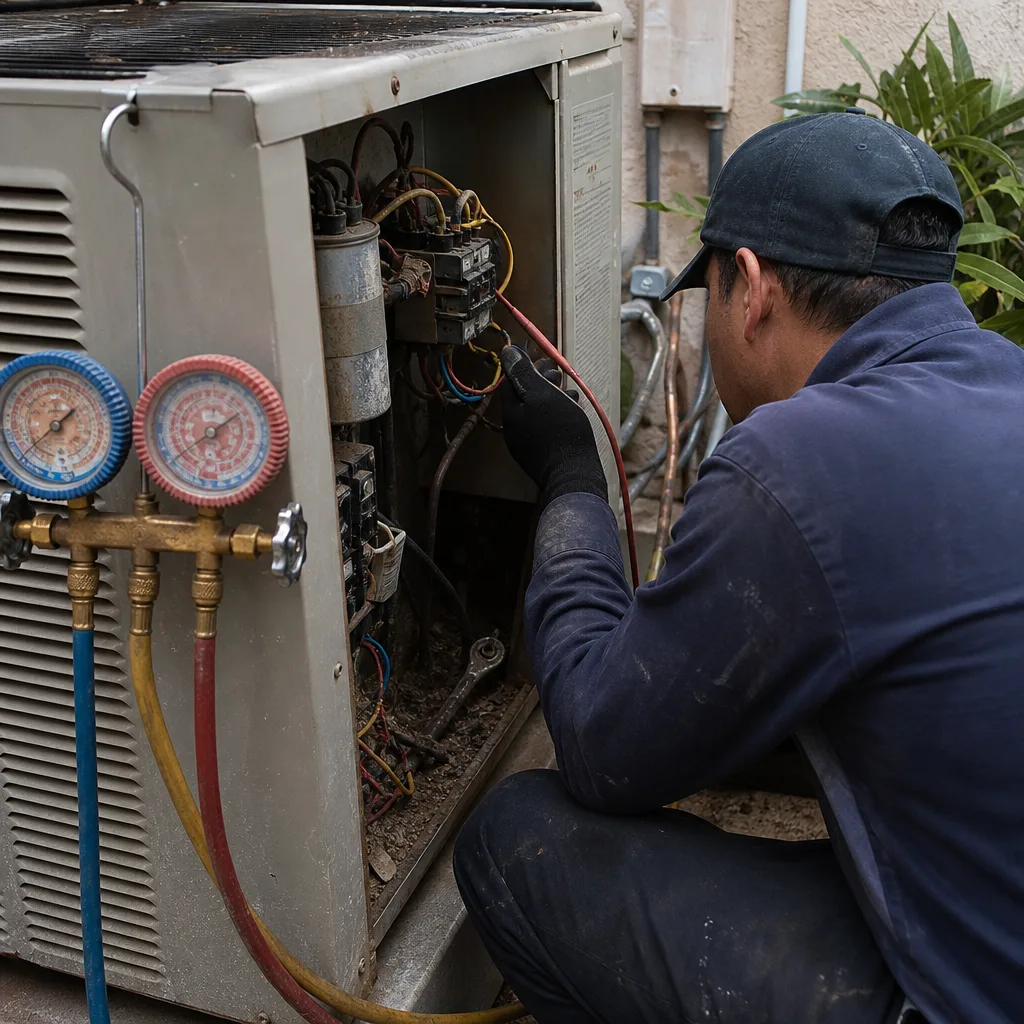
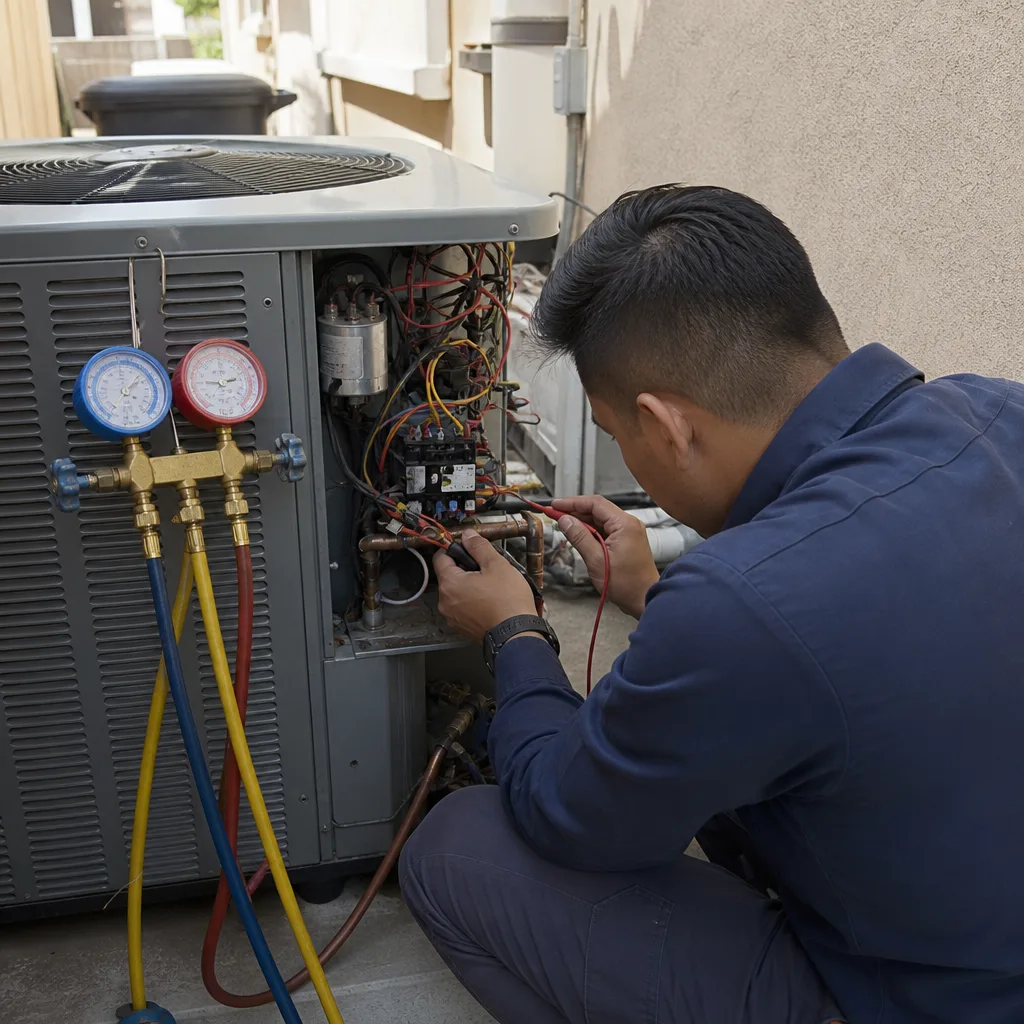
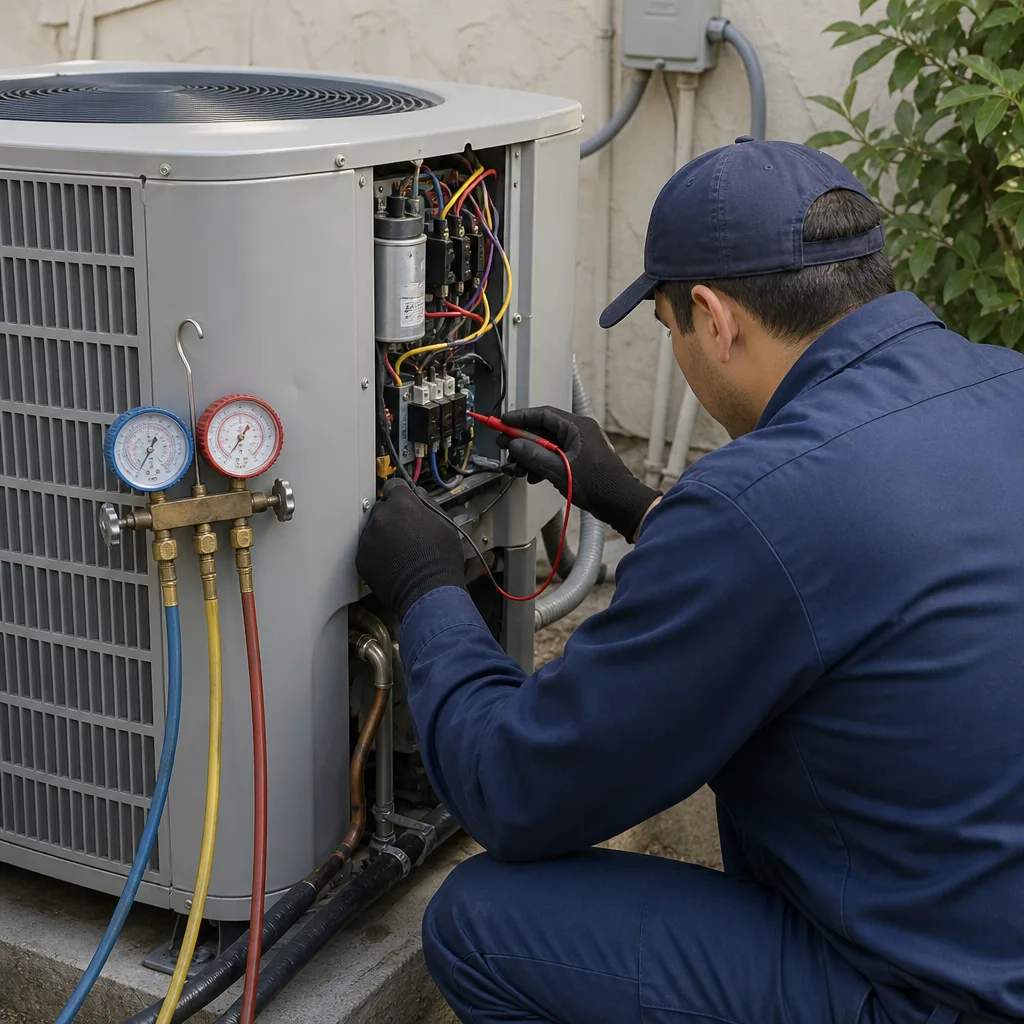
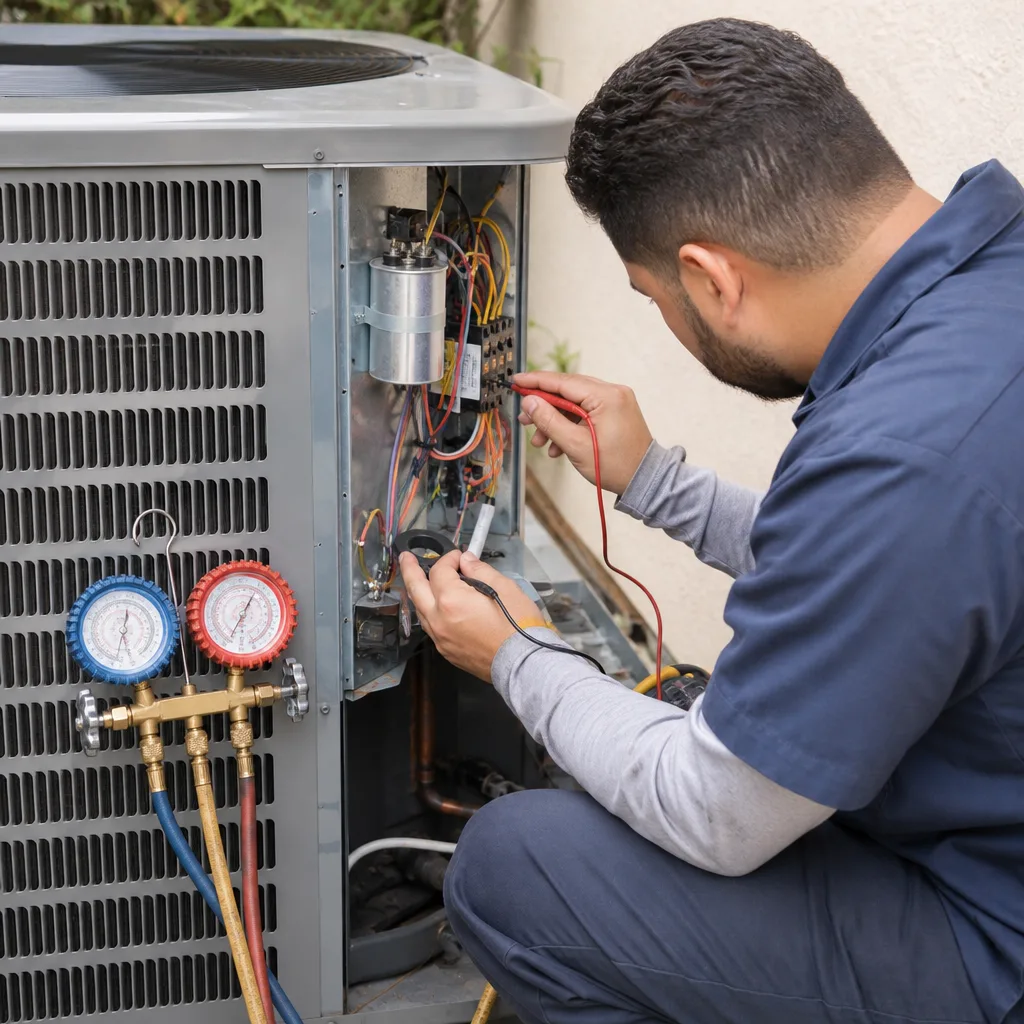
Seasonal tune-up and full diagnostic on your Carrier, Trane, or Goodman system - readings shown to you before any repair is proposed
Diagnosis first, numbers second - you approve the repair price before a single part goes in.
 Before
 After
After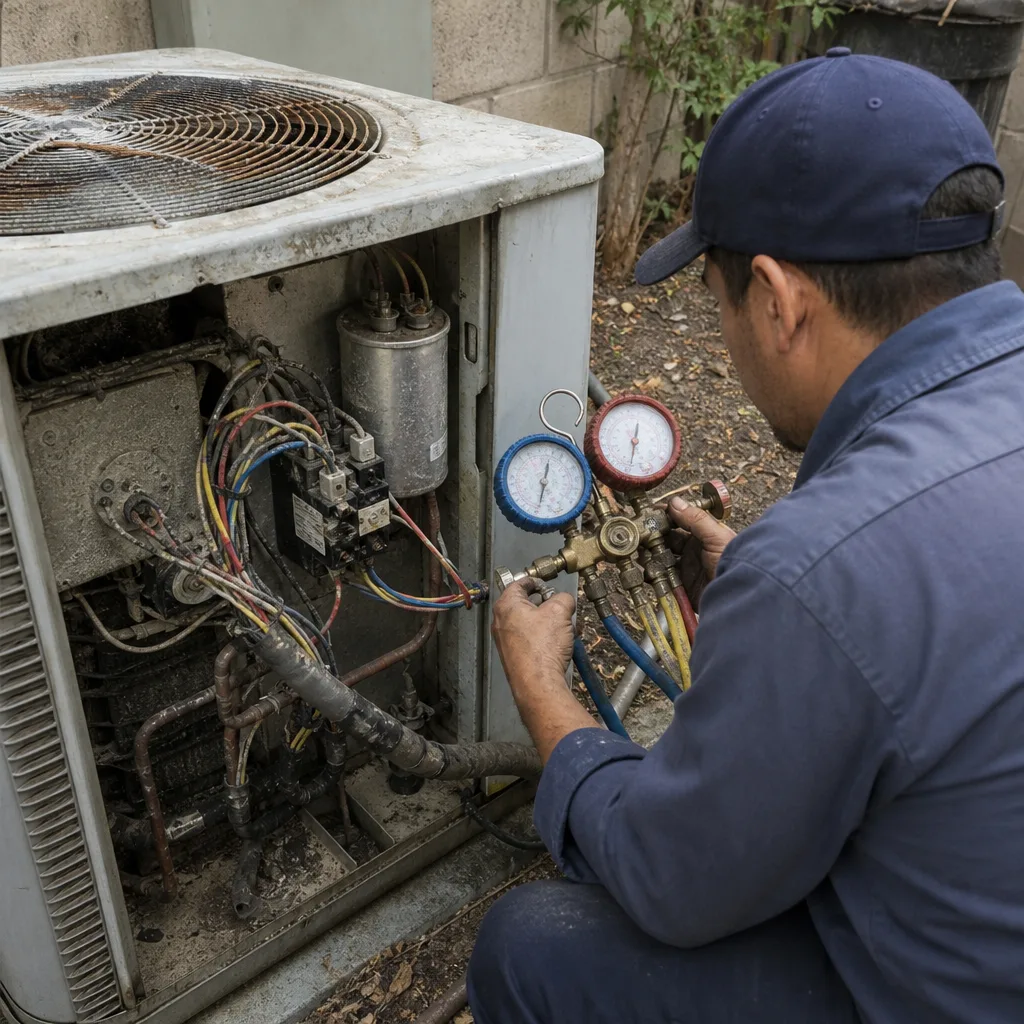 Before
 After
After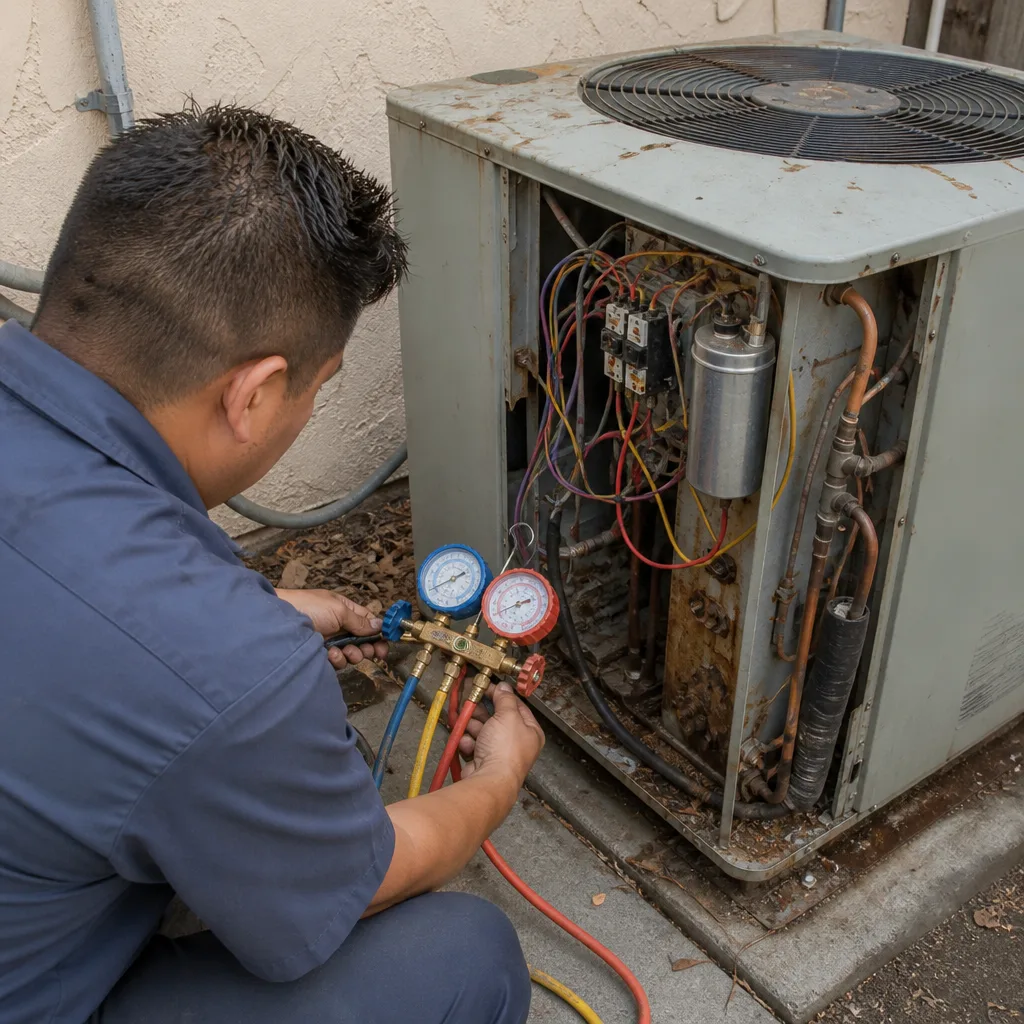 Before
 After
AfterYork Ductwork Repair: The Los Angeles Owner’s Guide
York ductwork repair in Los Angeles typically runs between $300 and $1,400 installed, depending on whether we’re sealing a failed joint, replacing a collapsed section, or correcting airflow through a poorly designed return. We stock York-compatible duct fittings, collars, flex sections, and sealing materials on our trucks, so most repairs are completed the same day we diagnose the problem. The most common way Los Angeles homeowners discover failing ductwork: one room never cools properly, the utility bill drifts up month over month, and a walk through the attic reveals a disconnected joint or a sagging run coated in fine Valley dust.
Here’s what matters: York equipment is engineered to move a specific volume of air, and when the ducts attached to that equipment leak or separate, the system works harder than it was designed to. That means shorter compressor life, uneven temperatures, and air you paid to condition leaking into an attic that’s already 130 degrees in August. Devin Marlowe, our owner and lead technician, puts it plainly: “Tell me what it is, tell me what it costs, tell me it holds – that’s the whole job.” Ductwork is the part of the system most homeowners never see, and it’s often where the real problem lives.
We’re an independent service provider, not affiliated with York. We repair and replace ductwork on York systems every week, and we treat the ductwork as part of the system, not an afterthought.
Which York Models This Applies To
York ductwork repair applies to every York furnace, air handler, heat pump, and air conditioner we see across Los Angeles, but the specifics depend on the equipment series and the home’s duct configuration. York’s residential lines span the Affinity series, the LX series, and the entry-level Latitude and Champion lines. The furnace or air handler model number, printed on the rating plate inside the cabinet door, tells us the blower’s rated static pressure and CFM range, which matters when we’re evaluating whether the existing ductwork is actually appropriate for the equipment.
Compatibility getschas to know: York air handlers and furnaces use standard duct collar dimensions (typically 16×20, 16×25, or 20×20 inches), and those are not York-specific, so a quality aftermarket cuff or plenum fitting will match as long as it’s fabricated to the same dimensions. The York-specific part usually matters on the equipment side: blower housings, control boards, inducer assemblies. For ductwork itself, the priority is proper sheet metal gauge, R-value on flexible sections, and correct sizing relative to the blower’s output.
When we arrive, we check the data plate, measure the existing duct gauge and diameter, and note where the takeoffs land on the plenum. For older York systems in mid-century homes in the San Fernando Valley, we often find metal ducts that were never sealed at the seams with mastic. For newer installs, the problem is usually poorly supported flex runs that sag between strapping points.
On OEM versus aftermarket for York ductwork: there is no meaningful aftermarket penalty for duct fittings, collars, takeoffs, and flex duct when they’re installed to the correct spec and sealed properly. We use 26- and 28-gauge metal, R-6 or R-8 insulated flex where code and climate require, and mastic plus butyl-backed tape rather than cheap foil tape that dries and peels in Los Angeles attic heat.
Signs Your York Ductwork Repair Is Failing
- One room stays hot or cold regardless of thermostat setting. This usually means a disconnected or kinked branch run, often where a flex section separated from its takeoff collar in the attic. The blower is running, but that room is getting nothing.
- Dust builds up days after you clean, especially around supply registers. That’s attic air being pulled into the return side through a gap or tear, then blown through the house. In Los Angeles, where attics hold generations of fine dust, this shows up fast.
- Your summer bill climbs 20 percent or more with no change in usage. Leaky ducts mean the York system conditions air that never reaches the living space. The equipment still works; the delivery system doesn’t.
- Whistling or rattling near registers when the fan starts. A collapsed liner inside flexible duct restricts airflow, and the pressure difference creates noise at the register face. It’s a restriction, not a ghost.
- Moldy or musty smell from vents, especially when the system first kicks on. Ducts sweating in humid coastal air from Long Beach to Santa Monica means insulation has failed or a gap is pulling damp air in. This is a health concern, not just comfort.
Replacement Cost & What’s Included
Ductwork repair pricing in Los Angeles breaks down by the scope of the job. A single disconnected flex run with a new collar and reseal typically costs $300 to $550, parts and labor included. Sealing major leaks across a system usually lands between $500 and $900. Replacing a collapsed return drop or a section of damaged trunk line runs $900 to $1,400. Full duct replacement in a standard 1,500 to 2,000 square foot Los Angeles home falls between $4,500 and $9,000, depending on attic access, insulation type, and whether we’re rebalancing takeoff locations.
What’s included on every repair: a written price before any work starts, on a Brandt HVAC work order you approve first. Materials, labor, and any required strapping or sealing are in that number. Every repair includes our written guarantee, and if the repair fails within the guarantee period, we return at no charge under the 365-Day Done Right Promise. No arguing, no re-billing.
What drives the range: attic access, how many runs are damaged, whether the duct insulation needs replacement to meet current Title 24 code in Los Angeles, and whether we’re repairing or replacing the section. We’ll tell you which it is before you pay anything.
DIY or Call Us?
What you can safely do: look at your supply registers and note which rooms run hot or cold, check whether any visible registers are blocked by furniture or rugs, and inspect accessible ducts in garages or utility closets for obvious separations. Those notes help us diagnose faster.
What goes wrong with DIY ductwork: the dangerous part isn’t usually the duct itself, it’s the attic. Los Angeles attics reach 140 degrees in the summer, and working up there without proper ventilation and footing leads to heat exhaustion and falls through ceilings. Duct sealing also fails when done with the wrong materials, foil tape dries and fails within two seasons, and improperly reconnected flex duct kinks immediately. Duct sizing errors are the most expensive mistake: a homeowner replaces a 10-inch run with an 8-inch run because it’s cheaper, then the York blower overworks against resistance it wasn’t designed to meet, and compressor life shortens.
If the job needs an attic, a ladder, or a tape measure on the plenum, call us at (984) 538-9003. One visit, one diagnosis, one written price.
FAQs
Metal ductwork lasts 40 to 60 years when sealed and supported, but the mastic and tape at the seams typically fails within 15 to 20 years in Los Angeles attic heat. Flexible duct lasts 15 to 25 years before the inner liner degrades and the insulation loses R-value. If your home is over 20 years old and the ducts have never been resealed, they’re leaking more than you’d expect. Call (984) 538-9003 and we’ll inspect exactly what you have.
Disconnected joints, small tears, failed sealing, and loose supports can all be repaired, usually same-day. We recommend replacement when the duct insulation has gone brittle, the liner has collapsed inside flex runs, or the original sizing was wrong for the equipment it now serves. We’ll show you the condition with photos and give you a straight recommendation before any work is approved.
Most single-run repairs are completed in two to four hours, including setup, attic access, the repair itself, and a before-and-after airflow check at the affected registers. Larger sealing jobs on multiple runs take four to six hours. We tell you the window when we give the written price.
Yes. Our trucks carry 26- and 28-gauge metal stock, common takeoff sizes, collars in 6, 8, 10, and 12-inch diameters, R-6 and R-8 flex sections, mastic, and butyl-backed sealing tape. We also keep replacement parts for York furnaces, air handlers, and condensers on hand alongside parts for Carrier, Trane, and Lennox systems, so the ductwork and the equipment get addressed in one visit.
If your York system is moving air through ducts that leak, sag, or disconnect in the Los Angeles heat, call Brandt HVAC at (984) 538-9003. We answer the phone with a live person, send you the technician’s name and photo before arrival, and hand you a written price before any work begins. Ductwork is the part of your system you’ll never see, and we’ll make sure it’s moving air the way York designed it to.
Written by Devin Marlowe, Owner & Lead HVAC Technician, Brandt HVAC at Brandt HVAC, serving Los Angeles and nearby areas.