
Last updated October 9, 2026
Seasonal tune-up and full diagnostic on your Carrier, Trane, or Goodman system - readings shown to you before any repair is proposed
Diagnosis first, numbers second - you approve the repair price before a single part goes in.
 Before
 After
After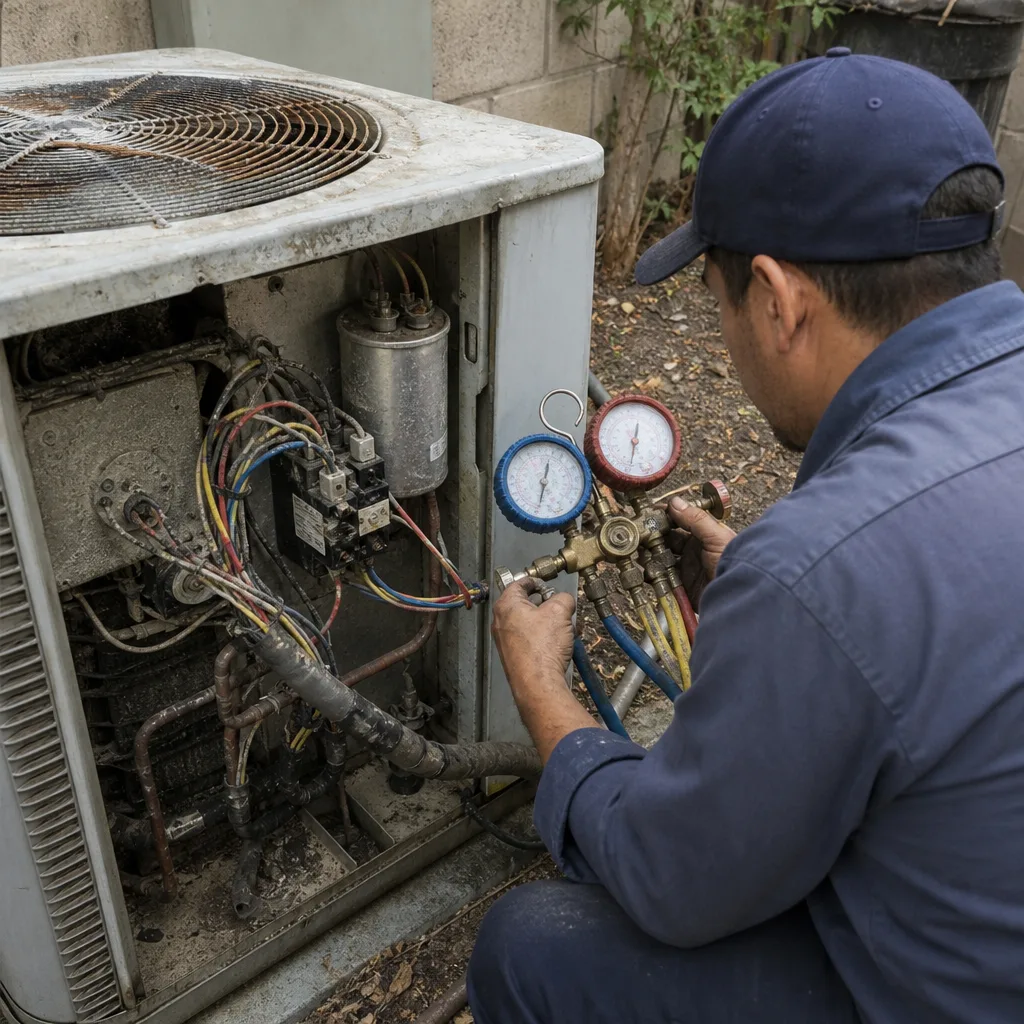 Before
 After
After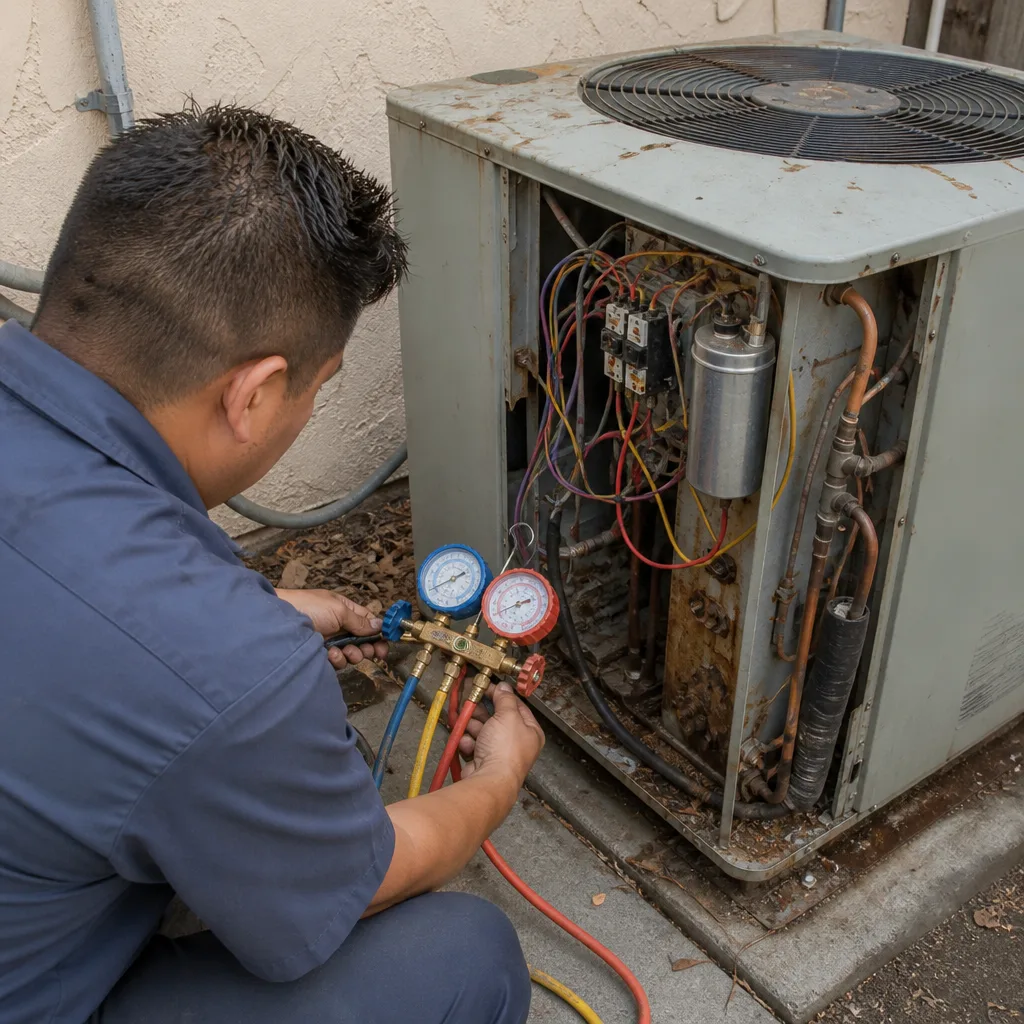 Before
 After
AfterAC Repair Maintenance Schedule: What to Do and When
Most homeowners in Los Angeles are following a maintenance schedule that was written for a house in Ohio. The manufacturer’s default “change the filter every 90 days” advice assumes a sealed house in a mild climate with no pets, no wildfire smoke, and no coastal humidity. In LA, that schedule falls apart fast. A home in Brentwood two miles from the ocean needs a different maintenance rhythm than a home in Woodland Hills where summer temperatures regularly climb past 100°F, and neither matches what a home in Pasadena needs during a September wildfire event. This guide builds a schedule you calibrate to your actual home, your actual system, and the specific air you breathe in Los Angeles.
Quick Answer
An AC maintenance schedule in Los Angeles should be built around three fixed points: a professional tune-up every spring (April is ideal, before the first heat wave), a filter check every 30 to 45 days instead of the generic 90-day default, and a condenser coil cleaning twice a year because LA’s dust, construction debris, and wildfire ash clog outdoor units faster than in most parts of the country. Homeowners who follow this calibrated schedule typically see lower AC Repair bills, fewer mid-summer breakdowns, and systems that last 3 to 5 years longer than neglected units in the same neighborhoods.
Table of Contents
- Why the Default Maintenance Schedule Fails in Los Angeles
- Your Month-by-Month AC Maintenance Calendar
- What You Can Do Yourself vs. What Needs a Licensed Technician
- What a Professional Tune-Up Should Include, Line by Line
- How Los Angeles Microclimates Change Your Maintenance Needs
- Wildfire Season and Your HVAC System: A Separate Protocol
- How to Document Maintenance to Protect Your Warranty
- Warning Signs Your AC Needs Repair, Not Just Maintenance
Why the Default Maintenance Schedule Fails in Los Angeles
The standard advice you’ll find on most HVAC websites, “change your filter every 90 days,” wasn’t written for Los Angeles. It was written as a national average, and averages are dangerous when applied to a city with this much variety. Here’s what LA throws at your system that most of the country doesn’t:
First, the air itself. Los Angeles sits in a basin that traps particulate matter. Construction dust from constant development, brake dust from freeway traffic, pollen from a twelve-month growing season, and seasonal wildfire smoke all end up in your return air. Your filter is the only thing standing between that particulate and your evaporator coil. When a coil gets coated in grime, your system loses efficiency fast, your energy bills climb, and your compressor works harder than it was designed to. A clogged filter in Los Angeles isn’t just a comfort issue, it’s a mechanical wear issue.
Second, the run time. Your AC in Los Angeles might run 2,000 to 3,000 hours in a year. The same unit in Seattle might run 300. Wear accumulates by the hour, not by the calendar. A system that runs as much as an LA system does needs more frequent attention, period.
Third, and this is the part most guides skip entirely: warranty language. Read the fine print on your Brandt HVAC home warranty or any manufacturer’s coverage. Many require “reasonable and necessary maintenance” as a condition of coverage. If you live in a wildfire-adjacent zip code and you ran a standard MERV 8 filter through a smoke event, and your blower motor or evaporator coil fails, the manufacturer can and will deny a claim on the grounds that you didn’t use filtration appropriate to your conditions. We’ve seen it happen. A homeowner in Altadena learns this the hard way every fall.
The maintenance schedule that actually works in Los Angeles is shorter between intervals than national defaults and adds a few LA-specific tasks. It’s not dramatically more work. It’s just more precise work, done at the right times.
Your Month-by-Month AC Maintenance Calendar
Here is a working calendar for a typical single-family home in Los Angeles with a central AC system. Adjust the filter frequency based on the factors we cover in the microclimates section below, but this is the baseline. Think of it as the default setting, not the final answer.
March: Pre-Season Inspection
March in Los Angeles is when you want to catch problems before the first heat wave hits in May or June. If your system sat mostly idle through the winter, this is the month to confirm it still works before you actually need it.
- Run the system for 30 minutes in cooling mode, even if it’s not hot yet. Set the thermostat 5°F below room temperature. Listen for rattling, grinding, or hissing. Any of those sounds means something is loose, worn, or leaking.
- Check the condensate drain line. Pour about a cup of white vinegar into the drain line access point near the indoor unit. This clears the sludge and algae that builds up during humid months. If you notice water pooling around the indoor unit, the line is already clogged, and that’s a call to a tech before water damage spreads.
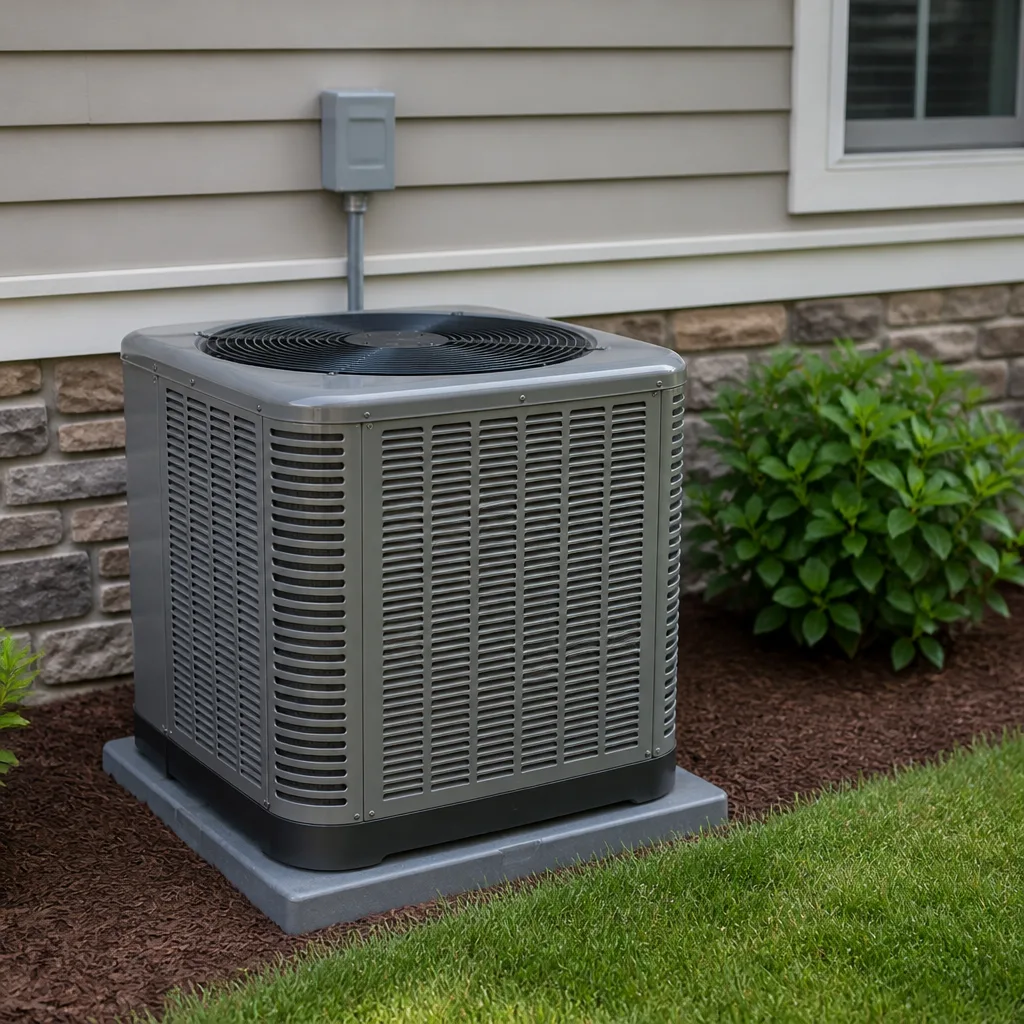
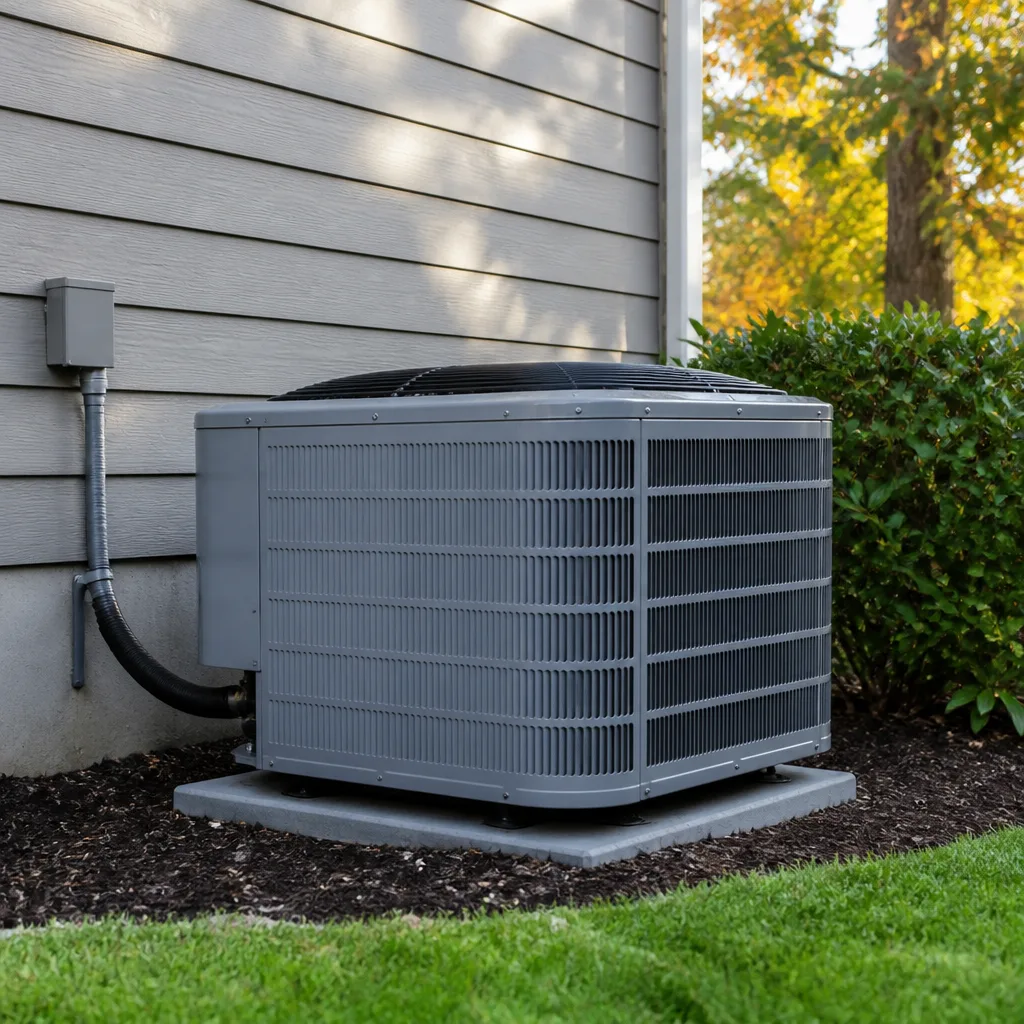
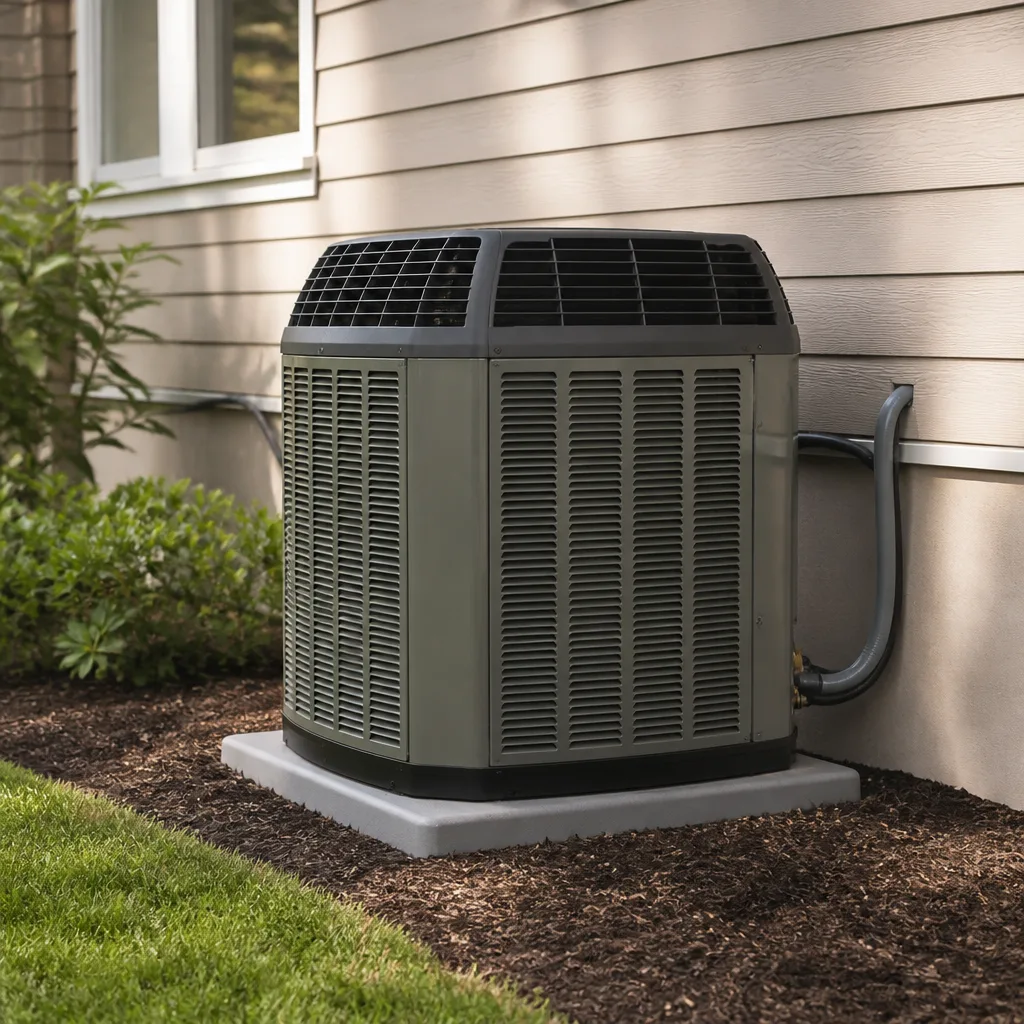
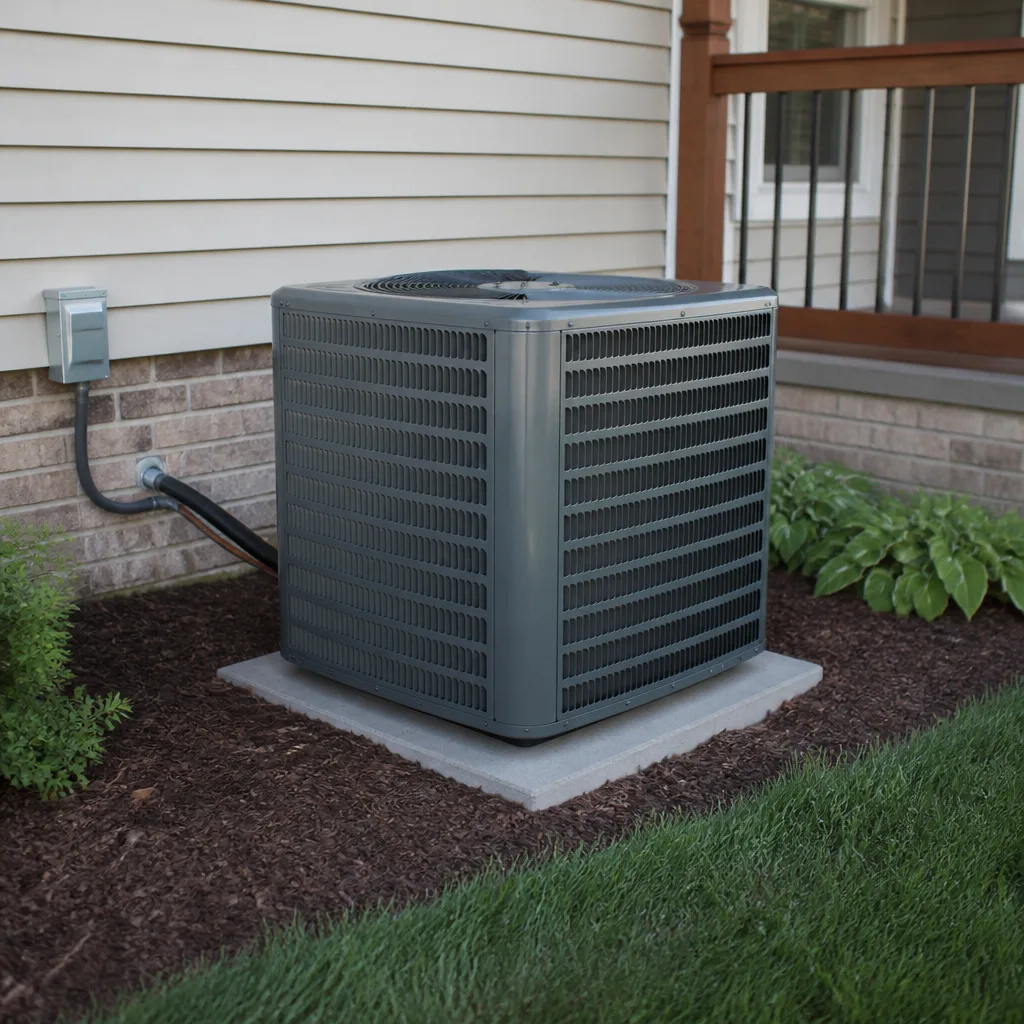
- Inspect the outdoor condenser unit. Remove any debris, leaves, or trash that accumulated around it over winter. Trim back any plants within two feet of the unit. The condenser needs clear airflow on all sides to reject heat.
- Check your filter. If you haven’t changed it since October, change it now, regardless of what it looks like. A filter that looks clean can still be coated in invisible fine particulate from winter inversions.
April: Professional Tune-Up
April is the single most important maintenance month in Los Angeles. This is when you schedule your professional tune-up. Why April specifically? Because you’re ahead of the rush. When the first 95°F day hits in May, every HVAC company in the city gets flooded with no-cooling calls, and tune-up appointments get pushed back weeks. In Los Angeles, the first heat wave is not a surprise. It happens every year. April is when smart homeowners get their systems dialed in.
During the April tune-up, a technician should complete the full checklist we detail in the professional tune-up section below. If they skip more than two items, they’re doing a sales call, not a maintenance call.
May through September: Active Monitoring
This is the heavy-use season. Your system is running daily, and small problems compound fast.
- Filter check every 30 days. Mark it on your calendar. The first of every month, pull the filter and hold it up to a light. If you can’t see light through it, replace it. Don’t wait for the 90-day mark.
- Monthly visual check of the outdoor unit. Look for grass clippings, cottonwood fluff, or dust caked on the coil fins. If the fins look dirty, hose them down gently with a garden hose from the inside out, with the system off.
- Listen for changes. Your AC has a baseline sound. When that sound changes, a qualified tech should hear about it. A new hum, a rattle that wasn’t there before, or a longer run cycle than usual all mean something is developing.
- Check the condensate drain monthly. During heavy-use months, the drain line can clog quickly, especially in humid coastal areas. A wet spot on the floor near the indoor unit, or a musty smell from the vents, means the line is backing up.
October: Post-Season Wrap-Up
In most of the country, October means switching to heat. In Los Angeles, October often still hits 85°F, but the nights cool down and the system runs less. This is when you do the post-season assessment.
- Change the filter one more time before the winter, even if it doesn’t look bad. Wildfire season has just peaked or is still active, and that filter has been working hard.
- Clean the outdoor unit thoroughly. If you’re in a wildfire-affected area, check for ash accumulation on and inside the unit. Ash is corrosive. It needs to be removed before winter moisture turns it into a paste that eats at the coil.
- Assess how the season went. Did the system keep up on the hottest days? Did it short-cycle? Were any rooms warmer than others? Write these observations down. When a tech comes out for the next tune-up, these notes are diagnostic gold.
November through February: Light Season
Even when the AC isn’t running much, it needs a check-in. Run the system in cooling mode for 15 minutes once a month during winter. This keeps seals lubricated, prevents refrigerant from settling in the wrong places, and catches problems when they’re still cheap to fix. It also prevents the “it worked fine last fall” discovery in May.
What You Can Do Yourself vs. What Needs a Licensed Technician
There’s a line between homeowner maintenance and licensed work, and knowing where that line is saves you money and keeps you safe. Crossing it in the wrong direction voids warranties, damages equipment, and in the case of refrigerant, violates federal law.
Genuinely DIY Tasks
- Filter replacement. This is the single highest-impact maintenance task any homeowner can do. It takes two minutes, requires no tools, and prevents more repair calls than anything else on this list. The only question is which filter to use, and that depends on your home and conditions, which we cover below.
- Condenser coil cleaning from the outside. With the system fully powered off, a garden hose with a gentle spray can remove surface dust, cottonwood fluff, and loose debris from the coil fins. Spray from the inside out, at an angle, never straight on. Straight-on spraying bends the fins. Bent fins reduce airflow, which reduces efficiency.
- Visual inspections. You can and should look at your outdoor unit regularly. Look for bent fins, oil stains underneath the unit, ice on the lines during summer, or any loose panels. You’re not fixing these things yourself, but you’re catching them early.
- Drain line maintenance. The vinegar flush we mentioned in the March section is a DIY task. A wet/dry vacuum on the drain line outlet outside can also help clear minor clogs. If the clog is deeper in the line, that’s a tech call.
- Thermostat battery replacement. It sounds too simple to mention, but dead thermostat batteries are a shockingly common cause of “my AC won’t turn on” service calls. If your thermostat has a battery, change it every spring and fall.
Tasks That Require a Licensed Technician
- Anything involving refrigerant. Refrigerant is federally regulated. Adding refrigerant requires an EPA Section 608 certification. Handling it yourself is illegal, and for good reason. Refrigerant leaks require specialized leak detection equipment, and a system low on refrigerant has a leak that needs to be found and fixed, not just topped off. If a tech offers to “top off” your refrigerant without looking for a leak, get a second opinion.
- Electrical work. Capacitors, contactors, circuit boards, and wiring all carry high voltage even when the system is off. Capacitors specifically can hold a charge for days. This is not a DIY area. A bad capacitor is a common AC failure, and it’s a quick fix for a trained tech with the right tools, but it’s dangerous for a homeowner.
- Evaporator coil cleaning. The indoor coil is not accessible without opening the air handler, and cleaning it involves chemicals, fin combs, and experience. This is a professional task, and it’s part of a proper tune-up.
- Compressor work. If the compressor is failing, you’re not fixing it yourself. This is the most expensive component in the system, and diagnosis requires gauges, meters, and experience.
- Ductwork inspection and sealing. Duct leaks waste 20 to 30 percent of your cooled air in a typical LA home. Finding and sealing those leaks requires access to attics and crawl spaces, specialized equipment, and a lot of physical labor.
What a Professional Tune-Up Should Include, Line by Line
Not all tune-ups are equal. Some companies charge $49 for a “tune-up” that’s really just a filter change and a sales pitch for a new system. A legitimate professional tune-up takes 60 to 90 minutes and includes specific, verifiable tasks. Here’s what should happen on a proper maintenance visit, and how to tell if your tech skipped steps.
The Full Tune-Up Checklist
- Thermostat calibration and check. The tech should verify that the thermostat is reading temperature accurately and communicating properly with the system. A thermostat that’s off by 3°F makes your system work harder than it should.
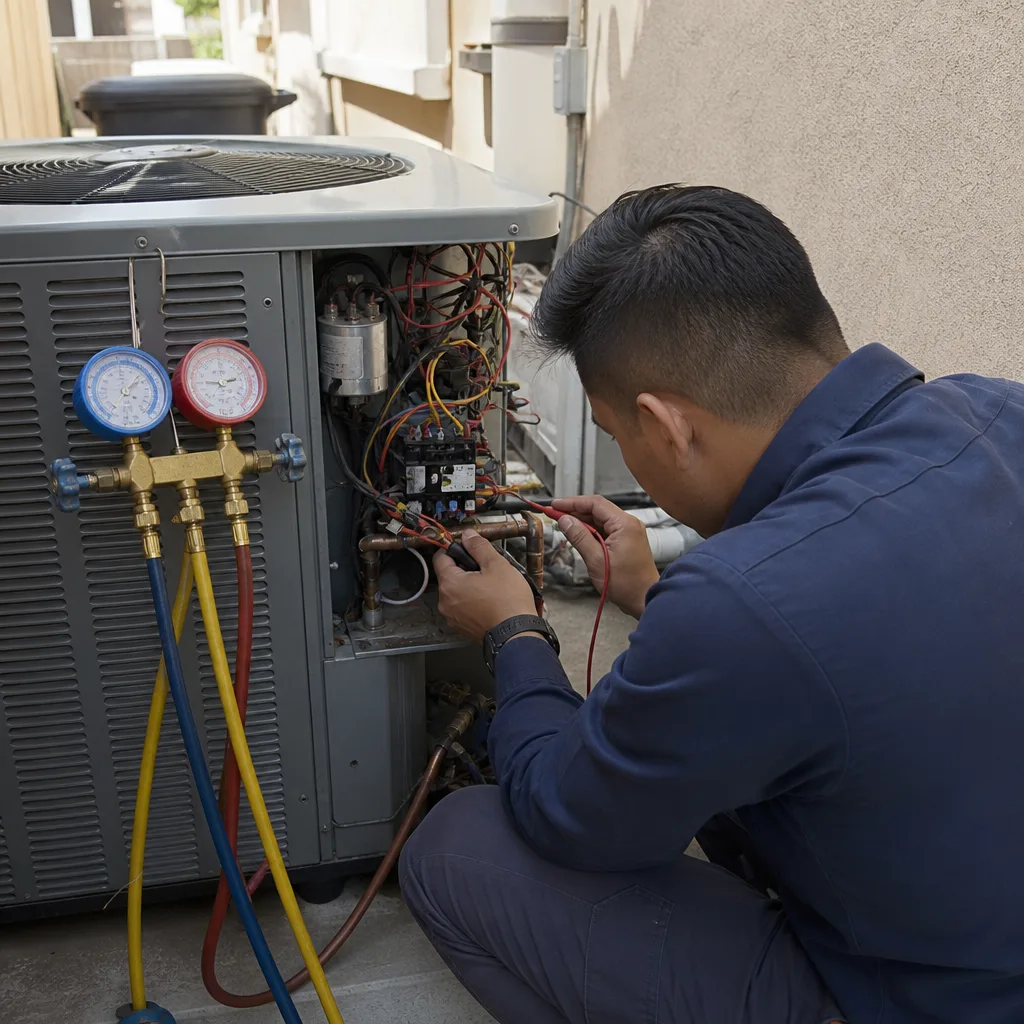
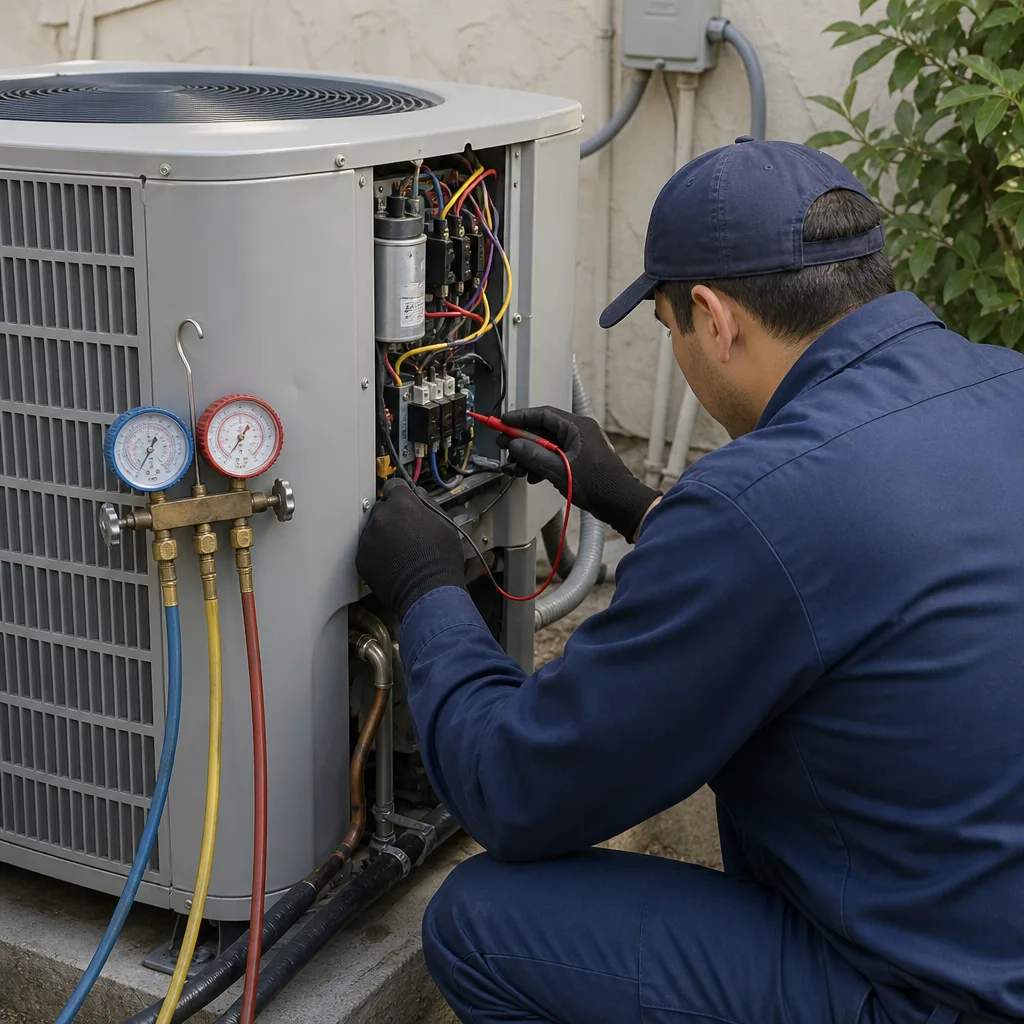
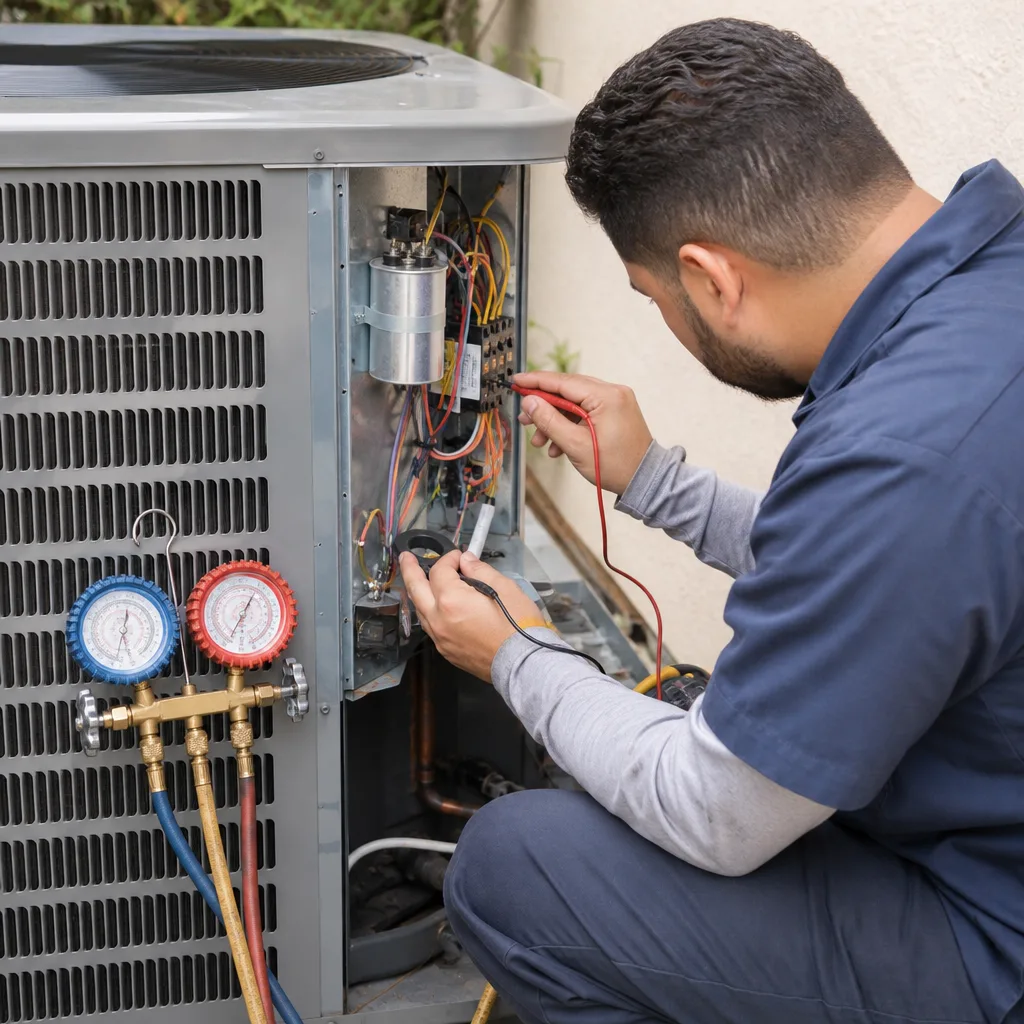
- Electrical component testing. Capacitors, contactors, relays, and wiring should be tested with a multimeter. Capacitors degrade over time and can fail without warning; a capacitor that’s reading low should be flagged for replacement before it fails on a 100°F day.
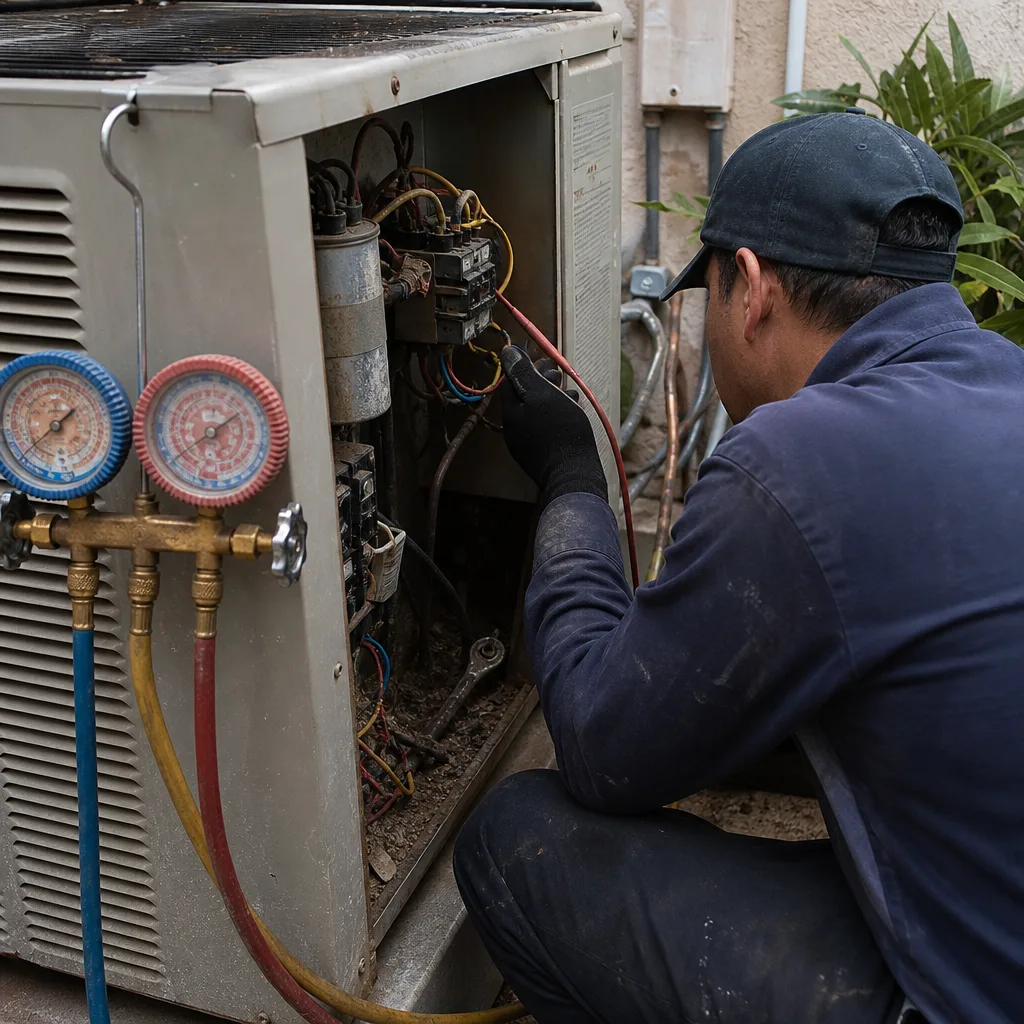
- Refrigerant level check. Using manifold gauges, the tech should verify that refrigerant levels match the manufacturer’s spec. If levels are low, there’s a leak somewhere, and the tech should discuss finding it, not just adding refrigerant.
- Evaporator coil inspection and cleaning. The indoor coil should be inspected for dirt, mold, and freeze patterns. If it’s dirty, it should be cleaned with a proper coil cleaner, not just wiped down.
- Condenser coil cleaning. The outdoor coil should be cleaned with a coil cleaner and rinsed thoroughly. Surface hosing is not the same thing.
- Drain line flush and check. The condensate drain should be flushed and tested for proper flow. A slow-draining line is a water damage claim waiting to happen.
- Blower motor and belt inspection. The blower motor should be checked for proper amperage draw, unusual noise, or excessive heat. Belt-driven blowers (more common on older systems) should have the belt checked for cracking and tension.
- Airflow measurement. Static pressure and temperature drop across the coil should be measured. If airflow is restricted, the tech should look for the cause: a dirty filter, a closed register, undersized ductwork, or a blower that’s set wrong.
- Safety check. The tech should verify that the system is properly grounded, the disconnect works, and there are no gas leaks on systems that include a furnace.
- Written report. You should leave the visit with a written summary of what was checked, what was found, and what (if anything) the tech recommends. A tech who says “everything looks good” but can’t show you the numbers didn’t actually check everything.
How to Tell If a Tech Skipped Steps
- A tune-up that takes 20 minutes is not a tune-up. It’s a filter change with paperwork.
- No gauges were connected. If the tech never pulled out manifold gauges, they didn’t check refrigerant.
- No multimeter was used. If they didn’t test capacitors and contactors electrically, they didn’t do an electrical check.
- The outdoor unit wasn’t opened. If the condenser panels never came off, the coil wasn’t cleaned from the inside.
- No written report. If you don’t have documentation of what was done, it didn’t happen in any way that matters for warranty purposes.
At AC Maintenance in Los Angeles, our techs follow this checklist on every visit and document everything in writing. We’ve found that homeowners who know what a real tune-up looks like are better customers and better advocates for their own systems.
How Los Angeles Microclimates Change Your Maintenance Needs
Los Angeles isn’t one climate. It’s dozens. The maintenance schedule that works for a home in Santa Monica doesn’t work for a home in Northridge, and both fail in a home in Topanga Canyon. Here’s how the specific conditions of your part of the city should shift your schedule.
Coastal Zones: Santa Monica, Venice, Playa del Rey, Manhattan Beach
Coastal air is salty and humid. Salt corrodes aluminum fins and electrical connections. Humidity keeps your evaporator coil wet longer, which grows biological growth faster. If you’re within three miles of the ocean, your outdoor unit should be rinsed monthly during the summer, not just checked, and your tune-up should include a corrosion check on the electrical connections. The salt air in Los Angeles coastal zones is a real factor in condensing unit failure, and it’s one of the reasons coastal units often die younger than inland units from the same manufacturer.
Valley Zones: Woodland Hills, Encino, Sherman Oaks, Van Nuys
The Valley runs hot. Very hot. Woodland Hills has hit 121°F, and summer days above 100°F are the norm, not the exception. Your system runs longer hours, which means more wear per month. Filter changes should happen every 30 days in the Valley during summer. No exceptions. The dust from the hills and the constant construction also means the condenser coil loads up faster. If you’re in the Valley, consider a tune-up in March and a mid-season check in July or August, because your system is working harder than almost any other in the country.
Foothill and Canyon Zones: Pasadena, Altadena, La Cañada, Topanga, Malibu Canyon
Foothill and canyon homes have two maintenance factors that flatland homes don’t: wildfire proximity and wildland debris. Dry grass, leaf litter, and brush end up in and around your outdoor unit. During wildfire season, ash accumulates on coils and inside electrical panels. If you’re in a wildfire-adjacent area, your October outdoor unit cleaning is not optional, it’s essential. And your filter protocol during smoke events is different, which we cover in the next section.
Inland and Desert-Edge Zones: Pomona, Ontario, Rancho Cucamonga, Palmdale
Inland Los Angeles County gets hot and dusty. The dust is fine and gritty, and it packs into coil fins. Your condenser coil may need professional cleaning three times a year instead of two. The temperature swings between day and night are also wider, which puts additional stress on the system’s start-up components: capacitors especially.
Wildfire Season and Your HVAC System: A Separate Protocol
Wildfire season in Los Angeles is no longer a few weeks in the fall. It’s effectively a year-round condition with peaks in late summer through early winter, and the smoke from fires in the Angeles National Forest, the Santa Monica Mountains, or even fires in Kern and Ventura counties can blanket the city for days at a time. Your HVAC system is both your best defense against that smoke and a casualty of it.
What to Do During a Smoke Event
- Upgrade your filter immediately. If you run a standard MERV 8 filter, switch to a MERV 13 filter for the duration of the smoke event. MERV 13 captures the fine particulate matter (PM2.5) that wildfire smoke carries, and PM2.5 is the component that gets into your lungs and bloodstream. If you have a heat pump or a system that runs the blower continuously, a MERV 13 filter is even more important.
- Run the fan continuously. Set your thermostat fan to “ON” rather than “AUTO.” This keeps air moving through the filter continuously, which removes more particulate from your indoor air. It costs a little more in electricity, but it’s significantly cheaper than a respiratory issue.
- Check the filter weekly during the event. Wildfire smoke will load up a filter faster than anything else your system will ever face. A filter that would last 30 days under normal conditions might be clogged in 5 to 7 days during a heavy smoke event.
- Do not hose down your outdoor unit during a smoke event. The ash is dry and fine. Water turns it into a paste that bakes onto the coil. Wait until the smoke clears, then clean thoroughly.
- After the event, change the filter again. Even if you just changed it before the smoke arrived. The filter is full of particulate, and leaving a loaded filter in place means your system is working against that restriction.
The Warranty Issue Nobody Talks About
Here’s the part that most guides miss, and it’s important. Most manufacturer warranties require that the system be maintained with filters appropriate to the operating environment. If you live in a Los Angeles home near wildfire-prone areas and you run a basic fiberglass filter through a smoke event, and your blower motor burns out, the manufacturer can deny the warranty claim on the basis that you operated the system with inadequate filtration. This is not hypothetical. We’ve seen warranty claims get complicated because the homeowner couldn’t demonstrate proper maintenance during a smoke event. Document everything: the filter you used, when you changed it, and what conditions were like. That documentation is your warranty protection.
When Smoke Season Ends
When the air clears, schedule a professional inspection. Ash is corrosive to electrical connections and coil fins. It also gets into the blower motor and can cause bearing wear. A post-smoke-season inspection catches that corrosion before it becomes a failure.
How to Document Maintenance to Protect Your Warranty
Your warranty is only as good as your documentation. If you can’t prove you maintained the system, the manufacturer is not obligated to honor the warranty, and in Los Angeles, where systems run hard and fail under heavy load, that’s a critical protection. Here’s how to document maintenance properly.
Keep a Simple Maintenance Log
You don’t need software. A spiral notebook or a note on your phone works. What matters is that it exists and is consistent. For every maintenance action, record:
- The date. Month, day, and year.
- The action taken. Filter changed, coil rinsed, professional tune-up completed, etc.
- The filter type and MERV rating if you changed a filter.
- The name of the company and technician if it was a professional visit.
- Any findings or observations. “Tech noted capacitor reading low” or “replaced MERV 8 with MERV 13 due to smoke event.”
- Photos. A quick photo of the old filter next to the new one, or the outdoor unit before and after cleaning, takes 30 seconds and is stronger evidence than any written note.
Save Every Professional Report
Every professional tune-up should end with a written report. Keep those reports in a folder, physical or digital. When a warranty claim happens, the manufacturer will ask for maintenance records. A homeowner who can produce three years of documented tune-ups is in a completely different position than one who says “I had it serviced a few times.”
The Los Angeles Angle
In Los Angeles, where your system runs more hours per year than in most of the country, the maintenance bar is higher. A system in LA with 2,500 run hours per year and documented maintenance is in better standing than a system in Portland with 400 run hours and no records. The manufacturer’s warranty language doesn’t always account for this, but your documentation does. It shows that you met or exceeded the standard of care for your operating conditions.
Warning Signs Your AC Needs Repair, Not Just Maintenance
Maintenance prevents problems. It doesn’t fix them. When these AC Repair Warning Signs Every Homeowner Should Know appear, you’re past the maintenance phase and into repair territory. Catching them early is the difference between a $200 fix and a $2,000 one.
- Warm air blowing from the vents. If the system is running but not cooling, the problem could be low refrigerant, a failed compressor, or a control issue. None of these are fixed by changing a filter.
- Ice on the refrigerant lines or the outdoor unit. Ice on an AC system in Los Angeles in July is a sign of low refrigerant or restricted airflow, not cold weather. Shut the system off and call a technician. Running it while frozen can destroy the compressor.
- Short cycling. If the system turns on and off every 5 to 10 minutes instead of running a full cycle, something is wrong. Short cycling is often a refrigerant issue, an oversized system, or a failing thermostat. It also doubles the wear on the start-up components.
- Water pooling around the indoor unit. This is a drain line issue, and it’s often urgent because the water is sitting next to electrical components and drywall. A clogged drain line can cause thousands of dollars in water damage in a single day.
- New or unusual smells. A musty smell means biological growth in the coil or drain pan. A burning smell means electrical. Both are repair calls.
- Rising energy bills with no change in usage. If your usage habits haven’t changed but your bill went up 20 percent or more, the system is losing efficiency. It’s working harder to produce the same cooling, and that’s a mechanical issue, not a rate issue.
Common Mistakes to Avoid
- Following the 90-day filter rule blindly. In Los Angeles, 90 days is a maximum interval for a lightly used system in a clean home, not a default. Homes with pets, smokers, nearby construction, or wildfire exposure need 30-day changes.
- Skipping the April tune-up because “the system works fine.” The point of April maintenance is to keep it working fine through the summer. By the time a problem shows up on a July afternoon, you’re paying emergency rates instead of scheduled rates.
- Hosing down a running condenser unit. Water and electricity don’t mix, and spraying water into a running condenser can damage the fan motor and electrical connections. Always shut the system off first.
- Using the cheapest filter you can find. A $1 fiberglass filter catches large debris and nothing else. Everything finer goes straight to your evaporator coil, which then needs professional cleaning. A $15 pleated MERV 8 or better filter protects the coil and your indoor air.
- Closing vents in unused rooms to “save energy.” This restricts airflow across the coil and can cause the coil to freeze. Your system was designed to move a specific volume of air, and closing vents throws off that balance.
- Ignoring the condensate drain until it overflows. A slow-draining line is a problem; a backed-up line is a disaster. The monthly vinegar flush costs about five cents and prevents most clogs.
- Assuming the warranty covers everything. Manufacturer warranties cover defects in materials and workmanship, not failures caused by neglect. Documented maintenance is what connects a failure to the warranty.
When to Call a Professional
Some situations demand a trained technician now, not on the next maintenance visit. Call a professional if you hear grinding, squealing, or banging from the system; if you see ice on the refrigerant lines during summer; if the system is short-cycling; or if water is pooling inside your home near the indoor unit. Any electrical smell, burning smell, or sparking is an immediate call. And if your system won’t cool at all during a Los Angeles heat wave, a working AC is not a convenience; it’s a health issue, especially for young children, older adults, and anyone with respiratory conditions. AC Repair in Los Angeles by Brandt HVAC includes free estimates on repair work, and a live person answers the phone 24 hours a day at (984) 538-9003. You’ll get a written price before any work starts, and every repair includes a written guarantee. If the repair fails within the guarantee period, we return at no charge under our 365-Day Done Right Promise.
Frequently Asked Questions
Every 30 to 45 days during the heavy-use months of May through October, and every 60 to 90 days during the cooler months of November through April. Homes with pets, residents with allergies, or locations near construction or wildfire areas should change every 30 days year-round. The 90-day guideline is a national average that doesn’t account for LA’s particulate load or run-time hours.
Filter management. A clogged filter is the root cause of more AC failures in Los Angeles than any other single factor. It causes evaporator coil freezing, blower motor strain, reduced airflow, and increased energy consumption. A $15 filter changed on schedule prevents thousands in repairs.
Every year, at minimum. In Los Angeles, where systems run 2,000 to 3,000 hours annually, one tune-up per year is the floor. Most manufacturers require annual maintenance as a warranty condition. Systems in Valley locations or homes with heavy use benefit from two tune-ups per year: one in March or April and one in July or August.
A tune-up is preventive maintenance designed to catch small issues before they become failures. For guidance on handling issues yourself, see our AC Repair Troubleshooting: Common Problems and How to Fix Them. A repair fixes a specific malfunction that’s already occurring. Tune-ups are scheduled and predictable in cost. Repairs are reactive and cost more. The point of the tune-up is to reduce how many repairs you need in the first place.
Both. Wildfire smoke damages your system by coating the condenser coil with corrosive ash, which reduces efficiency and accelerates corrosion. It also clogs the filter quickly, which strains the blower motor. During a smoke event, run a MERV 13 filter, set the fan to continuous, and check the filter weekly. After the event clears, change the filter and schedule a professional inspection if you’re in a heavily affected area.
Expect to pay $89 to $180 for a legitimate professional tune-up in the Los Angeles market, depending on the company and the scope of the work. Some companies advertise $49 tune-ups that are really filter changes and sales visits. A proper tune-up takes 60 to 90 minutes, includes electrical testing, coil cleaning, refrigerant checks, and airflow measurements, and ends with a written report. Call (984) 538-9003 for a current quote on AC maintenance in Los Angeles; you’ll know the price before anyone shows up at your door.
The Bottom Line
Maintaining an AC system in Los Angeles means treating it for what it is: a machine running thousands of hours a year in some of the most particulate-heavy air in the country. For more guides & resources on keeping your system running, explore our blog. The generic schedule doesn’t work here. Change your filter more often than the national average, schedule a professional tune-up in April before the heat hits, clean your outdoor unit seasonally instead of annually, and document everything with dates, filters, and reports. Do that, and your system runs longer, fails less often, and protects its warranty. Skip it, and you’ll meet your repair technician at the worst possible moment, on the hottest day of the year, paying emergency rates for a failure that maintenance would have prevented.
Written by Devin Marlowe, Owner at Brandt HVAC, serving Los Angeles since 2003.