
Last updated October 9, 2026
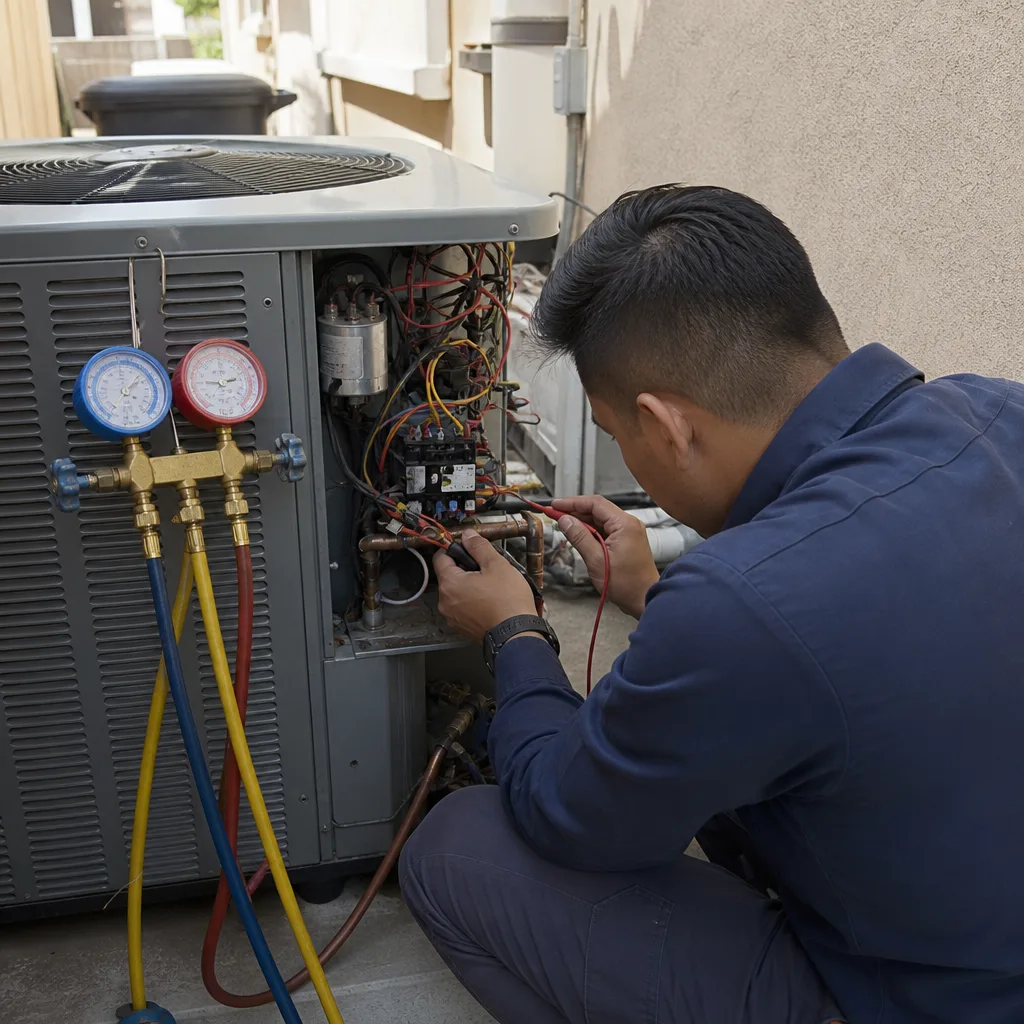
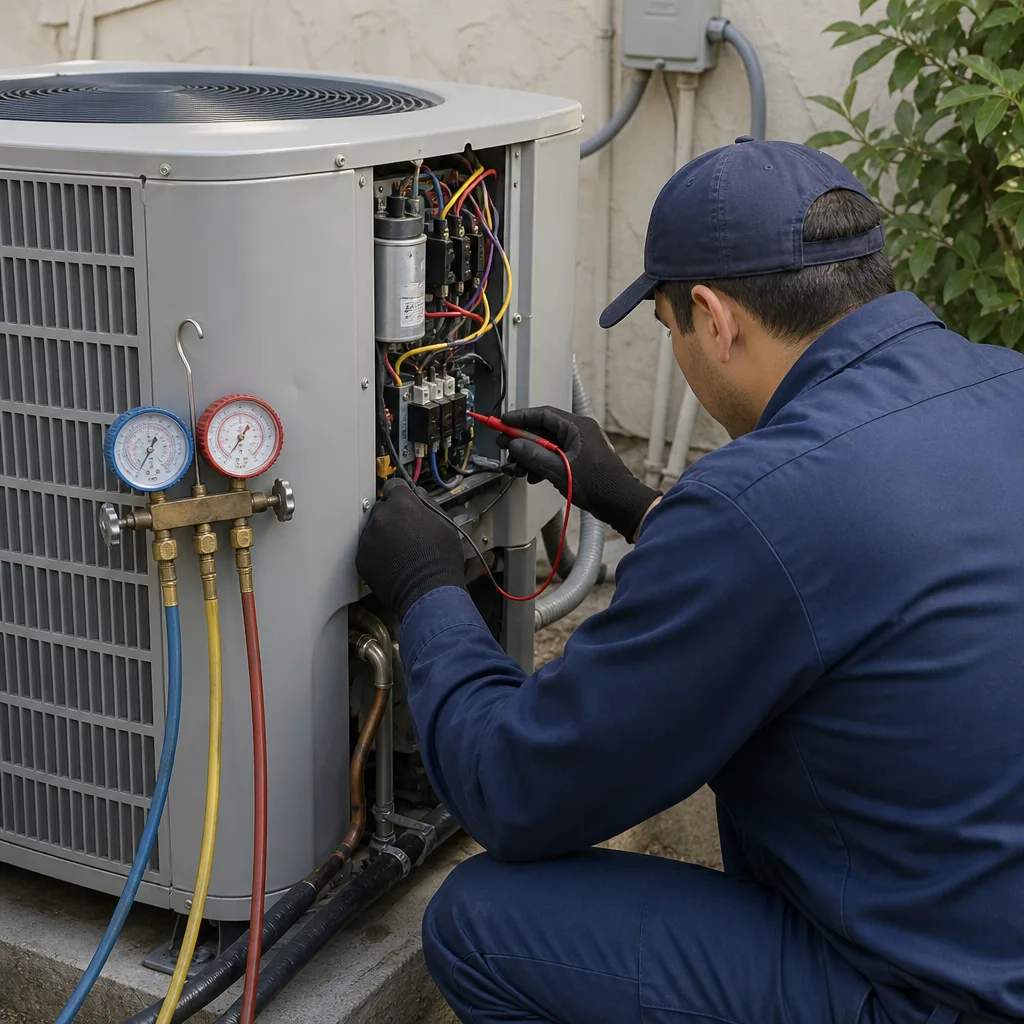
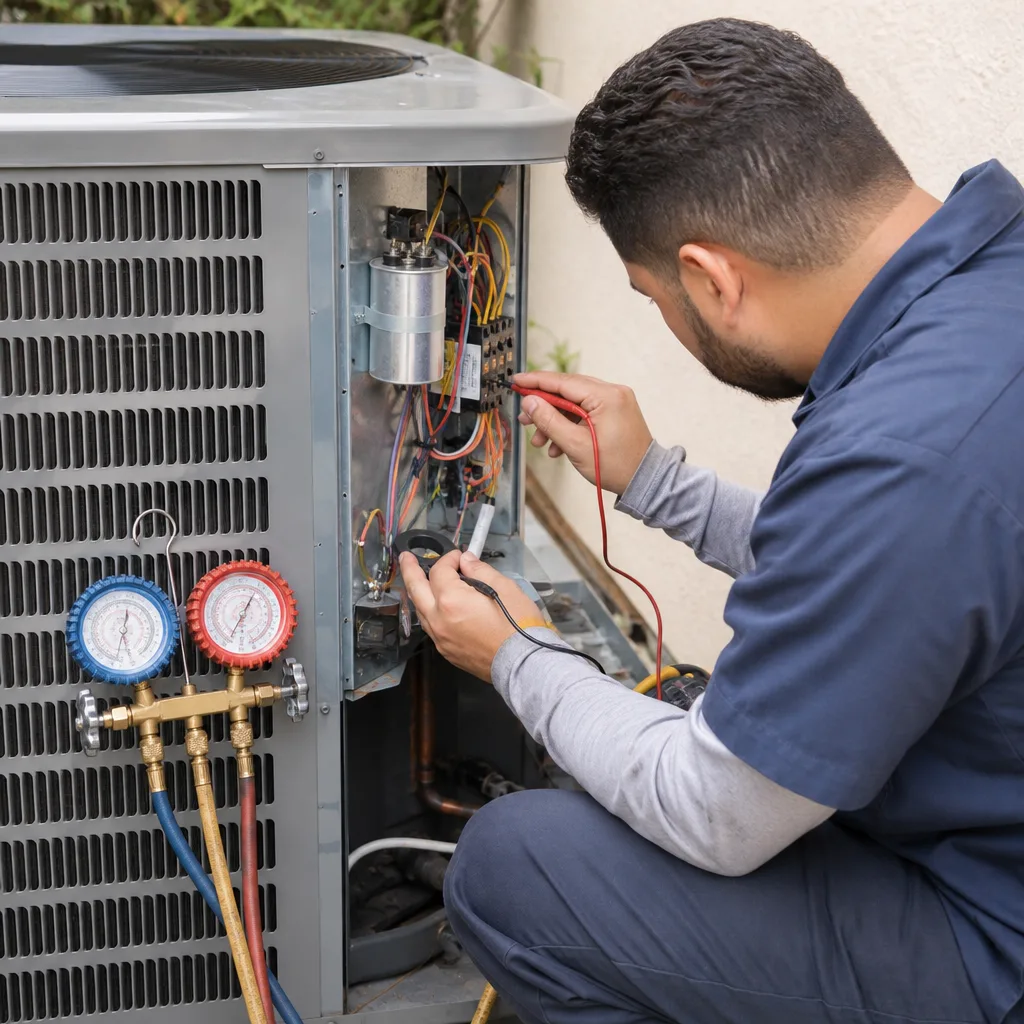
Seasonal tune-up and full diagnostic on your Carrier, Trane, or Goodman system - readings shown to you before any repair is proposed
Diagnosis first, numbers second - you approve the repair price before a single part goes in.
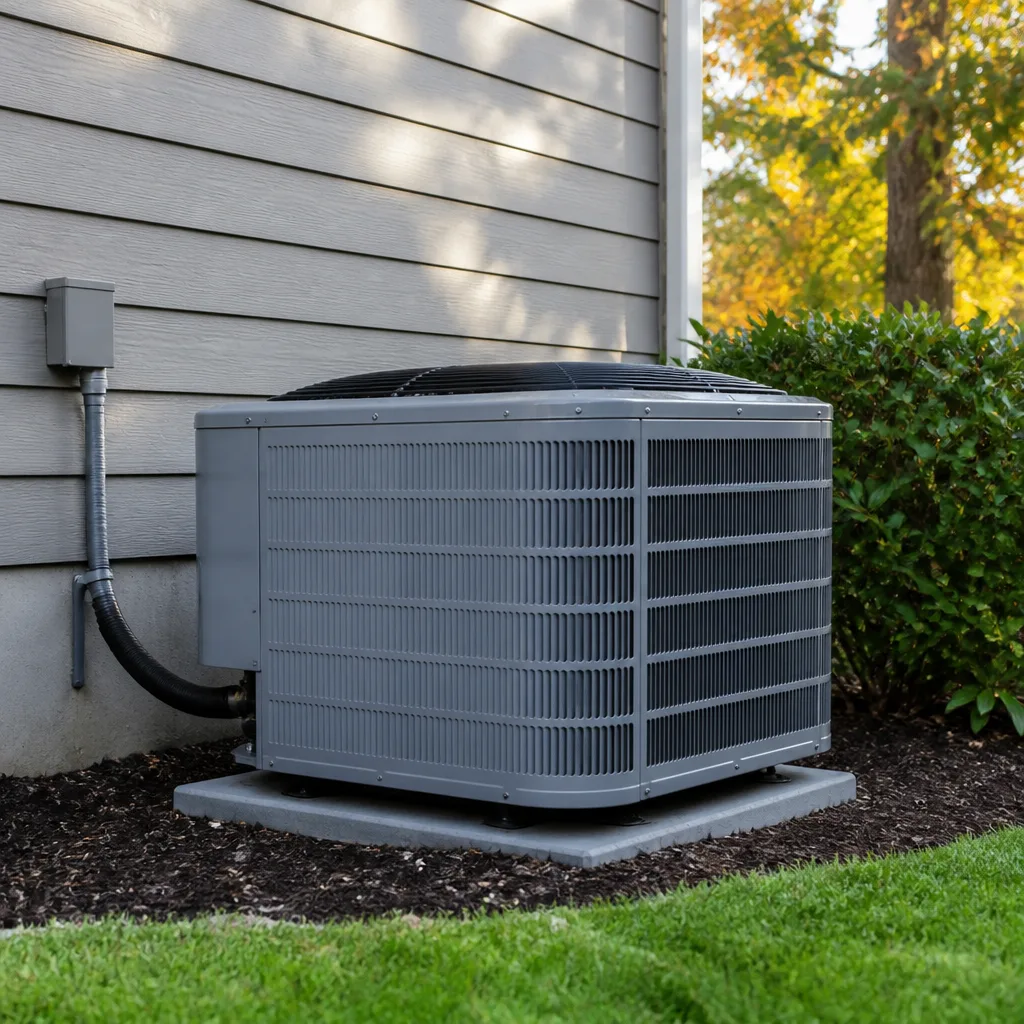
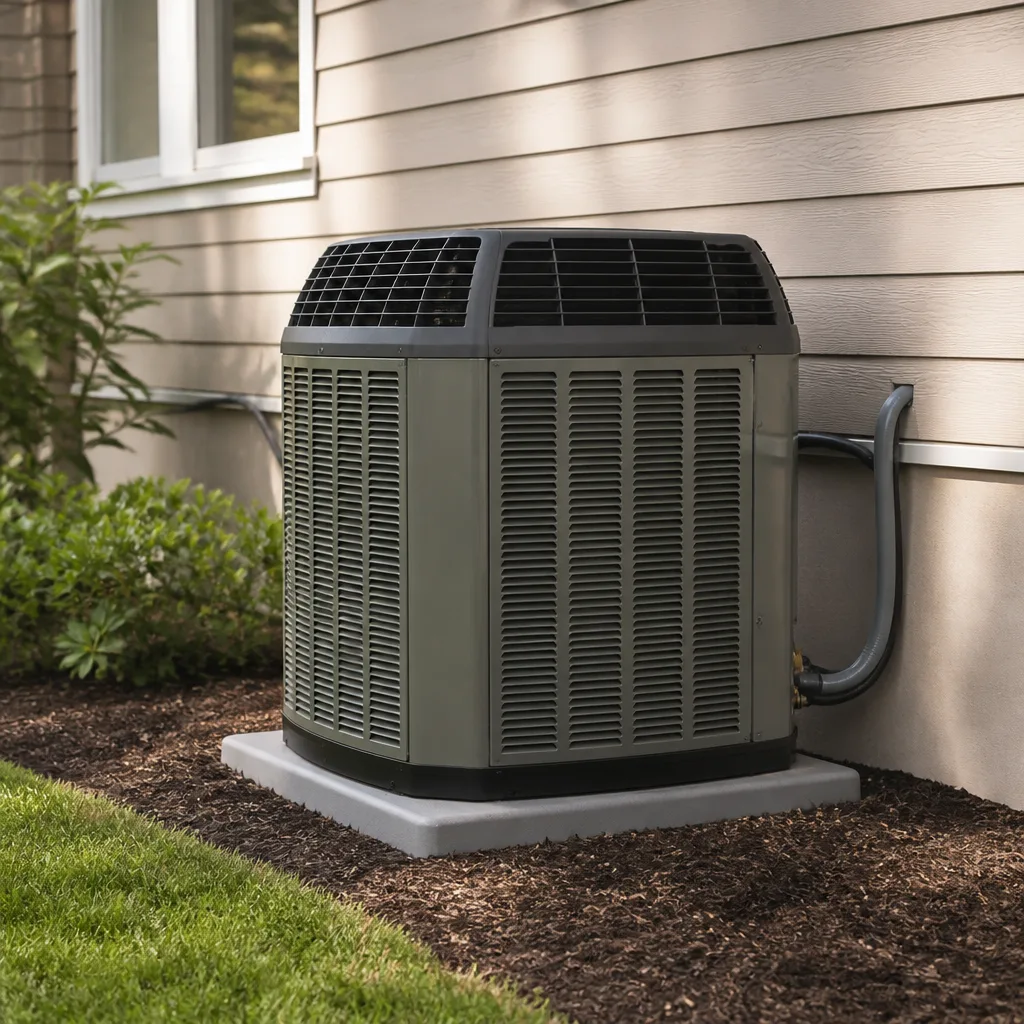
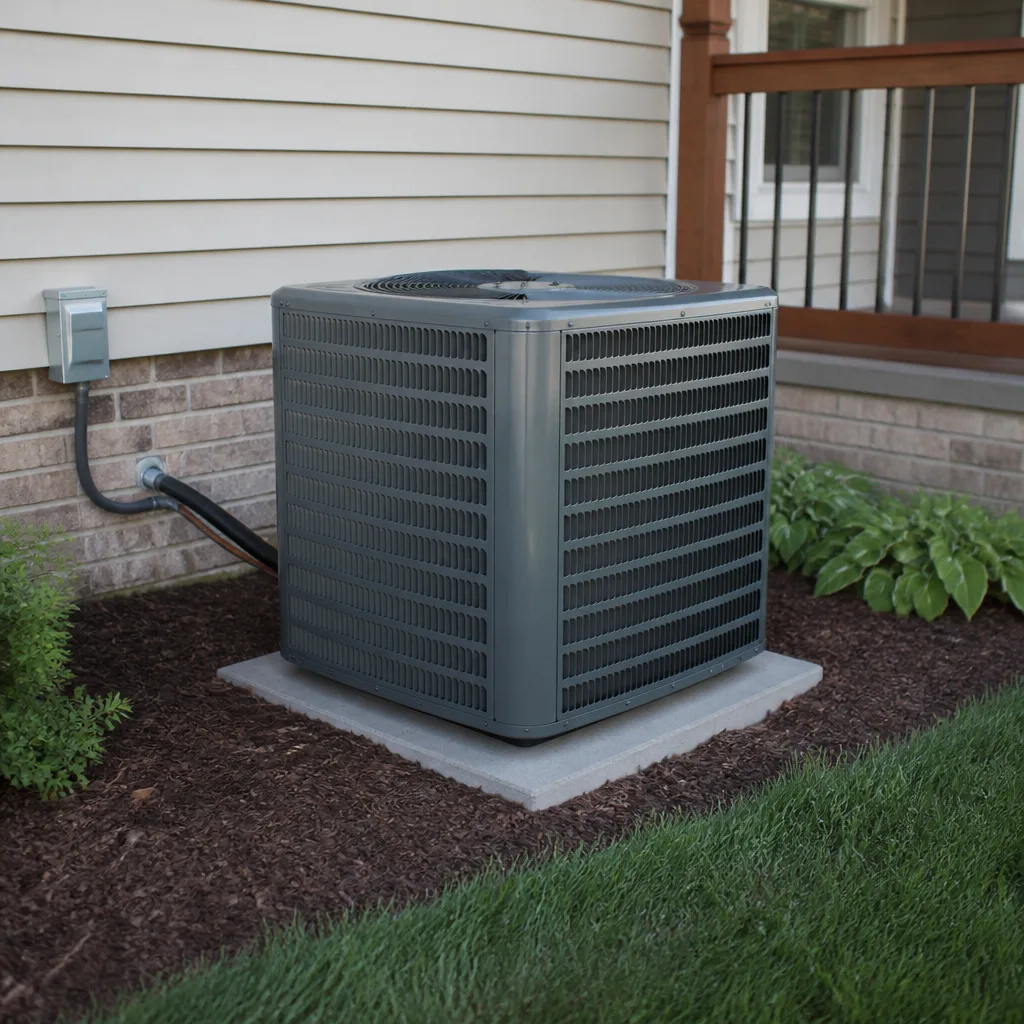
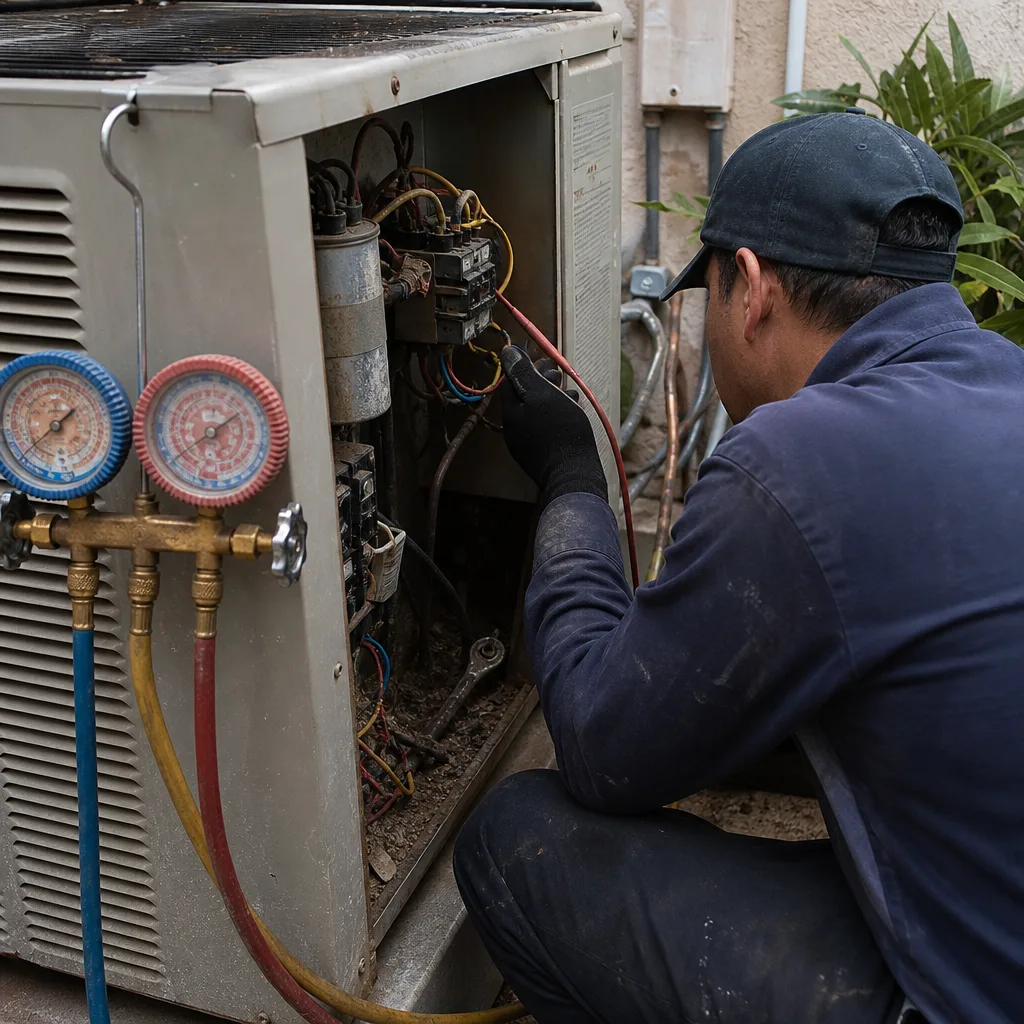 Before
 After
After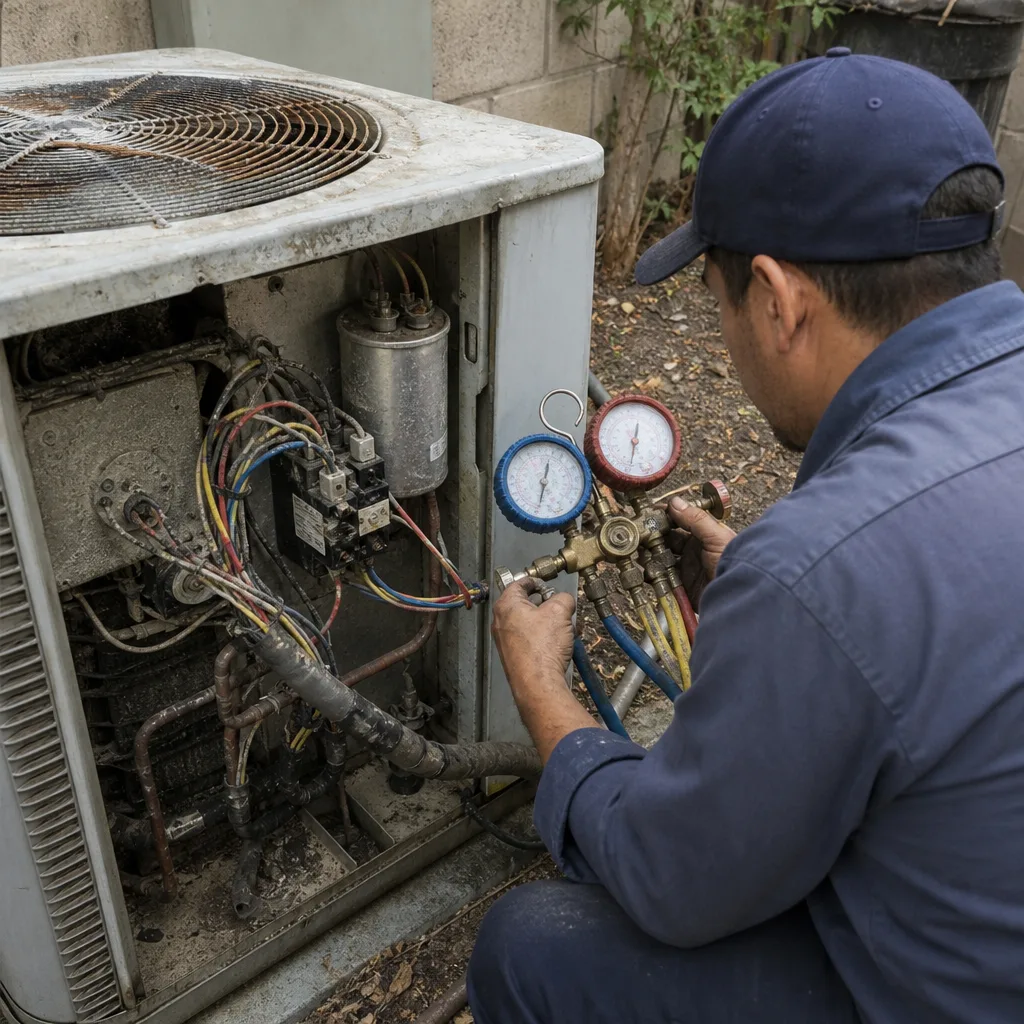 Before
 After
After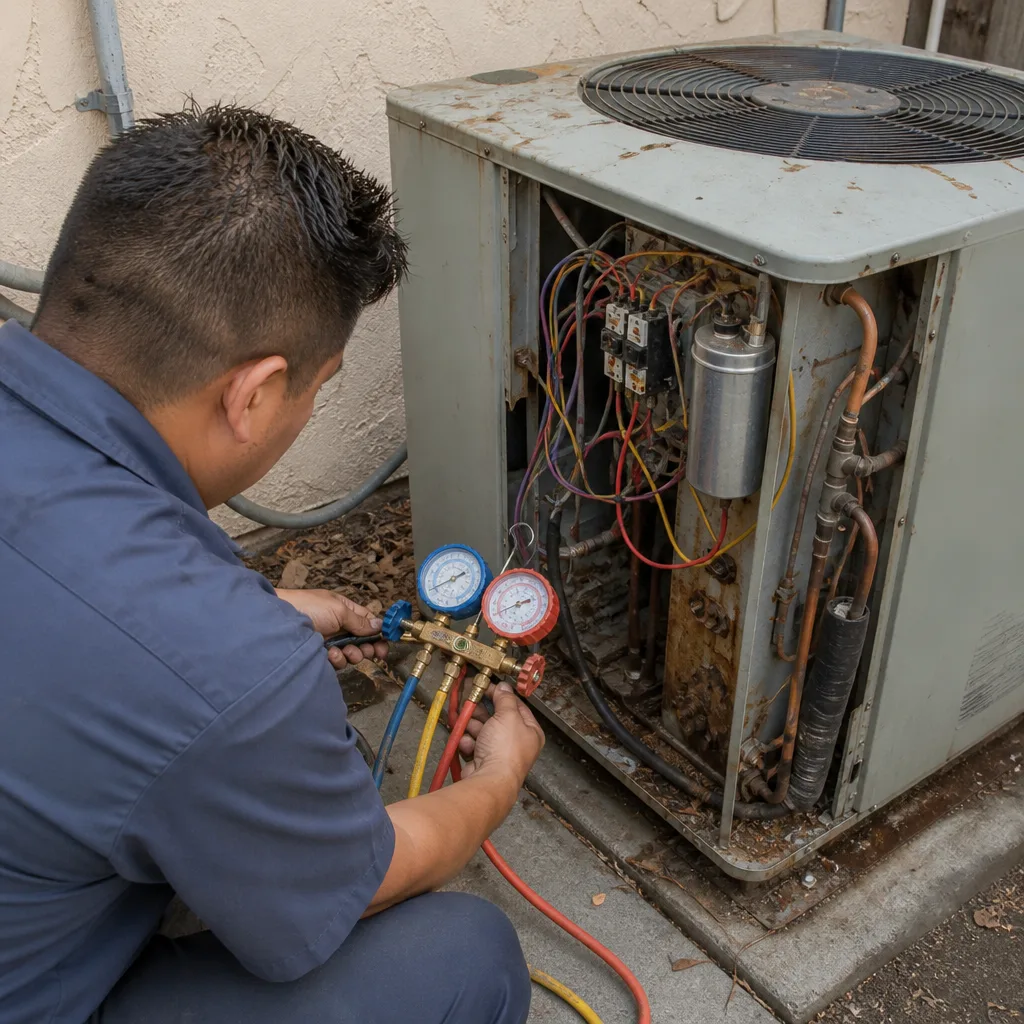 Before
 After
AfterAC Repair Warning Signs Every Homeowner Should Know
A unit that’s running constantly on a mild Los Angeles day is not just “working hard.” It’s often a sign of refrigerant loss or a failing compressor that, left alone, typically doubles the final repair cost within 30 days. Most warning-sign articles are written to scare you into calling someone immediately. This one is different. We’re going to rate each warning sign by actual urgency, so you know which ones require shutting the system down today, which ones can be scheduled within the week, and which ones just need a notebook and some patience. You’ll finish this guide with a clearer head and a better plan than you had when you started.
Quick Answer
The most common AC repair warning signs are warm air from vents, weak airflow, short cycling, unusual smells, rising energy bills without a change in usage, unusual noises, and ice on refrigerant lines. Each sign has a different urgency level, and knowing the difference can save you hundreds of dollars in preventable AC Repair services. In Los Angeles, where AC runs hard from June through October, catching these signs early is the difference between a $200 repair and a $2,000 one.
Table of Contents
- A Tiered Urgency Rating for Every Warning Sign
- Warm Air From Vents: Five Possible Causes and How to Narrow Them Down
- Energy Bill Spikes: What Percentage Actually Signals a Problem
- What Unusual Smells Are Telling You (and Which One Means Call the Gas Company)
- Noises That Mean Something: A Field Guide to AC Sounds
- Weak Airflow and Ice on the Lines: Two Signs That Travel Together
- How to Document Warning Signs Before You Call a Technician
A Tiered Urgency Rating for Every Warning Sign
Not every AC problem is an emergency. Treating them all as five-alarm fires leads to rushed decisions, overspending, and unnecessary replacements. In our experience working on Carrier, Daikin, and Bryant systems across Los Angeles, we’ve seen the full spectrum. Here’s how we rate the signs.
Immediate shutdown required: Burning or electrical smells, sparking sounds, or a breaker that trips more than once. Turn the system off at the thermostat and at the breaker panel. These signs point to an electrical fault that can cause a fire. Do not run the system again until a technician has inspected it.
Schedule within 48 hours: Ice forming on the indoor coil or the copper line running to the outdoor unit, refrigerant hissing, or a compressor that’s short cycling (turning on and off every few minutes). These get worse quickly and the repair cost climbs the longer you wait. A compressor running against a frozen coil can burn out in days, not weeks.
Monitor and track: A gradual rise in energy bills, slightly reduced airflow in one room, or a faint musty smell when the system first kicks on. These are worth documenting, but they don’t require an emergency call. Write down the dates, take photos where visible, and watch the pattern over a week or two.
This tiered approach is the opposite of what you’ll find in more guides & resources on most HVAC websites. We’d rather you make an informed decision than a panicked one. That said, when a real emergency hits, speed matters. A live person answers our phone around the clock, and we’ll tell you straight whether it’s a shut-it-down situation or a wait-until-morning one.
Warm Air From Vents: Five Possible Causes and How to Narrow Them Down
Warm air coming from your vents when the thermostat says “cool” is the single most common AC complaint in Los Angeles. It is also the most misunderstood. There are five distinct causes, and only some of them require a repair.
- Thermostat setting error. Check that the fan is set to “auto” and not “on.” When set to “on,” the fan blows air continuously, including times when the compressor isn’t cooling. The air feels warm because it is. This costs nothing to fix.
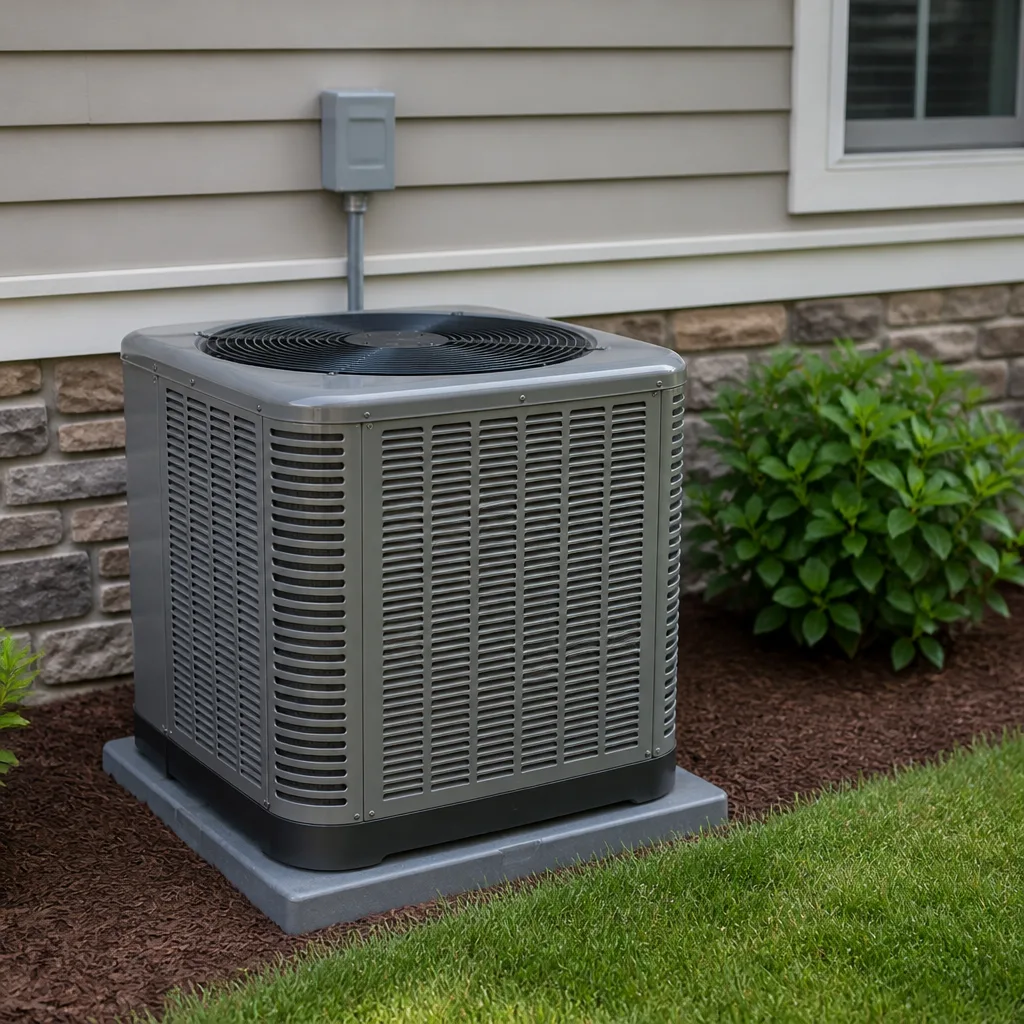
- Dirty outdoor condenser coil. The coil on the outdoor unit sheds heat. When it’s caked with dust, lint, and LA’s fine particulate grime, the system cannot reject heat properly. The air coming out of the vents is noticeably warmer, but not hot. Cleaning the coil often resolves it.
- Low refrigerant. If the system is low on refrigerant, often due to a slow leak, it cannot absorb enough heat from your home. The air is cool but not cold. This is a repair job, because adding refrigerant without finding and fixing the leak is a stopgap that fails again.
- Failing compressor. The compressor is the pump that moves refrigerant. When it starts to fail, it can’t generate enough pressure. The air is warm, and the outdoor unit may sound louder or vibrate more than usual. This is a urgent repair, and it’s one where a written price before any work begins matters enormously.
- Reversing valve stuck (heat pumps only). If you have a heat pump, a stuck reversing valve can leave the system in heating mode even when the thermostat calls for cooling. This is a straightforward diagnosis and repair for a technician, but a confusing one for a homeowner.
Before you call anyone, walk through these checks: thermostat setting, visible coil condition, and how cold the air actually is at the vent. If it’s lukewarm rather than cool, and the coil is clean, the problem is almost always refrigerant or the compressor. Both are jobs for a professional, and both should come with a written guarantee. We put ours in writing on every repair, and if it fails within the coverage period, we return at no charge under the 365-Day Done Right Promise.
Energy Bill Spikes: What Percentage Actually Signals a Problem
Energy bills rise in summer. That’s normal. What’s not normal is a sharp jump without a matching change in outdoor temperature or your usage habits. The rule of thumb we use with Los Angeles homeowners is this: a sustained increase of 20% or more, compared to the same billing period last year, after adjusting for temperature, signals an AC problem.
Here’s what typically drives that spike:
- Refrigerant leak. Low refrigerant forces the compressor to run longer to hit the same temperature. Run time is energy consumption. A system low on refrigerant can run 30-50% longer per cycle, which shows up directly on your bill.
- Dirty evaporator coil or blower. Restricted airflow makes the system work harder to move the same amount of cooled air. This is often a maintenance fix, not a repair.
- Failing capacitor or contactor. These electrical components start and run the compressor and fan. As they weaken, the system draws more current. A weak capacitor can add 10-15% to your bill before it fails completely.
- Duct leaks. Leaky ducts can dump 20-30% of your cooled air into the attic or crawlspace. In older Los Angeles homes, this is more common than most people realize.
Anything under a 15% increase is usually weather, occupancy, or rate changes. Between 15% and 20%, watch it for another billing cycle. Above 20%, call a technician. The fix for most of these issues is often under $400 when caught early, and significantly more when left to worsen. We price every job with a written quote before work begins, so you know what you’re approving before a tool comes off the truck.
What Unusual Smells Are Telling You (and Which One Means Call the Gas Company)
Smells are the most misunderstood AC warning sign. They’re also the one place where we’ll tell you to act immediately. Here’s the field guide.
Burning or electrical smell. This is almost always overheating wiring, a failing motor, or a burning capacitor. Shut the system off at the thermostat and the breaker. This is a fire risk, and it warrants a same-day call. When you call a company, ask whether their technicians are background-checked and identity-verified before they arrive. You should know the name and face of the person walking through your door, which is exactly how Brandt HVAC home operates under the Threshold Verified standard.
Musty or mildew smell. This is mold or mildew growing in the ductwork, on the evaporator coil, or in the drain pan. It’s rarely an emergency, but it is a health concern, and it usually points to a drainage or humidity problem. In Los Angeles, coastal neighborhoods with higher humidity see this more often than drier inland areas. Schedule it within a week.
Rotten egg or sulfur smell. Stop reading. This is not an AC problem. This is a natural gas or propane leak. Turn off any gas appliances if you can do so safely, leave the house, and call your gas utility from outside. Do not call your HVAC company first. Do not flip light switches. The gas company’s emergency line is the only number you need.
Chemical or sweet smell. This is often refrigerant. A sweet, chloroform-like odor near the indoor unit can indicate a refrigerant leak. While refrigerant is not immediately toxic in small amounts, it displaces oxygen and should be addressed. Ventilate the area and call for service within 48 hours.
Smells are one place where guessing is not worth the risk. If you’re unsure, call and describe it. A live person answers our phone 24 hours a day, and they can help you decide whether it’s a shut-it-down moment or a watch-it moment.
Noises That Mean Something: A Field Guide to AC Sounds
Your AC makes noise. That’s normal. But specific noises mean specific things, and learning the difference is one of the cheapest diagnostic tools you own.
- Squealing or screeching. This is usually a worn blower motor belt (on older systems) or a failing motor bearing. It does not get better on its own. Schedule it within the week before the motor seizes.
- Grinding or metal-on-metal. This is a failing bearing in the fan motor or compressor. Grinding means parts are wearing down fast. Turn the system off and call. Running it will destroy the component and turn a repair into a replacement.
- Buzzing. A buzz from the outdoor unit often means a failing contactor or capacitor. The system may still be running, but it’s drawing excess current. This is the electrical equivalent of limping. Schedule within 48 hours.
- Clicking that repeats. A thermostat clicking on and off rapidly may be failing. A compressor clicking but not starting is a bad capacitor or a locked compressor. Repeated clicking from the compressor warrants an immediate call.
- Hissing. Hissing from the outdoor unit or the line set usually means refrigerant escaping from a leak. The longer it leaks, the worse the problem gets.
Here’s a step our competitors don’t tell you: record the sound on your phone before you call. A 10-second clip helps a technician diagnose the problem before they arrive, and it makes sure you’re all hearing the same thing. If you’re scheduling AC Repair in Los Angeles, a quality company will welcome that information rather than dismiss it. We service all major residential brands, and a clear recording has saved our customers both time and a misdiagnosis.
Weak Airflow and Ice on the Lines: Two Signs That Travel Together
Weak airflow and ice on the refrigerant lines or indoor coil are the same problem in two different places. When airflow drops, the evaporator coil gets too cold. Moisture in the air freezes onto it. The ice then blocks airflow further, and the cycle accelerates.
The root causes, in order of frequency:
- Dirty air filter. This is the cause more often than any other single factor. A filter that’s clogged with dust chokes the system. Check it before you call anyone. If it’s been more than 90 days since you changed it, change it and see if the problem resolves.
- Closed or blocked vents. Closing too many supply vents raises static pressure and reduces airflow across the coil. Open all vents, at least partially, even in rooms you don’t use.
- Dirty evaporator coil. If the filter was neglected for a long time, the coil itself becomes coated in grime. This requires cleaning, which is a service call. This is also where regular AC Maintenance in Los Angeles pays for itself, because a clean coil costs far less to maintain than a dirty one costs to repair.
- Refrigerant leak. Low refrigerant drops the coil temperature below freezing point. Ice forms even with normal airflow. This is a sealed-system repair, and it should come with a written guarantee on the repair and the parts.
- Blower motor failing. A blower that can’t move enough air recreates the same conditions. The motor may be on its way out or the capacitor driving it may be weak.
If you see ice on the outdoor line set or on the indoor coil, turn the system off and let it thaw. Running it frozen can damage the compressor, and a compressor replacement in Los Angeles is one of the most expensive repairs a homeowner can face. Then call for service. If you catch it before the compressor fails, the fix is often a repair, not a replacement.
How to Document Warning Signs Before You Call a Technician
Here’s something almost no one tells you: your repair history matters, and it matters more when it’s documented. When a part fails under warranty, the manufacturer wants to see a service history. When a system fails repeatedly, a documented pattern helps you make the replace-versus-repair decision with confidence instead of guesswork.
Here’s the system we recommend to Los Angeles homeowners:
- Write down the date and the symptom. “June 14: noticed warm air from living room vents at 3pm. Outdoor temp 84°F. Thermostat set to 74°F, room temp 78°F.” This level of detail is gold.
- Take photos or videos. Ice on the lines, water in the pan, a dirty filter, the thermostat reading. Photos with date stamps build a record that holds up if a warranty claim is disputed.
- Record sounds. A 10-15 second phone recording of a new noise. Note in your log when it started and whether it’s constant or intermittent.
- Keep service invoices. Even from previous owners if you have them. A system with a sporadic service history is a different risk profile than one that has never been touched.
- Note the outdoor temperature when symptoms occur. A system that struggles at 90°F but runs fine at 80°F is telling you something specific about capacity or refrigerant charge. Most compressors are stressed at peak LA heat, and documenting the temperature threshold helps technicians find the problem faster.
This documentation is not busywork. It’s leverage. It ensures a technician doesn’t start from zero, and it keeps you protected if a repair fails before the guarantee runs out. We put our guarantees in writing on every repair, and a documented history makes that guarantee simpler to honor.
Common Mistakes to Avoid
- Adding refrigerant without finding the leak. A “recharge” often feels like a quick fix, and it’s cheaper upfront. But refrigerant does not burn off. If it’s low, there is a leak, and a refill without a leak search is money you’ll spend again within months.
- Ignoring a breaker that trips twice. One trip can be a fluke. Two trips within a short period is an electrical fault. Resetting the breaker and hoping is how small electrical problems become compressor replacements.
- Closing vents in unused rooms. It seems smart, but it raises static pressure and reduces airflow across the coil. That leads to ice, which leads to compressor stress. Keep vents at least partially open.
- Waiting to call because “it still cools.” Many systems limp along with a failing component for weeks. The system still cools, so the homeowner waits. But the failing part is pulling more current and wearing out connected components. A $300 capacitor can become a $2,000 compressor if ignored.
- Choosing a contractor without verifying who they are. You would not hand your house keys to a random person at the door. But many homeowners do exactly that when they hire an unverified contractor. Under the Threshold Verified standard, every Brandt HVAC technician is background-checked, identity-verified, and introduced by name and photo before arrival. If someone shows up who you were not told to expect, that visit is on us.
- Replacing a system without an itemized diagnosis. Some companies default to replacement because it’s more profitable. A quality diagnosis explains what failed, why it failed, and what repair would cost versus replacement. If you’re not getting that breakdown, get a second opinion.
When to Call a Professional
Call a professional the moment you smell burning or sulfur, hear grinding or sparking, see ice on the lines, or trip a breaker more than once. These are not monitor-and-wait situations. Call within 48 hours for hissing refrigerant, short cycling, weak airflow that’s getting worse, or a buzzing outdoor unit. Call when you have a documented pattern of rising bills or intermittent performance issues that you can’t explain. And call when you want a clear answer instead of a guess. Brandt HVAC offers free estimates in Los Angeles – call (984) 538-9003 and you’ll speak to a live person who can help you decide whether it’s a today problem or a next-week problem.
Frequently Asked Questions
The most common AC problem in Los Angeles is a dirty condenser coil, followed closely by low refrigerant from a slow leak. LA’s dry air carries fine dust and particulate that coats outdoor coils faster than in most climates, and our long cooling season means systems run hundreds of extra hours per year compared to cooler regions. Both problems reduce cooling capacity and raise energy bills, and both are preventable with The Complete AC Maintenance Guide for Los Angeles Homeowners.
AC repair in Los Angeles typically costs between $150 and $600 for common component replacements like capacitors, contactors, fan motors, and refrigerant leak repairs. Larger repairs like a compressor replacement can run $1,800 to $3,500 depending on Choosing the Right HVAC Brand: A Buyer’s Guide for Los Angeles and system size. Every job at Brandt HVAC begins with a written price before any work starts, so you’ll know the number before you approve the repair.
Have your AC serviced once a year, ideally in spring before the cooling season starts. In Los Angeles, where systems run heavily from June through October, a spring maintenance visit catches small issues like dirty coils, weak capacitors, and minor refrigerant leaks before they become peak-season breakdowns. Homeowners who maintain annually typically see fewer emergency repairs and lower energy bills than those who skip maintenance.
Some tasks are safe for homeowners: changing the air filter, clearing debris from around the outdoor unit, opening closed vents, and checking thermostat settings. Anything involving electrical components, refrigerant, or compressor diagnostics should be left to a trained professional. Refrigerant work in particular is regulated and requires certification. Attempting DIY electrical or refrigerant repairs risks injury and can void manufacturer warranties.
A system that runs constantly but doesn’t cool well is usually low on refrigerant, has a dirty condenser coil, or is undersized for the home. In Los Angeles, where summer temperatures routinely top 90°F, an undersized or low-charge system will run all afternoon and never hit the thermostat setpoint. The fix starts with a proper diagnosis: coil condition, refrigerant pressure, and airflow measurement. Call (984) 538-9003 for a free estimate and a straight answer.
Before the technician arrives, change the air filter if it’s been more than 90 days, clear any debris from around the outdoor unit, write down the symptom with the date and time it first appeared, and open all supply vents. If there’s an unusual sound, record a short phone video of it. If there’s a smell, note what it smells like and when it occurs. A prepared homeowner gets a faster, more accurate diagnosis, and that means a lower repair bill.
The Bottom Line
AC warning signs are not all emergencies, and treating them that way costs you money. Learn the tiered urgency levels: shut down immediately for burning smells and grinding sounds, schedule within 48 hours for ice and refrigerant hissing, and monitor gradually rising bills and mild airflow changes. Document what you see, because a written history protects your warranty and sharpens any diagnosis. And when you call, call someone who tells you the price before the work starts, guarantees the repair in writing, and tells you exactly who is walking through your door. That’s how we’ve done it since 2003, and it’s how the best repairs in Los Angeles get done.
Written by Devin Marlowe, Owner at Brandt HVAC, serving Los Angeles since 2003.