
Last updated October 9, 2026
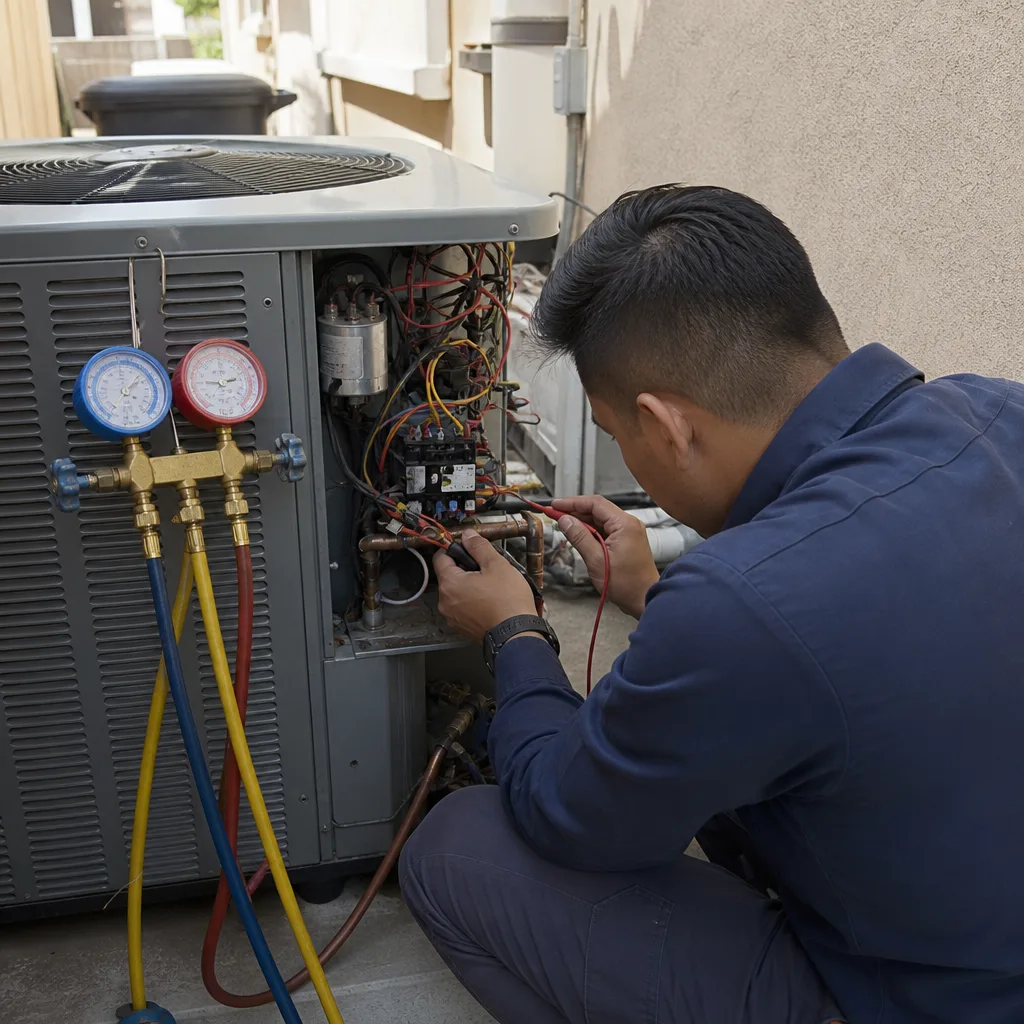
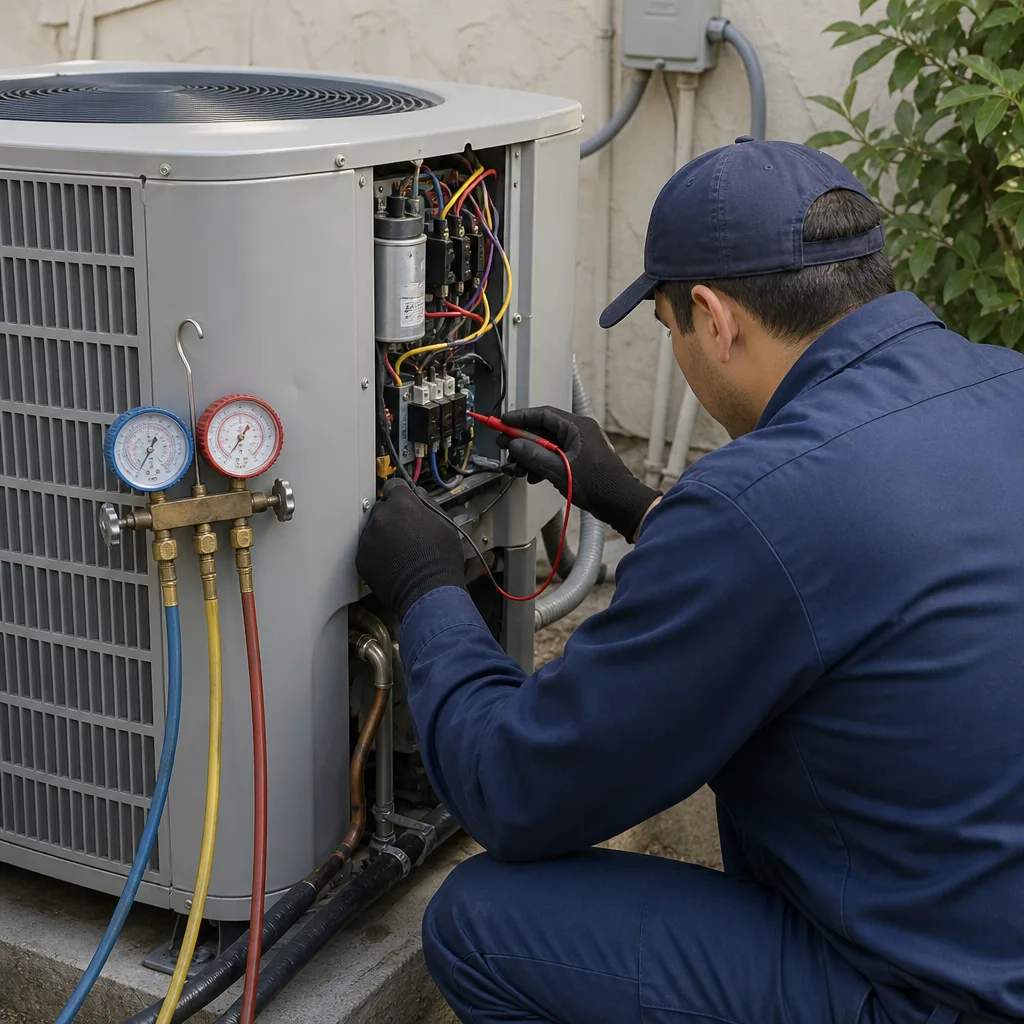
Seasonal tune-up and full diagnostic on your Carrier, Trane, or Goodman system - readings shown to you before any repair is proposed
Diagnosis first, numbers second - you approve the repair price before a single part goes in.
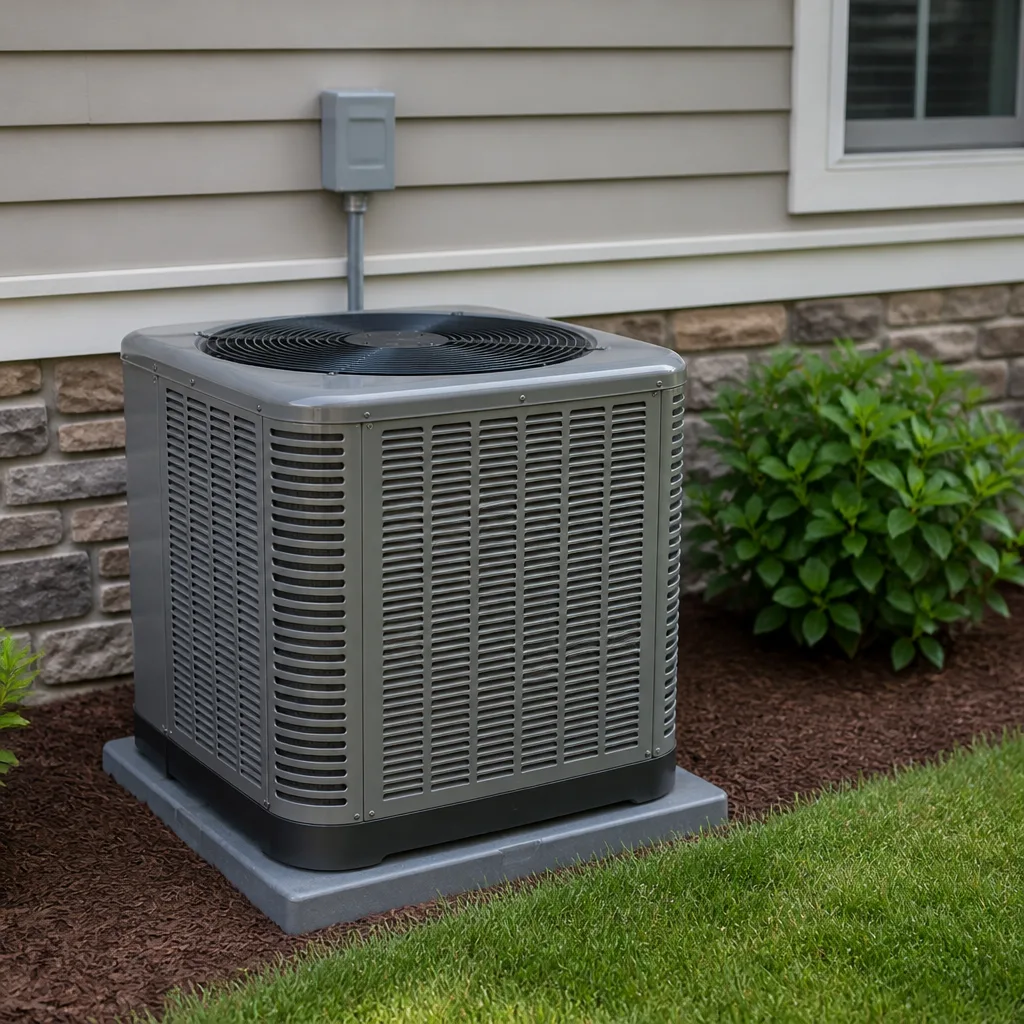
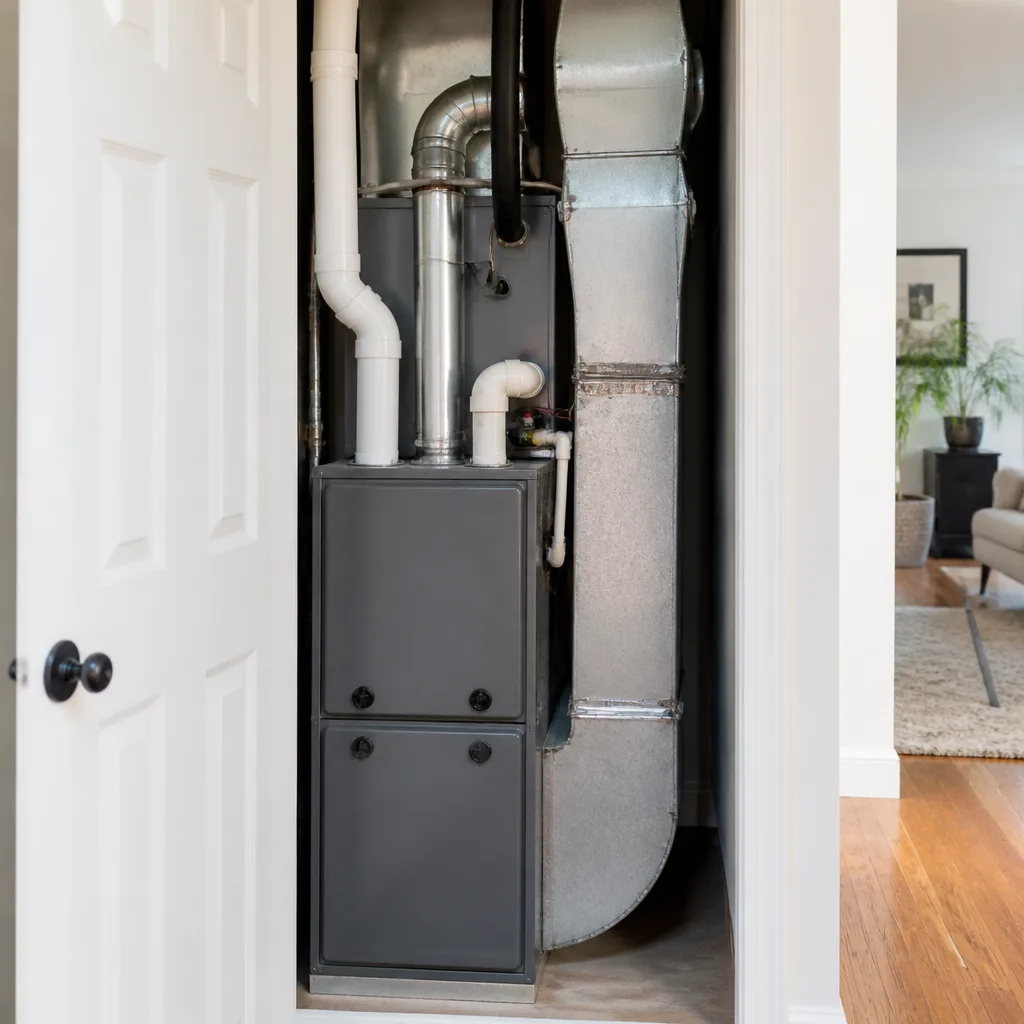
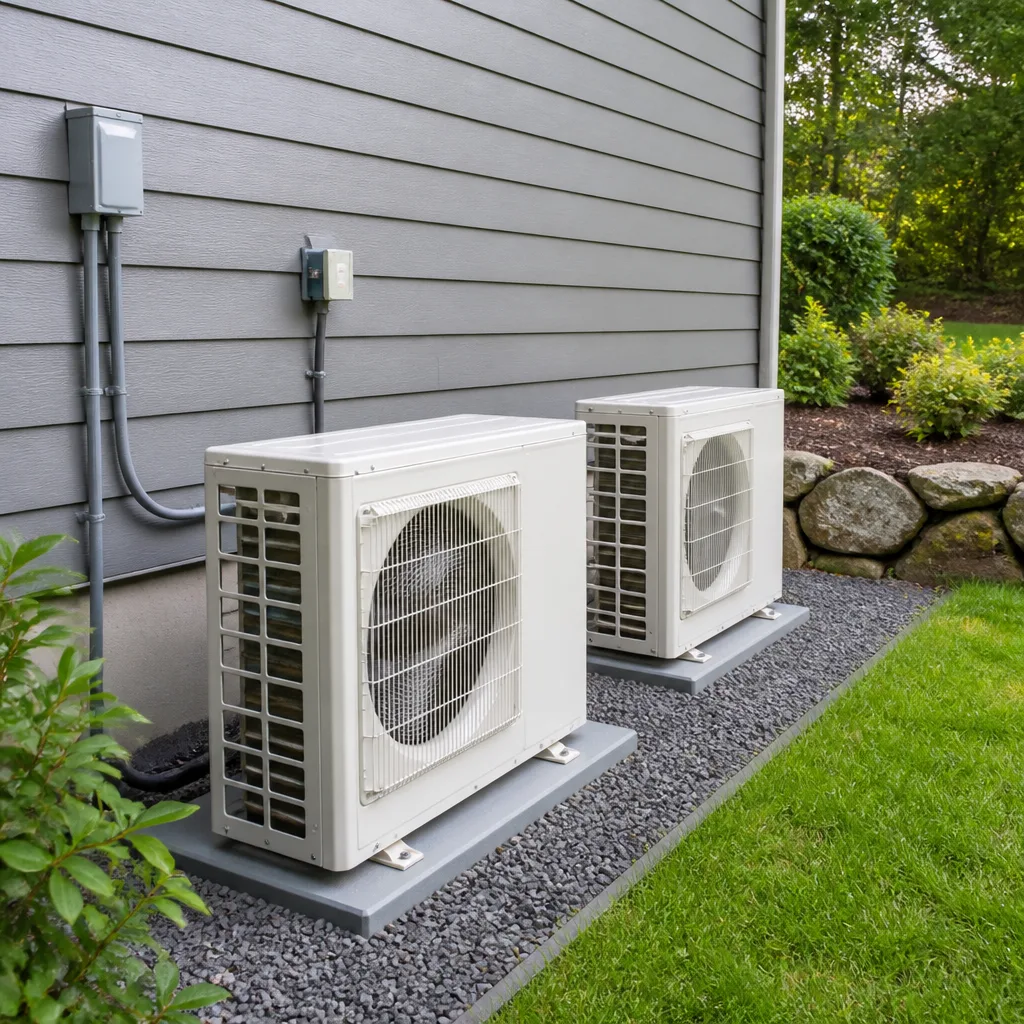
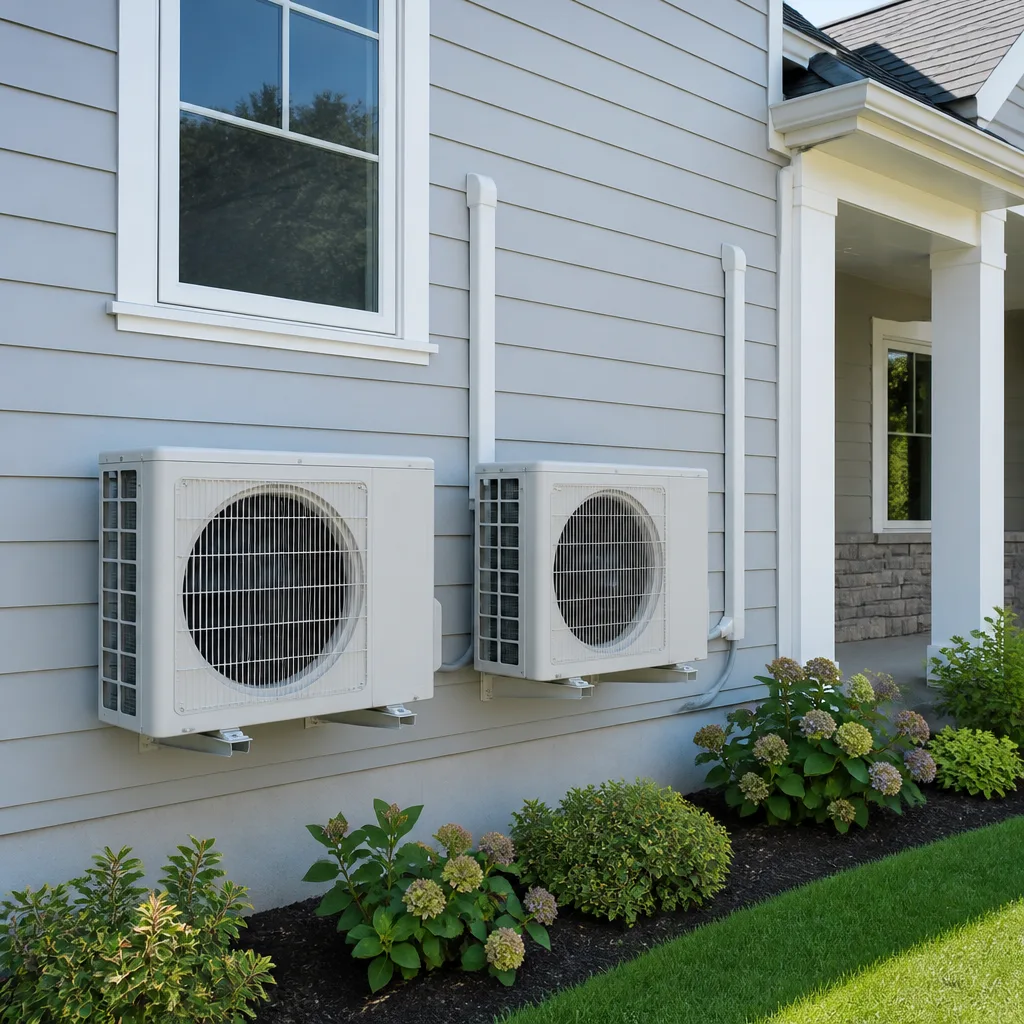
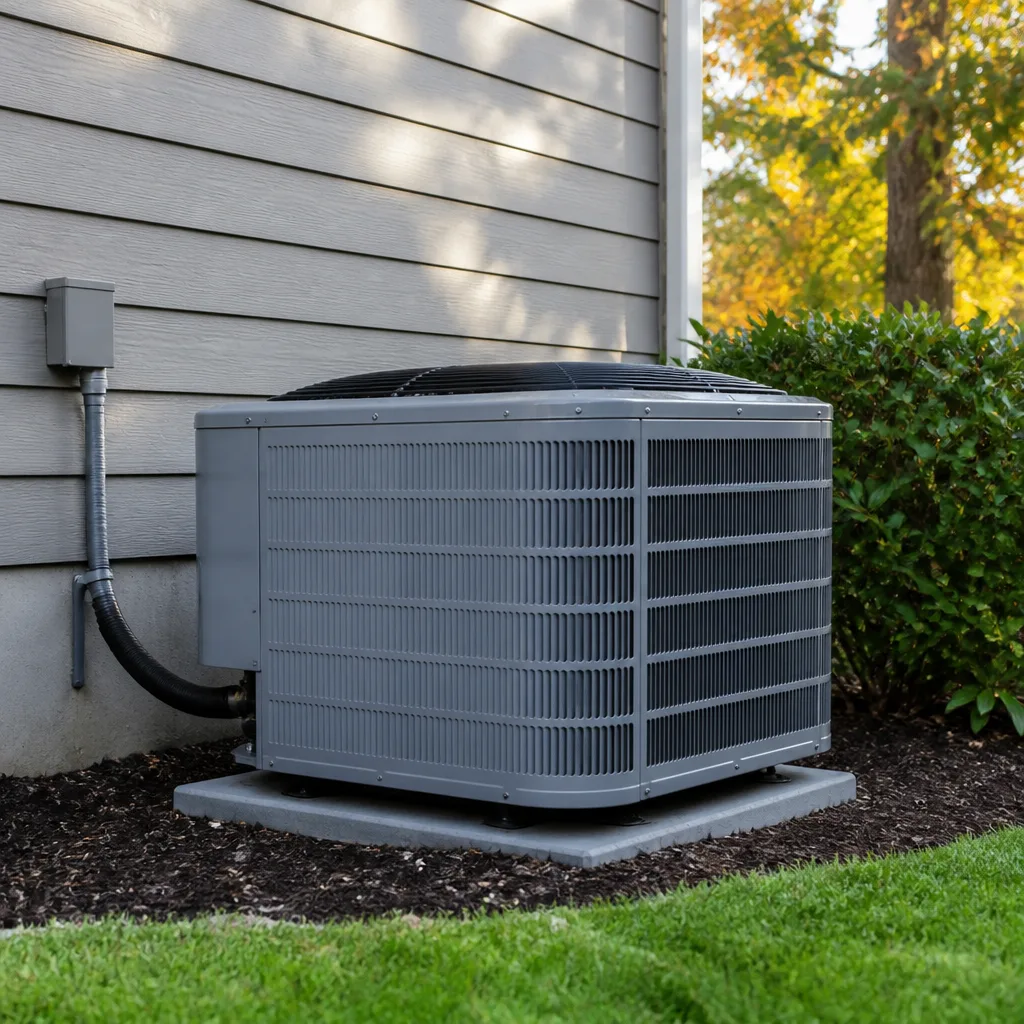
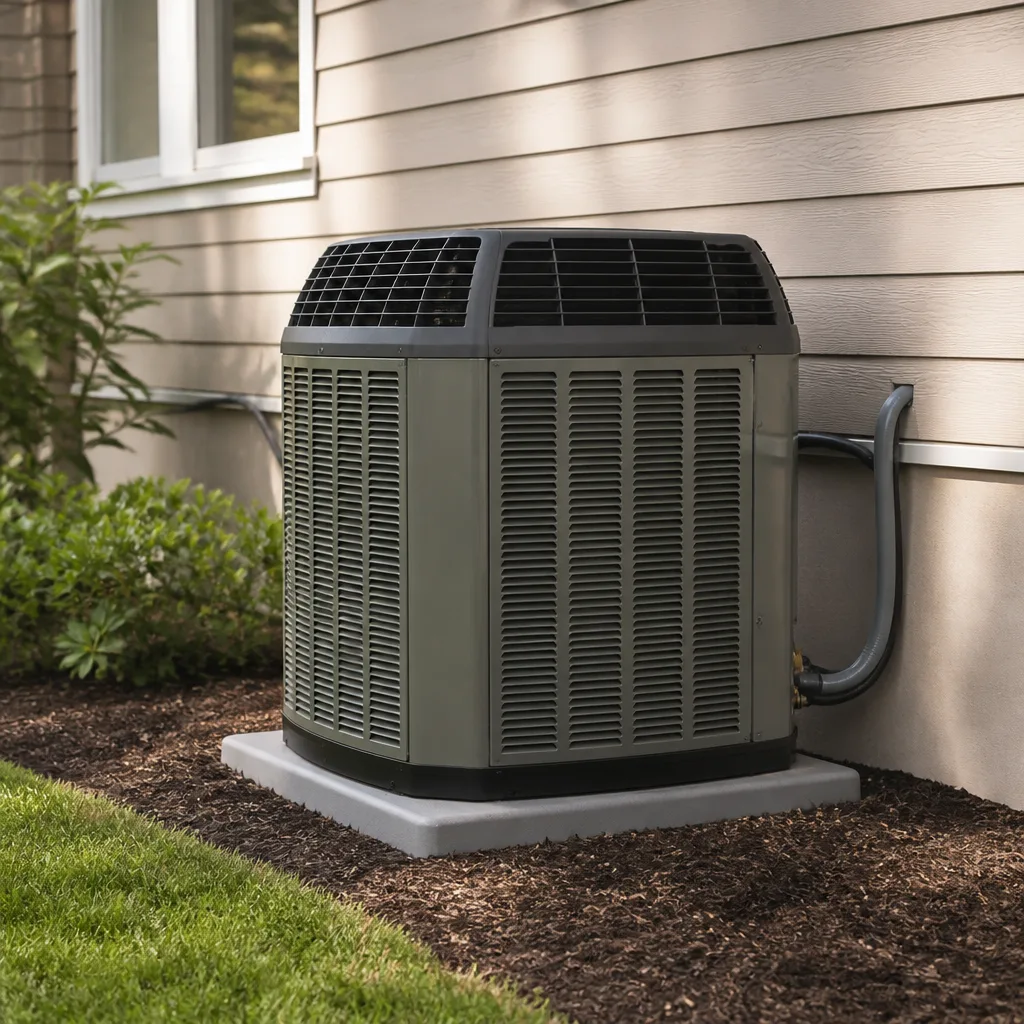
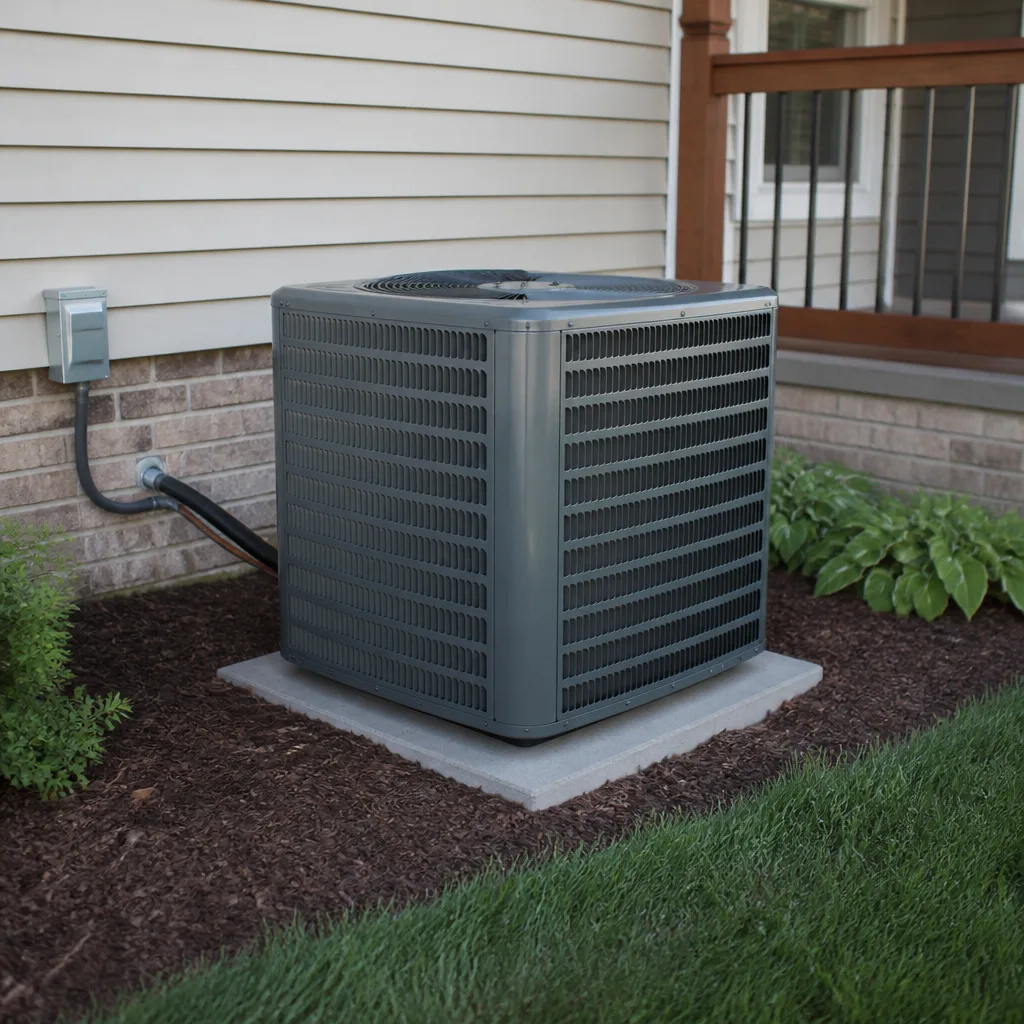
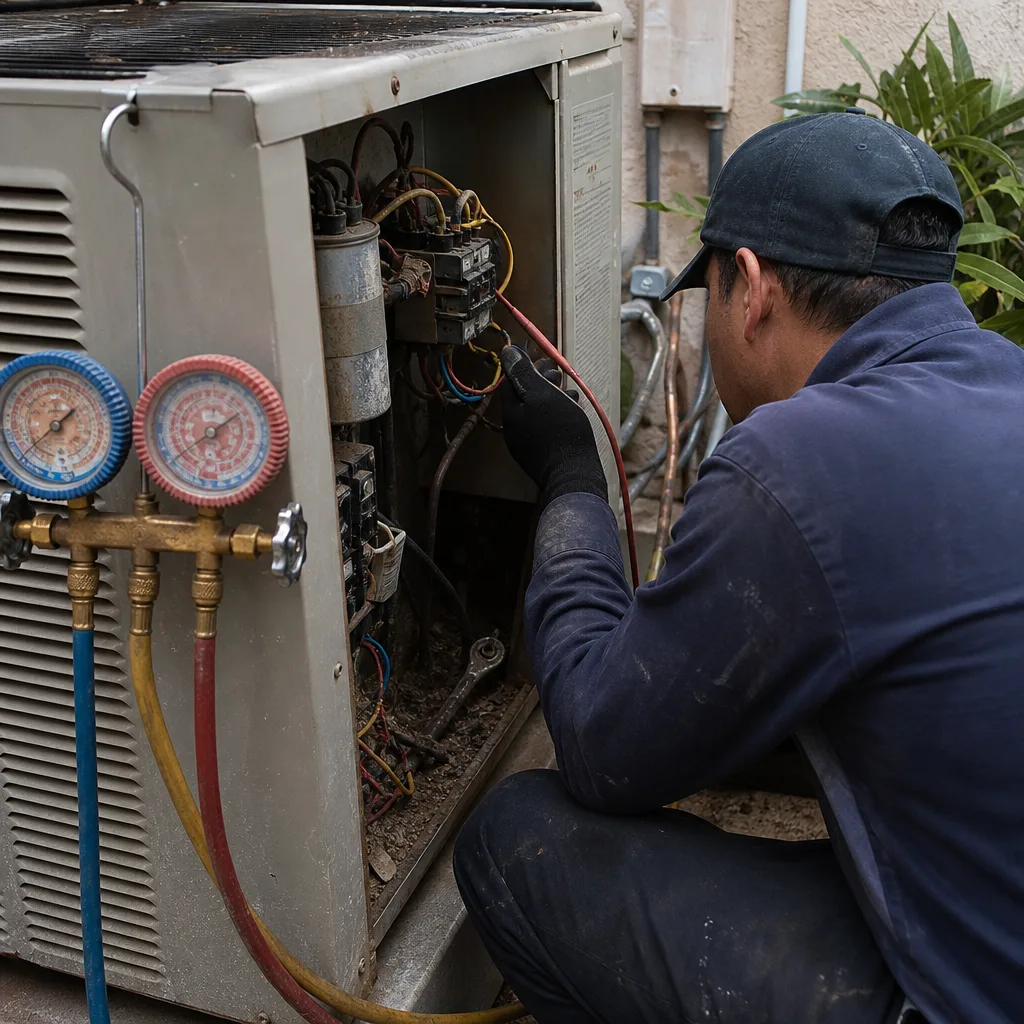 Before
 After
After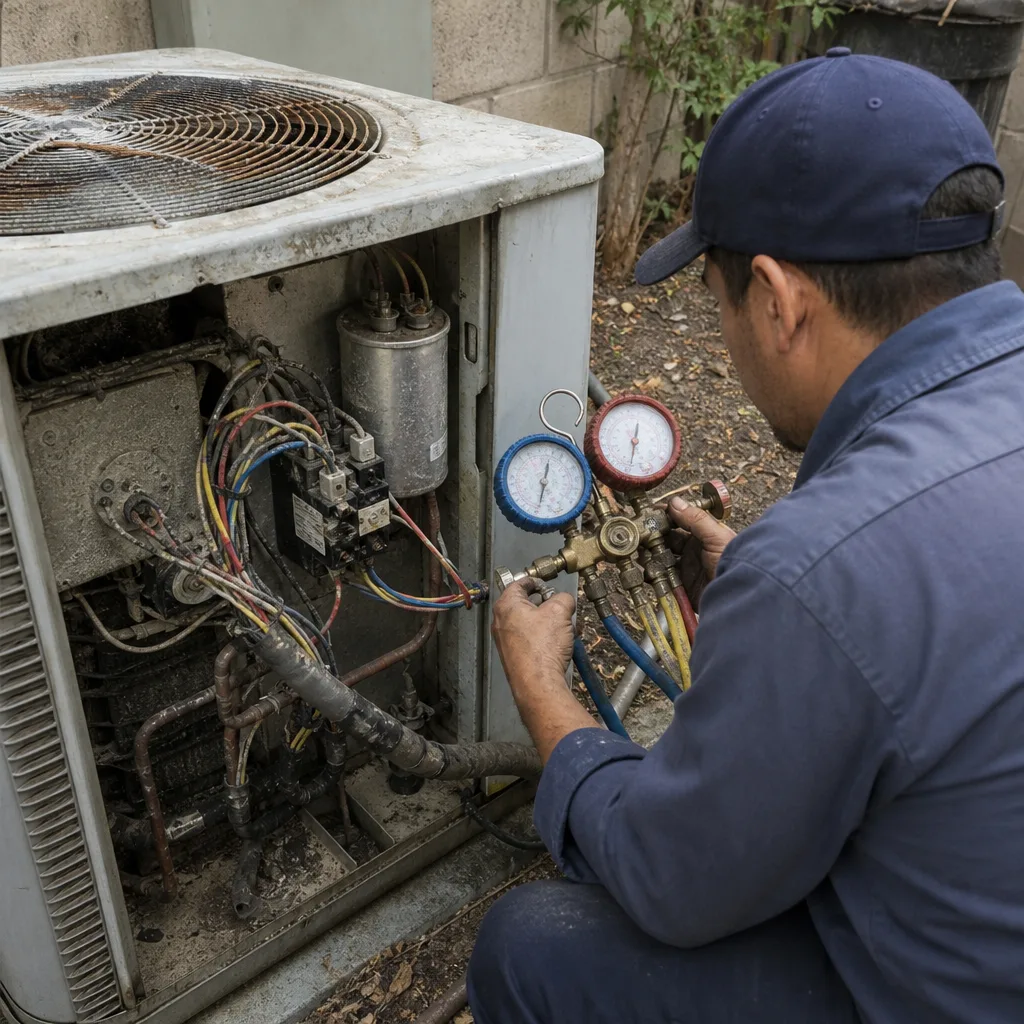 Before
 After
After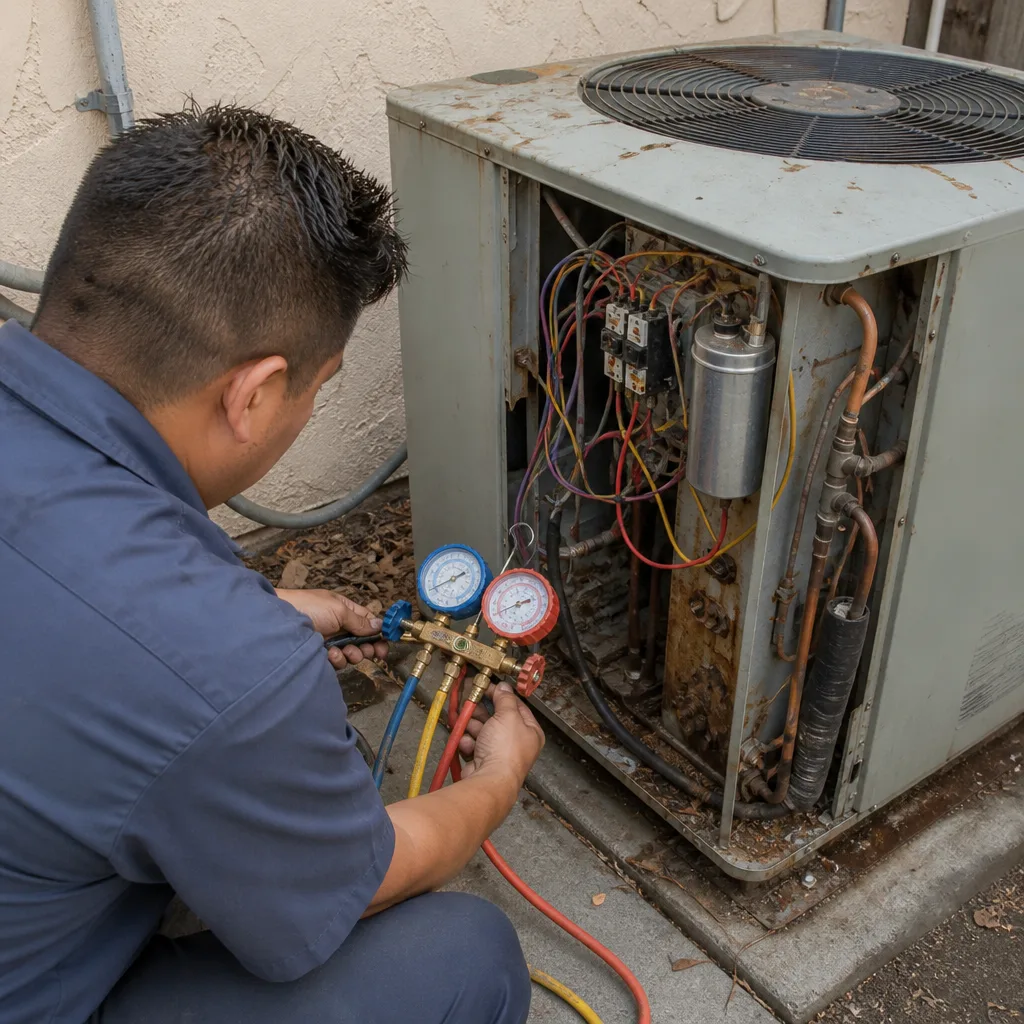 Before
 After
AfterThe Complete AC Repair Guide for Los Angeles Homeowners
That moment when your AC quits in Los Angeles rarely comes during the hottest day in August. It comes on a Tuesday evening in June, 68 degrees outside, when the marine layer has been sitting over the basin for four days straight and your system decides to turn into a block of ice. Or it comes in October, when the Santa Anas kick up and the dust load clogs a coil that ran fine all summer. LA’s failure points are different from Phoenix or Houston, and a repair guide that ignores the marine layer, the fire-season particulate, or the LADBS permit desk is giving you advice for the wrong city. This AC Repair guide is built for how systems actually fail here, what a legitimate repair should cost within LA’s labor market, and how to check a contractor’s license before you open the door.
Quick Answer
AC repair in Los Angeles typically costs between $250 and $800 for common residential issues, with costs driven by whether the problem is electrical, mechanical, or refrigerant-related. The single most useful thing any LA homeowner can do is rule out a dirty filter and a tripped breaker before calling, because those two fixes account for roughly a quarter of all service calls. If the issue involves refrigerant, a compressor, or any electrical component inside the unit, call a state-licensed C-20 contractor and get a written price before any work starts.
Table of Contents
- Why Los Angeles Has Two Distinct AC Failure Seasons
- The Most Common AC Repairs We See in LA Homes
- What AC Repair Actually Costs in Los Angeles
- LADBS Permits: Which AC Repairs Need Them and Why It Matters
- How to Verify a C-20 License Before Anyone Enters Your Home
- Wildfire Smoke and Filters: The LA Maintenance Schedule Nobody Writes Down
- Should You Repair or Replace? The LA Math Is Different Than You Think
- Common Mistakes to Avoid
- When to Call a Professional
- Frequently Asked Questions
- The Bottom Line
Why Los Angeles Has Two Distinct AC Failure Seasons
Most national AC guides treat summer as a single season and act like heat is the only thing that kills air conditioners. Los Angeles doesn’t work that way. We live with two separate failure cycles, and the fixes rarely overlap.
The first cycle runs from late May through early August, driven by the marine layer. Coastal and basin neighborhoods like Santa Monica, Mar Vista, Culver City, and even inland areas as far as the 405 corridor get weeks where overnight humidity sits in the 70 to 80 percent range. Your evaporator coil is designed to shed condensation, but when the air is already saturated and the system short-cycles at night because the thermostat never climbs, moisture builds up faster than the drain pan can clear it.
The result is coil frosting, and a frosted coil blocks airflow, which makes the coil colder, which builds more frost. It is a feedback loop that ends with a frozen block of ice on the indoor coil and complaints that “the AC isn’t blowing cold anymore,” even though the outdoor temperature never broke 80 degrees. Homeowners assume the system is failing. In reality, the system is overwhelmed by humidity conditions it was never sized for during design-day conditions.
The second cycle runs September through November, when the Santa Ana winds carry fine desert dust and dry particulates into the basin. That dust load is airborne and abrasive. A condenser coil that spent all summer doing fine suddenly gets coated with a fine layer of grit that insulates the coil fins and chokes heat transfer. Head pressure climbs, the compressor works harder, and run times lengthen. Add in an older filter that was already near the end of its life, and a system that cooled a house in July will struggle to maintain it in October.
Los Angeles homeowners need to think about these two seasons separately. What your system needs in June is a clean drain line and proper airflow to handle humidity. What it needs in October is a coil and filter inspection to handle particulate load. One maintenance visit in spring does not cover both. This is also why AC Maintenance in Los Angeles should be scheduled twice a year here, not once, if you want to catch both failure modes early.
The Most Common AC Repairs We See in LA Homes
Some repair issues are the same in every city: failed capacitors, locked-up blower motors, contactor burnout. But even these failures happen here with specific patterns, and knowing the pattern helps you make a faster call about what you’re actually dealing with.
Capacitor Failure
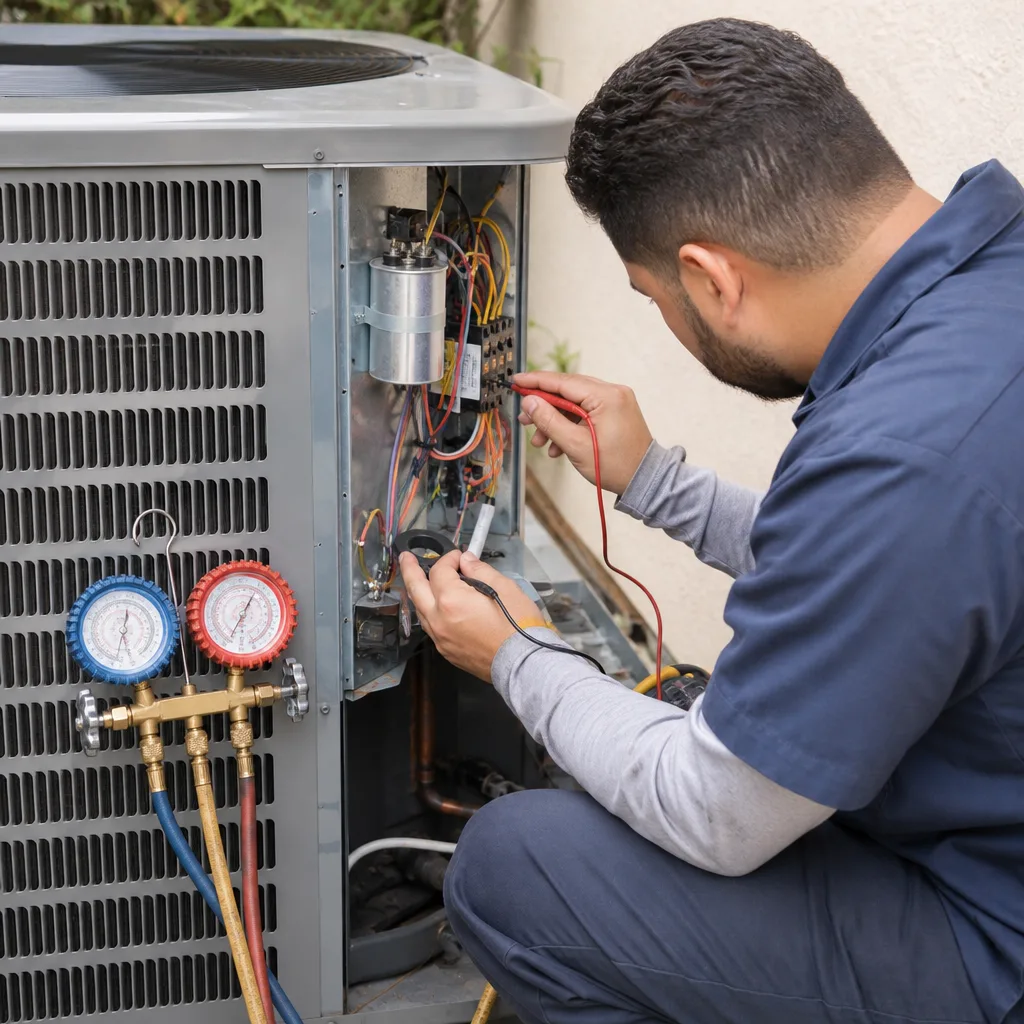
The capacitor is the little canister inside the outdoor unit that gives the compressor and fan motor the electrical shove they need to start. Heat shortens a capacitor’s life, and LA’s prolonged cooling seasons mean systems run hard from June through October, sometimes November. In our experience around Los Angeles, a failed capacitor is the single most common repair we make between May and September. Symptoms: the outdoor unit hums but doesn’t start, or the fan spins slowly, or the system trips the breaker shortly after start-up. Fix: a replacement capacitor, usually under $200 including labor. Leave this one to a professional. Capacitors hold a charge even when power is off and can deliver a serious shock.
Refrigerant Leak and Recharge
A refrigerant recharge means refilling the fluid that moves heat out of your home. But a recharge should never be needed unless there’s a leak, and refrigerant does not get “used up” over time. When a system is low, the leak needs to be found and sealed first, then the system recharged. A recharge without leak repair is a temporary fix that will repeat. LA housing stock includes a lot of systems installed in the 1990s and early 2000s that use R-22 refrigerant, which is being phased out and now costs enough that putting it into an old system often looks questionable against replacement. If your unit was installed before 2010 and needs refrigerant, ask what the recharge will cost and whether the unit still holds vacuum before paying for anything.
Drain Line Clogging and Overflow
The condensate drain line carries the moisture your system pulls from the indoor air out of your house. In humid summer conditions, particularly close to the coast, algae and sludge build up inside the line and eventually block it. When the line clogs, water backs up into the drain pan and eventually onto your floor, ceiling, or furnace cabinet. Many homes in Los Angeles have the air handler in a closet or attic, which means the first sign is a water stain. We recommend a drain line clean-out and a cup of white vinegar flushed through the line every month during cooling season. The cost of a professional drain clean-out in LA is typically between $150 and $300, depending on access.
Contactor and Electrical Component Wear
The contactor is the relay that controls power going to the compressor and fan. LA’s repeated short cycles, where systems with oversized tonnage cool a room too quickly and then turn off, wear contactors out faster than in markets where systems run long steady cycles. Burned or pitted contactor points cause intermittent failure: the system runs sometimes, then stops responding. Replacement is straightforward and relatively inexpensive, usually $150 to $250 including labor, part, and service call combined.
Condenser Coil Fouling from Particulate
During Santa Ana season, the outdoor condenser coil loads up with fine dust and grit. That coating insulates the coil and forces the system to reject heat with less efficiency. The outdoor fan then runs hotter, the compressor works harder, and energy consumption climbs while comfort drops. A coil cleaning is not a repair in the traditional sense, but it’s the fix for a system that is “running all day and not cooling the house.” Cost runs $150 to $300 in Los Angeles depending on how fouled the coil is and whether the unit needs to be partially disassembled to clean it.
What AC Repair Actually Costs in Los Angeles
You will find national averages online that tell you AC repair costs between $100 and $950. Those ranges are broad enough to be meaningless, and they’re built on data from every state in the country. Los Angeles labor rates run higher than the national median because of the cost of doing business here: contractor insurance, vehicle costs, CSLB compliance, and the sheer time it takes to get across the basin for a service call. Here are the prices we see and what they mean in practice for LA homeowners.
| Repair Type | Typical LA Cost Range | What Drives the Price |
|---|---|---|
| Diagnostic/service call | $75 – $150 | Travel time within LA, inspected components, written findings |
| Capacitor replacement | $150 – $250 | Part cost, access to the outdoor unit, same-day availability |
| Condensate drain clean-out | $150 – $300 | Access to the air handler, severity of clog, whether a pump float switch is needed |
| Contactor/relay replacement | $150 – $250 | Part cost and electrical testing after install |
| Condenser coil cleaning | $150 – $300 | Severity of fouling, unit location, disassembly required |
| Refrigerant leak search and seal | $350 – $800 | Leak location difficulty, brazing time, refrigerant type and amount |
| Evaporator coil replacement | $1,200 – $2,800 | R-22 vs R-410A system, coil accessibility, labor hours |
| Compressor replacement | $1,800 – $3,500 | Compressor size, refrigerant type, system age, warranty status |
Any company quoting below these ranges in Los Angeles is likely cutting on labor, parts, or licensing. A C-20 contractor carries insurance and CSLB compliance costs that fly-by-night operations don’t. You don’t want to learn that difference after a refrigerant spill or an electrical fault.
Every job we take at Brandt HVAC begins with a written price before any work starts. You see the number, you agree to the number, then we turn a wrench. No “discovered” line items halfway through, no verbal estimates that inflate at the end of the job. That’s how we’ve done it since 2003, and it’s the only way pricing stays honest in a city where service costs vary widely by contractor.
LADBS Permits: Which AC Repairs Need Them and Why It Matters
For The Complete Guide to HVAC in Los Angeles, it’s worth noting that Los Angeles has its own building department, and the LADBS is stricter about mechanical permits than most of the state. This matters for AC work because some repairs cross the line from “maintenance” to “installation” in the eyes of the city. Getting this wrong can cost you real money.
The principle is straightforward: repairs that replace like for like, with no modification to the system’s design, capacity, or electrical configuration, generally don’t require a permit. Replacing a capacitor, a contactor, a blower motor, or a condensate pump is maintenance. A coil replacement, if it uses the same coil spec and doesn’t modify the refrigerant circuit’s basic design, usually stays in maintenance territory.
What does need an LADBS mechanical permit: any change to the system’s cooling capacity, any modification of ductwork, any relocation of the air handler or condenser, any new gas or electrical line run, and essentially any replacement of the entire system. If a contractor is swapping your 3-ton unit for a 4-ton unit, that is a permitted alteration. If they’re relocating your condenser from the side yard to the roof, that is permitted work.
Here’s what happens if a contractor skips an LADBS permit on work that required it. The inspection never happens. If there’s a fire, an electrical fault, or a gas leak tied to that unpermitted work, your homeowner’s insurance can deny the claim. When you sell the house, a buyer’s inspection may flag the unpermitted work, and you’ll either pay to bring it up to code retroactively or lose the sale. A reputable contractor will tell you when a permit is needed and build that cost into the quote.
Before hiring anyone for a repair that touches your system’s electrical or mechanical design, ask the question directly: “Does this job require an LADBS permit, and is the permit included in your quote?” If the answer is vague, or the contractor says permits are a “waste of time,” end the conversation.
How to Verify a C-20 License Before Anyone Enters Your Home
In California, any contractor performing HVAC work over $500 in value must hold a C-20 Warm Air Heating, Ventilating and Air Conditioning license from the California Contractors State License Board. That requirement is not optional, and the CSLB enforcement arm takes action against unlicensed operators. The practical concern for homeowners is larger: an unlicensed contractor has not bonded, has no insurance requirement baked into the license, and vanishes the moment a repair fails.
You can check a contractor’s license status in under five minutes. Here is the sequence:
- Go to the CSLB license lookup page at cslb.ca.gov and select “Check a Contractor License.”
- Enter the contractor’s name or license number. The license number should appear on their truck, their website, and their paperwork. If it’s missing from all three, that’s your first red flag.
- Verify the classification is C-20 and that the license status is currently active, not suspended or expired.
- Check the workers’ comp insurance field. Any contractor with employees must carry workers’ comp. If the field says “exempt” and the contractor shows up with a crew, you are exposed to liability for any injuries on your property.
- Check the bond amount. California requires a $15,000 contractor bond minimum. A suspended bond shows up in the CSLB record.
At Brandt HVAC, every technician who walks through your door has already been background-checked and identity-verified under the Threshold Verified standard. We send you the name and photo of the technician before the visit, and the technician shows you photo ID before stepping inside. Our name, Brandt, comes from an old word for a firebrand, which fits the work of keeping a home warm or cool. If anyone arrives at your door who you were not told to expect, that visit is on us and we make it right. That is the standard that should exist everywhere, and it’s how we operate in Los Angeles.
Wildfire Smoke and Filters: The LA Maintenance Schedule Nobody Writes Down
Standard maintenance schedules in this industry say to change a 1-inch filter every 30 to 90 days and a 4-inch media filter every 6 to 12 months. Those numbers were written for average national air quality. Los Angeles during any wildfire season is not average. Fine particulate from smoke will load a filter in days, not months, and a loaded filter starves the system of airflow on both the return and supply side. The evaporator coil runs too cold, begins to freeze, and the compressor cycles off on its high-pressure or low-pressure safety. The homeowner calls for AC repair, and the repair is a $12 filter.
We tell our Los Angeles customers to use a simple visual check during fire season. If you can see dust building on the filter surface and it’s not white anymore, change it. Don’t wait for a calendar. For homes near burn zones, or during the August-to-November window when fire season and high heat overlap, check every two weeks. A pleated MERV 8 filter is adequate for most systems. A MERV 13 captures more smoke particles, but it adds static pressure, and on an older or undersized duct system it can reduce airflow enough to cause the exact freezing and short-cycling issues you’re trying to avoid. If you want to run a MERV 13 during smoke season, ask a technician to verify the static pressure first.
After significant smoke exposure, the outdoor condenser coil should be checked for buildup before the next cooling season. Smoke and ash settle into the coil fins and hold moisture, which accelerates corrosion. A professional coil cleaning after a bad fire season is cheap insurance compared to a condenser replacement. This is an LA-specific service need, and it’s why the standard national maintenance schedule doesn’t fully cover what our systems actually go through. If your system is struggling, start with AC Repair in Los Angeles and get a technician out to look before a small issue becomes a compressor failure.
Should You Repair or Replace? The LA Math Is Different Than You Think
The Complete Furnace Repair Guide for Los Angeles Homeowners uses a similar framework: the classic repair-versus-replace formula is to multiply the repair cost by the system’s age, and replace when the product exceeds the cost of a new system. That rule works okay as a rough guide, but Los Angeles has variables that shift the math.
First is the existing refrigerant. If your system uses R-22, that refrigerant is no longer produced or imported in the US. What remains is reclaimed stock, and its cost has risen sharply. Charging an older R-22 system can cost hundreds of dollars on top of the leak repair. When the leak is in the evaporator coil or the compressor itself, you’re looking at a repair bill that equals a significant portion of a new system. In that situation, replacing makes clearer financial sense.
Second is the LADBS retrofit landscape. A new system must meet current Title 24 efficiency standards and may trigger permit requirements, duct inspections, and in some cases asbestos abatement if old insulation is compromised. That is a real cost and a real inconvenience. But it’s a one-time cost that resets the system for 15 to 20 years. Repairing a 18-year-old compressor to avoid a permit will look like a bad decision in two years.
Third is comfort equity. Many LA homes have systems that were undersized for inland heat or poorly matched to the house from the start. If your system struggles to hold 76 degrees in August, repairs will keep it alive but won’t fix the underlying sizing problem. A load calculation, correctly performed with LA climate data, is the only way to know if the system can ever be comfortable. No amount of capacitor replacement fixes a fundamentally undersized system.
A reasonable rule of thumb for Los Angeles: if the repair is under $700 and the system is under 10 years old, repair. If the repair is over $2,000 and the system is over 12 years old, get a replacement quote. If the system uses R-22, lean replacement earlier than you would otherwise. And before you decide, get the repair quote and the replacement quote from the same contractor, in writing, so you can compare the real numbers rather than guessing. When you call Brandt HVAC home, you’ll get a written price for the repair and, if you ask for it, a written price for system replacement. No pressure either way. You decide.
Common Mistakes to Avoid
- Ignoring a dirty filter because it “doesn’t look that bad.” In LA, during fire season, a filter that looks mild brown is already choking airflow. Change it before you call for repair. The filter is always the cheapest first fix.
- Paying for a refrigerant recharge without a leak search. Refrigerant doesn’t get used up. If a contractor offers to “top off” a unit without finding the leak, you’re paying for a temporary fix that will fail again. Get the leak found, sealed, and the repair documented with a written guarantee.
- Hiring based on the lowest quote without checking CSLB standing. A C-20 license check takes five minutes and tells you whether the company is bonded, insured, and current. A low quote from an unlicensed operator costs more than a higher quote from a licensed one.
- Waiting until August to schedule maintenance. By the time Los Angeles hits peak heat, the best techs are booked and emergency rates climb. Spring and fall maintenance catches both LA failure seasons early. We recommend twice-yearly tune-ups in this climate, not one annual visit.
- Choosing a repair based on “this is what the last guy did.” The previous homeowner’s patch job is not a diagnosis. A failing contactor might have been replaced three times when the real problem was short-cycling caused by an oversized system. Correct diagnosis matters more than part-swapping.
- Skipping the LADBS permit on a replacement. It saves money up front and creates liability for years after. Insurance claims, home sale disclosures, and future code compliance all get tangled up by unpermitted mechanical work.
- Running a window unit as a permanent fix instead of addressing the real problem. It masks the failure, raises electric bills, and leaves the central system deteriorating while it sits unused. LA heat waves are long enough that you need the central system working.
When to Call a Professional
Call a professional when the fix involves refrigerant, electrical wiring, capacitors, circuit boards, or anything inside the sealed system. These failures are dangerous to work on without proper training and equipment, and botching a repair creates larger problems. Call when the outdoor unit hums without starting, when ice forms on the line set or indoor coil, when the breaker trips repeatedly, or when water appears around the air handler. Call before the system fails entirely, because running a failing AC through a Los Angeles heat wave is how a $200 capacitor replacement turns into a $3,000 compressor job. If you’re in Los Angeles and need a technician who carries a current C-20 license and gives you a written price before starting, Brandt HVAC offers free estimates. Call us at (984) 538-9003 and a live person answers, any hour, any day.
Frequently Asked Questions
Most residential AC repairs in Los Angeles fall between $250 and $800, depending on the part and the labor involved. Simple fixes like a capacitor or contactor replacement run $150 to $250, while a refrigerant leak search and seal typically runs $350 to $800. A full coil replacement can reach $1,200 to $2,800. Every repair we quote includes a written price before work starts, so there are no surprises. Call (984) 538-9003 for a free estimate.
Yes, in most cases a technician can diagnose and complete common repairs the same day. Capacitor failures, clogged drain lines, and electrical relay issues are typically same-day or next-day fixes. Larger jobs, like coil replacement or compressor work, may require ordering parts, which adds lead time. Los Angeles has heavy demand during peak heat, so calling early in the failure gives you the best chance of a same-day repair.
A system that runs constantly without cooling is usually low on refrigerant, has a heavily fouled outdoor coil, or is suffering from reduced airflow due to a clogged filter or failing blower motor. During Santa Ana season, the dust layer on the condenser coil is the first thing to check after the filter. A technician will check the refrigerant pressures and the coil condition to pinpoint the cause.
Only if the work changes the system’s capacity, moves the equipment, alters ductwork, or runs new electrical or gas lines. Simple component replacements at the same location and capacity are usually considered maintenance and don’t require an LADBS permit. Ask your contractor directly whether the job requires a permit before you sign anything.
Visit cslb.ca.gov and look up the contractor’s license number. The license class should be C-20 for HVAC work, the status should be active, and the insurance and bond fields should show current coverage. Any contractor doing HVAC work over $500 in value must hold this license in the state of California.
If the repair quote is under $700 and your system is under 10 years old, repair makes sense in most cases. If the repair exceeds $2,000 on a system over 12 years old, especially one using R-22 refrigerant, replacement is usually the better long-term move. Get both quotes in writing from the same contractor so you can compare real numbers. We provide both options without pressure. Call us at (984) 538-9003.
Marine layer humidity drives this. When the overnight air is cool and saturated, a system can run at a low load and still pull enough moisture across the coil to form ice. Low refrigerant, restricted airflow from a dirty filter, or a failing blower can all make it worse. If you see ice on the line set or indoor coil, shut the system off and call for service. Running it frozen can damage the compressor.
We work on all major residential HVAC equipment, including Carrier, Trane, Lennox, Furnace Repair in Los Angeles systems, Goodman, Rheem, York, Daikin, Bryant, and American Standard. If your system is a lesser-known brand or an older unit, call us and we’ll tell you straight whether we can service it before you pay for a visit.
The Bottom Line
Los Angeles AC systems fail in distinct patterns: humidity-driven icing from the marine layer in early summer, dust-driven coil and filter failures from the Santa Anas in fall. The repairs that fix them are mostly not exotic, but they require a contractor who understands the city’s climate, its permit rules, and its labor market. Verify the C-20 license before anyone enters your home. Get a written price before work starts. Change filters more often than the national schedule recommends. And when the system fails, call a company you can name, that names its technicians, and that stands behind the repair in writing. That is how it should always work. For more guides & resources, or if you need air conditioning repair or furnace repair in Los Angeles, Brandt HVAC is ready: call (984) 538-9003 for a free estimate, 24 hours a day, with a live person answering every call.
Written by Devin Marlowe, Owner at Brandt HVAC, serving Los Angeles since 2003.