
Last updated October 9, 2026
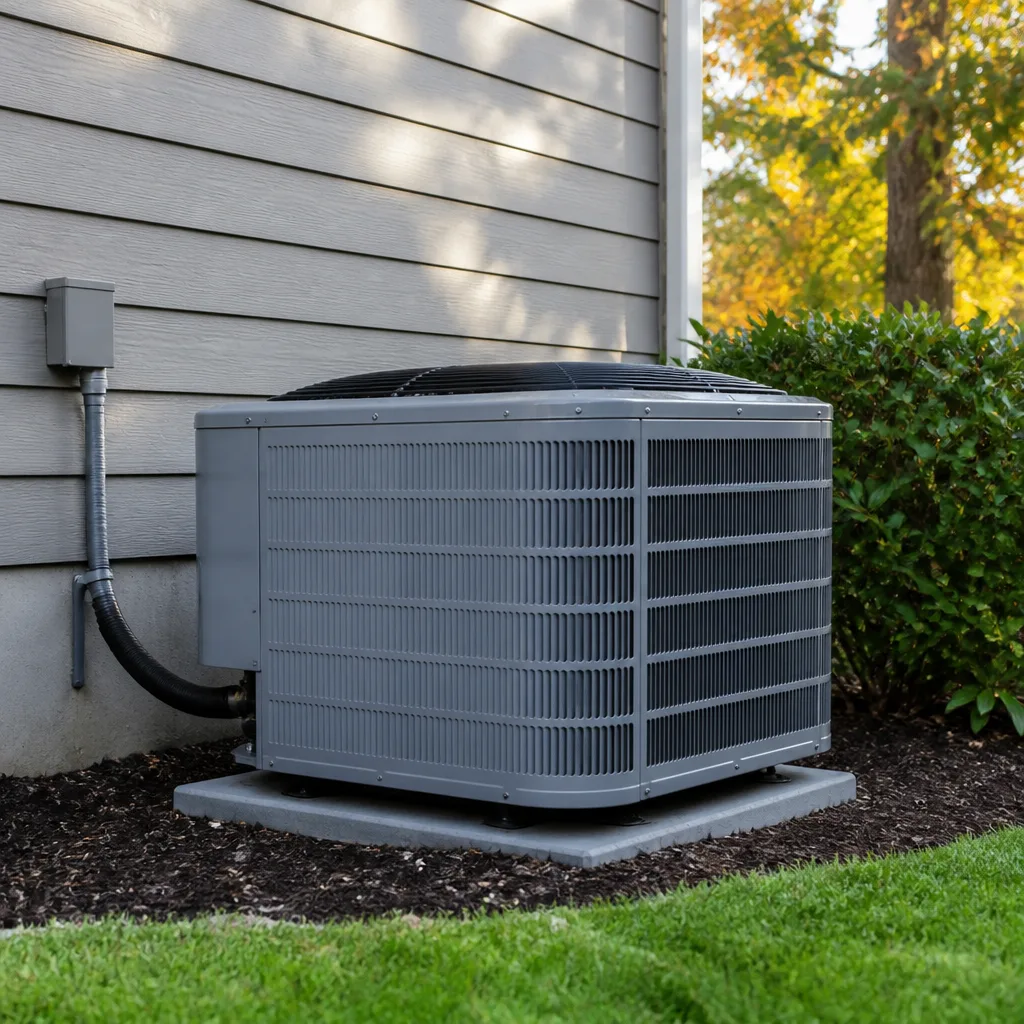
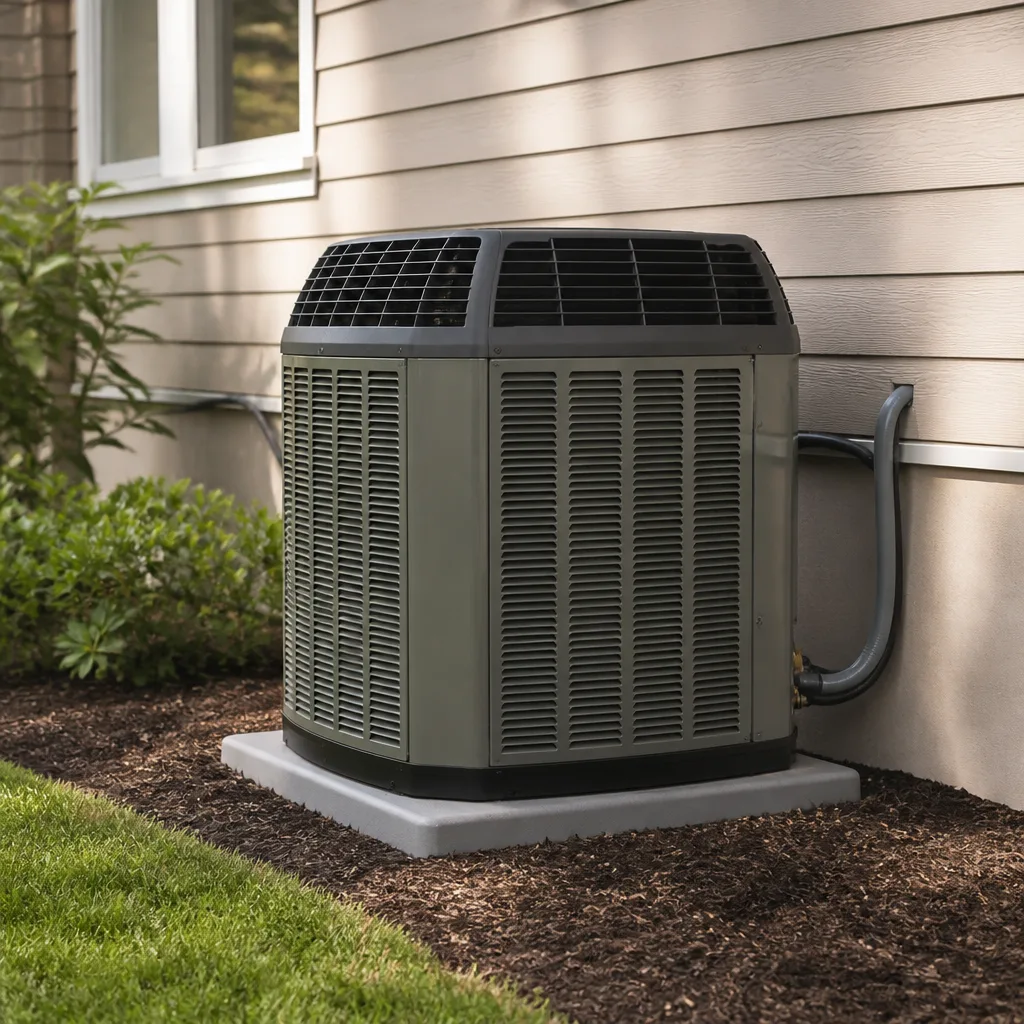
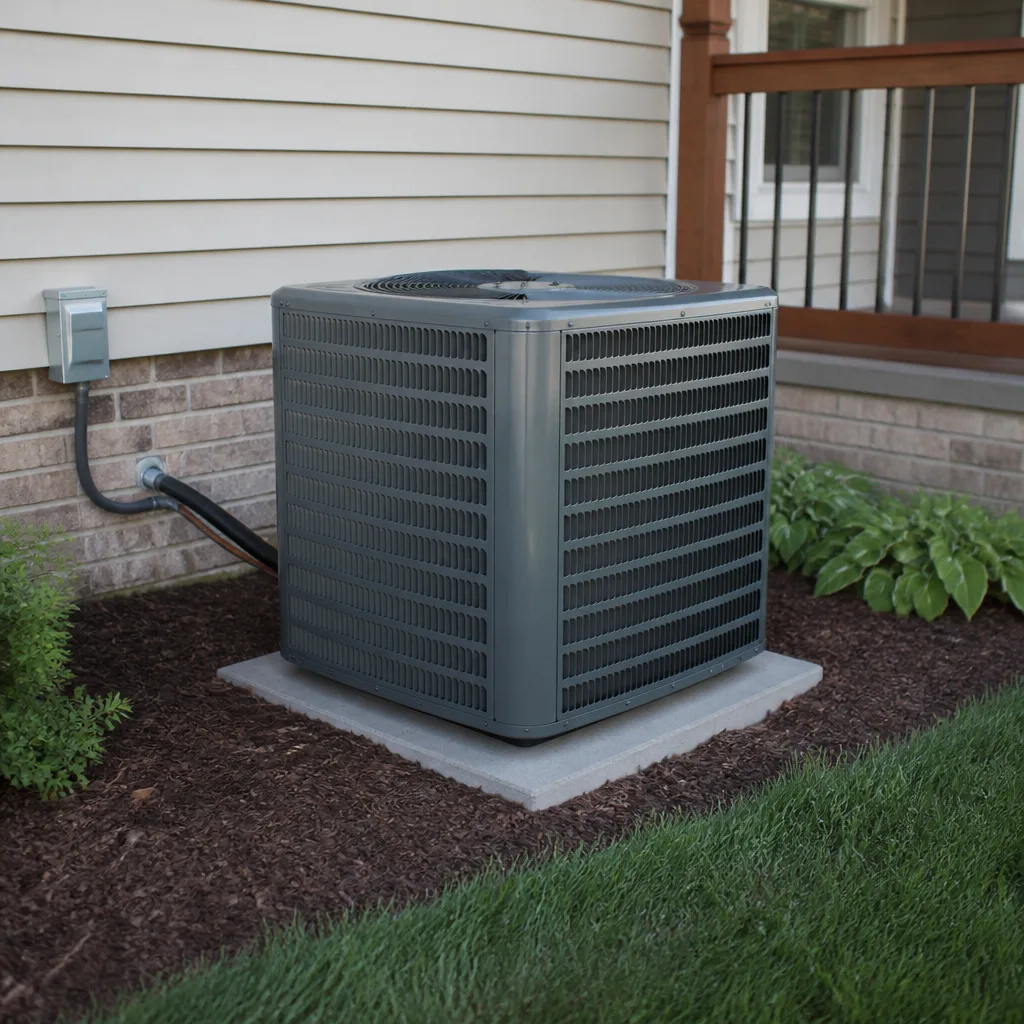
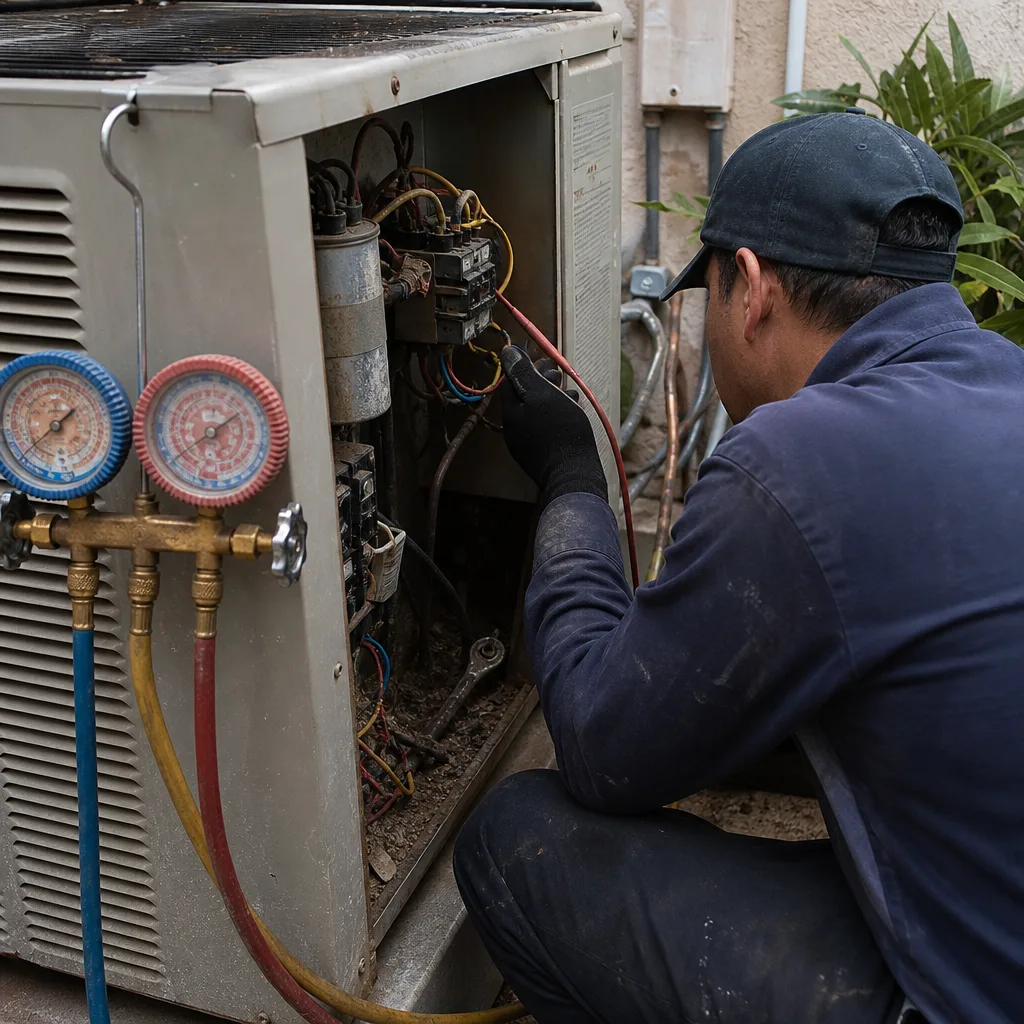
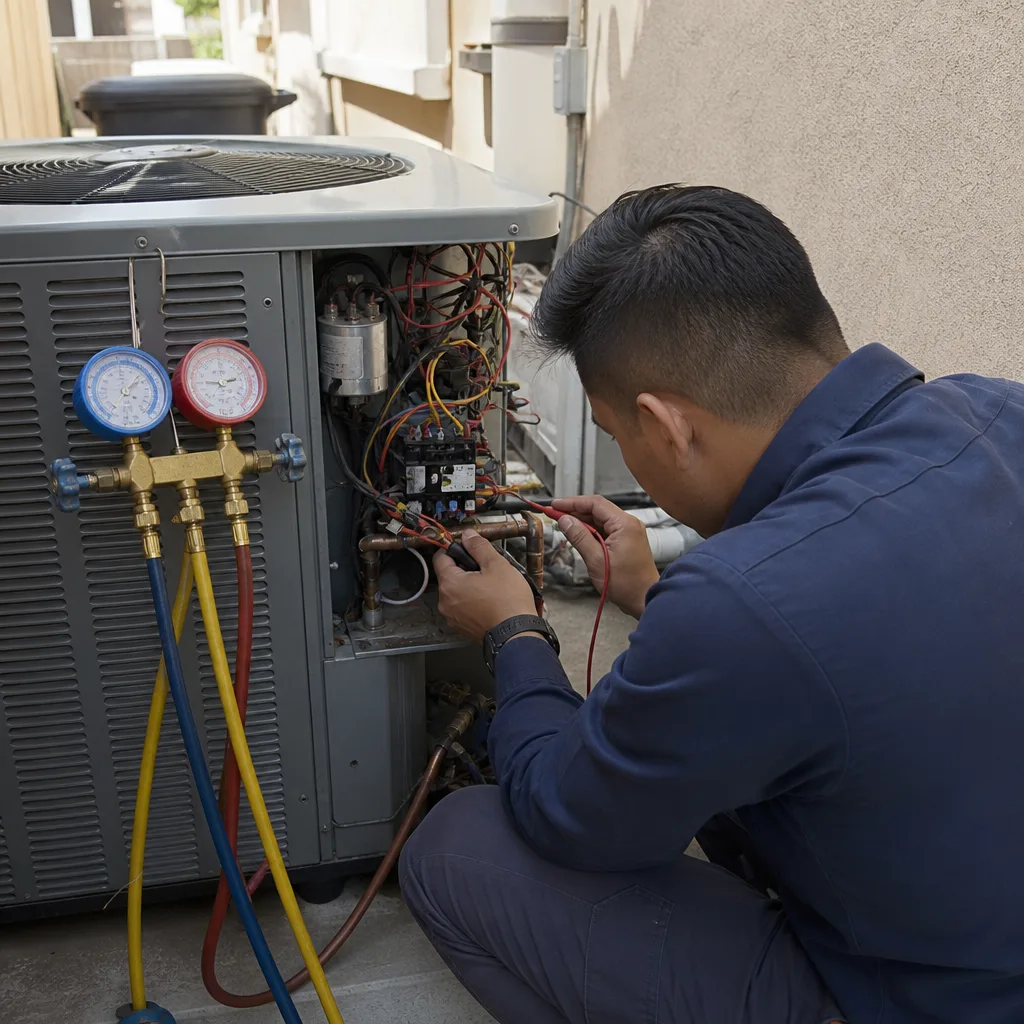
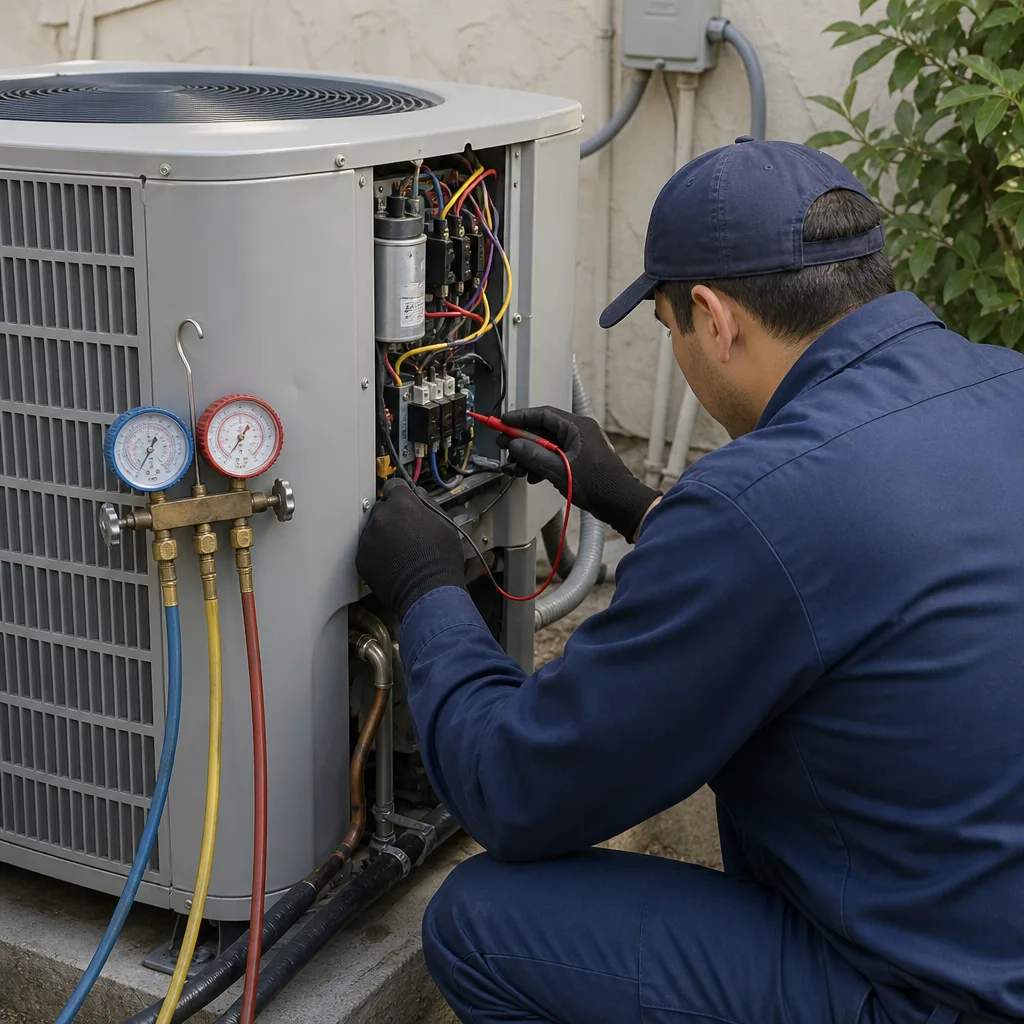
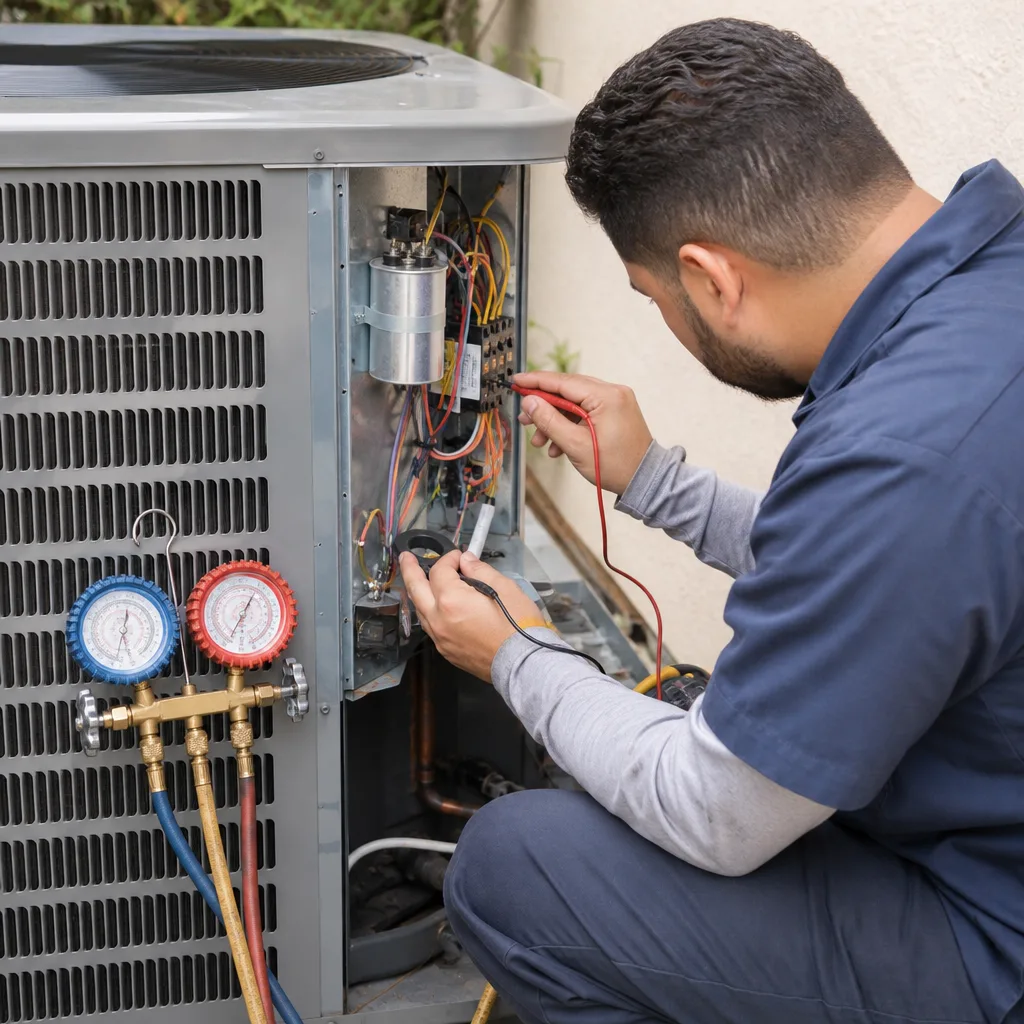
Seasonal tune-up and full diagnostic on your Carrier, Trane, or Goodman system - readings shown to you before any repair is proposed
Diagnosis first, numbers second - you approve the repair price before a single part goes in.
 Before
 After
After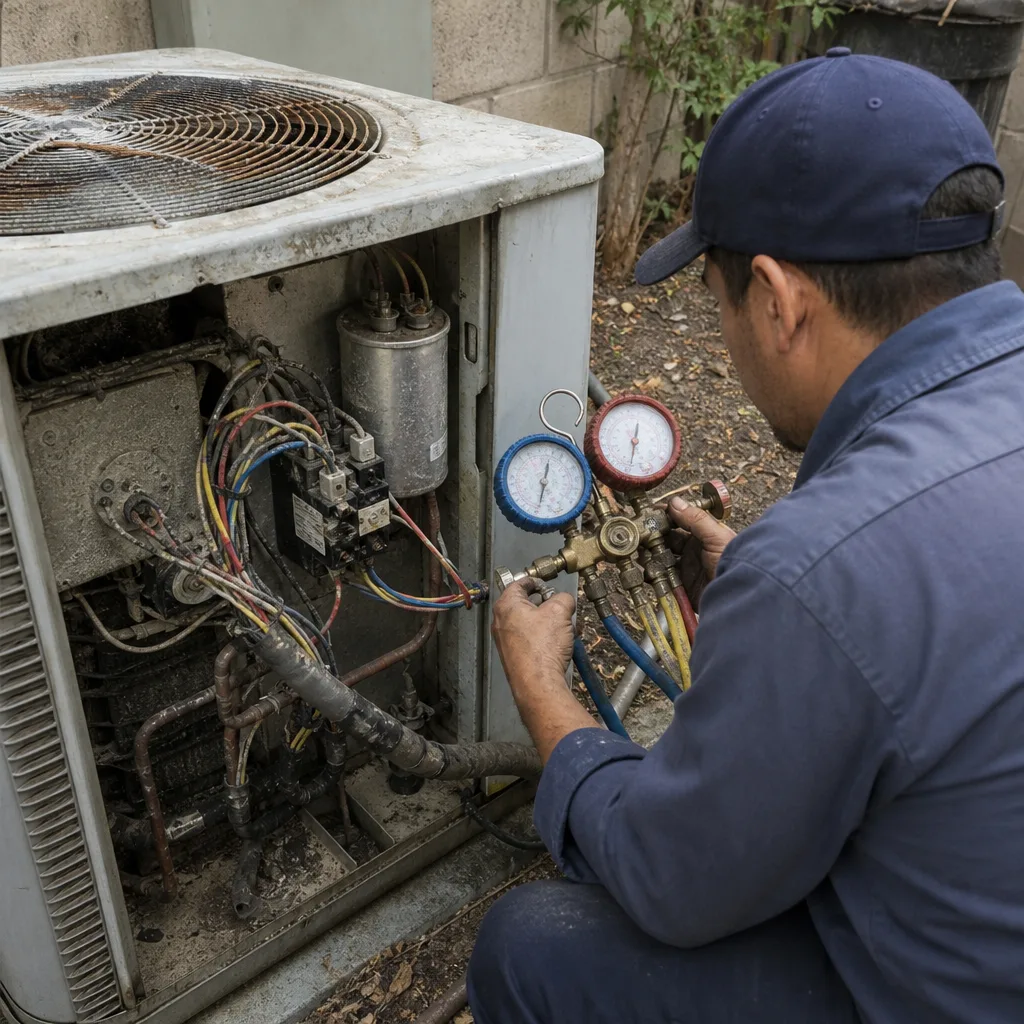 Before
 After
After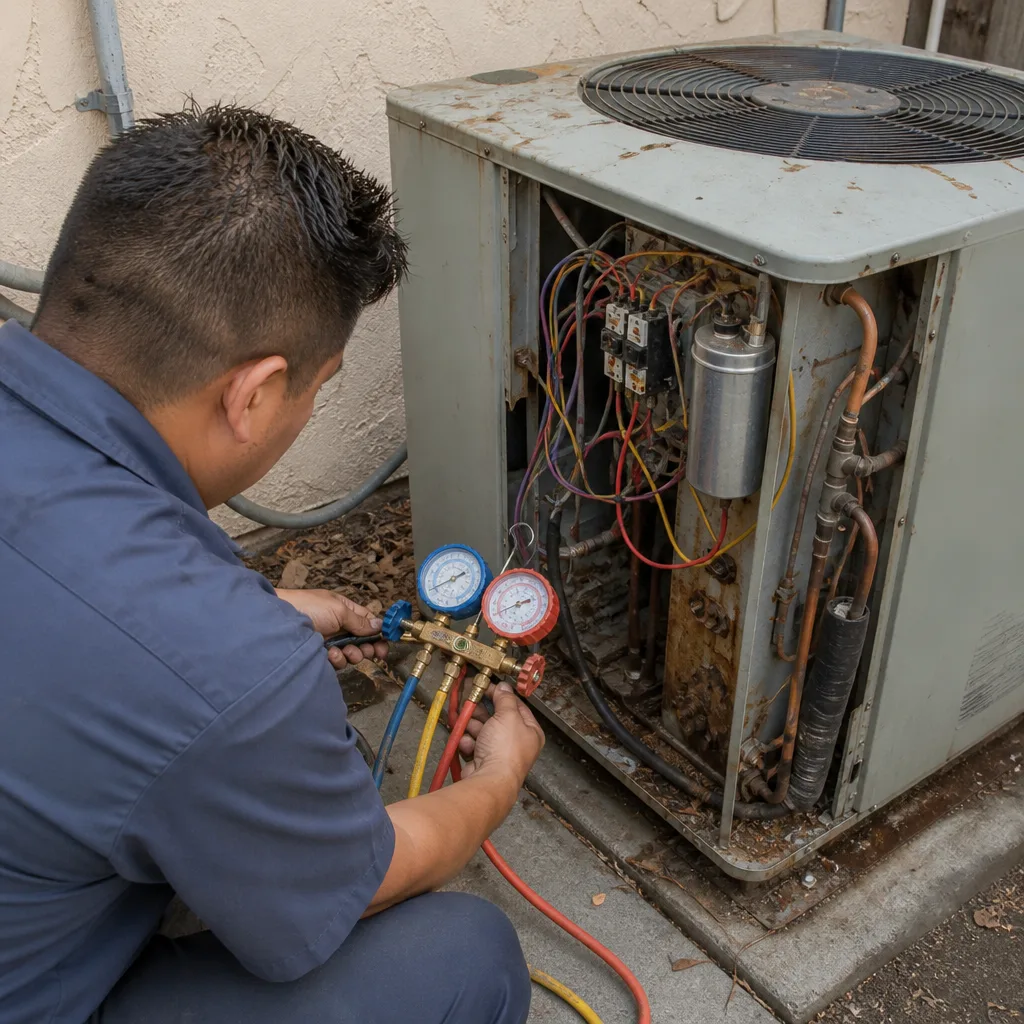 Before
 After
AfterThe Complete Furnace Repair Guide for Los Angeles Homeowners
Here’s something most furnace guides won’t tell you: Los Angeles homeowners experience more furnace failures on the first genuinely cold night of the year than at any other point in the calendar. That’s not a coincidence. It’s a predictable pattern that comes from living in a city where heating systems sit completely idle for six to eight months at a stretch. A furnace that runs through a Minnesota winter gets exercised. A furnace in Los Angeles gets neglected, and neglect has consequences. This guide walks through those consequences, what our Furnace Repair services actually cost in LA, how to verify the person at your door, and the local permit rules that most homeowners never hear about until something goes wrong.
Quick Answer
Furnace repair in Los Angeles typically costs between $150 and $650 depending on the failure, with the most common issues being failed ignitors, corroded flame sensors, and cracked heat exchangers caused by months of summer inactivity. LA homeowners should expect to pay slightly above national averages because of the city’s strict licensing, permit, and workers’ compensation requirements, which add to legitimate contractors’ overhead. Most repairs can be completed in a single visit, but a furnace that has sat unused through a long LA summer deserves a full inspection, not just a part swap.
Table of Contents
- Why LA Furnaces Fail Differently Than Furnaces Anywhere Else
- The Most Common Furnace Repairs We See in Los Angeles
- What Furnace Repair Actually Costs in Los Angeles
- LADBS Permit Rules: Repair vs. Replacement
- How to Verify a California C-20 License Before the Technician Rings Your Bell
- Cracked Heat Exchangers and Carbon Monoxide: The Danger You Can’t See
- What You Can Check Yourself vs. What Requires a Trained Technician
- Choosing a Furnace Repair Company in Los Angeles
Why LA Furnaces Fail Differently Than Furnaces Anywhere Else
Most furnace repair guides are written for cold-climate homes where the heating system runs from October through April, unlike The Complete Guide to HVAC in Los Angeles which addresses our unique climate. Those guides describe failures caused by heavy use: worn bearings from thousands of hours of runtime, motors that burn out from constant cycling, heat exchangers that fatigue from thermal expansion and contraction on a daily basis. Los Angeles has a different problem entirely.
Our furnaces sit. And sitting is harder on certain components than running ever is.
When a gas furnace sits unused through a long, warm LA summer, several things happen. Dust accumulates on the burners and inside the combustion chamber. Small amounts of moisture condense on metal surfaces, and in the mild coastal air of neighborhoods like Santa Monica or Marina del Rey, that moisture can sit for weeks. Flame sensors develop a thin layer of oxidation that prevents them from detecting the burner flame correctly. Ignitors, which are made of silicon carbide or silicon nitride, can develop micro-cracks from repeated temperature swings between chilly LA winter nights and warm days, even when the furnace isn’t running because the surrounding air temperature is still fluctuating.
Then October arrives. The first genuinely cold night hits. The thermostat calls for heat. The ignitor glows, the gas valve opens, and the flame sensor, coated in corrosion from eight idle months, fails to register the flame. The system shuts down as a safety measure. The homeowner stands in a cold house wondering what happened. This is the most common first-cold-night scenario we see in Los Angeles, and it happens in Sherman Oaks, in Pasadena, in Studio City, and in every neighborhood where furnaces sleep through summer.
One more thing worth understanding: LA homes built before 1980 often have furnaces tucked into closets or attic spaces rather than basements, because basements are rare here. Attic installations in particular expose the furnace to extreme heat during summer months. An attic in Van Nuys can reach 150 degrees in August. That heat bakes wiring insulation, dries out capacitors, and accelerates the degradation of rubber seals and gaskets. A furnace in an LA attic ages differently than one in a Chicago basement, and repair guides that ignore this miss the point entirely.
The Most Common Furnace Repairs We See in Los Angeles
Here’s a straight list of what actually breaks on LA furnaces, ranked roughly by how often we see each one:
1. Failed Ignitor
The ignitor is the component that glows hot enough to light the gas. Silicon carbide ignitors are fragile and typically last five to seven years. When one cracks or burns out, the furnace won’t light at all. You’ll hear the draft inducer motor spin up, then nothing. This is the single most common repair we perform across Los Angeles homes.
2. Corroded or Dirty Flame Sensor
The flame sensor is a thin metal rod that sits in the burner flame and tells the control board that combustion is happening. If it’s coated in oxidation, the system thinks the burners didn’t light and shuts down the gas valve within seconds. Sometimes cleaning the sensor solves it. Sometimes it needs replacement. In either case, this is a fast, inexpensive repair that causes a lot of distress when it fails on a cold night.
3. Failed Capacitor
Capacitors provide the electrical jolt needed to start the blower motor. In attic installations where summer heat bakes everything, capacitors fail early. A failed blower capacitor means the burners may light but warm air won’t circulate through the house. The furnace will shut down on high-limit.
4. Cracked Heat Exchanger
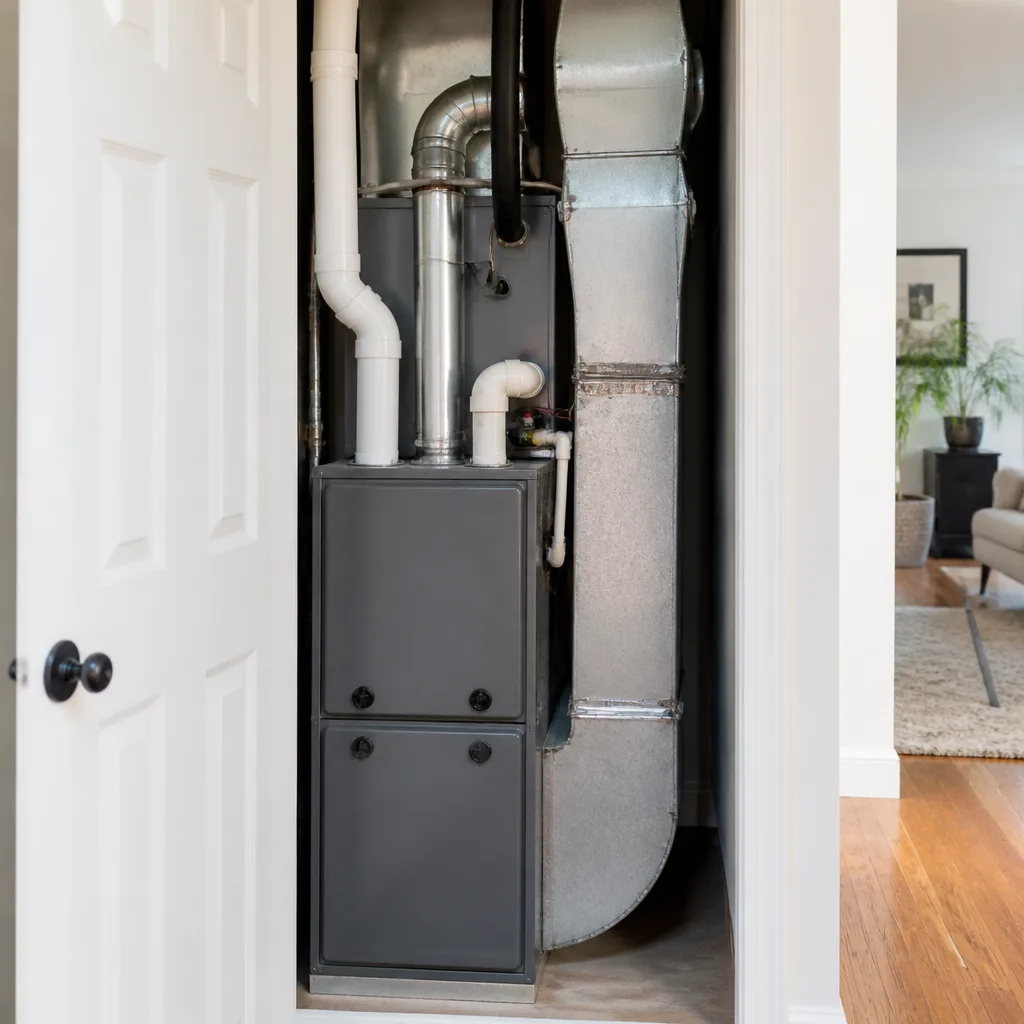
This is the serious one. The heat exchanger is the metal chamber that separates combustion gases from the air that blows through your home. When it cracks, carbon monoxide can enter the living space. Heat exchangers crack from thermal stress, and in LA, the specific stress pattern is different: long idle periods followed by sudden heavy use when the first cold snap arrives. A metal chamber that has been perfectly still for eight months is more prone to stress cracking when it suddenly heats to several hundred degrees than one that cycles daily. We’ll cover this in much more detail later because it’s the repair that matters most for your family’s safety.
5. Faulty Thermostat or Wiring
Sometimes the furnace is fine and the thermostat is the problem, especially with older mercury-bulb thermostats or battery-powered digital units whose batteries died over the summer. Loose wiring connections at the control board also show up regularly, particularly in older LA homes where original wiring has been in place since the Nixon administration.
What Furnace Repair Actually Costs in Los Angeles
Let’s talk real numbers. LA labor rates run higher than national averages because California’s workers’ compensation requirements, licensing fees, and general cost of doing business are all more expensive. Here’s what you should expect to pay for common repairs, parts and labor included:
| Repair Type | Typical LA Cost Range | Notes |
|---|---|---|
| Flame sensor cleaning or replacement | $150 – $300 | Fast repair, often done same visit |
| Ignitor replacement | $180 – $350 | Most common first-cold-night failure |
| Capacitor replacement | $150 – $280 | More common in attic installations |
| Pressure switch replacement | $200 – $400 | Often misdiagnosed by DIYers |
| Gas valve replacement | $350 – $650 | More involved, requires gas line work |
| Heat exchanger replacement | $900 – $2,500 | Often not worth it on furnaces over 15 years old |
| Full diagnostic visit (no repair) | $75 – $150 | Should be credited toward repair if you proceed |
These numbers reflect what we see across the Los Angeles market. The spread accounts for differences between neighborhoods, furnace brands, and how difficult the unit is to access. A furnace in a tight attic crawlspace in Silver Lake will cost more to repair than a closet install in a newer Westchester home, simply because the technician needs more time to work safely.
If you’re comparing quotes, ask each company one question: does the diagnostic fee apply toward the repair if I approve the work? Most reputable companies including ours will credit the diagnostic fee toward the repair, which means you’re not paying twice for the same visit.
LADBS Permit Rules: Repair vs. Replacement
The Los Angeles Department of Building and Safety (LADBS) treats furnace repair and furnace replacement differently when it comes to permits. Here’s what you need to know before anyone starts work:
- Repairs that replace like-for-like parts (an ignitor, a flame sensor, a capacitor, a pressure switch) do not require a permit in Los Angeles. The work is considered maintenance and repair, not new installation.
- Replacement of the entire furnace requires a mechanical permit from LADBS. A licensed contractor must pull this permit, and the installation must pass inspection.
- Replacement of a heat exchanger falls into a gray area. Some LADBS inspectors consider it a repair, others consider it significant enough to require a permit. Your contractor should know which way to go and should be willing to explain it to you.
- Adding or relocating ductwork requires a permit. If your repair company proposes adding a return or moving supply ducts, a permit should be part of the conversation.
Here’s the straightforward rule: if the work involves changing out the entire appliance or modifying the duct system, insist on a permit. If a contractor tells you a permit isn’t needed for a full furnace replacement in Los Angeles, find another contractor. The permit protects you in two ways. It ensures the work gets inspected by the city, and it creates a public record that the work was done, which matters when you sell the home. Unpermitted furnace work discovered during escrow is a genuine headache for sellers in Los Angeles.
When you ask about permits, pay attention to how the contractor answers. Someone who brushes the question off is signaling that they either don’t pull permits (a red flag) or don’t want to wait for inspection (a bigger red flag). Every furnace replacement we do in Los Angeles includes the permit, the inspection coordination, and the paperwork.
How to Verify a California C-20 License Before the Technician Rings Your Bell
California requires any contractor who works on heating systems to hold a C-20 Warm-Air Heating, Ventilating and Air-Conditioning Contractor license issued by the Contractors State License Board (CSLB). This is not a suggestion. It’s the law. And verifying it takes two minutes on your phone.
Here’s the exact process, step by step:
- Go to the CSLB website (cslb.ca.gov) and click “Check a License.”
- Enter the contractor’s name or license number. If you don’t have the license number, you can search by business name.
- Confirm the license classification is C-20 specifically. A general contractor license (Class B) does not permit heating work.
- Check the license status. It should show “Active.” Anything else means the contractor cannot legally perform furnace repair in Los Angeles.
- Check for workers’ compensation coverage. In California, any contractor with employees must carry workers’ comp, and the CSLB license detail page shows this. If there’s no coverage listed and the technician gets hurt on your property, you can be held liable.
Do this before the technician arrives. Not after the invoice is in your hand. A legitimate contractor will already have this information printed on their estimate or available on their website. A contractor who hesitates or deflects when you ask for a license number is telling you something important.
We mention this because the person who stands at your front door should be someone you’ve already verified by name, license, and background check. Under the Threshold Verified standard, every technician we send to a Los Angeles home has been background-checked and identity-verified, and you’ll receive their name and photo before they arrive. If someone shows up who you were not told to expect, that visit is on us, and we make it right.
Cracked Heat Exchangers and Carbon Monoxide: The Danger You Can’t See
A cracked heat exchanger is the furnace repair that matters most, because the consequences of ignoring one can be fatal. Carbon monoxide is colorless, odorless, and produces symptoms that look like the flu: headache, nausea, dizziness, fatigue. People who are sleeping when CO levels rise may not wake up.
The heat exchanger is a metal chamber that separates the hot, toxic gases produced by combustion from the clean air that circulates through your home. When combustion happens, gases pass through the heat exchanger’s walls, which transfer heat to the air around them. If the exchanger cracks, combustion gases including carbon monoxide can leak into the air stream that blows through your vents.
Here’s the LA-specific pattern we mentioned earlier. In colder climates, furnaces run continuously through the winter, and heat exchangers expand and contract on a daily cycle. Failures happen, but they’re spread throughout the heating season. In Los Angeles, the pattern is different. A furnace sits completely cold for six to eight months. Then, on the first genuinely cold night of October or November, the burners fire up and the heat exchanger heats from ambient to several hundred degrees in a matter of minutes. That sudden thermal shock, repeated across a few cold nights each year, creates stress fractures at the welds and seams. We find cracked heat exchangers in LA furnaces at a rate that surprises homeowners who assume their heating system is “barely used.”
If you have a carbon monoxide detector in your Los Angeles home, check the battery tonight. If you don’t have one, get one this week. They cost under $40 and are available at any hardware store. Install one near the sleeping areas. This is not optional equipment for a home with a gas furnace, and it’s the single cheapest safety device you’ll ever buy.
If your furnace is over 15 years old and has never had a combustion analysis, schedule an inspection before the weather turns cold. A technician with a combustion analyzer can detect early signs of heat exchanger failure before the crack becomes dangerous. When the exchanger is cracked, the fix is either replacement of the exchanger (often not cost-effective on older units) or replacement of the entire furnace. We’ll be straight with you about which makes sense for your home and your budget, because a furnace that’s endangering your family is not a furnace worth patching.
What You Can Check Yourself vs. What Requires a Trained Technician
Some furnace issues have safe, simple checks you can do before calling anyone. Others are genuinely dangerous and should never be attempted by a homeowner. Our DIY vs Professional AC Maintenance: What’s Safe to Do Yourself guide covers similar territory for cooling systems, and the same principles apply here. Here’s the line:
Safe to Check Yourself
- Thermostat batteries. If your furnace won’t turn on at all, check the thermostat first. Dead batteries after a long idle season are surprisingly common.
- Circuit breaker. Furnaces are on dedicated circuits. If the breaker tripped, reset it once. If it trips again, that’s a real problem and you need a professional.
- Air filter. A clogged filter restricts airflow and can cause the furnace to overheat and shut down. Check it monthly during heating season.
- Gas shutoff valve. Located near the furnace, usually a lever on a pipe entering the unit. If it’s parallel to the pipe, gas is on. If perpendicular, it’s off. If you turned it off for summer, turn it back on.
- Vents and returns. Make sure furniture, rugs, or storage hasn’t blocked any supply or return vents during the summer.
Do Not Attempt Yourself
- Anything involving the gas valve or gas line. A mistake here can cause a gas leak or an explosion. This requires a licensed professional with proper leak-testing equipment.
- Heat exchanger inspection or replacement. This requires disassembling the furnace, and the stakes are carbon monoxide exposure if done wrong.
- Electrical work inside the furnace cabinet. The control board, high-voltage wiring, and blower motor connections carry enough power to injure or kill. Even with the power off, capacitors store charge.
- Any repair on a furnace that shows signs of soot, rust, or combustion odor. These are indicators of improper combustion and should be evaluated by someone with a combustion analyzer.
Here’s the plain version: if the problem is batteries, a breaker, a filter, or a closed valve, check it yourself. If the problem is anything involving gas, combustion, or the internal components of the furnace, call a trained technician. The line between “simple fix” and “genuine danger” with gas appliances is sharper than most people realize.
Choosing a Furnace Repair Company in Los Angeles
Los Angeles has hundreds of HVAC companies. Some are excellent. Some are not. Here’s how to tell the difference before you let anyone into your home:
Verify the license before the visit. We covered the C-20 license verification process above. Do it before you even schedule. A company that can’t show you a license number isn’t a company you want working on a gas appliance in your home.
Ask who, specifically, is coming. You should know the technician’s name before they ring the bell. Not “one of our guys.” A name. And ideally a photo. The Threshold Verified standard we work under means every Brandt HVAC technician is background-checked and identity-verified, and you get their name and photo before the appointment. If a company can’t tell you who’s coming, you’re rolling dice on who stands at your door.
Demand a written price before work starts. In Los Angeles, a legitimate furnace repair company will hand you a written estimate before any work begins, and they’ll stand by it. If a technician wants to start work without a written price, tell them to stop. This is non-negotiable. Every job we do in Los Angeles begins with a written price. You see the number, you agree to the number, and that’s the number you pay.
Ask what the guarantee covers and for how long. A furnace repair without a written guarantee isn’t a completed repair, it’s a hope. Every repair we perform includes a written guarantee, and under our 365-Day Done Right Promise, if the repair fails within the guarantee period, the return visit is free. No argument, no additional charge.
Pay attention to how they answer the phone. Call the company at 9pm on a Sunday. Does a live person answer? If you get a voicemail, a callback queue, or an automated tree, think about what happens when your furnace dies on a cold night and you actually need help. Our phones are answered by a live person 24 hours a day, 7 days a week. Nights, weekends, holidays. A human picks up.
The name Brandt comes from an old word for a firebrand, a fitting name for the work of keeping a home warm. We’ve been doing this work in Los Angeles since 2003, as part of the Threshold Group family of home service companies, and we service all major residential HVAC brands including Carrier, Trane, Lennox, and American Standard. For homeowners weighing their options, our Brandt HVAC home page walks through how we operate differently, from written pricing to technician verification.
Common Mistakes to Avoid
- Waiting until the first cold night to test the furnace. By then, every HVAC company in Los Angeles is booked solid, and you’re sleeping in a cold house. Test your furnace in September. Run it for ten minutes. If it fails, you’ll get an appointment before the rush.
- Choosing a repair company based on price alone. The cheapest quote on furnace repair in Los Angeles often comes from someone who isn’t paying for a license, insurance, or workers’ comp. That’s not a bargain, that’s a liability in work clothes.
- Letting a technician start work without a written estimate. If you don’t have the price on paper before work starts, you’ve given up your leverage. Never do this.
- Skipping the license check. Two minutes on the CSLB website could save you from hiring someone who isn’t legally allowed to touch a gas appliance in California.
- Ignoring a cracked heat exchanger because the furnace “still works.” A cracked heat exchanger works right up until it doesn’t, and when it doesn’t, the result can be carbon monoxide in your home. This is not a repair to defer.
- Keeping an old furnace alive with repeated repairs when replacement makes more sense. If you’ve spent $500 or more on repairs in the past two years and the furnace is over 15 years old, ask for an honest conversation about replacement costs instead of another patch job.
When to Call a Professional
Call a furnace repair professional in Los Angeles when you notice any of these specific situations: the furnace won’t light at all and you’ve already checked the thermostat, breaker, and filter; the system lights but shuts down within a minute or two; you smell gas near the furnace or anywhere in the home; the furnace makes banging, grinding, or screeching noises; you see soot, rust, or water around the furnace base; or your carbon monoxide detector goes off, in which case you should leave the home immediately, call the gas company, and only after the situation is resolved have the furnace inspected. If your system is running through our Furnace Repair in Los Angeles service, you’ll get a written diagnostic, a written price, and a written guarantee before any work begins. Brandt HVAC offers free estimates in Los Angeles. Call (984) 538-9003 and a live person will answer.
Frequently Asked Questions
Most furnace repairs in Los Angeles cost between $150 and $650 depending on the component, with ignitor replacements running $180 to $350 and gas valve replacements running $350 to $650. Heat exchanger replacement is the exception at $900 to $2,500, and we’ll be honest about whether replacement of the entire furnace makes more sense at that point. Call (984) 538-9003 for a free estimate with a written price.
Furnaces in Los Angeles sit idle for six to eight months every year, and components like ignitors, flame sensors, and capacitors degrade during that idle period rather than from heavy use. When the first cold night triggers the system, it’s the first time in months that these parts have been asked to work, and failures surface immediately. This is why we recommend testing your furnace in September before LA’s first cold snap.
During the first cold snap of the season, every furnace repair company in Los Angeles gets slammed, and same-day availability depends on the day and your neighborhood. We prioritize furnace calls that involve no heat onto the schedule as quickly as possible, and our phones are answered by a live person 24/7 so you’ll know exactly where you stand. Call (984) 538-9003.
Yes. A cracked heat exchanger allows combustion gases including carbon monoxide to enter the air stream that circulates through your home, and the furnace will often keep running because the crack doesn’t immediately affect the flame sensor or pressure switch. Carbon monoxide is colorless, odorless, and potentially fatal. If you suspect a cracked heat exchanger, stop using the furnace and call for an inspection immediately.
No permit is required in Los Angeles for repairs that replace like-for-like parts such as ignitors, flame sensors, capacitors, or pressure switches. A mechanical permit from LADBS is required for full furnace replacement and for any work that involves adding or relocating ductwork. Any reputable contractor will handle the permitting and inspection process for you.
We service all major residential HVAC brands including Carrier, Trane, Lennox, Goodman, Rheem, York, Daikin, Bryant, and American Standard. Most furnace repair work in Los Angeles involves replacement parts that are brand-specific, so it’s worth confirming that your contractor works on your system’s brand before scheduling. If your home also needs air conditioning work, our AC Repair in Los Angeles service covers the cooling side, and our AC Maintenance in Los Angeles program keeps systems tuned year-round.
The Bottom Line
Los Angeles homeowners deal with furnace failures that cold-climate guides never mention: systems that sit idle for months, then crack, corrode, and fail on the first cold night of the year. The repairs that follow are predictable in type and in cost, and they’re manageable when you have a license-verified contractor and a written price in hand before work begins. The dangerous failures, particularly cracked heat exchangers, are more common here than most homeowners assume, and the only way to catch them early is with an inspection from a trained technician using a combustion analyzer. Test your furnace before the cold arrives. Verify the license before the visit. Demand a written price and a written guarantee. And when something goes wrong on a cold Los Angeles night, call a company that answers the phone with a live person. Call (984) 538-9003 for a free estimate.
Written by Devin Marlowe, Owner at Brandt HVAC, serving Los Angeles since 2003.