
Last updated October 9, 2026
Seasonal tune-up and full diagnostic on your Carrier, Trane, or Goodman system - readings shown to you before any repair is proposed
Diagnosis first, numbers second - you approve the repair price before a single part goes in.
 Before
 After
After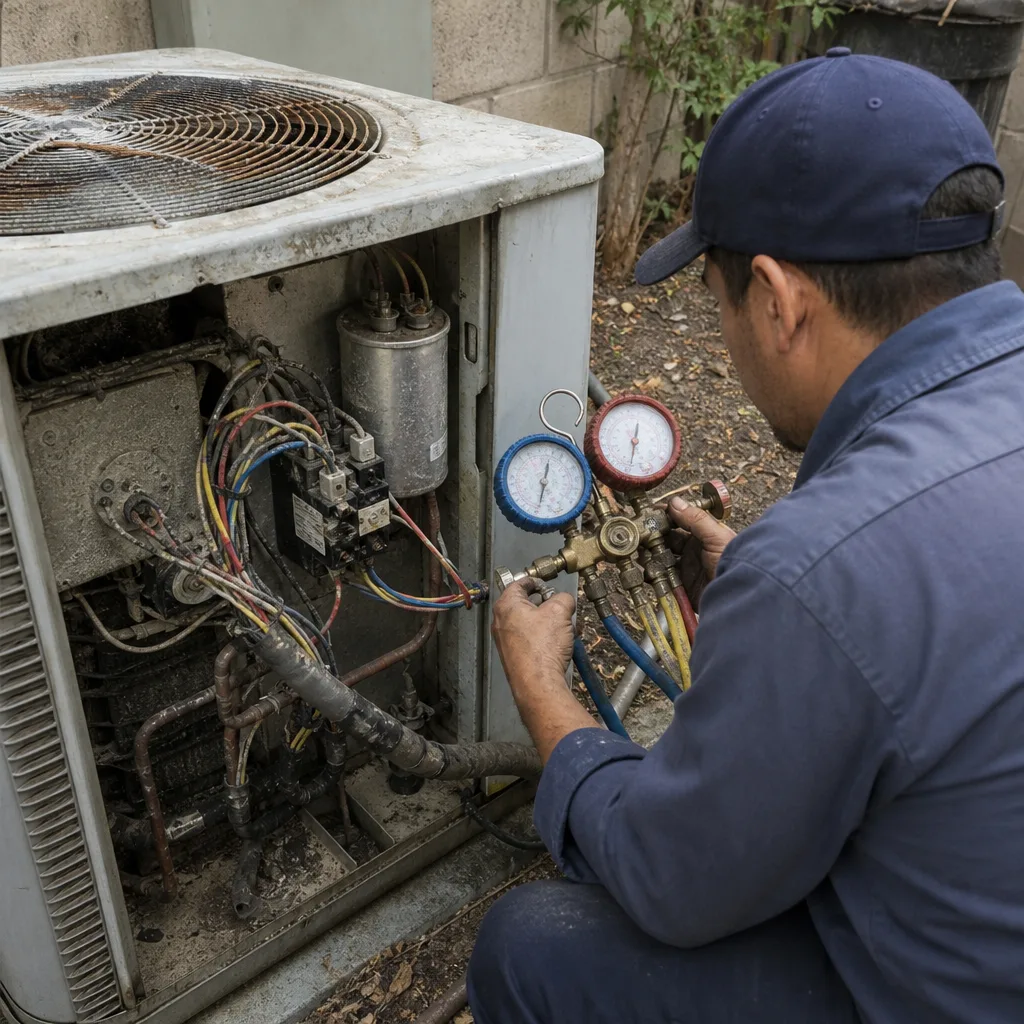 Before
 After
After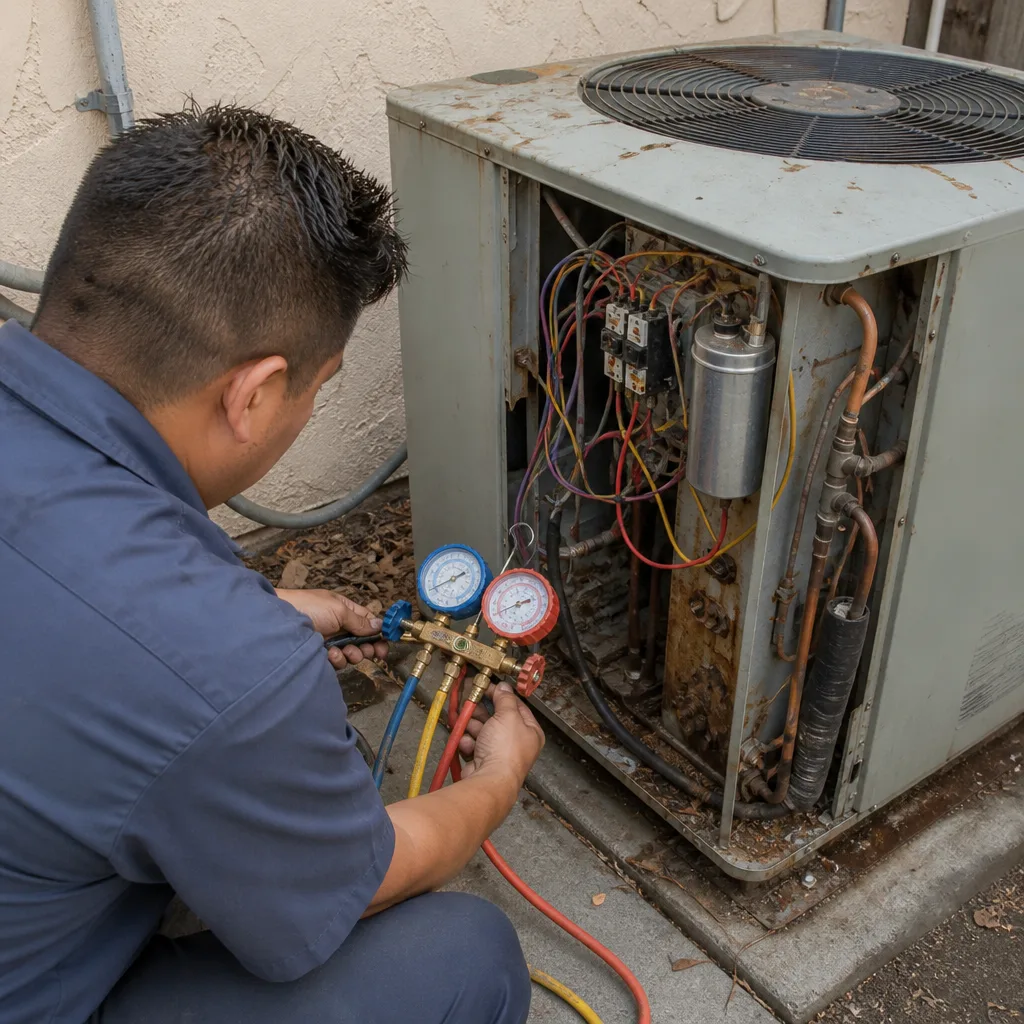 Before
 After
AfterDIY vs Professional AC Repair: What’s Safe to Do Yourself
Every summer in Los Angeles, some homeowner ends up in an emergency room after a capacitor discharge, and another one gets a $4,000 repair bill because a “simple DIY fix” turned a $90 part into a system-wide failure. The real question isn’t whether you’re handy enough to open your condenser unit. It’s whether you’re legally allowed to touch what’s inside it, and whether your homeowner’s insurance will still cover you if something goes wrong. This guide draws the exact boundary between what’s safe for a homeowner and what belongs in the hands of a licensed professional, based on federal law, California code, and the physical dangers most YouTube tutorials never mention. For a deeper look at this decision, see our DIY vs Professional HVAC: The Los Angeles Homeowner’s Decision Guide.
Quick Answer
Safe DIY AC maintenance includes changing air filters, cleaning condenser fins with water, clearing debris, and checking your thermostat batteries. Anything involving refrigerant, electrical components beyond a basic capacitor check, compressor work, or gas lines requires a licensed professional, and refrigerant handling specifically requires EPA Section 608 certification, which most homeowners don’t have and legally can’t get without passing a proctored exam.
Table of Contents
- The Legal Boundary Most Homeowners Don’t Know Exists
- Safe DIY Tasks You Can Do This Weekend
- The Three Tiers: DIY, Licensed Tech, Licensed Plus Permit
- The Hidden Cost of a Misdiagnosed DIY Repair
- What “Licensed and Insured” Actually Protects You From
- How to Spot a Contractor Subbing Out to Unlicensed Labor
- Why Los Angeles Weather Makes This Decision Harder
- Common Mistakes to Avoid
- When to Call a Professional
- Frequently Asked Questions
- The Bottom Line
The Legal Boundary Most Homeowners Don’t Know Exists
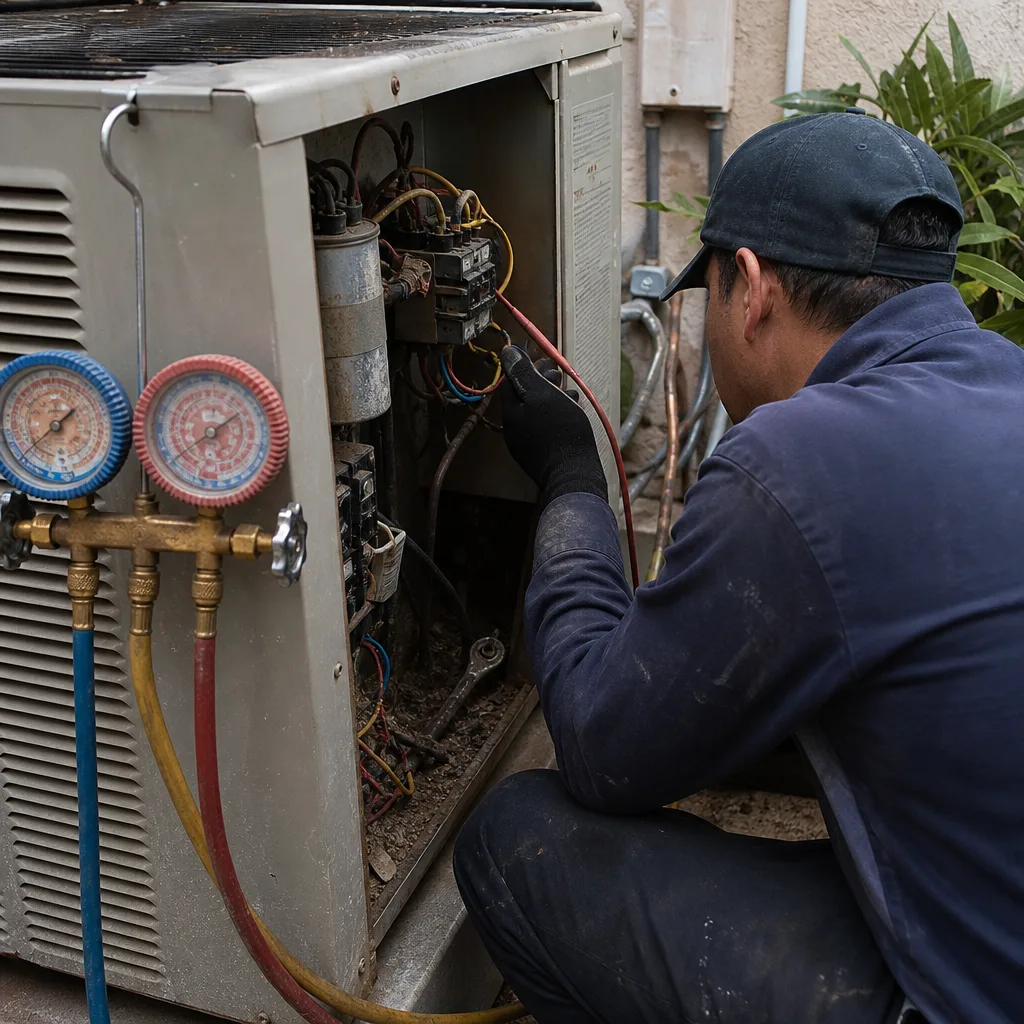
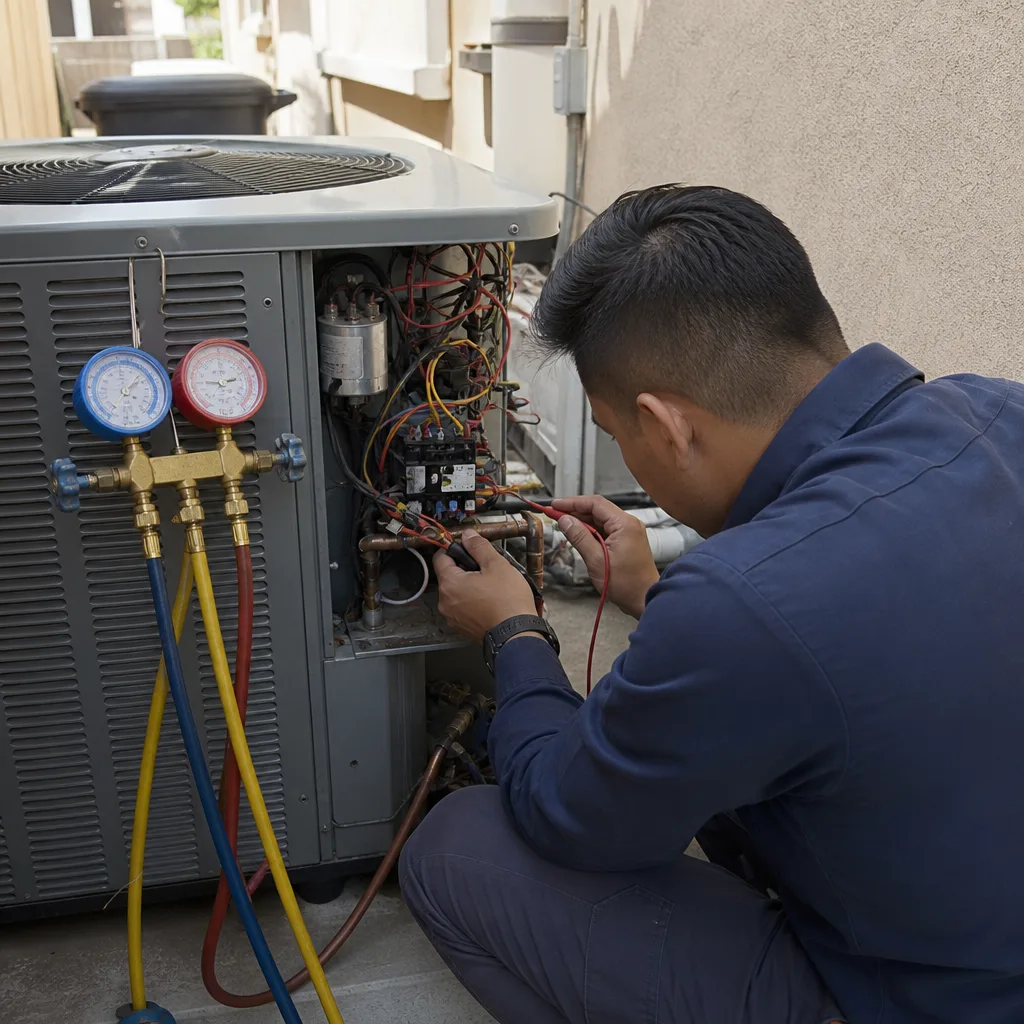
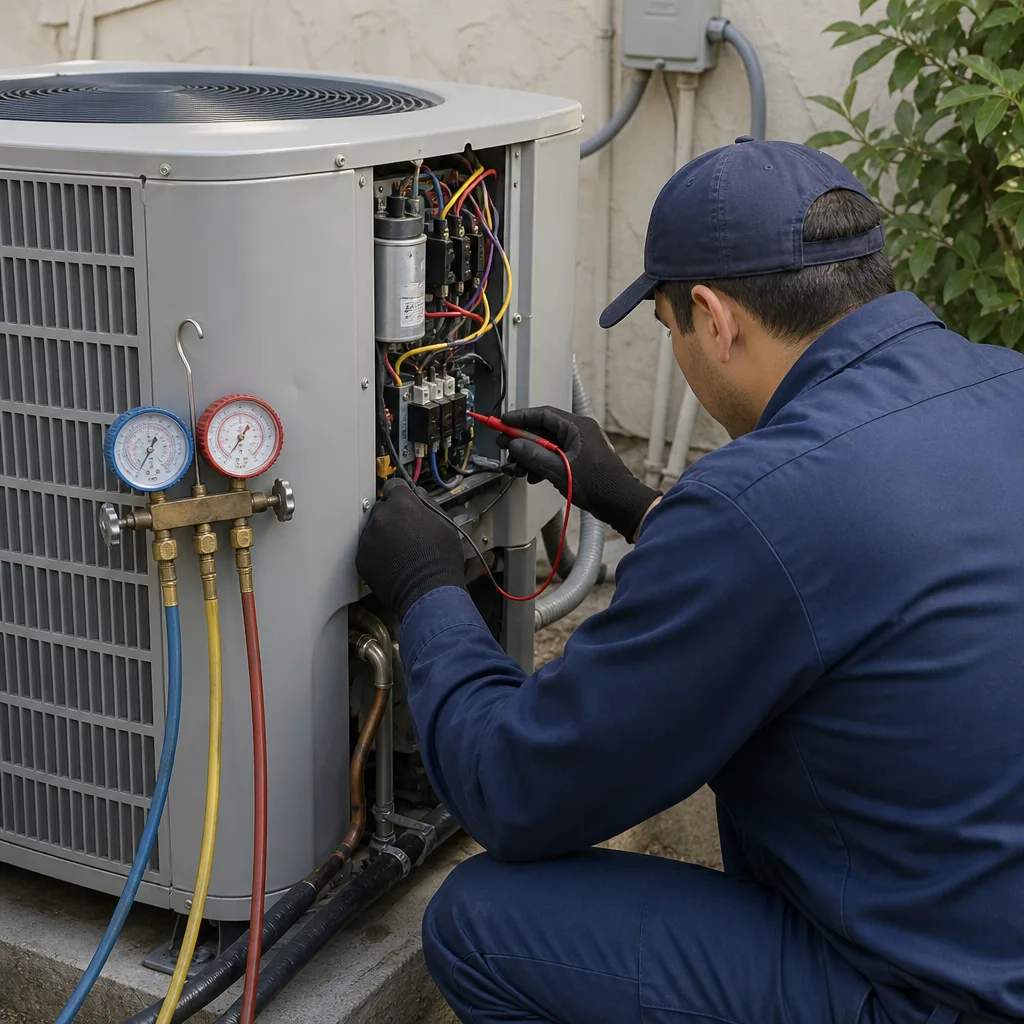
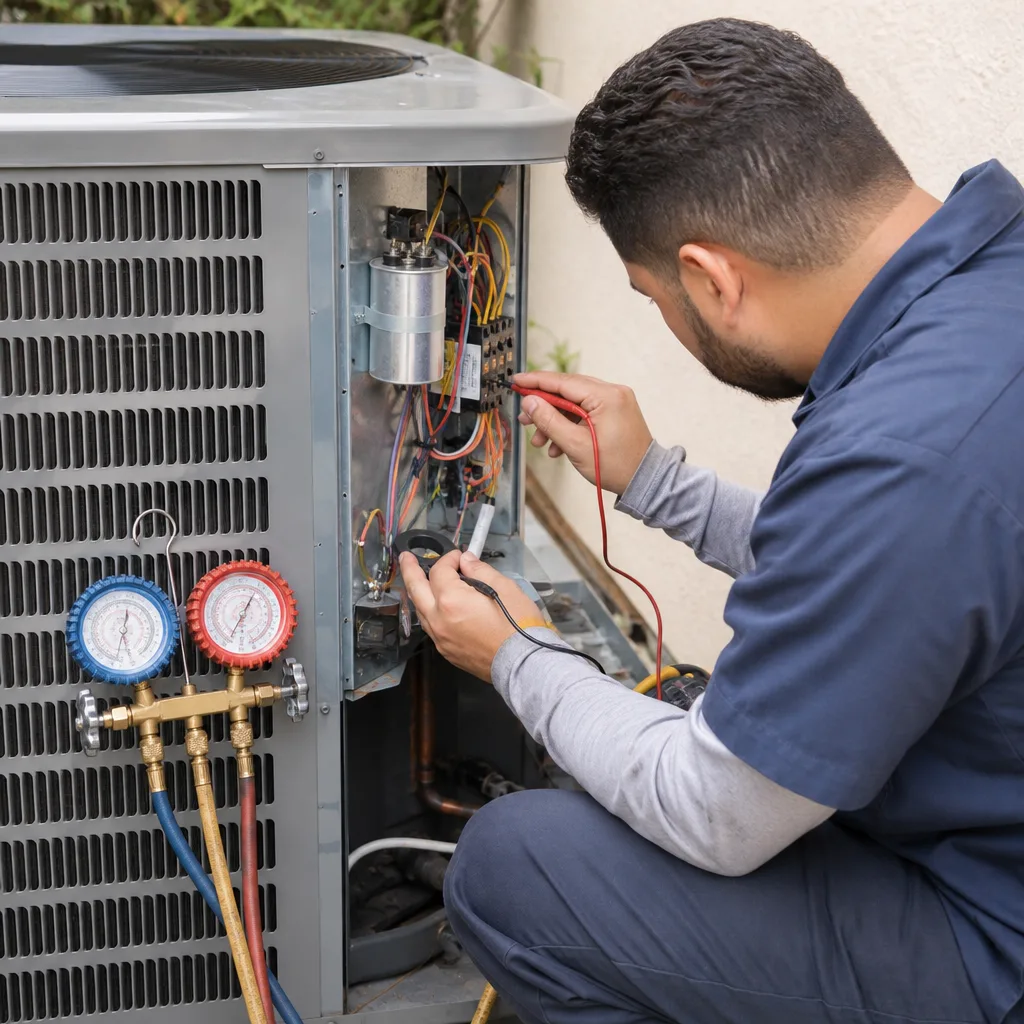
Here’s the part that surprises almost every homeowner we talk to in Los Angeles: the moment you connect a manifold gauge set to your AC’s service valve, you’re handling refrigerant. And under federal law, handling refrigerant requires EPA Section 608 certification. That’s not a contractor requirement. It’s an anyone-who-touches-it requirement, written into the Clean Air Act and enforced with fines that start around $37,500 per day of violation. The DIY recharge kits sold at auto parts stores carry the same legal exposure, even if the label says “for home use.” Selling the kit is legal. Using it on your home AC is a federal violation unless you hold the certification.
California layers its own rules on top of the federal ones. The state requires any contractor performing HVAC work over $500 in labor and materials to hold a C-20 warm-air heating, ventilating, and air-conditioning contractor’s license from the Contractors State License Board. Unlicensed work above that threshold isn’t just a bad idea here. It’s a misdemeanor for the person doing the work, and it creates real liability for the homeowner who hired them. If an unlicensed worker gets hurt on your property, your homeowner’s policy may deny the claim, because the injury stemmed from work you arranged outside the law.
This is the part every DIY AC debate misses. The question isn’t just whether you can physically do the task. It’s whether doing it exposes you to consequences that dwarf the money you saved. In our experience, homeowners are usually happy to spend $250 on our AC Repair services once they understand the alternative isn’t a $250 savings, but a $37,500 fine and a voided insurance policy.
Safe DIY Tasks You Can Do This Weekend
There is a real list of AC maintenance jobs that are safe, legal, and genuinely worth doing yourself in Los Angeles. None of them touch refrigerant, none of them open the electrical panel, and none of them require tools beyond what most garages already have. Here’s what we tell our own customers they can handle between professional visits, including the AC Maintenance in Los Angeles tune-ups we perform twice a year.
- Replacing the air filter. This is the single highest-value DIY task in HVAC. In Los Angeles, where wildfire smoke and dust push through returns from March through November, a clogged filter forces your blower to work harder and shortens system life. Check it monthly during fire season, and replace it every 30 to 90 days depending on filter type and indoor air quality.
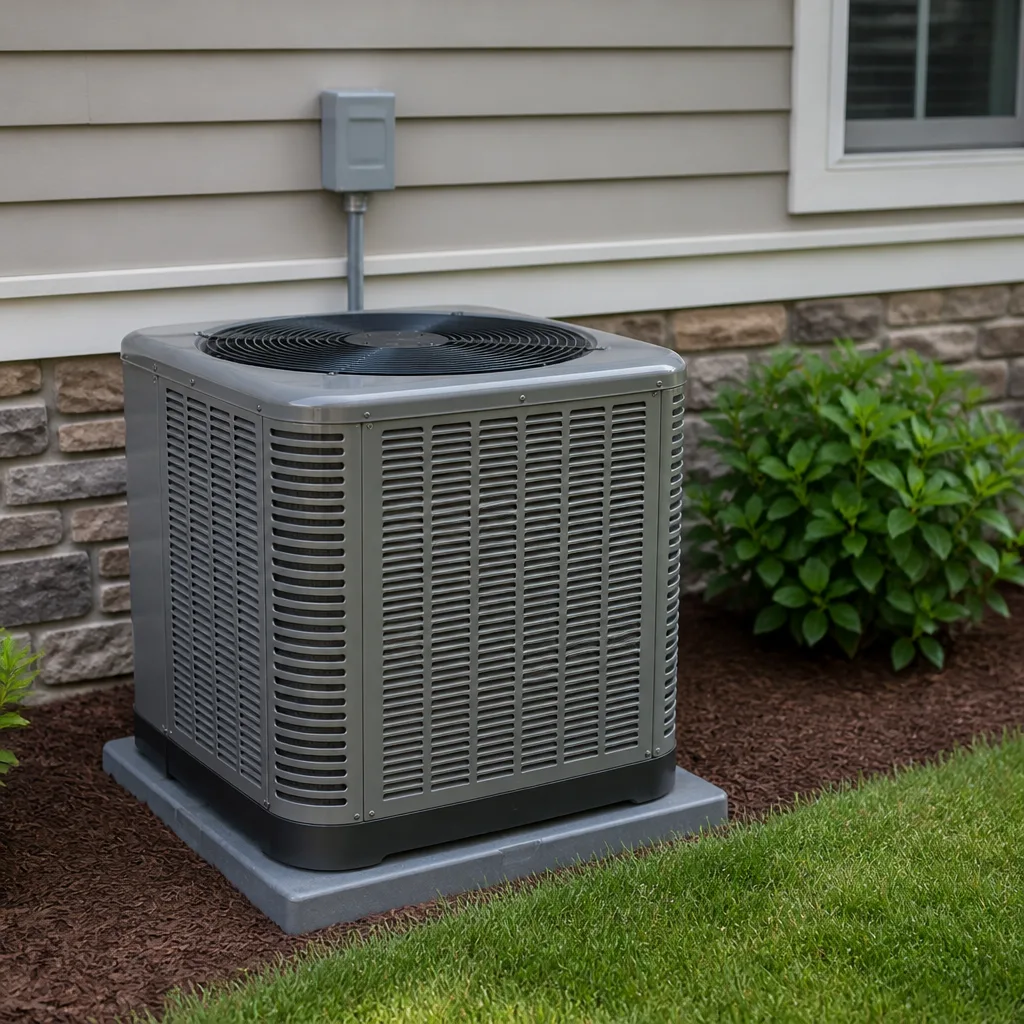
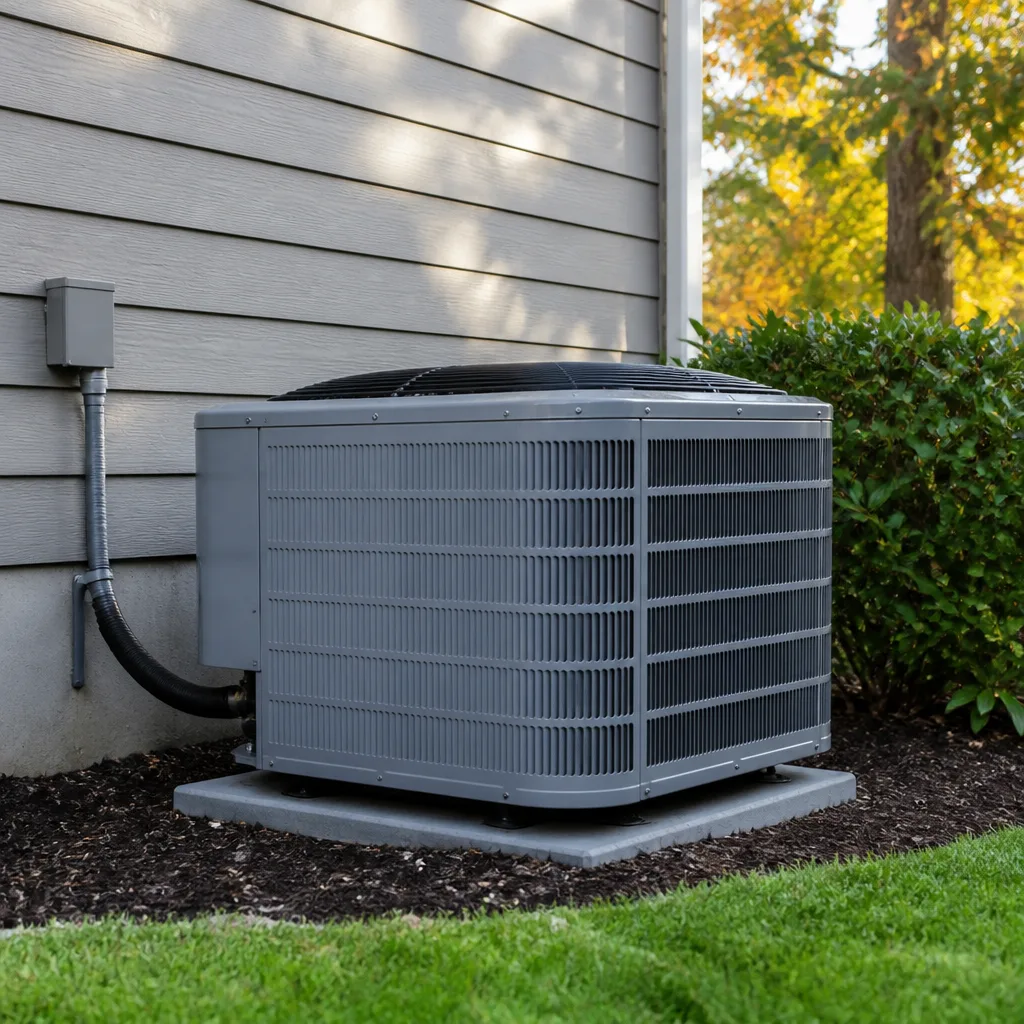
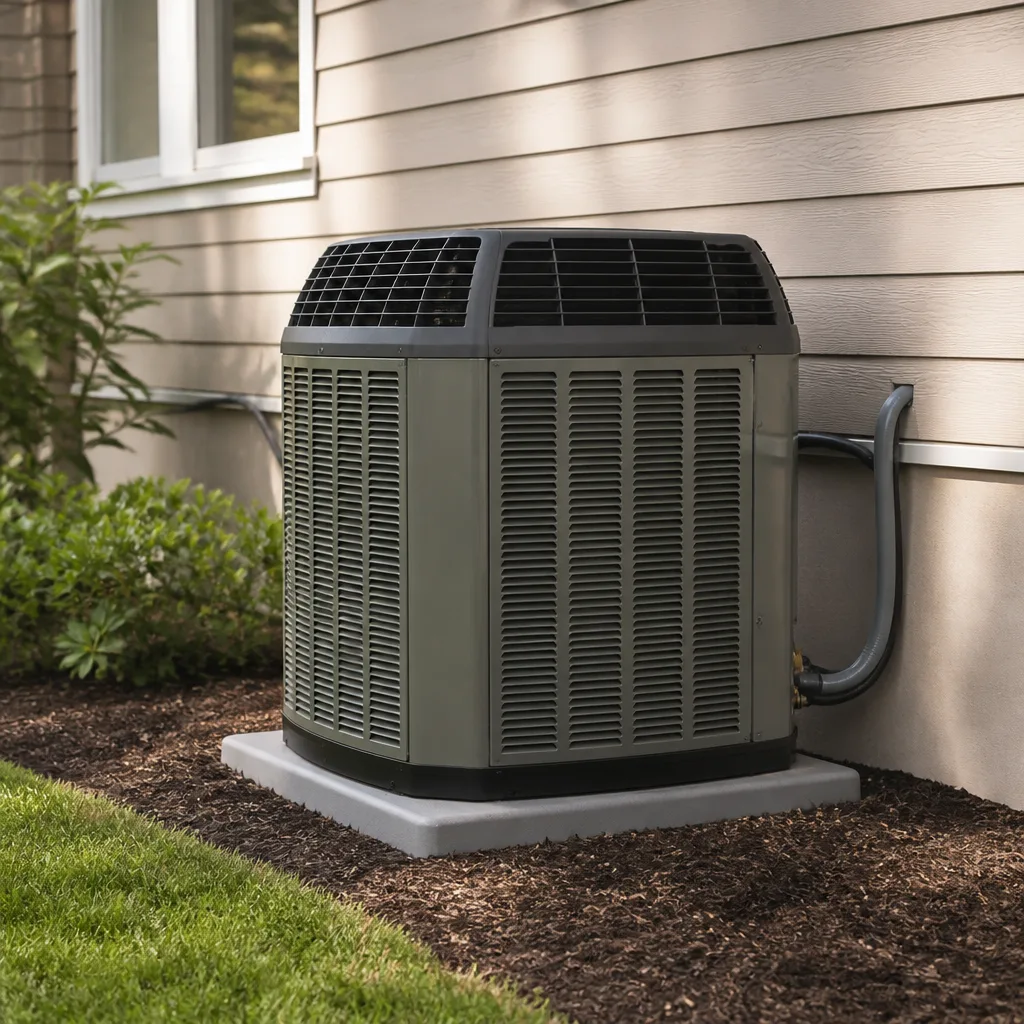
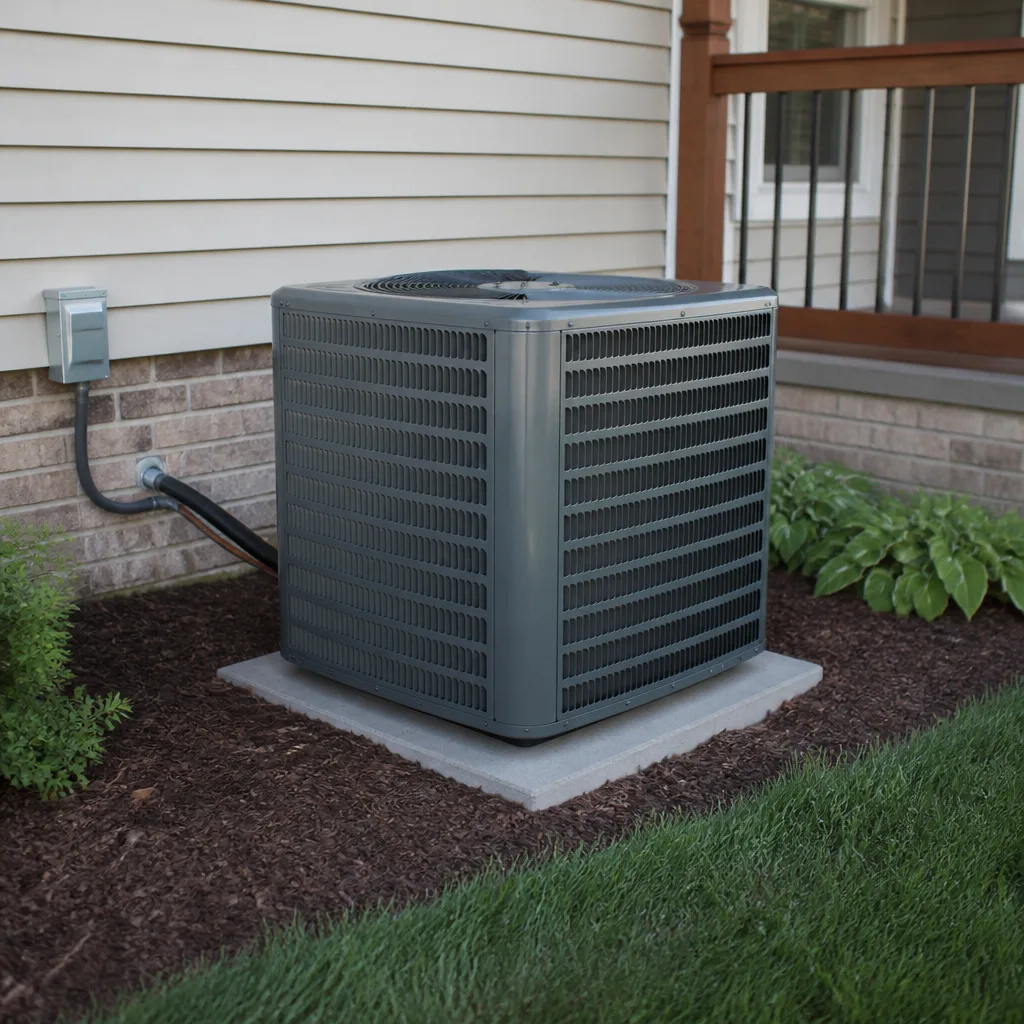
- Cleaning debris from around the condenser unit. Leaves, grass clippings, and construction dust collect on the outdoor coil and choke airflow. Turn the system off at the thermostat, and use a garden hose with a gentle spray to rinse the fins. Never use a pressure washer. It folds the aluminum fins flat and ruins the coil’s heat exchange surface.
- Straightening bent condenser fins. A fin comb costs about $15 and lets you carefully realign fins that have been bent by hail, yard equipment, or curious kids. Straight fins mean proper airflow, and proper airflow means a cooler house on the same amount of electricity.
- Checking thermostat batteries and settings. Weak batteries cause erratic cycling and inaccurate temperature readings. Swap them once a year, and while you’re at it, make sure your thermostat isn’t set to a mode or schedule that’s causing unnecessary runtime.
- Clearing drain line clogs. The condensate drain line carries water away from your indoor coil. Algae and dust can clog it, causing water damage or a safety shutoff. A wet/dry vacuum on the drain line outlet pulls most clogs clear. This is a messy but safe task.
None of these tasks carry legal exposure, none require opening sealed system components, and none will void a manufacturer’s warranty. They’re the kind of work that keeps your system running between professional visits, and they’re exactly what a homeowner should learn to do confidently. For everything else, see our DIY vs Professional Furnace Repair: What’s Safe to Do Yourself guide.
The Three Tiers: DIY, Licensed Tech, Licensed Plus Permit
AC work breaks down into three clear categories, and the boundaries aren’t about skill. They’re about law and physical risk.
Tier One: Safe for homeowners. This is the list above. Air filters, condenser cleaning, thermostat batteries, drain line clearing, fin straightening, and visual inspections of outdoor components. No certification needed, no permit needed, no manufacturer warranty at risk. If it doesn’t involve opening the sealed system, handling chemicals, or touching line voltage, it likely belongs here.
Tier Two: Licensed technician required, no permit. This covers most actual repairs. Capacitor replacement, contactor replacement, fan motor swaps, refrigerant leak detection, refrigerant recovery and recharge, compressor diagnosis, and electrical troubleshooting all fall here. The EPA Section 608 certification is the legal gate for refrigerant work. The C-20 license is the state gate for paid repairs. For homeowners, the message is simple: if the repair requires gauges, refrigerant, or a multimeter inside the electrical compartment, call someone who carries both credentials.
Tier Three: Licensed technician plus local permit. System replacement and major electrical upgrades usually require a permit from the Los Angeles Department of Building and Safety. A full system changeout, a panel upgrade to support a new heat pump, ductwork modifications, and some relocations of the condenser unit all trigger permit requirements. Permits exist for a reason: they create an inspection record that proves the work was done to code. When you sell your home, unpermitted HVAC work becomes a disclosure problem and sometimes a dealbreaker.
The Hidden Cost of a Misdiagnosed DIY Repair
The most expensive AC repair in Los Angeles is the second one. Here’s what we mean. A homeowner hears a humming noise, watches a YouTube video, and decides the capacitor is bad. He replaces it with a $35 part from a parts store. The hum continues. He replaces the contactor. Same hum. A month later, the compressor is dead, and what started as a $185 professional capacitor replacement is now a $3,800 compressor job, or worse, a full system replacement.
This isn’t a hypothetical. We see it every cooling season. The problem is that HVAC symptoms overlap. A humming condenser can be a bad capacitor, a seized compressor, a failing contactor, or a wiring fault. Diagnosing which one requires a multimeter, an understanding of the start circuit, and the experience to know what a healthy compressor sounds like versus one that’s about to die. Parts replacement without diagnosis is just guessing with expensive consequences.
The math is worth spelling out. A professional diagnostic call in Los Angeles runs $89 to $149 with most reputable companies, and many, including ours, credit that fee toward the repair if you proceed. A misdiagnosed DIY repair that delays the real fix by three weeks typically adds $400 to $900 to the final bill, because you’ve paid for the wrong parts, and the underlying problem has had time to cause collateral damage. The question isn’t whether you saved the diagnostic fee. It’s whether you’re comfortable betting $900 against $89.
What “Licensed and Insured” Actually Protects You From
Everyone says it. Almost no one explains what it means. Here’s the plain-language version, because this is the difference between a repair that goes smoothly and a repair that becomes a legal problem.
A license protects you from incompetence by creating accountability. A licensed contractor in California has passed trade exams, carries a bond, and answers to the Contractors State License Board. If a licensed contractor walks off a job or does substandard work, you have a complaint path, a bond claim, and a regulator who can suspend the license. An unlicensed worker offers none of that. He’s gone, and so is your money.
Insurance protects you from accidents on your property. If a worker falls off your roof or gets electrocuted while working on your AC, and the company carries workers’ compensation and liability insurance, the insurance pays the medical bills and any damages. If the company is uninsured, the worker’s attorney looks to the next available source: your homeowner’s insurance, or you personally. This is the single most important reason to verify insurance before work starts, not after something goes wrong.
Bonding protects you from financial loss caused by a contractor’s failure. It’s a guarantee pool that pays out if the contractor breaches the contract or fails to meet legal obligations. It’s not a substitute for insurance, but it’s another layer of accountability that unlicensed operators don’t have.
When we send a technician to a Los Angeles home, that tech carries a photo ID badge and arrives in uniform after the homeowner has already seen a name and photo. That’s the Brandt HVAC home standard, and it exists because accountability shouldn’t be an afterthought. It should be verifiable before the work begins. The paperwork matters, but it only matters if you see it.
How to Spot a Contractor Subbing Out to Unlicensed Labor
Here’s a scenario we hear too often. A Los Angeles homeowner hires a company with a great website and a contractor’s license. The crew that shows up is different from the company on the contract. The lead tech is licensed, but the two helpers running the copper lines and charging the system are day laborers with no credentials, no background check, and no insurance coverage. If one of them gets hurt, or the install leaks refrigerant, the homeowner is on the hook.
This is illegal. California law requires anyone performing HVAC work for pay to either hold the license or be a registered employee of the license holder. But the law only protects you if you verify. Here’s what to check:
- Ask who will be doing the work, by name. A reputable company tells you before the visit. If they won’t, that’s a red flag.
- Verify the license number on the CSLB website. It takes three minutes. Make sure the name on the license matches the name on your contract.
- Check that every person on site is an employee of the licensed company. Ask to see their ID badge. If the company can’t produce one, ask harder.
- Read your contract for any language about subcontracting. Some contracts allow it by default. That language should be crossed out before you sign.
- Watch for cash-only payment requests. Licensed companies invoice. Cash is how unlicensed labor gets paid off the books.
The companies doing this well make verification easy. We send you the tech’s name and photo before the visit, and every tech carries a Threshold Verified badge with a photo ID they show at the door. If someone arrives who you weren’t told to expect, we want that call. It should never happen, but if it does, the visit is on us.
Why Los Angeles Weather Makes This Decision Harder
Los Angeles presents a specific set of conditions that make both DIY and professional AC work more complicated than in other markets. The city’s coastal fog zones keep some neighborhoods mild while inland areas like the San Fernando Valley and the San Gabriel Valley routinely cross 95 degrees in summer. That spread means the margin for error is narrower. In a coastal neighborhood, a mediocre AC repair might go unnoticed for weeks. In Van Nuys or Woodland Hills, the same mistake becomes obvious within hours, when the house won’t drop below 85 and a family can’t sleep.
Los Angeles air quality adds another layer. Wildfire smoke, construction dust, and valley inversions load up filters and coat coils faster than in most cities. An AC system in North Hollywood or Burbank works harder than an identical system in, say, coastal San Diego. That means the consequences of neglect, and the consequences of bad repairs, both accelerate here. A capacitor that might coast through another summer in a mild climate fails in August here, usually on the hottest day of the year.
Local utility rates matter too. LA DWP’s tiered rate structure means heavy AC use pushes households into higher cost brackets quickly. An inefficient system, or one limping along after a partial repair, costs more per month than the repair itself. And the city’s housing stock skews older, which means more systems nearing end of life, more R-22 refrigerant systems being phased out, and more homes where a repair decision is really a replacement decision in disguise. Our AC Repair in Los Angeles work reflects this pattern every summer.
Common Mistakes to Avoid
- Buying a DIY recharge kit from an auto parts store. Using it on a home AC is a federal violation without EPA Section 608 certification, and it also doesn’t fix leaks. If refrigerant is low, it leaked out, and adding more without finding the leak just postpones the repair while risking a fine.
- Replacing parts before diagnosing the fault. A $35 capacitor replacement for a seized compressor does nothing but delay the real repair and add collateral damage. Diagnose first, then replace.
- Using a pressure washer on condenser coils. The fins on modern units from Trane, Lennox, and Goodman are thin aluminum. A pressure washer folds them flat, kills airflow, and turns a cleaning into a coil replacement.
- Opening the electrical compartment without shutting off power at the breaker. The thermostat doesn’t cut line voltage to the condenser. The disconnect box or breaker does. A live capacitor can hold a lethal charge even after power is removed.
- Ignoring a refrigerant leak because the system “still cools a little.” Low refrigerant makes the compressor run hotter and the system work harder. Every week of delay shortens the compressor’s life and raises the eventual repair cost.
- Hiring an unlicensed handyman for a repair over $500. In Los Angeles, that’s a legal violation, a liability nightmare, and most likely a waste of the money you thought you saved.
- Assuming the company you hired is the company showing up. Subcontracting to unlicensed labor is common. Verify names, badges, and licensing before the work starts, not after.
When to Call a Professional
Call a licensed HVAC company when any of these happens: you hear a humming or buzzing sound from the condenser, the system trips breakers, the air from your vents feels warm on a cool setting, the outdoor unit runs but the house won’t cool, you see ice on the refrigerant lines, or you smell burning. These are symptoms that signal electrical or refrigerant problems, and none of them are safe to chase as a DIY project. A professional diagnostic call gets you an answer in under an hour, usually for between $89 and $149, and with many companies the diagnostic fee is credited toward the repair. Brandt HVAC offers free estimates in Los Angeles, call (984) 538-9003, and we never start work without a written price in your hand.
Frequently Asked Questions
You do not need a contractor’s license to work on your own home’s AC system, but you do need EPA Section 608 certification to handle refrigerant, including to connect gauges or add refrigerant, and that certification applies to everyone, not just contractors. Electrical work beyond basic component checks may also require a permit depending on the scope.
No. Connecting a recharge kit to your home AC system is refrigerant handling under federal law, and doing it without EPA Section 608 certification is a violation with fines up to $37,500 per day. The kits are sold for automotive use, which carries different rules, not for residential HVAC systems.
Replacing air filters, cleaning condenser debris with a garden hose, straightening bent fins with a fin comb, changing thermostat batteries, and clearing condensate drain lines are all safe, legal, and don’t require any certification or permit. The list stops where the sealed system or electrical components begin.
Most reputable Los Angeles HVAC companies charge between $89 and $149 for a diagnostic visit, and many credit that amount toward the repair if you proceed. The cost of guessing wrong on a DIY diagnosis usually exceeds the diagnostic fee by several hundred dollars, so paying for the right answer is cheaper than paying for the wrong parts.
A license creates accountability through the Contractors State License Board, a bond, and a complaint path if work goes wrong. Insurance means you’re not liable if a worker gets hurt on your property. Without both, you’re the insurer of last resort, and your homeowner’s policy may decline to cover you if the worker was hired illegally.
Ask for the names of the technicians before the visit, verify the company’s license on the CSLB website, check for photo ID badges at the door, and read your contract for any subcontracting language. If anyone shows up who you weren’t told to expect, stop the work and call the company.
The Bottom Line
The DIY-versus-professional AC debate isn’t really about money. It’s about liability, safety, and the difference between a $90 part and a $37,500 fine. Safe DIY work exists, and homeowners should learn to do it: filters, coils, drains, thermostats. The rest belongs to licensed professionals, not because the work is hard, but because the consequences of getting it wrong, legally and physically, are bigger than any repair bill. In Los Angeles, where the heat punishes mistakes and the housing stock punishes shortcuts, that boundary matters. Learn it, respect it, and call a pro when the line appears. Call Brandt HVAC at (984) 538-9003 for a free estimate in Los Angeles, and we’ll tell you honestly whether the job is yours to do or ours.
Written by Devin Marlowe, Owner at Brandt HVAC, serving Los Angeles since 2003.