
Last updated October 9, 2026
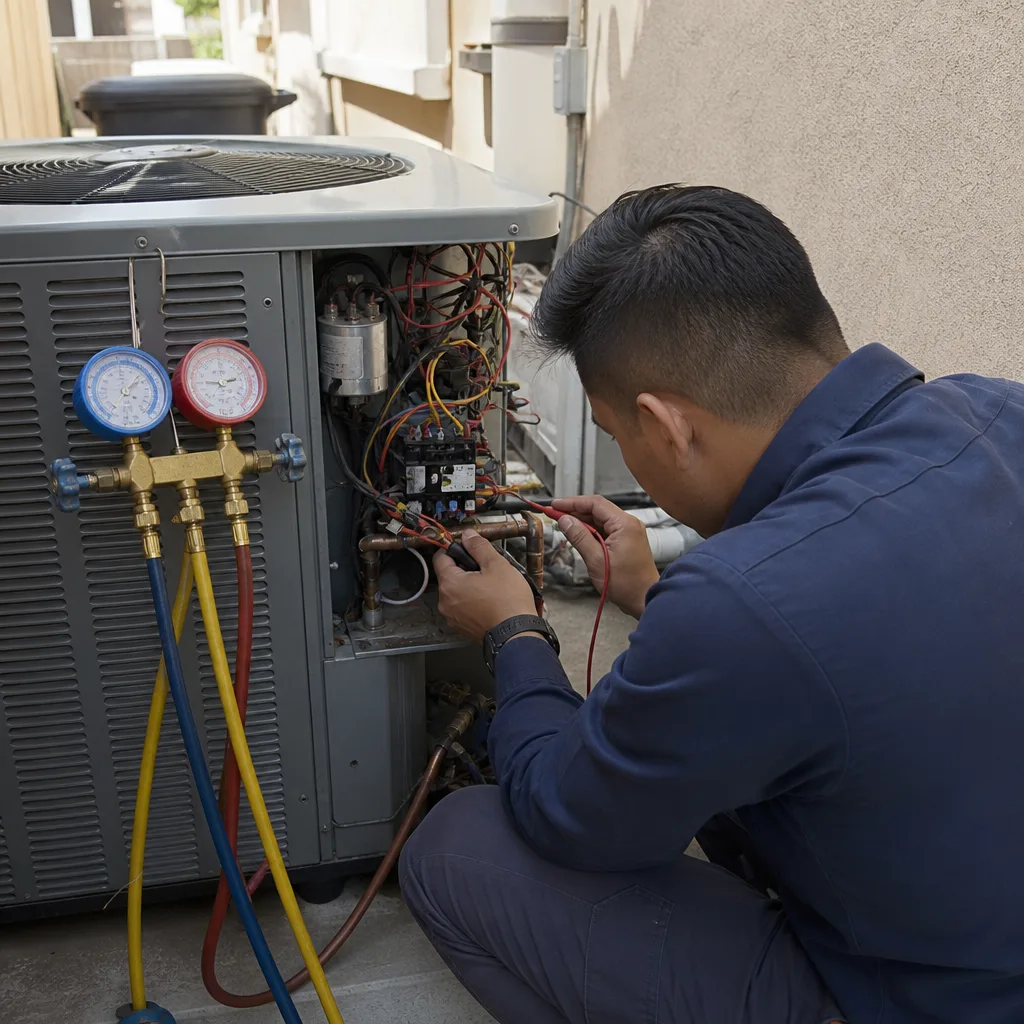
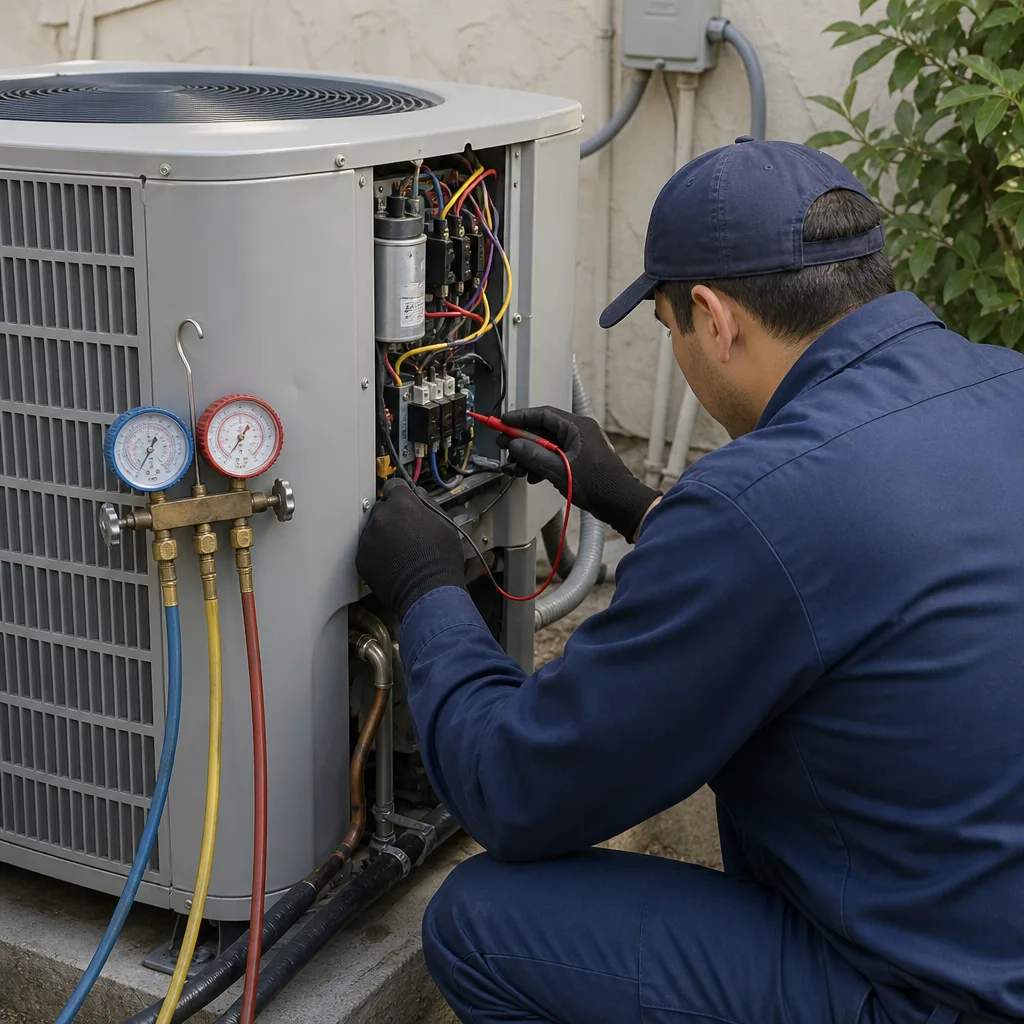
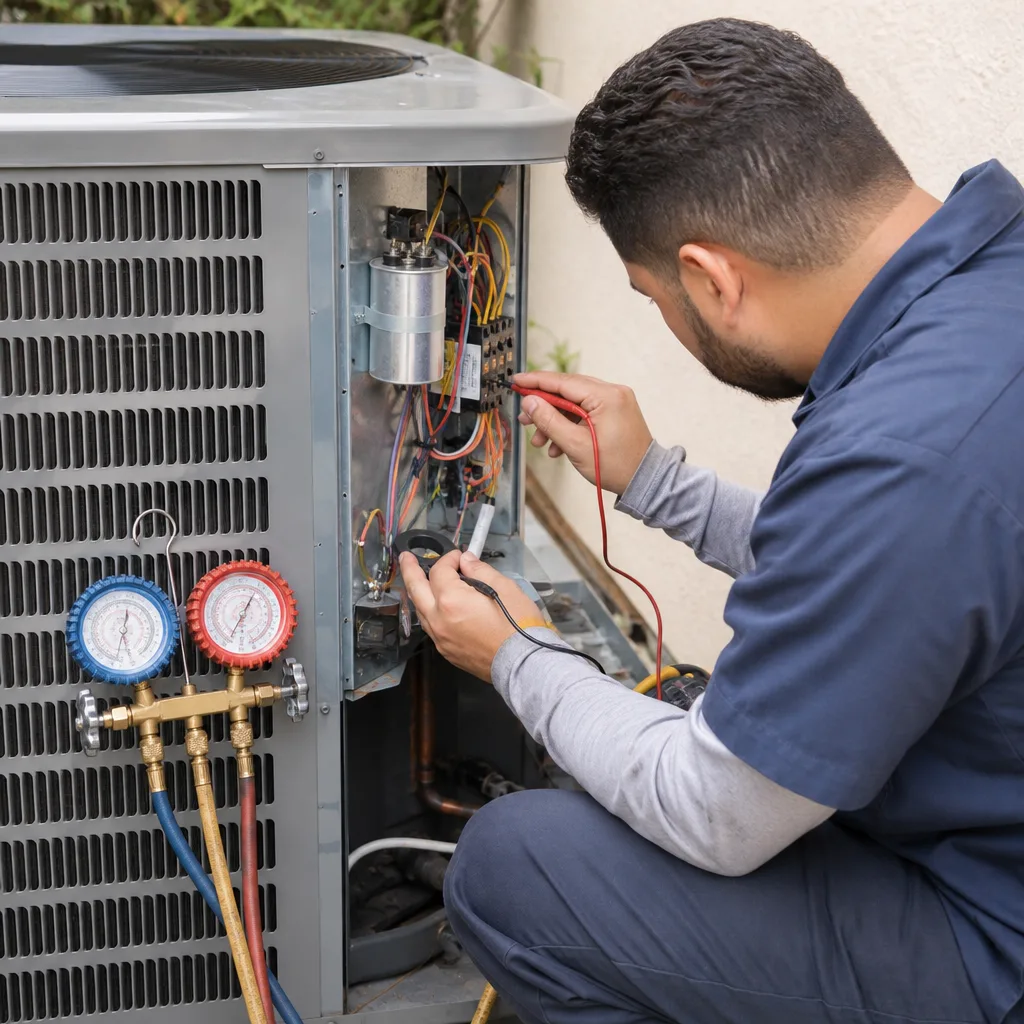
Seasonal tune-up and full diagnostic on your Carrier, Trane, or Goodman system - readings shown to you before any repair is proposed
Diagnosis first, numbers second - you approve the repair price before a single part goes in.
 Before
 After
After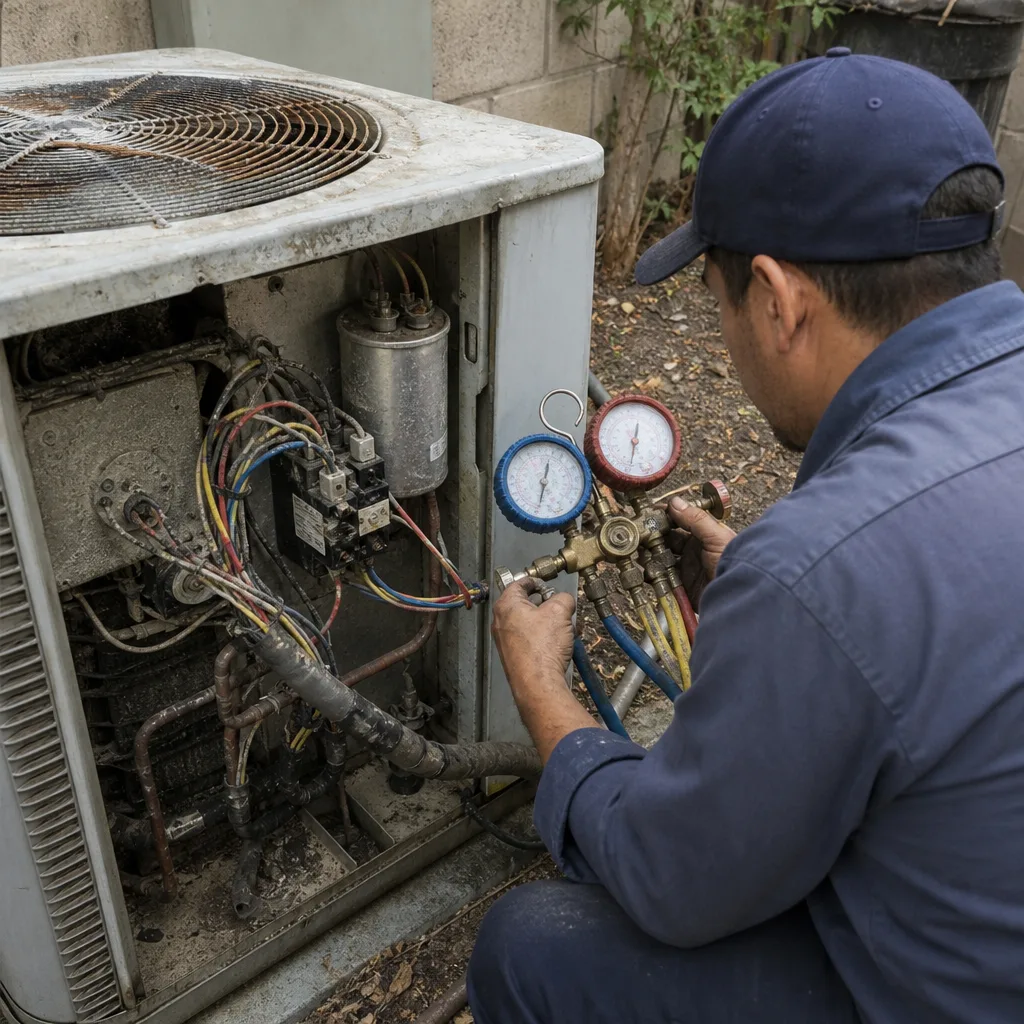 Before
 After
After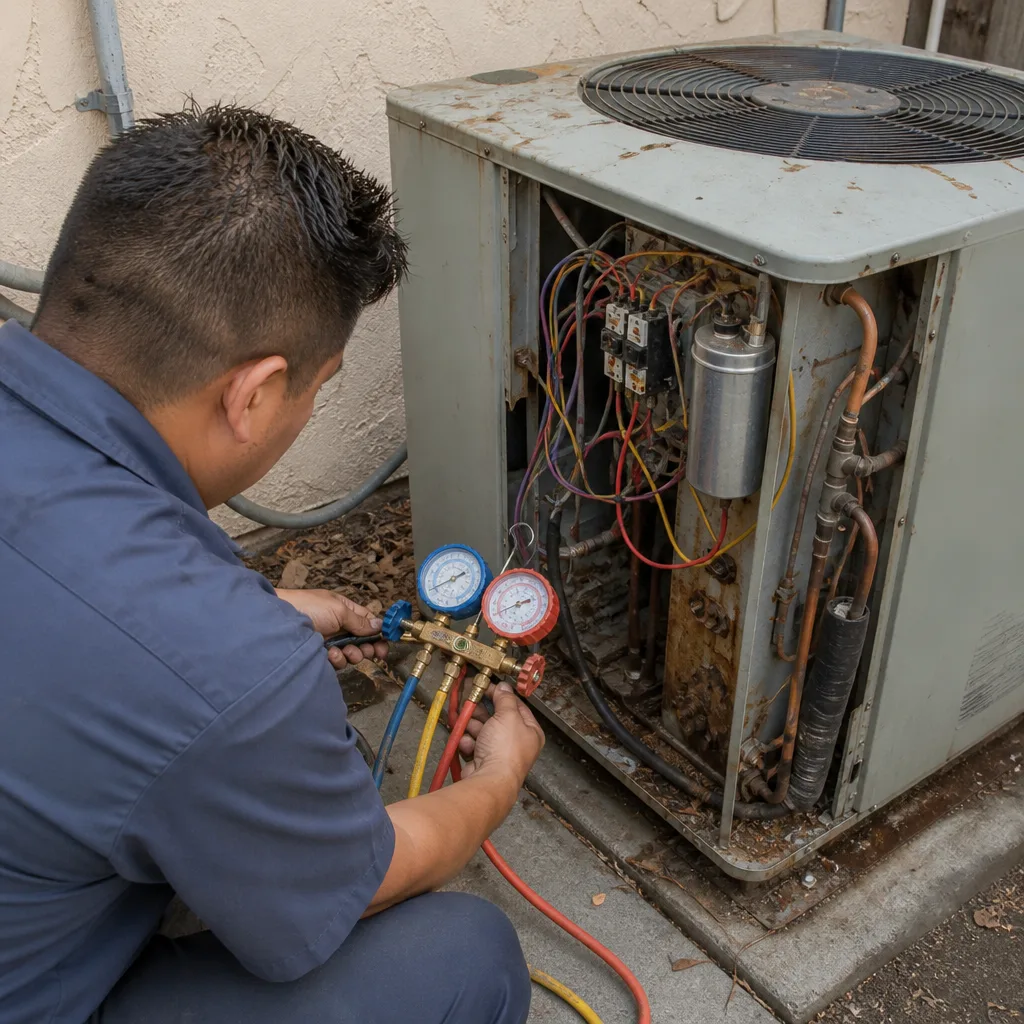 Before
 After
AfterDIY vs Professional Furnace Repair: What’s Safe to Do Yourself
A cracked heat exchanger looks like a hairline fracture you’d never notice, but it’s the leading residential source of carbon monoxide poisoning, and it cannot be diagnosed without a combustion analyzer that no homeowner tool kit includes. That single fact explains more about Furnace Repair services than any amount of general handyman advice. This guide is our honest breakdown of where the safe line sits for DIY furnace work in Los Angeles, which tasks you can handle confidently, and how California law, combustion physics, and common sense draw a ceiling that no amount of YouTube confidence can raise.
Quick Answer
Safe DIY furnace repair in Los Angeles is limited to tasks that do not involve gas lines, combustion chambers, heat exchangers, or electrical panels: changing air filters, cleaning flame sensors, checking thermostat batteries, clearing intake and exhaust vents, and inspecting your condensate drain. Anything involving gas pressure, burner operation, heat exchanger inspection, or carbon monoxide measurement requires a licensed C-20 contractor under California law, full stop. If your furnace is making a smell you can describe, a sound you can locate, or failing to ignite repeatedly, stop troubleshooting and call a professional.
Table of Contents
- The Combustion Ceiling: Why Furnace DIY Is Different From Any Other Home Repair
- What You Can Legally and Safely Do Yourself: The Definitive List
- Step-by-Step: The Five Safe Tasks Every Los Angeles Homeowner Should Know
- What California Law Says About Gas Work and Furnace Repair
- The Carbon Monoxide Risk Profile of DIY Furnace Repair Gone Wrong
- How to Verify a C-20 License, Bond, and Insurance in California
- What a Professional Furnace Repair Invoice Should Document
- The Real Cost Comparison: DIY Savings vs Professional Guarantees
The Combustion Ceiling: Why Furnace DIY Is Different From Any Other Home Repair
Most home repair follows a simple rule: the worse the outcome, the more obvious the mistake. A bad drywall patch looks bad. A loose faucet drips. You notice the failure and fix it. Furnace repair breaks that rule completely. A furnace can look perfect, sound normal, and leak carbon monoxide into your living room for months while you sleep through it.
In our experience across Los Angeles neighborhoods from the San Fernando Valley to the South Bay, the furnaces that scare us most are not the ones that stopped working. They’re the ones a homeowner “fixed” months ago. We’ve walked into homes where a DIY igniter swap left a burner misaligned, where a replaced limit switch was wired backward, and where a furnace door was left slightly ajar so the safety interlock never engaged. None of those systems tripped an alarm. None of them should have been operating.
The combustion ceiling is the point where mechanical skill stops mattering and specialized measurement becomes mandatory. You can be the most capable DIYer in your ZIP code, but you cannot see carbon monoxide, you cannot smell a partially clogged flue, and you cannot measure combustion efficiency with a multimeter from Harbor Freight. You need a combustion analyzer, a manometer, and the training to read both against the manufacturer’s specifications for your specific unit, whether it’s a Carrier, Trane, Bryant, or American Standard.
This is not gatekeeping. It’s the physics of burning natural gas inside a sealed metal box connected to your living space, and the law in California reflects it.
What You Can Legally and Safely Do Yourself: The Definitive List
Here is the full list of furnace tasks that a Los Angeles homeowner can perform without a license, without specialized tools, and without creating a meaningful safety risk. If a task is not on this list, assume it requires a licensed professional.
- Replace the air filter. This is the single most important maintenance task for any furnace, and the one most homeowners skip. In Los Angeles, where dry air carries fine dust and ash from wildfire season, a clogged filter forces your blower motor to work harder and your heat exchanger to run hotter. Change it every 30 to 90 days depending on filter type and whether you have pets.
- Clean the flame sensor. A dirty flame sensor causes short cycling, where the furnace ignites and shuts off within seconds. The sensor is a thin metal rod inside the burner assembly. You can remove it with a screwdriver, clean it gently with fine steel wool or a dollar bill, and reinstall it. This is a 15-minute task that saves a $200 service call, but it requires turning off power to the furnace first.
- Check and replace thermostat batteries. If your thermostat display is blank or your furnace won’t respond to temperature changes, check the batteries before calling anyone. This eliminates the most common no-heat complaint in Los Angeles every winter.
- Clear visible debris from the area around your furnace. Furnaces need clearance for airflow and safety. Keep the area within 3 feet free of stored boxes, paint cans, cleaning chemicals, and anything flammable. In many Los Angeles homes, furnace closets double as storage, and that is a fire hazard waiting for a dry season.
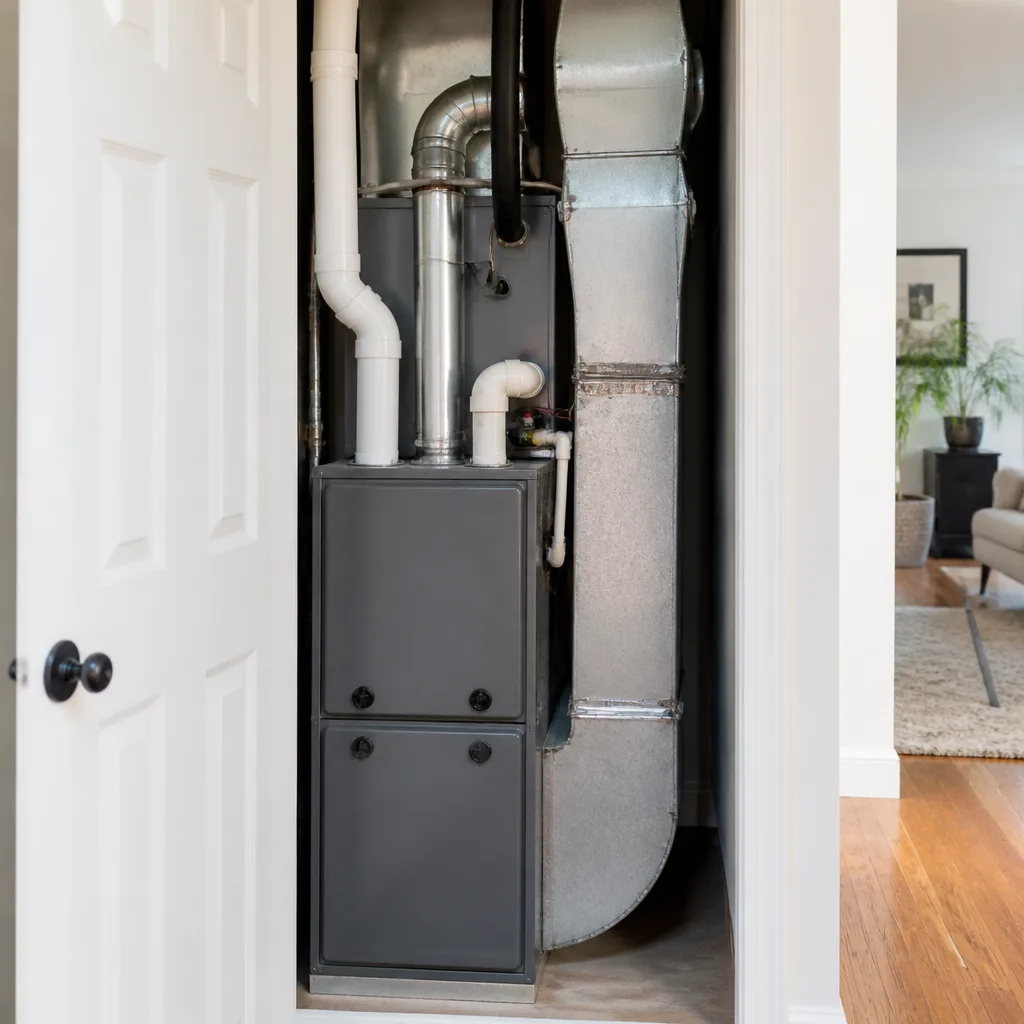
- Inspect the condensate drain line. High-efficiency furnaces produce condensate that drains through a PVC pipe. If that line clogs, the furnace shuts down or leaks water. You can visibly inspect the line and clear an obvious clog at the access point, but do not cut or modify the pipe.
- Check visible air intake and exhaust pipes outside your home. Walk outside and look at your furnace’s intake and exhaust vents. During Santa Ana winds, leaves and debris can partially block these openings. If you can safely reach them, clear the obstruction. If they require a ladder, call a professional.
- Reset a tripped circuit breaker. If your furnace has no power at all, check your electrical panel. A tripped breaker is a simple reset. If it trips again immediately, stop and call a technician, because a repeating trip means a real electrical fault.
Every single task on this list shares three qualities: it requires no gas line involvement, no combustion measurement, and no modification to the furnace’s original components. That is the line. Everything beyond it crosses into licensed territory.
Step-by-Step: The Five Safe Tasks Every Los Angeles Homeowner Should Know
These five tasks account for roughly 40 percent of the no-heat calls we receive in Los Angeles every winter. Doing them correctly prevents most calls entirely. Here is exactly how to do each one.
1. Replacing Your Air Filter
- 1
Turn off the furnace at the thermostat and at the wall switch, usually on or near the unit.
- 2
Locate the filter slot. On most furnaces, it’s between the return air duct and the blower compartment, often behind a removable metal cover or inside the bottom door.
- 3
Slide out the old filter and note the size printed on its frame. Do not guess.
- 4
Slide in the new filter with the arrow pointing toward the furnace, which is the direction of airflow.
- 5
Replace the cover, restore power, and mark the date on the filter frame so you know when to replace it again.
2. Cleaning a Flame Sensor
- Turn off power to the furnace at the breaker box. Never skip this step.
- Remove the furnace’s upper access panel, usually held by two screws or quarter-turn fasteners.
- Find the flame sensor. It is a thin metal rod, roughly 2 to 3 inches long, positioned in front of one burner. It will have a single wire connected to it.
- Remove the single screw holding the sensor, pull it out gently, and disconnect the wire.
- Rub the metal rod gently with fine steel wool, a Scotch-Brite pad, or a dollar bill until the dark residue is gone. Do not sand aggressively.
- Reinstall the sensor, secure the screw, replace the panel, and restore power.
If the furnace still short cycles after cleaning, the flame sensor may be failing outright, and replacement is where we recommend a professional. We see this often in Los Angeles homes where older Carrier and Bryant units have accumulated years of carbon buildup that cleaning alone won’t fix.
3. Checking Thermostat Batteries
- Remove the thermostat from its wall plate. Most models either snap off or have a release tab.
- Open the battery compartment and replace the batteries, typically two or four AA or AAA cells.
- Wait 30 seconds, reattach the thermostat, and set your desired temperature.
- If the display stays blank, your thermostat may need replacement, which is generally a safe DIY swap with matching wiring, but this article is about furnaces, so call us if you’re unsure.
4. Clearing Exhaust and Intake Vents
- Locate your furnace’s exterior vents. These are typically two PVC pipes exiting a side wall, each 2 to 3 inches in diameter.
- Look inside with a flashlight. Check for leaves, spider webs, paper, or any debris lodged inside.
- If you can reach the opening safely from the ground, remove the obstruction by hand or with a shop vacuum fitted with a narrow attachment.
- Do not climb a ladder for this. If the vents are above reachable height, have a professional do it during a maintenance visit.
5. Inspecting the Condensate Drain Line
- Find the PVC pipe leading away from your furnace, usually terminating near a floor drain or utility sink.
- Look for visible water pooling around the furnace or a damp area near the drain line’s end.
- If you see a cleanout port, a small capped vertical section, remove the cap and check for standing water or debris.
- Clear any visible blockage you can reach with a wet/dry vacuum, but do not pour bleach or chemical drain cleaners into the line. Those can damage the PVC and void warranties.
Each of these steps keeps you well inside the safe zone. None of them require you to touch a gas valve, open a burner assembly, or measure anything you cannot see with your own eyes.
What California Law Says About Gas Work and Furnace Repair
California is stricter than most states about who can work on gas appliances, and that strictness has saved lives. Under the California Contractors State License Board, any contractor performing work on a furnace that involves gas connections, combustion systems, or heat exchangers must hold a C-20 Warm-Air Heating, Ventilating and Air-Conditioning Contractor license. A general contractor license is not sufficient. A handyman license does not exist in California for this kind of work.
This means gas line work, burner servicing, heat exchanger inspection, gas valve replacement, and any repair that requires combustion testing are legally off-limits for unlicensed individuals, including homeowners performing work on their own properties in most cities within Los Angeles County. Local jurisdictions may add their own permitting requirements for furnace replacement, but repair work under the C-20 standard falls squarely under state law.
The reason is straightforward. A furnace burns natural gas inside your home. A mistake in gas line assembly, a missed leak, an improperly sealed combustion chamber, or an incorrectly adjusted air-to-fuel ratio can poison occupants or cause an explosion. California regulators do not consider this an acceptable risk for unlicensed work, and neither should you.
We tell Los Angeles homeowners this plainly: the law is not restricting you from saving money. It is restricting unqualified people from creating situations that kill families. The distinction matters.
The Carbon Monoxide Risk Profile of DIY Furnace Repair Gone Wrong
Carbon monoxide is odorless, colorless, and heavier than air in practice when it settles in still air pockets, though it initially disperses evenly. It binds to hemoglobin 200 times more readily than oxygen. A furnace that is burning poorly can produce enough CO to make a sleeping family seriously ill before anyone wakes up with a headache. Those are not scare tactics. Those are the documented mechanics of CO poisoning, and they apply directly to DIY furnace repair scenarios.
Here are the specific scenarios we have seen or reviewed in Los Angeles homes, not hypothetical warnings:
- A homeowner replaced an igniter but did not reseat the burner manifold properly. The furnace lit, but the flame was impinging on the heat exchanger at an angle, causing incomplete combustion and elevated CO levels. The family had no idea. The detector was 10 years old and had a dead battery.
- A homeowner cleaned a flame sensor and left the burner access panel slightly ajar. The panel’s safety interlock switch was designed to prevent operation with the panel open, but the gap was small enough that the switch still engaged. Combustion gases were now venting into a utility closet that shared air with a hallway.
- A homeowner replaced a thermostat and miswired the fan control. The blower ran constantly, but the limit switch wiring was crossed, meaning the furnace cycled on gas without proper airflow over the heat exchanger. Overheating followed, and in a different home, that scenario has cracked heat exchangers and caused CO leaks.
- A homeowner noticed a “weird smell” from the furnace and assumed it was dust burning off. It was a cracked heat exchanger allowing combustion byproducts into the airstream. This is the most dangerous assumption in residential HVAC, and it happens every Los Angeles winter.
We recommend that every Los Angeles home with a gas furnace have at least one carbon monoxide detector on each sleeping floor, tested monthly, with batteries replaced every six months. A detector is not a substitute for professional combustion testing, but it is the difference between a near miss and a tragedy when something goes wrong.
How to Verify a C-20 License, Bond, and Insurance in California
Every person who works on your furnace in California should hold a C-20 license issued by the Contractors State License Board. Verifying that license before they arrive takes about three minutes, and the process is free. Here is how to do it, with a numbered list because this is a step-by-step task worth doing every time.
- Ask the company for their C-20 license number before scheduling. If a company hesitates, deflects, or claims licensing is “unnecessary” for the work they’re quoting, stop the conversation. Every legitimate furnace repair company in Los Angeles has this number on their website, their invoices, and their vehicles.
- Go to the CSLB website at cslb.ca.gov and use the “Check a License” tool. Enter the license number exactly as provided.
- Confirm the license classification is C-20, Warm-Air Heating, Ventilating and Air-Conditioning Contractor. A C-36 plumbing license or a B general building license does not authorize furnace combustion work.
- Check the license status. It must be “Active.” Any other status, including “Suspended” or “Expired,” means that company cannot legally work on your furnace today.
- Check the bond information. The CSLB requires a contractor’s bond of at least $25,000. If the bond is listed as “Cancelled,” the license is not valid regardless of status.
- Ask for proof of general liability insurance. The CSLB does not require liability insurance for all contractor types, but any reputable furnace company carries it. Request a certificate of insurance with your name or property listed as the certificate holder, and confirm the policy’s effective dates.
- Confirm workers’ compensation coverage if the company has employees. If they do not carry workers’ comp and an uninsured worker is injured in your home, your homeowner’s insurance may be liable for the claim.
We built the Threshold Verified standard because this process, while straightforward, is more than most homeowners know to do. Every Brandt HVAC technician arrives with a background check completed, a photo ID badge shown at the door, and their name and photo sent to you before the visit. You know exactly who is walking through your door before they knock. In Los Angeles, where contractors range from licensed professionals to entirely unvetted strangers advertising on social media, that difference is not a luxury. It is the minimum standard for letting someone into your home.
What a Professional Furnace Repair Invoice Should Document
Here is a fact that most Los Angeles homeowners do not know: a furnace repair invoice is not proof that a repair was done correctly. Many invoices are one line: “furnace repair, $400.” That tells you nothing about what was replaced, whether it was tested, or whether the furnace is actually safe to operate. A proper invoice documents the repair the way a mechanic documents a brake job, with specific parts, specific measurements, and specific test results.
When a professional repairs your furnace in Los Angeles, the invoice should include:
- The specific part replaced or repaired. “Igniter” is too vague. You want the part number, the manufacturer’s name if applicable, and the brand of furnace it was installed in. Our invoices list the exact part, because the Brandt HVAC home standard is written documentation on every job.
- Combustion readings taken after the repair. After any repair involving the burner, gas valve, or heat exchanger, a professional should measure CO output, oxygen levels, and stack temperature with a combustion analyzer. Those readings should appear on the invoice, not just “passed combustion test.” The numbers matter.
- Gas pressure measurements. Natural gas furnaces require a specific manifold pressure, typically 3.5 inches of water column for standard units. A proper repair invoice shows the measured pressure after adjustment, because the previously installed part did not fail in a vacuum, and incorrect pressure is often the reason it failed.
- Safety checks completed. This includes verification that the flame sensor is reading correctly, the limit switch is functioning, the rollout switch is operational, and the inducer motor is producing proper draft.
- A written guarantee with a specific term. Every Furnace Repair in Los Angeles we perform includes a written guarantee, and that guarantee states exactly what is covered and for how long. If a repair fails within 365 days, we return at no charge under the 365-Day Done Right Promise. You will not have to argue for that return visit. It is in writing before you pay.
- The technician’s name and license number. Not just a company name. A person performed the work, and that person’s identity should be documented.
If a technician hands you an invoice that says only “furnace fixed” and a total, you have not received a professional repair. You have received a receipt. In our experience, the difference between the two is the single most reliable indicator of whether a repair was done correctly.
The Real Cost Comparison: DIY Savings vs Professional Guarantees
Let us put real numbers against the DIY vs Professional HVAC: The Los Angeles Homeowner’s Decision Guide question, because most homeowners make this decision on instinct rather than arithmetic. In Los Angeles, furnace repair pricing varies by neighborhood and company, but the ranges are fairly consistent across the market.
Here is what common furnace repairs cost in the Los Angeles area, parts and labor included:
- Igniter replacement: $150 to $300
- Flame sensor replacement: $120 to $225
- Pressure switch replacement: $180 to $350
- Gas valve replacement: $350 to $650
- Blower motor replacement: $450 to $900, depending on motor type and furnace brand
- Control board replacement: $300 to $600
- Thermostat replacement: $150 to $400, depending on model and wiring complexity
The DIY savings on an igniter, using a compatible aftermarket part purchased online, might be $100 to $200. A flame sensor replacement might save you $80 to $150. Those are real savings. We do not pretend otherwise. But compare that against the downside risk: a misaligned burner causing a cracked heat exchanger that costs $1,200 to $2,500 to replace, or a gas leak that requires emergency service, or a carbon monoxide exposure that sends someone to the emergency room. Those costs make a $200 professional repair look like the cheapest insurance you will ever buy.
And here is the part the comparison usually misses: a professional repair in Los Angeles comes with a written guarantee. If our repair fails within 365 days, we return at no charge. No argument. No second labor bill. No shipping wait on a warranty part. You cannot buy that guarantee on a DIY repair, because the only warranty on a DIY repair is your own skill and your own willingness to stand behind it when it breaks at 2 a.m. in January.
We also recommend pairing any repair with regular AC Maintenance in Los Angeles, even though that may seem odd for a furnace article. Your heating and cooling systems share the same blower, the same ductwork, and the same electrical circuits. A technician who inspects both systems once a year will catch furnace problems in October and AC problems in April before either one fails in extreme weather.
Common Mistakes to Avoid
- Opening the burner compartment without turning off the gas supply. The burner assembly is the heart of your furnace, and opening it without understanding gas valve operation risks a gas leak. Even visual inspection inside that compartment crosses the safe DIY line.
- Using generic online videos for brand-specific repairs. A Carrier furnace and a Trane furnace may both be gas furnaces, but their gas valves, control boards, and wiring differ substantially. Following a generic tutorial on the wrong brand creates new problems while attempting to solve the original one.
- Ignoring a burning smell from the vents. Many Los Angeles homeowners assume a burning smell at the start of winter is normal dust burning off. Sometimes it is. But repeated or persistent burning smells can indicate a cracked heat exchanger or an overheating blower motor, and neither one is a task for a screwdriver and optimism.
- Replacing parts without checking the root cause. An igniter does not typically fail for no reason. A flame sensor does not foul itself randomly. A professional diagnoses why a part failed, because installing a new part into the same underlying condition means it will fail again, possibly worse.
- Skipping the CO detector replacement. Carbon monoxide detectors have a lifespan of 5 to 7 years depending on the model. Many Los Angeles homes have detectors that are a decade old and functionally dead. If you are doing any furnace work yourself, start by confirming your detectors actually work.
- Hiring the cheapest ad without checking the license. The lowest bid in Los Angeles furnace repair is often the lowest bid for a reason. That reason is frequently an unlicensed operator with no bond, no insurance, and no accountability when the repair fails. Three minutes on the CSLB website prevents that mistake entirely.
- Treating a furnace repair as isolated from the rest of the home. Your furnace does not operate alone. It connects to your ductwork, your electrical panel, your gas meter, and your thermostat. A proper repair considers those connections, and a proper invoice documents that they were checked.
When to Call a Professional
Call a professional the moment you encounter any of these: a gas smell anywhere near the furnace or vents, a burning smell that persists beyond the first few minutes of operation, repeated breaker trips, a furnace that lights and shuts off repeatedly, visible rust or cracks anywhere on the furnace body, water pooling around the unit, or any symptom that returns after you have completed the safe DIY tasks above. These are not diagnostic puzzles for a homeowner to solve. They are warning signs that combustion, electrical, or structural components have failed, and each of them carries risk that a screwdriver cannot address.
Brandt HVAC offers free estimates in Los Angeles, and our phones are answered by a live person 24 hours a day, 7 days a week. Call (984) 538-9003 and you will get a real conversation, a written price before any work starts, and a technician whose name and photo you will receive before they arrive at your door.
Frequently Asked Questions
You can legally perform basic maintenance tasks like changing filters, cleaning flame sensors, and checking thermostat batteries, but any repair involving gas lines, burners, heat exchangers, gas valves, or combustion testing requires a C-20 licensed contractor under California law. Homeowners are not exempt from this requirement when the work involves gas combustion, regardless of their mechanical skill level.
The most dangerous part of DIY furnace repair is not the tool work. It is the invisible failure. A furnace that has been incorrectly repaired can operate for weeks or months while leaking carbon monoxide into your home, and the first symptom for many victims is never waking up. This is why combustion testing with a professional analyzer is mandatory after any repair that touches the burner or gas system.
Most furnace repairs in Los Angeles run between $150 and $650 depending on the part, with igniter replacements typically $150 to $300, gas valve replacements $350 to $650, and blower motor replacements $450 to $900. At Brandt HVAC, every repair begins with a written price before any work starts, so you know the cost before you commit. Call (984) 538-9003 for a free estimate.
Check the air filter, thermostat batteries, circuit breaker, and visible vents before calling, because those account for a surprisingly large share of no-heat calls in Los Angeles. If all four are fine and the furnace still will not operate correctly, stop troubleshooting and call a licensed C-20 contractor. Continuing to work on a furnace that has already failed basic checks increases the risk of creating a more expensive or more dangerous problem.
Ask for their C-20 license number before they arrive, then verify it on the Contractors State License Board website. Confirm the license is active, the classification is C-20 specifically, and the bond is in place. At Brandt HVAC, every technician is background-checked and identity-verified through the Threshold Verified standard, and you receive their name and photo before they arrive at your door.
As a general rule, if your furnace is more than 15 years old and the repair will cost more than 40 percent of a replacement unit, replacement makes more financial sense. In Los Angeles, where furnaces see relatively light use compared to colder climates, older units can last 20 years or more with proper maintenance, but that longevity depends on regular professional service. The AC Repair in Los Angeles side of your system shares the same age and wear patterns, so if your AC is also near end of life, planning both replacements together saves on installation costs and ductwork modifications.
The Bottom Line
Furnace DIY is a real thing, but it has a hard ceiling set by combustion physics and California law, not by your skill level. The safe tasks, changing filters, cleaning flame sensors, checking thermostats and vents and drains, are genuinely useful and worth learning, and you can find more guides & resources on our blog. Everything beyond that line belongs to a licensed professional with a combustion analyzer and the training to use it. In Los Angeles, where winter nights drop into the 40s and gas furnaces run hard during cold snaps, the cost of a professional repair is not the expensive option. It is the responsible one. When you need a furnace professional, work with a company that verifies its people, documents its work, and guarantees the result in writing.
Written by Devin Marlowe, Owner at Brandt HVAC, serving Los Angeles since 2003.