
Last updated October 9, 2026
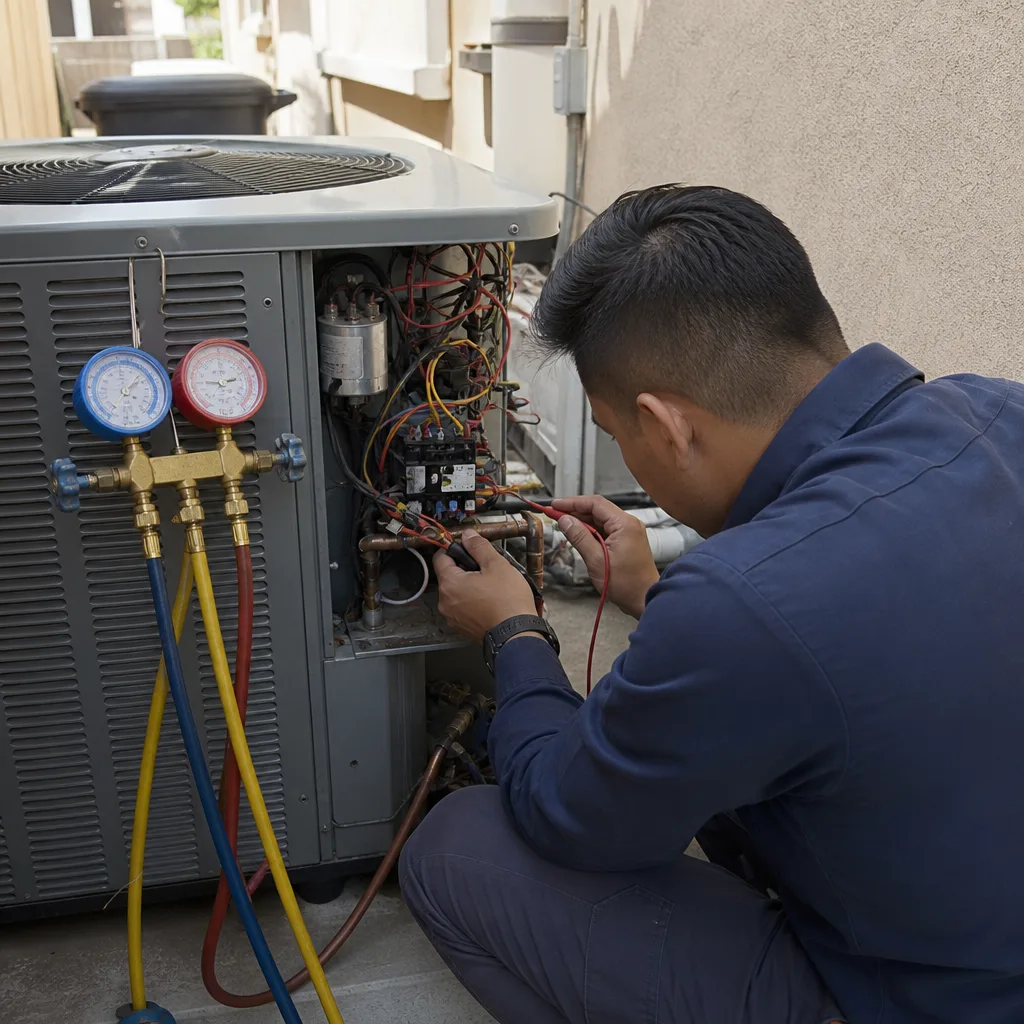
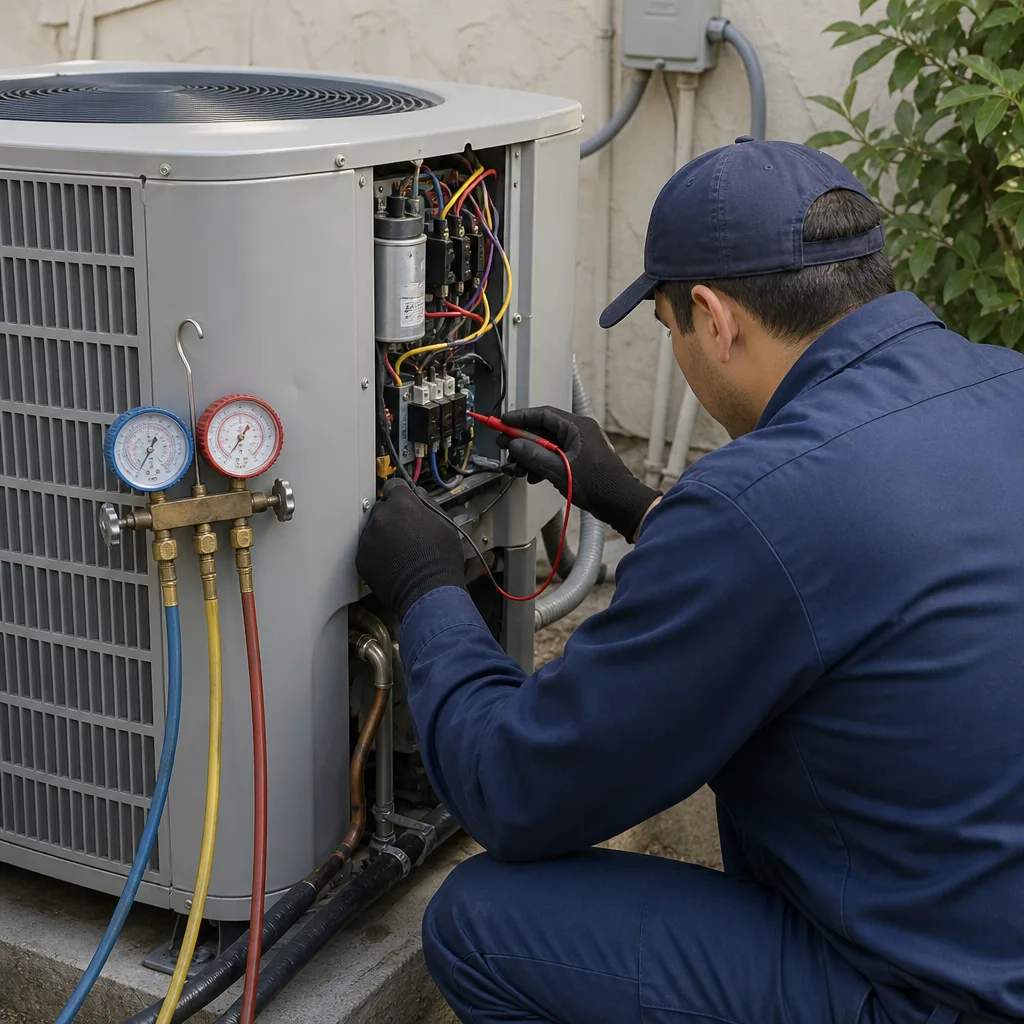
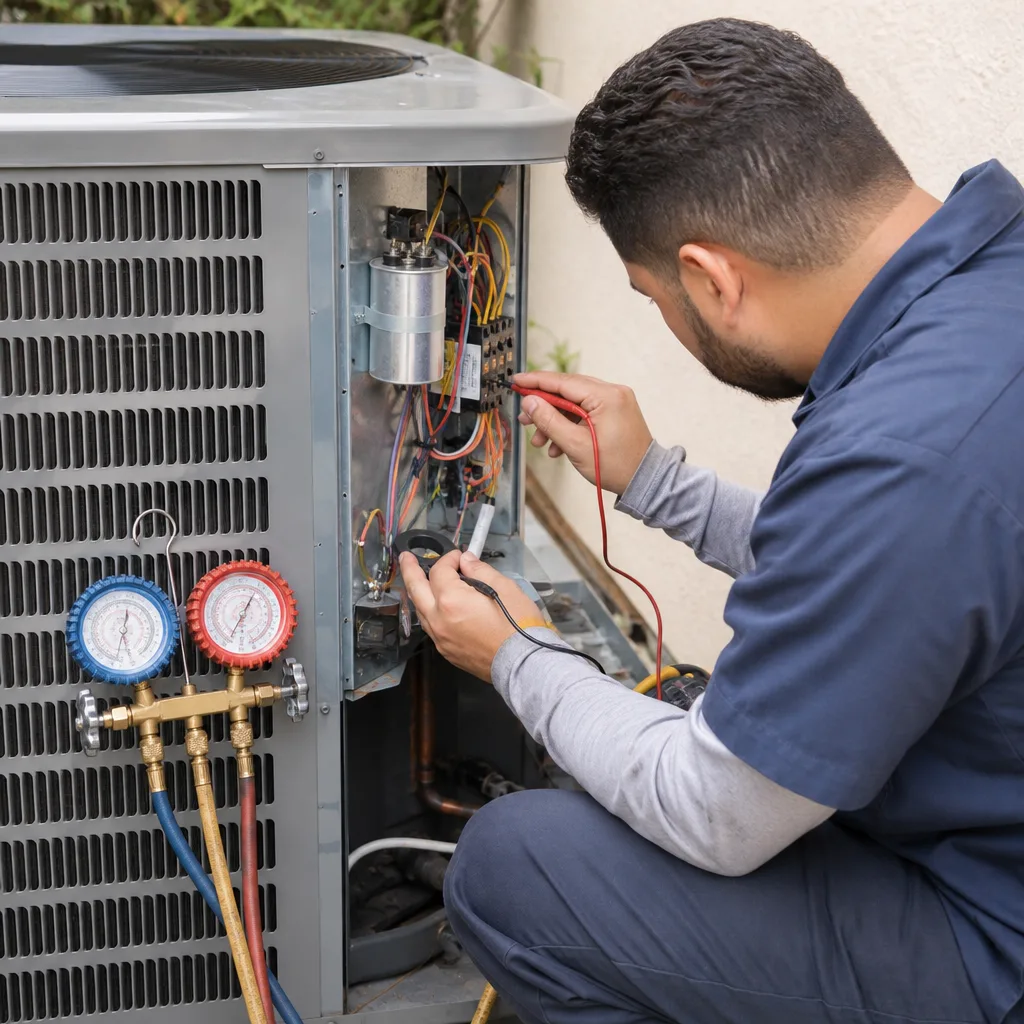
Seasonal tune-up and full diagnostic on your Carrier, Trane, or Goodman system - readings shown to you before any repair is proposed
Diagnosis first, numbers second - you approve the repair price before a single part goes in.
 Before
 After
After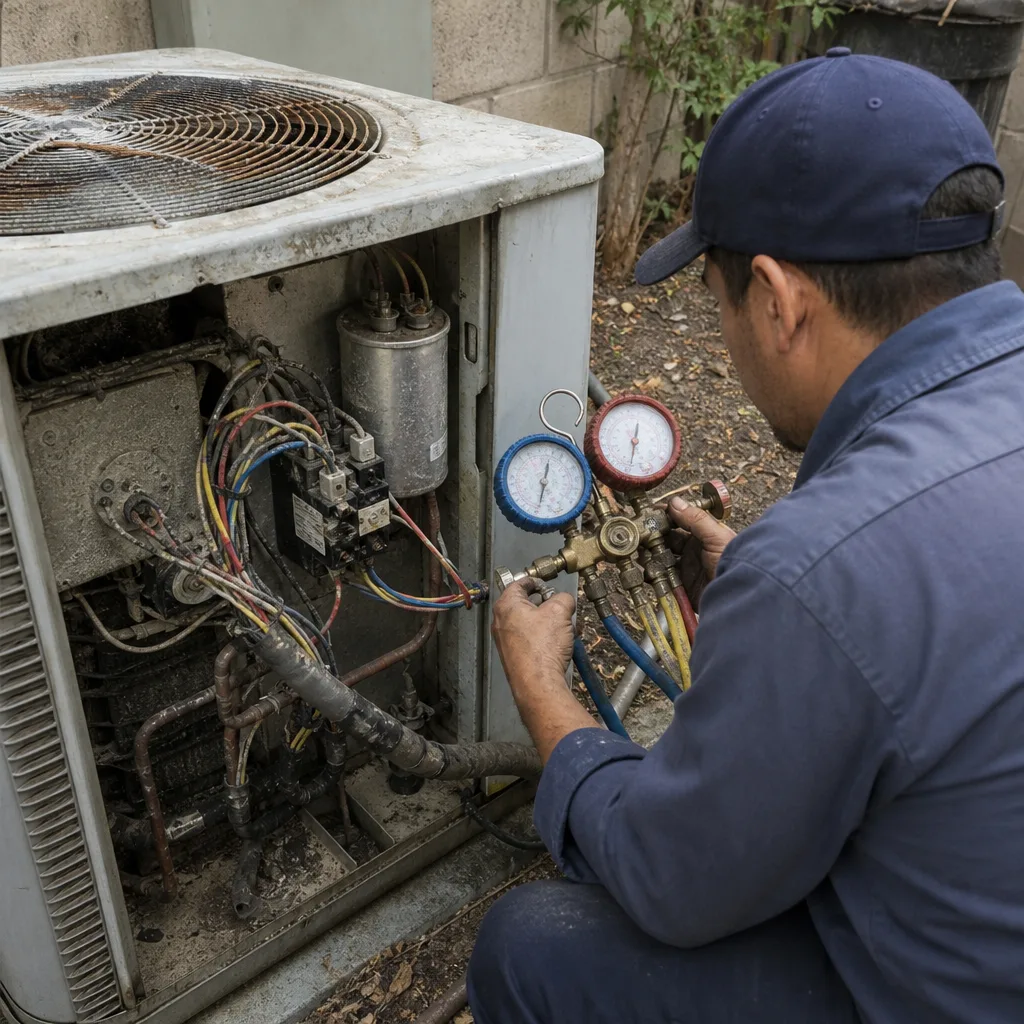 Before
 After
After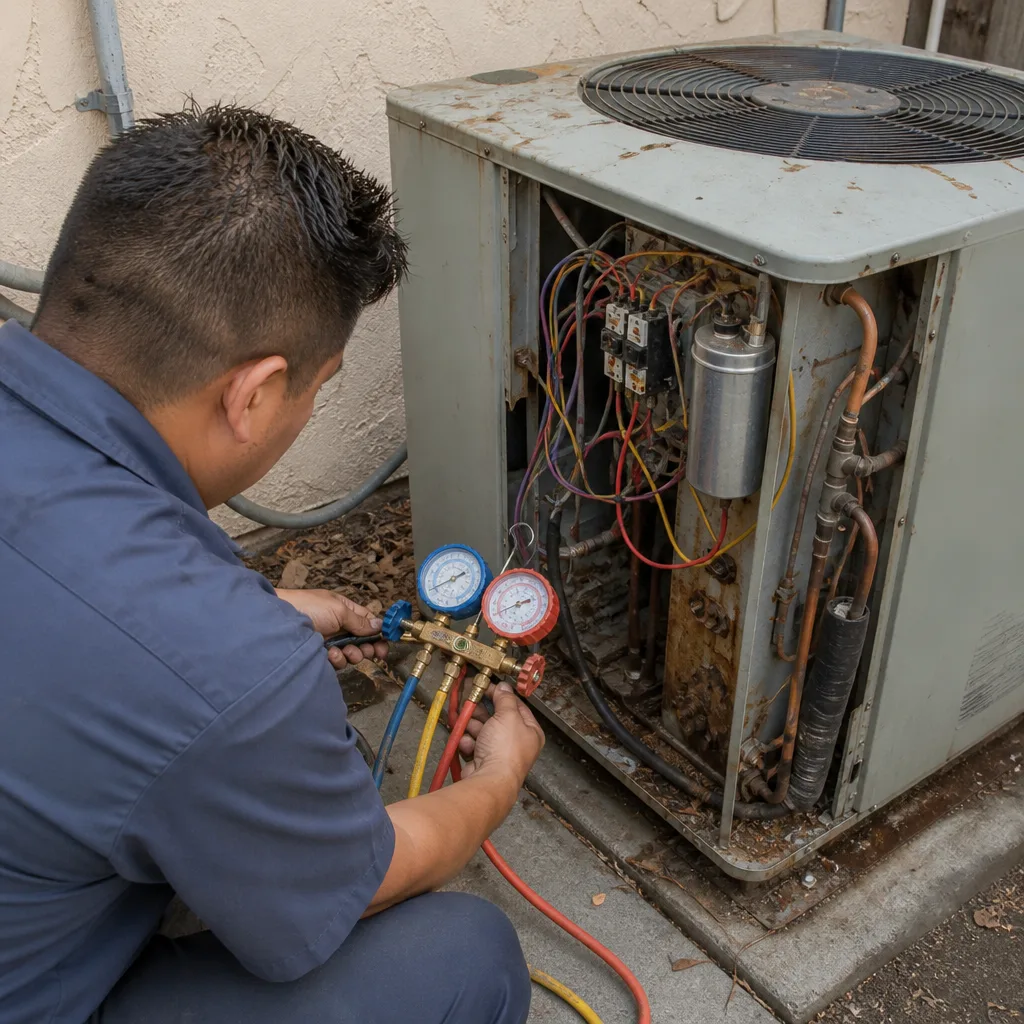 Before
 After
AfterFurnace Repair Troubleshooting: Common Problems and How to Fix Them
Here’s a counterintuitive fact that surprises most Los Angeles homeowners: the most dangerous furnace problem you’ll ever face has nothing to do with the furnace failing to heat your home. It has everything to do with a smell that most people misdiagnose as a mechanical issue. If your furnace smells like rotten eggs, the correct first step isn’t calling an HVAC company. It’s leaving the house and calling SoCalGas from outside, because that smell is a gas leak indicator, not a furnace problem. This guide walks you through a calm, clear protocol: what to investigate safely from your thermostat, what to leave alone, and what to tell the dispatcher when you do call for help.
Quick Answer
Most furnace failures in Los Angeles homes come down to one of five issues: a failed igniter, a dirty flame sensor, a tripped limit switch, a clogged filter, or a thermostat miscommunication. You can safely check the filter and thermostat yourself in about five minutes. Anything involving gas, burners, or electrical components inside the cabinet should be handled by a licensed technician for Furnace Repair, not a homeowner with a screwdriver and a YouTube video.
Table of Contents
- Safety First: The Evacuate vs. Investigate Decision Tree
- Furnace Won’t Ignite: The Two Usual Suspects
- Ignites Then Shuts Off: What Your Furnace Is Trying to Tell You
- How to Read Furnace Error Codes Like a Technician
- Why Short Cycling Matters More in Los Angeles Than You’d Think
- What to Tell the Dispatcher So the Right Parts Show Up
- The Maintenance Checks That Prevent Most Repairs
- Common Mistakes to Avoid
- When to Call a Professional
- Frequently Asked Questions
- The Bottom Line
Safety First: The Evacuate vs. Investigate Decision Tree
Furnace troubleshooting carries a safety dimension that AC troubleshooting doesn’t. Gas and combustion are involved, and knowing the line between “I can check this” and “I need to leave now” matters more than any diagnostic skill. Here’s the simple decision tree we’ve taught homeowners across Los Angeles for over two decades:
Evacuate immediately if you notice any of these:
- Rotten egg or sulfur smell – This is mercaptan, the odorant added to natural gas. It means a gas leak. Leave the house without flipping any switches or using your phone inside. Call SoCalGas from outside or from across the street. Once they’ve cleared the house, then call an HVAC company.
- Carbon monoxide detector sounding – Evacuate. Call 911. Do not open windows on your way out. Do not re-enter until the fire department has cleared the space and the source has been identified and fixed.
- Visible soot or scorch marks around the furnace cabinet or vents – This suggests incomplete combustion or a burner issue. Shut the system off at the thermostat and call a professional before running it again.
- Standing water around an operational gas furnace – Water is bad. Water plus gas is worse. Turn the system off and get it inspected.
Safe to investigate from the thermostat if:
- The furnace simply isn’t turning on – no smell, no noise, no heat
- The blower runs but the air coming out is cold
- The system turns on and off repeatedly without any unusual odor
- You hear clicking but nothing ignites
These are mechanical or electrical issues. They’re frustrating, but they’re not an immediate threat. At Brandt HVAC, every technician we send into a Los Angeles home is background-checked, identity-verified, and introduced to you by name and photo before arrival under our Threshold Verified standard. We’d rather you call us from outside a house with a potential gas leak than hesitate while you look up a YouTube tutorial next to a furnace that’s actively leaking fuel.
Furnace Won’t Ignite: The Two Usual Suspects
When a furnace won’t ignite at all, you’re usually looking at one of two components: the igniter or the flame sensor. Here’s the difference in plain language.
The igniter is the part that gets hot enough to light the gas. In older furnaces, this was a standing pilot light. In most modern units made after about 1995, it’s a hot surface igniter – a small silicon carbide or nitride element that glows bright orange when functioning. When igniters fail, they typically crack or develop a dead zone, and the furnace simply refuses to start. No click, no glow, no heat. Most furnace igniter replacements in Los Angeles run $150 to $300, parts and labor included, depending on the brand and model. York and Daikin units often have proprietary igniter configurations that cost a bit more than generic replacements.
The flame sensor is a thin metal rod that sits in the burner flame path. Its job is simple: prove that a flame is actually burning before the gas valve stays open. When the sensor gets coated with carbon or silicone residue (common in Los Angeles homes where dust and coastal air accelerate buildup), it stops sending the signal. The furnace ignites for about three seconds, then the control board shuts the gas valve as a safety precaution. This is the classic “blinks a code every time it tries to start” scenario.
Quick Diagnosis: Igniter vs. Flame Sensor
Igniter failure: Furnace does nothing. No ignition attempt, no brief flame, just silence or a faint click.
Flame sensor failure: Furnace ignites, runs for 3 – 8 seconds, and shuts off. It will often try this sequence three times before locking out.
A good flame sensor cleaning costs less than $150 in most cases. A replacement runs $180 to $300. If your furnace tries to start and then clicks off repeatedly, mention the flame sensor by name when you call. It’s a real word that tells the dispatcher you’ve been paying attention.
Ignites Then Shuts Off: What Your Furnace Is Trying to Tell You
If your furnace lights successfully but shuts down within a few minutes, the problem is usually different from a no-ignite failure. This pattern is the furnace’s control board protecting the unit from overheating or unsafe operating conditions.
- The limit switch is tripping. A limit switch monitors the temperature inside the furnace cabinet. If it gets too hot – often because a dirty filter restricts airflow – the switch opens, kills the gas valve, and cools the unit down. Replace or clean the filter first, reset the switch (if your model allows easy reset), and see if the behavior changes.
- The heat exchanger is cracked or compromised. This is the serious one. A cracked heat exchanger lets combustion gases mix with the air your family breathes. This can cause the flame to flutter, the limit switch to trip repeatedly, or a carbon monoxide detector to go off. A furnace with a cracked heat exchanger should not be run again until it’s inspected. In Los Angeles, where many homes still run original-equipment furnaces from the 1980s and 1990s, this is more common than most homeowners want to know.
- The blower motor is failing intermittently. If the blower doesn’t spin up to full speed, heat doesn’t move out of the cabinet, the limit switch trips, and the furnace shuts down. A failing blower motor often makes a humming or grinding noise before it quits entirely.
We’ve seen all three in Los Angeles homes from Northridge to Torrance. The furnace that ignites and shuts off is not a nuisance, it’s a unit that’s trying to protect you. Listen to it.
How to Read Furnace Error Codes Like a Technician
Most furnaces installed in the last 20 years have a control board with an LED that blinks in specific patterns. Your furnace is telling you what’s wrong. You just need to know the language.
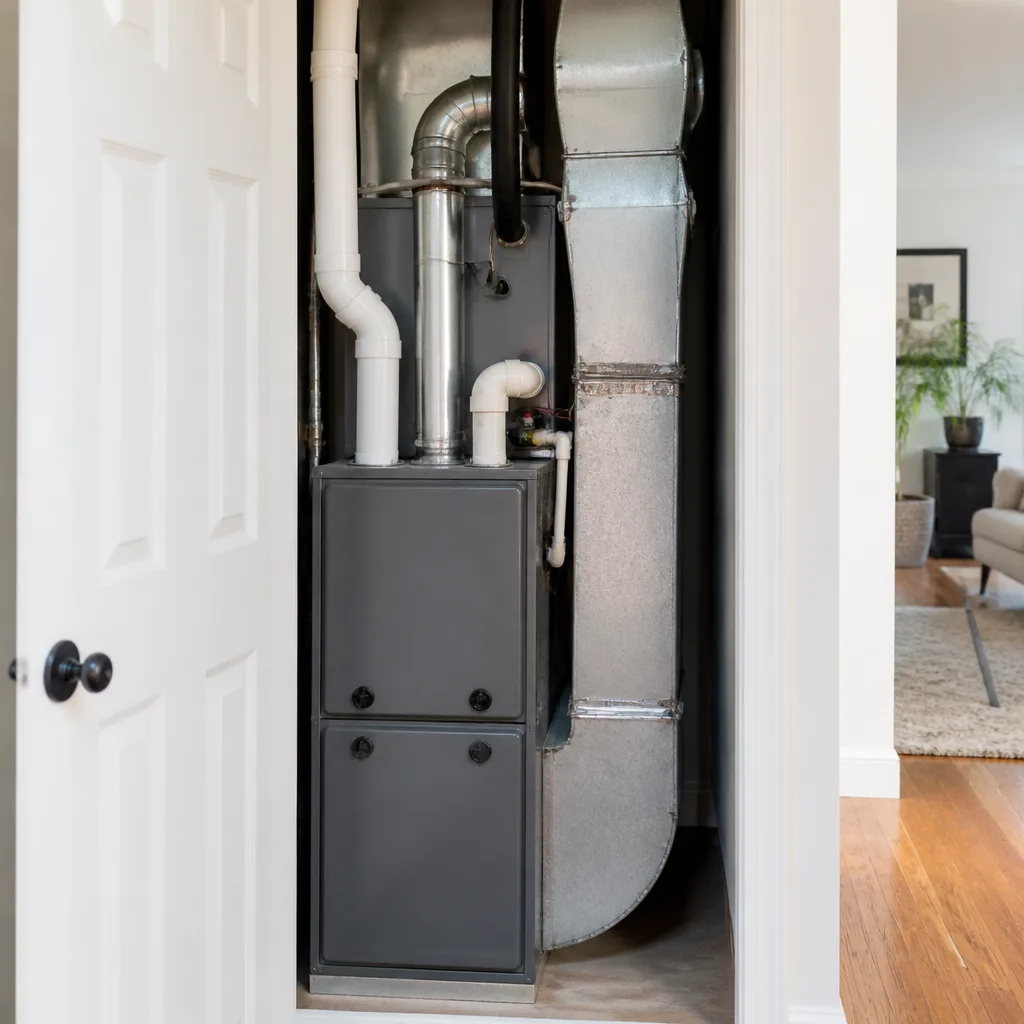
Here’s how to read it: open the furnace cabinet (furnace off, breaker off), look at the circuit board, and find a small LED – usually red or green. Count the blinks. The blink sequence corresponds to a code listed on the furnace door label or in the model’s service manual.
Common Error Code Patterns (simplified):
- One blink, pause, repeat: System lockout. Often means the furnace failed to ignite after multiple attempts.
- Two blinks: Pressure switch stuck open or closed. This can mean a venting issue or a blocked condensate drain.
- Three blinks: Pressure switch fail. The draft inducer may be blocked or the vent pipe restricted.
- Four blinks: Limit switch open. Overheating. Check the filter first.
- Five blinks: Flame sensed with no call for heat. This can indicate a faulty gas valve or a short in the flame sensor circuit.
- Steady on, no blink: Board is receiving power and the system is functioning normally.
- Steady off: No power to the board. Check the breaker or the furnace door switch.
The exact codes vary by brand. American Standard and Bryant boards sometimes use a two-digit code system that’s less intuitive. If you’re not sure what your furnace is saying, write down the blink pattern before you call. A technician who knows the code before they arrive can bring the right part – and in Los Angeles traffic, that saves you a second service visit.
Why Short Cycling Matters More in Los Angeles Than You’d Think
Short cycling is when a furnace starts, runs for a few minutes, shuts off, and repeats this cycle far more often than normal. In Los Angeles, where mild winters mean furnaces often sit unused for months at a time, the problem can sneak up on you. Here’s what short cycling always means: the furnace is protecting itself or it’s being told to stop too early. It’s never a personality quirk.
The three most common causes in LA homes:
- Oversized furnace on undersized ductwork. This is extremely common in Los Angeles homes built before the 2000s. A furnace that’s too big for the house reaches temperature at the thermostat too quickly, shuts off, and starts again 10 minutes later. The constant cycling wears out igniters, blower motors, and limit switches prematurely.
- Dirty filter or blocked return vent. We often find return vents painted-over or blocked by furniture in Los Angeles homes where square footage is tight. Restricting the airflow makes the furnace work harder, heat up faster, and trip the limit switch. Simple physics, simple fix.
- Failing thermostat or improperly placed thermostat. If the thermostat is in a sun-blasted hallway or right next to a supply vent, it gets a false temperature reading. The furnace thinks the house is warmer than it is, shuts off, and restarts when the hot spot cools. Moving the thermostat or recalibrating it fixes the behavior.
A furnace that short-cycles isn’t just annoying. It uses more energy, fails faster, and costs more to run than one that runs long, even cycles. The fix is usually simple, but the diagnosis requires someone who understands airflow, not just parts swapping.
What to Tell the Dispatcher So the Right Parts Show Up
When you call for furnace repair, the person on the other end of the phone is the first line of defense for getting a fast, one-visit fix. For Furnace Repair Warning Signs Every Homeowner Should Know, see our guide. At Brandt HVAC, a live person answers 24 hours a day, 7 days a week – no voicemail trees, no callback queue. Here’s what to have ready when you call:
The five pieces of information that get the right part on the truck:
- Brand and model number. It’s printed on the furnace nameplate, usually inside the cabinet or on the side of the unit facing the wall. York, Daikin, Bryant, and American Standard models have different igniter, board, and sensor configurations. A Bryant dealer in Los Angeles might stock Bryant parts; a generic dispatcher might not.
- Age of the furnace. If you know it, say it. A 2005 unit with a failed igniter is a simple fix. A 1988 unit with the same symptom might have a discontinued part that requires retrofit work.
- The exact symptom. Don’t say “it doesn’t work.” Say “it ignites for five seconds and then shuts off with a four-blink code.” Or “it does nothing at all, no click, no hum.” Specific symptoms let the technician pre-stage parts.
- Error code if you saw one. That blink sequence you recorded? Read it off. It can short-circuit an hour of diagnostic time.
- Any recent changes. New thermostat? Work done on the house? A new dog that sheds near a return vent? We’ve found furnaces taken offline by a single fur-coated air filter more times than you’d believe.
This is the kind of certainty Brandt HVAC is built on. A written price before any work starts, a technician you’ve been introduced to by name and photo before they arrive, and a truck that’s already carrying the right part because you told us what to bring.
The Maintenance Checks That Prevent Most Repairs
About 75% of the furnace repairs we perform in Los Angeles could have been prevented or delayed by three simple maintenance steps. Check How Long Does AC Maintenance Take? Timelines and What to Expect for related timing guidance. None of these require opening the furnace cabinet or touching any component that could hurt you.
Three things you can do in 15 minutes:
- Replace the air filter. The single highest-impact maintenance task on a furnace is also the one most often skipped. A clogged filter reduces airflow, overheats the furnace, trips the limit switch, and shortens the life of every component downstream. In Los Angeles, where homes with central air often have filters in a hallway return, check the filter every 30 days during peak heating season. A good pleated filter costs $15 to $25.
- Visual inspection of the exhaust pipe. Look at the PVC or metal pipe that vents combustion gases outside. If you see bird nesting, rust flakes, or anything blocking the opening, it’s a pressure switch trip waiting to happen. Do not reach inside. Call a professional.
- Listen to the system. This sounds simple, but most people don’t do it. When the furnace starts up, set a mental baseline for how it normally sounds. If you notice a new rattle, hum, or whoosh on a later cycle, that’s the earliest warning sign of a developing mechanical problem.
We recommend a professional furnace tune-up once a year, even in Los Angeles where the heating season is only a few months. It includes checking the heat exchanger for cracks, testing the ignition sequence, measuring gas pressure, and verifying that the flue system is venting properly. Our AC Maintenance in Los Angeles page covers the cooling side of the same core principle: a system that’s checked is a system that doesn’t surprise you.
Common Mistakes to Avoid
- Ignoring a gas smell because “it’s always done that.” It hasn’t always done that. A mercaptan odor means a leak. The fix is evacuation, not a new air filter. We’ve been called to Los Angeles homes where homeowners had been living with a slow gas leak for weeks because they thought the smell was just how the furnace smelled.
- Attempting DIY ignition repairs. Replacing a hot surface igniter or flame sensor looks easy on video, but the gas valve and burner assembly are directly adjacent. One wrong move with a gas fitting and you’ve created a bigger problem than the one you were trying to fix. We’re a Furnace Repair in Los Angeles company, and even we never let untrained hands near a gas valve.
- Running the furnace with the filter door off. Many modern furnaces have a safety switch that prevents operation when the filter door is open. But on older units, running without the door can mean the burners pull air from the wrong place and the flame rolls out. If the door is off, the unit should be off.
- Resetting a tripped breaker repeatedly without investigating. A furnace that trips its breaker is protecting you from a short circuit somewhere. Resetting it once to see what happens is fine. Resetting it three times because “it’s been working fine all week” is how electrical fires start, especially in older Los Angeles homes with aging breaker panels.
- Using a smart thermostat as a diagnostic shortcut. Smart thermostats generate their own error messages, and those messages don’t always match the furnace’s control board codes. If your Nest or Ecobee says one thing and the LED on the furnace board says another, trust the LED.
- Calling a repair company without writing down the model number first. This sounds minor, but it adds time to your repair visit. The model number is on the nameplate. You either know it before the call or we spend the first 15 minutes finding it in a dark closet.
When to Call a Professional
Call a licensed professional immediately if you smell gas, see soot around the furnace, or have any reason to suspect a carbon monoxide issue. Call a professional if your furnace is short cycling and you’ve already replaced the filter. Call a professional if the furnace ignites and shuts off repeatedly – that pattern can indicate a cracked heat exchanger, which is a safety problem, not a comfort problem.
For everything else, the decision comes down to time and risk tolerance. If you’re in Los Angeles and the furnace is down on a cold night, you want a company that answers the phone with a live person at 2 a.m., gives you a written price before work starts, and sends a technician you’ve been introduced to by name before they arrive. Brandt HVAC offers free estimates across Los Angeles. Call (984) 538-9003. We’ll talk through what your furnace is doing over the phone, help you decide if it’s urgent, and schedule a visit with a technician you’ll know before they ring the bell.
Frequently Asked Questions
The most common furnace repair we perform across Los Angeles is a failed igniter, followed closely by a dirty or failed flame sensor. Both are the furnace equivalent of a car’s spark plug: a component that wears out through normal use. Most igniter replacements run $150 to $300, parts and labor included.
You can safely replace the air filter, check the breaker, and read error codes from the control board without opening the furnace cabinet. Anything involving the ignition system, gas valve, heat exchanger, or internal electrical components should be left to a licensed technician. The safety risk is too high for a DIY approach, especially with gas-fired equipment.
A furnace that shuts off shortly after igniting is usually tripping the limit switch due to restricted airflow, or it’s detecting a problem with the flame and shutting down as a safety measure. The most common fix is a clean air filter. If the filter isn’t the issue, the heat exchanger needs to be inspected for cracks.
Locate the control board inside the furnace cabinet, find the small LED, and count the blink pattern. Compare it to the code chart on the furnace door label. Write down the pattern before calling for repair – it tells the technician what to bring before they arrive.
Burning dust is normal the first time a furnace runs after sitting unused through the summer, which is common in Los Angeles. The dust on the heat exchanger burns off after about 15 minutes. If the smell persists beyond the first cycle or is accompanied by visible smoke, shut the system down and call a professional.
Most common furnace repairs in Los Angeles land between $150 and $450, depending on the part. Igniter and flame sensor replacements are at the lower end. Blower motors, control boards, and heat exchanger replacement run higher. Brandt HVAC provides a written price before any work starts, on every single job. Call (984) 538-9003 for a free estimate.
The Bottom Line
Furnace troubleshooting is a hierarchy: safety first, diagnosis second, repair third. The rotten egg smell means get out. The blink code means write it down. The short cycling means check the filter. The ignites-then-shuts-off pattern means stop running it and get a professional inspection. Most furnace problems in Los Angeles homes are mechanical, fixable, and inexpensive when caught early. The ones that aren’t are almost always the result of ignoring the early warning signs. Read your furnace’s signals, act on them calmly, and when in doubt, call someone who answers the phone with a human voice and tells you exactly who is coming to your door. If your furnace is down and you need help, Brandt HVAC home services are one call away at (984) 538-9003. We cover the full spectrum, including AC Repair in Los Angeles, with the same written-price-before-work rule on every job.
Written by Devin Marlowe, Owner at Brandt HVAC, serving Los Angeles since 2003. Explore more guides & resources from our team.