
Last updated October 9, 2026
Seasonal tune-up and full diagnostic on your Carrier, Trane, or Goodman system - readings shown to you before any repair is proposed
Diagnosis first, numbers second - you approve the repair price before a single part goes in.
 Before
 After
After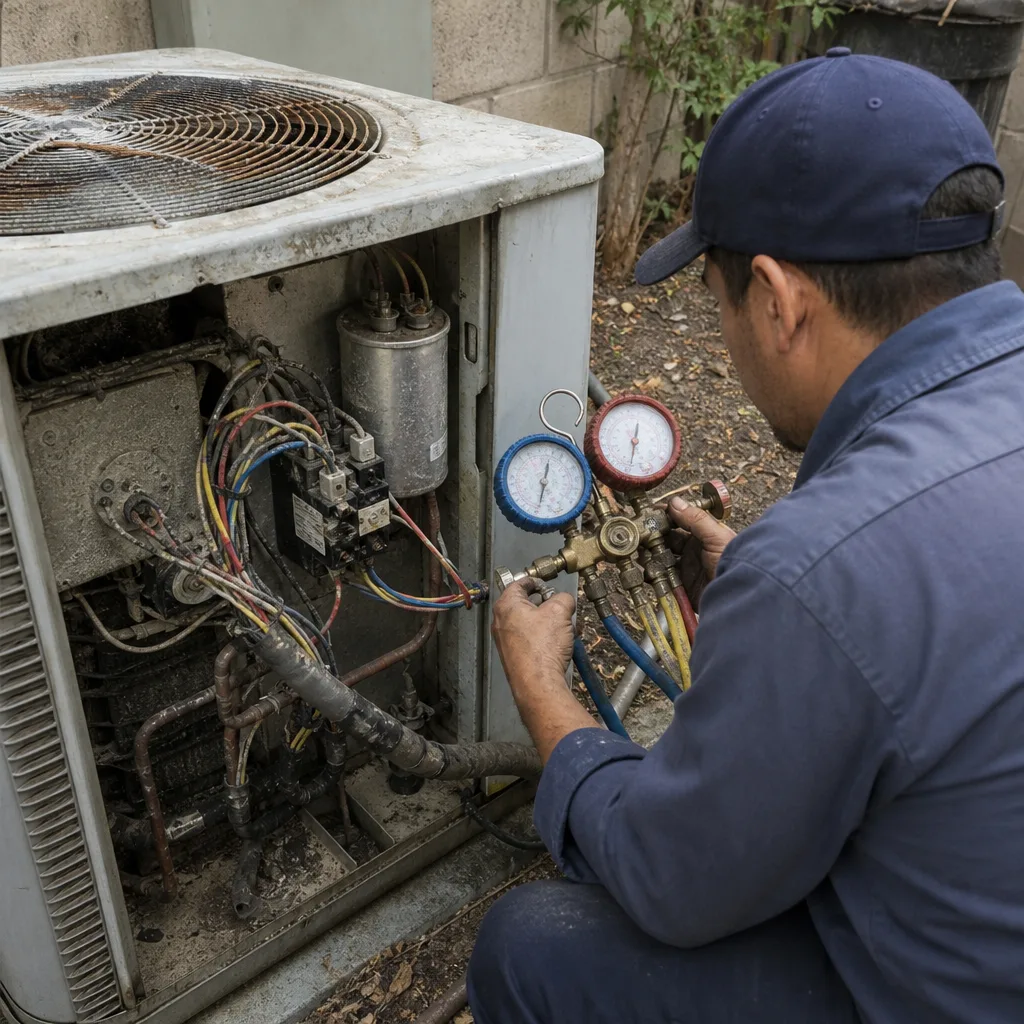 Before
 After
After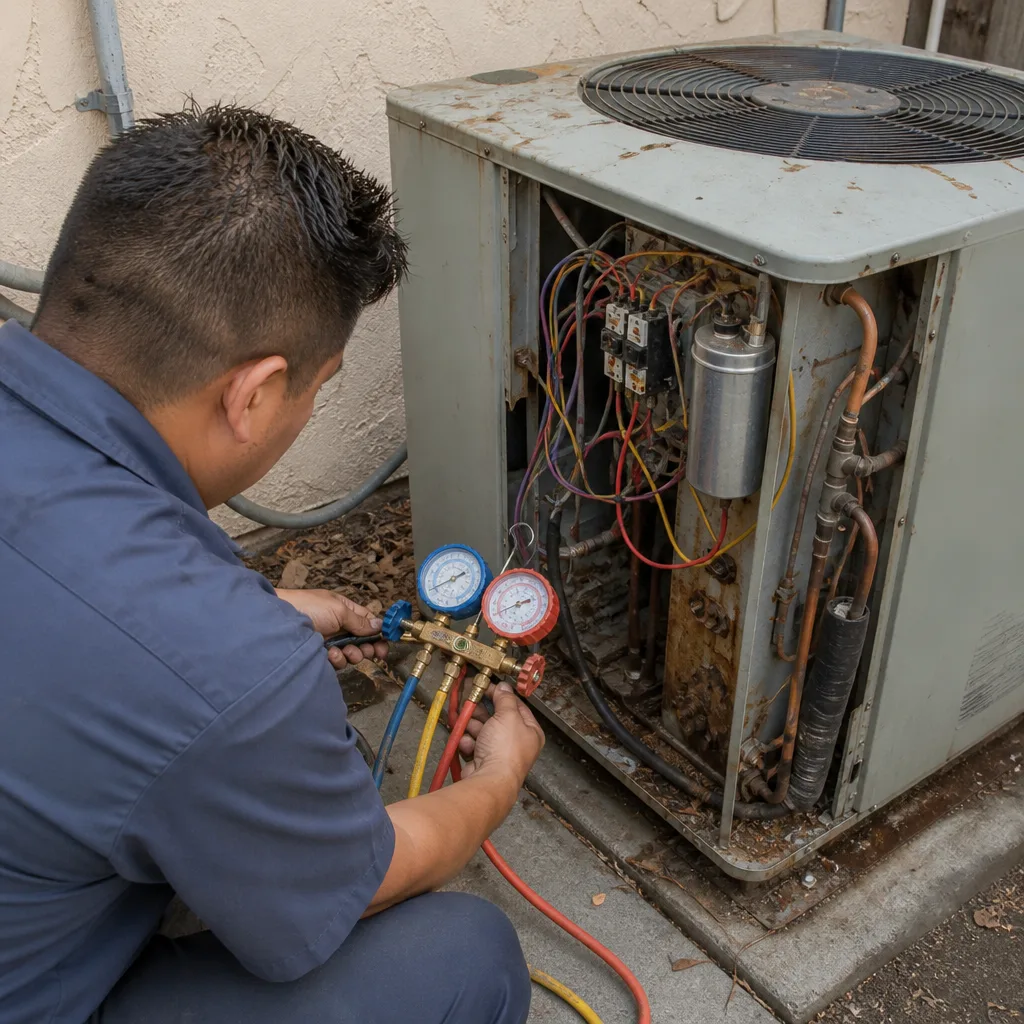 Before
 After
AfterHow Long Does AC Maintenance Take? Timelines and What to Expect
A thorough AC maintenance visit has 18 to 22 distinct checkpoints. If your technician was done in under 30 minutes, you can do the math on how many they skipped. In Los Angeles, where air conditioners run hard from May through October, a rushed maintenance call is a slow-motion breakdown waiting for the first 100-degree day. This guide breaks down exactly what a complete AC Maintenance services visit involves, how long each step takes, why some companies rush the job, and what you should expect to receive before the technician walks back out your door.
Quick Answer
A complete AC maintenance visit takes How Long Does AC Repair Take? Timelines and What to Expect-typically 60 to 90 minutes for a single system. Anything under 45 minutes almost certainly means steps were skipped. Larger homes with zoned systems or two units can take 2 to 3 hours, and visits run longer when the technician finds a problem that needs diagnosis beyond standard maintenance.
Table of Contents
- The 18-22 Checkpoints That Define Done Right
- Task-by-Task Time Breakdown
- Why Rush Jobs Happen and How to Spot Them
- What Legitimately Extends a Maintenance Visit
- Three Questions to Ask Before You Schedule
- What Your Technician Should Hand You at the End
- How Maintenance Frequency Affects Visit Length
- Why Maintenance Is Not a DIY Job
The 18-22 Checkpoints That Define Done Right
A real AC maintenance visit is a methodical process, not a filter swap and a wave goodbye. The number of checkpoints varies slightly by system type and condition, but the core list is consistent across every major residential brand we service, including Carrier, Daikin, and Bryant. When a technician moves through these deliberately, the visit lands in that 60 to 90 minute window naturally.
Here is what a complete maintenance visit should cover, in the order a careful technician follows:
- Thermostat calibration and battery check. If the thermostat reads two degrees off, the system runs when it shouldn’t. This takes 5 to 10 minutes, including cycling the system to verify the temperature reading matches the actual room temperature.
- Air filter inspection and replacement. A clogged filter is the leading cause of frozen coils and shortened compressor life. The technician should check the filter size, install the correct replacement if one is provided, or flag it clearly if you need to buy a specific size.
- Condensate drain line inspection and flush. In Los Angeles humidity, algae and sediment build up in drain lines and cause water damage when they back up. A proper flush takes 10 minutes and prevents a ceiling stain or a soaked closet.
- Evaporator coil inspection. The indoor coil needs to be clean and dry. A dirty coil can reduce cooling capacity by 20% or more without making a sound. The technician should inspect it, photograph it if needed, and recommend cleaning only if it’s actually dirty, not as an automatic add-on.
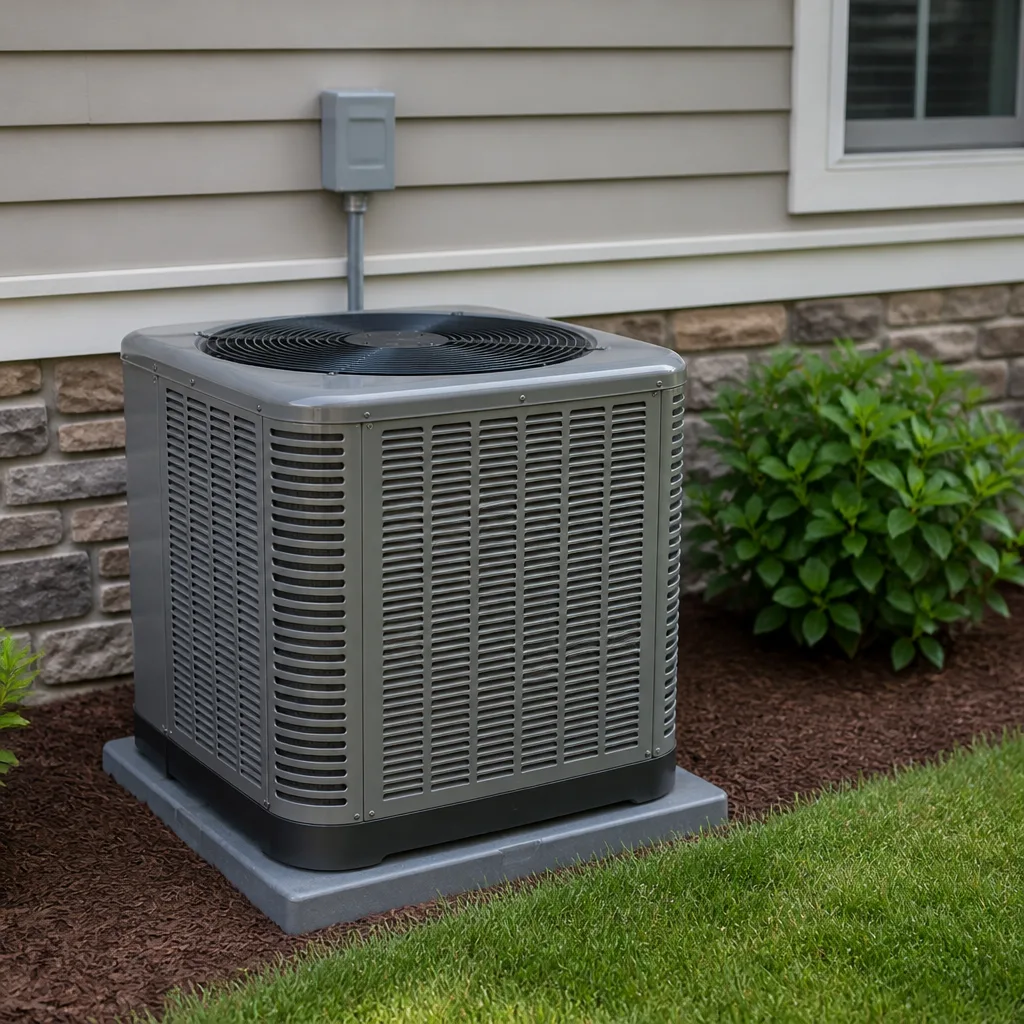
- Condenser coil inspection and cleaning. The outdoor coil gets pounded by Los Angeles dust, pollen, and construction debris. Cleaning it properly, not just hosing it off, takes real time. A technician who spends 3 minutes on the condenser coil is not cleaning it.
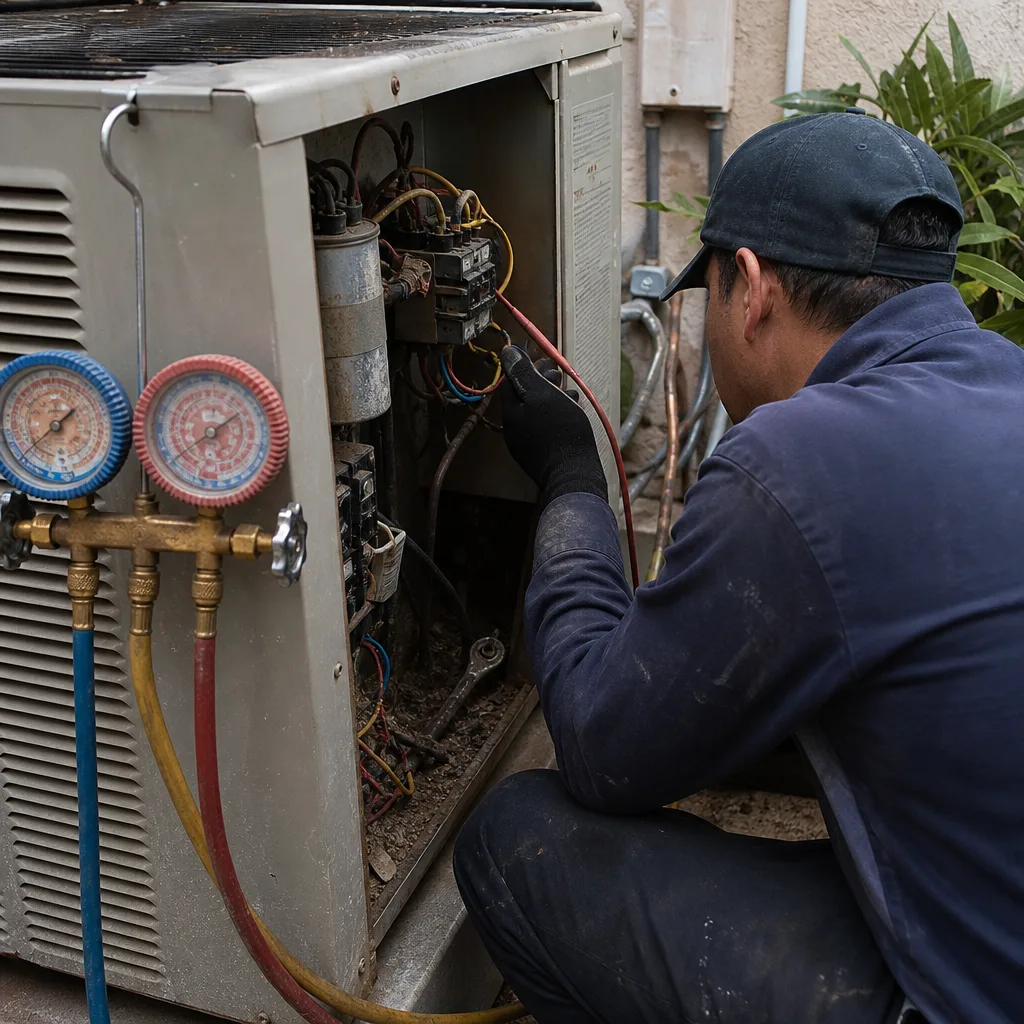
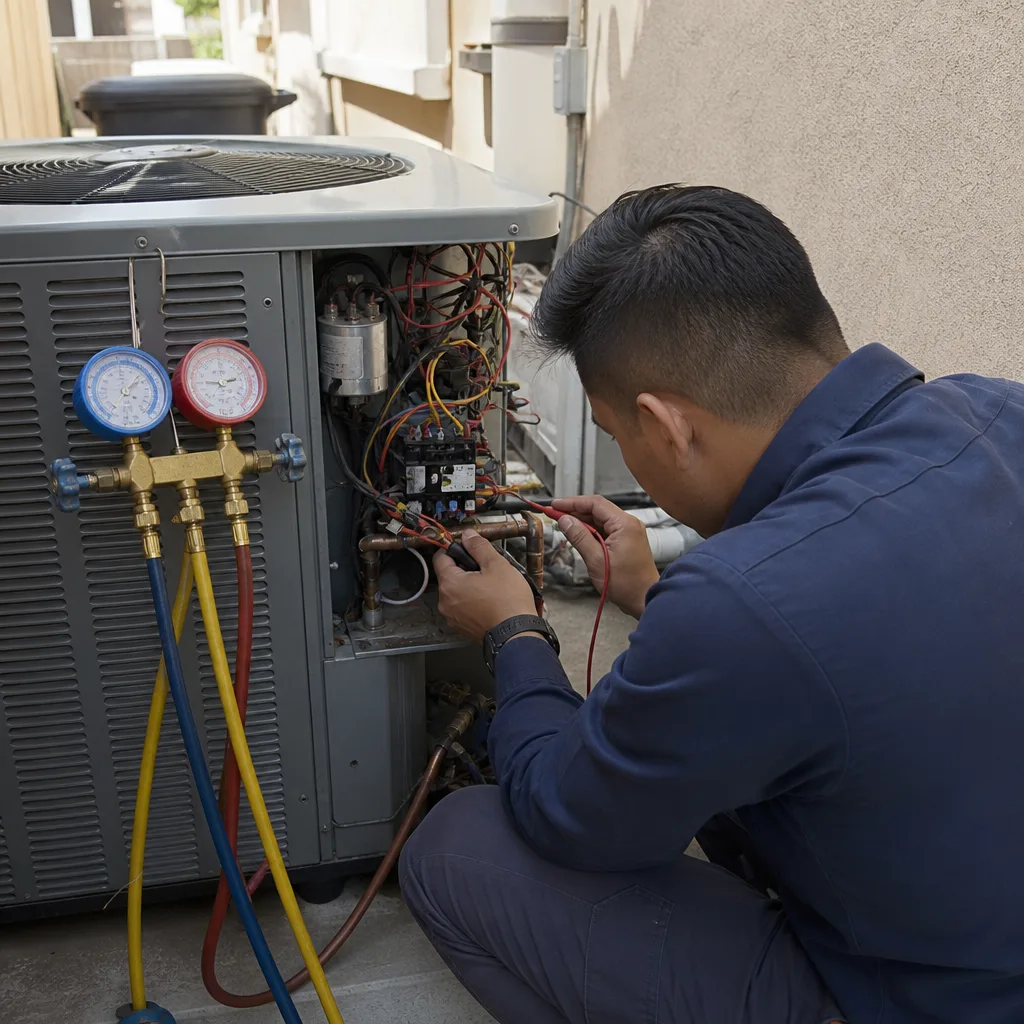
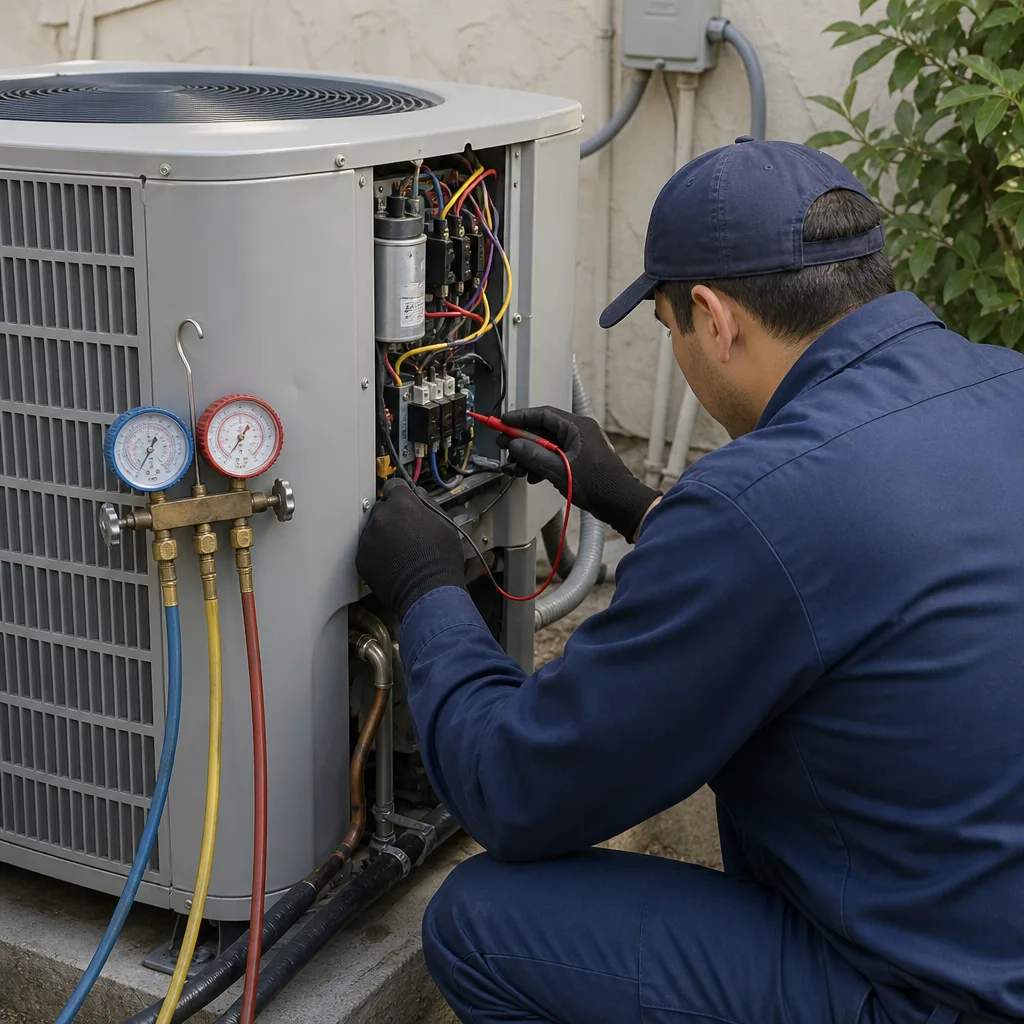
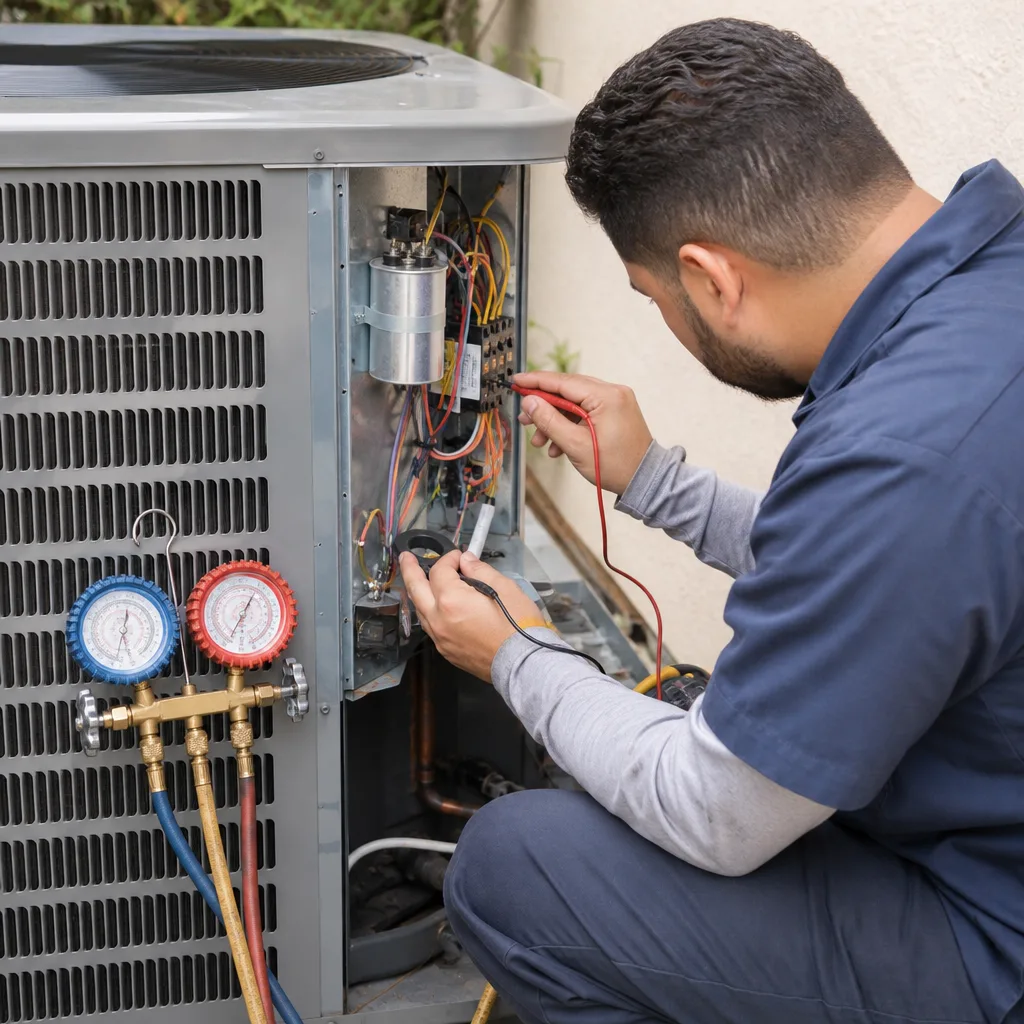
- Refrigerant level check using superheat and subcooling readings. This is the most skipped step in residential maintenance. It requires attaching gauges and taking temperature readings on both refrigerant lines. It takes 10 to 15 minutes. A technician who skips it cannot tell you if your system is slowly losing refrigerant.
- Electrical connection torque check. Loose electrical connections cause components to overheat and fail early. Every connection at the contactor, capacitor, and compressor should be checked for tightness and corrosion. This takes 5 to 10 minutes and is boring work, which is why it gets skipped.
- Capacitor testing. The capacitor provides the jolt that starts the compressor and fan motors. A weak capacitor will still run the system, but it’s running on borrowed time. Testing takes 5 minutes with a multimeter. Most capacitor failures we see in Los Angeles happen in August, when the system is working hardest and the weak part finally gives out.
- Contactor inspection. The contactor is the electrical switch that turns the compressor on. Burnt or pitted contacts create resistance and heat. Inspection takes 5 minutes and should be done with power to the unit disconnected.
- Compressor amp draw test. Measuring the amps the compressor pulls tells you if it’s working harder than it should. This reading, compared to the manufacturer’s spec, catches problems before they become compressor failures. Takes 5 to 10 minutes.
- Fan motor and blade inspection. The outdoor fan motor bearings wear, blades crack, and balance shifts. A wobbling blade will eventually destroy the motor. Visual inspection and amp testing takes 10 minutes.
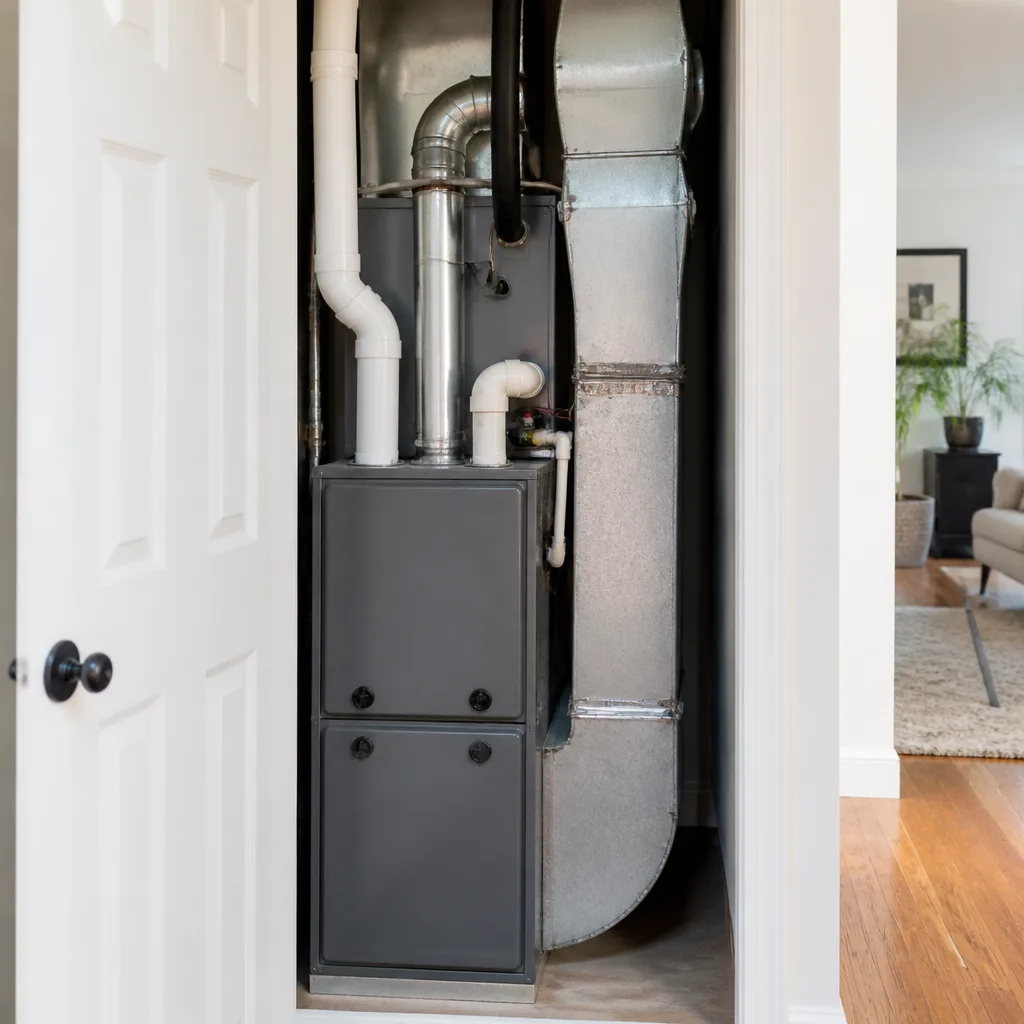
- Blower motor and belt inspection. The indoor blower moves conditioned air through your home. A dirty blower wheel can reduce airflow by 30%. Inspection and amp testing takes 10 to 15 minutes.
- Condensate pump test. If your system drains via a pump rather than gravity, the pump needs to be tested by filling the reservoir and confirming the float switch works. Takes 5 minutes. A failed pump that goes unnoticed will overflow and damage whatever is beneath it.
- Safety control verification. High-pressure and low-pressure safety switches exist to shut the system down before catastrophic failure. They should be tested, not assumed functional. Takes 5 to 10 minutes.
- Temperature differential measurement. The technician should measure the temperature of air entering the return and leaving the supply vents. A healthy system shows a 15-20 degree difference. Anything less indicates a problem. Takes 5 minutes.
- Ductwork visual inspection. In Los Angeles attics, ducts get crushed, disconnected, or chewed by rodents. The technician should visually inspect accessible ductwork for obvious issues. Takes 5 to 10 minutes if the attic is accessible.
- System cycle test. After all checks are complete, the system should run through a full cooling cycle while the technician watches and listens. Takes 10 to 15 minutes.
- Documentation and homeowner walkthrough. A written report with all readings, photos, and recommendations should be produced and explained to you. Takes 10 minutes and is often the first thing to get cut when a technician is behind schedule.
That’s 18 steps. Some systems add a few more: heat pump reversing valve check, zone damper verification, UV light inspection, or humidifier service on systems that have them. That’s where the 22 number comes from.
Task-by-Task Time Breakdown
Here is what the clock looks like on a properly performed maintenance visit for a standard single-system home in Los Angeles:
- Arrival, introduction, and system startup: 5 minutes. The technician should confirm who they are, walk with you to the thermostat and equipment, and ask if you’ve noticed any changes in performance or unusual sounds.
- Thermostat and controls: 5-10 minutes.
- Filter replacement: 5 minutes if a standard size is on hand.
- Indoor unit service (coil, drain, blower): 15-20 minutes.
- Outdoor unit service (coil, electrical, compressor checks): 20-25 minutes.
- Refrigerant verification: 10-15 minutes.
- Full system cycle test: 10-15 minutes.
- Documentation and walkthrough: 10 minutes.
Add those up and even an efficient technician with a system in good condition lands around 75 to 90 minutes. A technician can go faster on a brand-new system with easy access and no issues found. But 30 minutes is not a fast maintenance visit. It is an incomplete one.
Two-system homes, which are common in the larger Los Angeles homes built across the Valley and the Westside, should expect roughly double that time, minus a little overlap on arrival and documentation. Three-system homes can run 3 hours. If you have a zoned system with multiple dampers and thermostats, add another 20 to 30 minutes.
Why Rush Jobs Happen and How to Spot Them
No technician wakes up wanting to do a bad job. But the economics of residential HVAC maintenance companies in Los Angeles push toward speed, and homeowners who don’t know what a complete visit looks like never notice what they’re missing.
Here is the pressure that creates rush jobs:
- Flat-rate maintenance pricing creates volume incentives. When a company charges a flat maintenance fee, the only way to make money is to fit more visits into each day. A technician with six maintenance calls scheduled in an eight-hour day cannot spend 90 minutes at five of them. The schedule itself makes thoroughness impossible.
- Commission-based pay structures reward service calls, not maintenance. Some companies treat maintenance as a loss leader, a foot in the door to find and sell repairs or replacement systems. The faster the maintenance visit wraps, the sooner the technician can move to a revenue-producing call. This is not every company, but it is common enough that Los Angeles homeowners should understand the incentive.
- Same-day demand spikes in heat waves. When temperatures in Los Angeles hit 95+ for three straight days, every AC company is booked solid. Maintenance calls get compressed to squeeze in emergency no-cool calls. You may not know your maintenance was shortened to make room for someone else’s emergency.
You can spot a rush job without watching every step. Here are the telltale signs:
- The technician never opens the outdoor unit’s electrical panel.
- No gauges ever touch the refrigerant lines.
- The visit is done in under 40 minutes.
- The only thing you receive at the end is a receipt, with no readings or written findings.
- The technician never asks what you’ve noticed about system performance.
None of these are proof of terrible work on their own. Together, they mean you paid for a checklist that wasn’t actually completed.
What Legitimately Extends a Maintenance Visit
Not every long visit means something is wrong. Some systems simply take longer to service properly, and some discoveries during maintenance legitimately extend the appointment. Here is what adds time, and what it means for you:
System Age
An AC system that’s 15 years old has seen things. Connections corrode, bolts seize, access panels fight back, and components that were easy to reach when the unit was installed are now buried behind a decade of homeowner landscaping choices. An older system can add 20 to 30 minutes to a maintenance visit simply because the technician has to work carefully around brittle plastic and aged wiring. Rushing an old system is how you turn a maintenance visit into a How Long Does Furnace Repair Take? Timelines and What to Expect-style repair bill.
Accessibility
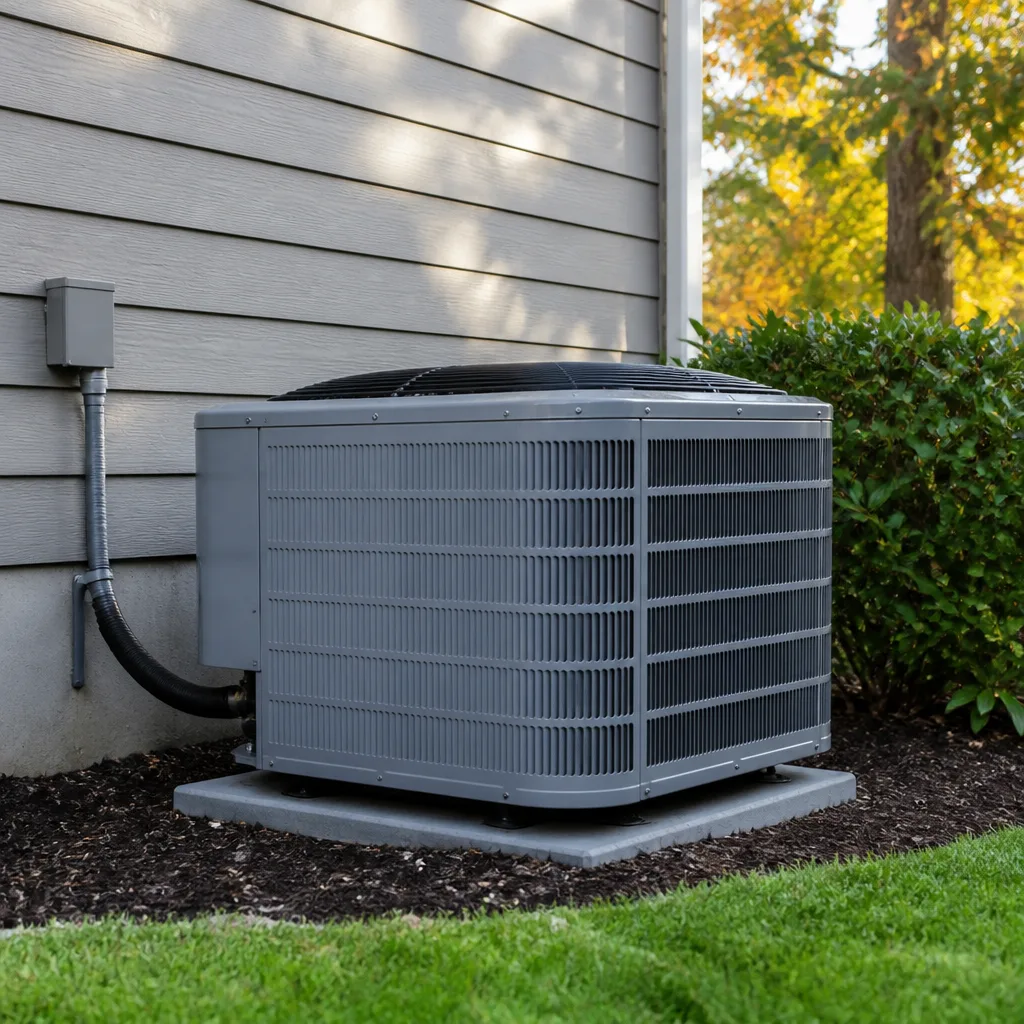
Los Angeles homes run the full range of access conditions. A ground-level condenser unit with open clearance on all sides is a 20-minute service. A rooftop unit in the hills, reached by ladder, takes longer before any wrench turns. Crawlspace air handlers, attic-mounted evaporator coils, and units squeezed into side yards with 18 inches of clearance all add real time. If your outdoor unit is surrounded by hedges or enclosed by a decorative fence the technician has to partially remove, expect the visit to run longer, or trim the landscaping before they arrive.
Discovered Issues
Sometimes maintenance uncovers something that needs attention beyond the standard checklist. A low refrigerant reading could indicate a slow leak, which requires diagnosis. An electrical connection that shows signs of overheating needs to be opened, inspected, and possibly repaired. A condensate drain that’s fully clogged needs more than a cursory flush. These discoveries can add 20 minutes or an hour, depending on what’s found. A good technician will stop and explain the finding before doing additional work, with a written price for anything beyond the maintenance scope. A great technician will show you the reading or photo that led them to the recommendation.
Three Questions to Ask Before You Schedule
You can set the expectation for a thorough visit before the technician ever arrives. These three questions, asked when you book the appointment, signal that you know what a complete maintenance visit looks like and that you’ll be checking the results:
- “How long should I expect the maintenance visit to take?” The answer tells you more than you might think. A company that says 30 to 45 minutes is telling you, honestly or not, that they run a short checklist. A company that says 60 to 90 minutes has a process that matches the actual work. Listen for a number, not a vague “it depends on the system.”
- “Will I receive a written report with the refrigerant and electrical readings?” If the answer is anything other than yes, find another company. The whole point of maintenance is measurement. Without written readings, you have no baseline for next year, no proof the work was done, and no way to track whether your system is slowly degrading. The report should include refrigerant pressures, temperature differential, amp draws, and capacitor readings at a minimum.
- “What exactly is included in your maintenance service?” Ask them to email you the checklist. A company that can’t produce a written checklist on request does not have a standardized process. A company that sends you an 18-point list is doing the real job. A company that sends you a 5-point list (change filter, check thermostat, hose down coil, check refrigerant, done) is selling a filter change at maintenance prices.
None of these questions are confrontational. They are the same questions you’d ask a mechanic before leaving your car for service. You wouldn’t hand over car keys without knowing what “service” includes. Your air conditioner costs more than your car’s annual maintenance and runs harder in Los Angeles summers.
What Your Technician Should Hand You at the End
The maintenance visit is not complete until you have documentation. A verbal “everything looks good” is not documentation. Here is what a complete visit should leave in your hand or your email inbox:
- A written maintenance report. This should list every checkpoint performed, the readings from each test, and a pass/fail or within-spec/out-of-spec notation for each item. Refrigerant pressures, superheat and subcooling values, temperature differential, capacitor microfarad readings, and compressor amp draw should all be on the page.
- Photo documentation of any flagged issues. If the technician found a corroded contactor or a dirty coil, you should be able to see it. Photos give you the ability to get a second opinion and verify the recommendation is real. A technician who won’t show you a photo of a problem they claim to have found is a red flag, plain and simple.
- A prioritized list of recommendations. Some findings need immediate attention. Others can wait until next spring. A complete report distinguishes between “repair this now” and “watch this and check again next year.” That distinction is the difference between honest guidance and a sales pitch.
- Next maintenance date or reminder information. If the company uses a maintenance program, the report should note when your next visit is due and what, if anything, should be monitored between now and then.
- A written price for any recommended additional work. If the maintenance uncovered something that needs repair, you should receive a written price before any work is done. Not a verbal estimate, not a “we’ll figure it out” – a written price, in your hand, before you authorize anything.
If you walk away from a maintenance visit with only a receipt, you did not receive a maintenance visit. You received a filter change and a quick look. The receipt may have “Maintenance” printed on it, but the documentation tells the real story.
How Maintenance Frequency Affects Visit Length
The first maintenance visit on a system that hasn’t been serviced in years will take longer than a visit on a system that’s been maintained annually. Here’s the difference:
First Visit on a Neglected System
A Los Angeles AC system that’s gone three summers without maintenance will be dirty. The condenser coil will be caked with dust and debris. The drain line may be partially clogged. The filter may have collapsed and sent dust into the blower. Electrical connections may show corrosion. The first maintenance visit on a neglected system often runs 2 hours and may require additional cleaning beyond the standard service. Some companies charge extra for this deep cleaning. Others build it into the first-visit price. Either way, expect the first visit to be the longest one.
Annual Visit on a Well-Maintained System
If you’ve maintained your system every year since installation, the annual visit should be efficient. The coils stay reasonably clean, the drain line doesn’t accumulate serious buildup, and the electrical connections remain tight. A well-maintained system can be fully serviced in 60 to 75 minutes without cutting any corners. That’s the payoff for consistency: a shorter visit that still includes every checkpoint.
In Los Angeles, we recommend maintenance twice a year for systems that run most of the year, or at minimum once in spring before the summer heat arrives. A system that’s checked in March or April has time for any needed repairs before the first 90-degree day shows up.
Why Maintenance Is Not a DIY Job
You can change your own air filter. You should change your own air filter, actually, and check it monthly during Los Angeles summers. But the rest of the maintenance checklist involves live electrical components, refrigerant under pressure, and moving parts that can remove fingers. The capacitor inside your outdoor unit holds a charge even when the power is off and can deliver a serious shock. Refrigerant is under hundreds of pounds of pressure and requires EPA certification to handle legally. The 240 volts feeding your condenser unit will not give you a second chance if you touch the wrong connection.
This is not a gatekeeping speech. It’s a safety speech. If you want to improve your system’s health between professional visits, change the filter, keep the outdoor unit clear of debris, and listen for changes in how the system sounds. Leave the electrical testing, refrigerant checks, and coil cleaning to a licensed professional who knows how to do the work safely. A maintenance visit costs far less than an emergency room visit or a compressor replacement caused by a botched DIY attempt. Our own AC Maintenance in Los Angeles service exists because this work requires training, tools, and a process, not just enthusiasm.
Common Mistakes to Avoid
- Accepting a 20-minute “tune-up” as complete maintenance. A 20-minute visit is a filter change with a visual once-over. You paid maintenance pricing for a task you could have done yourself for the cost of the filter. In Los Angeles summer conditions, that’s a gamble you don’t want to take.
- Not asking what “maintenance” includes before booking. Every company defines maintenance differently. Some define it as 5 checkpoints. Some define it as 20. The price difference between the two is often smaller than you’d think, but the value difference is enormous. Get the checklist in writing before you book.
- Skipping maintenance entirely until the system breaks. Breakdown repair in Los Angeles during a July heat wave means paying emergency rates and waiting days because every reputable company is booked. The maintenance visit that could have caught the failing capacitor in April costs a fraction of the emergency call in July. This is the most expensive mistake on this list, and it’s also the most common.
- Not keeping maintenance records. When your system eventually needs replacement, and every system eventually does, your maintenance records matter. They support warranty claims, they help the next technician understand the system’s history, and they add resale value if you sell the home. A homeowner with ten years of maintenance reports is a homeowner whose AC system was actually cared for.
- Choosing a company based on price alone. Rock-bottom maintenance pricing in Los Angeles is usually the volume play: get in, replace the filter, leave in 30 minutes, move to the next house. The visit costs less, but you got less. In some cases, you got nothing but a service sticker and a false sense of security.
- Not being home during the maintenance visit. A maintenance visit is not a delivery. You should be there to answer questions about system behavior, point out concerns, and receive the walkthrough at the end. If you can’t be home, at minimum arrange a phone call before and after the visit. A technician who never talks to the homeowner is missing half the diagnostic information.
- Ignoring the written recommendations. A maintenance report that flags a weak capacitor or a low refrigerant level is giving you a warning. Ignoring it until the system fails means paying for the repair twice: once for the part and labor, and again for the emergency service fee because the system failed on the hottest day of the year.
When to Call a Professional
Call a professional for maintenance before the Los Angeles heat arrives, not after your system quits. Spring is the right time: temperatures are mild, scheduling is flexible, and the technician can address any findings before the first heat wave. Call immediately if you notice warm air blowing from the vents, ice on the outdoor unit, water leaking from the indoor unit, unusual sounds, or a sudden spike in your electric bill during cooling season. These are not normal system behavior and indicate a problem that maintenance alone may not solve. If you haven’t had your system serviced in more than a year, or you can’t remember the last time you changed the filter, schedule now. Brandt HVAC offers free estimates in Los Angeles – call (984) 538-9003 and a live person will answer, any time of day, any day of the week. We also provide AC Repair in Los Angeles and Furnace Repair in Los Angeles when maintenance uncovers something that needs attention.
Frequently Asked Questions
A complete AC maintenance visit takes 60 to 90 minutes for a single system. Larger homes with two systems take 2 to 3 hours. Visits shorter than 45 minutes usually mean the technician skipped steps on the checklist.
Complete AC maintenance includes 18 to 22 checkpoints: thermostat calibration, filter replacement, condensate drain flush, evaporator and condenser coil inspection, refrigerant level verification, electrical connection torque checks, capacitor and contactor testing, compressor amp draw measurement, fan and blower motor inspection, safety control verification, temperature differential measurement, and a full system cycle test, followed by written documentation of all readings and findings.
A 30-minute maintenance visit likely skipped significant steps, most commonly the refrigerant level check, electrical connection torque check, and capacitor testing. These steps require time and tools but are essential for catching problems before they become breakdowns. The pressure to fit more appointments into each day pushes some companies toward shorter visits, and the homeowner who doesn’t know what to expect never notices.
In Los Angeles, where AC systems often run from May through October, we recommend maintenance at least once a year, ideally in spring before the summer heat arrives. Systems that run year-round, or homes with older equipment, benefit from twice-annual service. The consistency matters more than the exact schedule: a well-maintained system has fewer breakdowns and lower energy bills.
AC maintenance in Los Angeles typically runs $90 to $200 for a standard single-system visit, depending on the company and the depth of the checklist. Some companies offer lower promotional pricing that covers only a basic filter change and visual inspection. Before you pay, confirm exactly what the maintenance includes and get the checklist in writing.
You can and should change your air filter monthly, keep the outdoor unit clear of debris, and listen for changes in system operation. But the full maintenance checklist involves live 240-volt electrical components, refrigerant under high pressure, and moving parts that require professional training and safety equipment. A capacitor can hold a lethal charge even after the power is off. Leave the technical work to a licensed professional.
Look for a company that gives you a written checklist before the visit, delivers a written report with actual readings after the visit, quotes you a specific time frame for the appointment, and answers the phone with a live person. In Los Angeles, where many companies compete on speed and price, the written documentation is the clearest indicator of whether you’re getting real maintenance or a filter change with a service sticker.
The Bottom Line
A complete AC maintenance visit takes 60 to 90 minutes and covers 18 to 22 distinct checkpoints. If your technician is done in 30 minutes, steps were skipped, almost certainly including the refrigerant and electrical checks that catch failures before they happen. Ask for a written checklist before you book, expect a written report with actual readings when the visit is done, and don’t accept a receipt as your only documentation. Your Los Angeles air conditioner works hard enough in summer. For more guides & resources, The maintenance that protects it should work just as hard. If you want certainty about who’s walking through your door and what they’re actually doing to your system, call (984) 538-9003 for a free estimate. We’ve been doing this work the right way since 2003, and we’ll tell you exactly what we found, in writing, every single time.
Written by Devin Marlowe, Owner at Brandt HVAC, serving Los Angeles since 2003.