
Last updated October 9, 2026
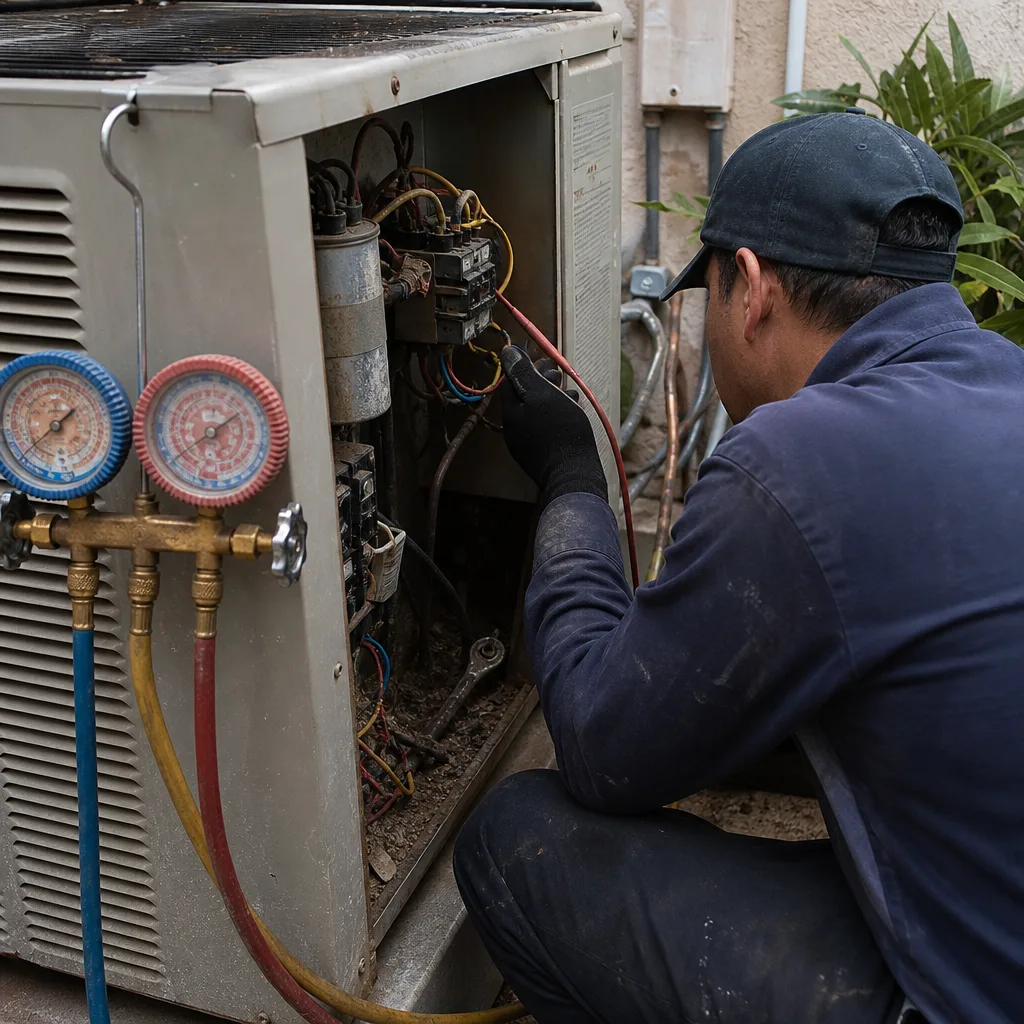
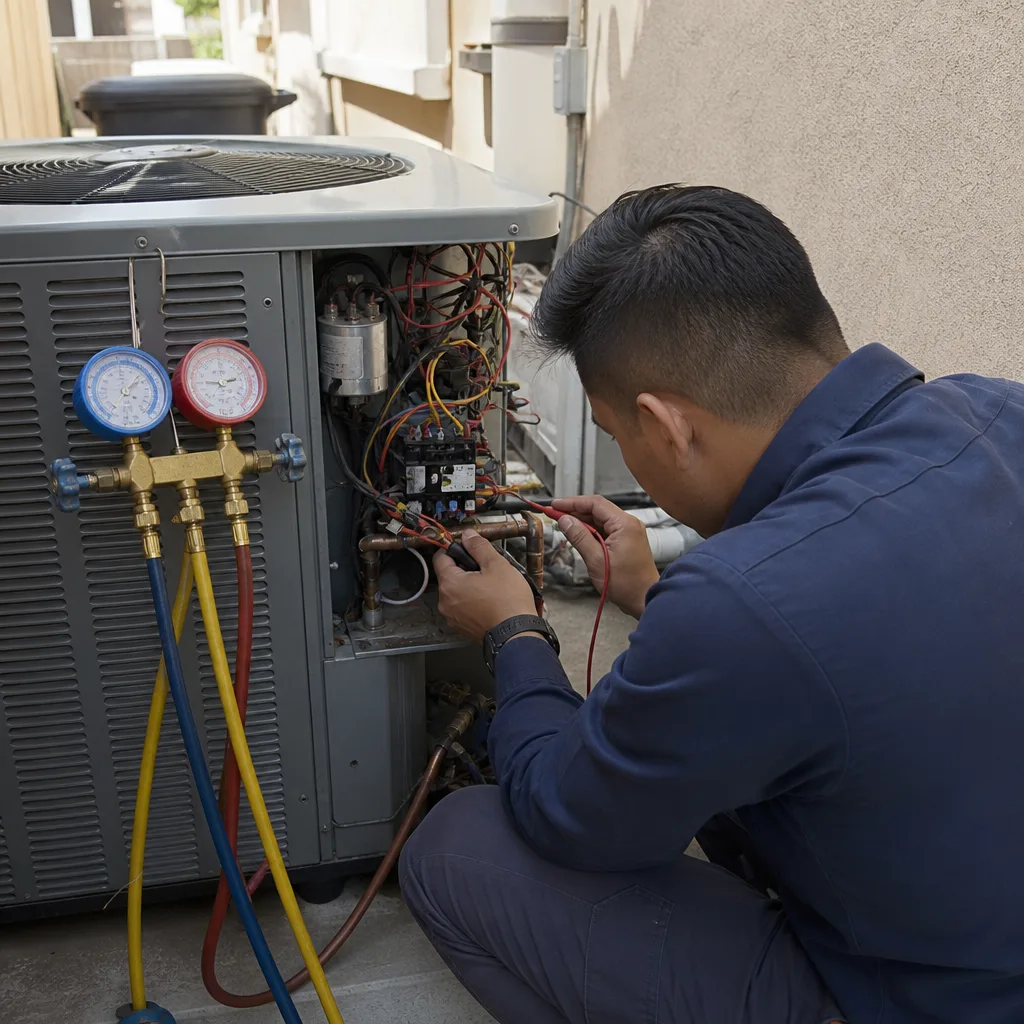
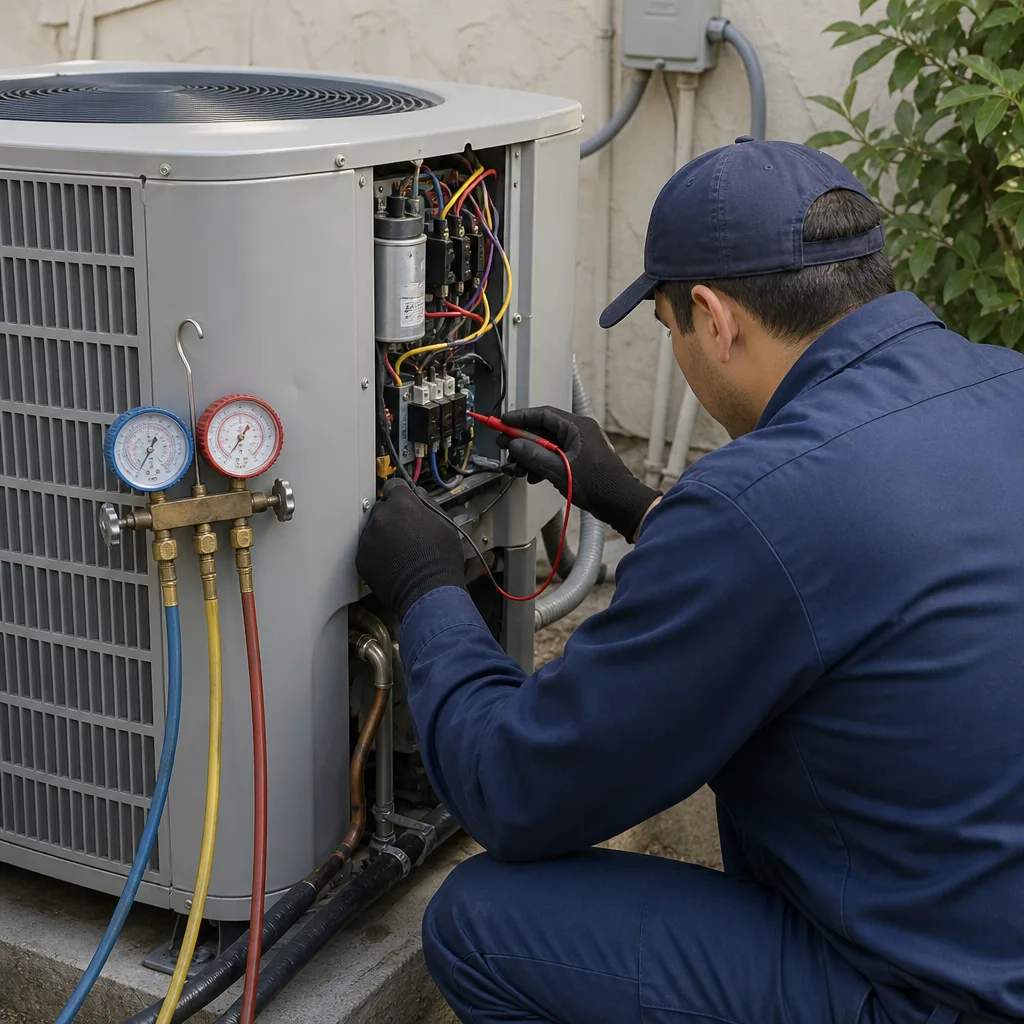
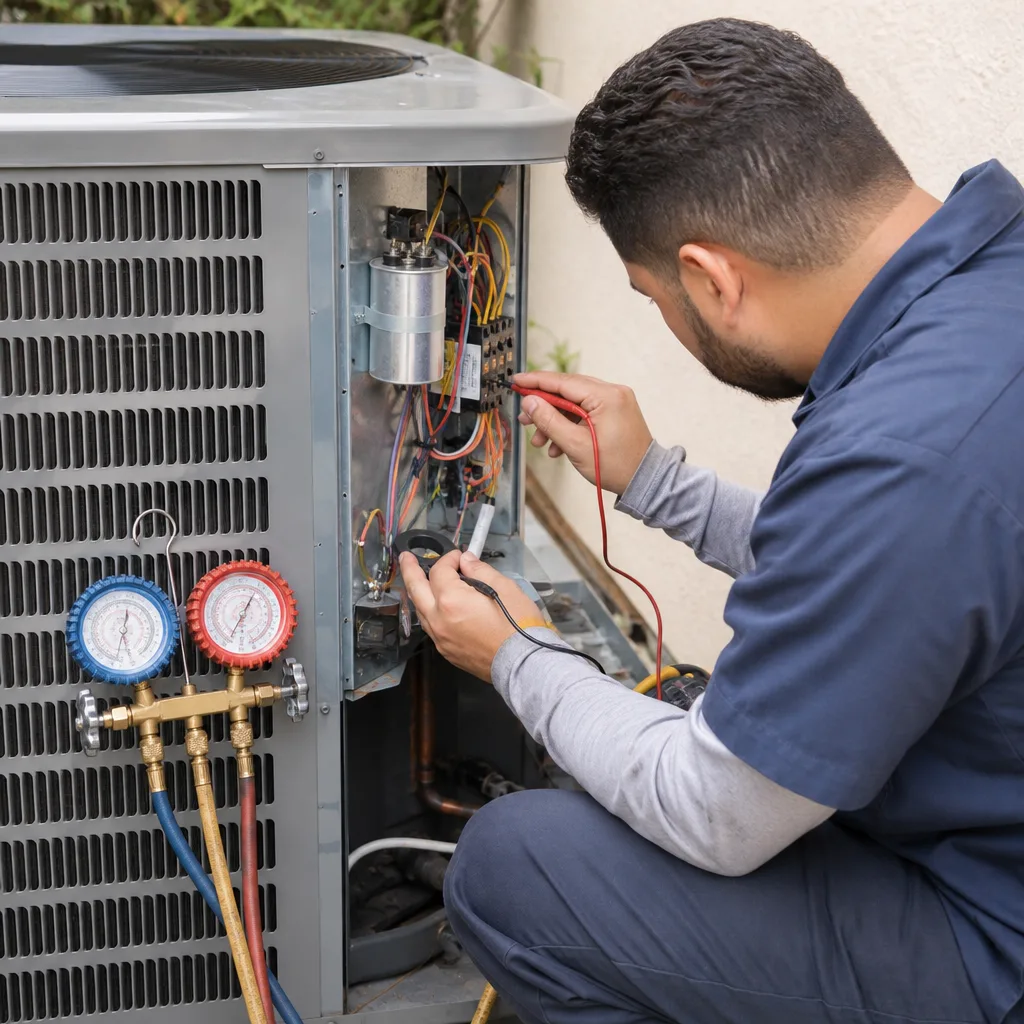
Seasonal tune-up and full diagnostic on your Carrier, Trane, or Goodman system - readings shown to you before any repair is proposed
Diagnosis first, numbers second - you approve the repair price before a single part goes in.
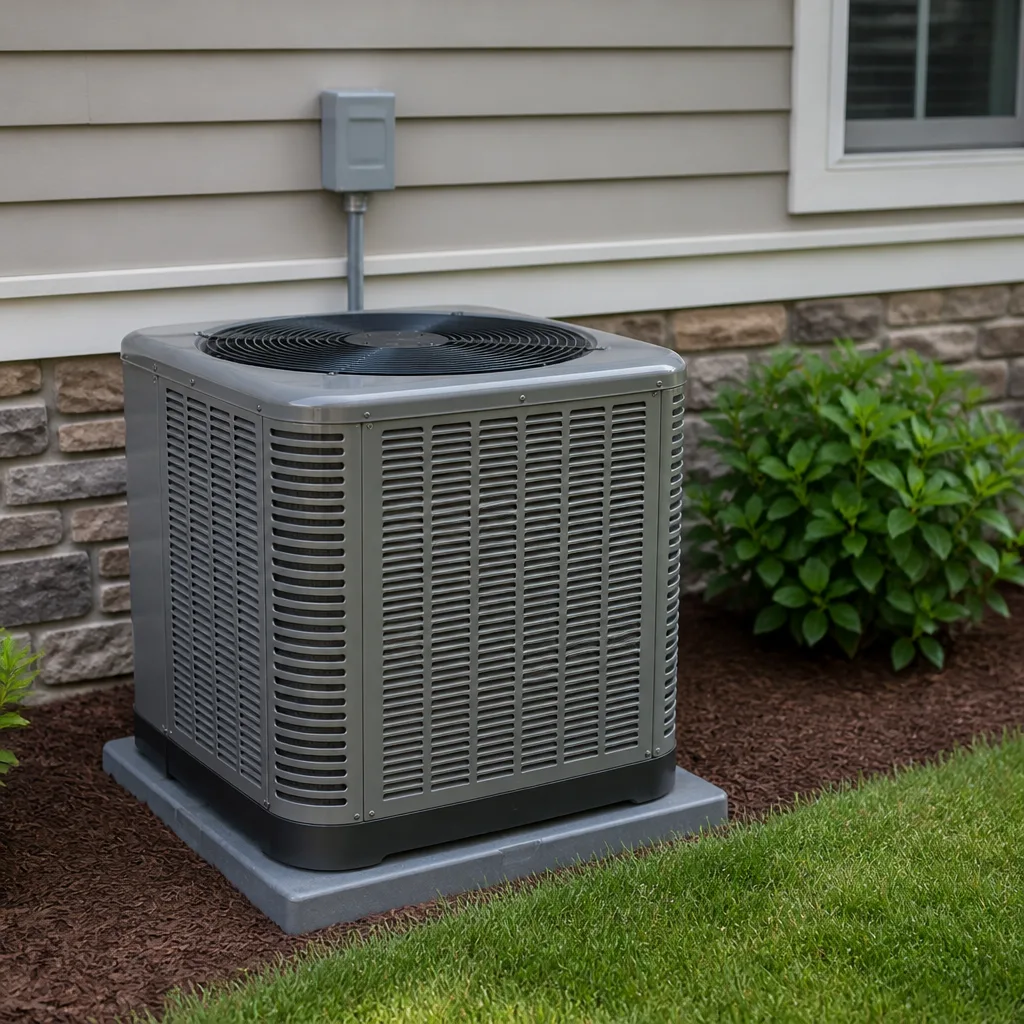
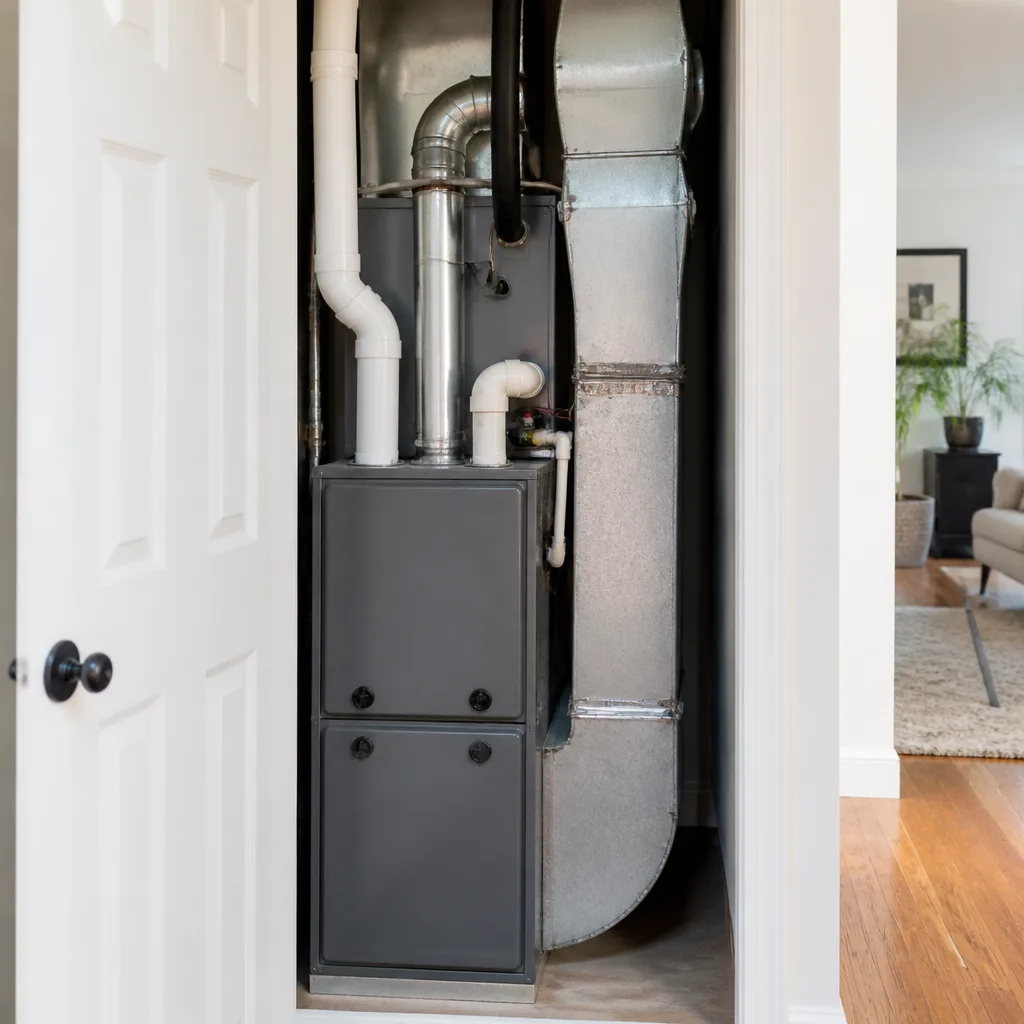
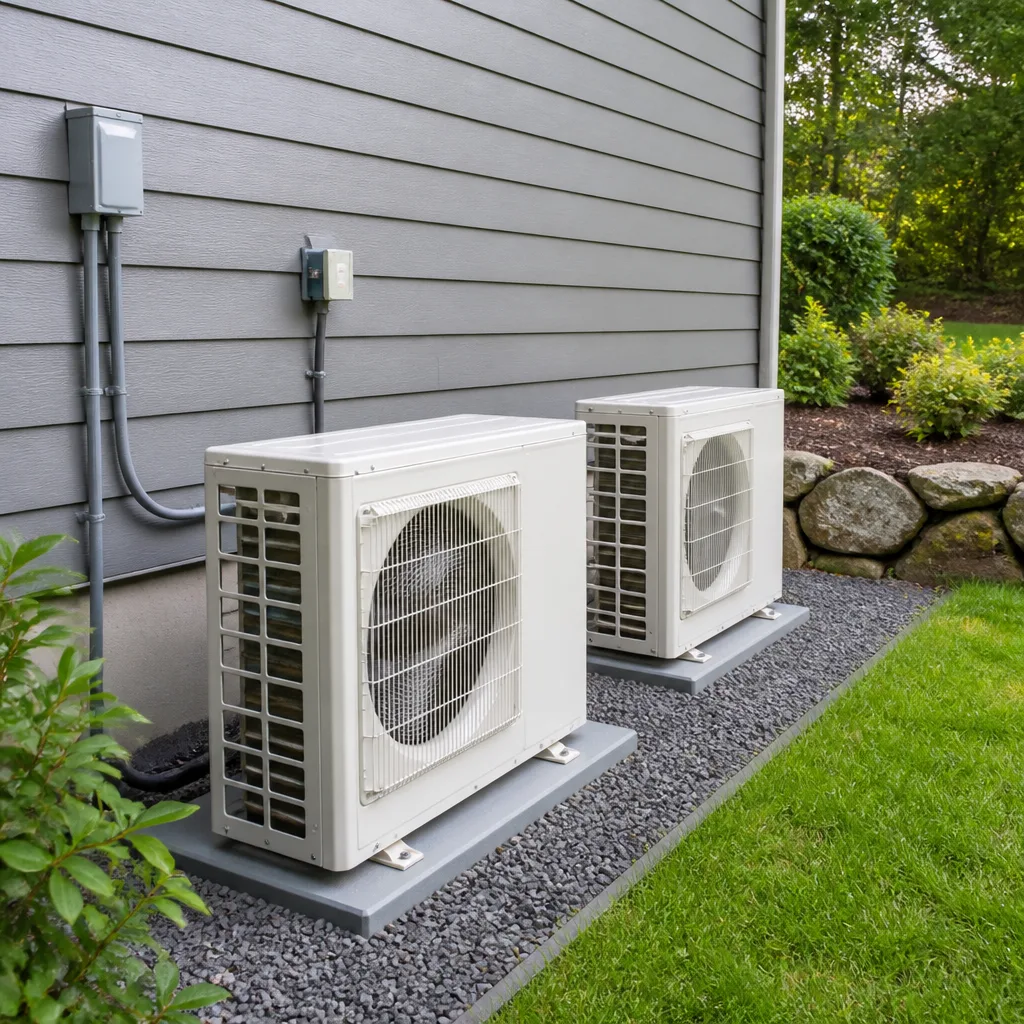
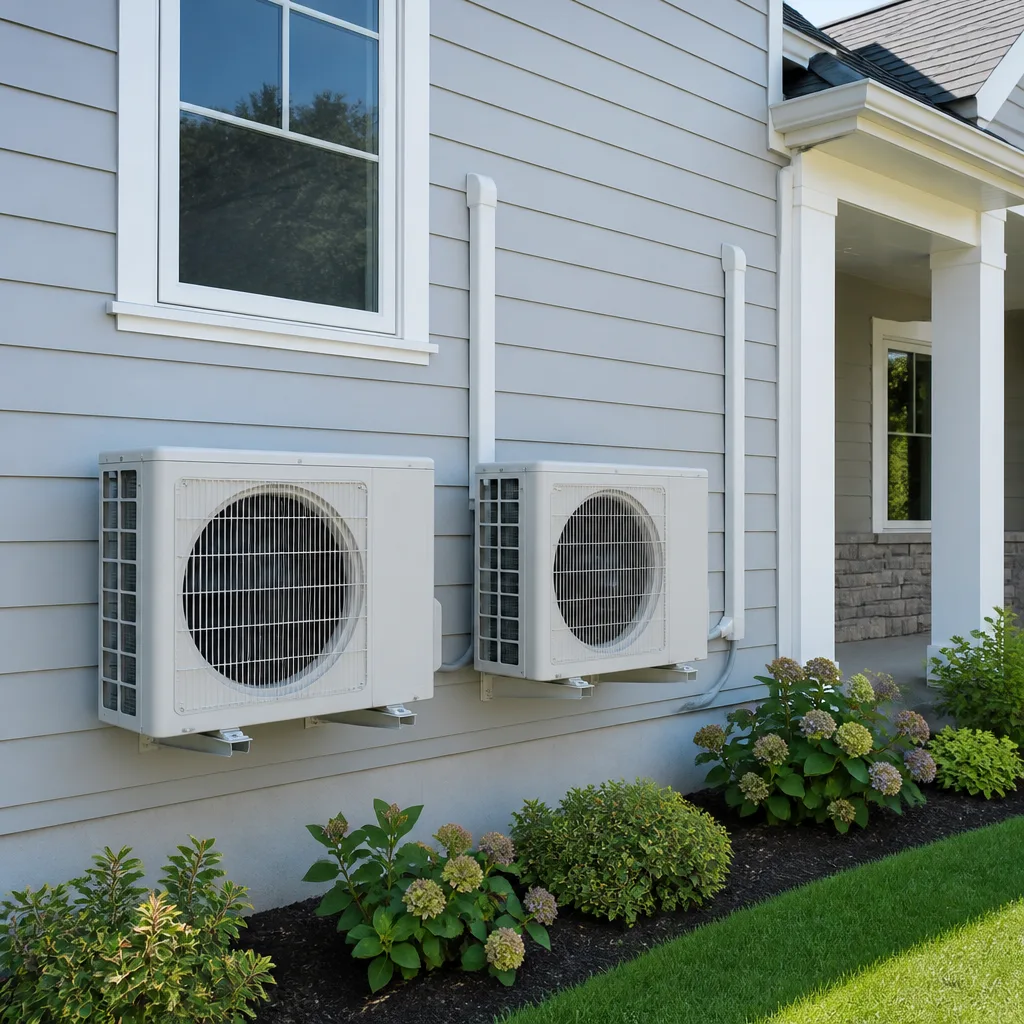
 Before
 After
After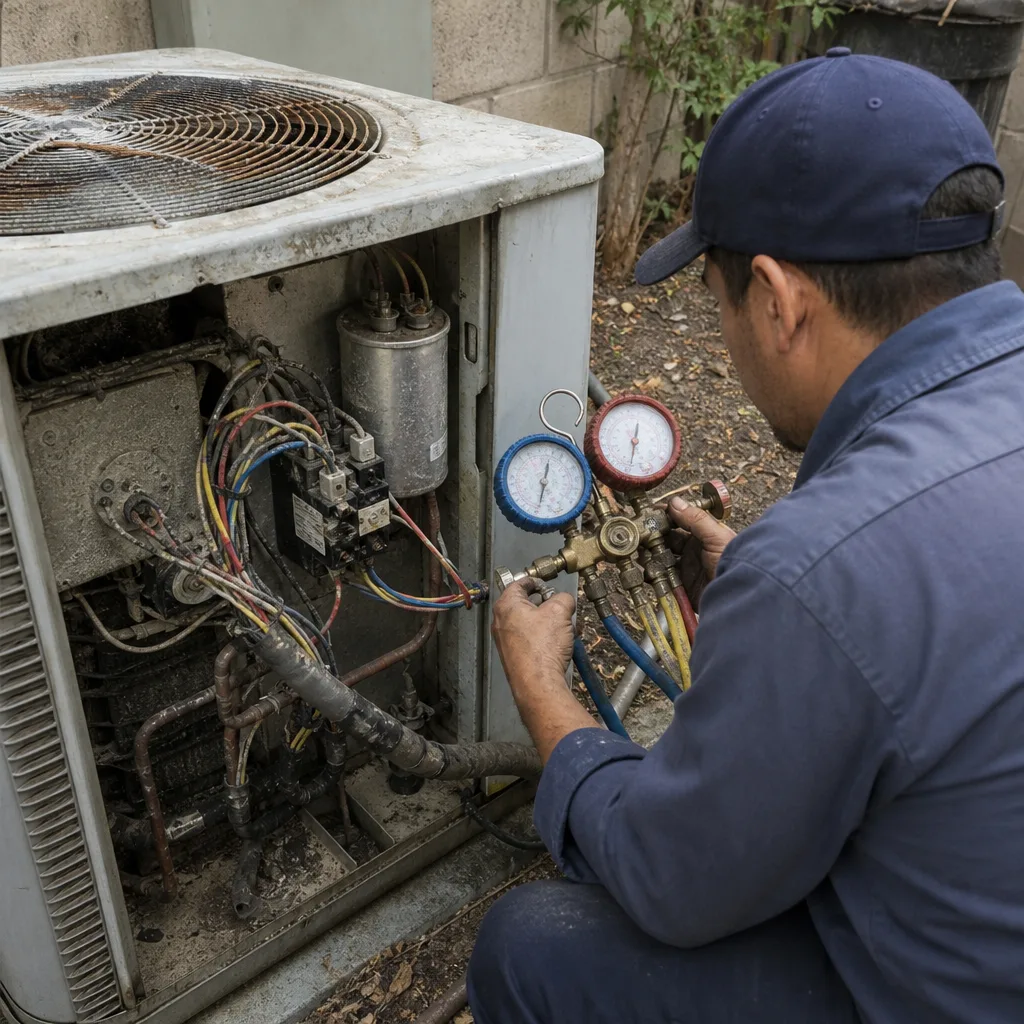 Before
 After
After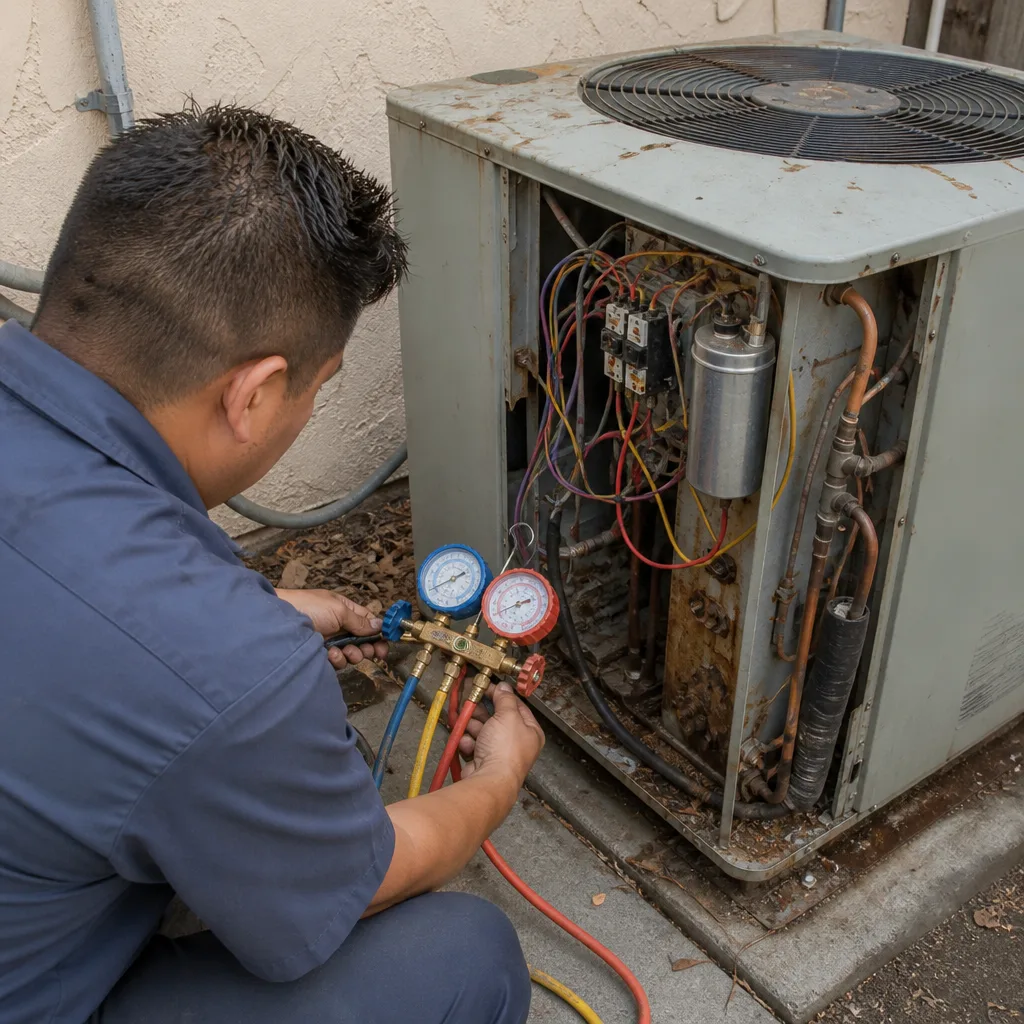 Before
 After
AfterHow to Hire a HVAC Contractor in Los Angeles: A Step-by-Step Guide
Here’s a number that should stop you cold: the California State License Board receives thousands of complaints about contractor fraud every year, and Los Angeles consistently ranks among the highest in the state for HVAC-related disputes. But licensing fraud is only half the story. When you hire an HVAC contractor in Los Angeles, you’re not just hiring a company. You’re handing a house key to a stranger, often when you’re alone, and the industry has almost no standard process for telling you who that person actually is before they ring the bell. This guide walks through exactly what to verify, what to ask, and what to require before you sign anything.
Quick Answer
To hire an HVAC contractor in Los Angeles, start by verifying the company’s C-20 license on the CSLB portal, then require four documents before any technician enters your home: the company’s license number, a certificate of insurance, a written itemized estimate, and confirmation the individual tech has passed a background check. Ask for all of this in writing, refuse same-day pressure, and never let anyone through the door who hasn’t been identified to you by name and photo beforehand.
Table of Contents
- How to Verify a C-20 License on the CSLB Portal
- The Four Documents to Require Before Anyone Enters Your Home
- Red Flags Specific to the Los Angeles HVAC Market
- How to Read a Written HVAC Estimate Line by Line
- What a Threshold Verified Standard Looks Like in Practice
- Eight Questions to Ask Before You Sign
- Common Mistakes to Avoid
- When to Call a Professional
- Frequently Asked Questions
How to Verify a C-20 License on the CSLB Portal
The first screen most Los Angeles homeowners run is the license number itself. A contractor slaps a six-digit number on a truck or a flyer, and most people assume that means everything checks out. It doesn’t. The CSLB license lookup tells you the company is licensed. It tells you nothing about which individual is showing up at your door, whether their background has been checked, or whether the tech on the truck is even the one who was vetted.
That said, license verification is still step one, and it’s non-negotiable. Here’s the number to know: in California, a heating and air contractor must hold a C-20 warm-air heating, ventilating, and air-conditioning contractor license. A general building license, a C-36 plumbing license, or a handyman registration is not the same thing and does not authorize someone to pull permits for HVAC work on your Los Angeles home.
Here’s the exact process to verify a license:
- Go to the CSLB website and open the “Check a License” tool.
- Enter the license number the contractor gave you. If they won’t give you the number before the visit, treat that as a refusal and move on.
- Confirm the license type says “C-20” and the classification description matches heating, ventilation, and air conditioning work.
- Check the status: it must read “Active” in good standing. Suspended, expired, or revoked licenses are common in the Los Angeles market.
- Verify the name on the license matches the name of the company you’re actually speaking with. Subcontracting a licensed company’s number to an unlicensed crew is a known pattern in the LA area.
- Note the license issue date and the business address. A license issued three weeks ago with a residential address in Pomona is a different risk profile than one held for fifteen years with a commercial address in the San Fernando Valley.
- Check for any disclosure of liens, judgments, or pending complaints on the license record. The CSLB publishes these, and they are a matter of public record.
One more point worth stating plainly: a valid license confirms the company met a minimum legal bar. It does not confirm the person standing on your porch is employed by that company, trained by that company, or even known to that company. That part requires a different set of demands, which is exactly what the next section covers.
The Four Documents to Require Before Anyone Enters Your Home
Most homeowners in Los Angeles will ask for a license number and stop there. That’s the gap this guide exists to close. Before a technician crosses your threshold, especially if you’re home alone or have young children in the house, there are four things to request in writing. Not one of them should be treated as optional, and a legitimate contractor will produce all four without argument.
Here is what to ask for:
- Company ID and license number. The company should state its full legal name, its C-20 license number, and the name of the specific technician assigned to your job. If the dispatcher can’t tell you who is coming, that’s a signal the company itself doesn’t track who goes where.
- Certificate of insurance. Ask for a copy of the company’s general liability insurance certificate with coverage limits stated. Workers’ compensation coverage matters too. If a worker gets hurt on your Los Angeles property and the contractor lacks coverage, the financial exposure can land on you.
- Written itemized estimate. More on this in the section on reading estimates, but the principle is simple: a real company prices the job on paper before touching a screwdriver. A vague verbal number is not an estimate. It’s a placeholder for a bigger invoice.
- Technician-level background check confirmation. This is the document almost no one asks for, and it’s the one that matters most for personal safety. The question to ask is, “Can you confirm in writing that the specific technician assigned to my home has passed a background check at the individual level?” A company-level license is not a background check. It tells you nothing about the human at your door.
When a contractor hesitates on any of these four items, the correct response is to end the conversation. Los Angeles has thousands of licensed HVAC companies. No single one is so special that you should compromise on any of these points.
Red Flags Specific to the Los Angeles HVAC Market
Every market has its own failure patterns, and Los Angeles has several worth naming directly. The city’s sheer size creates a volume environment where sloppy and predatory operators can hide between legitimate companies, especially in high-turnover neighborhoods across the Valley, the Westside, and South LA. Knowing the patterns helps you spot them before they cost you money or worse.
Here are the red flags we see most often in the Los Angeles market:
- The bait-and-switch diagnostic. A company advertises a $29 or $49 tune-up, the tech arrives and “discovers” a crisis, and the quoted repair balloons to four figures. The cheap diagnostic is a door-opener, not a service. Reputable companies charge a fair diagnostic fee and show you the problem before quoting the fix.
- The unlicensed subcontractor on a permitted job. Los Angeles requires permits for significant HVAC work like furnace replacements and duct modifications. Some companies pull the permit under one name and then send an unlicensed crew to do the actual install. When you sign, ask whose employees will be on site and whether the workers are W-2 employees of the licensed company or subcontracted labor.
- The “today only” price. Pressure pricing is alive and well in Los Angeles, especially during the first heat wave of summer and the first cold snap of winter. A legitimate contractor prices a job the same on Tuesday as they do on Thursday. If the price dies at midnight, treat the whole offer as suspect.
- The photograph-free dispatcher. Many companies in LA will send “a tech” to your home with no name, no photo, and no prior introduction. You’ll get a two-hour arrival window and a knock on the door from someone you’ve never seen. That’s the industry default, and it’s exactly the risk this guide teaches you to eliminate.
- The cash-discount dodge. A contractor who offers a significant discount for cash payment or for skipping the written estimate is usually avoiding a paper trail. In a city the size of Los Angeles, this pattern is frequent enough that it’s worth treating as disqualifying on its own.
How to Read a Written HVAC Estimate Line by Line
The written estimate is the single best predictor of how the final invoice will look. When the estimate is vague, the invoice will be too, and the difference usually lands in the contractor’s favor. Here’s how to read one so you’re not surprised later.
A clean estimate separates the job into four buckets. If any of them is missing, ask why.
- Labor. This should be a specific dollar amount for the time and skill of the technician or install crew. Not a range. Not “depending on conditions.” A number. In the Los Angeles market, standard residential labor rates for qualified C-20 techs are real, published figures. If the labor line is blank or folded into a round number with no breakdown, that’s a red flag.
- Parts and equipment. The estimate should name the specific parts or the specific model numbers being installed. “New condenser” is not specific enough. “Carrier 24SCA4 3-ton condenser” is. Brand names like Bryant, Daikin, York, and American Standard are common in LA homes, and a real estimate tells you which one you’re paying for.
- Refrigerant. On any AC repair involving refrigerant, the type and per-pound price should be itemized. R-410A and the newer A2L refrigerants are priced differently, and the amount being added should be listed. “Recharge as needed” is a blank check. In our experience, a vague refrigerant line predicts an invoice dispute more reliably than anything else.
- Warranty terms. The estimate should state what the warranty covers and for how long. A real one reads like this: “This repair is guaranteed for 365 days. If it fails, we return at no additional charge.” If the warranty section says nothing more than “guaranteed,” ask for it in writing.
One habit worth building: ask for the estimate before the work starts and refuse any changes not presented in writing. In Los Angeles, the honest shops put the number on paper upfront, every time, with no exceptions. The ones that don’t are betting you won’t push back.
What a Threshold Verified Standard Looks Like in Practice
Here’s the problem in plain terms: the HVAC industry is one of the few trades where a company can send a stranger to a woman’s door, with no warning, no photo, and no proof of who he is, and call it normal. That should bother you. It bothers us.
The Threshold Verified standard exists to fix that gap. It starts with a simple commitment: every technician sent by a Threshold-verified company is background-checked and identity-verified at the individual level, not just listed on a company license. That means the person whose name is on your appointment is the person who shows up. Not a subcontractor. Not a fill-in.
In practice, the standard works like this:
- You book the job and receive the name and photo of your assigned technician before the visit, so you know exactly who to expect at the door.
- When the tech arrives, they show a photo ID badge that matches the name and face you were sent.
- If someone shows up who you were not told to expect, the visit is treated as an error by the company, and it’s made right.
You can use this exact standard as a benchmark when interviewing any contractor in Los Angeles. Ask, “Will you give me the name and photo of my technician before the visit, and will that same person be the one who arrives?” The answer tells you a lot. If the company can’t do that, they can’t guarantee who walks through your door. And that guarantee is the whole point.
Eight Questions to Ask Before You Sign
Here’s a ready-to-use interview script. These eight questions cover the gaps most Los Angeles homeowners never think to ask, and the answers will separate a professional operation from a sales operation within about ninety seconds.
- “What is your C-20 license number, and is it in active status?” Get the number, then verify it yourself on the CSLB portal. Don’t rely on their website.
- “Will the technician assigned to my home be an employee of your company or a subcontractor?” This one cuts through the unlicensed-subcontractor pattern in the LA market.
- “Can you send me the name and photo of my technician before the visit?” If the answer is no, consider what that means about their ability to tell you who is in your home.
- “Has this specific technician passed an individual background check?” Company-level vetting is not the same thing. Ask about the person, not the company.
- “Will you provide a written, itemized estimate before any work begins?” Every legitimate contractor says yes immediately. Any hesitation is information.
- “What exactly does your warranty cover, and for how long is it in writing?” Ask for the warranty terms on paper before you sign the estimate.
- “If the repair fails within the warranty period, do you return at no charge?” The answer should be an unqualified yes. Brandt HVAC operates under a 365-Day Done Right Promise: if a repair isn’t done right, we make it right, including a free return visit.
- “Who answers the phone if I have a problem at night or on a weekend?” If the answer is an answering service or a callback queue, know that before you’re standing in a hot house on a Sunday in August.
Common Mistakes to Avoid
- Hiring on price alone. The cheapest bid in Los Angeles is often the most expensive one by the time the job is finished. A low price with a vague estimate is not a bargain. It’s a down payment on a change order.
- Never asking who will actually show up. The company you call is not necessarily the person who rings your bell. Subcontracting and day-labor crews are common in the LA market. Always ask for the assigned tech’s name and photo before the visit.
- Skipping the written estimate to “save time.” There is no scenario where a verbal price protects you. If a contractor resists putting the number on paper, that resistance is your answer.
- Confusing a license with a background check. A C-20 license confirms the company met a legal standard. It tells you nothing about the individual in your house. Ask about the person, not just the paperwork.
- Falling for the seasonal urgency play. During a Los Angeles heat wave, every contractor is busy, and the honest ones still give written prices without “today only” pressure. A company that needs you to decide on the spot is not selling service. It’s selling a clock.
- Not asking about permits. Significant HVAC work in Los Angeles requires permits. If a contractor offers to skip them to save you money, that’s your liability, not theirs.
- Accepting a warranty that isn’t written down. A spoken guarantee evaporates the moment a repair fails. If the warranty terms aren’t in writing, you don’t have a warranty. You have a promise from someone you may never see again.
When to Call a Professional
Some HVAC problems are fine to observe for a day or two. Others need a call right away. In Los Angeles, where summer temperatures routinely cross into the triple digits in the Valley and stay warm across most of the basin well into October, a dead air conditioner in July is not an inconvenience. It’s a health issue, especially for older adults and young children. For steps to prepare before the heat hits, see our HVAC Emergency Preparedness Guide for Los Angeles Homes.
Call a professional when your system is blowing warm air, when you hear grinding or screeching from the indoor or outdoor unit, when your furnace smells like gas, when your AC is short-cycling every few minutes, or when any system fails entirely during extreme heat or cold. Refrigerant leaks, electrical smells, and water pooling around the indoor unit also warrant a same-day call. These are not conditions to troubleshoot through a YouTube video. Brandt HVAC offers free estimates in Los Angeles. Call (984) 538-9003 and a live person answers, 24 hours a day, no voicemail tree.
Frequently Asked Questions
Expect to pay a diagnostic fee of $75 to $150 for a service call in Los Angeles, with most common repairs like capacitor replacements running $150 to $350, igniter replacements $150 to $300, and full system replacements ranging from $8,000 to $16,000 depending on size and efficiency. For a deeper breakdown of what drives these numbers, see our HVAC Cost Breakdown: The Los Angeles Homeowner’s Reference for 2026. A written itemized estimate is the only way to know your exact price, and you should never agree to work without one. Call (984) 538-9003 for a free estimate from Brandt HVAC.
Yes, furnace replacements and significant HVAC system changes in Los Angeles generally require a permit through the Los Angeles Department of Building and Safety, and the contractor should handle the permit process as part of the job. For details on what to expect, read HVAC Permits, Codes & Inspections in CA: What You Need to Know. A contractor who suggests skipping permits is saving themselves money and transferring the legal risk to you. Always ask who pulls the permit before work begins.
Verify the contractor’s C-20 license number on the California State License Board’s “Check a License” portal at cslb.ca.gov, then confirm the status reads “Active” and the license type is C-20 warm-air heating, ventilating, and air-conditioning. Do not accept a license number printed on a truck or website without checking it yourself. The CSLB lookup takes about two minutes.
Repair is usually the right call if the system is under 10 years old, the repair costs less than a third of a replacement, and the compressor is still healthy. Replacement starts making sense when the system is over 12 to 15 years old, uses R-22 refrigerant, or has failed multiple times in a single Los Angeles cooling season. A trustworthy contractor will show you the numbers for both options in writing and let you decide without pressure. Call (984) 538-9003 for a straight answer on your specific system.
Yes, a diagnostic fee is standard practice in Los Angeles and a legitimate one, because a qualified C-20 tech’s time and skill have real value. The problem isn’t the fee. It’s what some companies do after collecting it: inflate the repair, fabricate urgency, or use the visit to push a full replacement. Ask for the diagnostic findings and the itemized repair quote in writing before you authorize any additional work.
Most Los Angeles homes run on major residential equipment from manufacturers like Carrier, Trane, Lennox, Goodman, Rheem, York, Daikin, Bryant, and American Standard. Any competent contractor should be able to service all of them. If a tech tells you your brand is “junk” and you need a full replacement from a brand they just happen to sell, that’s a sales pitch, not a diagnosis. Brandt HVAC services all major residential brands and will show you the repair option before any replacement conversation.
The Bottom Line
Hiring an HVAC contractor in Los Angeles comes down to one question: would you open your front door to a stranger with no proof of who he is? Most people wouldn’t, and yet that’s exactly what the standard HVAC hiring process asks homeowners to do every day. The fix is to treat the hiring decision as a security decision. Verify the C-20 license on the CSLB portal. Require the four documents: license, insurance, itemized estimate, and technician-level background confirmation. Read the estimate line by line, refuse pressure pricing, and insist on a written guarantee with a free return visit. A contractor who passes all of that is one you can trust. One that won’t is one you don’t need. For more guides & resources on hiring safely in Los Angeles, explore our blog.
Written by Devin Marlowe, Owner at Brandt HVAC, serving Los Angeles since 2003.