
Last updated October 9, 2026
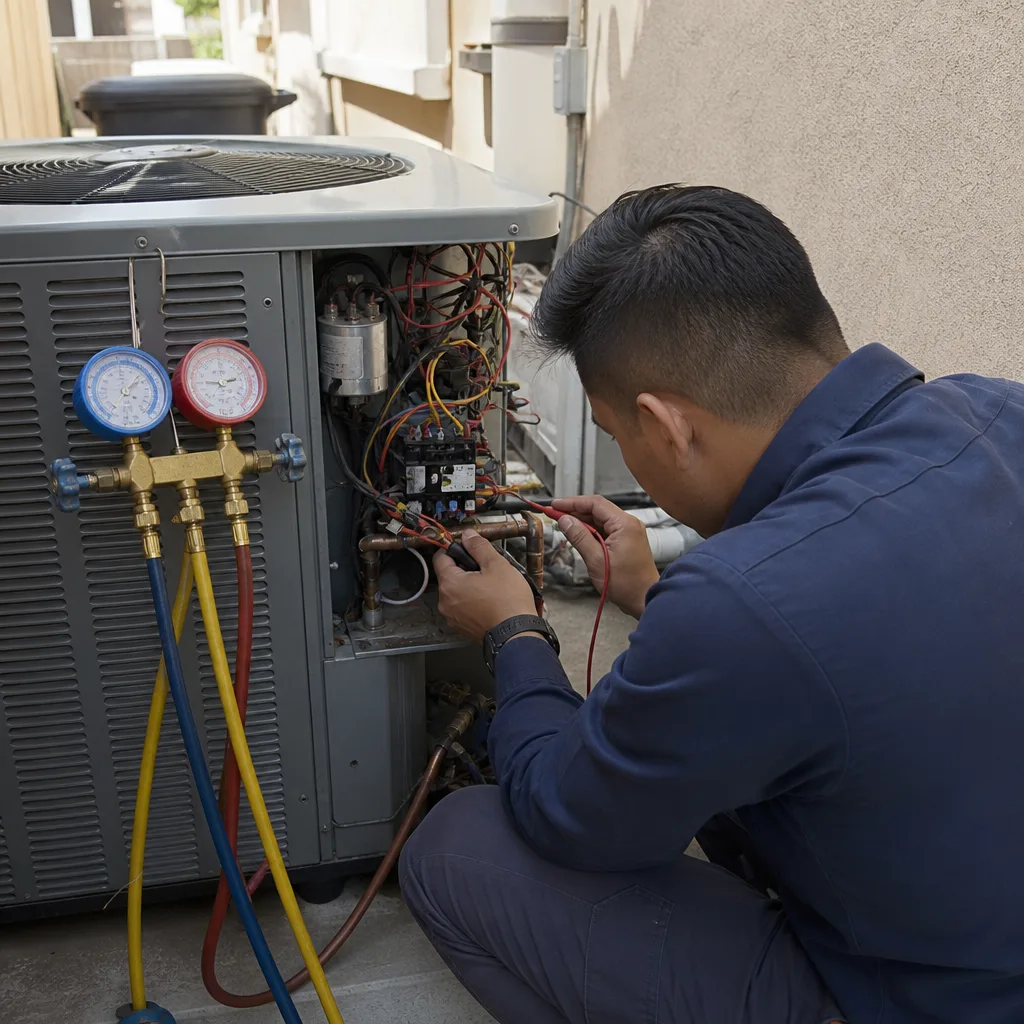
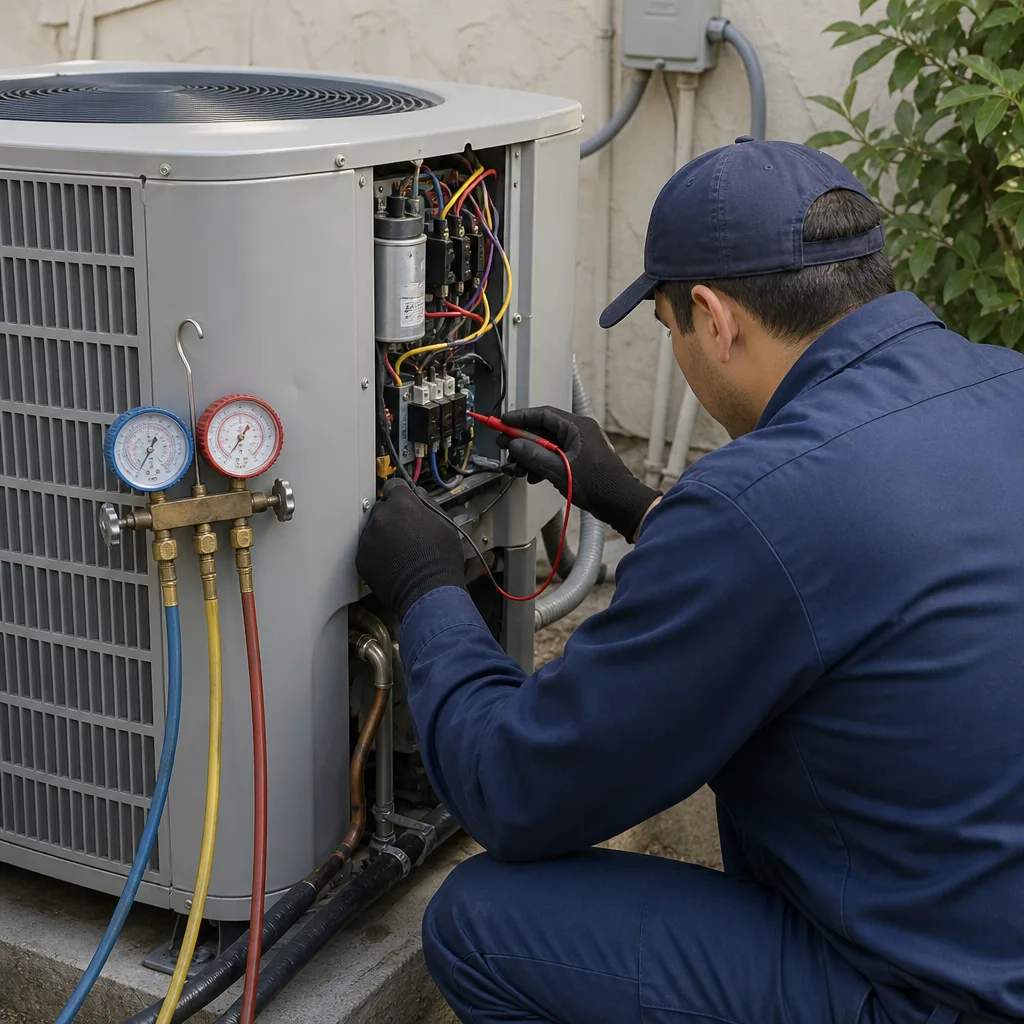
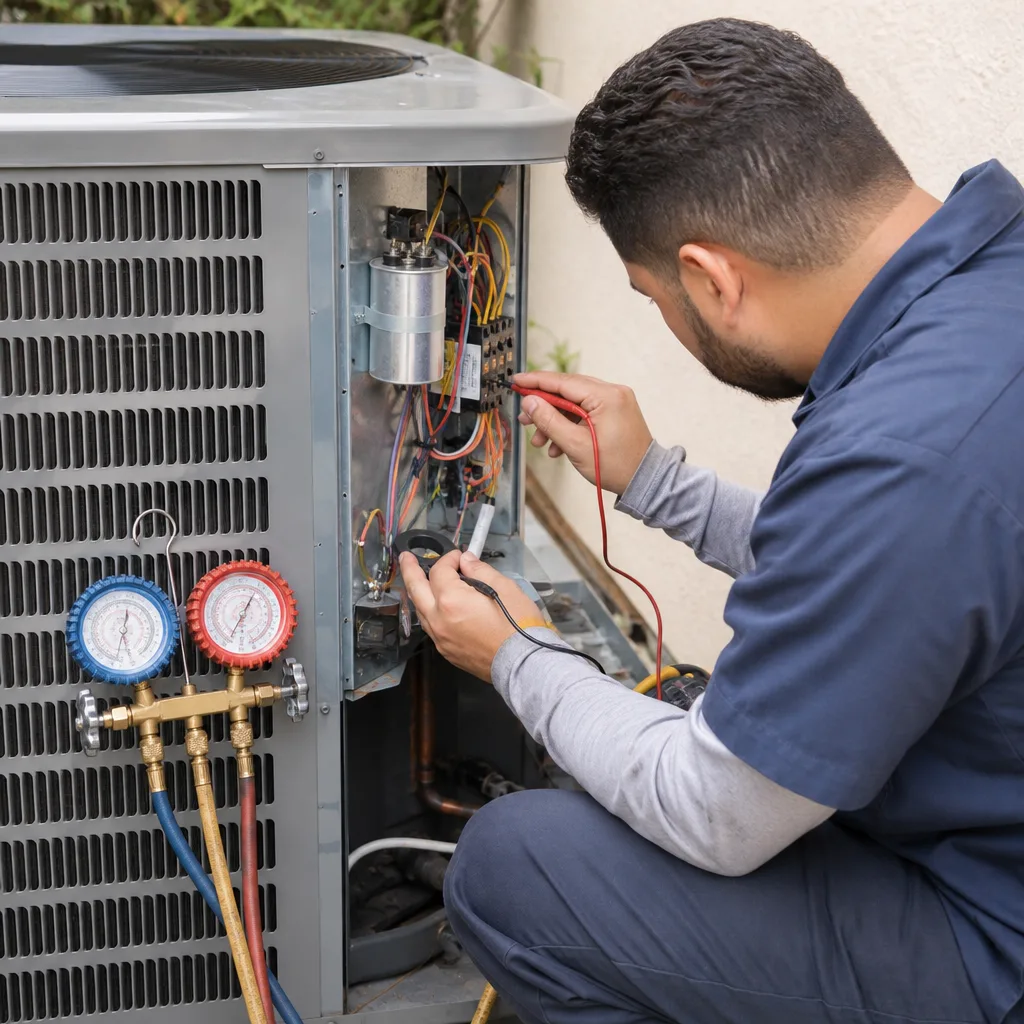
Seasonal tune-up and full diagnostic on your Carrier, Trane, or Goodman system - readings shown to you before any repair is proposed
Diagnosis first, numbers second - you approve the repair price before a single part goes in.
 Before
 After
After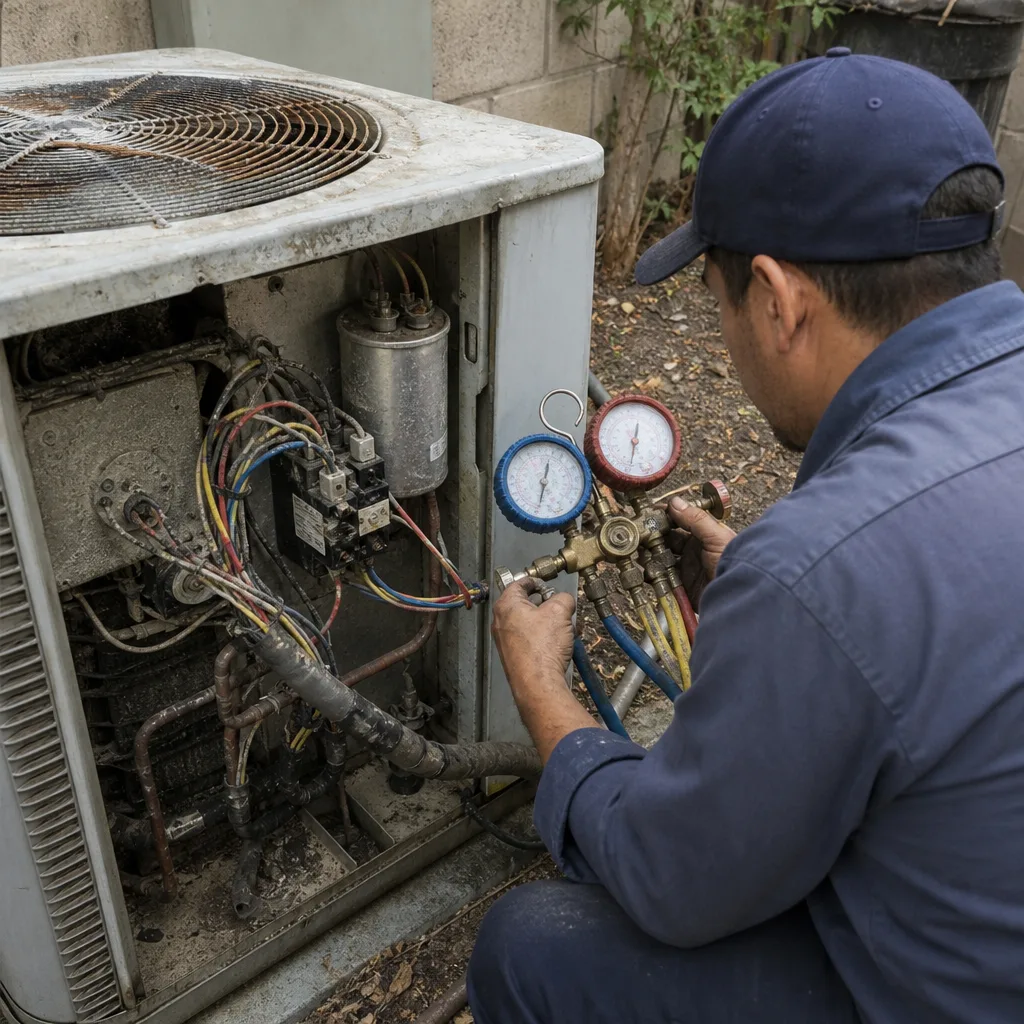 Before
 After
After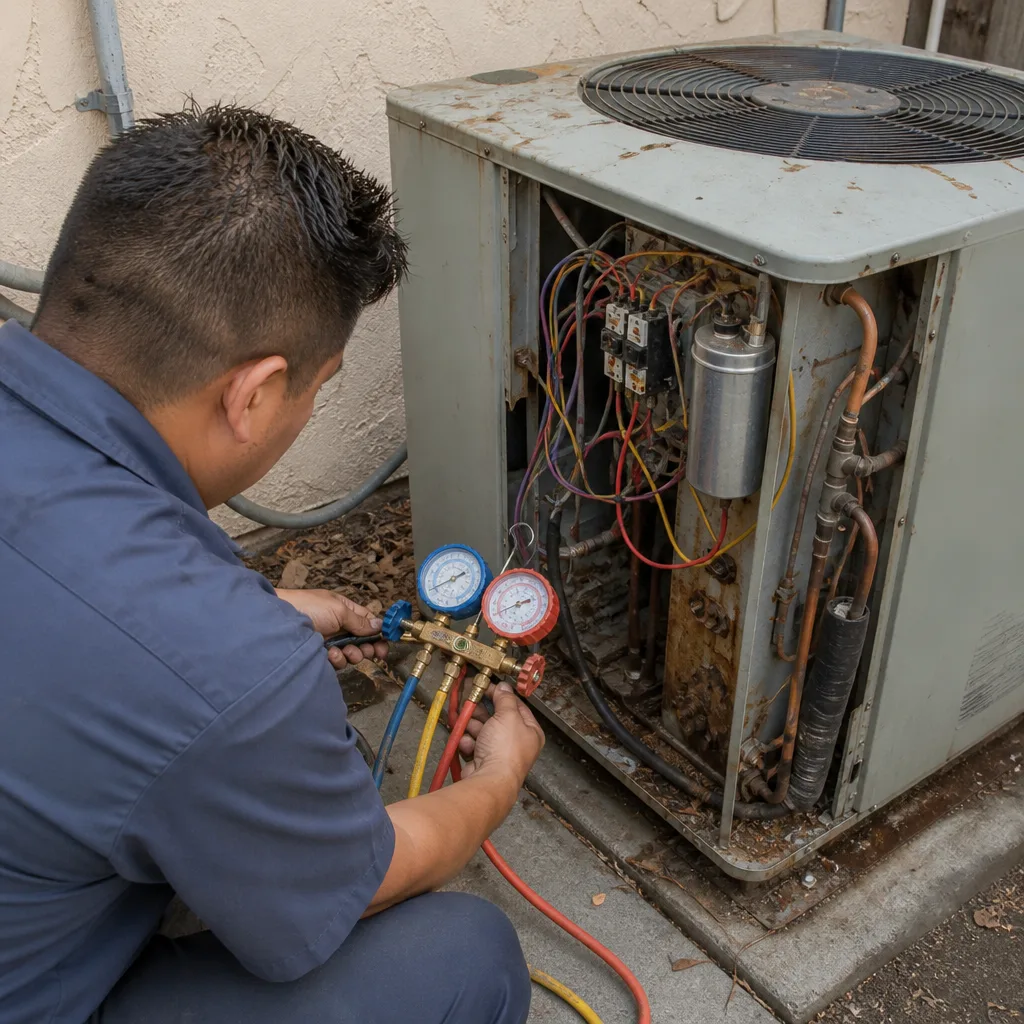 Before
 After
AfterFurnace Repair Warning Signs Every Homeowner Should Know
A furnace that short-cycles isn’t “acting up” – it’s communicating a specific fault code in plain behavior. Once you know what each symptom maps to, you stop guessing and start acting at the right moment. In Los Angeles, where furnaces sit idle for eight months a year, these warning signs get dismissed as “normal winter quirks” far longer than they should. This guide maps each symptom to its likely cause, gives you an urgency tier for every warning sign, and tells you exactly what to document before you call for Furnace Repair services – so you arrive at the repair conversation informed, not surprised.
Quick Answer
The most common furnace repair warning signs are short cycling (turning on and off every few minutes), a yellow or flickering flame instead of a steady blue one, banging or popping sounds at startup, a furnace that runs constantly without reaching the set temperature, and any smell of gas or burning. A yellow flame and gas odors are carbon monoxide risks that require leaving the house immediately. Other symptoms like short cycling or constant running mean you should schedule service within days, not weeks.
Table of Contents
- Short Cycling: What Your Furnace Is Trying to Tell You
- Yellow Flame: The Heat Exchanger Warning You Can’t Ignore
- Banging, Popping, and Rattling: What Those Startup Noises Mean
- Furnace Running Constantly: The Los Angeles-Specific Problem
- Strange Smells: Dust, Burning, and the One That Means Leave Now
- Higher Gas Bills With No Weather Change: The Invisible Warning Sign
- What to Document Before You Call: A Technician’s Checklist
- Urgency Tiers: Act Today vs. Schedule Soon vs. Watch for a Week
Short Cycling: What Your Furnace Is Trying to Tell You
Short cycling means the furnace fires up, runs for two to five minutes, shuts off, and repeats the cycle several times an hour. It’s one of the most misunderstood furnace behaviors in Los Angeles homes, because the mild climate makes it easy to shrug off. The house still gets warm, eventually. So what’s the problem?
The problem is that every short cycle puts stress on the heat exchanger, the blower motor, and the ignition system without giving the furnace enough runtime to do its job properly. A furnace designed to run 10 to 15 minutes per cycle is instead running three or four cycles in that same window. That’s accelerated wear on components that cost hundreds to replace.
In our experience, short cycling maps to one of three causes:
- A clogged or restrictive air filter. When airflow drops, the furnace overheats and the high-limit switch shuts it down as a safety measure. In Los Angeles, where homes often go months without filter changes during the shoulder seasons, this is the most common culprit. A pleated filter left in place for a year can restrict airflow by 40 percent or more.
- A failing pressure switch. The pressure switch confirms that exhaust gases are venting properly before the gas valve opens. When it starts to fail, it can send a false “not venting” signal mid-cycle, cutting the flame.
- An overheating condition. If the blower motor is slow to start, or if the heat exchanger is coated with years of dust from the Santa Ana winds, the furnace overheats and the limit switch trips. This one repeats until something fails outright.
The fix for short cycling isn’t always expensive. A filter replacement might solve it for under twenty dollars. A pressure switch replacement typically runs $150 to $300 including labor. But if the overheating is caused by a cracked heat exchanger or a failing blower motor, you’re looking at a more serious repair and possibly a replacement conversation. The key is not waiting. Short cycling that continues for weeks turns a $20 fix into a $600 one.
Yellow Flame: The Heat Exchanger Warning You Can’t Ignore
A healthy gas furnace produces a steady, blue flame with maybe a small yellow tip at the very top. Blue means complete combustion – the gas is burning cleanly with the right mix of oxygen. When the flame turns predominantly yellow, orange, or flickers unevenly, the furnace is burning incompletely.
Incomplete combustion produces carbon monoxide. That’s not an exaggeration for effect; it’s the chemistry. A yellow flame means the gas isn’t burning cleanly, and the byproduct of dirty burning is CO. In most cases, the cause is a dirty burner, misaligned burner ports, or a compromised heat exchanger. Dirt and dust from a long idle season in Los Angeles – where furnaces sit unused from April through November – settles on burners and disrupts the air-to-fuel ratio.
Here’s how to check: find the small viewing window on the front panel of the furnace while it’s running. You should see blue. If you see yellow or orange, here’s your urgency tier:
- Yellow flame with no other symptoms: Schedule service this week. A burner cleaning typically runs $120 to $250 and resolves most yellow-flame issues.
- Yellow flame plus soot buildup around the furnace cabinet: Schedule service within 48 hours. Soot means the problem has been developing for a while.
- Yellow flame plus a smell like campfire or burnt metal: This is the leave-the-house tier. Turn off the furnace at the thermostat, open a window if safe to do so, and call for emergency service.
One thing we want to be direct about: this is not a do-it-yourself repair. A yellow flame can indicate a cracked heat exchanger, and a cracked heat exchanger is the component that separates combustion gases from the air circulating through your home. If that barrier fails, CO moves into living spaces. This is the safety-critical part of the furnace, and it’s a strong argument for having a licensed professional inspect it. The Furnace Repair in Los Angeles page covers how our technicians approach heat exchanger inspections, but the short version is: we check it on every call because it’s the component we refuse to guess about.
Banging, Popping, and Rattling: What Those Startup Noises Mean
Furnaces make noise. A low hum from the blower is normal. A click when the gas valve opens is normal. But a bang, pop, or boom at startup is a specific diagnostic signal, and it has a specific name: delayed ignition.
Delayed ignition happens when gas builds up in the combustion chamber before the igniter lights it. Instead of igniting immediately when the gas valve opens, the gas accumulates for a second or two, then ignites all at once. That’s the bang. It’s a small explosion happening inside your furnace, and every time it happens, it puts stress on the heat exchanger and the burner assembly.
The causes of delayed ignition are usually a dirty or failing igniter, a misaligned burner, or a gas pressure issue. On Rheem and Goodman furnaces, we commonly see igniter wear after eight to twelve years – the igniter gets slower to reach ignition temperature, and that lag allows gas to pool. It’s a straightforward repair: an igniter replacement typically runs $150 to $300 parts and labor included.
What you should not do is ignore it. Here’s the specific progression we’ve seen in Los Angeles homes:
- Occasional bang at startup, maybe once every few cycles. The homeowner shrugs it off.
- The bang becomes consistent – every startup. Still producing heat, so it’s easy to postpone.
- The furnace fails to ignite entirely. The igniter has finally quit, and now it’s a no-heat call on a 40-degree January night.
If you’re hearing a bang at startup, schedule the repair now. It’s cheaper than a no-heat emergency, and it prevents the cumulative damage that turns a $300 igniter replacement into a much larger repair. Another noise – a rattling or vibrating that comes and goes – often maps to loose ductwork, a failing blower wheel, or a blower motor bearing wearing out. That one is lower urgency, but worth documenting and mentioning when you eventually call.
Furnace Running Constantly: The Los Angeles-Specific Problem
Here’s a myth worth debunking: a furnace running constantly in a Los Angeles winter is not fine just because the winters are mild. The furnace should cycle. When the thermostat reaches the set temperature, the burner shuts off. If the burner runs continuously, one of two things is happening: the furnace is not producing enough heat to reach the setpoint, or the heat is escaping faster than the furnace can produce it.
Mild climates create a specific maintenance problem. In places with harsh winters, furnaces get serviced every fall because a failure means frozen pipes. In Los Angeles, furnaces sit idle for eight months, and when they come on for the first stretch of 50-degree nights, homeowners discover the neglect all at once. See our guide on How Long Does AC Maintenance Take? Timelines and What to Expect for related maintenance planning. A furnace that’s been running constantly for two weeks in January may have been losing efficiency since November – it’s just that nobody was paying attention.
The likely culprits, in order of how often we see them:
- Undersized furnace for the home. If the furnace was installed when the house had different insulation, different windows, or an addition that wasn’t there, it may simply be too small. This is a replacement conversation, not a repair.
- Dirty evaporator coil or blower wheel. Restricted airflow means the heat stays in the furnace instead of moving into the house. The furnace runs longer to compensate.
- A failing gas valve or burner. If the burners are partially clogged, the furnace produces less heat per cycle and runs longer to compensate.
- Thermostat issue. Sometimes the thermostat is misreading the room temperature or is located in a drafty hallway, causing the system to think the house is colder than it is.
For Los Angeles homeowners, the action item is this: if your furnace ran ten minutes per cycle last winter and twenty this winter, that’s data. It’s telling you the system is losing capacity. The fix might be as simple as a thorough cleaning – we typically book those for under $200 – or it might be the first signal that a 15-year-old system is approaching the end of its service life. Either way, the constant running is a message, not a quirk.
Strange Smells: Dust, Burning, and the One That Means Leave Now
The first time a furnace fires up each fall or winter, a dust smell is normal. Dust accumulated on the heat exchanger and burners during the idle season burns off in the first ten to twenty minutes. In Los Angeles, where furnaces sit unused from spring through late fall, this dust smell can be stronger than in colder climates. It should fade after the first full cycle.
What’s not normal – and here’s where you need to be specific about the smell – is any of the following:
- Burning plastic or electrical smell. This means a component is overheating: a fan motor, a capacitor, a control board, or wiring insulation. It won’t fix itself. Shut it down and schedule service the same day.
- Burnt metal smell that persists. If the smell continues after the first hour, it may mean the heat exchanger is overheating, or the blower motor is running against resistance. This is same-day territory.
- Rotten egg or sulfur smell. Natural gas is odorized with mercaptan, which smells like rotten eggs. If you smell sulfur, you have a gas leak. Leave the house. Don’t flip light switches, don’t use a phone inside, don’t light matches. Get outside and call your gas utility first, then a furnace repair professional.
We want to be direct about the rotten egg one because it’s the highest-stakes symptom on this list. A gas leak is not a repair conversation; it’s a safety event. Leave first, call second. It’s also worth noting that a carbon monoxide leak has no smell at all – that’s why the yellow flame and soot buildup signs matter so much. CO is odorless. If you don’t have a carbon monoxide detector in the hallway outside the furnace room or utility closet, install one this week. They’re under forty dollars at any hardware store, and in a Los Angeles home with gas appliances, they should be as standard as a smoke detector.
Higher Gas Bills With No Weather Change: The Invisible Warning Sign
Some furnace failures announce themselves with noise or smell. Others show up quietly in the billing statement. A furnace that’s losing efficiency burns more gas to produce the same amount of heat, and the only visible evidence is the rising cost per therm on your utility bill.
Here’s how to check. Pull your gas bill from the same billing period last year. The comparison needs to account for weather, and in Los Angeles that’s tricky – winter temperatures swing year to year. But if your January bill is 30 percent higher than last January and the weather wasn’t notably colder, your furnace is working harder than it should be.
The causes of silent efficiency loss are the same ones behind the constant-running symptom, but there’s a specific maintenance angle worth naming. A furnace burns gas and forces combustion byproducts out through the exhaust flue. If that flue is partially blocked, or if the burners are dirty, or if the air filter is so clogged that the system is running against pressure, the furnace’s efficiency drops by 5 to 15 percent. That’s a real cost that shows up month after month.
Daikin and York furnaces typically report their rated efficiency as AFUE – Annual Fuel Utilization Efficiency – and a well-maintained unit should hold close to its rated number for its service life. A 15-year-old furnace that started at 80 percent AFUE might still run, but it could be burning gas at 60 or 65 percent efficiency. The repair conversation here is usually a cleaning and tune-up first, then an honest assessment of whether additional repairs make sense on an older unit. The AC Maintenance in Los Angeles page outlines what a full-system tune-up covers, and most of those checks apply to both heating and cooling.
What to Document Before You Call: A Technician’s Checklist
Every technician starts from zero when they arrive at your door. The more useful information you’ve gathered before the call, the faster the diagnosis and the fewer return trips. In our experience, the homeowners who get the best outcomes – the right repair, the right price, and the right guarantee – are the ones who treat the symptom like a data set.
Here’s the checklist we give to every Los Angeles homeowner who calls with a furnace issue:
- When does it happen? Note the time of day, the outdoor temperature, and whether the symptom appears at startup, mid-cycle, or shutdown.
- How often? Every cycle? Once a day? Random but repeating? Frequency is diagnostic. A bang at every startup points to delayed ignition. A bang once a week points to something else.
- What does it sound like? Be specific. Bang, pop, rattle, hum, whine, boom. Each maps to different components. If you can record a short video with sound on your phone, do that – technicians use these recordings all the time.
- What does the flame look like? Through the viewing window: blue, yellow, orange, flickering, steady? This single observation can rule in or out the highest-stakes problem.
- What’s the thermostat doing? Does the setpoint match the room temperature? Is the system running constantly, short cycling, or cycling normally but not producing heat?
- When did it start? If the symptom first appeared three weeks ago, that’s different from three hours ago. A recent onset after a storm, a power outage, or any contractor work in the house is relevant context.
Bring this list to the call. It saves diagnostic time, and it means the technician arrives with a working hypothesis instead of starting from zero.
Urgency Tiers: Act Today vs. Schedule Soon vs. Watch for a Week
Every warning sign falls into one of three buckets. Here’s how we categorize them, informed by what we see across Los Angeles homes every winter.
Tier 1: Act today
- Rotten egg or sulfur smell. Gas leak. Leave the house, call the utility company, then call a repair professional.
- Yellow or orange flame with soot buildup or a burnt metal smell. Carbon monoxide risk. Shut the system down at the thermostat and call for emergency service.
- Furnace won’t ignite at all on a day below 50 degrees. When a Los Angeles home loses heat in January, it means cold showers, cold floors, and a race against frozen pipes if the temperature keeps dropping. This is an emergency call.
Tier 2: Schedule within a week
- Consistent banging or popping at startup. Delayed ignition. It points to a specific component failure, and it’s damaging the furnace every time it happens.
- Short cycling every few minutes. The same component failure can cause this, and extended short cycling wears the heat exchanger and blower motor.
- Electrical or burning plastic smell that happens every cycle. Something is overheating. It’s not safe to let this continue indefinitely.
- Constant running that’s new this season. A system that ran normally last winter and now runs nonstop has lost capacity. It’s telling you something is wrong.
Tier 3: Watch and document
- Occasional rattling or vibration. May be loose ductwork or a blower wheel issue developing. Document it, but it’s not an immediate threat.
- Dust smell in the first cycle of the season. Normal. Only escalate if it persists beyond the first hour.
- Slightly higher gas bills without other symptoms. If the increase is modest and you haven’t changed anything else, schedule a tune-up at your convenience. It may be a cleaning issue.
One thing to state plainly: no furnace warning sign improves on its own. The component doesn’t heal. The heat exchanger doesn’t re-seal itself. The igniter doesn’t get faster with age. For more guides & resources on keeping your system running well, explore our blog. Every week of delay is wear on the system and money you’ll pay eventually, usually at a more inconvenient time. Los Angeles furnaces are the worst-maintained in the country because the climate lets homeowners forget about them for eight months. That’s exactly why the warning signs matter more here, not less.
Common Mistakes to Avoid
- Ignoring the first cold-morning symptom because the house still warms up. A furnace that produces heat while short cycling or banging at startup is masking a component failure. The heat doesn’t mean the system is healthy.
- Changing the thermostat aggressively to “test” the furnace. Cranking the setpoint from 68 to 78 doesn’t reveal anything useful, and it can mask the real symptom you should be documenting.
- Repeatedly resetting the furnace breaker or pressing the reset button on the gas valve. If the furnace is tripping a limit switch or a pressure switch, resetting it repeatedly can damage components and hide the underlying cause. Reset once. If it trips again, call a professional.
- Assuming a Los Angeles winter is “too mild to need maintenance.” This is the myth that keeps furnace repair technicians busy every January. The idle season is exactly when dust settles on burners, igniters corrode, and gas valves stick.
- Using a too-restrictive high-MERV filter without checking compatibility. High-MERV filters can fit physically but restrict airflow beyond what the blower can handle, causing overheating and short cycling. Match the filter to the manufacturer’s spec.
- Waiting months to document a symptom because “it’s not that bad yet.” The technician who shows up to a bang that’s been happening for three months has less diagnostic clarity than one who arrives in week one. Document early, call early, and the repair is more likely to be small.
- Treating the symptom as the repair target. Short cycling is a behavior, not a component. The repair target is whatever’s causing it – a filter, a switch, a blower motor, a heat exchanger. Fix the cause, not the symptom.
When to Call a Professional
Call a professional when the warning sign is specific enough to act on. That means a sulfur smell, a yellow flame, a consistent bang at startup, short cycling every few minutes, or a furnace that won’t produce heat on a cold night. These are not “watch and wait” situations. If you’ve documented the symptom and you’re still uncertain about the urgency, call and describe what you’re seeing. A good furnace repair company will help you triage the situation over the phone without pushing an unnecessary service call. Brandt HVAC offers free estimates in Los Angeles – call (984) 538-9003 and describe your symptoms to a live person. We’ll tell you if it’s a today problem, a this-week problem, or a keep-documenting problem.
Frequently Asked Questions
If your furnace is over fifteen years old and the repair cost exceeds about one-third of the replacement cost, replacement usually makes more financial sense long-term. For anything under ten years old, a specific component repair is usually the right call. The decision comes down to the heat exchanger – if it’s cracked or failing, that’s a replacement conversation regardless of age. Brandt HVAC home has more on how we approach that decision with written pricing before any work starts.
Short cycling – turning on and off every few minutes – is almost always caused by restricted airflow, a failing pressure switch, or an overheating condition. Check the air filter first; a clogged filter is the cheapest possible cause. If a clean filter doesn’t resolve it, the pressure switch or blower motor is the likely culprit, and that’s a professional repair. Continuing to run a short-cycling furnace puts stress on the heat exchanger and can turn a small repair into a large one.
Most residential furnace repairs in Los Angeles fall between $150 and $600, depending on the component. A thermostat replacement runs $150 to $350. A pressure switch runs $150 to $300. An igniter replacement runs $150 to $300 parts and labor included. A blower motor replacement can run $500 to $900. A heat exchanger replacement, when it’s possible at all, can exceed $1,500 and is usually a sign that replacement makes more sense. Every job should start with a written price before any work begins.
You can change the air filter and check the thermostat batteries. Full stop. Any repair involving gas valves, burners, igniters, pressure switches, or the heat exchanger should be done by a licensed professional. Gas furnaces are live combustion appliances – a wiring mistake or an improperly sealed gas connection can create a carbon monoxide or fire hazard. This isn’t about protecting a trade; it’s about the chemistry of gas combustion and the safety margins built into the equipment.
A burning smell on the first start of the season is usually dust burning off the heat exchanger and burners. It should fade within the first hour. If the smell persists, or if it smells like burning plastic or electrical components, the system is overheating and needs professional attention the same day. A smell like rotten eggs is gas – leave the house and call for help.
A properly functioning gas furnace in a Los Angeles home typically runs for 10 to 15 minutes per cycle, two to four times per hour depending on outdoor temperature and insulation. Cycles shorter than five minutes are short cycling. Cycles that never end are constant running. Both are data points that tell you something specific about what’s failing. Document what you’re observing, then make the call.
The Bottom Line
Furnace warning signs aren’t nuisances – they’re diagnostic data. A yellow flame maps to a combustion problem. A bang at startup maps to delayed ignition. Short cycling maps to airflow or pressure issues. Constant running maps to lost capacity. Each symptom has an urgency tier, and acting at the right time is the difference between a $150 part and a $1,500 component. Los Angeles homeowners face a specific challenge: the mild climate hides furnace neglect for eight months, then reveals it all at once in January. Document what you see, know which tier your symptom falls into, and make the call before the small problem becomes the big one. We’re available to help – our technicians at AC Repair in Los Angeles and furnace service approach every visit with a written price and a clear diagnosis.
Written by Devin Marlowe, Owner at Brandt HVAC, serving Los Angeles since 2003.