
Last updated October 9, 2026
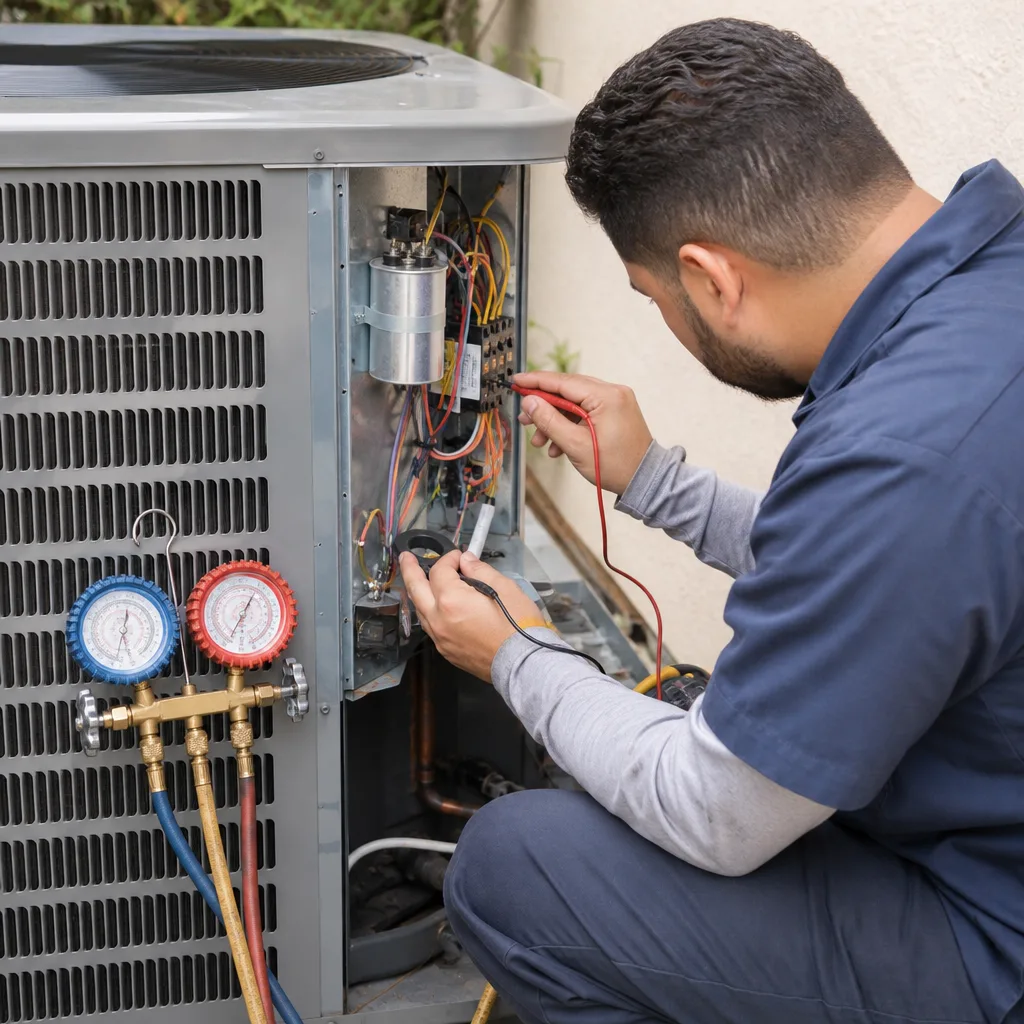
Seasonal tune-up and full diagnostic on your Carrier, Trane, or Goodman system - readings shown to you before any repair is proposed
Diagnosis first, numbers second - you approve the repair price before a single part goes in.
 Before
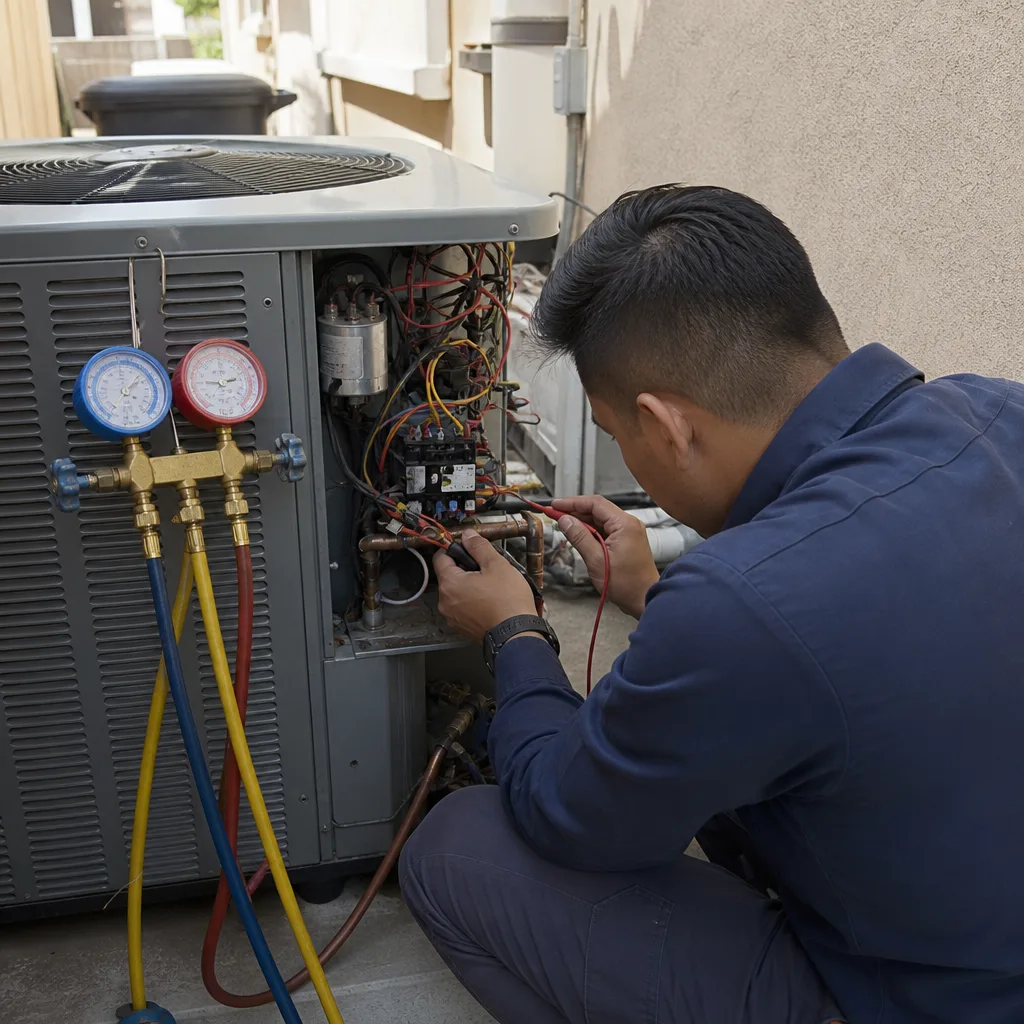 After
After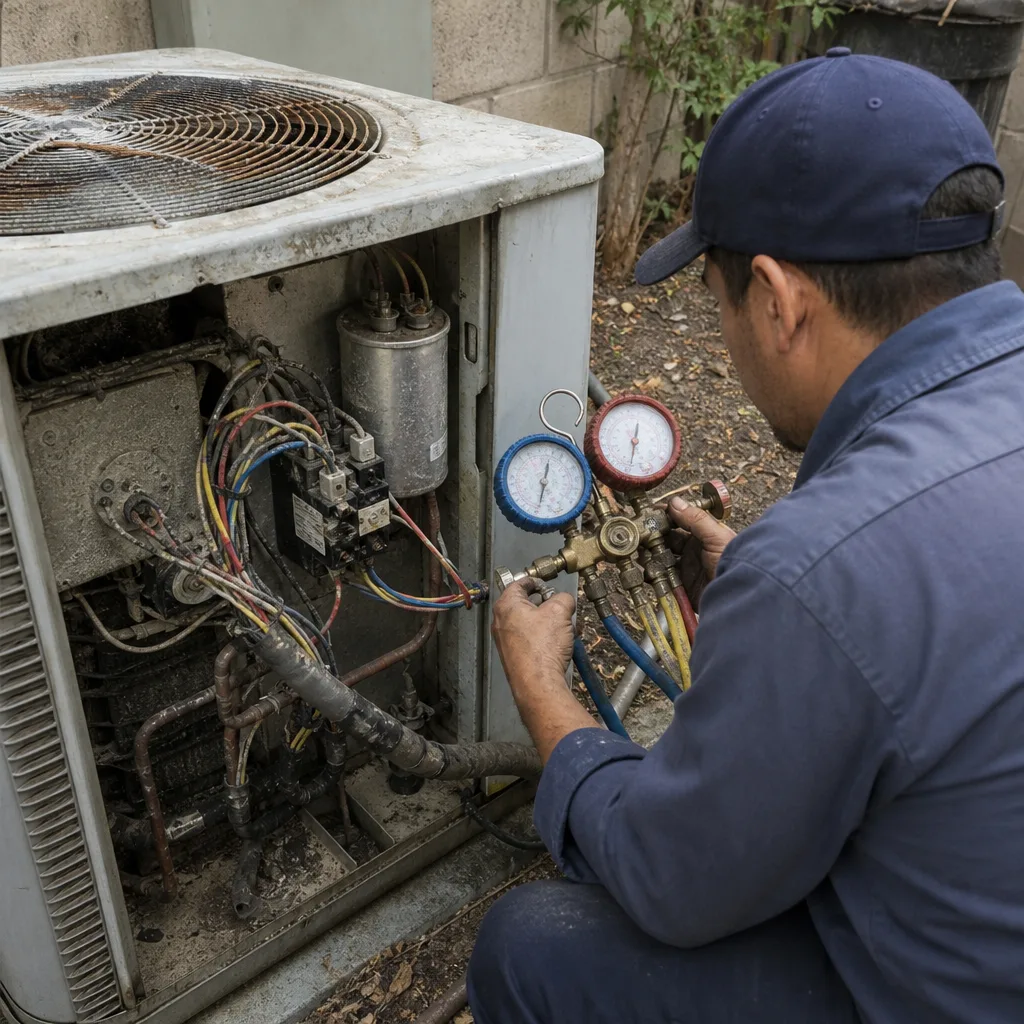 Before
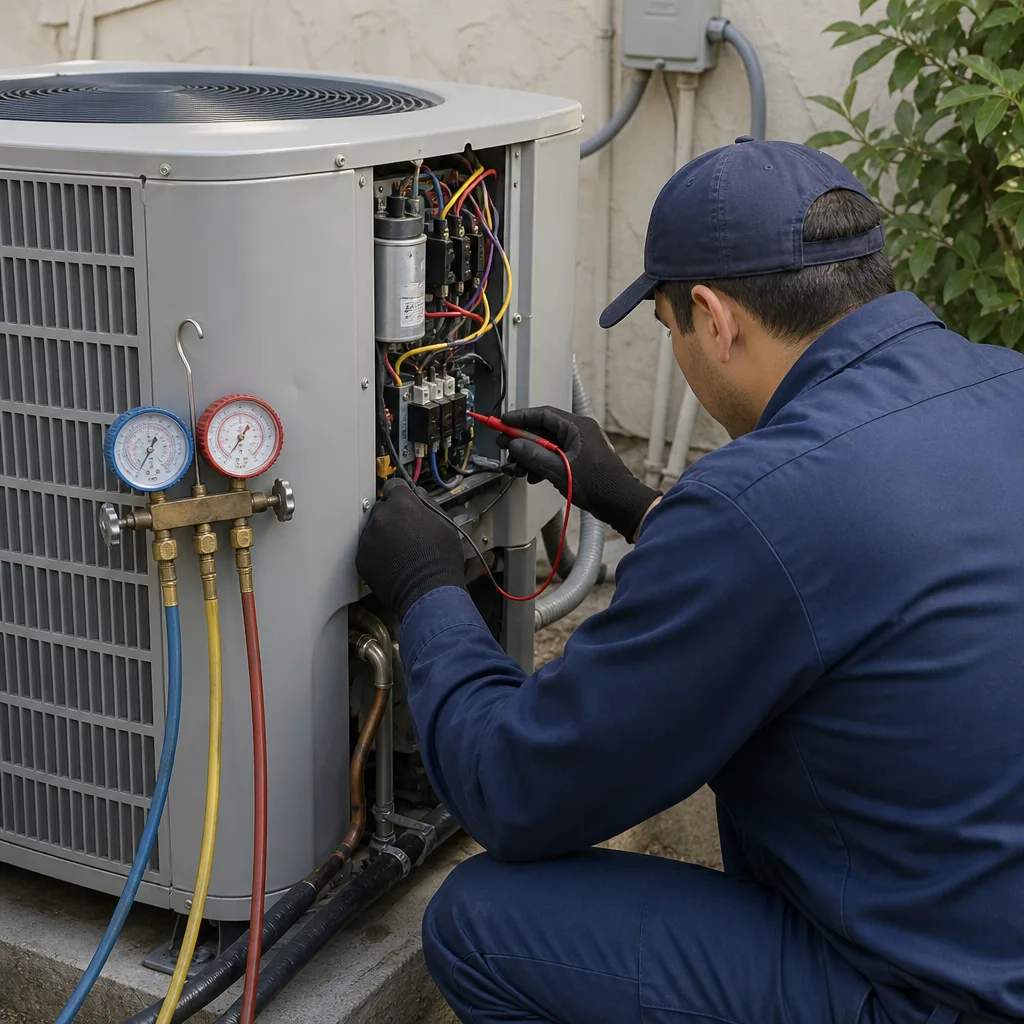 After
After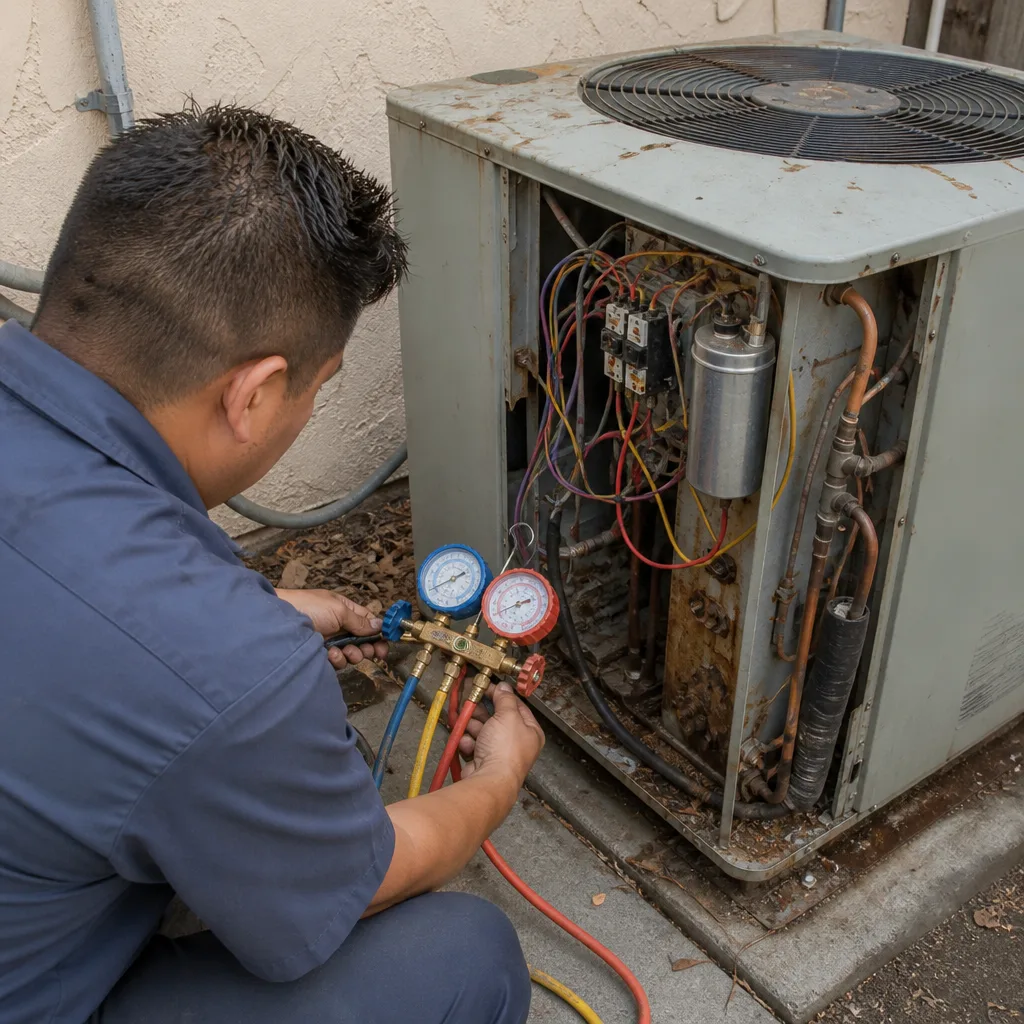 Before
 After
AfterAC Maintenance Warning Signs Every Homeowner Should Know
When your AC smells musty for the first five minutes, that’s not “just how it smells.” It’s mold on your evaporator coil telling you the condensate system hasn’t been cleaned in over a year. Most Los Angeles homeowners treat air conditioning as a background appliance: turn it on, feel cool air, forget it exists until they need AC Maintenance. But your AC is constantly sending signals through smells, sounds, airflow changes, and even the humidity level in your rooms. Those signals have specific mechanical meanings. This guide translates each one into plain language so you know exactly what’s failing, why it matters, and whether you’re looking at harmless deferred maintenance or a component about to die on the hottest day of the year in Los Angeles.
Quick Answer
The most common AC maintenance warning signs are musty or burning odors at startup, weak or uneven airflow, unusual sounds like hissing or grinding, short cycling, rising indoor humidity, ice on the refrigerant lines, and visible debris or bent fins on the outdoor unit. For a complete breakdown, see our AC Repair Maintenance Checklist for Los Angeles Homeowners. Each of these points to a specific maintenance deficiency: a dirty evaporator coil, a clogged condensate line, a failing capacitor, low refrigerant, or a blocked condenser. Catching these early typically costs $150 to $400 in maintenance work. Ignoring them for a full season in Los Angeles heat routinely turns into $1,200 to $3,500 compressor or coil replacements.
Table of Contents
- Moisture and Odor Signals: What Your Nose Is Telling You
- Sound Signals: What That Noise Actually Means
- Airflow and Temperature Signals: The Comfort Clues
- Outdoor Unit Signals You Walk Past Every Day
- Los Angeles-Specific Warning Signs
- Deferred Maintenance vs. Urgent Repair: Knowing the Difference
- How to Track Warning Signs: A Simple Homeowner Log
- Common Mistakes to Avoid
- When to Call a Professional
- Frequently Asked Questions
- The Bottom Line
Moisture and Odor Signals: What Your Nose Is Telling You
A musty smell that fades after a few minutes is the single most ignored AC warning sign. In Los Angeles, homeowners write it off as “the house settling” or “old ductwork.” It is neither. That smell is microbial growth on a wet evaporator coil, and it means your condensate drain line is partially clogged. Water backs up, sits against the coil, and organic material starts growing in the dark, damp environment. The fix is simple and cheap: a coil cleaning and condensate line flush usually runs $150 to $250. Left alone, that growth spreads into the ductwork, and you’re now looking at a $800 to $1,500 duct sanitation job, plus the respiratory irritation for anyone in the home with allergies or asthma.
A different smell entirely is the acrid, electrical, or burnt-dust odor at startup. That’s common at the beginning of the first hot stretch in Los Angeles because dust has settled on the heat strip or the blower motor over the off-season. If the smell disappears within a day or two of regular use, it was just surface dust burning off. If it persists for more than three days or gets stronger under load, the blower motor or capacitor is overheating, and that is a fire-risk signal, not a maintenance nuisance.
A sweet, chemical, or ether-like smell inside the home is refrigerant. It should never be inside your living space. That means a leak in the evaporator coil or the refrigerant lines running through your walls, and it requires a licensed technician with recovery equipment. Refrigerant recharge, which means refilling the fluid that moves heat out of your home, only makes sense after the leak is found and sealed. A recharge alone typically runs $200 to $400. Fixing the leak first might add $300 to $800 depending on where it is. Recharging without fixing the leak is throwing money away.
Sound Signals: What That Noise Actually Means
Your AC has a normal operating voice: a steady airflow whoosh from the vents, a soft compressor hum from outside, and the occasional click when the thermostat cycles the system on. Anything outside that vocabulary is a warning sign with a specific mechanical translation.
A hissing or bubbling sound near the indoor unit usually means refrigerant escaping through a pinhole leak in the coil or line set. It is one of the earliest audible warnings of a refrigerant problem, and in our experience across Los Angeles, catching a hiss early often means a $400 repair instead of a $1,800 coil replacement plus a compressor that slowly cooks itself running low on charge.
A grinding, metal-on-metal sound from the outdoor unit means the compressor’s internal components are wearing against each other. By the time you hear grinding, the compressor is usually not salvageable. The repair question becomes whether the system still has enough life in the rest of its components to justify a compressor swap, which on a Carrier, Trane, or Lennox system runs $1,500 to $2,800, versus putting that money toward a new system.
A loud buzzing or humming from the outdoor condenser that starts weak and gets louder means the capacitor is failing. The capacitor is a $20 to $50 part that gives the compressor and fan motor the electrical jolt they need to start. The labor to diagnose and replace it typically puts the total between $150 and $300. This is the best-case scenario for an AC sound warning sign: cheap part, one-hour repair, system saved.
- Hissing or bubbling: refrigerant leak. Call soon. Costs escalate quickly.
- Grinding: compressor internal failure. Prepare for a serious repair or replacement conversation.
- Buzzing/humming at startup: failing capacitor. Inexpensive fix if caught now.
- Clicking repeatedly without starting: electrical relay or thermostat signal problem. Could also be a tripped safety.
Airflow and Temperature Signals: The Comfort Clues
Weak airflow from one or two vents while others blow strong is not always a duct problem. Often it means the evaporator coil is partially frozen, and ice is physically blocking air from moving through the coil fins. The root cause of that ice is usually one of two things: low refrigerant from a slow leak, or a dirty air filter that has been left in place so long the coil cannot breathe. In Los Angeles, with windows closed and AC running for months straight, filters clog faster than most homeowners expect. A $12 filter changed every 30 to 60 days prevents a $400 coil defrost and cleaning call.
Short cycling is the term for an AC that turns on, runs for five or ten minutes, shuts off, then starts again twenty minutes later. It means the system is not completing a full cooling cycle. The causes are usually an oversized unit, a refrigerant charge problem, or a thermostat sensor misreading the room temperature. Short cycling doubles your electrical consumption for the same amount of cooling and dramatically shortens compressor life. In Los Angeles electricity-rate terms, a short-cycling AC can add $80 to $150 to a summer monthly bill before you even notice the comfort difference.
Temperature differences between rooms of more than 3 or 4 degrees, when the system used to keep the house even, usually point to one of three things: leaking or disconnected ductwork in the attic, a zoning damper stuck shut, or an aging system that has lost capacity and can no longer push air to the farthest runs. The diagnostic process is the same whether you have a Bryant, Daikin, or American Standard system: measure airflow at each register, inspect the attic duct connections, and check static pressure. A homeowner cannot do this without the right tools, which is why so many Los Angeles homes run uneven for years before anyone looks.
Outdoor Unit Signals You Walk Past Every Day
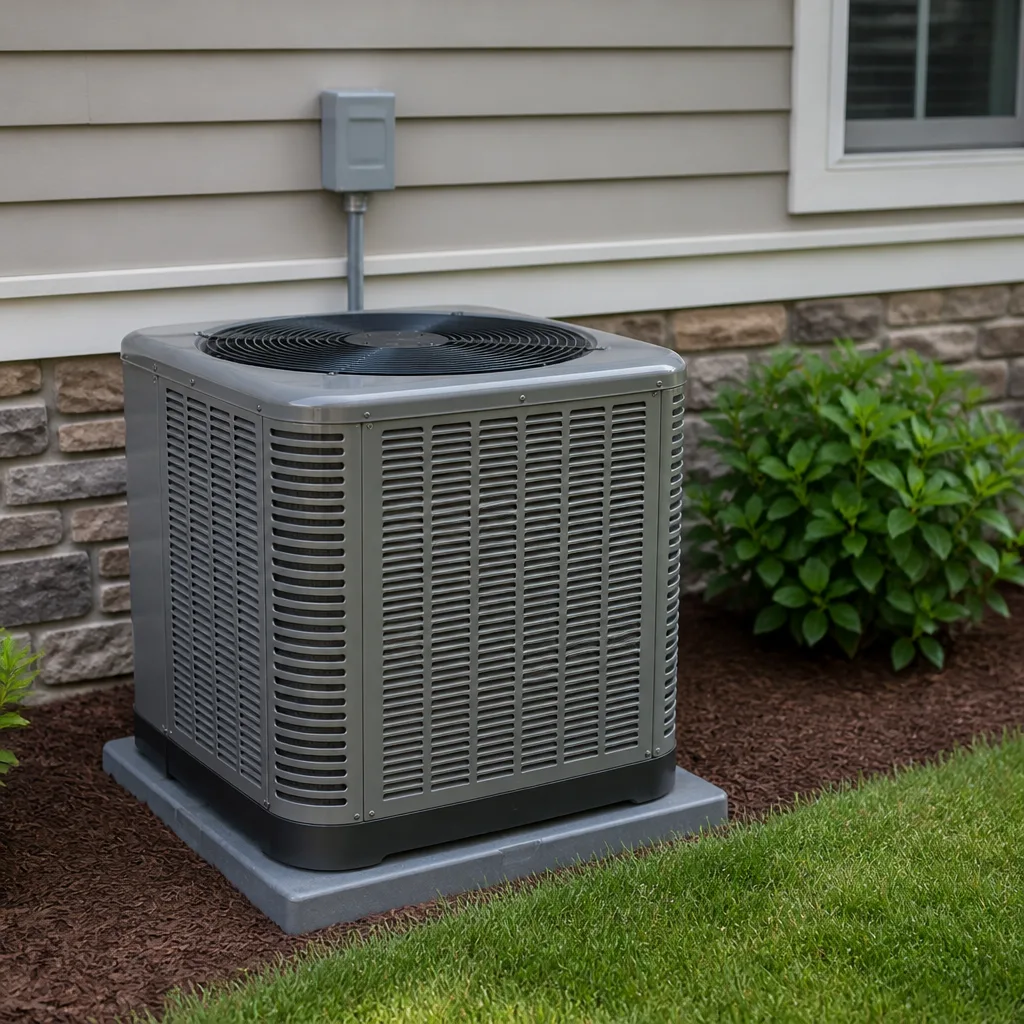
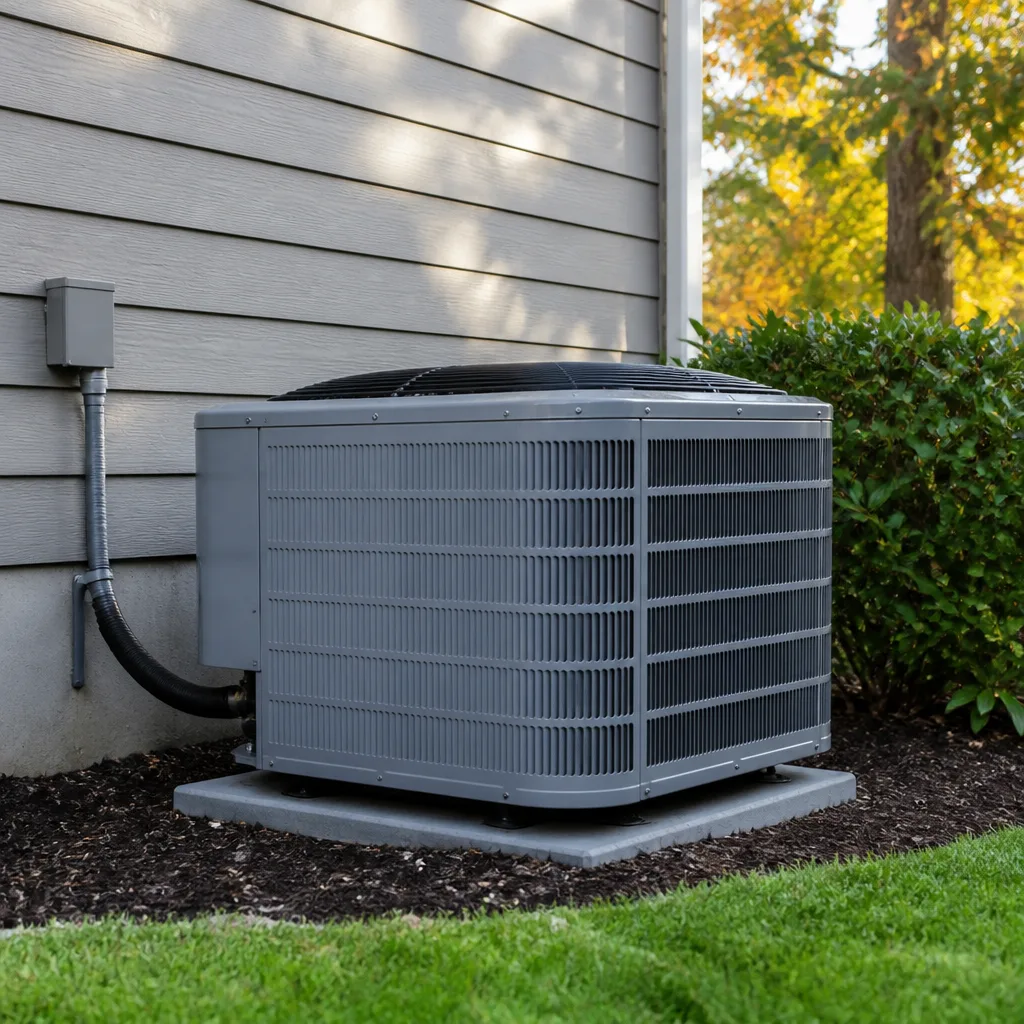
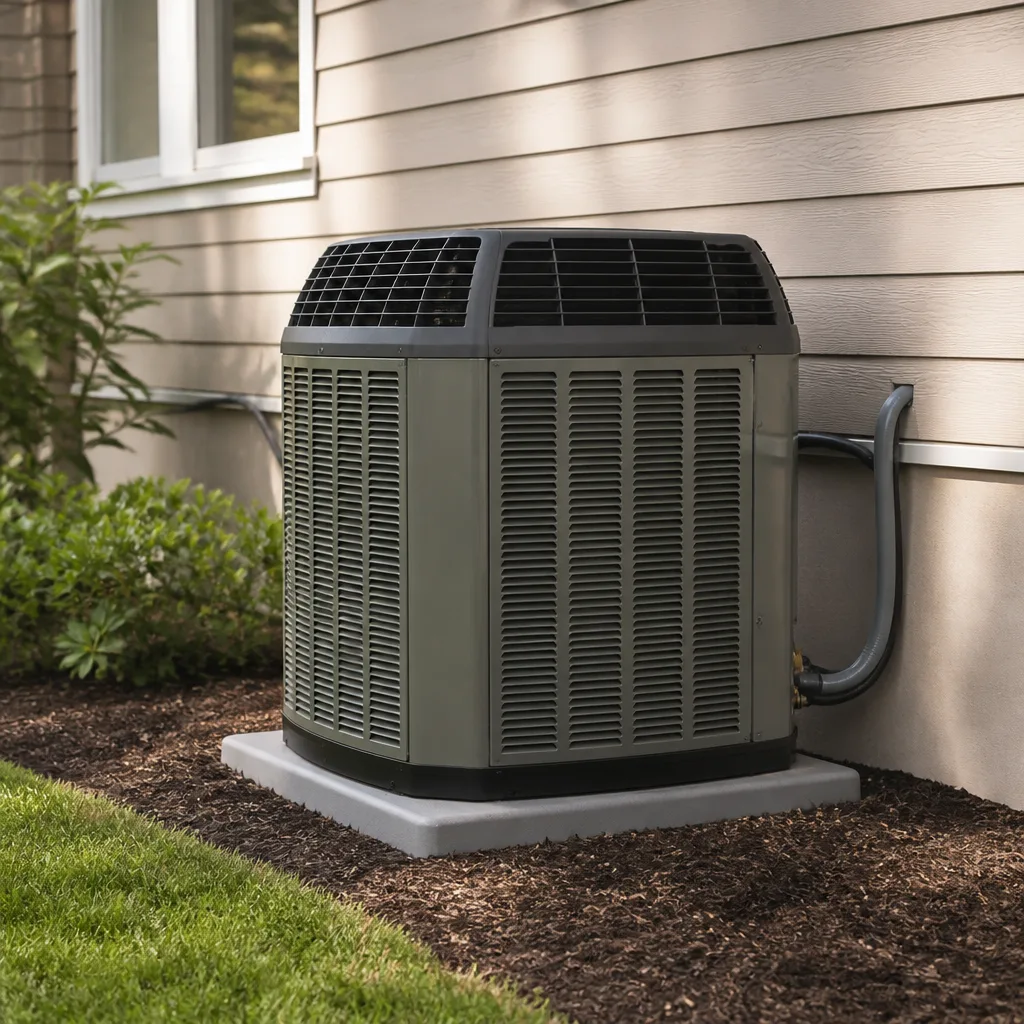
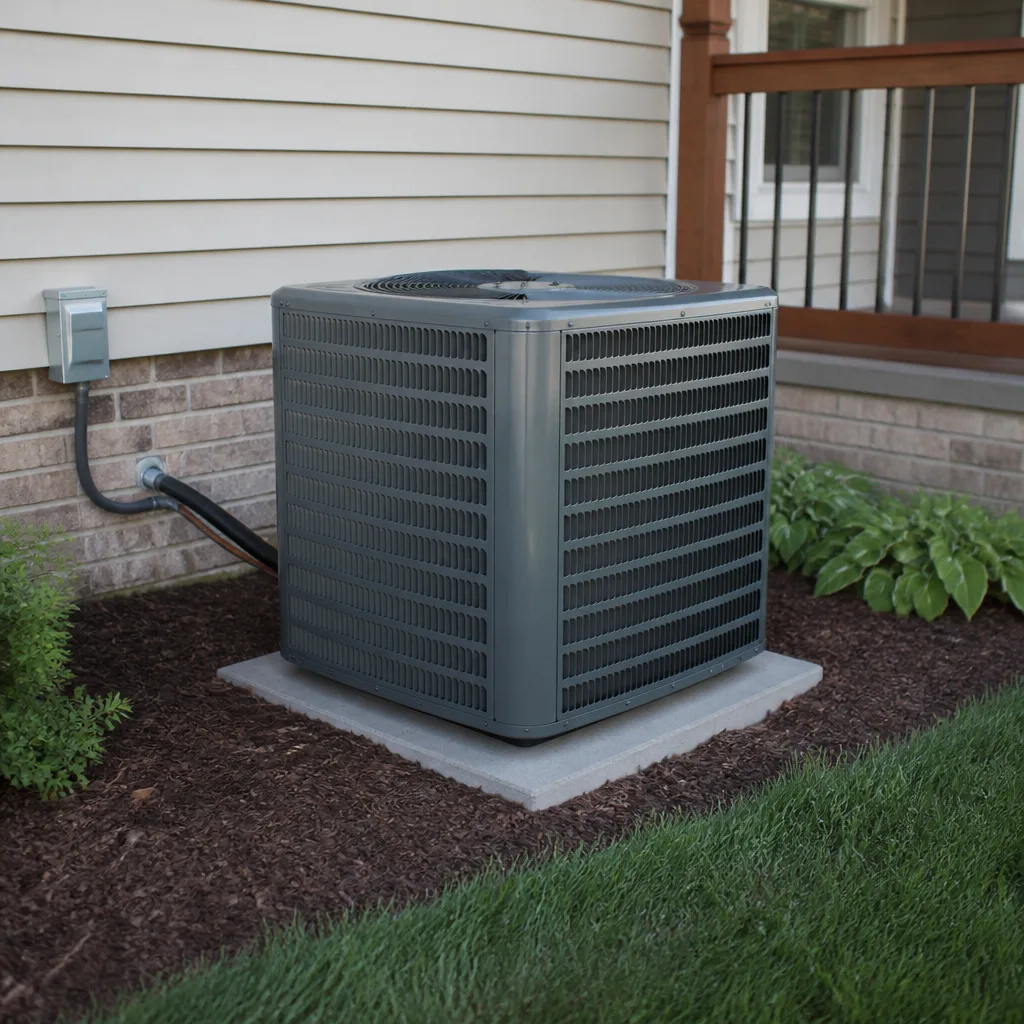
The condenser unit sitting beside your house or on your roof is a diagnostic billboard. Most homeowners walk past it daily without registering what it shows. Bent fins are the most common visible signal. Those thin aluminum fins on the sides of the unit direct air across the coil to pull heat out of the refrigerant. Hail, a stray baseball, a weed whacker, or even years of a dog leaning against the unit all bend those fins closed. When enough fins are closed, the condenser cannot reject heat. The compressor runs hotter and draws more amperage. A fin combing, which is exactly what it sounds like, a technician with a comb that straightens the fins, runs $100 to $180 and restores normal heat rejection. Ignore it and the compressor’s lifespan shortens by years.
Ice on the outdoor unit in the middle of a Los Angeles summer is never normal. Ice on the larger copper line heading into the house means the system is low on refrigerant and the coil temperature has dropped below freezing. Ice on the entire compressor means the system has been running low for a long time. Either way, shut the system off and let it thaw before calling for service. Running a frozen system is like driving a car with no oil. The compressor is lubricated by oil mixed into the refrigerant, and a low charge means low lubrication.
Unusual debris accumulation inside the unit, leaves, cottonwood fluff from the wind events we get in Los Angeles, dust from Santa Ana conditions, all of it acts like a blanket over the coil. Annual condenser cleaning should be part of any maintenance plan, and in Los Angeles, with our specific dry-season dust patterns, twice a year is often more realistic. The marine layer that rolls in overnight during May and June adds moisture to that dust, and the result is a caked-on paste that is harder to remove than dry dust alone.
Los Angeles-Specific Warning Signs
Los Angeles HVAC systems face three conditions most of the country never deals with, and each creates its own set of warning signs. First, the marine layer. From late May through early July, overnight fog pushes inland and settles over the coastal and basin neighborhoods. Systems that sit idle overnight wake up to high humidity and cool, damp air. That moisture cycle promotes coil corrosion and microbial growth faster than in inland areas. If you live west of the 405, or in any neighborhood that gets regular morning fog, a musty startup smell means your coil likely needs cleaning twice as often as a system in the Valley.
Second, dust events. Santa Ana winds carry fine particulate dust that works its way into condenser coils and air filters. After a big wind event, walk outside and look at your outdoor unit. If you see a visible film of dust on the coil surface, that same dust is also inside the coil fins where you cannot see it. Post-wind-event coil cleaning is preventive maintenance that Los Angeles homeowners in Altadena, Glendale, and the foothills especially need to take seriously.
Third, heat events. When Los Angeles hits a stretch of 95-plus degree days, every system runs near its design limit. Older systems that perform fine at 85 degrees start showing short cycling, tripped breakers, and ice formation at 100 degrees. These are not new problems. They are underlying maintenance deficiencies that only become visible when the system is pushed to its capacity. A system that trips its breaker during a heat wave was already running too hot due to a dirty coil or failing capacitor. The heat wave just exposed it.
Deferred Maintenance vs. Urgent Repair: Knowing the Difference
Not every warning sign is an emergency. Knowing which signals mean “schedule maintenance in the next few weeks” versus “shut it off and call tonight” saves you money and protects your equipment.
- Deferred maintenance signals: mild musty odor at startup, reduced airflow but still cool, one room running 2 to 3 degrees warmer, visible dust on the outdoor coil after a wind event, a capacitor that buzzes but still starts the unit. These mean you have days or weeks to schedule a maintenance visit. Typical cost: $150 to $400.
- Urgent repair signals: hissing or bubbling refrigerant sounds, grinding from the compressor, ice on the refrigerant lines, acrid electrical smells that do not fade, a breaker that trips and will not hold after one reset, any burning or smoking. These mean turn the system off and call. Running the system in these conditions converts a repairable problem into a ruined compressor. Typical cost if caught early: $300 to $800. Typical cost if ignored: $1,500 to $3,500.
The financial difference between the two categories is the strongest argument for paying attention to early signals. Every major component failure we see in Los Angeles started as a minor maintenance item six to eighteen months earlier. The capacitor that failed in August was buzzing in May. The compressor that seized in September had a dirty coil all summer. The refrigerant leak that emptied the system in June was hissing in March.
How to Track Warning Signs: A Simple Homeowner Log
When a technician arrives at your Los Angeles home, the first fifteen minutes of diagnosis is spent asking questions: When did you first notice it? Does it happen at night or during the day? Does it happen every day or only on hot days? A homeowner who can answer those questions precisely cuts the diagnostic time in half, and shorter diagnostic time means a lower bill.
Here is a simple log format that works. Open a note on your phone and record these fields every time you notice something unusual:
- Date and time. Note whether it was morning (marine layer), afternoon (peak heat), or evening (overworked day).
- What you noticed. One sentence: “musty smell at startup,” “buzzing from outside unit,” “ice on the copper line.”
- How long it lasted. Thirty seconds, five minutes, until you turned the system off.
- Weather conditions. Hot and dry, foggy morning, Santa Ana wind event.
- What fixed it or changed it. Did turning it off and back on clear the sound? Did the smell fade after a few minutes? Did you change the filter?
This log transforms a vague call, “My AC is making a noise,” into a specific call: “The outdoor unit has buzzed at startup for the last three mornings, each time in cool weather, and it lasts about twenty seconds until the fan spins up.” That is a textbook capacitor description, and it tells the technician exactly what part to bring. In our experience in Los Angeles, a homeowner who keeps a two-week log of one noisy signal saves about $100 in diagnostic time on average.
Common Mistakes to Avoid
- Replacing the filter but never checking airflow afterward. A new filter is not a diagnostic. If airflow is still weak after a filter swap, the problem is deeper: coil, ductwork, or blower motor. Replacing filters and hoping is how small problems become big ones.
- Ignoring a musty smell because it fades. The smell fades because the fan pushes the air through the room, not because the mold went away. The coil is still wet and the growth is still there. You are just moving scent molecules around.
- Adding refrigerant without finding the leak. Some Los Angeles homeowners treat refrigerant like gasoline: top it off and go. Refrigerant is not consumed. It is a closed system. If it is low, there is a hole. Recharging without finding the hole means you will be back next summer, paying again.
- Running a frozen system to “let it finish the cycle.” Ice on the lines means the system is not transferring heat. Running it frozen does not cool your home. It damages the compressor. Shut it off, set the fan to ON at the thermostat to thaw the coil with airflow, and call for service.
- Thinking a noisy outdoor unit is “just getting old.” Systems get louder with age, but loudness is not benign. It is friction. Friction is wear. A grinding outdoor unit is a $2,000 repair in progress every minute it runs.
- Comparing only the monthly price when choosing a maintenance plan. The value is in what the plan includes: coil cleaning, drain line flush, capacitor testing, and a written report. A cheap plan that skips the coil cleaning is not saving you money. It is deferring the exact work that prevents the expensive failures.
When to Call a Professional
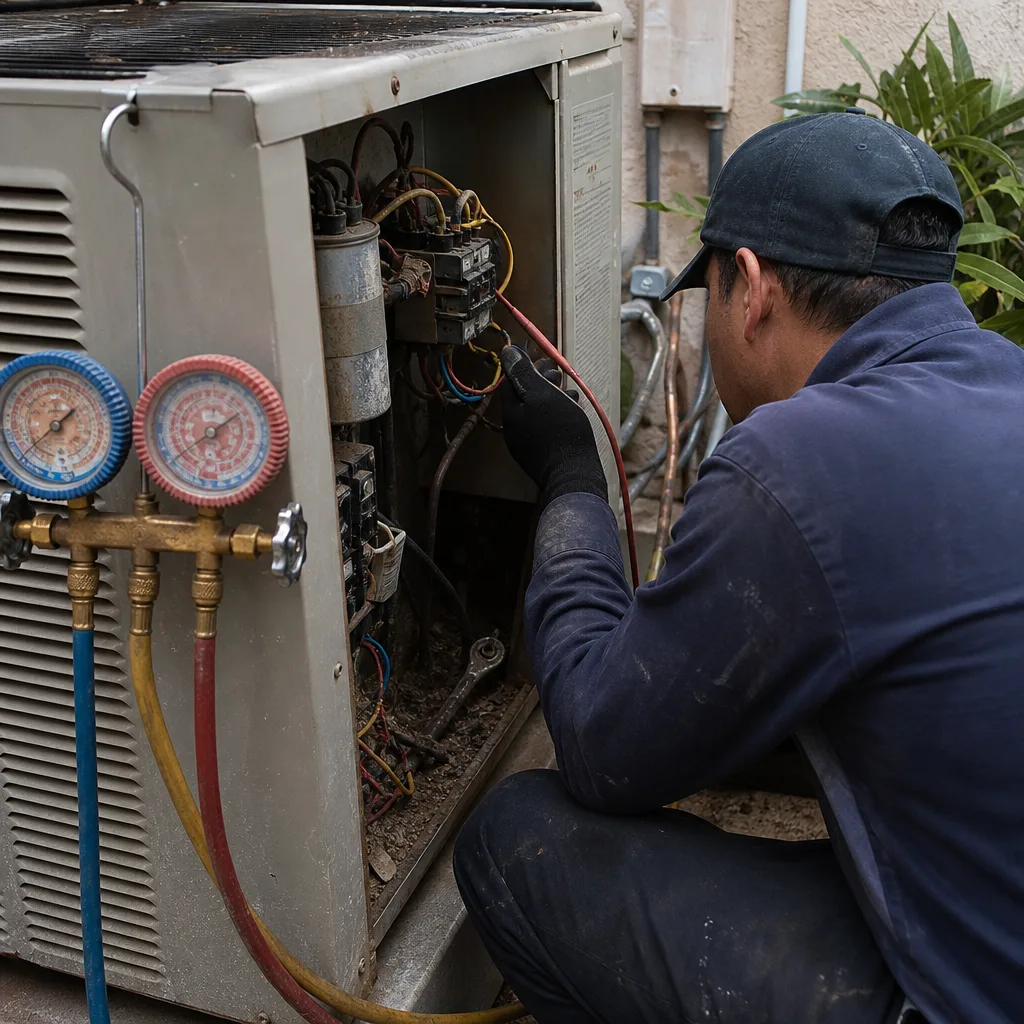
Any signal in the urgent category means call now: hissing, grinding, electrical burning smell, ice on the lines, a breaker that trips repeatedly. Beyond that, call when any of the deferred signals have persisted for more than two weeks despite a filter change, or when you have logged the same signal three or more times. A professional can measure refrigerant pressures, test the capacitor under load, inspect the evaporator coil with a camera, and give you a written diagnosis. These are not visual-inspection tasks. They require tools and training. AC maintenance in Los Angeles with Brandt HVAC includes a written report of what we found, a written price before any work starts, and a written guarantee on every repair. Call (984) 538-9003 for a free estimate.
Frequently Asked Questions
Hissing or bubbling sounds from the indoor unit, ice on the copper refrigerant lines, or a sweet chemical smell near the air handler all indicate a refrigerant leak. A system low on refrigerant also runs longer and cools less, so weak cooling combined with any of those sounds or ice is a strong signal. Call for a leak search and repair before adding refrigerant, because adding refrigerant to a leaking system is a recurring cost rather than a fix.
In Los Angeles, twice a year is realistic for most homes: once in late spring before peak cooling, and once in late summer or early fall after the dust and heat season. See our AC Repair Maintenance Schedule: What to Do and When for seasonal details. Homes in wind-prone foothill neighborhoods or near construction sites may need a third cleaning. The marine layer adds moisture that turns dust into a harder-to-remove paste, so coastal homes benefit from a spring cleaning timed after the fog season starts.
Short cycling means the system turns on and off frequently without completing a full cooling cycle. Common causes are an oversized system, a failing capacitor that cannot hold the compressor running, a thermostat sensor misreading room temperature, or low refrigerant triggering the low-pressure safety switch. Short cycling increases electricity consumption and accelerates compressor wear. It needs diagnosis, not just observation.
A musty smell at startup means microbial growth on a wet evaporator coil. The coil stays damp in a dark environment, and without regular cleaning, organic material grows. The condensate drain line is usually partially clogged, which keeps the coil wetter than normal. Cleaning the coil and flushing the drain line typically resolves it in a single visit.
Yes, ice on the refrigerant lines or the outdoor unit is an urgent signal. It means the system is low on refrigerant or airflow is so restricted that the coil temperature has dropped below freezing. Ice indicates the compressor is running without proper lubrication and cooling, which causes permanent damage. Shut the system off, switch the thermostat fan to ON to thaw the coil, and schedule service.
A seasonal maintenance visit in Los Angeles typically runs $150 to $250 for a complete service including coil cleaning, condensate line flush, capacitor test, refrigerant check, and a written report. Repairs found during maintenance, like a clogged drain line or failing capacitor, add $150 to $400 depending on the part and complexity. Larger repairs like coil replacement or compressor work run $1,200 to $3,500. AC repair in Los Angeles estimates are free, and every repair includes a written guarantee.
The Bottom Line
Your AC talks to you constantly. The musty startup smell, the buzz, the frozen line, the weak airflow from one vent, each of these is a precise mechanical signal pointing to a specific failing or dirty component. Learning the translation is the difference between a $200 maintenance visit and a $2,500 replacement. In Los Angeles, where systems run hard through long summers, dust events, and marine-layer humidity, that translation matters more than in almost any other market. Track what you notice. Respond to the urgent signals immediately. Schedule maintenance for the deferred ones. And when a technician walks through your door, know who they are before they arrive. If you see signals you cannot translate, Brandt HVAC offers furnace repair in Los Angeles as well, and our team can evaluate any warning sign with a free estimate at (984) 538-9003.
Written by Devin Marlowe, Owner at Brandt HVAC, serving Los Angeles since 2003.