
Last updated October 9, 2026
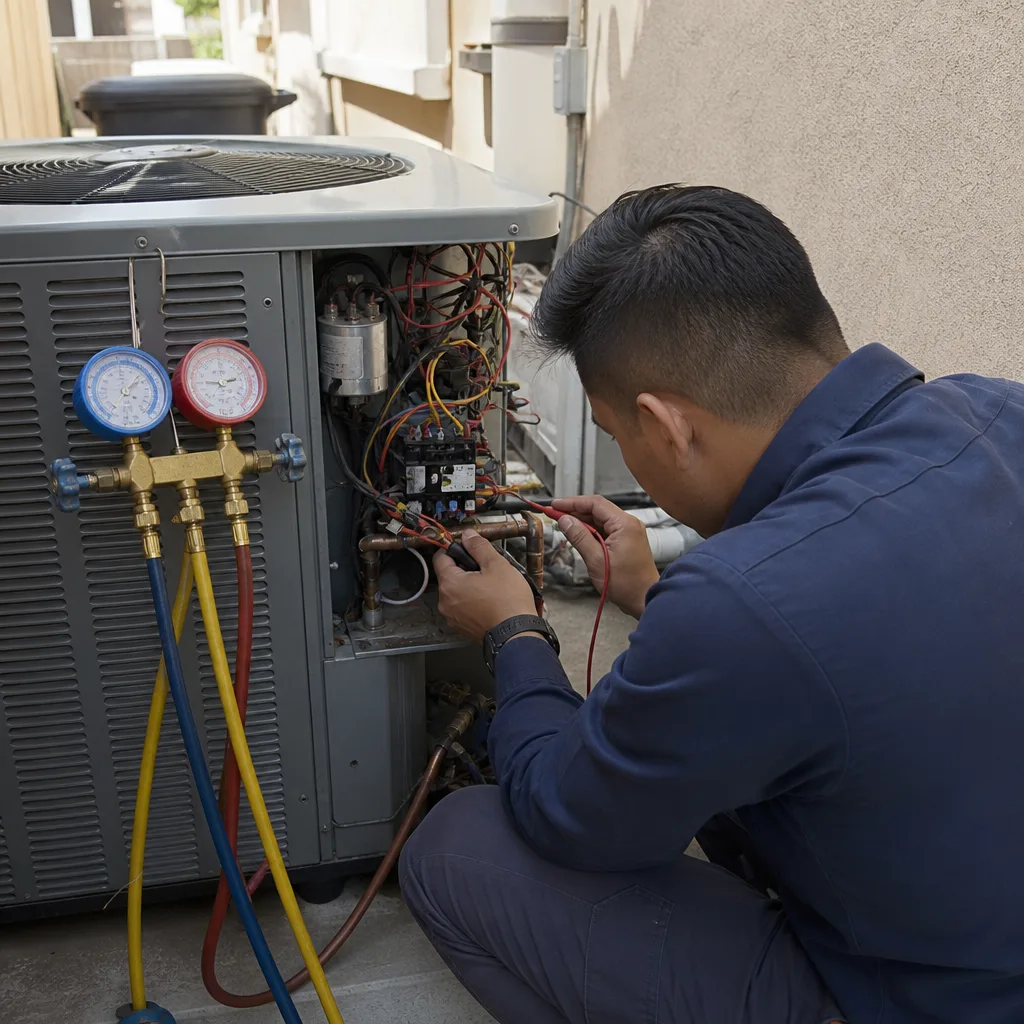
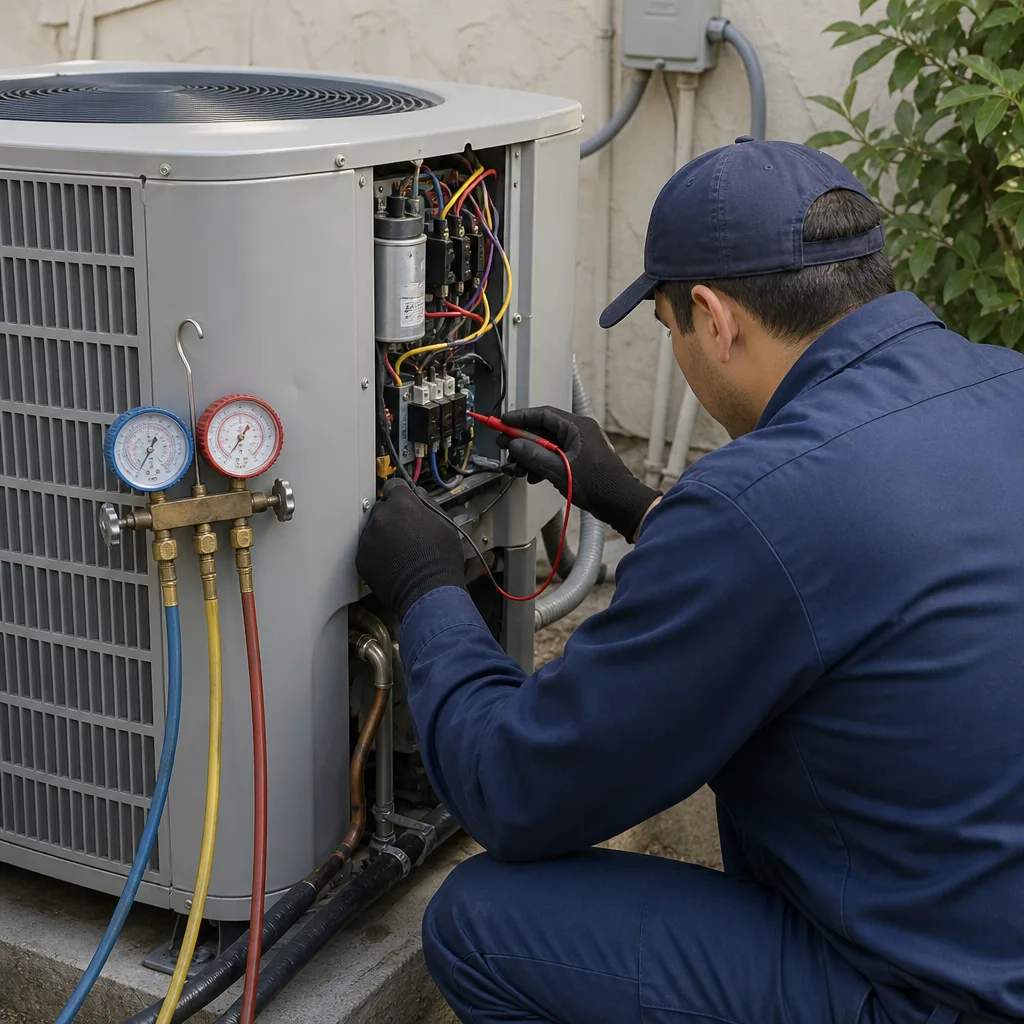
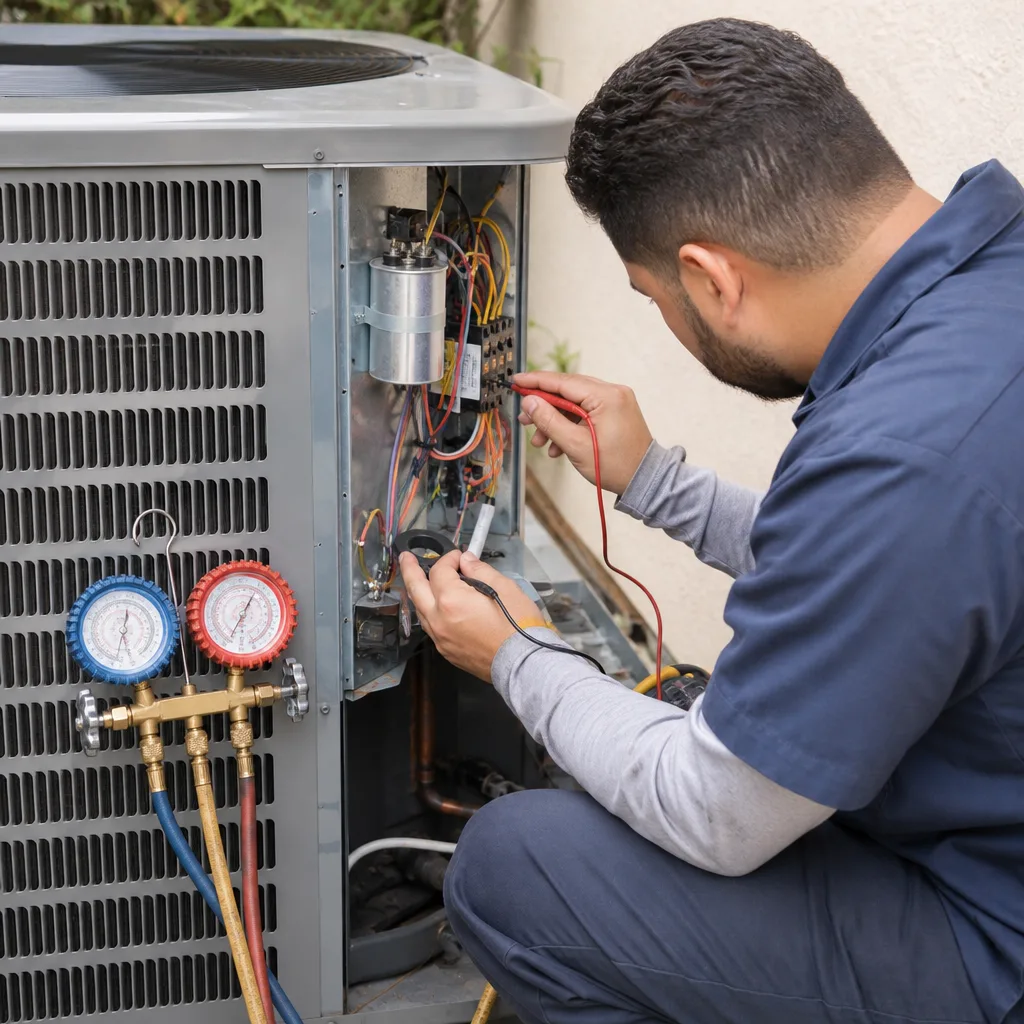
Seasonal tune-up and full diagnostic on your Carrier, Trane, or Goodman system - readings shown to you before any repair is proposed
Diagnosis first, numbers second - you approve the repair price before a single part goes in.
 Before
 After
After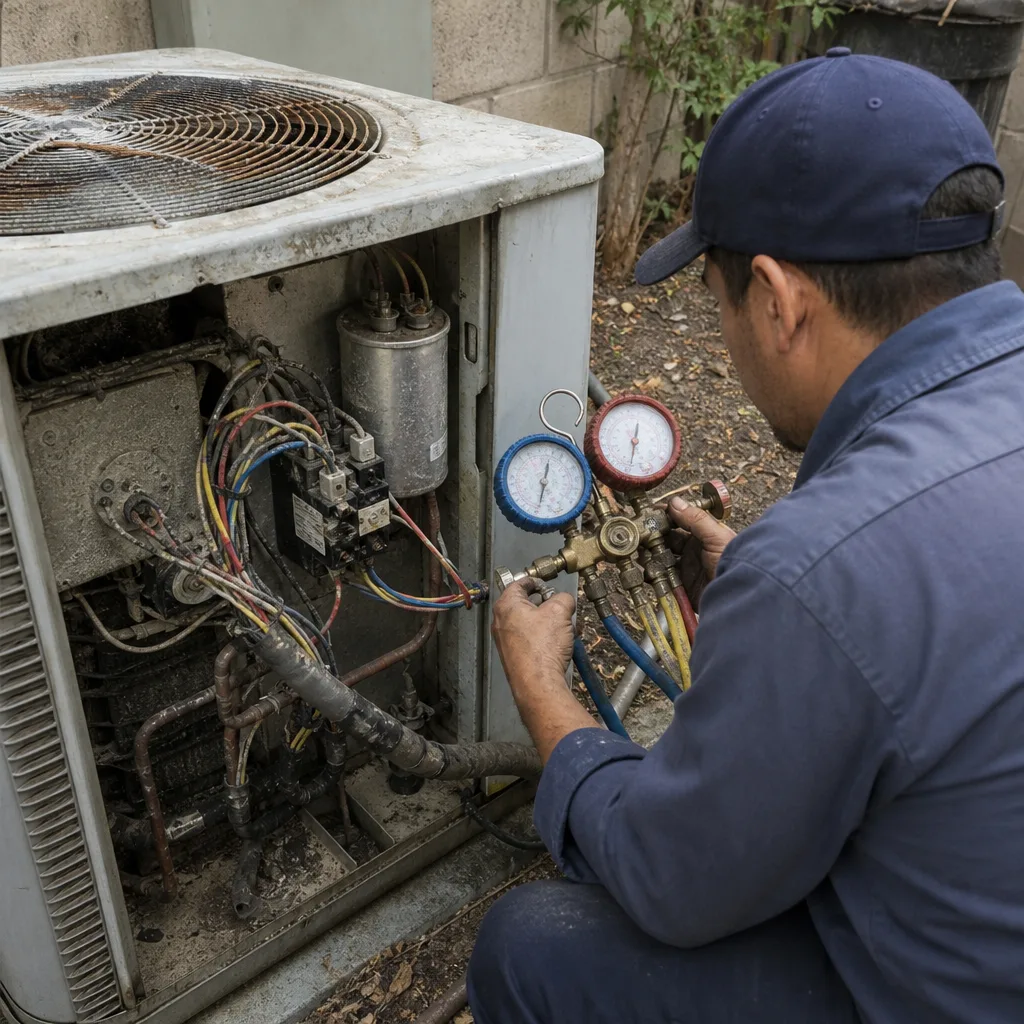 Before
 After
After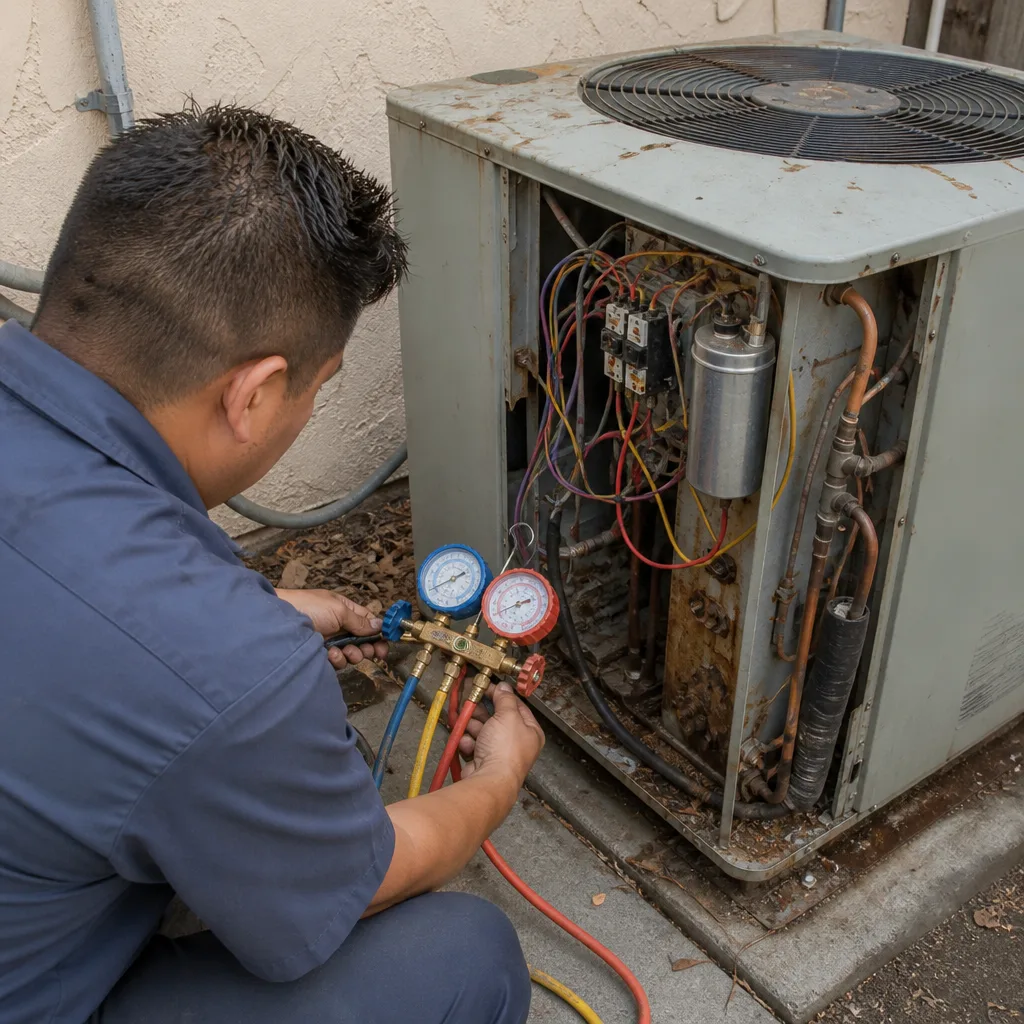 Before
 After
AfterAC Repair Maintenance Checklist for Los Angeles Homeowners
An LA air conditioner that runs only 90 days a year can fail faster than one running 180 days in Phoenix. Sitting idle lets capacitors degrade, refrigerant lines corrode, and drain pans grow mold that a humid summer startup then blows straight into the living room. Most maintenance checklists floating around the internet are recycled from Midwest HVAC blogs, and they miss the specific failure points that Los Angeles systems actually develop. This guide is different. It’s built around what really breaks in Los Angeles systems, and when, with an AC Repair Maintenance Schedule: What to Do and When. You’ll learn the maintenance windows most homeowners skip, the checks that prevent the worst startup failures, and how to document your system’s condition before a technician ever arrives.
Quick Answer
An effective AC maintenance checklist for Los Angeles homeowners has five core parts: replacing filters every 1 to 2 months during wildfire smoke season, clearing debris from the outdoor condenser unit before and after Santa Ana wind events, checking the condensate drain line for blockages before first summer startup, verifying refrigerant levels annually, and testing the system in May and September. Roof-mounted units need inspection twice a year because LA’s dust load settles on them differently than ground units. Skip the generic seasonal schedule and follow this LA-specific rhythm instead.
Table of Contents
- The Pre-Santa-Ana Check Los Angeles Homeowners Skip
- Roof-Mounted Condensers: What LA Dust Does Differently
- The Drain Pan and Condensate Line Check That Prevents Mold
- Filter Reality in LA: Why Wildfire Smoke Changes Everything
- What to Photograph Before the Technician Arrives
- The 10-Step Los Angeles AC Maintenance Checklist
- What AC Maintenance Costs in Los Angeles
The Pre-Santa-Ana Check Los Angeles Homeowners Skip
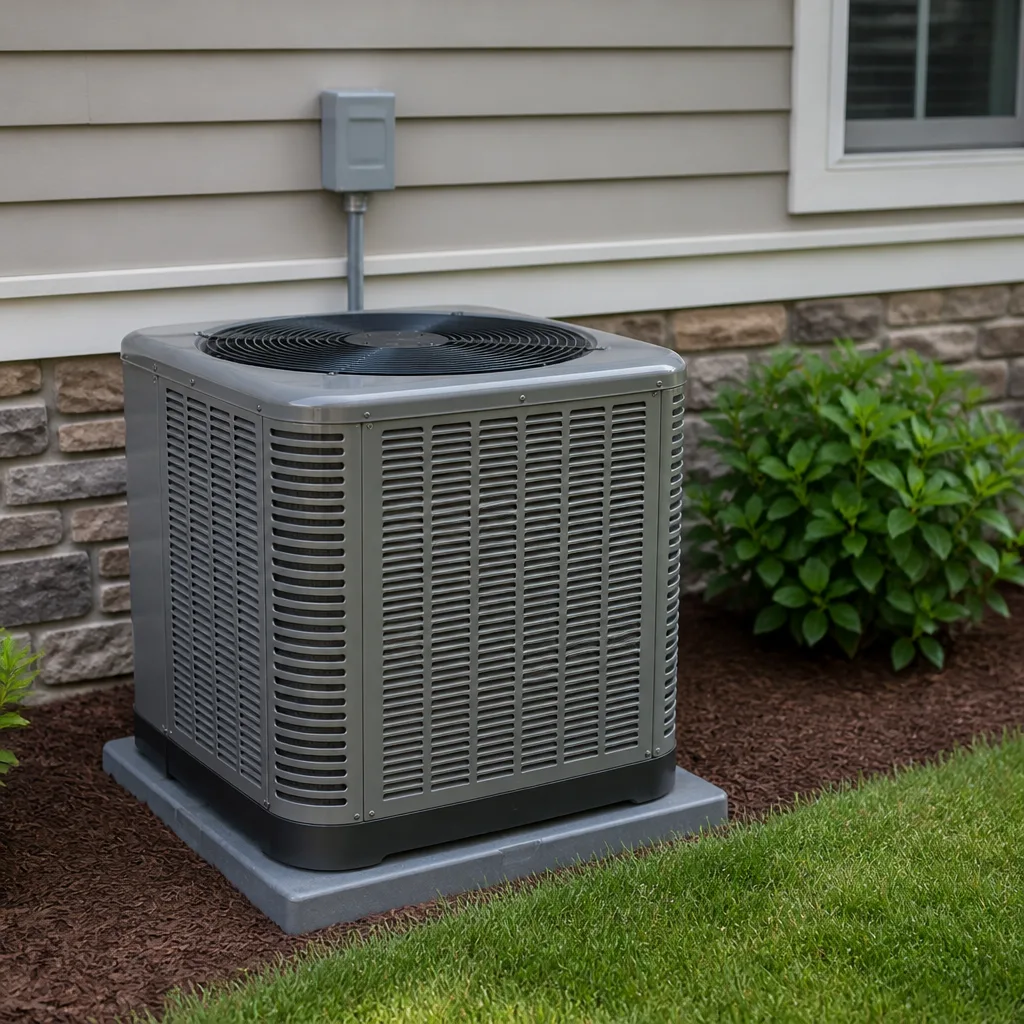
Every September, the Santa Ana winds arrive. They push dry, dusty air from the high desert through the mountain passes and across the LA basin, coating every outdoor surface with a fine layer of grit. Your AC condenser unit sits directly in that path. By the first week of October, the coils on a ground-level unit can accumulate enough dust and leaf debris to choke airflow by 20 to 30 percent. That forces the compressor to run hotter and longer, which shortens its life and raises your bill in the final warm weeks of the year.
Here’s the thing: almost no Los Angeles homeowner thinks about AC maintenance in September. The marine layer has kept mornings cool, and the worst heat feels behind us. But September is exactly when the system needs a specific pre-Santa-Ana check.
What to do before the first Santa Ana event of the season:
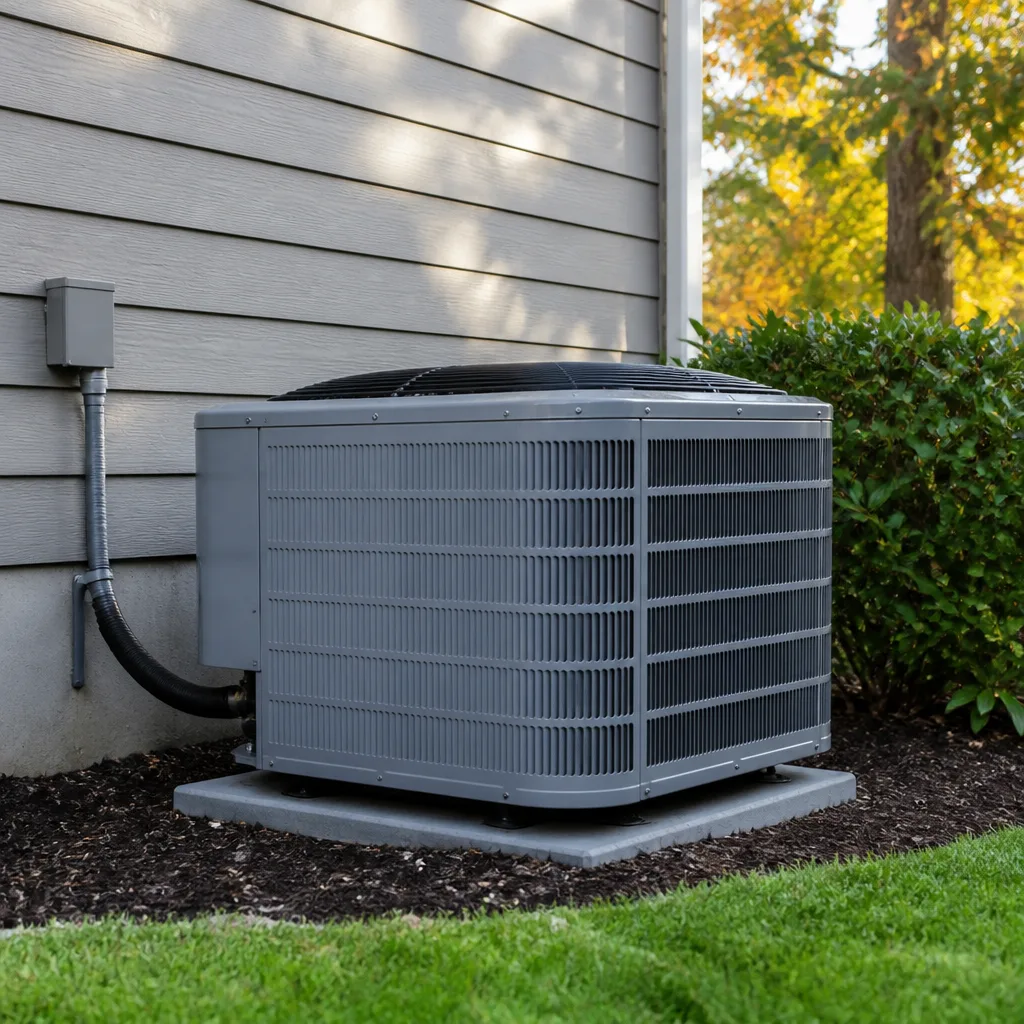
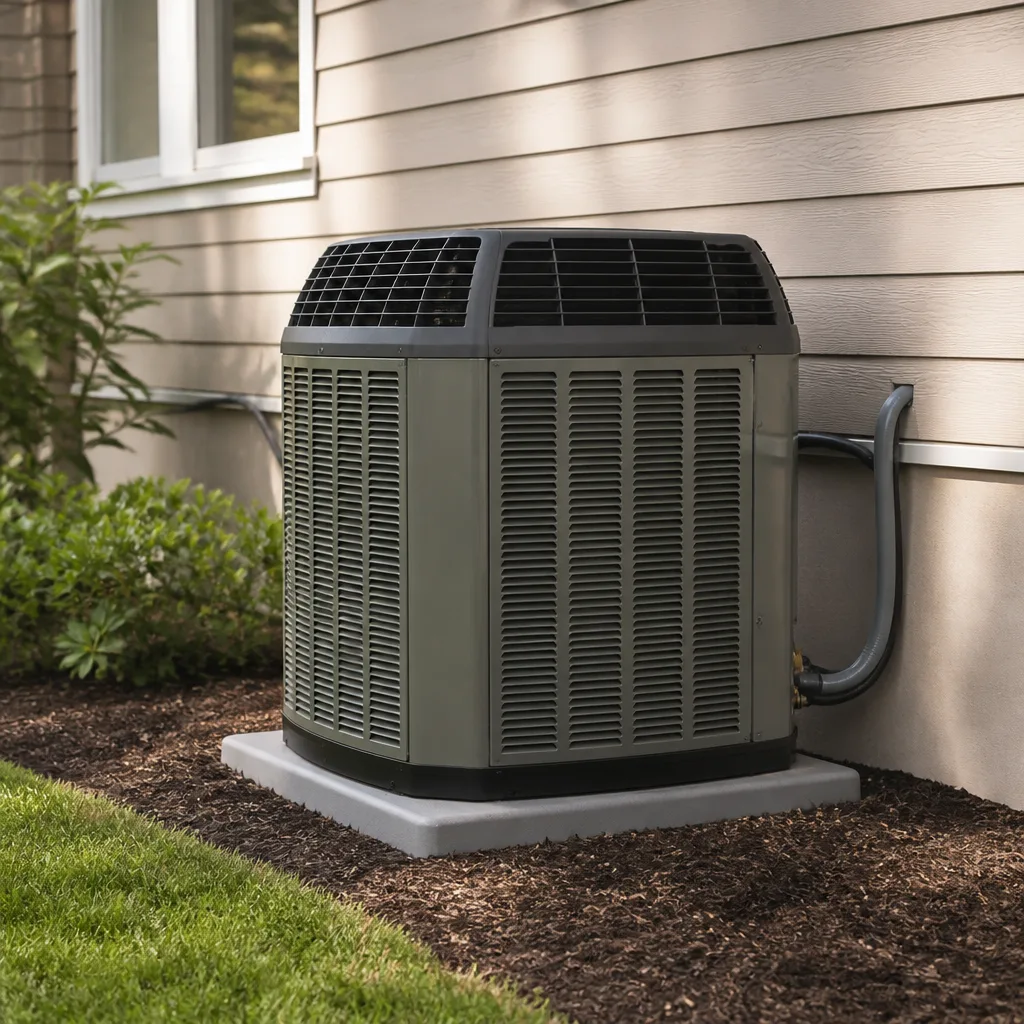
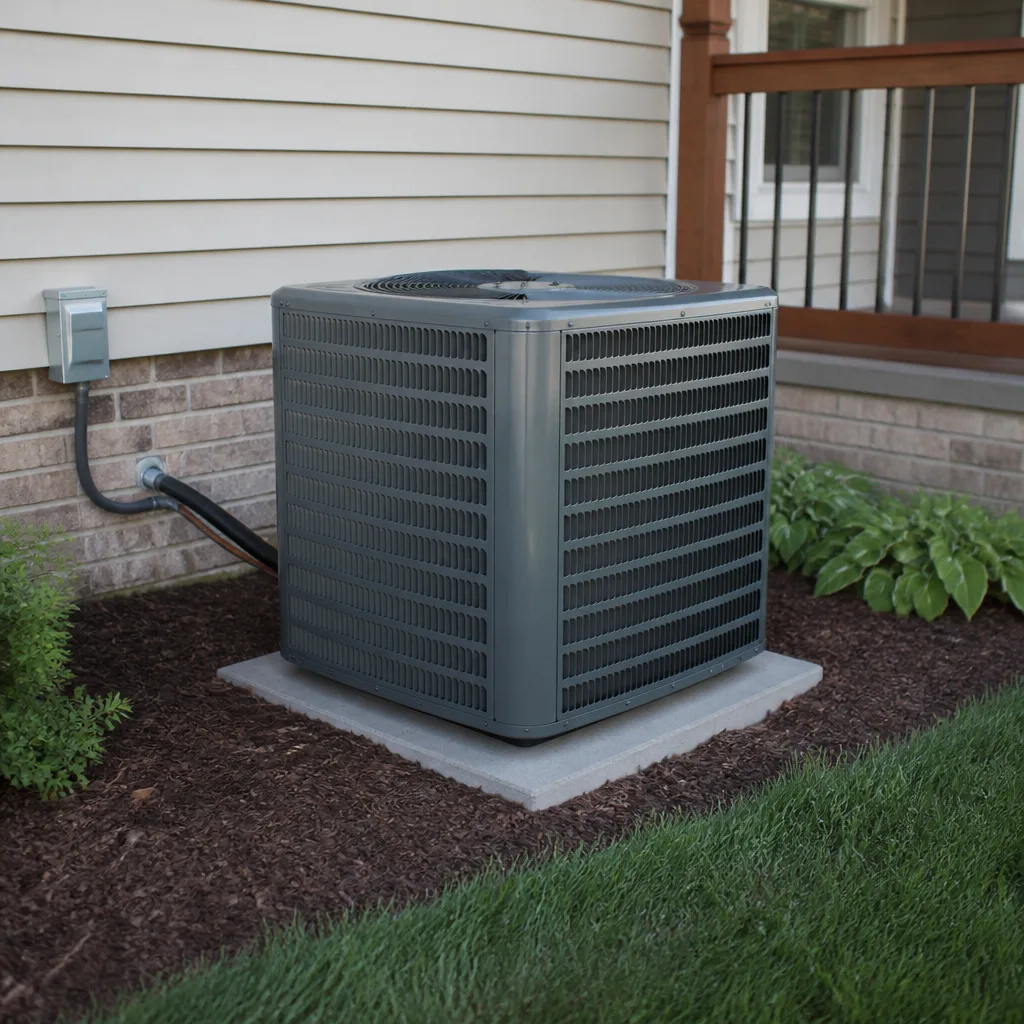
- Visually inspect the outdoor unit. Remove any leaves, twigs, or debris that accumulated over the summer. Look for any visible damage to the coil fins.
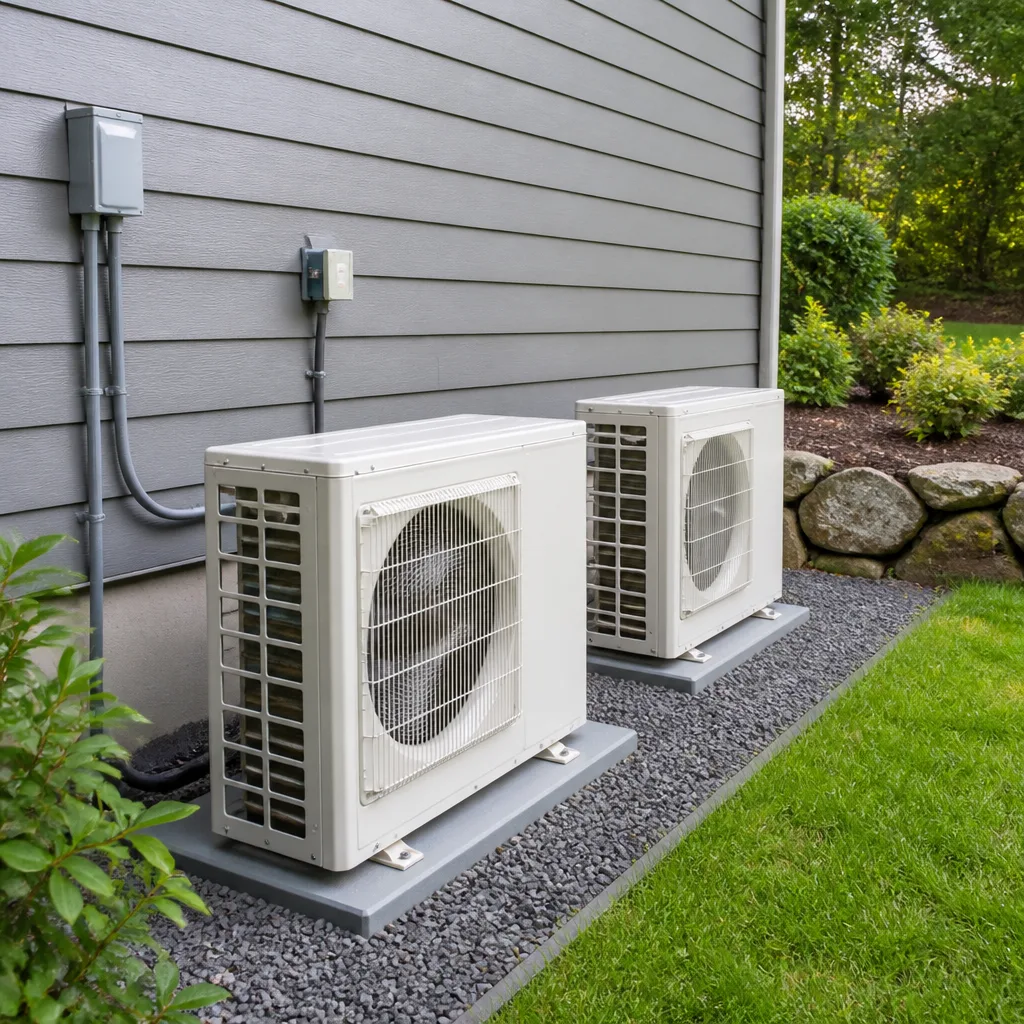
- Check the clearance around the unit. Los Angeles has thousands of homes where landscaping has grown up around the condenser over the summer. You need at least two feet of clear space on all sides.
- Verify the disconnect box near the unit is clear of debris and accessible. During an emergency shutdown, you don’t want to fight through an overgrown bougainvillea to reach it.
- Run the AC for 20 minutes and listen. If the compressor makes a hard-starting sound or the fan doesn’t turn smoothly, those are early warning signs of a failing capacitor or motor bearing.
We’ve seen the same pattern across Los Angeles: systems that ran quietly all summer develop capacitor failures in September and October, not June and July. The dust load from Santa Ana winds accelerates what was already a marginal part. Replacing a capacitor before it fails costs years of trouble-free operation, and in some cases, can save the compressor itself.
Roof-Mounted Condensers: What LA Dust Does Differently
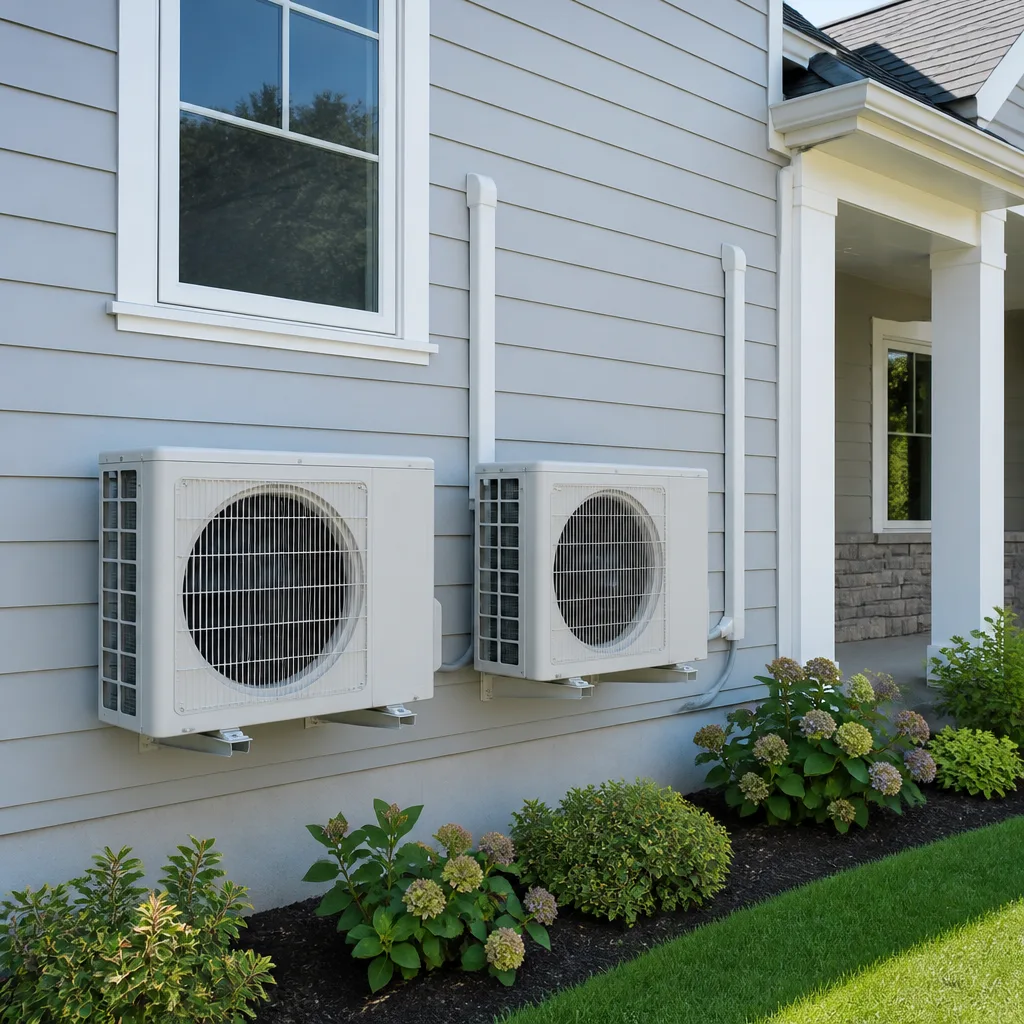
Los Angeles has a unique concentration of roof-mounted AC condensers, especially in older single-story homes built between the 1940s and 1970s. You’ll see them on rooftops in neighborhoods across the city, from the mid-century homes of the Valley to the canyon houses in the Hollywood Hills. Roof-mounted units accumulate debris differently than ground units, and the maintenance cadence has to reflect that.
A ground unit sits in a yard, surrounded by grass, plants, and foot traffic. Debris gets kicked up and blown in. A roof unit sits in the path of every wind event, with nothing shielding it. LA’s prevailing wind patterns push dust, pollen, and micro-debris across roof surfaces continuously. During Santa Ana season, that means a roof-mounted condenser can accumulate a layer of fine grit that a ground unit never sees.
Roof units also face a drainage problem that ground units don’t. The drain pan under the evaporator coil (which is often located in the attic or a closet for roof-mounted systems) must slope correctly to move condensation to the drain line. In Los Angeles, heat causes roof membranes and wood framing to shift. Over time, that movement can change the pitch of the drain pan. Water pools. Mold grows. And since the pan sits above the living space, ceiling damage is the first visible sign. By then, the problem is already serious.
Inspection cadence for roof-mounted LA units:
- Every spring (April-May): Full inspection of the roof unit, including coil cleaning, drain pan check, and electrical connection tightening.
- Every September: Pre-Santa-Ana debris clearing and coil inspection, plus a check of all roof penetrations and mounting hardware.
- After any major wind event: Visual check for dislodged panels, exposed wiring, or accumulated debris on the coil surface.
In our experience, the failure we see on LA roof units more than any other problem is a cracked or disconnected drain line where it exits the roof or attic. The sun bakes PVC and flexible tubing. After five or six Los Angeles summers, it becomes brittle. The safest approach is to have a professional inspect that line twice a year, because catching a leak early can prevent a ceiling replacement that costs ten times the repair.
The Drain Pan and Condensate Line Check That Prevents Mold
The first time many Los Angeles homeowners run their AC in late spring or early summer, they get a smell: musty, damp, like old socks. That odor is mold and bacteria that grew in the drain pan and condensate line during the months the system sat idle. In LA’s humid coastal microclimates, a drain pan can stay damp for weeks after the last use. In the inland valleys, the combination of heat and occasional humidity creates the same problem. Then the first launch of the season blows that entire ecosystem into the house.
This is preventable with a specific check before first startup. Here’s the process, in order:
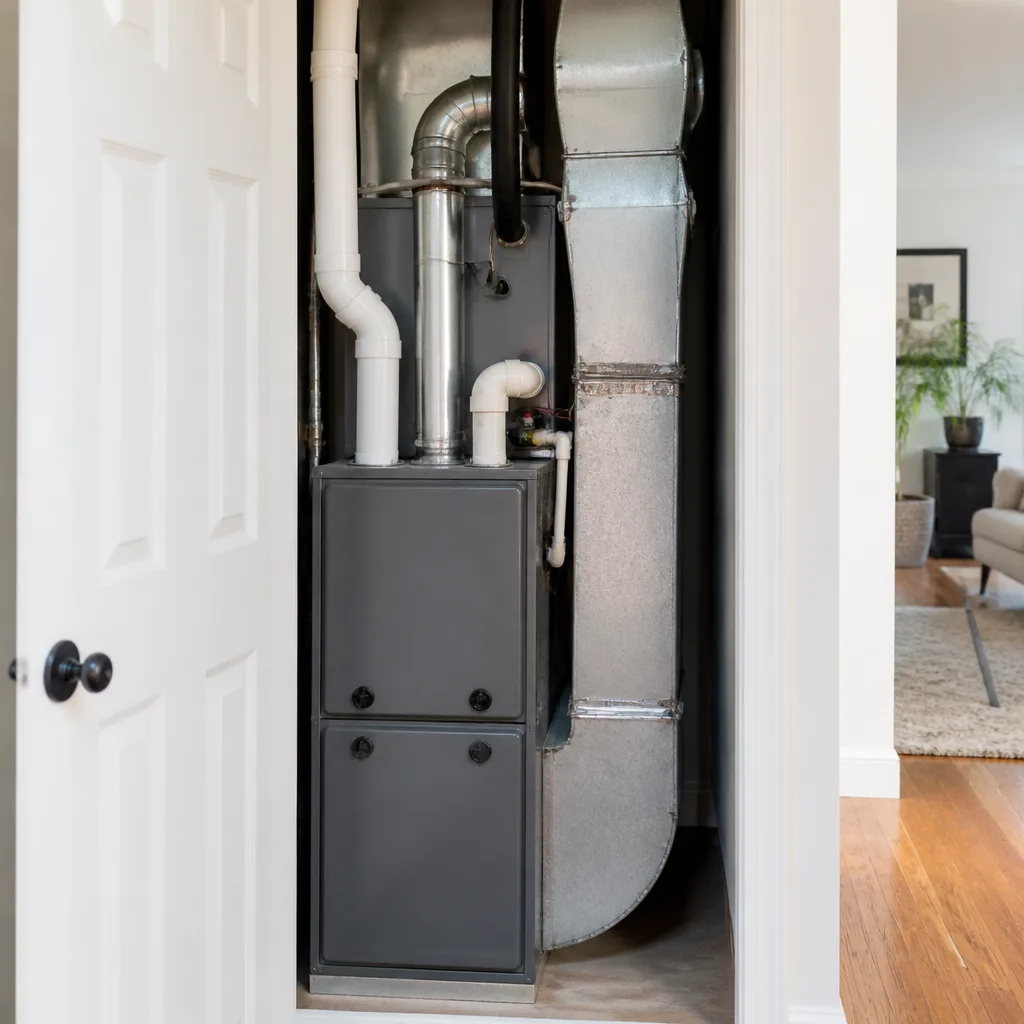
- Locate your indoor air handler. It’s typically in a closet, garage, or attic. The drain pan sits directly below the evaporator coil inside or under this unit.
- Check the drain line exit. Find where the condensate line exits the house (usually near the outdoor condenser or a dedicated drain). If you see standing water, the line is partially blocked.
- Inspect the drain pan. If accessible, look for standing water, visible mold, or debris. A pan that holds water means the line is blocked further down.
- Test the drain. Pour about a cup of water slowly into the drain line access point. If it backs up or drains slowly, there’s a blockage that needs clearing.
This is the single most skipped maintenance item in Los Angeles, and it causes the most dramatic “first startup” failures. When we respond to our AC Repair services calls in Los Angeles in June and July, a blocked condensate line or overflowing drain pan is one of the top three issues we diagnose. The fix is usually straightforward if caught early. Left alone, an overflowing drain pan can damage drywall, carpet, and wood flooring, and can even create an electrical hazard if water reaches wiring.
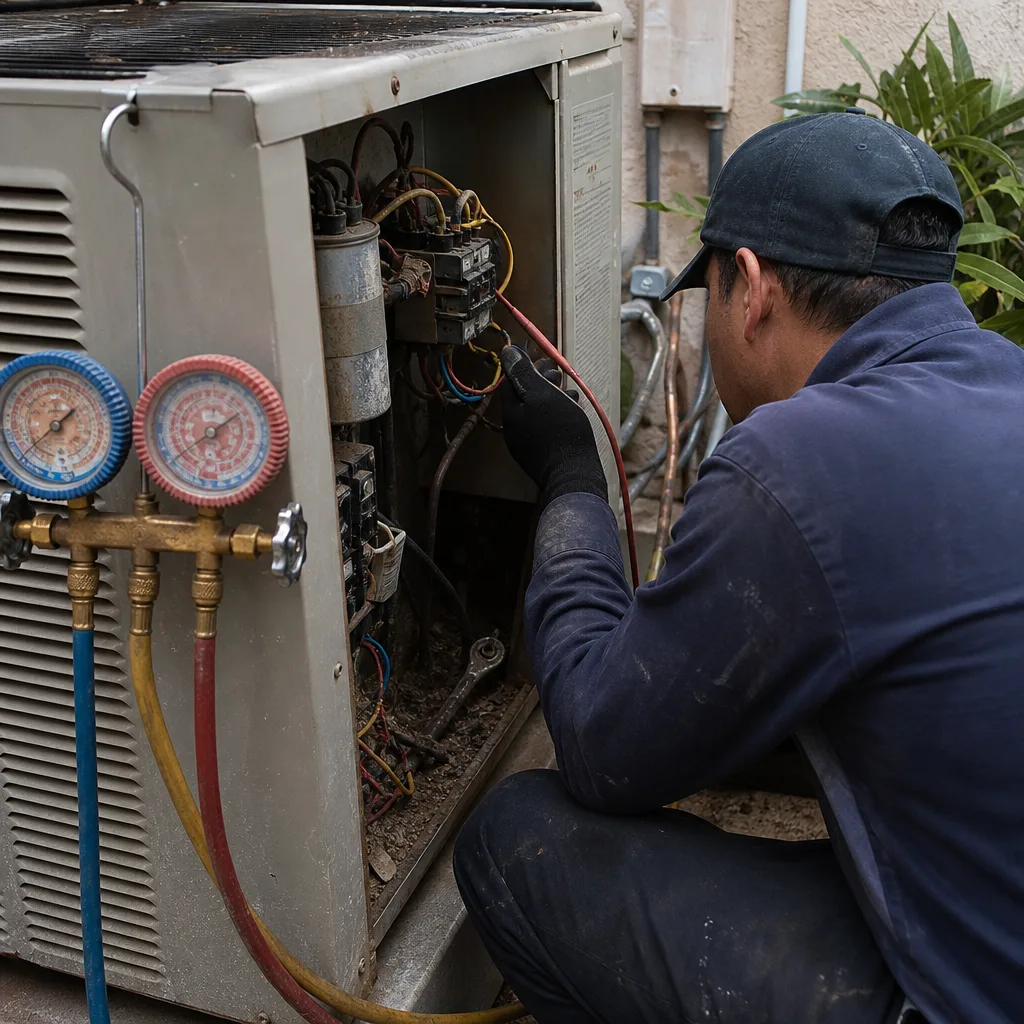
Brändt HVAC technicians inspect this specific point on every maintenance visit, because we know it’s where LA systems fail most predictably. A professional AC maintenance visit in Los Angeles will include flushing the drain line, treating it to prevent future mold growth, and verifying the pan’s slope and condition. If you’re doing it yourself, use a wet/dry vacuum on the drain line exit to clear a mild blockage, but if water has been sitting for more than a few days or mold is visible, call a professional.
Filter Reality in LA: Why Wildfire Smoke Changes Everything
The standard manufacturer recommendation is to replace your HVAC filter every 90 days. That guidance works in places where the air stays relatively clean. It doesn’t work in Los Angeles. Two factors drive LA’s filter reality: wildfire smoke season and the coastal marine layer.
During wildfire smoke events, which now occur somewhere in Southern California nearly every year during the late summer and fall, a standard 1-inch fiberglass filter can clog in 2 to 3 weeks. Smoke is full of fine particulate matter that your filter is designed to capture. When the filter saturates, airflow drops. The blower motor works harder. The evaporator coil can freeze. And the filter stops doing its job, allowing particulates into your living space.
For homes in coastal neighborhoods from Santa Monica to San Pedro, the marine layer adds moisture to the air. That moisture combined with dust and pollen can create a pasty accumulation on filter media that restricts airflow faster than dry conditions would. Homes within three miles of the coast often need filter changes 50 percent more often than homes in the Valley.
Here’s our Los Angeles filter guidance:
- Standard 1-inch filters: Check monthly. Replace every 30 to 45 days during wildfire season or if the filter is visibly dirty.
- Pleated media filters (MERV 8-11): Check monthly. Replace every 2 to 3 months under normal LA conditions, every month during active smoke events.
- High-MERV or HEPA-style filters: Check monthly. Follow manufacturer guidance, but if you see visible dust accumulation on the filter surface, it’s time to replace it regardless of the calendar.
The filter is the cheapest component of your entire HVAC system, and it protects the most expensive ones. Replacing a $10 filter monthly is dramatically cheaper than replacing a $300 blower motor or a $1,200 evaporator coil. In Los Angeles, the math is clear: when in doubt, change it.
What to Photograph Before the Technician Arrives
This is the page most LA homeowners don’t have in their maintenance playbook. But it saves time, money, and frustration. Before you call for AC service or maintenance in Los Angeles, document the system as it sits right now. Photos create a record. They help the technician diagnose faster. And they protect you from any misunderstanding about the system’s condition before and after the visit.
Here’s what to capture with your phone:
- Model and serial number sticker. Located on the outdoor condenser unit and often on the indoor air handler. This tells the technician exactly what system you have and whether replacement parts are available.
- The outdoor unit from all four sides. Shows the current condition of the coil, the clearance around the unit, and any visible damage. A photo taken before the visit can show whether new damage occurred during the work.
- The indoor air handler and drain pan area. If accessible, photograph the area around the coil and pan. Shows rust, leaks, or prior water damage.
- The thermostat and its wiring. Shows the current configuration and can help diagnose intermittent issues.
- The electrical disconnect near the outdoor unit. Shows whether it’s in the on position and the condition of the wiring.
- Any visible leaks, stains, or unusual areas. Photos of problems help the technician prep before arrival.
When you share these photos during the scheduling call or via email, the technician arrives with baseline knowledge. The diagnostic process shortens. And you have a dated, time-stamped record of the system’s condition before any work begins. We encourage every customer to do this, and our technicians review any photos you provide before they walk in the door. It’s one more way to cut uncertainty out of the process.
The 10-Step Los Angeles AC Maintenance Checklist
This is the consolidated checklist, built for Los Angeles specifically. Print it, save it, or bookmark this page. Run through it in April or May before first summer use, and again in September before Santa Ana season. Every step matters.
- Replace the air filter. Even if it looks okay, starting the season with a fresh filter protects the blower motor and evaporator coil from the start.
- Clear debris around the outdoor unit. Two feet of clearance on all sides. Remove weeds, leaves, and any objects stored near the condenser.
- Visually inspect the coil. Look for bent fins, visible dirt buildup, or signs of oil or refrigerant leaks. A dirty coil reduces efficiency and increases runtime.
- Check the drain pan and condensate line. No standing water. No visible mold. Test the drain flow with a cup of water.
- Test the system for 20 minutes. Set the thermostat 5 degrees below room temperature and listen for unusual sounds. Watch for airflow from every vent.
- Verify the thermostat is reading accurately. Compare the thermostat’s displayed temperature to a separate thermometer in the same room. Replace batteries if the display is dim.
- Inspect the wiring and disconnect. With the disconnect in the off position, check for any exposed wires, corrosion, or damage that could indicate overheating.
- Check refrigerant line insulation. The larger of the two copper lines should be insulated along its entire exposed length. Deteriorated insulation costs you efficiency.
- Document your system. Take the photos described in the section above. You now have a baseline record.
- Schedule a professional inspection if anything fails. Don’t wait. A small issue found in April is a $200 repair. The same issue ignored until August is a $2,000 replacement.
If all ten steps pass, your system is in solid shape for the season ahead. If any step reveals a problem, call a professional before it compounds. Our AC repair service in Los Angeles responds to these exact findings every day, and every job starts with a written price before any work begins.
What AC Maintenance Costs in Los Angeles
Professional AC maintenance in Los Angeles typically runs between $125 and $250 for a standard tune-up visit. Here’s how that breaks down in the LA market specifically:
- Basic maintenance visit: $125 – $200. Includes filter check, coil cleaning, drain line flush, thermostat calibration, and a system test. Most Los Angeles HVAC companies offer this at this rate.
- Comprehensive maintenance with coil pull: $200 – $350. Includes everything above, plus deeper coil cleaning, electrical component testing, and a written report of findings.
- Maintenance plan (annual contract): $180 – $400 per year, typically covering two visits. Often includes priority scheduling and discounted repairs.
- Individual repairs found during maintenance: Varies widely. Capacitor replacement $150 – $300. Condensate drain line clearing $100 – $250. Refrigerant recharge $200 – $600, depending on refrigerant type and amount.
Prices in Los Angeles are influenced by the same factors as everything else here: labor rates are higher than the national average, and the dense urban environment adds time to every service call. That said, maintenance is the cheapest line item in your HVAC budget. The systems we see that receive regular maintenance in LA routinely last 15 to 20 years. The ones that don’t often fail in 10 to 12.
At Brandt HVAC, every maintenance visit includes a written price before any work starts, and every repair includes a written guarantee that specifies exactly what it covers and for how long. If a repair fails during that guarantee period, we return for free under our 365-Day Done Right Promise. You’ll know the cost before you agree to anything, and you’ll know the outcome before we leave.
Common Mistakes to Avoid
- Only thinking about AC when it’s hot. Los Angeles systems fail most predictably at startup, not during peak operation. The best time to maintain is before you need the system, not during a July heat wave when every repair company in LA is booked solid.
- Skimming the Santa Ana season check. The September-October dust load causes more coil and capacitor failures in LA than the entire summer does. A 20-minute September inspection prevents the most expensive October repairs.
- Ignoring the drain line until there’s a smell. By the time you smell mold from the vents, the drain system has been dysfunctional for weeks and the remediation is more involved. Check it before first startup every season.
- Replacing filters on the manufacturer’s schedule. A 90-day filter interval doesn’t hold up in Los Angeles wildfire smoke or in coastal marine-layer conditions. Check monthly and replace on condition, not the calendar.
- Letting landscaping grow around the ground unit. That overgrown jasmine or hibiscus might look nice, but it’s starving your condenser of airflow and forcing the system to work harder than it should. Keep a two-foot clearance.
- Not documenting the system before service. Photos taken before a technician arrives protect you and speed up diagnosis. It takes three minutes and costs nothing.
When to Call a Professional
Some maintenance tasks are DIY-friendly: filter changes, debris clearing, visual inspections, photography. Others need a trained technician with the right tools and knowledge. Call a professional if you notice any of these: warm air blowing from vents when the system is set to cool, ice forming on the copper lines or evaporator coil, a burning smell when the system runs, water leaking from the indoor unit, unusual banging or grinding sounds, or a system that cycles on and off rapidly. These symptoms indicate problems that get worse with time, not better. Refrigerant work, in particular, requires specialized equipment and EPA certification. Don’t attempt it. For AC Repair Troubleshooting: Common Problems and How to Fix Them, see our detailed guide. If you’re in Los Angeles and any of these warning signs appear, call Brandt HVAC at (984) 538-9003 for a free estimate. We arrive with a written price before any work begins, and every repair includes a written guarantee.
Frequently Asked Questions
In Los Angeles, check your filter every month and replace it as soon as it looks dirty, regardless of the manufacturer’s 90-day recommendation. During wildfire smoke events, plan on replacing a standard filter every 2 to 3 weeks. Coastal homes with heavy marine layer moisture may need changes 50 percent more often than inland homes. The filter is the least expensive component in your system, and a dirty one forces every other component to work harder.
The condensate drain line and drain pan. Because many LA systems sit idle for months at a time, water lingers in the pan and line, creating mold growth that the first summer startup then pushes into the living space. A simple pre-startup drain check and flush prevents the single most common “first use” failure we see in Los Angeles.
Yes, absolutely. The Santa Ana wind season from September through November pushes significant dust and debris into outdoor condenser units. Systems that ran quietly all summer often develop capacitor and airflow problems in September and October as a result. A pre-Santa-Ana check is the most undervalued maintenance window in Los Angeles.
Standard professional maintenance visits in Los Angeles run $125 to $250. Comprehensive visits with deeper coil cleaning and electrical testing run $200 to $350. Annual maintenance plans covering two visits typically cost $180 to $400 per year. Call (984) 538-9003 for an exact quote for your system.
With regular, consistent maintenance, air conditioning systems in Los Angeles routinely last 15 to 20 years. Without it, that number drops to 10 to 12 years. The difference is roughly the cost of a full system replacement, which in LA can run $8,000 to $15,000 or more for a typical single-family home.
Photograph the model and serial number sticker on the outdoor condenser, the unit from all four sides, the indoor air handler and drain pan area, the thermostat, the electrical disconnect, and any visible leaks or problem areas. These photos speed up diagnosis and create a dated record of your system’s condition before any work is performed.
The Bottom Line
Los Angeles air conditioners fail differently than systems elsewhere, and generic maintenance advice doesn’t account for the Santa Ana dust load, coastal marine layer moisture, and long idle periods that define our climate. The maintenance rhythm that actually works here is: filters checked monthly, drain lines cleared before first startup, a dedicated pre-Santa-Ana inspection in September, roof units inspected twice a year, and photo documentation before any service call. Maintenance costs a fraction of repairs, and repairs cost a fraction of replacements. For more guides & resources, explore our blog. If any check on this list is beyond what you’re comfortable doing yourself, call Brandt HVAC at (984) 538-9003. You’ll get a written price before any work starts and a written guarantee on every repair.
Written by Devin Marlowe, Owner at Brandt HVAC, serving Los Angeles since 2003.