
Last updated October 9, 2026
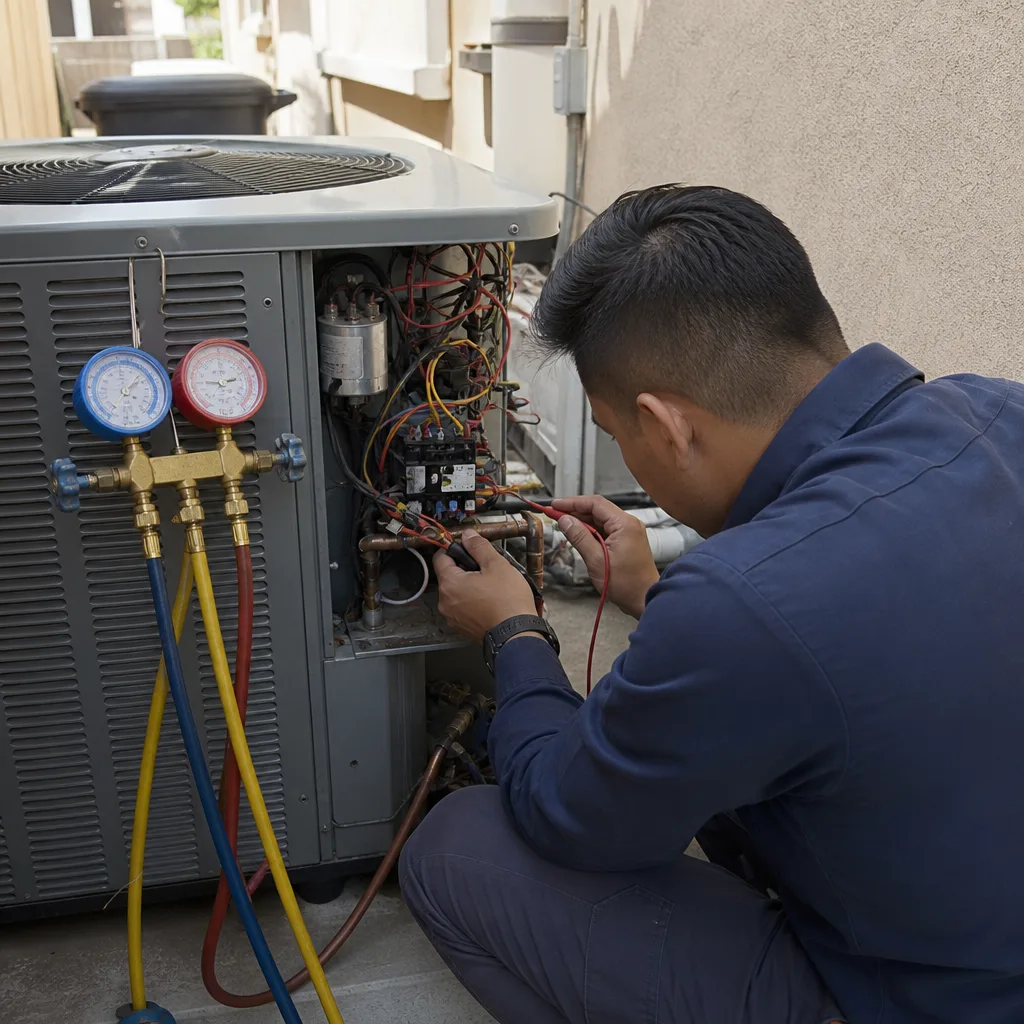
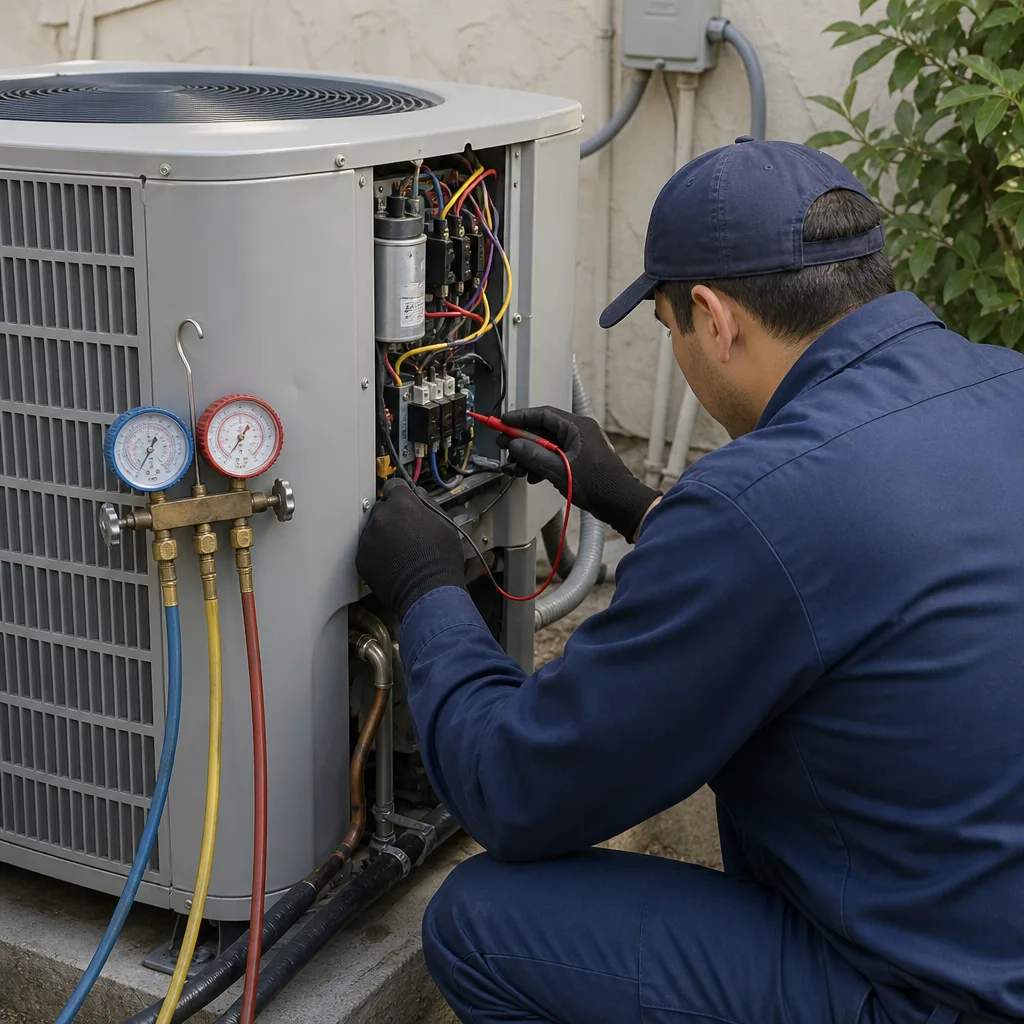
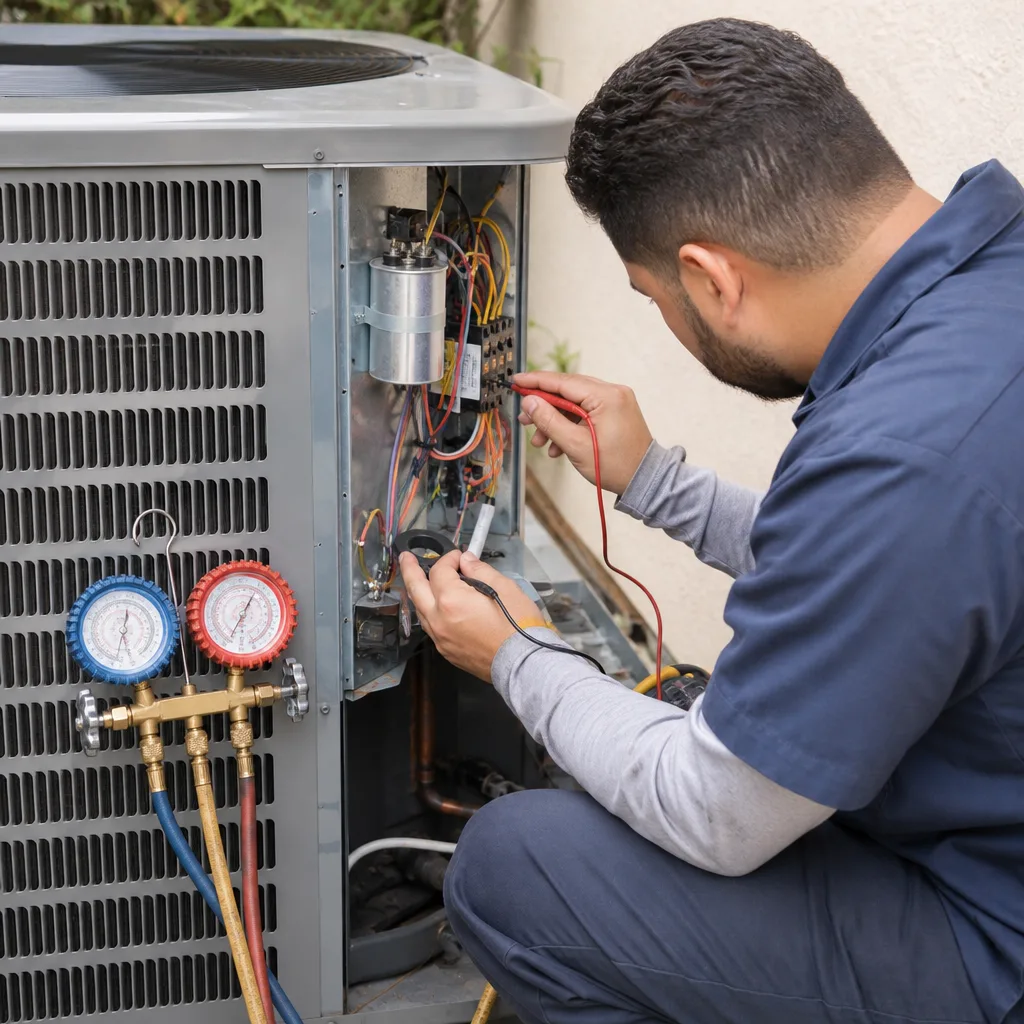
Seasonal tune-up and full diagnostic on your Carrier, Trane, or Goodman system - readings shown to you before any repair is proposed
Diagnosis first, numbers second - you approve the repair price before a single part goes in.
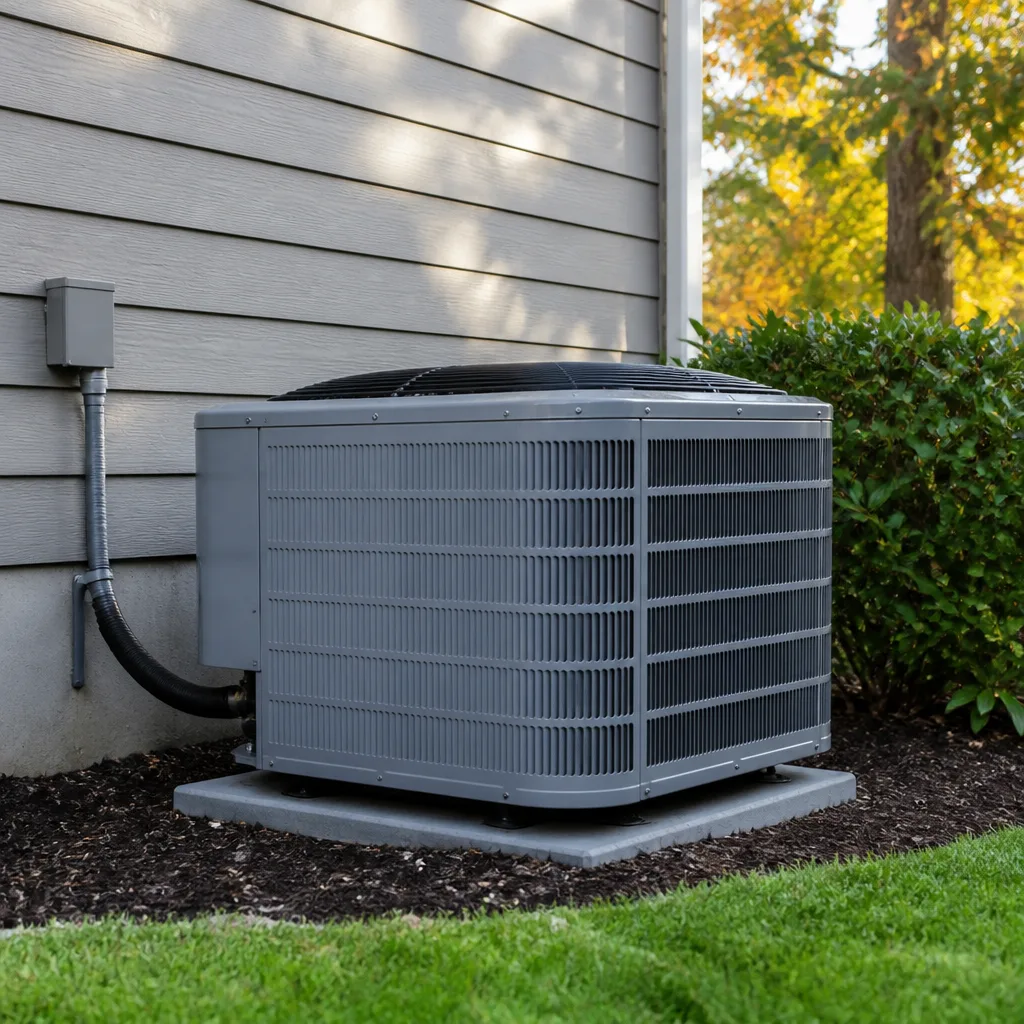
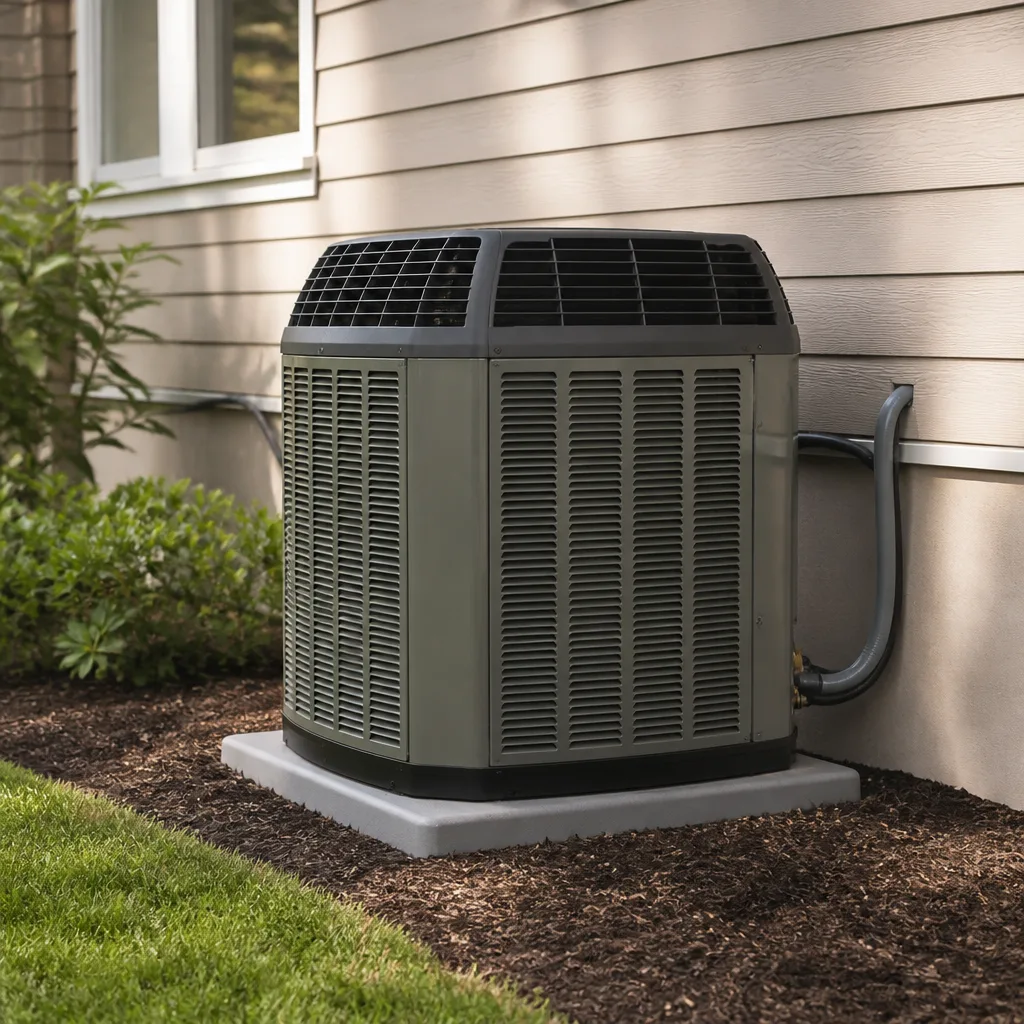
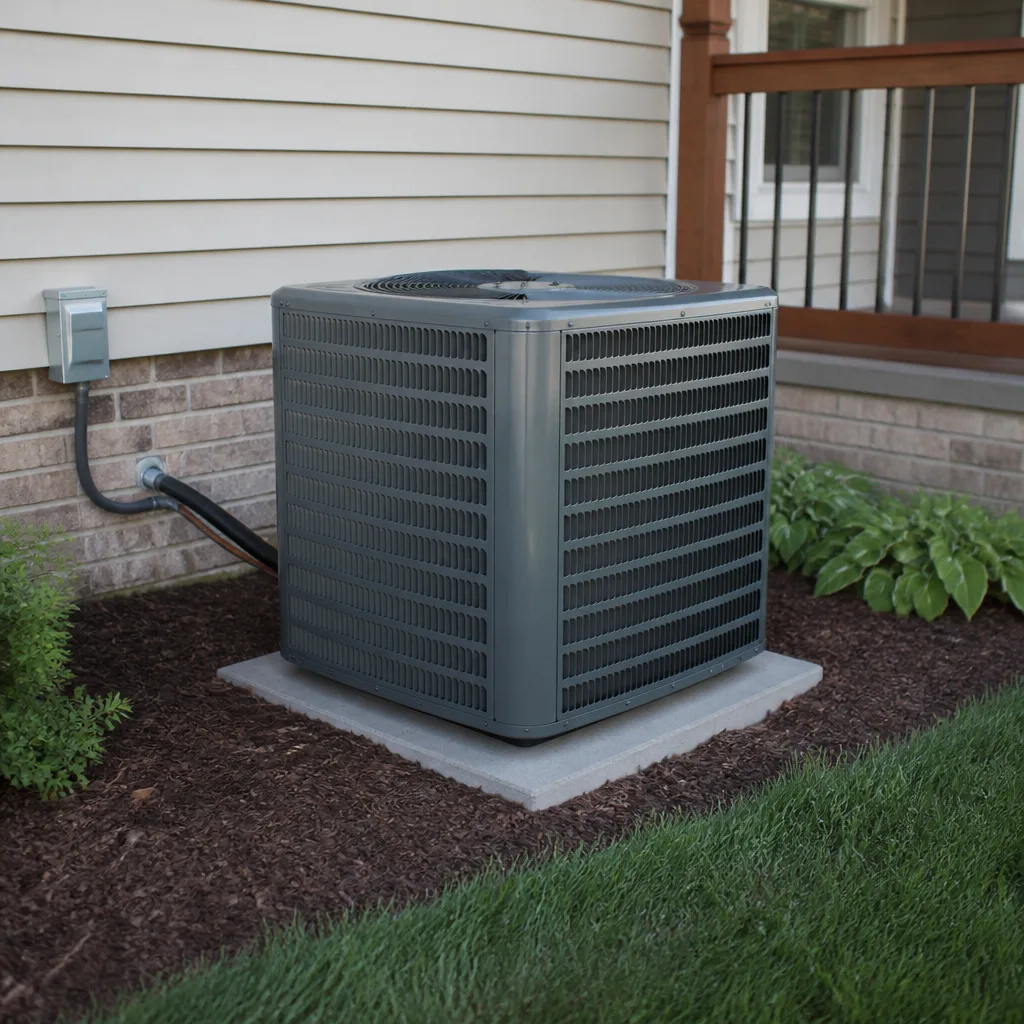
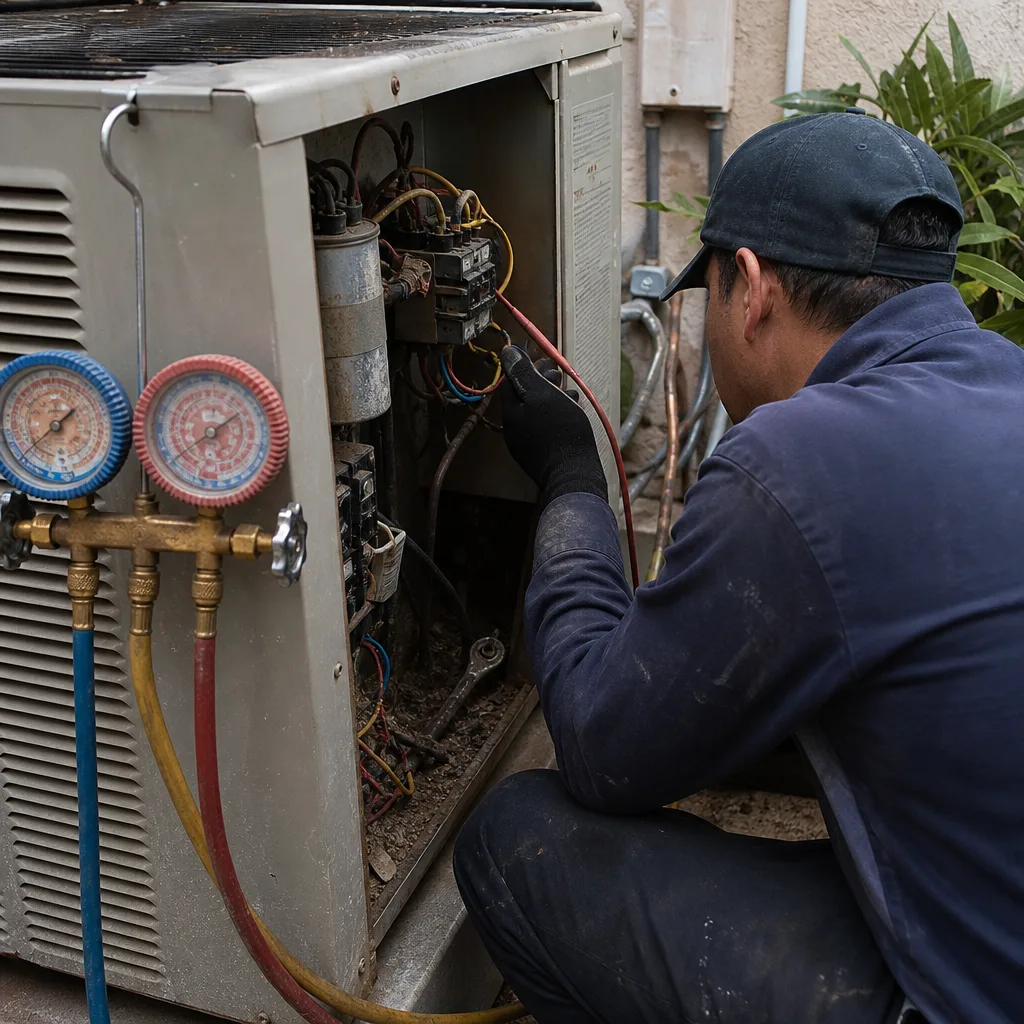 Before
 After
After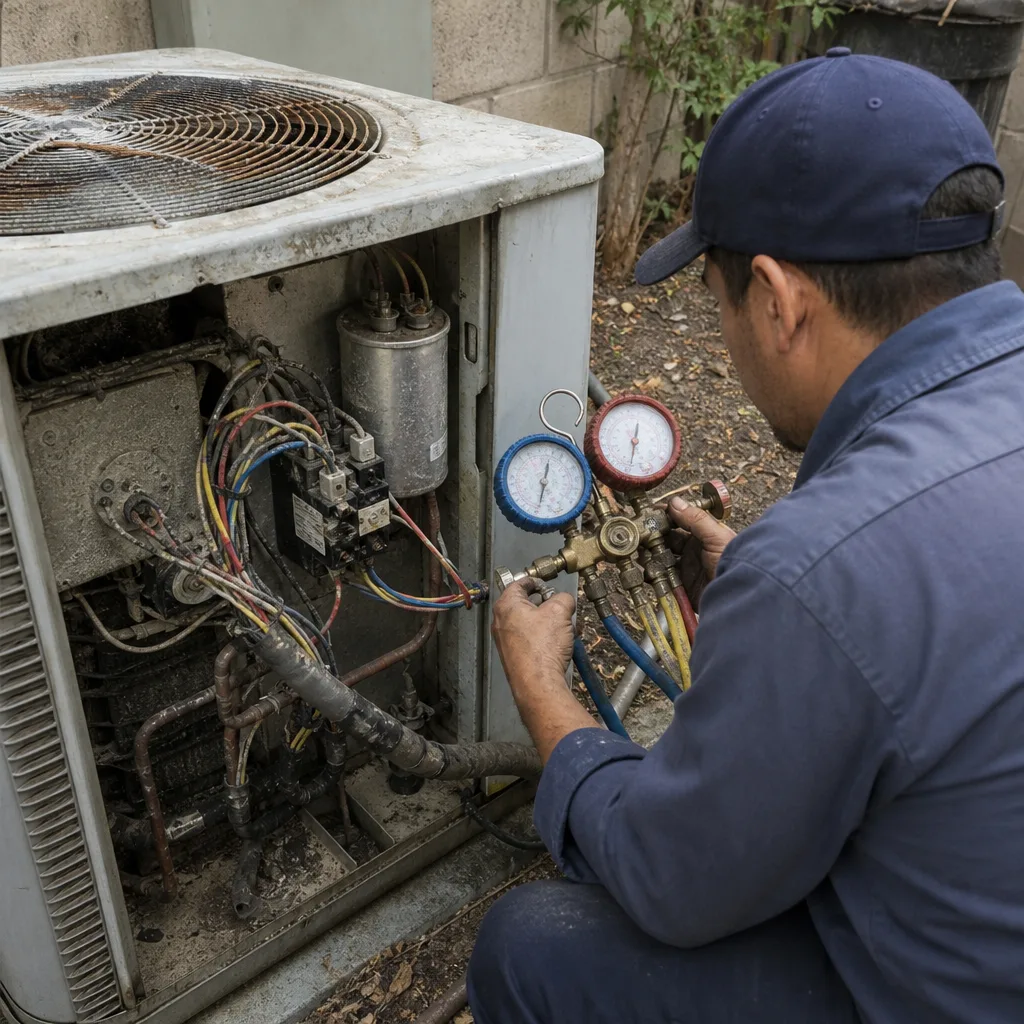 Before
 After
After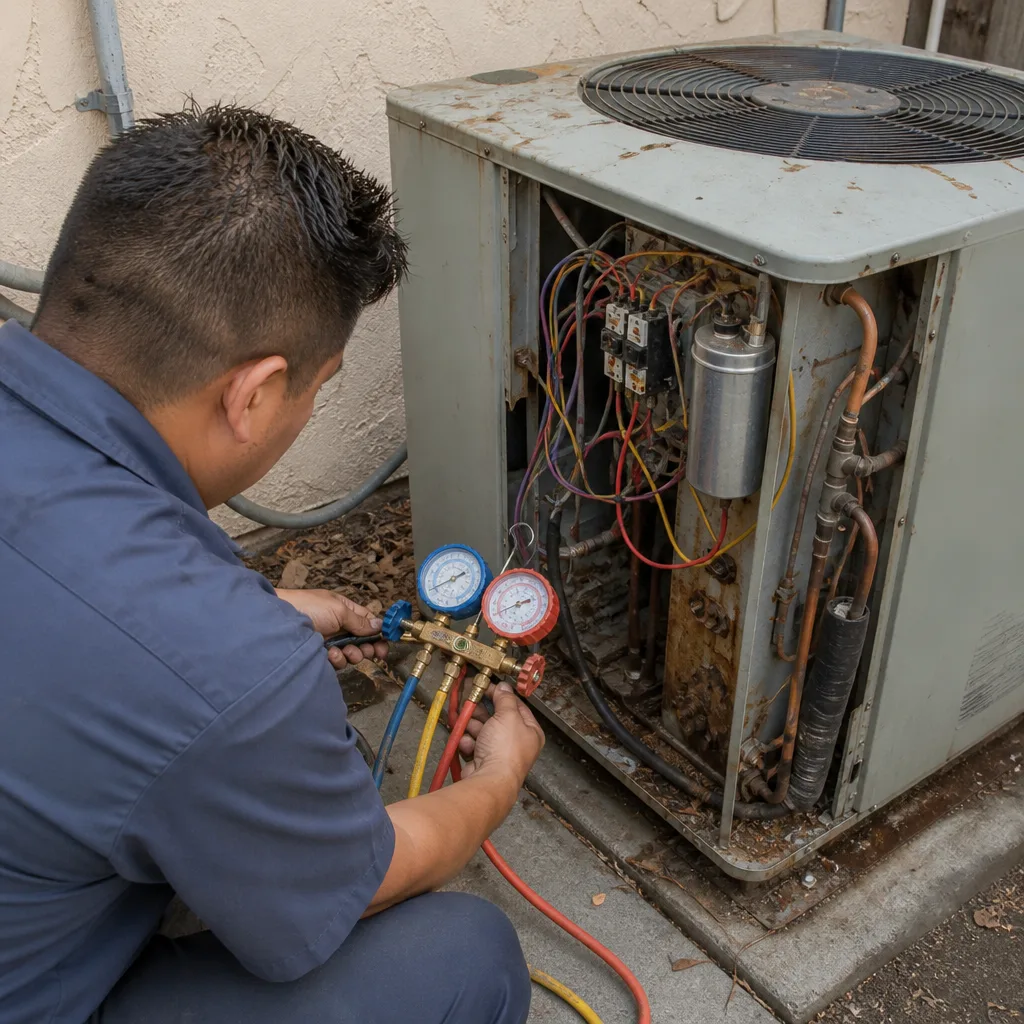 Before
 After
AfterHVAC Warning Signs: A Los Angeles Homeowner’s Reference Guide
Here’s a counterintuitive fact we’ve learned from two decades of Los Angeles HVAC work: most major system failures don’t start with a breakdown. They start with a “quirk.” A breaker that trips once. A faint rattle when the fan kicks on. A musty smell that disappears after five minutes. Los Angeles homeowners are especially vulnerable to missing these early signals because our systems run harder and longer than almost anywhere else, often with rooftop package units that are out of sight and out of mind. This guide-along with our AC Maintenance Troubleshooting: Common Problems and How to Fix Them-translates those quirks into specific component failures, with realistic timelines before each becomes an emergency.
Quick Answer
The most common early HVAC warning signs in Los Angeles are: a breaker that trips 15 – 30 minutes after startup, a high-pitched squeal when the system starts, a musty smell from the vents, short cycling (the system turning on and off every few minutes), and an unexplained jump in your Edison bill compared to the same month last year. Each of these points to a specific failing component, and most can be repaired for $150 – $400 if caught early-see our AC Maintenance Maintenance Schedule: What to Do and When for timing. Ignored, they typically escalate to $800 – $3,000 repairs or full replacement within 4 – 8 weeks.
Table of Contents
- Why Los Angeles Creates Unique HVAC Warning Signs
- Sound-to-Failure Translation
- Rooftop Package Units vs. Split Systems: Different Warnings
- Humidity and Air Quality Signals
- Using Your 12-Month Edison Bill as a Diagnostic Tool
- Warning Sign Triage: Scheduled vs. Same-Day
- Brand-Specific Warning Patterns
- Common Mistakes to Avoid
- When to Call a Professional
- Frequently Asked Questions
Why Los Angeles Creates Unique HVAC Warning Signs
Los Angeles HVAC systems fail differently than systems in Phoenix, Houston, or Chicago. The reason comes down to three local conditions that shape how warning signs appear, and how much time you have to respond.
First, our shoulder seasons are nearly nonexistent. A Chicago furnace sits idle from April through October, giving homeowners six months of visual and auditory silence before failure. A Los Angeles system in neighborhoods like Sherman Oaks or Pasadena can cycle for cooling in February, switch to heating during a cold snap in March, and return to cooling by April-exactly why our Seasonal HVAC Care for Los Angeles: Year-Round Homeowner’s Guide matters. This constant cycling accelerates component wear and compresses the warning window. When a Los Angeles homeowner hears a new sound from the system, it’s often been developing for weeks, not months.
Second, rooftop package units dominate LA housing stock. Walk through Mid-City, West Adams, or the San Fernando Valley and you’ll see flat roofs with Rheem, Goodman, and Bryant package units sitting in direct sun. These units absorb heat all day, then work against that same heat buildup when they kick on in the afternoon. The result is higher refrigerant pressures, faster capacitor degradation, and warning signs that show up as attic-level sounds or ceiling-vibration patterns that homeowners often attribute to “the house settling.”
Third, our air contains a specific mix of particulates. Los Angeles air carries wildfire ash during fire season, marine layer moisture in coastal neighborhoods from Santa Monica to Long Beach, and fine dust from the 405 and 101 corridors. This combination clogs condenser coils and air filters faster than national averages, which means a system that gets its filter changed on a generic “every 90 days” schedule is already behind. Clogged filters and coils create a cascade: reduced airflow, frozen evaporator coils, compressor strain, and finally failure.
What this means for you: when your LA system shows a warning sign, treat it as urgent by default. The operational margin that buyers of HVAC equipment assume doesn’t match what Los Angeles actually demands.
Sound-to-Failure Translation: What Your AC Is Actually Saying
Every HVAC system makes sound. The skill is knowing which sounds are normal and which are mechanical language for “a specific part is failing.” Here is what we listen for when a Los Angeles homeowner calls us about a strange noise, and what each sound translates to in component terms.
Rattling (mid-pitched, metallic, from the outdoor unit)
A rattle usually means a loosening component: a fan blade that has shifted out of alignment, a screw that has backed out of a panel, or a compressor mount that is vibrating against the chassis. The fix is often simple and inexpensive ($75 – $150), but the cost of ignoring it is not. A vibrating compressor mount places stress on the refrigerant lines, which can eventually crack and leak refrigerant. You go from a $100 tightening job to a $900 – $2,000 refrigerant line replacement and recharge.
High-pitched squeal at startup
This is the classic warning sign of a failing blower motor bearing or a belt that has lost tension. In belt-driven systems, the squeal often fades as the belt warms up and grabs the pulley again, which is precisely why homeowners dismiss it. But the belt is slipping, and each slip wears it thinner. Expect 1 – 3 weeks of intermittent squeal before the belt snaps or the motor seizes. Belt replacement: $120 – $250. Motor replacement after the belt takes out the bearings: $450 – $900.
Short cycling (system turns on and off every 5 – 10 minutes)
Short cycling is not a personality trait of your AC. It is almost always one of two specific problems: a failing capacitor that can no longer hold the voltage needed to keep the compressor running, or an oversized system that reaches the thermostat setpoint too quickly. The capacitor version is the urgent one. A failing capacitor costs $150 – $300 to replace and prevents a $1,200 – $2,400 compressor failure. If your system is short-cycling and you have a Carrier or Trane unit older than 8 years, get the capacitor checked that week.
Humming that doesn’t stop (and the fan isn’t spinning)
A humming outdoor unit with a stationary fan is usually the capacitor completely failed: the compressor is trying to start but can’t. This is not a “maybe call tomorrow” situation. Running in this state for even a few hours can destroy the compressor windings. Turn the system off at the thermostat and breaker, then call. Capacitor replacement is $150 – $300. Compressor replacement starts around $1,800.
Our test as experienced Los Angeles technicians: a noise that appears once and vanishes is worth a mental note. A noise that repeats every cycle, or gets louder over a week, is a documented mechanical change. Trust the pattern, not the exception.
Rooftop Package Units vs. Split Systems: Different Warning Signs
Los Angeles housing stock splits roughly into two HVAC configurations, and they warn you differently. Knowing which system you have changes what you should be looking and listening for.
Rooftop package units (common in the Valley, Mid-City, West Adams, older flat-roof construction)
A package unit puts the compressor, condenser coil, evaporator coil, blower, and air handler all in one metal cabinet on the roof. The entire system lives in direct Los Angeles sun, which means every component operates at higher ambient temperatures than a shaded ground unit ever would. Warning signs to watch for on a rooftop unit:
- Ceiling vibration or a new hum directly below the unit’s footprint. Rooftop units transmit vibration through the roof decking, and a new vibration usually means a failing motor mount or a condenser fan blade that has lost a weight clip.
- Water stains or discoloration on the ceiling below the unit. Package units have an internal drain pan. When it cracks or the drain line clogs, water pools inside the cabinet and can seep through the roof seal. This is a drain issue, but it often gets misdiagnosed as a roof leak.
- A burned smell from the vents when heat runs for the first time each season. Because package units sit outside, dust and fine debris accumulate in the heat exchanger. The first heating cycle burns it off. A persistent burning smell that lasts more than 10 minutes is different: it may indicate a failing heat exchanger, which is a carbon monoxide concern and warrants same-day attention.
Split systems (common in newer construction, condos, and hillside homes from Echo Park to Silver Lake)
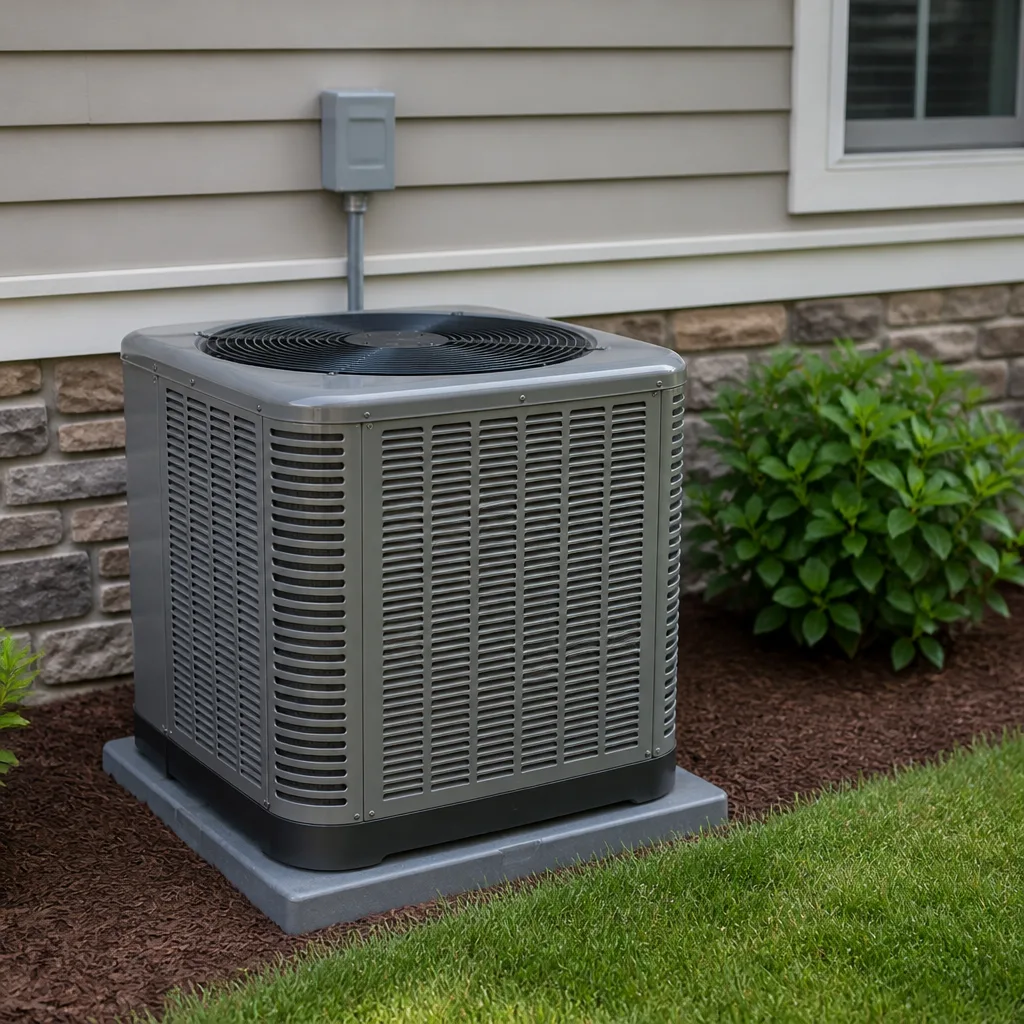
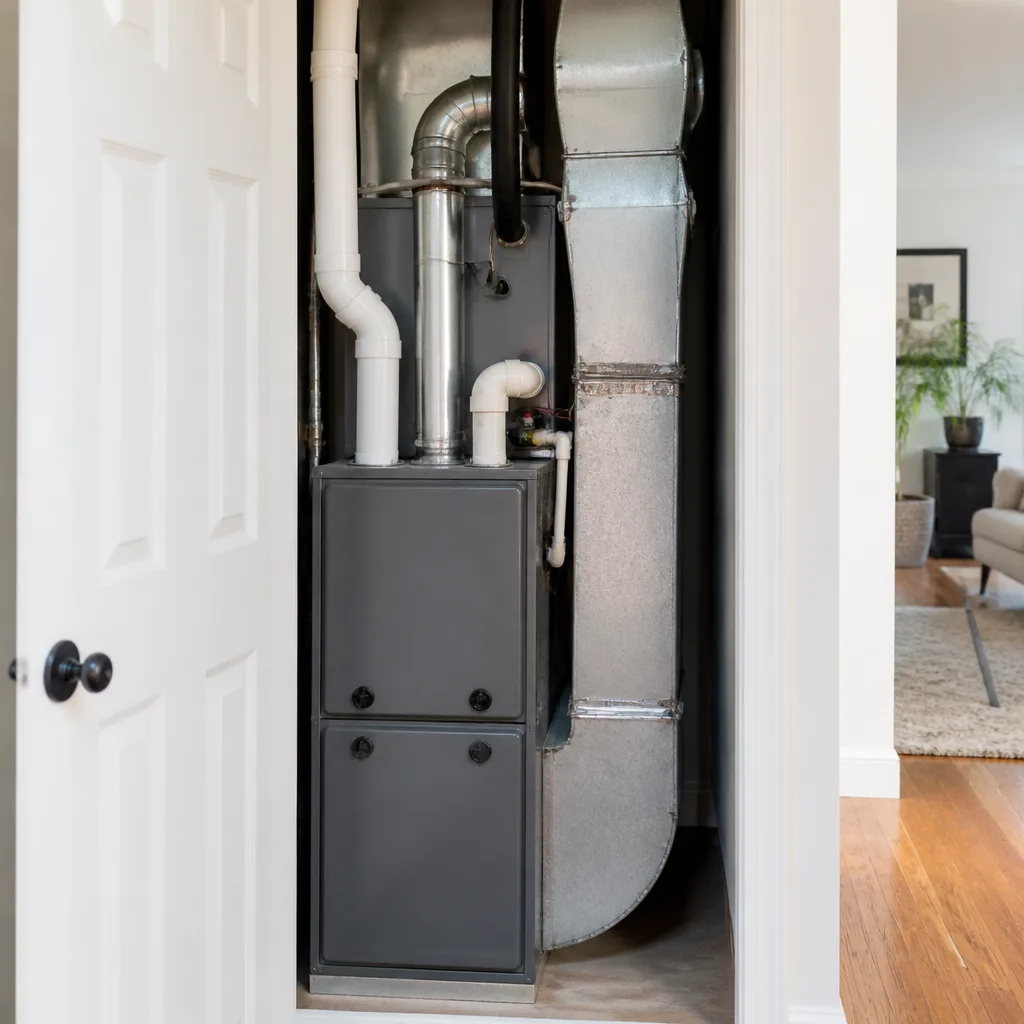
A split system separates the condensing unit (outside, usually on a patio or side yard) from the evaporator coil and air handler (inside, often in a closet, attic, or crawlspace). The separation changes where warning signs appear:
- Refrigerant line sweating or ice on the outside copper lines. On a split system, the copper line set runs between the outdoor and indoor units. Visible ice or heavy condensation on the larger insulated line usually means low refrigerant. This is common on systems older than 10 years in Los Angeles, where repeated heat cycles eventually create small leaks at the braze joints.
- Water pooling around the indoor air handler (closet or garage). Split systems drain condensation through a line to the outside. When that line clogs with the fine dust that accumulates in LA closets and garages, the pan backs up and overflows. You’ll see water on the floor or closet baseboards, often before you notice any cooling change.
- Clanking from the outdoor unit when it cycles off. This is typically a failing compressor isolation mount or a reversing valve shifting hard. On split systems, the outdoor unit sits on a pad close to the house, so the sound is louder and easier to localize. A clanking compressor mount can be shimmed and tightened. A hard-shifting reversing valve is a more serious issue that can eventually prevent the system from switching between heating and cooling.
If you’re not sure which system you have, step outside and look. A metal cabinet on the roof is a package unit. A metal cabinet at ground level with copper lines running into the house is a split system.
Humidity and Air Quality Signals: What Your Vents Are Telling You
Los Angeles is not a humid city by national standards, but our specific geography creates two moisture patterns that show up in HVAC warning signs. Coastal neighborhoods from Venice to San Pedro get consistent marine layer moisture. Inland areas from Northridge to Pasadena get dry heat but sudden humidity spikes during monsoon season and after winter rains. Neither pattern is something your system can ignore.
Musty smell on startup
When your AC kicks on and the first 30 seconds of air smells like a damp basement, you’re smelling microbial growth on the evaporator coil or in the drain pan. In Los Angeles, this is most common in coastal homes where the marine layer keeps the coil damp overnight, and in any home where the system has been off for several days during a mild stretch. The smell fades as the coil dries, which is exactly why people tolerate it for months. Under the surface, the drain pan is likely holding standing water because the drain line is partially clogged with dust and biofilm. The fix is a drain line flush and coil cleaning ($200 – $400). Left alone, the moisture corrodes the pan (another $300 – $600) and degrades indoor air quality.
Visible condensation on supply vents
If you see moisture beading on the metal grille of a supply vent, the air coming off the coil is colder than normal, which usually means low refrigerant or restricted airflow. Low refrigerant pulls the evaporator coil below the dew point and creates condensation that was never supposed to form inside the duct run. This is a sign worth noting and acting on: refrigerant leaks don’t self-heal, and they get more expensive as they grow. A small leak can often be located and repaired at the source. A large leak, after months of ignoring the condensation, may require component replacement.
Dust accumulation on the return grille within a week of cleaning
This is not an air quality observation, it is an airflow measurement. A return grille that visibly loads with dust in days means the system is pulling air through the filter at a higher-than-designed velocity, which means the filter is too restrictive, the return duct is undersized, or the blower is working harder than it should. Los Angeles homes with original 1960s – 1970s ductwork in neighborhoods like Westchester, Culver City, and Torrance often have return ducts that were sized for the original heating-only systems, not the cooling loads they now carry. The symptom at the grille is free information: your system is telling you it’s starved for air.
Using Your 12-Month Edison Bill as a Diagnostic Tool
Your Edison bill is the only HVAC diagnostic instrument that works continuously, even when you’re not home. Here’s how to use it.
Pull your last 13 months of statements from Southern California Edison or SoCalGas. You’re looking for the same month last year (or two years ago) compared to the same month this year. A 15 – 20% increase in kWh usage with no corresponding change in square footage, occupancy, or new appliances is a documented efficiency decline. Something mechanical changed.
- Download or print 13 months of bills. You need the trailing month plus the same month from one and two years back. The “usage comparison” graphs on the Edison website work, but the raw numbers are more useful.
- Find three same-month comparisons. July vs. July, September vs. September, December vs. December. Seasonal variation is normal. Same-month variation is diagnostic.
- Look for a 15%+ increase that persists for two or more consecutive months. A one-month spike during a heatwave is weather. A two-month sustained increase is mechanical: dirty condenser coil, low refrigerant, failing capacitor causing longer run times, or duct leaks that are dumping conditioned air into the attic.
- Cross-reference with your thermostat settings. If you’ve held the same setpoint (say 74°F) and the system just runs longer to reach it, that’s your mechanical decline made visible on the bill.
- Call for a diagnostic before the next billing cycle. The efficiency decline that shows up as $30 – $50 a month in extra electricity is often a $200 – $400 repair today and a $1,500 – $3,000 repair in 6 – 8 weeks.
In our experience as Los Angeles HVAC technicians, the 12-month bill comparison catches more failing capacitors and leaking coils than any other single diagnostic signal. It’s also the one homeowners almost never do until someone shows them how.
Warning Sign Triage: What Needs Same-Day Contact and What Can Wait
Not every warning sign deserves the same response urgency. Here’s a triage framework we use with Los Angeles homeowners, built specifically for a 10 p.m. discovery of something strange.
Same-day category (system off, call now):
- Breaker trips more than once in 24 hours. This means the system is drawing current beyond the breaker’s rating. It could be a failing capacitor, a grounded compressor winding, or a shorted wire. None of these self-resolve, and all of them can damage other components each time the breaker trips.
- Burning smell that persists beyond 10 minutes. A momentary burn-off smell from a dusty heat exchanger is normal. A persistent burning or electrical smell is not. Turn the system off at the thermostat and breaker.
- Humming outdoor unit with a stationary fan. The compressor is likely locked or the capacitor is completely dead. Power it down now to protect the compressor windings.
- Water actively leaking or pooling from the indoor unit. The drain pan is overflowing, which means water is going somewhere it shouldn’t be: your ceiling, your closet floor, your garage drywall. Water damage escalates hourly, not weekly.
Scheduled appointment category (system can run, call within the week):
- Intermittent rattling or squeal that repeats every cycle. A loosening component or slipping belt. It will get worse, but a week of monitoring is generally safe.
- Musty startup smell. A drain pan and coil cleaning can be scheduled. There’s no immediate safety risk, though air quality degrades over time.
- Short cycling that’s mild (on/off every 10 minutes, not every 2 – 3). This is usually a capacitor that’s wearing but not yet failed. Schedule within 7 days.
- Energy bill creep of 10 – 15%. Worth investigating soon, but not an emergency unless you’re also seeing other symptoms.
The key distinction: anything involving electricity, water, or burning smells gets immediate attention. Anything involving gradual mechanical wear can be scheduled. When in doubt, turn the system off and call a professional for guidance. A live voice at 10 p.m. is better than a guess at midnight.
Brand-Specific Warning Patterns in Los Angeles
Different manufacturers build systems with different failure profiles, and Los Angeles conditions expose those profiles predictably. Here’s what we see most often, by brand, across LA service calls.
Carrier and Bryant
These two share a parent company and much of their component architecture. In Los Angeles, we see capacitor failures as the most common early warning sign on Carrier and Bryant systems aged 6 – 10 years. The systems run well when the capacitor is healthy, but LA’s heat load degrades capacitors faster than the national average. If your Carrier or Bryant system is short-cycling or the outdoor unit hums without starting, a capacitor replacement ($150 – $300) is the likely fix. The systems also have a distinctive contactor “chatter” sound when the 24-volt control relay starts to wear. If you hear a rapid clicking from the outdoor unit when the thermostat calls for cooling, that’s the contactor.
Daikin and American Standard
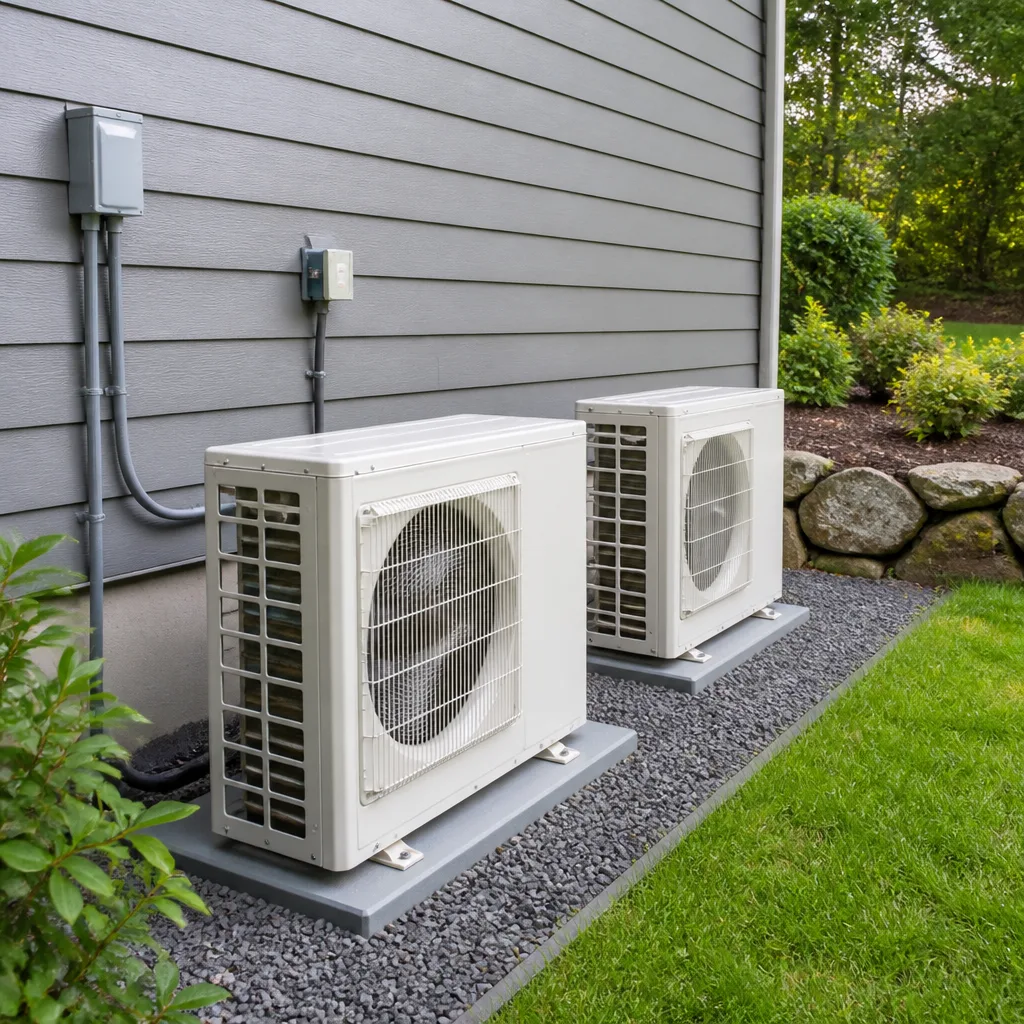
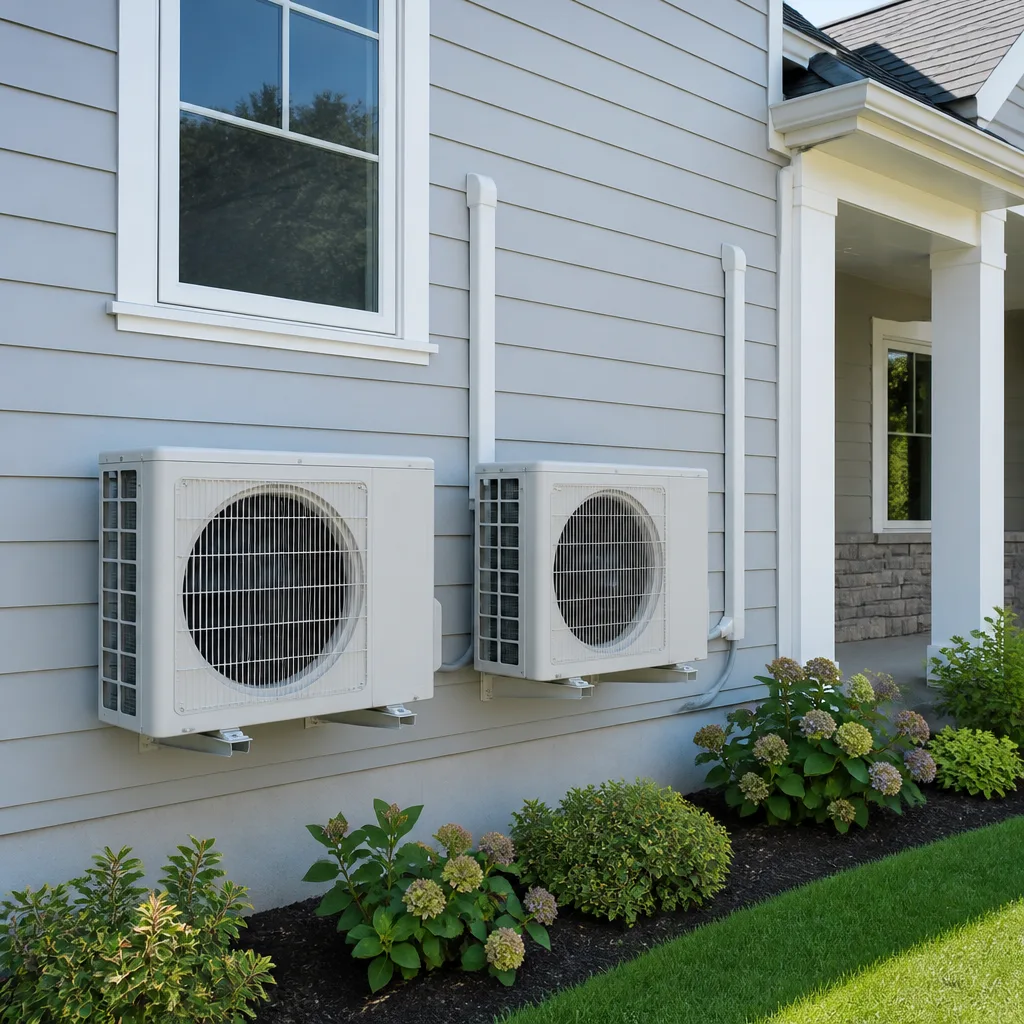
Daikin systems, especially the mini-split and multi-zone configurations that are increasingly popular in Los Angeles hillside homes and ADU conversions, have a different warning language. The indoor units communicate via error codes displayed on the remote or wall controller. When a Daikin indoor unit blinks a specific pattern on its indicator light, the manual lists the corresponding fault. We find that many homeowners never register the blinking light as meaningful. If your Daikin wall unit has a blinking LED, that is the system telling you exactly which sensor or component is failing. Don’t ignore it.
American Standard (and its Trane sibling) systems tend to fail more gracefully. The first warning is usually reduced cooling capacity that develops over several weeks, not a sudden failure. This makes the energy bill comparison especially valuable for American Standard owners. The system may cool the house but run longer and more often to do it, and that extra runtime shows up on the Edison statement before any other symptom.
One pattern we want Los Angeles homeowners to understand regardless of brand: when a system reaches 12 – 15 years old in our climate, even well-maintained units begin showing simultaneous warning signs. A capacitor fails, then the condenser coil starts leaking, then the blower motor bearings wear. At that age, the 12-month bill comparison and a seasonal tune-up become your best tools for deciding between continued repair and planned replacement. Our AC Maintenance in Los Angeles page explains what a seasonal inspection covers and why it catches these patterns before they become emergencies.
Common Mistakes to Avoid
- Resetting a tripped breaker and “seeing if it happens again.” A breaker that trips once was responding to an overcurrent event. Resetting it without diagnosing why the current spiked subjects the compressor and fan motor to that same event again. Each trip shortens equipment life. If it trips twice, call before resetting a third time.
- Ignoring a noise that “only happens on hot days.” Los Angeles hot days are precisely when your system is under maximum load and maximum strain. A sound that appears only under load is a component at its stress limit. That’s the most diagnostic sound you can get, not the least.
- Changing the filter but never checking the outdoor unit. Los Angeles condenser coils collect dust, wildfire ash, and traffic particulate on a schedule that outpaces filter replacement. A clogged coil costs you 15 – 25% in efficiency and pushes every other component harder. Walk outside once a month and look at the coil fins. If they’re gray and packed, they need cleaning.
- Treating a musty smell as a housekeeping issue. The source is almost always standing water in the drain pan or microbial growth on the coil. Febreze masks it. The coil and drain line need service.
- Assuming a rooftop unit doesn’t need regular visual inspection because “no one can reach it.” This is the single most expensive assumption in Los Angeles HVAC ownership. Rooftop units in the sun degrade faster than ground units, and they’re the least likely to get looked at. A roofing access point and a professional inspection once or twice a year catches what you can’t see from the ground.
- Using the “it cools fine, so it’s fine” test. A system can cool acceptably while a capacitor degrades, a drain line slowly clogs, and a refrigerant leak grows. “Cools fine” is a lagging indicator. The leading indicators are the sounds, smells, moisture patterns, and bill changes described above.
- Waiting until the heatwave to schedule a diagnostic. Los Angeles HVAC contractors are stretched thinnest during July through September heat events. The diagnostic you schedule in May gets more attention and costs less than the same diagnostic during a 100°F stretch. The calendar is a maintenance tool.
When to Call a Professional
You should call a professional the first time you notice any of the same-day triage signals: a tripped breaker that repeats, a persistent burning smell, a humming unit with a stationary fan, or active water leakage. You should also call if you’ve done a 12-month bill comparison and found a sustained 15%+ increase that you can’t explain through occupancy or appliance changes. And if your system is over 12 years old and you’re seeing two or more of the warning signs in this guide at once, a professional diagnostic will tell you whether you’re looking at one repair or a cascade. We’ve been doing AC Repair in Los Angeles long enough to know that most homeowners who call early spend less than $300, while homeowners who call during the emergency spend ten times that.
Brandt HVAC offers free estimates in Los Angeles. Call (984) 538-9003, tell us which warning sign you’re seeing, and we’ll walk you through whether it needs same-day service or can be scheduled. There’s a live person on the phone 24 hours a day, every day.
Frequently Asked Questions
The most common HVAC warning signs in Los Angeles are tripped breakers (usually a failing capacitor), short cycling, a high-pitched startup squeal (failing blower bearing or belt), musty startup smell (clogged drain line or coil growth), and a 15%+ increase on your Edison bill compared to the same month last year. Each points to a specific component failure, and most repairs fall in the $150 – $400 range when caught early.
An AC that runs fine and then trips the breaker after 20 – 30 minutes is typically a capacitor that is losing its ability to hold voltage under sustained load, or a compressor that is pulling increasing current as it runs hot. It is not a “normal summer” condition. The next failure stage is a system shutdown during a heat event. Call for a diagnostic before resetting the breaker multiple times, because each trip stresses the compressor. For an exact estimate, call (984) 538-9003.
Urgent (call now): repeated breaker trips, persistent burning smell, outdoor unit humming with the fan stopped, active water leakage. Can wait a few days: intermittent rattle or squeal, musty startup smell, mild short cycling, gradual energy bill increase. When in doubt, turn the system off and call. A technician can help you triage over the phone without a service call.
Yes. Rooftop package units in Los Angeles sit in direct sun all day and operate at higher ambient temperatures than ground split systems. This accelerates capacitor degradation, increases refrigerant pressure, and makes drain line clogs more damaging because the pan is above your ceiling rather than in a garage or closet. Rooftop units benefit from a visual inspection twice a year. For more on what that includes, see our AC Maintenance in Los Angeles guide.
Most early-warning repairs in the Los Angeles market run as follows: capacitor replacement $150 – $300, belt replacement $120 – $250, drain line flush and coil cleaning $200 – $400, blower motor replacement $450 – $900, and contactor replacement $150 – $250. Refrigerant leak repairs vary widely depending on leak location, ranging from $400 for a simple braze joint repair to $1,500+ for an evaporator coil replacement. These prices include parts and labor and reflect what we quote across Los Angeles service calls. Every job starts with a written price before any work begins.
If your system is under 10 years old and showing one or two of the warning signs in this guide, repair is usually the right call. If it’s 12 – 15+ years old and showing three or more simultaneous symptoms, or if a major component like the compressor or evaporator coil has failed, replacement often costs less over a 3 – 5 year horizon than repeated repairs. A heat load calculation and a written repair estimate will give you the numbers to decide. For a same-week estimate on Furnace Repair in Los Angeles or AC replacement, call (984) 538-9003.
The Bottom Line
Los Angeles HVAC systems fail on a compressed timeline, and the warning signs are almost always present weeks before the breakdown. The breaker that trips once. The squeal that fades. The damp grille. The bill that crept up $35 a month. Each of these is specific information about a specific component, and none of them self-resolve. The difference between a $250 capacitor and a $2,400 compressor is usually a decision to investigate instead of dismiss. Trust the pattern, compare the bills, and when something seems off, call-or browse more guides & resources to keep learning. A professional diagnostic costs less than almost any repair it prevents, and it decisively beats a July emergency call during a heatwave.
Written by Devin Marlowe, Owner at Brandt HVAC, serving Los Angeles since 2003.