
Last updated October 9, 2026
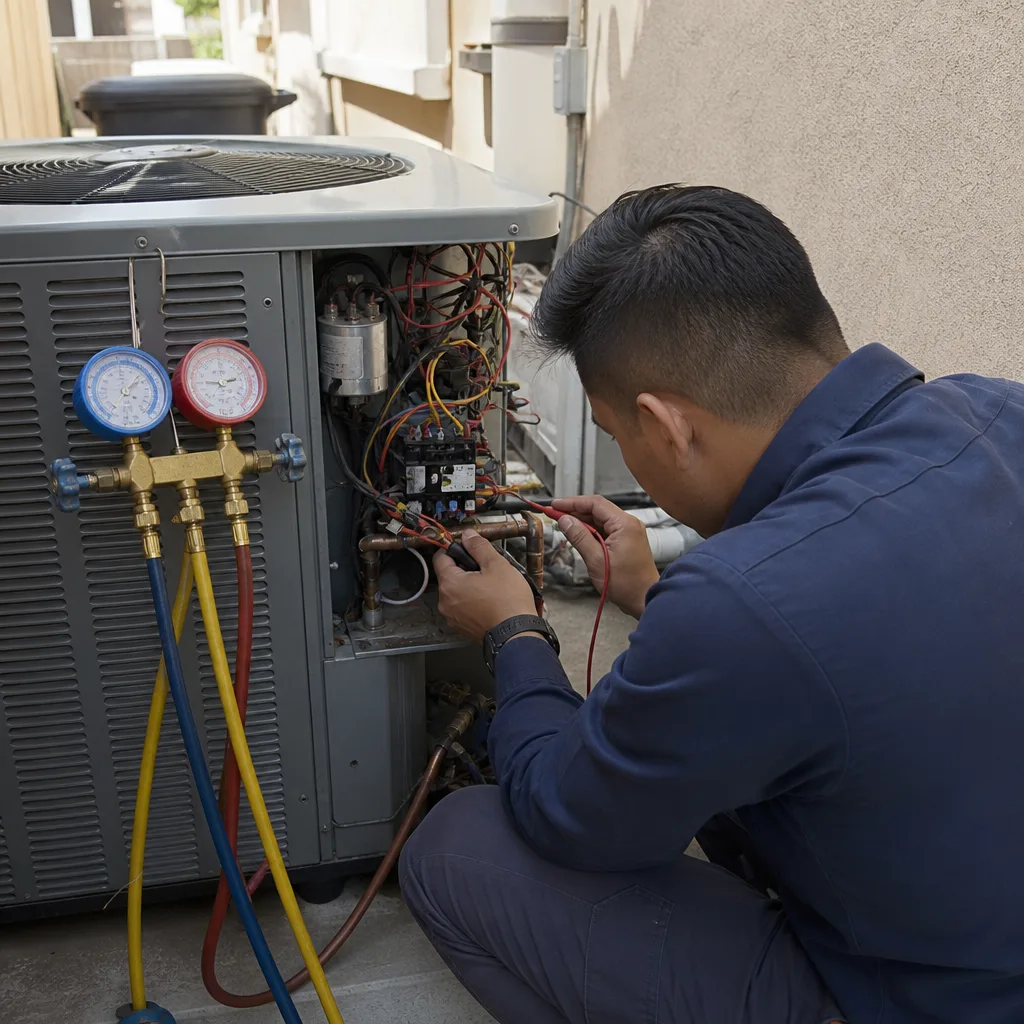
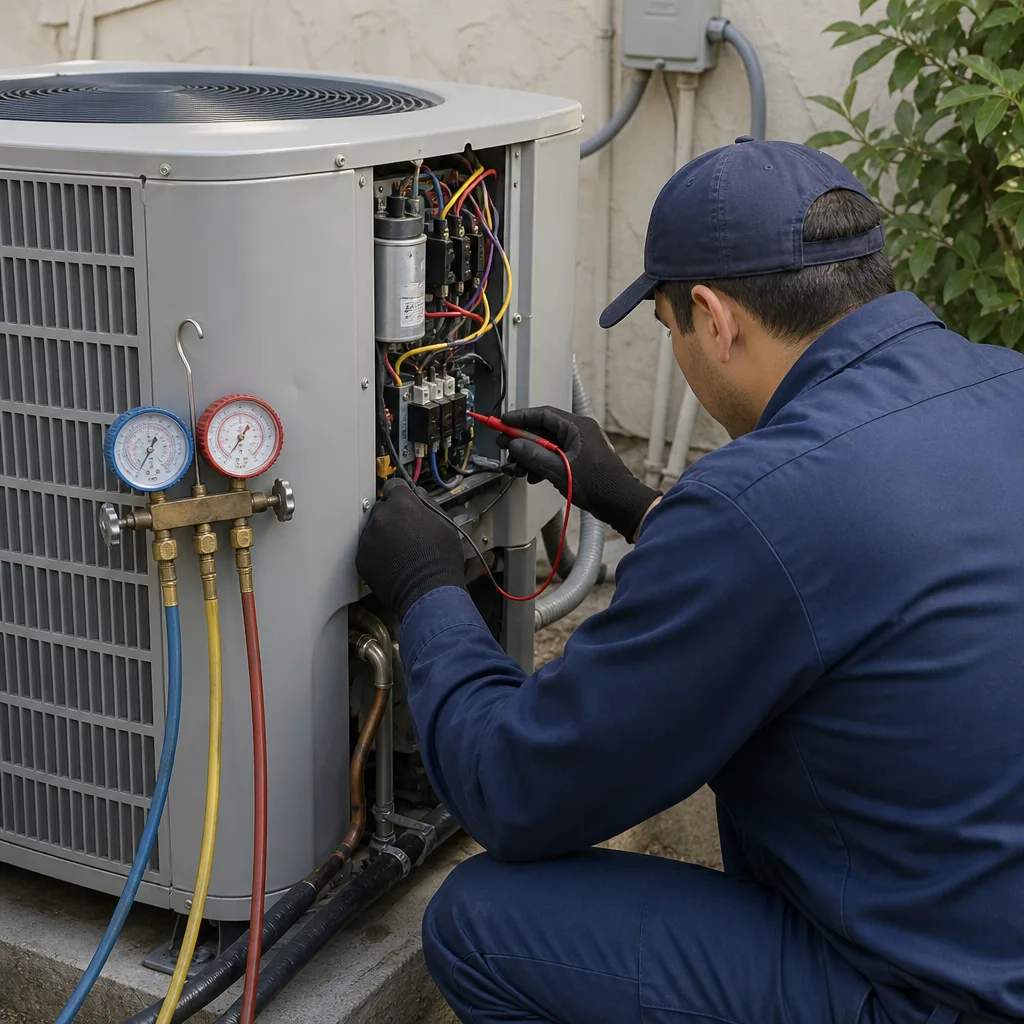
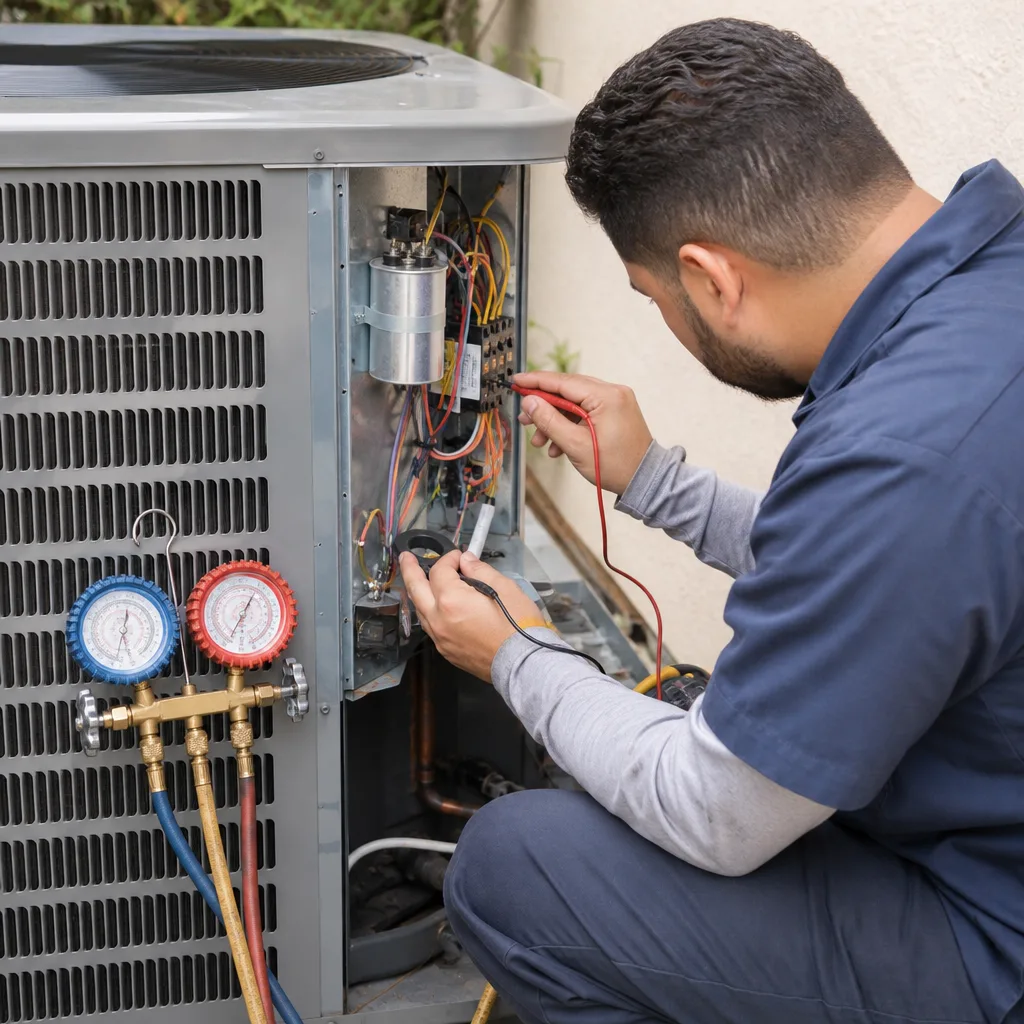
Seasonal tune-up and full diagnostic on your Carrier, Trane, or Goodman system - readings shown to you before any repair is proposed
Diagnosis first, numbers second - you approve the repair price before a single part goes in.
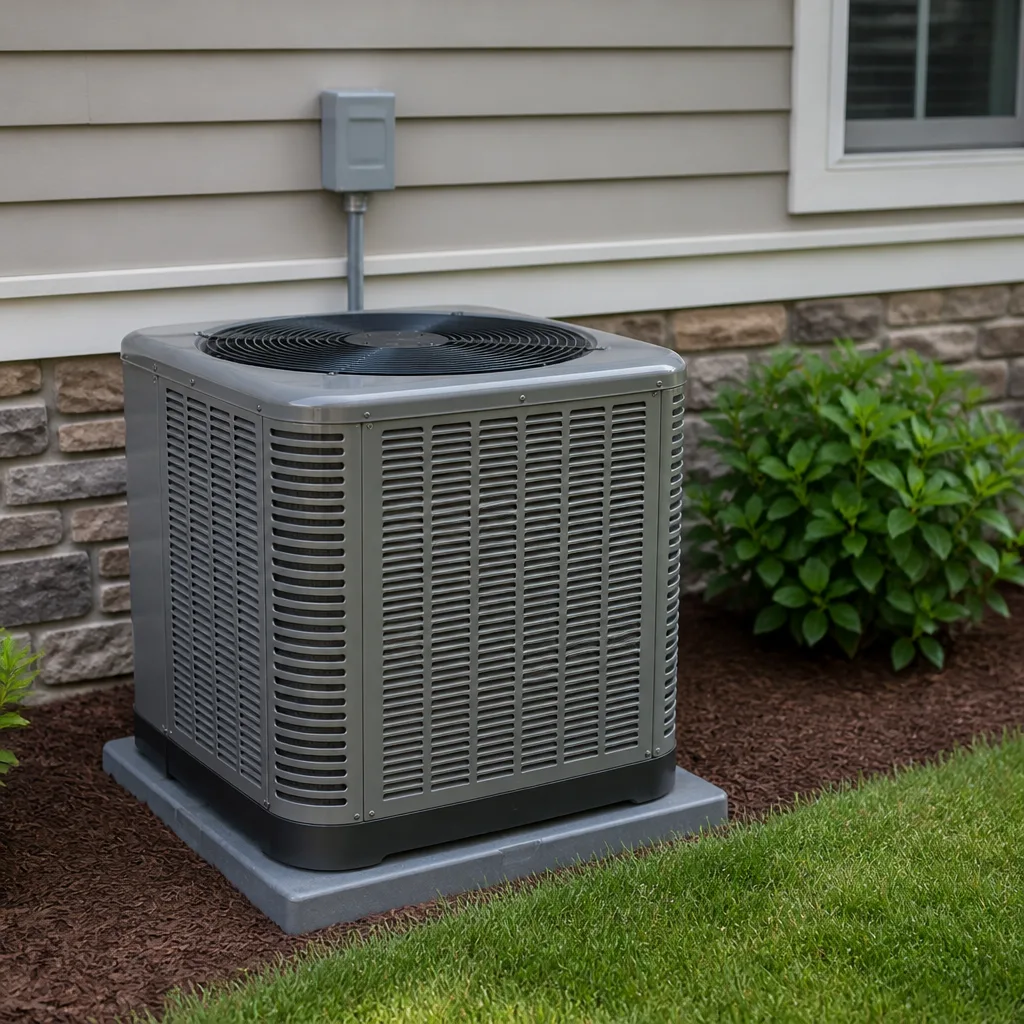
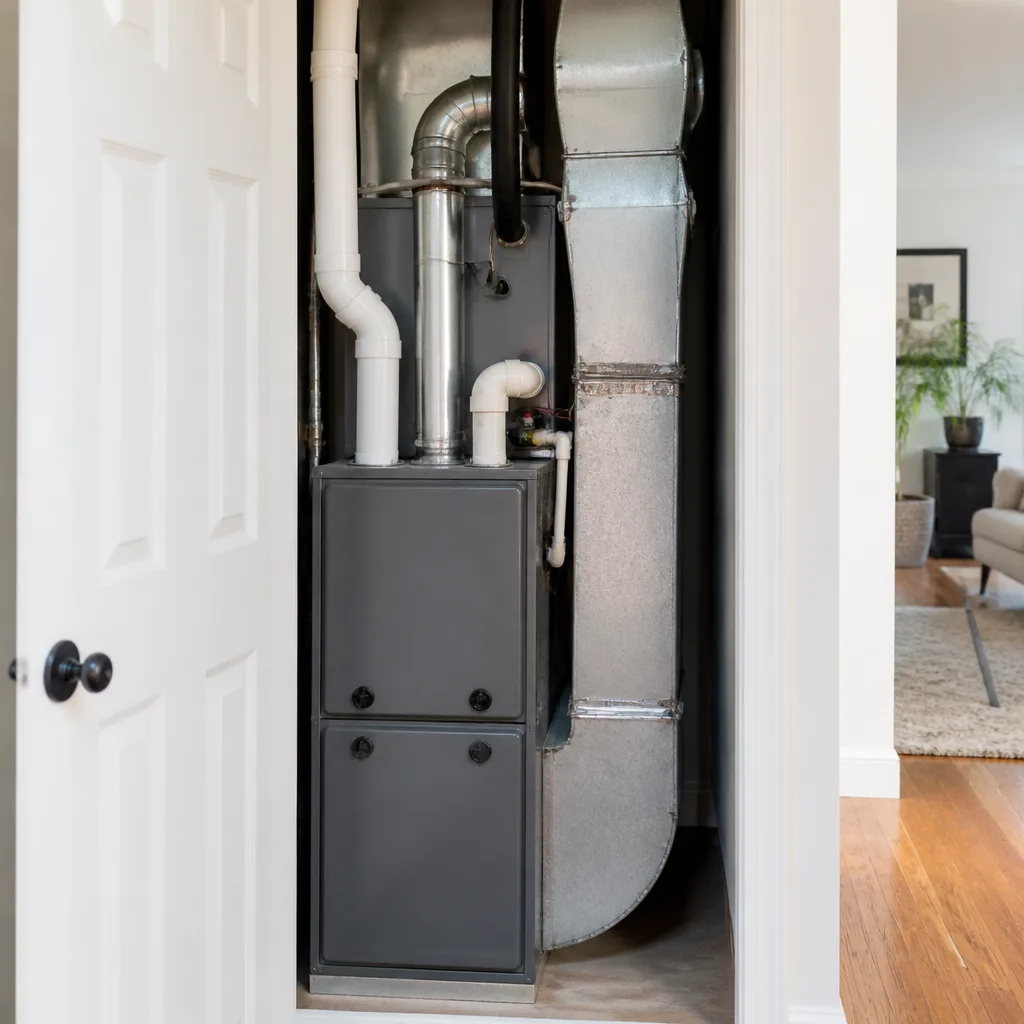
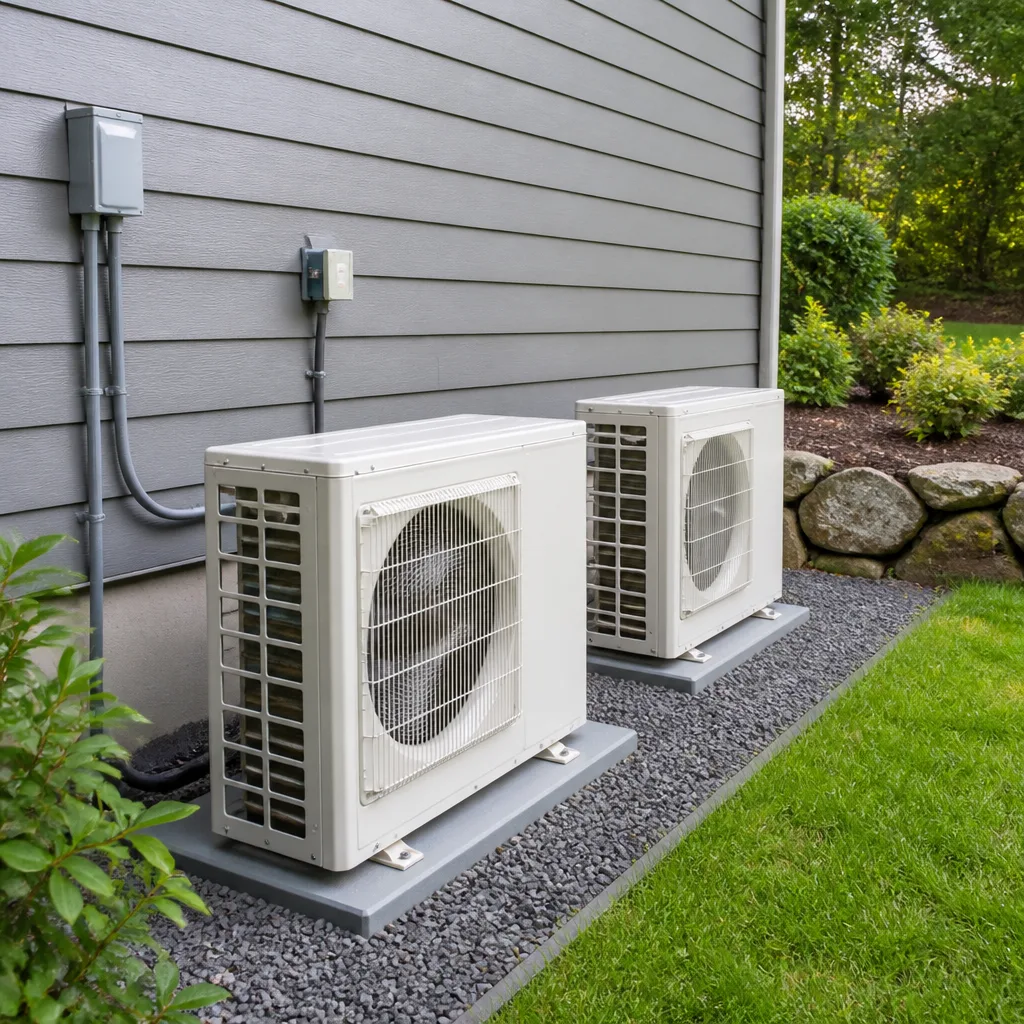
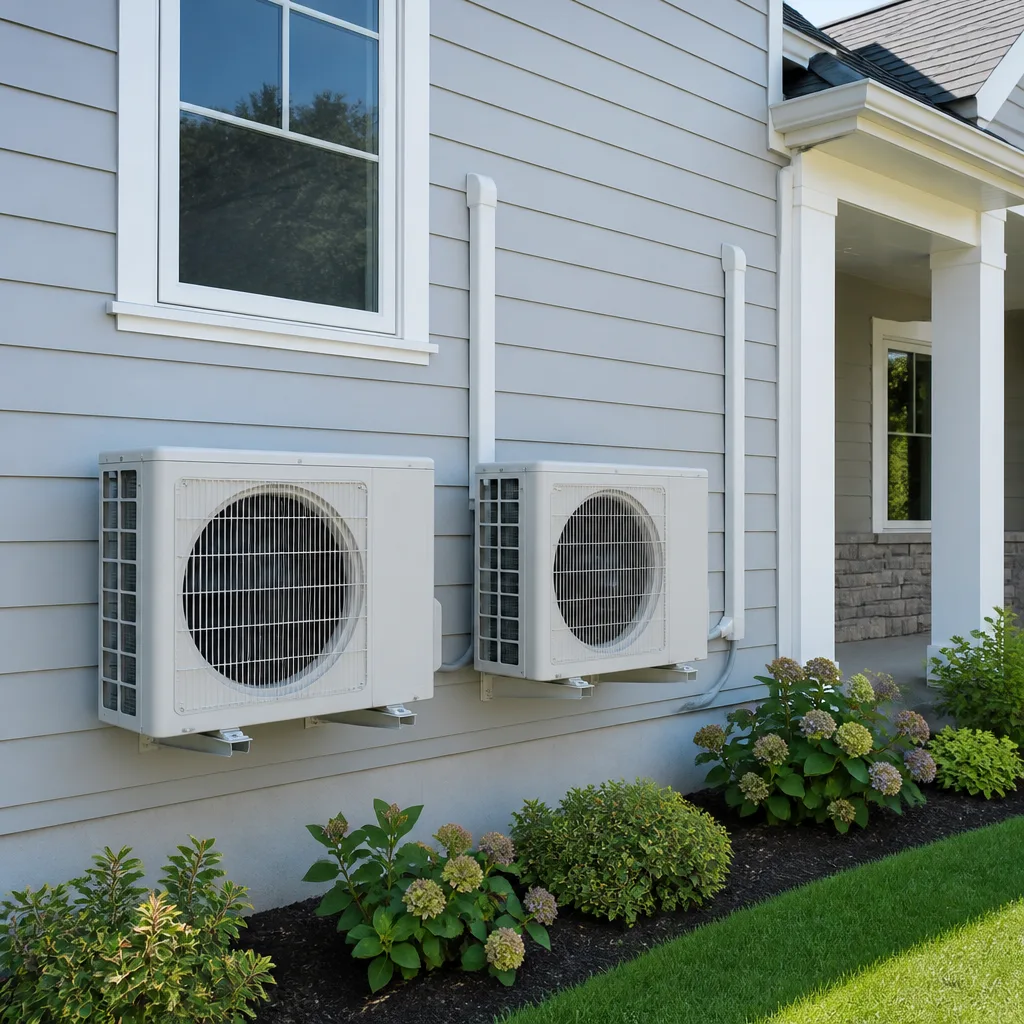
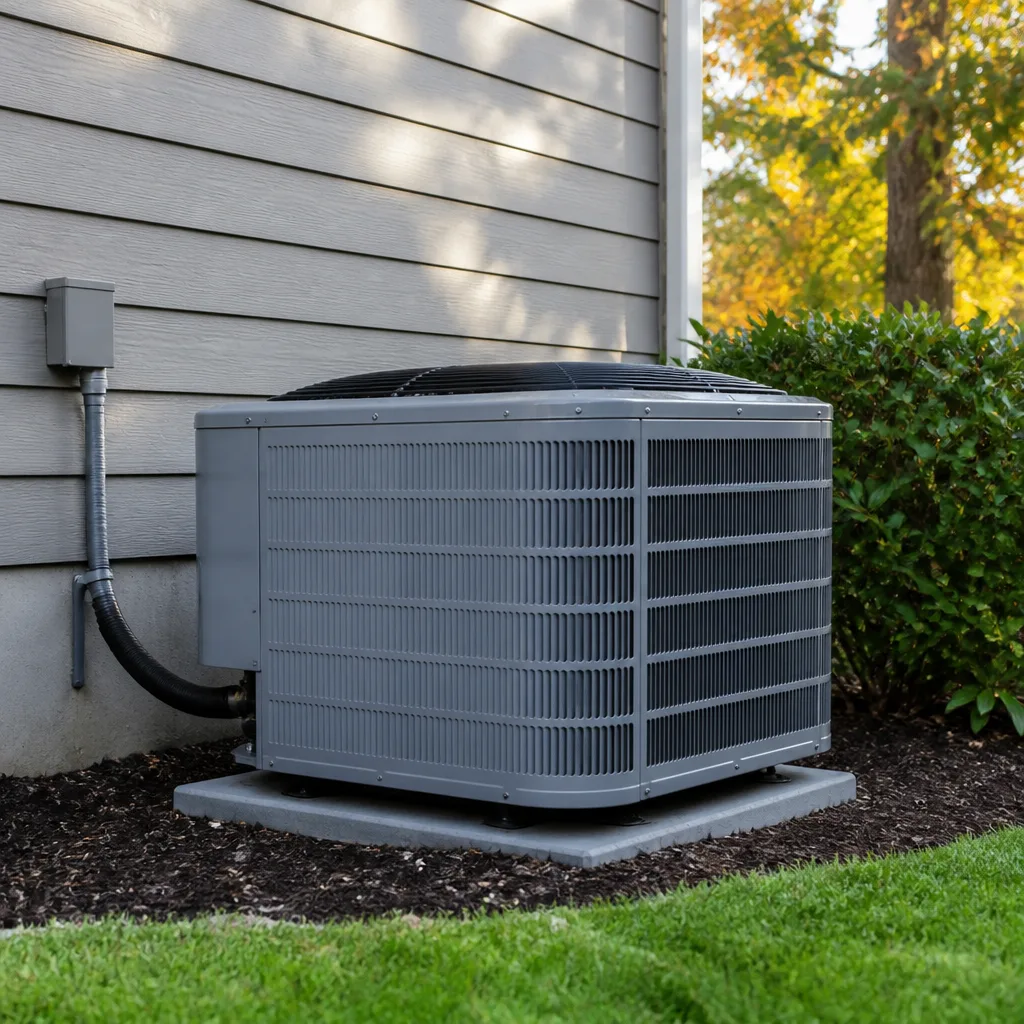
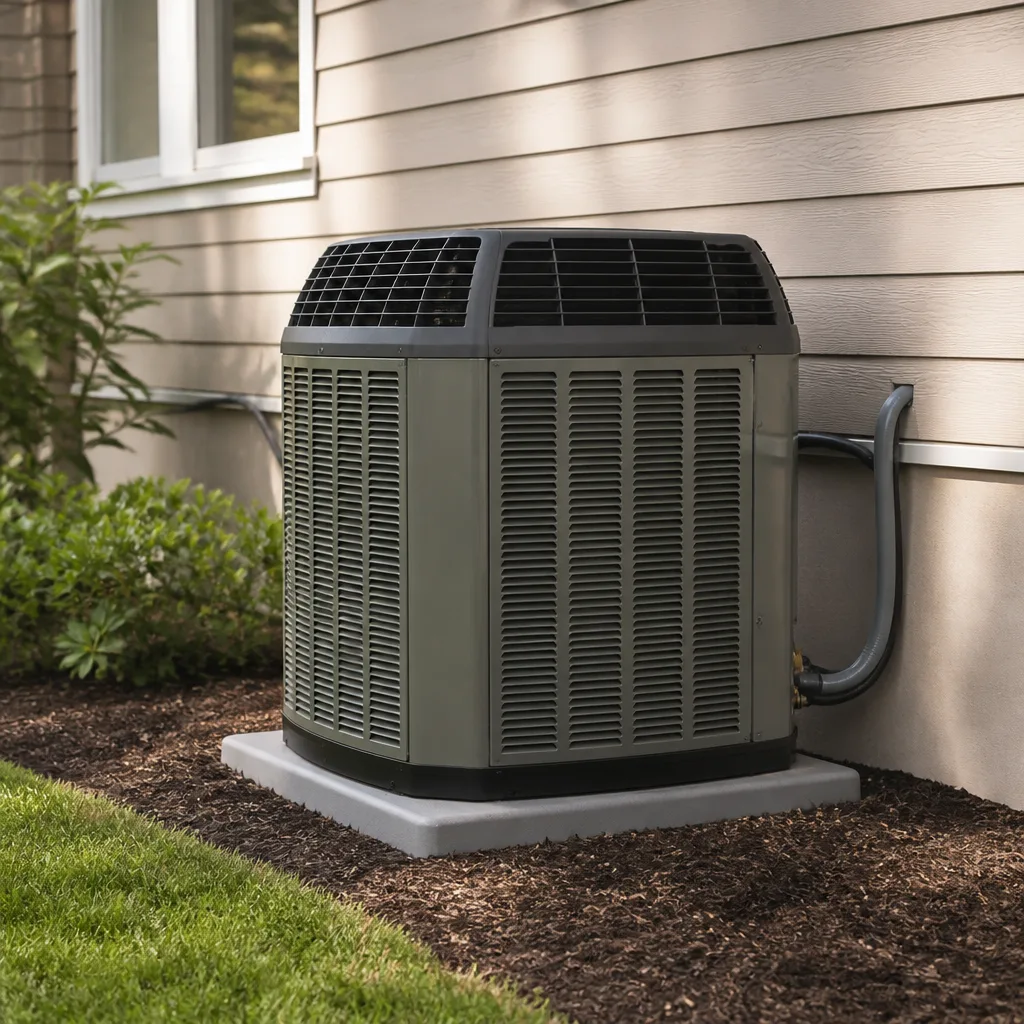
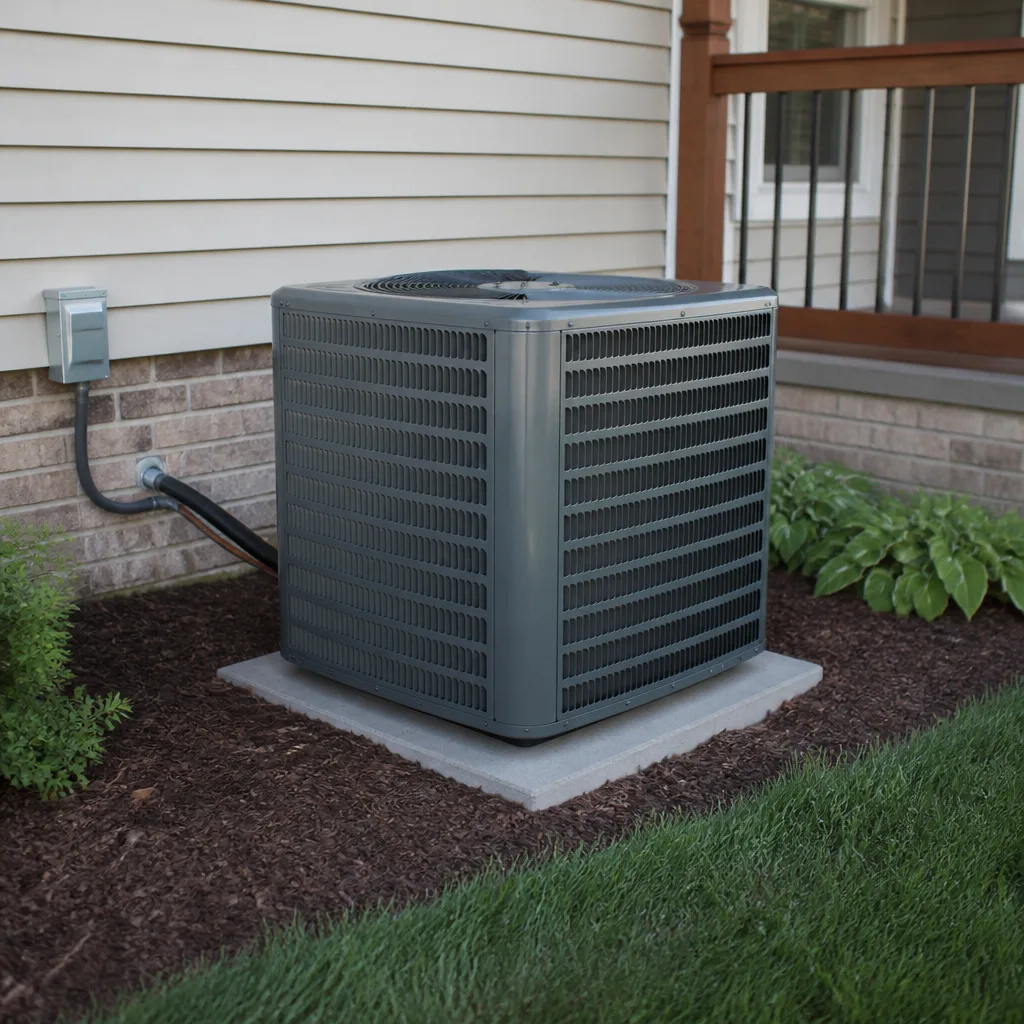
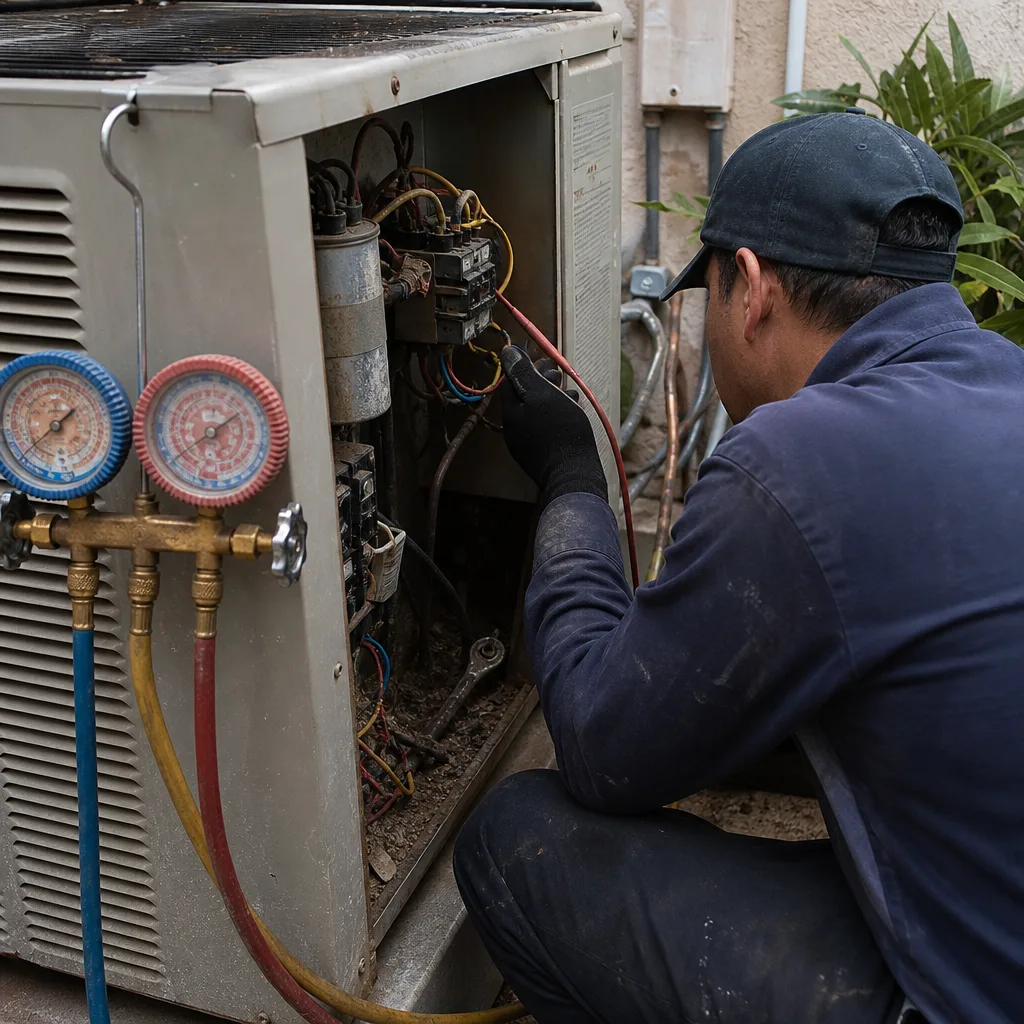 Before
 After
After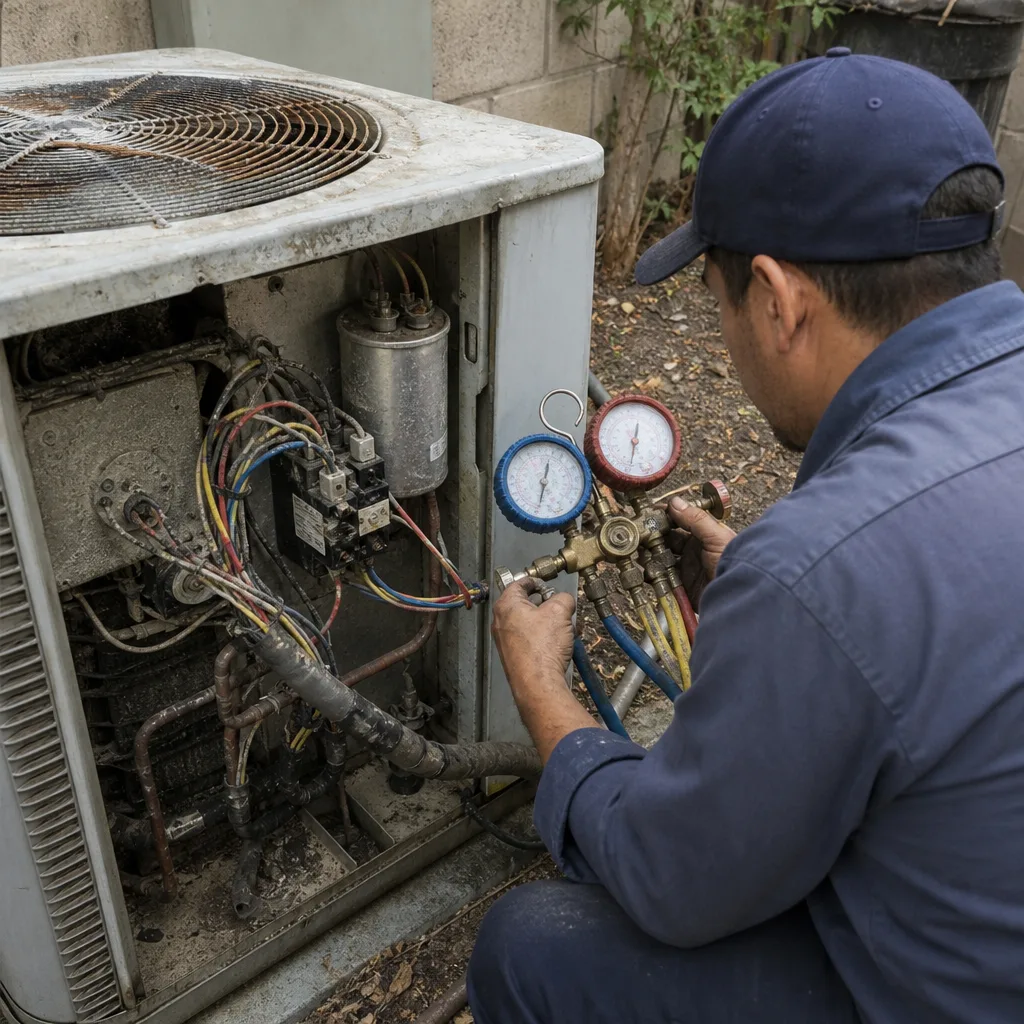 Before
 After
After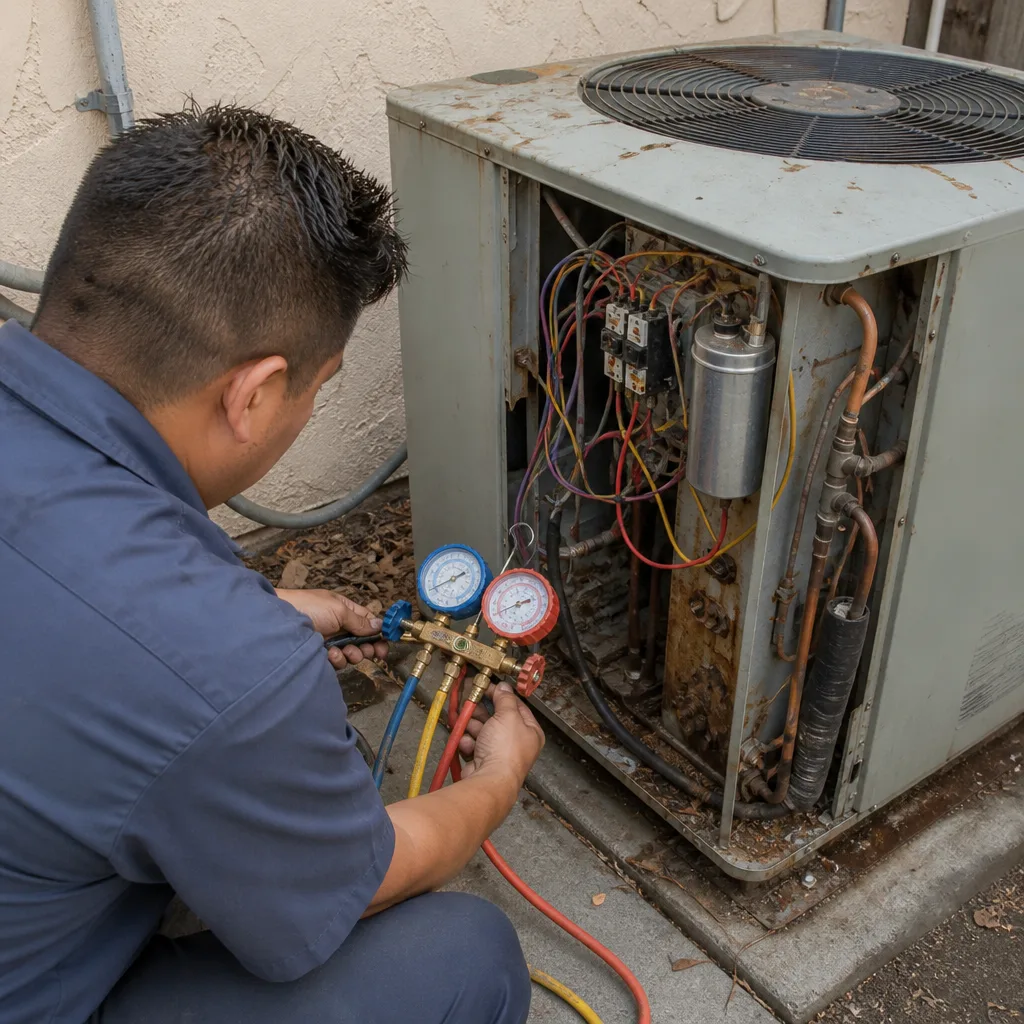 Before
 After
AfterThe Complete Guide to HVAC in Los Angeles
Here’s something most HVAC guides won’t tell you: the temperature in Woodland Hills and the temperature in Santa Monica on the same July afternoon can differ by 20 degrees or more. Los Angeles is not one climate, and treating it like one is how homeowners end up with systems that cycle too often, fail early, and never quite hold a comfortable temperature. This guide maps the city’s actual HVAC microclimates, explains the equipment choices that make sense in each, and covers the California-specific rules and contractor standards that determine whether your install is done right, with more guides & resources available on our blog. We’re going to get specific, because the generic advice most Angelenos get is written for cities that don’t share our weather.
Quick Answer
HVAC in Los Angeles requires matching your system to your specific microclimate: coastal homes on the Westside need mild, efficient cooling and dehumidification, while San Fernando Valley homes need properly sized equipment built for sustained 100°F-plus heat. Homeowners should choose a load-calculated system (never rule-of-thumb square footage sizing), confirm Title 24 compliance on any new install, and select a licensed C-20 contractor who provides written pricing and written guarantees before work begins. See our breakdown of DIY vs Professional AC Maintenance: What’s Safe to Do Yourself to understand where professional expertise matters most.
Table of Contents
- Los Angeles Is Three HVAC Microclimates, Not One
- Why Heat Pumps Make More Sense in LA Than Almost Anywhere Else
- Title 24: The California Energy Code That Shapes Every Install
- C-20 Contractor vs. Handyman: Why the Distinction Dictates Your Warranty
- Threshold Verified: What Technician Identity Verification Looks Like at Your Door
- What HVAC Work Actually Costs in Los Angeles
- Sizing Your System: The Load Calculation Most Contractors Skip
- Which Equipment Brands Hold Up in LA’s Climate
Los Angeles Is Three HVAC Microclimates, Not One
The City of Los Angeles spans 469 square miles and rises from sea level to over 5,000 feet. Within that footprint are at least three distinct HVAC zones, and the equipment that works beautifully in one will struggle in another. Understanding which zone you live in is the single most important step in making a smart equipment decision.
The coastal strip, from Pacific Palisades through Santa Monica, Venice, Playa del Rey, and down to San Pedro, has the mildest summer temperatures in the city. Highs rarely exceed 80°F, and marine layer humidity routinely pushes relative humidity above 70% in the morning. Homes here don’t need massive cooling capacity. They need a system that handles moisture well, runs quietly, and prioritizes efficiency at partial load rather than maximum output. A two-stage or variable-speed compressor with a properly configured dehumidification mode will outperform a larger single-stage unit every time. In our experience, coastal LA homes are the most frequently oversized in the entire region, because contractors apply valley-style rules to beach-side homes.
The inland valleys, the San Fernando Valley, the San Gabriel Valley, and parts of Northeast LA like Eagle Rock and Highland Park, are a different world. Woodland Hills, Canoga Park, Northridge, and Chatsworth routinely see summer highs between 100°F and 115°F, with sustained heat that starts in June and doesn’t fully release until October. These homes need equipment sized for sustained peak load, not momentary spikes. The right system here will have a higher SEER rating to handle long cooling seasons, but equally important is proper duct insulation and attic ventilation to prevent conditioned air from bleeding into a 140°F attic. High-temperature performance matters, and not every brand’s efficiency ratings hold up at 110°F ambient temperature.
The hillside communities, neighborhoods in the Hollywood Hills, Mount Washington, Laurel Canyon, and the canyons off the 101, have their own challenges. Elevation brings more extreme temperature swings between day and night, and many hillside homes have limited attic space, difficult duct routing, or flat roofs that restrict condenser placement. Zoning becomes a real consideration here, since multi-level homes on a slope heat unevenly. The correct approach is often a ductless mini-split system that can serve specific zones independently without the losses of long duct runs through unconditioned spaces.
Why Heat Pumps Make More Sense in LA Than Almost Anywhere Else
Heat pumps have a mixed reputation in much of the country, and for good reason. In places like Minneapolis or Chicago, winter temperatures routinely drop into the teens or below, where traditional air-source heat pumps lose capacity and efficiency just when you need them most. Los Angeles has the opposite profile. Our winters are mild enough that a modern cold-climate heat pump will rarely, if ever, hit the conditions where it struggles. Winter lows in most of the LA basin stay above 40°F, and even the colder valley nights in January rarely dip below 35°F for long. This is the temperature band where inverter-driven heat pumps run at their peak efficiency.
The financial case has shifted dramatically in the past few years. Southern California Edison and Los Angeles Department of Water and Power both offer rebate programs for heat pump conversion, and the federal Inflation Reduction Act’s 25C tax credit provides up to $2,000 for qualifying heat pump installations. Combined, these incentives can knock $4,000 to $6,000 off the installed cost of a whole-home electric heat pump system. The utility rebates are income-qualified for some tiers, so the exact amount depends on your household situation and your utility provider, but the programs are real and well-funded in the LA market.
There’s a second reason heat pumps are worth a hard look in Los Angeles specifically: they eliminate gas combustion entirely. That matters because California’s building code has been progressively restricting gas appliance installations in new construction, and LA city ordinances have been moving in the same direction. A homeowner who installs a gas furnace today is investing in technology that regulators are actively discouraging in this market. Even if your current gas furnace has years left, planning for an eventual conversion now means you won’t be forced into a rushed decision when the rules tighten further.
We often get asked whether Los Angeles heat pumps can handle a real heat wave. The answer from our technicians who work the San Fernando Valley every summer is yes, provided the system is properly sized and the outdoor unit has a high ambient temperature rating. Look for equipment rated for operation at 115°F or higher. Some budget heat pumps lose capacity above 105°F. The brands that publish high-temperature performance data, rather than just rated SEER, are the ones worth shortlisting for valley and hillside homes.
Title 24: The California Energy Code That Shapes Every Install
Title 24 is the section of the California Code of Regulations that sets energy efficiency standards for buildings, and it applies to every new HVAC installation and most replacements in Los Angeles. If you live in the City of Los Angeles, you also fall under the Los Angeles Building Code as amended by the Department of Building and Safety, which means permits are required far more often than homeowners expect.
Here’s what Title 24 requires in practice for HVAC work:
- Duct testing and sealing. When new ductwork is installed or more than 40 feet of existing duct is replaced, a HERS rater must test the system for leakage. The maximum allowed leakage is calculated as a percentage of total airflow, and most systems need duct sealing to pass. We see a lot of older LA homes with duct leakage in the 25% to 35% range. That means one in every three dollars of conditioned air is escaping into the attic before it reaches a register.
- Refrigerant charge verification. On new systems, the contractor must verify and document the refrigerant charge matches manufacturer specifications. An undercharged or overcharged system will never hit its rated efficiency and will fail early.
- Airflow rate confirmation. The system’s actual airflow through the indoor coil must meet the manufacturer’s minimum specification. This catches undersized duct systems, which are very common in older LA homes originally built with wall furnaces or floor registers.
- Equipment efficiency minimums. California enforces SEER2 minimums that are higher than the federal baseline. As of the most recent code cycle, split-system air conditioners in our climate zones need to meet specific SEER2 and EER2 thresholds. The exact number depends on your system type and the LA climate zone where you live.
When these requirements are ignored, two things happen. First, the system underperforms and costs more to run, even if it cools adequately on day one. Second, if you ever sell the home, a Title 24 non-compliance finding during inspection becomes a negotiating point against you or a required repair before close. Los Angeles home inspectors are increasingly familiar with spotting unpermitted HVAC work. The fix usually costs far more than the compliance would have on the original job.
C-20 Contractor vs. Handyman: Why the Distinction Dictates Your Warranty
California requires a C-20 Warm-Air Heating, Ventilating and Air-Conditioning Contractor license to install, repair, or replace HVAC equipment on any job where the combined labor and materials exceed $500. That covers essentially all meaningful HVAC work. A handyman who tells you they can install a furnace or condenser “no problem” is either not aware of the law or not concerned about it. Our guide to DIY vs Professional AC Repair: What’s Safe to Do Yourself explains which tasks truly require a licensed pro. Neither is the person you want working on a $10,000 to $20,000 system inside your home.
The practical consequences of using an unlicensed contractor in Los Angeles run deeper than a potential fine. When the work is unlicensed, the equipment manufacturer’s warranty is often void, because manufacturers condition their extended warranty coverage on installation by a licensed contractor. Your homeowner’s insurance may also deny a claim if an unlicensed worker damages your home during the install. LADBS will not issue a permit to an unlicensed individual, so the work proceeds unpermitted, which creates the Title 24 problems described above.
Before any work starts, do these three things:
- Check the contractor’s C-20 license number against the Contractors State License Board database at cslb.ca.gov. Confirm the license is active and that the holder is the same company you’ve been speaking with.
- Confirm the contractor will pull a permit for any work that requires one. In Los Angeles, this includes most equipment replacements, not just new construction. A contractor who wants to skip the permit is a red flag.
- Get the written price and written guarantee before you authorize any work. The guarantee should state exactly what it covers and for how long. Vague verbal assurances don’t survive contact with a failed compressor.
Threshold Verified: What Technician Identity Verification Looks Like at Your Door
Every HVAC company sends a technician to your home. What almost none of them do is tell you who that technician is before he or she arrives. This is a Los Angeles-specific problem with real stakes, because our city’s sheer size means most service companies use rotating subcontractors, third-party dispatch services, or technicians whose first day with the company is the day they walk up your driveway. The name on the van is not always the company that vetted the person behind the wheel.
The Threshold Verified standard, which Brandt HVAC follows on every visit, closes that gap. Before a technician is assigned to your call, they undergo a background check and identity verification. Before the appointment, we send you the technician’s name and photo so you know exactly who you’ll see at the door. When the technician arrives, they present a photo ID badge matching the information you received. If anyone shows up who you were not told to expect, that visit is on us, and we make it right.
For homeowners who are home alone, parents with young children, or older residents, this is not a courtesy. It’s the difference between opening the door with confidence and making an anxious decision about whether to let a stranger in. Los Angeles is a city of renters and homeowners living in densely packed neighborhoods, and most people can’t easily verify who a service worker is once they’re standing on the porch. We built our process so you never have to make that judgment call in the moment.
The name Brandt comes from an old word for firebrand, a piece of burning wood carried from one hearth to another to bring warmth to a new home. That idea, bringing heat and comfort where it’s needed, with a person you know by name, is the entire point.
What HVAC Work Actually Costs in Los Angeles
Numbers change with the market, but here’s what we currently see across Los Angeles for typical residential work. These are all-in ranges including parts and labor:
| Job | Typical Range in Los Angeles |
|---|---|
| Furnace igniter replacement | $150 – $300 |
| Capacitor replacement | $150 – $300 |
| Condenser fan motor replacement | $350 – $600 |
| Refrigerant recharge (small leak repair included) | $400 – $900 |
| Full AC condenser replacement (R-410A system) | $4,500 – $8,500 |
| Full furnace replacement (80% to 96% AFUE) | $3,500 – $6,500 |
| Complete system changeout (AC + furnace) | $8,500 – $16,000 |
| Heat pump system (whole-home, with new air handler) | $12,000 – $22,000 |
These Los Angeles prices run higher than national averages for two reasons. First, our labor market and commercial real estate costs are among the highest in the country. Second, Title 24 compliance adds hard costs, duct testing, refrigerant verification, and permit fees that don’t exist in states without our energy code. When you see a bid that’s dramatically lower than the ranges above, ask what’s being left out. Usually it’s a permit, a load calculation, or a warranty.
Every Brandt HVAC job, from a $150 igniter swap to a full system replacement, starts with a written price before any work begins. You see the number, you agree to the number, and that’s the number you pay. We don’t do callbacks with “it turned out to be more than we thought.” If a repair fails within 365 days, we return at no charge under our Done Right Promise. That’s what a guarantee is supposed to mean.
Sizing Your System: The Load Calculation Most Contractors Skip
The single most common mistake we correct in Los Angeles homes is a system sized by square footage alone. The rule of thumb looks like 400 to 600 square feet per ton of cooling, and it’s wrong. A Manual J load calculation considers your home’s orientation, window area and solar exposure, insulation levels, air leakage, ceiling height, and the number of occupants. In a city where a west-facing Westside condominium and a north-facing Valley ranch can have identical square footage and wildly different cooling loads, the rule of thumb produces errors in both directions.
An oversized system cools the air quickly but doesn’t run long enough to dehumidify, leaving coastal homes clammy and uncomfortable even when the thermostat reads 72°F. It also short-cycles, which wears out compressors and increases energy consumption on startup. An undersized system runs constantly, fails to hold temperature during August heat waves, and drives up electricity bills as it runs at maximum output without ever satisfying the thermostat.
Here is what a proper sizing process looks like:
- The contractor measures each room, not just the overall floorplan.
- Windows are counted individually, noting orientation, shading, and glass type.
- Insulation in the attic and walls is inspected, not assumed.
- Duct sizes and lengths are measured to confirm they can deliver the airflow the new system needs.
- The calculation is run in software that accounts for Los Angeles climate design temperatures, typically 95°F for coastal zones and 105°F or higher for inland valley zones.
We’ve replaced plenty of five-ton condensers with three-and-a-half or four-ton systems because the calculation said so, and the result is a quieter, more comfortable home that costs less to run. If a contractor won’t show you the load calculation, ask why.
Which Equipment Brands Hold Up in LA’s Climate
Brandt HVAC services all major residential brands, including Carrier, Trane, Lennox, Goodman, Rheem, York, Daikin, Bryant, and American Standard, so our technicians see how each performs under real Los Angeles conditions. Rather than rank them, which would be dishonest since proper installation matters as much as the equipment itself, here’s what actually differentiates brands in our market.
For valley homes that run cooling nine months a year, we lean toward Daikin and York units with proven high-ambient performance ratings. Both brands publish detailed capacity retention data at temperatures above 100°F, and both have strong inverter-driven options that maintain efficiency at partial load, which is where systems spend most of their operating hours even in Woodland Hills.
For coastal homes where humidity control matters more than raw capacity, Bryant and American Standard two-stage and variable-speed systems configure well for low-load, high-humidity operation. The key is pairing the right indoor coil and configuring the blower speed correctly, which is a technician skill issue more than a brand quality issue.
Whatever brand you choose, confirm three things before signing: the manufacturer’s parts warranty duration, the labor warranty offered by the installing contractor, and whether the warranty is registered in your name (unregistered systems often carry a shorter warranty). A written guarantee covering the contractor’s labor, separate from the manufacturer’s parts coverage, is what protects you when a board fails or a coil leaks. That’s the guarantee Brandt HVAC puts in writing on every repair and every install.
Common Mistakes to Avoid
- Skipping the load calculation. Accepting a square-footage-based size estimate is the fastest route to an uncomfortable home and short-lived equipment. Insist on a Manual J calculation performed from actual measurements, and ask to see it.
- Not pulling permits. In Los Angeles, most HVAC replacements require a permit, and unpermitted work creates headaches when you sell. A licensed C-20 contractor handles permits as part of the job; a handyman does not.
- Ignoring duct condition. Many LA homes built before 1980 have leaking, undersized, or uninsulated ducts, and putting a new high-efficiency system on bad ducts wastes the entire efficiency gain. Have ducts tested and sealed before or during any major equipment replacement.
- Choosing a contractor on price alone. The lowest bid in Los Angeles frequently excludes the permit, the load calc, the duct test, or the labor warranty. Add those back in and the honest bid is often the same or cheaper.
- Letting anyone through the door without verification. Los Angeles is a big enough market that HVAC subcontracting is common, and you may not know who is actually working in your home. Demand the installer’s name and photo before the appointment, and require an ID badge at the door.
- Delaying refrigerant conversions. R-22 refrigerant has been phased out, and remaining supplies are expensive. Systems older than about 2010 that use R-22 will cost increasingly more to repair as supplies shrink. Start planning the replacement now rather than in the middle of a heat wave.
- Overlooking heat pump incentives. Many LA homeowners qualify for utility rebates and federal tax credits that reduce heat pump costs by thousands of dollars. Leaving that money on the table because the furnace “still works” shortens your runway when the gas restrictions tighten.
When to Call a Professional
Some HVAC symptoms are diagnosable with a thermometer and a flashlight. A refrigerant leak is not. If your system is blowing warm air on a hot day, making sounds you have never heard before, or tripping breakers, turn it off and call a licensed contractor. Refrigerant is hazardous to handle without training, and a high-voltage capacitor retains a dangerous charge even when the power is off. If you smell burning dust on the first start of winter, that’s normal and fades within a few minutes. If the smell persists, shut it down and get a professional inspection. For heating system concerns specifically, read DIY vs Professional Furnace Repair: What’s Safe to Do Yourself before attempting any troubleshooting. Brandt HVAC offers free estimates in Los Angeles, call (984) 538-9003. We send you the technician’s name and photo before every visit, and every job begins with a written price.
Frequently Asked Questions
A complete system changeout in Los Angeles, meaning a new AC condenser, indoor coil, and furnace or air handler, typically runs between $8,500 and $16,000 installed, depending on equipment efficiency, system size, and duct condition. Heat pump systems run higher, from $12,000 to $22,000 before rebates and tax credits. Call (984) 538-9003 for an exact quote, estimates are free and always in writing before any work starts.
Repair is usually the right call if the system is under 10 years old and the repair costs less than a third of replacement. Replacement makes more sense when the system is 15 years or older, uses R-22 refrigerant, or has a failing compressor. The honest answer depends on your specific equipment, and a written price for both options is the only way to decide without guesswork.
Yes, most AC replacements in the City of Los Angeles require a mechanical permit from LADBS, and the installing contractor should pull it as part of the job. A contractor who suggests skipping the permit is putting you at risk of code enforcement, warranty denial, and Title 24 compliance trouble when you sell the home.
Yes, Los Angeles is one of the best markets in the country for heat pumps because our mild winters rarely reach temperatures where air-source heat pumps lose efficiency. Federal tax credits and California utility rebates can reduce installed costs by $4,000 or more. The key is sizing the unit for your actual microclimate and selecting equipment rated for high-temperature performance if you live inland.
Once a year, ideally in spring before the first sustained heat, is the right cadence for Los Angeles. Our climate runs cooling equipment harder than almost any other major metro in the country, so annual coil cleaning, refrigerant level checks, and electrical inspection prevent the mid-July failures that are most expensive to fix. For more detail on exactly what’s covered and why it matters, see our AC Maintenance in Los Angeles page.
A licensed C-20 HVAC contractor in California is legally authorized to install and repair heating and cooling systems and to pull mechanical permits. A company without that license cannot legally perform work over $500 in labor and materials. For more on what AC repair actually involves, read our AC Repair in Los Angeles guide. For furnace-specific questions, see our Furnace Repair in Los Angeles page.
The Bottom Line
Los Angeles HVAC decisions come down to three things: matching the system to your microclimate, doing the paperwork right, and knowing who is in your home. Coastal homes need efficiency and dehumidification. Valley homes need capacity rated for sustained 110°F heat. Hillside homes need zoning and smart duct design. Every home needs a Title 24-compliant permit by a licensed C-20 contractor. And in a city this large, every homeowner deserves the certainty of a technician verified by name and photo before the appointment. Start with the Brandt HVAC home page to see how we work, or call (984) 538-9003 for a written estimate.
Written by Devin Marlowe, Owner at Brandt HVAC, serving Los Angeles since 2003.